BOOK REVIEW: Tales of the Taoist Immortals by Eva Wong

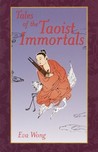
Tales of the Taoist ImmortalsTales of the Taoist Immortals by Eva Wong
My rating: 3 of 5 stars

Amazon page


This book tells of the key events in the lives of forty Taoist immortals. While the title (specifically the word “tales”) might lead one to think that this is a book of stories, it is only so in the most general sense of the word “story.” Satisfying stories show a character confronted by barriers to obtaining some desired goal. That isn’t the case in the overwhelming majority of the “tales” in this book, and the few in which the individual is confronted with a challenge she usually uses her superpowers to magic the problem away. (To be fair, Taoist sages aren’t known for being ambitious and thus have few goals to chase after. There are more examples of individuals turning down high offices in these character sketches than there are characters attempting to obtain some objective.)

If you are looking to learn more about key figures in Chinese history and mythology, this book will serve your purpose through brief (2-3 page) character sketches that hit the highlights. However, if you are looking for something like the “Book of Chuang Tzu” with clever morality tales, that’s not at all what you’ll find in this book. There are a couple of exceptions, but they are rare nuggets.

Each of the 40 chapters provides one character sketch of life events with a brief bio at the end. The 40 chapters are divided into five parts by the class of individual being mentioned (i.e. the eight immortals, sages, magicians, diviners, and alchemists.) There is a line drawing (reminiscent of block print) for each of the chapters that depicts the immortal in action. The only ancillary matter is a brief introduction.

As I suggested, if one is looking for information about the lives of Taoist immortals, one may find this to be a good source—particularly if one doesn’t want to get bogged down in minutiae. The entire book is less than 200 pages. On the other hand, if one is looking for stories or morality tales, one will likely find this book leaves one wanting.

View all my reviews

BOOK REVIEW: An Introduction to Indian Philosophy Chatterjee & Datta

An Introduction to Indian PhilosophyAn Introduction to Indian Philosophy by Satischandra Chatterjee
My rating: 4 of 5 stars

Amazon page


India has spawned a number of philosophical systems over the centuries. Chatterjee and Datta provide an overview of Indian philosophy by comparing and contrasting nine major schools of Indian philosophy—the six orthodox schools plus three well-known heterodox schools. The dividing line between orthodox and unorthodox hinges upon whether a philosophy accepts the Vedas as sources of authority.

After an introductory chapter that lays out the concepts that will be needed throughout the remainder of the book as well as providing brief sketches of nine philosophical schools, the remainder of the book is a one chapter per school examination of metaphysics, ethics, theology, epistemology, etc. The authors first consider the heterodox schools: i.e. Carvaka (a materialist /atheist approach), Jain (one of the major Indian religions), and Buddhist. After examining the heterodox approaches, Chatterjee and Datta take on the orthodox schools in the following order: Nyaya, Vaisesika, Sankhya, Yoga (which you may not have realized was a philosophical system), Mimamsa, and Vedanta.

There are a number of questions that recur as the authors compare these schools to each other. A major point of consideration is presence or absence of belief in a god, and—for those systems that believe in a God or gods—what is the role of said deity. It might seem that all the orthodox systems would be theistic, but this isn’t the case (e.g. Sankhya.) Another key question is how one can know something, i.e. what is acceptable authority—can one only trust one’s own senses or can one trust everything but one’s own senses? Then there is the matter of ethics and how each system regards ethical behavior. Of course, there are some elements that are unique to a given system, and so it’s not entirely a matter of comparison and contrast.

There are no graphics in the book and the ancillary material is limited to footnotes, a select bibliography, and prefaces to the various editions of the book. Note: I read the 2007 / 7th Edition of the book.

I won’t say this book isn’t dry. It’s a philosophy textbook, after all. However, it does provide a solid overview of the topic and seems to take great efforts to be unbiased (to the extent of sometimes not challenging philosophical ideas that are patently unsound in favor of reporting what advocates of the tradition propose.)

I’d recommend this book for anyone who’s looking for an overview of Indian philosophy.

View all my reviews

BOOK REVIEW: Going Solo by Roald Dahl

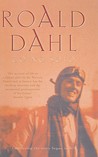
Going SoloGoing Solo by Roald Dahl
My rating: 5 of 5 stars

Amazon page


This is the second installment of Roald Dahl’s autobiography, and it covers the period from the time when the famous children’s author left home to work Shell Oil in East Africa, through his adventures as a pilot in the Royal Air Force (RAF) during World War II, concluding with his return home to England. In short it covers the earliest years of his adulthood, before he wrote such classic books for children as: “BFG,” “Matilda,” and “Charlie and the Chocolate Factory.”

In fifteen chapters, Dahl discusses his mysterious shipmate on the ship to Africa, a lion attack, an unwanted visitor in the form of a green mamba snake, and Dahl’s early experience of the war before he became a pilot. Becoming a pilot represents a shift in the book’s tone. From that point, it’s more of a war story, with the higher tempo of life and death situations that entails. That isn’t to say there’s no life and death in the first part, but it’s more quirky and humorous. In the chapters about his life as a pilot, Dahl describes crash landing in the desert and his subsequent recuperation, how he was posted to Greece where the German Air Force had a fleet of planes that made Britain’s look minuscule by comparison, and then his squadron’s move to Palestine to what would be his last battle-filled days before he was relieved from flight operations and sent home.

The stories throughout are as well crafted, as one might expect from a master storyteller. Dahl follows the advice (often-attributed to Elmore Leonard, but which has been around for decades in some words or another) to, “…leave out all the parts readers skip.” There is a tension throughout the book. It’s a much different approach than the previous volume, “Boy” which plays off the dramas of the adult-child interaction.

There are many graphics throughout the book, mostly black-and-white photos, but also maps and documents, but no other ancillary matter.

I’d highly recommend this book. If you want to know how to write a memoir that people will read, this is how it’s done. Dahl doesn’t try to take us from cradle to grave. He’s happy giving us the parts we won’t skip.

View all my reviews

BOOK REVIEW: Crossing the Heart of Africa by Julian Smith

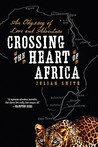
Crossing the Heart of Africa: An Odyssey of Love and AdventureCrossing the Heart of Africa: An Odyssey of Love and Adventure by Julian Smith
My rating: 5 of 5 stars

Amazon page


This book tells two tales in parallel, connected by one theme: travel for love. The author, Julian Smith, recounts the experience of Ewart Grogan, an English explorer whose life straddled the 19th and 20th centuries. Grogan traveled the length of Africa from South to North and recounted his experience in a book entitled “From Cape to Cairo.” The purpose of his grand endeavor was to prove his worth as man. Grogan was in love with a woman whose family was of higher station, and he believed that if he could only do what had never been done before, then the objections to his “marrying up” would dissolve.

The other story is Smith’s own attempt to retrace Grogan’s route across the length of the continent. While Smith doesn’t have to prove his worth, his motivations are more complex and tied up with his engagement to be married. Maybe Smith’s motivation is best summed up as a desire to prove to himself and / or his fiancé that he had sufficient commitment and fortitude to get him through rough times—a characteristic relevant to both marriage and crossing some of the world’s least developed countries.

Of his own admission, Smith’s journey was to be far less arduous than Grogan’s by virtue of the fact that he’d be traveling by taxis, motorcycles, buses, and ferries. Grogan and other 19th century explorers were subject to hazards far graver and more ever-present. For one thing, in Grogan’s day virtually everybody who spent any significant time in Africa got malaria. It wasn’t a question of if but when and how seriously. Even if you escaped malaria, there were myriad other tropical diseases to bring one to one’s knees. Next, there was the tribal environment in which one would travel through dozens of tribal territories, all of whose chiefs expected tribute and many of which were outright hostile. For Smith, rule of law was present in some form or fashion along most of his route, such that no one could just murder him and get off scot-free. There was also the risk of crew desertions that could cripple an expedition. Traveling parties had to carry huge amounts of goods from surveying equipment to gifts to medicines to food stuffs. Still, they had to obtain many of the party’s needs along the route. Among other things, this meant hunting animals that weren’t as docile as livestock. Anything less than an instant kill meant having to trudge into tall grass after a wounded creature that had a far greater killing capacity at close range.

This isn’t to say that Smith’s journey was adventure free. Anyone who has traveled in Africa knows that getting from place to place remains a slow and exhausting process. And many of the things that undermined Grogan’s trip also undermined Smith’s, e.g. the author suffered extended fever. But the most devastating factor for Smith’s travels was the fact that parts of Sudan were lawless and a brutal war was being fought. While Grogan barely managed to drag himself through the swampy landscape, Smith was unable to proceed overland because of the conflict. In telling of his travels, Smith discusses many of the dilemma’s that traveler’s face today (e.g. to give people money or not, how to contend with bureaucrats.) Among the travels that modern-day readers might be interested in is Smith’s visit to a gorilla sanctuary.

I enjoyed this mix of travelogue and history. The book gives one insight into the changing nature of the world and, particularly, what was once called the Dark Continent. [Note: while that may sound either racist or awash in a negativity bias, I’ve read that the reason it was called that was that when the 19th century explorers were traveling through much of the continent was unmapped, i.e. blacked out.]

I’d recommend this book for anyone who is interested in travel in Africa—past or present.

View all my reviews

BOOK REVIEW: Hapkido by Scott Shaw

Hapkido: Korean Art of Self-DefenseHapkido: Korean Art of Self-Defense by Scott Shaw
My rating: 4 of 5 stars

Amazon page


When I picked up this book, all I knew about Hapkidō was that it was a Korean martial art, that it wasn’t a sport like its more famous martial cousin—Tae Kwon Do (TKD), and that it was a more comprehensive art (grappling as well as striking) than TKD. I grabbed it because at least one of these mental reductions proved only partially correct and I wanted to know what else I might be getting wrong. In the first paragraph, I learned that Hapkidō was heavily influenced by / a descendant of Daitō-ryū Akijūjutsu. (If that art sounds vaguely familiar, it’s because it was also a big influence for its most famous student, Morihei Ueshiba—i.e. the founder of the Japanese art Aikidō.)

This book is tiny. It’s an overview of the art in less than 100 pages (and, as is common with martial arts books, at least half the space is devoted to photos.) So the first thing a reader might want to be aware of is that you’ve probably read newspaper articles with higher word counts than this book. I’ll leave it to the reader to determine whether that’s a good or bad thing.

The book consists of five chapters, but the last chapter accounts for the majority of the page count (but not the word count.) The first two chapters are histories. The first offers an overview of Korean martial arts situated in the context of national events of the time. The second chapter is a history of Hapkidō and gives one insight into Daitō-ryū Akijūjutsu and how it came to influence the Korean founder of Hapkidō, Choi Yong-Sul.

Chapters 3 and 4 examine aspects of the art that one might call “pre-basics” for lack of a better term. As ki (i.e. life force / energy, those familiar with Chinese arts might know it as “chi” or “qi”) plays a central role in the art, Chapter 3 discusses ki and describes breathing and meditation practices that are used for building energy. Chapter 4 describes break-falls and the art’s one posture / stance (a natural posture.)

Chapter 5 describes, and presents photos of, basic defensive moves of Hapkidō. There are five sub-sections that explore, respectively, the following types of techniques: disengagements (i.e. breaking away from an opponent who has seized one), joint locks, throws, punch defenses, and kick defenses.

I found this book to be concise and informative. If one is seeking a detailed overview of the art, one might want to look elsewhere. However, if one is just trying to figure out what Hapkidō is all about, it should serve you well. I doubt that an experienced student of the art would get much out of this book as it’s just the bare bones. Not everybody is looking to delve into the minutiae.

View all my reviews

BOOK REVIEW: The Body Has a Mind of Its Own by Blakeslee and Blakeslee

The Body Has a Mind of Its Own: How Body Maps in Your Brain Help You Do (Almost) Everything BetterThe Body Has a Mind of Its Own: How Body Maps in Your Brain Help You Do (Almost) Everything Better by Sandra Blakeslee
My rating: 5 of 5 stars

Amazon page


This book examines the role of the nervous system in movement and bodily activity. It describes how one’s body is able to perform extraordinarily complex maneuvers that we often take for granted because they feel effortless. It investigates some of the ways in which the interface between body and brain go awry, as well as the various effects this can have. It also offers insight into how we can be deceived because we are experiencing the world less directly and more through the shaping activities of the brain than we feel is true.

The book contains ten chapters, plus a little forward and back matter. The first chapter is entitled “the body mandala” and it provides an overview of how the nervous system can be thought of as a series of maps layered upon maps that routes various input from outlying areas to the brain and commands from the brain to the outlying areas. A “mandala” is a symbolic representation of the universe [from Hindu and Buddhist traditions], and this notion is repeatedly revisited throughout the book.

Chapter 2 explores the mapping of the homunculus and its ramifications. If you’ve ever seen a 2-D or 3-D image /model of a human being that has gigantic lips and hands and disproportionately small torso and thighs, you’ve seen said homunculus (as the term is used in neuroscience.) The reason it’s scaled this way is that body part size is reflective of space in the nervous system dedicated to said parts and not their actual size. If you’ve ever seen one of those maps–called cartograms–in which the size of a country reflects a statistic, say, population (thus India, China, and Singapore are much larger than their physical size, but Canada is much smaller than its), you get the drift. This chapter also answers the question everyone wants to ask (and many do) which is “why–if the lips are so large because of their dedicated territory in the brain—are the genitals unexpectedly small in the homunculus?

Chapter 3 describes how body maps can be in conflict and what effect this can have. It talks about why people who lose weight often still feel fat and move in ways that are not reflective of their actual figure. It also gets into anorexia (and the lesser known bigorexia) which reflect mismatches between perceived body image and actual body schema.

Chapter 4 investigates a fascinating phenomenon in which visualization can often result in strength and performance gains. Said gains aren’t on the same scale as among those who actually exercise or practice, but the fact that one can make gains without moving a muscle is certainly intriguing. Of course, the takeaway is that one can get the best of both worlds by augmenting physical conditioning and practice with visualization—one has a more finite number of feasible physical training hours in a day (i.e. there are diminishing returns on physical training at some point.)

Chapter 5 is the first of two chapters that deal with problems related to improper interaction between the nervous system and the body. Here we learn about “the yips” that plague golfers and other occupational dystonias. When one begins practicing any physical activity, the objective is to build up muscle memory so that the movements can be completed purely unconsciously. This works through neuroplasticity—the fact that sequences of neurons that frequently fire together become more strongly linked—but neuroplasticity can have a dark side at the extremes.

Chapter 6 considers the way in which the system of maps can fail such that one fails to recognize one’s own limbs, one recognizes extra ones, or the like. Chapter 7 is about peripersonal space—i.e. the physical bubble of space that one needs to feel comfortable, and which varies both culturally and individually.

Chapter 8 delves into the role that upcoming technology may have in changing how we look at the body-brain connection. Mirror neurons are the subject of the penultimate chapter. You’ve probably heard of these neurons which fire when we see someone else perform an action. Usually there is an inhibitory signal to keep our body from actual mimicry, but sometimes you may find yourself unconsciously mimicking the position or body language of another person when one is engaged in an engrossing conversation. (Yawning contagiousness is a featured example.) Mirror neurons play a role in how we learn so quickly, how we sometimes anticipate the behavior or emotions of others, and deficient activity in these cells has been speculated to be responsible for autism.

Chapter 10 describes the role of the insula in human activities. The insula has been found to be involved in emotion and rewards system by which humans are motivated to engage in a number of bodily activities.

The book has many graphics to clarify technical points, many of these being line drawings of the brain and other physiological structures. There is also a glossary of key scientific terms.

I found this book to be fascinating. It was highly readable despite its technical subject matter, and it described these systems and the research about them in a clear manner. I’d highly recommend it—particularly if one is interested in movement, fitness, and optimal human performance.

View all my reviews

BOOK REVIEW: On Looking by Alexandra Horowitz

On Looking: Eleven Walks with Expert EyesOn Looking: Eleven Walks with Expert Eyes by Alexandra Horowitz
My rating: 5 of 5 stars

Amazon page


This is a field guide to getting the most out of walks in the city; though it’s presented through a series of essays. City-centeredness is the book’s niche. There are tons of books that teach one how to get more out of the subtle signs and signals seen in nature, but we tend to miss the nature (and a good deal of the culture) in our city walks because we view them in a utilitarian fashion and because there is so much shouting for our attention that it’s easy to miss nature’s subtle cues.

The book consists of 12 chapters—each of which is organized around a city walk. Eleven of these walks are with experts who offer the author (and her readers) greater insight into some dimension of the city walk experience that is often lost to the limits of our attention. When I use the word “expert,” I use it broadly. The reader may find some of these individuals more worthy of the title “expert” than others—e.g. two among them are the author’s 19 month old son and her dog—but they all offer a unique insight. [You may recognize the author’s name from a popular book she wrote on dog behavior, and that’s a particular area of interest for her.] Others are the kind of experts that might testify in court or be asked to give a consultation at a corporation. Along the way, Horowitz inserts more general information on the psychology and science of human attention–and its limits—as is relevant to the larger discussion.

The twelve chapters are organized into three parts. The first part deals with the inanimate dimension of the city. Its four chapters deal with the things that children notice owing to either their height or their unjadedness, the natural materials of the city (rocks and biomass), fonts and signage, and the under-appreciated ordinary.

The second part explores the animate part of the city, including insects, animals, and humans. The reader will learn that–despite the fact that they may only see the occasional bird or squirrel—the city is teeming with non-human fauna. The two chapters that deal with humans take quite different perspectives. One is with the Director of the Project on Public Spaces, an expert on how cities are organized (by planning, organically, and by default) and the effect that this has on people and their movement through cities. The last chapter in this part is by a doctor whose expertise is making diagnoses in the style of Sherlock Holmes by means of close observation of the minutiae of a person’s appearance and posture.

The final part is about the sensory experience of a city walk. The first chapter in this section details a walk with a blind woman who is attuned to moving about the city using her other senses. There’s a chapter with an expert on sound, and the walk she takes with her dog—whose experience is largely informed by its olfactory sense. The last chapter is a short summation of what the author has learned and begun to apply in her own solo walks.

The book has few graphics, e.g. depictions of relevant art. There are source citations arranged by chapter in end-note form.

I found this book to be intriguing and beneficial. I think we could all benefit from city walkers who were more tuned in to what was going on around them. (Sadly, the trend seems to be going the other way.) I’d recommend this book for anyone who likes to take a walk, and nature lovers may find it unexpectedly fascinating.

View all my reviews

BOOK REVIEW: Doors of Perception & Heaven and Hell by Aldous Huxley

The Doors of Perception and Heaven and HellThe Doors of Perception and Heaven and Hell by Aldous Huxley
My rating: 5 of 5 stars

Amazon page


The two essays collected in this thin volume recount Aldous Huxley’s experience taking mescalin (a psychedelic drug / hallucinogen derived from a cactus root) in the 1950’s, and the insights derived from that experimentation. The book contains descriptions of what Huxley observed under the influence, such as the hallucinations of “sacred geometry” that are common among those consuming hallucinogens. However, much of these essays are about how what he witnessed mirrors art and the text of mystical religions. Huxley provides a steady diet of food-for-thought on these topics. It is when Huxley relates the psychedelic experience to the mystical, religious, and artistic experience that I found this volume to be the most intriguing. “The Doors of Perception” is a mix of description and discussion of these linkages. “Heaven & Hell” delves much more deeply into said linkages, and I was blown away by some of the ideas in the latter essay. There is also a bit of discussion of the commonalities between schizophrenia and psychedelic experience.

Huxley devotes some space in both essays to discussing the science of these experiences, but I don’t see those parts as the strength of the volume. While Huxley was a scientifically minded fellow, his reporting on science errors on some of the grand scale issues (e.g. memory, which is far more fallible than was thought in his day.) (Specific [small-scale issue] findings are probably accurate.) The thing is, Huxley was also a mystic and he viewed biology as a “reducing valve” that mitigated our experience of consciousness—a grand field existing wholly beyond the nervous system, such that our experience of it was hemmed in by biology—rather than being created by it. This isn’t particularly a criticism. For one thing, when one beholds the bold sensory experiences that Huxley witnessed and contrasts them to the visualization of everyday consciousness, it’s hard not to believe that one is on a plane entirely outside the bonds of biology. While I’ve never done psychedelic drugs, my limited experience with the more-real-than-real world of lucid dreaming makes me sympathetic to this long-held and widely held belief. Additionally, neuroscience was still in it’s infancy during Huxley’s time. [It may still be in its infancy, but a great deal has been learned—particularly since the technology of the 1990’s—that points to biology being the source of many of these experiences that seem amaterial.]

The two essays are each short. “The Doors of Perception” is about 50 pages, and “Heaven & Hell” is about 40. Even with the front matter and appendices, the book comes in at only a little over 120 pages.

There are no graphics in this volume, nor is it annotated—except for in-text references and a few footnotes. With respect to front matter, there is a Forward by J.G. Ballard and an Introduction / bio-sketch of Huxley by David Bradshaw. There are also a series of appendices that report on various topics related to mystical / psychedelic experiences such as the effects of CO2, strobe lights, and starvation, as well as the relationship to lighting, works of art, and mental illness.

If one is interested in alternate states of consciousness, I’d highly recommend this book. Huxley’s ability to capture his experience vividly and his thought-provoking suggestions about the experience make these essays worth the read.

View all my reviews

BOOK REVIEW: Lab Girl by Hope Jahren

Lab GirlLab Girl by Hope Jahren
My rating: 5 of 5 stars

Amazon page


This book is in part the autobiography of a female scientist with a career in a field that is both male-dominated and in which basic science is the meat and potatoes—by which I mean a discipline with few of the commercial applications at which companies, foundations, venture capitalists, and governments are willing to throw millions. Interspersed into the autobiographical chapters are short essays on trees and the ways they survive, grow, and interact with each other and their environments. So it’s a mix of biography and pop science, and was one of the most well-received science-themed books of last year (2016.)

The book is arranged into three parts. The first 11 chapters are entitled “Roots & Leaves” and these cover Jahren’s path to becoming a scientist from her childhood in an unexpressive Scandinavian family in rural Minnesota, through her college job in a hospital lab, and onto her graduate education. Part II consists of 12 chapters that cover Jahren’s years as a junior faculty member, most of which takes place at (my alma mater and former employer) Georgia Tech. The title of this chapter, “Wood & Knots,” gives one some indication of where the author’s story sits in this part of her life. She experiences both growth and set-backs during her time in Atlanta. The last part, “Flowers & Fruit,” describes the period in which not only her professional life, but also her personal life begins to bear fruit. During these years she moved her lab to Johns Hopkins, got tenure, built a family, and eventually moved to Hawaii to work for the University of Hawaii.

Besides Jahren, the only other major character in the book is her side-kick Bill, who was an undergraduate where she did her doctorate in California. The two met when Jahren was the Teaching Assistant for a course that Bill took, and subsequently he followed her from lab to lab as her research assistant. Bill’s mix of workaholic diligence, nerdiness, dysfunction, and adroit sarcasm made him a sort of soulmate of science. Their strange, platonic relationship is at the heart of the book, and is in part what keeps the reader wondering and turning pages. Her dog, her husband, and her child are all secondary characters by comparison (perhaps not in her life but in the science-centric story she is telling) though her son becomes a central player near the book’s end. The other people are cameos by grad students and other faculty members.

Jahren’s use of language is skillful and at times poetically beautiful. There’s a great deal of humor in the book, much of which stems from the dialogue between her and Bill. While the parts of the books about trees didn’t wow me as much as Wohlleben’s “The Hidden Life of Trees,” that may be because I read his book first and, therefore, was clued into some of the fascinating arboreal secrets. That said, these botanical sketches are intriguing and readable. The only place that the book bogged down for me was in incessant complaints about the difficulty of keeping a lab funded. (And this is from a person who was paid from grant money—job perpetually at risk–at the same Institute where Jahren struggled. But now I’ve lived in India for the past four years so… first world problems, right?)

I’d recommend this book for readers generally. I think it may be particularly insightful for young women choosing a career in science, but the book shouldn’t be shunted into a parochial box. There are a number of elements that will keep one reading. For some it will be a fascination with the unexpectedly complex life of trees. For some, the tension of this life story may have a lot to do with the mental health issues that Jahren struggles with. These issues aren’t put front and center in the book, but there are points at which their impact is felt. A few will just be wondering what exactly is going on with her relationship with Bill.

View all my reviews

BOOK REVIEW: How Enlightenment Changes Your Brain by Andrew Newberg and Mark Waldman

How Enlightenment Changes Your Brain: The New Science of TransformationHow Enlightenment Changes Your Brain: The New Science of Transformation by Andrew Newberg
My rating: 5 of 5 stars

Amazon page


This book busted me over the head with some profound food for thought. I’d been skeptical of the notion of Enlightenment. [Note: the authors distinguish big-E Enlightenment as a permanent and substantial brain change, in contrast to the little-e enlightenment which is just a momentary epiphanies or insight—a number of which may precede the big-E Enlightenment.] It’s not that I disbelieved that some people had life-changing and / or perspective-changing experiences, but rather that such events represented permanent change. My skepticism was influenced by the many gurus who have been said to be Enlightened, but who behaved to all appearances like petty, materialistic douche-bags. It’s not that I couldn’t believe that these teachers achieved some momentary heightened state of consciousness during their youth, but—if they had—they clearly couldn’t maintain it under the pressure of being idolized. I’d, therefore, come to think that life is a perpetual struggle to try to be a better version of oneself, and backsliding can and will happen at any moment. This book, however, suggests there is a possibility for permanent brain changes. [Though Dalberg’s “Absolute power corrupts absolutely” seems to still apply.]

Andrew Newberg is a neuroscientist who has made a career out of conducting brain imaging studies of people engaged in various spiritual, religious, and meditative activities. His co-author is a psychologist, Mark Robert Waldman, who works on applying neuroscientific understanding to positive psychology. In this book, the two examine what Enlightenment is from a neuroscientific standpoint and then try to cull the common features across a population of cases of Enlightenment / enlightenment. Discovering the common elements of Enlightenment is no easy task. While it seems everybody is theoretically capable of achieving Enlightenment, it also seems that the experience is different for everybody and the collection of systems (religious, spiritual, and secular) by which it’s pursued is vast. However, the authors present a five-step outline by which readers can prime themselves to achieve Enlightenment, and it can be personalized depending upon one’s beliefs (or lack thereof—Enlightenment occurs among agnostics and atheists as well as religious practitioners) and background.

The book consists of 12 chapters divided among three parts. Part I (Ch. 1 to 5) lays the groundwork for readers to understand what Enlightenment is, how it feels, how it’s experienced between people with radically varying belief (and disbelief) structures, and it presents a model of human awareness that is crucial to the later discussion. Part II (Ch. 6 to 9) considers what happens in the brain during various practices by which individuals advance towards Enlightenment. Concepts like unity, surrender, and belief are explored in detail. Part III (Ch. 10 to 12) describes the process by which readers can pursue Enlightenment for themselves. If one is inclined to chart one’s own path, versus adopting an existing program, one has all the insight and tools to begin constructing one’s personal method by the time this section is complete.

The book has graphics as necessary (e.g. brain diagrams) that largely consist of line diagrams. There is an appendix that consolidates tools and resources, and the book is annotated by chapter.

I found this book to be both interesting and potentially beneficial to readers who take it beyond a popular science book and into the realm of self-help. The authors do a great job of navigating the waters between religion and science. Obviously, they are scientists and are agnostic about that which cannot be proven, but they don’t question other people’s beliefs and–if anything–error on the side of being open-minded. Still, I suspect that there will be religious types offended by the very notion that all humans are biologically primed to achieve this heightened state. It should be pointed out that the book could be supremely useful for such individuals because it points out the need to engage in exercises to challenge one’s most closely held beliefs. (Those with less mental flexibility and capacity for tolerance seem to be less likely to achieve Enlightenment.)

I’d recommend this book for anyone trying to figure out how to be the ultimate version of oneself.

View all my reviews