BOOK REVIEW: Khajuraho by the Archaeological Survey of India

KhajurahoKhajuraho by Krishna Deva
My rating: 3 of 5 stars

Amazon page


Khajuraho is one of India’s most legendary historical sites; despite the fact that it’s located in a quiet, rural town that’s not so easy to travel to—at least, relative to many of the popular tourist sites of India. I could tell you that it’s so well-known because of its exquisite carvings. However, while it’s true that the sculptures are beautiful, the fact that almost no one outside of India has heard of Belur or Halebidu—sites which also have magnificent carvings—puts strain on the credulity of that explanation. It’s also not a major pilgrimage site like Varanasi. I’m afraid the explanation that remains is a touch lascivious. Imagine the Kama Sutra played out in 3-D on bas-reliefs and sculptures, and you have the scenes for which Khajuraho is most well-known. Which isn’t to say that the temples are nothing but “hein’ and shein’,” there are many of the same types of devotional imagery that one sees at other Hindu temples, and I’m sure some people go out of their way to see those devotional images.

This is one in a series of guide books put out by the Archaeological Survey of India. They are mostly sold at various historical sites and museums run by the Indian government, but can also be found at used bookstores and for sale online (e.g. Amazon.com.) This isn’t the first book of this series that I’ve read. I first stumbled upon them when I traveled to the caves of Ajanta and Ellora in Maharashtra.

The text for this book is based on a manuscript by Krishna Deva, and it’s organized to move from general to specific. After a one page Forward by the Minister of Tourism [at the time, 2002], there’s an Introduction that describes the historical and political context in which these temples were built. Then there are chapters that examine the art and architecture of the Chandella era, then the general approach to sculptures, and, finally, a look at the specifics of various temples ordered by groups. Those who’ve traveled to Khajuraho will know that the most extensive and impressive temples are in the Western Group—that’s the only group for which there is an admission fee. There is also an Eastern Group, a Southern Group, and a couple independent temples that don’t conveniently group with any others.

Almost as important as the text are the pictures. There are many color photographs that serve to illustrate the explanations being offered and which will help travelers to link up the textual discussion to what they are seeing. There are photographs on every page excepting the ancillary material.

These books also have a number of nice ancillary features. The book has a brief “Practical Information” section that provides guidebook style information (getting there, where to stay, where to dine, etc.) This includes a couple pages that are about traveling to / in India generally, and then a couple that are specifically about Khajuraho. I wouldn’t count on any of this information to not be out of date, though in little ole Khajuraho it might change less rapidly than in the cities. There is also a brief glossary and a “Further Reading” section, both of which may be of use. The book is indexed. There is also a general map of the part of India containing Khajuraho on the inside flap (both front and back.) A map of Khajuraho town might have been nice, but they do have an outlay of the Western Group, which is helpful.

I found this book (and the other books in the series that I’ve used) to be useful and informative. Furthermore, one can’t beat the price. The list price was 99Rs, but I see there’s a stamp inside mine that they’d discounted it to 50Rs. (That’s less than $1 USD.)

I’d recommend you pick up one of these guides—particularly if you are traveling to one of the more extensive sites. If you like to use guides [human guides,] you may find that there’s not a lot of new material to be gleaned from these concise guides, but they may help you organize your photos after your travels—and they don’t take up much space (a flat 12 X 23.5 X 0.5cm.)

View all my reviews

Since they don’t have a cover photo up for this book, I’ll include a couple illustrative pics that I took at Khajuraho:

In the Western Group

In the Western Group

In the act

In the act

Jain Temples of the Eastern Group

Jain Temples of the Eastern Group

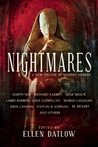
BOOK REVIEW: Nightmares ed. by Ellen Datlow

Nightmares: A New Decade of Modern HorrorNightmares: A New Decade of Modern Horror by Ellen Datlow
My rating: 5 of 5 stars

Amazon page


This is an anthology of 24 horror short stories. Horror is a simplification; there are several cross-genre pieces (e.g. dark sci-fi, dark historical fiction, tales of the weird, etc.) as well as stories that have a realistic—but dark—tone. However, it’s all fiction linked by a visceral darkness.

These stories have all been previously published in various magazines or collections, and they were all written during the decade between 2005 and 2015.

1.) “Shallaballah” by Mark Samuels: A celebrity awakens in a hospital after a drunken crash that necessitated reconstructive surgery. It slowly dawns on him that the clinic isn’t what it seemed. This is an intriguing and distinctive tale.

2.) “Sob in the Silence” by Gene Wolfe: A horror writer has the family of an old friend to his house. He tells them that it’s the “least haunted house in the Midwest,” despite a gruesome history that suggests a place where evil comes to play. This was among my favorites. The horror writer character is well-developed.

3.) “Our Turn Too Will One Day Come” by Brian Hodge: It’s never good when someone calls you in the middle of the night and asks you to bring a shovel. But sometimes it’s even worse than expected. I’ve read this one before. It’s a great premise and an engaging story. This anthology includes both stories that feel like they are realistically set in the world we know, as well as speculative fiction pieces. This feels like the former, but makes a shift.

4.) “Dead Sea Fruit” by Kaaron Warren: There’s a myth among anorexics of the Ash Mouth Man, whose kiss robs its victims of the ability to taste pleasant flavors. A dentist of a different ilk takes up with this mythical man. I’d place this one more as a tale of the weird than horror, but it’s on the dark side of that sub-genre. It’s well-written.

5.) “Closet Dreams” by Lisa Tuttle: An abduction and abuse victim tells her story of being locked in a closet, but no one believes the part about her fantastic escape. This is a gritty and evocative piece.

6.) “Spectral Evidence” by Gemma Files: This is an unconventional approach to story. The information content is conveyed by way of a file from a parapsychology institute after a coroner’s inquest of a psychic medium’s death proves inconclusive. I sometimes like this approach. Reading through a file fills a kind of voyeuristic pleasure, and offers the challenge of piecing together events oneself. This story was solid, but not my favorite of the bunch.

7.) “Hushabye” by Simon Bestwick: A man out walking in the middle of the night stumbles onto the scene of a young girl under attack. Strangely, there seems to be a metallic substance pouring between the girl’s mouth and that of her attacker. This is crime fiction with a supernatural twist.

8.) “Very Low-Flying Aircraft” by Nicholas Royle: A Royal Air Force air crew in Zanzibar shows off for some ladies with dire consequences. This one is in the realist vein. It feels like a story one might be told in a bar by a particularly gifted storytelling veteran.

9.) “The Goosle” by Margo Lanagan: This tale seems to take place in the Hansel and Gretel universe. An unsavory merchant of the illicit woos a witch, and, surprisingly, it doesn’t work out as he’d hoped. This is a compelling story in the dark fairy tale sub-genre.

10.) “The Clay Party” by Steve Duffy: This one has a 19th century vibe, not only because that’s when it’s set, but because it’s conveyed through documentation as was a popular approach of the era. In this case it’s a newspaper’s reprinting of the diary of an individual from an ill-fated cross-continental convoy. (i.e. “Clay Party” as in Donner Party.) The diary approach worked well, being both easy to follow and having an authentic feel.

11.) “Strappado” by Laird Barron: Two hip and cosmopolitan lovers attend the performance art event of an artist deemed trendy and edgy by the in-crowd. The performance doesn’t work out for everybody. This was evocative, and was, perhaps, a cautionary tale about being too up for trendy and edgy activities.

12.) “Lonegan’s Luck” by Stephen Graham Jones: A snake-oil salesman knows something that the locals don’t, and it’s not about the efficacy of his product. This is another of my favorites. It’s a Western with a supernatural twist.

13.) “Mr Pigsny” by Reggie Oliver: A Professor with some mobster relatives attends the funeral of one such gangster. The Professor is willed a Ming vase that he’d once admired, but ends up tangled up in the dealings between the deceased and a mysterious “spiritualist.” The spiritualist, Mr. Pigsny, is masterfully portrayed as both a quiet professional and spine-tinglingly creepy.

14.) “At Night, When the Demons Come” by Ray Cluley: A big, strong man and a little girl meet, and team up with, a party of four survivors in a demon-infested dystopian wasteland. Whether the odd pairing are truly allies, or, if not, what type of threat they present is not as was expected and made for a thought-provoking piece. I found this tale to be clever, and it revealed an unexpected theme.

15.) “Was She Wicked? Was She Good?” by M. Rickert: A little girl makes enemies by cruelly dispensing with little forest creatures–fairies, perhaps. Her parents debate what they should do to stave off the wrath of their neighbors of another species. The title says it all. This is one of those stories that tactically reveal information to keep the reader wondering.

16.) “The Shallows” by John Langan: It’s not so easy for me to describe this story. There’s a lot going on. It’s what I’d call busy. The part of the story that resonated with me was about a stray dog that a family adopts only to have its (apparently-negligent) owner come and retrieve it. This was among my least favorite entries, but it was solidly written.

17.) “Little Pig” by Anna Taborska: A newly-wed man waits at Heathrow airport for the grandmother of his Polish wife. That present-day event brackets a flashback from the grandmother’s youth that helps to explain what seems like inexplicable old-world behavior. This is one of the shortest pieces, but it’s an endearing tale–even with the dark events of the flashback.

18.) “Omphalos” by Livia Llewellyn: This is an intense story about a family of four who go on a vacation that’s a sham. The mom and dad pretend they are taking the kids to Canada in their RV only to detour into remote parts of the Pacific Northwest. The depravity quotient of this family is high. Much of the story is brutally realistic, but there is a supernatural element with regards maps, which appear to be marked up differently to each member of the family. The maps play an important role in the unfolding of the story. This story is well-written and gripping, but, unlike the bulk of the works herein, it’s not PG-13.

19.) “How We Escaped Our Certain Fate” by Dan Chaon: This is the story of a father and son living in a zombie apocalypse-ish—after the mother died. That may make this sound like one of the more derivative stories in the bunch, but the author creates a unique zombie “apocalypse.” This isn’t the dark and gritty world of Cormac McCarthy’s “The Road.” Here, the zombies are more of an inconvenience—like wild animals that get into one’s garden–rather than a swarming threat to life and limb. This is both an interesting take on the sub-genre, and an intriguing commentary on humanity.

20.) “That Tiny Flutter of the Heart I Used to Call Love” by Robert Shearman: A girl requires the execution of her dolls from both her brother and later her new husband. She says she cannot love them fully as long as the dolls are there taking in her love. Creepy, that’s the word for this one. It has a lower body count (of living things) than many of the stories, and yet it’s as disturbing as they come.

21.) “Interstate Love Song” by Caitlin R. Keirnan: A couple of homicidal girls pick up a hitchhiker as they ride cross-country. There are some interspersed flashbacks that show that this isn’t their first rodeo, but, still, it doesn’t go like the others. This is a page-turner.

22.) “Shay Corsham Worsted” by Garth Nix: Wouldn’t it suck to die because the post-Cold War bureaucracy didn’t have institutional memory of one of its doomsday technologies—especially one that lived next door? This is one of my favorites. Besides the fear factor, this story has a dry humor that I found amusing. Like a few of the others, this story manages to make a commentary without detracting from its entertainment value.

23.) “The Atlas of Hell” by Nathan Ballingrud: A bookstore owner / occultist who used to work for a crime boss is strong-armed back into the life. What he stumbles into is even worse than he expected, but he makes a decision that will dramatically change his life. This was also an engaging story as well as a strong entrant in the anthology.

24.) “Ambitious Boys Like You” by Richard Kadrey: A couple of burglars badly overestimate the ease of robbing an old man and what will come of it. It starts out a bit like a creepy version of “Home Alone”–with an old man instead of an eight-year-old, but then takes a turn into territory darker than Wild Bill of “Silence of the Lambs” fame.

This is a strong collection. There are several stories that have that cinematic quality that make for gripping reading. There weren’t any pieces that I didn’t at all care for, and there were several that hooked me.

I’d recommend this collection for those who like dark fiction.

View all my reviews

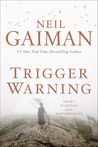
BOOK REVIEW: Trigger Warning by Neil Gaiman

Trigger Warning: Short Fictions and DisturbancesTrigger Warning: Short Fictions and Disturbances by Neil Gaiman
My rating: 5 of 5 stars

Amazon page


“Trigger Warning” is a collection of 24 pieces of short fiction and poetry written by Neil Gaiman. If you know what a trigger warning is (I had to look it up) you may be thinking this collection is darker, edgier, and/or more risque than it really is. (For those who don’t want to look it up, a “trigger warning” is a blurb that intimates that a work has words or images that may induce a traumatic reaction.) However, these stories are Gaiman to the core, which means they are humorous, clever, and often quirky; but they are unlikely to throw one into catatonia or an apoplectic fit. The pieces include Sherlock Holmes and Doctor Who stories, spin-offs from Sleeping Beauty and American Gods, as well as a few homages to other authors, including Ray Bradbury, Gene Wolfe, and William Blake.


Without further ado, I’ll give a rundown of the included works:


1.) “Making a Chair”: This is a poem about writer’s block.

2.) “A Lunar Labyrinth”: An homage to Gene Wolfe’s work, “Solar Labyrinth.” This short story is about a maze that was destroyed, and that wasn’t to be walked on full moon nights.

3.) “The Thing About Cassandra”: This is among my favorite stories in the collection. What happens when your friends and family start bumping into the girl who you made up as a girlfriend back in school?

4.) “Down to a Sunless Sea”: This was written for a water-themed event. It’s about a person riding in a lifeboat down the Thames toward the sea.

5.) “The Truth is a Cave in the Black Mountains”: This one was inspired by an island off Scotland called Skye, but the story is fantasy with magic elements. A man strikes out in search of revenge and closing, regarding a daughter who he thought had run away. This is one of the most engaging pieces in the collection.

6.) “My Last Landlady”: This is a story, conveyed in poetic form, about a mean landlady.

7.) “Adventure Story”: In the Introduction, Gaiman calls this a companion piece to his novella “The Ocean at the End of the Lane.” However, I didn’t make that connection, (and I’ve read that story.) At any rate, it’s a great story about an intriguing artifact left behind by a [deceased] father whose stories were always painfully dull. It’s told by a mother to a son who is incredulous that his, seemingly milquetoast, father lived through such a fascinating event.

8.) “Orange”: Like several of the pieces in this book, this one is unconventional / experimental. However, it’s creative, and it works. It consists of answers to a questionnaire, from which the reader pieces together the story. One doesn’t have the questions, but most of them are fairly clear from the context of the answer.

9.) “Calendar of Tales”: This is what it sounds like, 12 stories each matched to a month. It’s another of the unconventional and unusual pieces. Each story was spun from a tweet response to a question about a given month of the year.

10.) “The Case of Death and Honey”: Few characters in the public domain have spurred as many offshoot stories as Sherlock Holmes, and this is Gaiman’s entry in the pool. Holmes’s interest in bee-keeping is central to the story.

11.) “The Man Who Forgot Ray Bradbury”: An homage to Bradbury. If one forgets a person, did they ever exist?

12.) “Jerusalem”: This work was influenced both by a poem by William Blake and a trip the author took to said city. The story is about a couple of tourists and the unique mental illness associated with this locale.

13.) “Click-Clack the Rattlebag”: A scary bedtime story told by a child about a different kind of monster.

14.) “An Invocation of Incuriosity”: A story about one of the strange and colorful people one might meet at a flea market.

15.) “’And Weep, Like Alexander’”: A lighthearted story about an “un-inventor,” one who keeps you from having flying cars and all the other promised technology from sci-fi.

16.) “Nothing O’Clock”: This is a “Doctor Who” story. It’s not necessary to be familiar with the series (necessary backstory is provided), but it could make it more appealing—i.e. the inside joke effect.

17.) “Diamonds and Pearls: A Fairy Tale”: This is from “Who Killed Amanda Palmer?” Palmer is a cabaret-punk singer/songwriter and Gaiman’s wife, and the aforementioned booklet consists of a series of photos of Palmer looking deceased with brief stories to go along. This is one of the stories that could stand alone. It’s a fairy tale of the adults-only variety.

18.) “The Return of the Thin White Duke”: Another fairy tale, this one about a Duke that strikes out on a quest for adventure in order to rescue a Queen who doesn’t need rescuing.

19.) “Feminine Endings”: A story about a human statue—by that I mean one of those people who deck themselves out and stand on a box in the town square in touristy places in many parts of the world.

20.) “Observing the Formalities”: A poem about one who doesn’t get invited.

21.) “The Sleeper and the Spindle”: A take on the story of “Sleeping Beauty,” but from a different point of view.

22.) “Witch Work”: This is another poem. I believe it’s the only one that’s not free verse. It’s about the life of a witch.

23.) “In Relig Odhrain”: This is a true story about a saint, written in free verse.

24.) “Black Dog”: This is a spin-off from the novel “American Gods” and it features that book’s protagonist, Shadow. You don’t need to have read that book, but you might have a greater affinity for the story if you have. It should also be noted that this is the one piece that is original to this collection, and it’s one of the most substantial pieces in the collection. i.e. it gives fans a reason to pick up the book even if they’ve read a lot of it from the original source.


I enjoyed this book. Gaiman is a masterful story-teller. Whether it’s one of conventional pieces based in established worlds (e.g. “Doctor Who” or that of Sherlock Holmes) or one of the off-the-wall, experimental pieces, these stories and poems are a pleasure to read.

View all my reviews

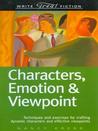
BOOK REVIEW: Characters, Emotion & Viewpoint by Nancy Kress

Characters, Emotion & Viewpoint: Techniques and Exercises for Crafting Dynamic Characters and Effective Viewpoints (Write Great Fiction)Characters, Emotion & Viewpoint: Techniques and Exercises for Crafting Dynamic Characters and Effective Viewpoints by Nancy Kress
My rating: 4 of 5 stars

Amazon page


This book is about how to write characters with sufficient depth that readers will follow them through to the end of a story. As the title suggests, there are three major components to the book: character building, emotional considerations, and point of view. A story requires a character who needs or wants something and faces barriers to that goal. The character has to be someone who the reader is interested in seeing through a process that involves inching toward a goal while being repeatedly beaten back. This doesn’t mean the character has to be likable, but if the character is unrealistic and uninteresting readers won’t get far. (In other words, they don’t have to like the character, but they do have to feel some sort of way about them.) Facing barriers to one’s goals creates emotional states that must feel authentic. If a character doesn’t respond emotionally to events, then the story is likely to feel flat (unless one has built a hilarious Sheldon Cooper-like character on purpose.) The perspective from which the reader learns of events is critical because it determines what information the reader is privy to, and—in particular—information about thoughts and emotions that are sometimes falsely portrayed.

Of the sixteen chapters that comprise the book, the first seven explore character development. Chapter 1 describes character in terms of general types. The book goes on to discuss the importance of how one introduces key characters. The next three chapters drill down into the challenge of building an authentic character: 1.) What is the character like deep down? 2.) Are the motives of the character clear-cut or complex? 3.) How can one show that the character has changed over the course of the story, and, if they don’t change, will the reader be satisfied? Chapters 6 and 7 investigate specialized types of characters (i.e. genre characters such as in romance, mystery, thriller, or sci-fi [Ch. 6] and in humor [Ch.7.])

Chapters 8 through 11 examine emotion and how it’s conveyed to the reader. The means by which writers communicate emotion include: dialogue (Ch. 8), metaphor, symbolism, and sensory experience (Ch.9.) Chapter 10 delves into special cases that are common in fiction but which require unique consideration (love, fighting, and dying.) Frustration has its own chapter (Ch.11,) and that may seem odd, but one must remember that a story is one barrier after another being erected in the way of the character’s pursuit of his or her objective.

The next four chapters present information to help the writer evaluate different approaches to viewpoint. Not only are there various pros, cons, and considerations one must take into account when deciding upon viewpoint, each approach has a several variations. The first of these chapters (Ch. 12) outlines the broad-based considerations. The next three chapters deal with first person (Ch. 13), third person (Ch. 14), and omniscient points of view (Ch. 15,) respectively. (The rarely used 2nd person point of view is also discussed briefly, but largely as a warning.) The last chapter explores how to make it all work by way of what Kress calls the “fourth persona.” Early in the book, one is told that the writer must simultaneously embody three personas (i.e. the writer, the character, and the reader.) Kress’s “fourth persona” is that of the critic, and it becomes necessary once one has drafted a story and character.

The book has a few extras. At the end of each chapters there are several (usually 4 to 6) exercises to help writers understand the concepts through practice. The chapters each have summaries, and at the end of the book there’s a summary in the form of a checklist. That is about it for ancillary features. There are a couple of graphics in the form of pictures of a “mini-bio” and an “emotional mini-bio.” These are single page fill-in-the blank summaries that help one build a character that has depth and an authentic feel.

I found this book to be interesting and educational. The writer uses examples from a number of popular commercial and literary fiction authors. There’s no real need to be familiar with any particular author, but being familiar with them might present one with additional insights. The book is readable.

I would recommend this book for writers of fiction.

View all my reviews

BOOK REVIEW: Piriformis Syndrome by Loren Fishman, M.D.

Piriformis Syndrome: Diagnosis, Treatment, and Yoga: Pain in the ButtPiriformis Syndrome: Diagnosis, Treatment, and Yoga: Pain in the Butt by Loren Fishman
My rating: 4 of 5 stars

Amazon page


This short book (<50pp.) describes piriformis syndrome, what causes it and how it’s diagnosed and treated. Piriformis Syndrome is a malady in which a nerve is pinched by the piriformis muscle. Because of the way pain (and other sensations) radiate, it’s not necessarily easy to differentiate this syndrome from a low back injury. However, the descriptions of the specifics of this condition, and the test used to diagnose, it may give one insight as to whether one is looking in the right direction for the cause of one’s butt and leg pain.

One nice feature of this book is that it explains how yoga can be used both as part of the treatment regimen and as a preventive measure. The yogic treatment consists of just four classical postures of Hatha Yoga: Janu Shirshasana (head to knee pose), Parivrtta Trikonasana (twisted triangle pose), Matsyendrasana (a simple twisting pose named for a sage), and Parivrtta Parsvakonasana (twisted side angle pose.) However, yoga teachers who have students who’ve been diagnosed with this condition will find it nice that the book gives modifications and clarifications pertaining to use of the postures to help such people.

There are seven chapters in the book. The first describes the condition and its cause. The second chapter explains the connection between the condition of piriformis syndrome and the symptom of sciatica. Chapter three clarifies the ways in which this condition may be misdiagnosed, and this is followed up by the chapter that shows how it is diagnosed by both physical examination and by imaging technology. Chapter five gives a basic overview of the available treatment options including injections, drugs, physical therapy, surgery, and yoga. The next chapter talks about the state of research. The last chapter explores the yoga asana that can be used to help treat or prevent piriformis syndrome. There are a few graphics. These include line drawings such as of the diagnostic physical exam, and photos of modified versions of the yoga postures.

I’d recommend this book for those who’ve been diagnosed with this ailment, who believe they might have it, but also for yoga teachers who are interested in expanding their understanding of the afflictions of which their students may suffer—so as to be prepared to help them or, at least, not hurt them.

View all my reviews

BOOK REVIEW: Astrobiology by David C. Catling

Astrobiology: A Very Short IntroductionAstrobiology: A Very Short Introduction by David C. Catling
My rating: 4 of 5 stars

Amazon page


This book explains how life came about on Earth and what that might mean for life elsewhere in the universe. It may seem odd that life’s origins on Earth is relevant to this otherwise extraterrestrial sub-discipline, but that bit of biology offers insight into what is necessary for life—at least life as we know it. There is also the question of whether life originated entirely within Earth’s primordial soup, or whether there was an extraterrestrial ingredient necessary.” [Note: we aren’t talking about an advanced civilization placing creatures here so much as raw materials frozen in space dust or a meteorite. This is the idea of panspermia that once had a substantial following.]

If you’re interested in whether there might be life beyond our planet, this little introduction will give you the basic insights into where it might be found and what it might be like. Though the book deals with a highly technical subject, it’s written with the non-expert in mind.

The book consists of eight chapters. The first chapter defines the subject of “astrobiology,” which is important as it’s not exactly a household term—and is arguably an ill-chosen term to boot. However, chapter one also defines life and outlines what are the necessities for the development of life. The second chapter explores what type of celestial body life might reside upon–or in. We tend to think narrowly of other planets like ours, but what about moons or meteorites, or even space dust? More broadly, this chapter gives the reader a primer on cosmology and astronomy as is relevant to the development of life. Chapter three evaluates the conditions which proved conducive to spawning life on Earth. This is followed by a chapter that looks at how the Earth provided an environment in which life could flourish, even allowing for the evolution of intelligent lifeforms. Chapter five explains how genes and the chemistry of life contribute to the perpetuation of life.

Chapters six and seven both answer the question of where we might expect to find extraterrestrial life. The former discusses promising locales for life within our solar system and the latter is about the space beyond. Needless to say, chapter six is a great deal more specific; it actually proposes nine celestial bodies in the solar system that could theoretically harbor life, and expounds upon which are most and least promising and why. Chapter seven is more about what kinds of places we might expect to find life, and where we might direct our investigations. While scientists are finding new planets all the time, it is a relatively new capability and these distant bodies are only discovered through indirect evidence. The last chapter is a brief one that discusses “controversies and prospects.” With respect to controversies the primary contender is the Rare Earth hypothesis that suggests that life may not be so common as we expect by virtue of the massive number of solar systems out there. As for prospects, that is just a couple of pages on the most likely contenders at the time the book was written.

The book has about a dozen illustrations, mostly explanatory diagrams and all in black-and-white. It also has a two-page further reading section. However, that’s it as far as ancillary matter is concerned.

I found this book to be interesting and a good way to get up to speed on the basic concepts necessary to understand the search for extraterrestrial life. I’d recommend it for others who’d like to do the same.

View all my reviews

BOOK REVIEW: Lucid Dreaming by Charlie Morley

Lucid Dreaming: A Beginner's Guide to Becoming Conscious in Your DreamsLucid Dreaming: A Beginner’s Guide to Becoming Conscious in Your Dreams by Charlie Morley
My rating: 4 of 5 stars

Amazon page


Lucid dreams are those in which the dreamer is aware he or she is in the dream and can interact with the dreamscape. Most people experience lucid dreaming only as a happy accident. Some people dream lucidly in their youth, but never as an adult. Some people become aware they’re dreaming under specific conditions, e.g. on a certain medication. However, lucid dreaming has been practiced in some traditions for centuries, most notably by Tibetan Buddhists (though chapters 5 & 6 demonstrate that it’s much broader than just the Tibetans.) Furthermore, having confirmed lucidity in dreams in sleep laboratories, scientists have moved to advance our understanding of the phenomena using the scientific method and by taking advantage of the latest brain imaging technologies.

Charlie Morley has written a couple books on the subject as well as giving a well-received TEDx Talk on the subject. Morley studied under a Tibetan lama as well as studying up on the science of the phenomenon.

There are eight chapters in this book. The first three chapters constitute part one, the basics. This part introduces one to the subject of lucid dreaming, considers some of the reasons why people get into it, and explains how to recognize one is in a dream. The remaining five chapters form the second part, which is about going deeper with one’s practice. The second part explores what one may see in a dream, and how one can use the experience of being lucid for self-improvement. Lucid dreaming is one of the few access points to one’s subconscious mind. The second part also charts the development of lucid dreaming in both the West and the East, as well as offering suggestions about how nutrition may help in one’s practice.

The book is written as an instructional manual, and offers “toolboxes” of techniques to help advance one’s lucid dream practice by teaching one to remember one’s dreams, understand the phases of sleep, recognize one is in a dream, achieve lucidity, and know what to do once one is lucid in a dream. These are handy summaries of the lessons taught in greater detail in the text. All of the chapters but 5 and 8 have one of these toolbox summaries. There are also frequent text boxes of strange but true facts about lucid dreaming, tips from experienced lucid dreamers, case studies, and stories used to make relevant points about lucid dreaming. There are no graphics, but they aren’t missed.

I found this book to be useful and interesting. It’s readable and logically organized. I’d recommend it for anyone interested in developing a lucid dreaming practice—particularly if one is starting from scratch. There are a number of books on the subject, but many will be too ethereal to be of value to a new practitioner, but Morley writes in an approachable fashion and organizes the book to help one get into a practice as efficiently as possible.

View all my reviews

BOOK REVIEW: William Blake: Selected Poems ed. Paul Butter

Selected PoemsSelected Poems by William Blake
My rating: 4 of 5 stars

Amazon doesn’t carry this edition.

So, e-Bay

Blake’s “The Tyger” is one of my favorite poems, and one of the few that I’ve bothered to memorize. Even if the words made no sense, they sound beautiful together, but not only do they make sense they forge powerful imagery. Blake wrote many poems that managed to be both pleasing to the ear and meaningful.

This collection consists of about 80 poems and fragments (of longer poems) that are pulled from Blake’s collections. Much of Blake’s work is about nature, though the worlds of man and the divine also feature prominently. With respect to the human world, poems about children are particularly common. Most of the poems and partials fit on a single page or two, but some are as short as a four-line stanza and others are as long as a dozen pages.

The compiler of the poems, Peter Butter, doesn’t feel the need to pile in rambling prologues and introductions—a plus in my opinion. The only ancillary matter consists of two timelines: one of Blake’s life, and one of with key events that happened over the course of his life. I will say that these two timelines are confusingly arranged in the edition that I read. They are two pages each, with the pages of each facing each other. So, as one flips, one reads a page of life history, one of world history, one of Blake’s history, and one of world history. Either rearrangement of pages or formatting changes would fix this right up.

This is a great little collection with which to get a taste for Blake. I’d recommend it for those who want some of his classics and some others, but without the need to wade through unabridged collection—in case he turns out to not be your cup of tea.

I’ll leave you with one of my favorite lines from the collection: “Wisdom is sold in the desolate market where none come to buy,”

View all my reviews

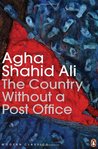
BOOK REVIEW: The Country With No Post Office by Agha Shahid Ali

The Country Without a Post OfficeThe Country Without a Post Office by Agha Shahid Ali
My rating: 5 of 5 stars

Amazon page

This is a collection of 27 poems about life in conflict-riddled Kashmir. Kashmir is a territory in the Himalayas that’s governed by India, but claimed by both India and Pakistan—and, it should be noted, has a significant population of residents that want to be part of neither country. In other words, there are some who’d like to see an independent Kashmir. However, at the moment Kashmir is one portion of one of India’s 29 states, Jammu and Kashmir—a state which is, itself, tripartite (Hindu Jammu, Muslim Kashmir, and Buddhist Ladakh.)

It’s a telling quote from Tacitus with which the author begins the collection. Solitudinum faciunt et pacem appellant. I won’t claim that I didn’t have to look this up, but it means: “They make a desert, and call it peace.” The first poem echoes variations on that quote.

There are a range of poetry styles within this collection, including: rhyming verse, free verse, poetic prose, and ghazal. A ghazal is a Middle Eastern style of lyric poem which has a pattern of rhyme and is metered to be set to music; there are several in this collection. Some of the poems are sparse and some are wordy, and variety is the order of the day.

The 27 poems of this collection are divided among five parts. The book is brief (under 100 pages), and it contains only a prologue and notes (some of which are interesting) with respect to ancillary matter.

This collection paints a portrait of war and life in a war-torn locale. It’s as much the latter as the former. The title poem, “The Country With No Post Office,” suggests the sapping nature of life where the institutions of governance and civil society have broken down.

I’d recommend this collection for those who enjoy poetry, but also for those interested in the conflict in Kashmir.

View all my reviews

BOOK REVIEW: Krav Maga: Real World Solutions to Real World Violence by Gershon Ben Keren

Krav Maga: Real World Solutions to Real World ViolenceKrav Maga: Real World Solutions to Real World Violence by Gershon Keren
My rating: 4 of 5 stars

Amazon page


This is a comprehensive guide to the Krav Maga Yashir style of Krav Maga. The fact that there are multiple styles of Krav Maga was news to me. Yashir means “straight” or “direct” and this system was founded by the book’s author, Gershon Ben Keren, drawing heavily upon Imi Lichtenfeld’s original program, but modified to make it relevant for a modern, civilian practitioner. (To offer an example of said modification, Lichtenfeld’s system presumed that the fighter was an infantryman with a pack on his back, and so the original Krav Maga avoided movements that would be hazardous when so loaded down, but that are feasible for the average civilian on the street.) The author has a scholarly background in the psychology of violence, and emphasis on the realities of violence is a recurring theme.

The book follows a typical format for martial arts books. The early pages discuss the philosophy and approach of the system in detail. The book then proceeds to discuss basics such as stance and the fundamentals of punching and kicking. Finally, it delves into progressively more challenging self-defense scenarios (unarmed, armed, multiple attacker, and from various directions) and the counters that the system offers.

The book succeeds in its objectives. The photographs are well-done and provide the requisite clarity. One particularly nice feature is that the scenario photographs are taken in realistic settings so as to reinforce the importance of recognizing and using one’s environment. Key concepts are reiterated throughout so as to facilitate learning. The organization is systematic and builds logically through progressively more challenging situations.

The biggest criticism is of some of the book’s repetitiveness. Repetitiveness is not necessarily a bad thing. It can be an important tool for learning, particularly with ideas that need to be thoroughly ingrained—e.g. self-defense concepts. However, some of the repetition in this book is more wasteful than beneficial. The scenario sections feature a textual description of the attack / defense event, and then there’re captioned photos that visually portray how the scenario plays out. The captions repeat much of the text, and they do it so close to the original text that it’s hard to imagine it being much more than an annoyance.

I’d recommend this book for someone who is considering whether to take Krav Maga classes, or for martial artists looking for insight in to the nature of this system. It has some sound general advice on self-defense that those interested in that topic might find useful.

View all my reviews