PROMPT: Advice

Daily writing prompt
What advice would you give to your teenage self?

Eat more veggies, mind your joints, beauty is everywhere, all is impermanence, and very few things in life actually matter (see item 4.)

She Walks in Beauty by Lord Byron [w/ Audio]

She walks in beauty, like the night
   Of cloudless climes and starry skies,
 And all that's best of dark and bright
   Meets in her aspect and her eyes,
 Thus mellow'd to that tender light
   Which heaven to gaudy day denies.

One shade the more, one ray the less
   Had half impair'd the nameless grace
 Which waves in every raven tress
   Or softly lightens o'er her face,
 Where thoughts serenely sweet express
   How pure, how dear their dwelling-place.

And on that cheek and o'er that brow
   So soft, so calm, yet eloquent,
 The smiles that win, the tints that glow
   But tell of days in goodness spent,--
 A mind at peace with all below,
   A heart whose love is innocent.
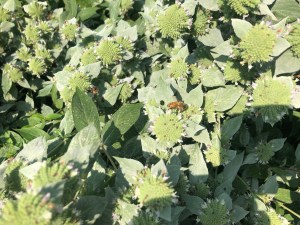
Beauty-Blind Bees [Haiku]

a plain, green plant
crawls with bees-o-plenty:
despite no bright blooms.
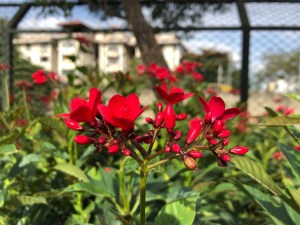
Buds & Blossoms [Haiku]

buds & blossoms,
in vibrant red, gussy up
a dreary cityscape.

Ubiquity [Blank Verse]

I ran into a seeker from far lands,
 and asked him what he sought in my hometown.
  He said he sought what's true and beautiful.
  I asked him if it was here, more than his home?

"Sometimes you have to walk a thousand miles
  to find that which resides beneath your nose.
   To unlock truth, the tumblers must align
    from the shake of experience and time."
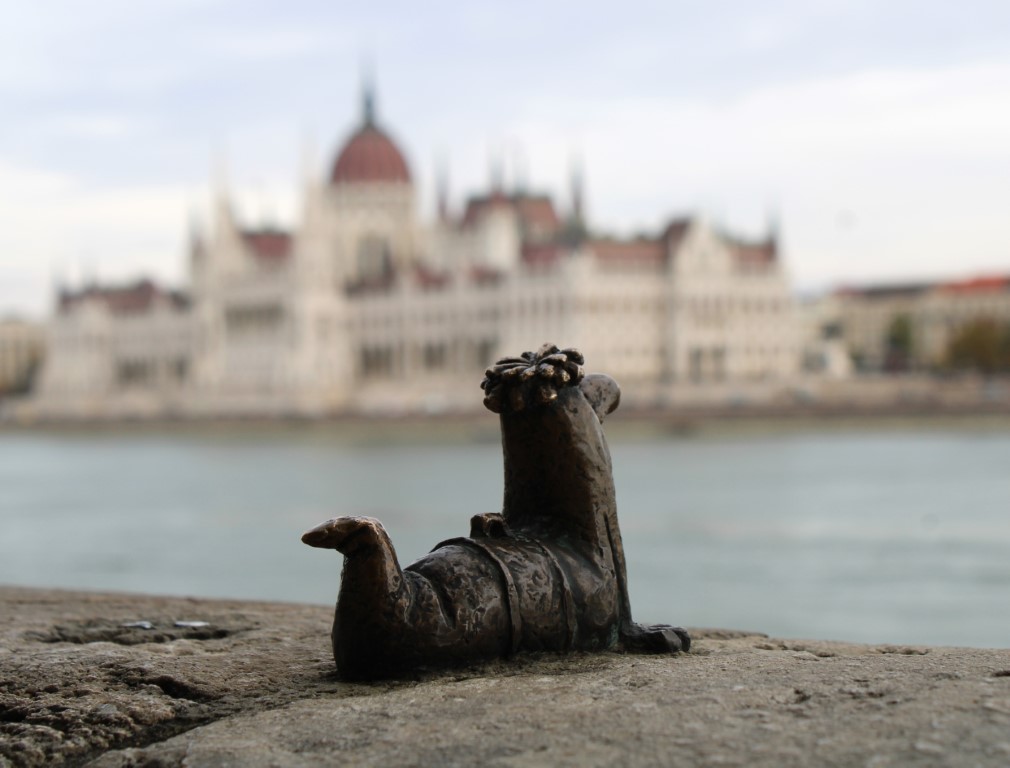
Jolie Laide [Common Meter]

I've seen in ordinary eyes
  a special twinkling glow.
 In rough and sinewy muscle
  I've seen a grace in throe.

From rotund torsos, I have seen
  a lithesome prance or strut.
 I've seen a thing called character,
  in schnozzes that kink or jut.

If beauty below the surface,
  it finds you splendor-blind.
 Then defect 's not in the object
   but in the viewer's mind.
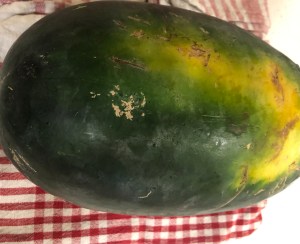
Fruit Beauty [Common Meter]

The flawless deep green melon rind
houses a pink, bland flesh.
The rind - pitted, yellowed, lumpy -
hides fruit: red, sweet, & fresh.

BOOK REVIEW: Beauty: A Very Short Introduction by Roger Scruton

Beauty: A Very Short IntroductionBeauty: A Very Short Introduction by Roger Scruton
My rating: 5 of 5 stars

Amazon.in Page

This isn’t so much a book about what beauty is as where we find it, and in what kind of traits we find it, including the question of whether all that is aesthetically pleasing is beauty (or is beauty one element among multiple sources of aesthetic pleasure.) Scruton proposes four major locations of beauty: the human form (and face,) nature, everyday objects, and art. Each of these four has its own chapter (ch. 2-5,) and those chapters form the core of the book. Other chapters examine related questions such as: whether (/how) we can judge beauty, whether it means anything to say someone has good or bad taste, and how / why we find aesthetic appeal in places often consider devoid of beauty (e.g. the profane, the kitsch, the pornographic, etc.)

I found this book to be well-organized and thought-provoking. I liked that the author used a range of examples from literature and music as well as from the graphic arts. (Though the latter offer the advantage of being able to present the picture within the book — which the book often does.) I felt that the questions were framed nicely and gave me much to think about.

Some readers will find the occasional controversial opinion presented gratuitously to be annoying, as well as the sporadic blatant pretentiousness. I forgave these sins because the overall approach was analytical and considerate.

If you’re looking for an introductory guide to the philosophy of aesthetics and beauty, this is a fine book to read. [Note: there is a VSI guide (from the same series) on aesthetics that (I assume) has a different focus (though I haven’t yet read it.)]


View all my reviews

BOOK REVIEW: The Critic as Artist by Oscar Wilde

The Critic as Artist: With Some Remarks Upon the Importance of Doing NothingThe Critic as Artist: With Some Remarks Upon the Importance of Doing Nothing by Oscar Wilde
My rating: 5 of 5 stars

Amazon.in Page

Free to Read Online

In this dialogue, the characters of Ernest and Gilbert reflect upon the value, nature, and limits of artistic criticism. Ernest serves largely as foil and questioner, taking the everyman view that critics are failed artists and that criticism is a puny endeavor that isn’t good for much. Gilbert, on the other hand, defends criticism of art as an art unto itself, and a difficult one at that, one that requires revealing elements and ideas of the artistic piece that the artist didn’t put in the piece in the first place. Throughout, Gilbert lays down his counterintuitive bits of wisdom about the job of the critic, the characteristics of good critics, and – also – about artists and art, itself. [Ideas such as that all art is immoral.]

Oscar Wilde was famed for his wit, quips, and clever – if controversial – turns of phrase, and this dialogic essay is packed with them. A few of my favorites include:

“The one duty we owe to history is to re-write it.”

“Conversation should touch everything, but should concentrate itself on nothing.”

“If you wish to understand others you must intensify your own individualism.”

“Let me say to you now that to do nothing at all is the most difficult thing in the world, the most difficult and the most intellectual.”

“Ah! don’t say that you agree with me. When people agree with me I always feel I must be wrong.”

“…nothing worth knowing can be taught.”

This is an excellent essay, and I’d highly recommend it for anyone who’s interested in art, criticism, or who just likes to noodle through ideas. You’re unlikely to complete the essay as a convert to all of Gilbert’s tenets, but you’ll have plenty to chew on, mentally speaking.


View all my reviews

BOOK REVIEW: Hippias Major [a.k.a. Greater Hippias] by Plato

Hippias MajorHippias Major by Plato
My rating: 5 of 5 stars

Amazon.in Page

Socrates questions the arrogant sophist, Hippias, about the nature of beauty. The dialogue begins, as do most, with a meeting and pleasantries. This involves Socrates’ seemingly sarcastic praise of Hippias (we’re given no indication that Hippias sees the sarcasm, but – given the degree to which the sophist is in love with himself – that’s no surprise.) It’s possible Socrates is being sincere, but given the views attributed to him elsewhere, it seems uncharacteristic that Socrates should truly think Hippias wise because the sophist rakes in cash for making eloquent speeches.

The dialogue plays out with Hippias offering a range of unacceptable “definitions” of beauty. Hippias first presents a set of examples of things which are beautiful. This, of course, is unacceptable because if there is some common property of these varied entities, Socrates believes that property should be definable such that a person could see how the trait applies to other things. There are a series of other false starts involving goldenness, goodness, usefulness, popular agreement about what is beautiful, and a combination or two of the aforementioned.

Finally, Socrates suggests a definition of that which is pleasing to the eyes or to the ears. The discussion peters out after this definition is shown to be incomplete because pleasantness to eyes and to ears still begs the need of a common characteristic, as well as the fact that there are many concepts that are called beautiful that aren’t sensory experiences at all (e.g. a beautiful idea.)

This dialogue is more satisfying than Lesser Hippias, but is by no means one of the best. However, it does encourage thought about beauty, as well as about how both members of a set can have a characteristic that each does not have individually. If you’re interested in aesthetics, check it out.

View all my reviews
