“Sailing to Byzantium” by William Butler Yeats [w/ Audio]

I

That is no country for old men. The young
In one another's arms, birds in the trees,
-- Those dying generations - at their song,
The salmon-falls, the mackerel-crowded seas,
Fish, flesh, or fowl, commend all summer long
Whatever is begotten, born, and dies.
Caught in that sensual music all neglect
Monuments of unageing intellect.

II

An aged man is but a paltry thing,
A tattered coat upon a stick, unless
Soul clap its hands and sing, and louder sing
For every tatter in its mortal dress,
Nor is there singing school but studying
Monuments of its own magnificence;
And therefore I have sailed the seas and come
To the holy city of Byzantium.

III

O sages standing in God's holy fire
As in the gold mosaic of a wall,
Come from the holy fire, perne a gyre,
And be the singing-masters of my soul.
Consume my heart away; sick with desire
And fastened to a dying animal
It knows not what it is; and gather me
Into the artifice of eternity.

IV

Once out of nature I shall never take
My bodily form from any natural thing,
But such a form as Grecian goldsmiths make
Of hammered gold and gold enamelling
To keep a drowsy Emperor awake;
Or set upon a golden bough to sing
To lords and ladies of Byzantium
Of what is past, or passing, or to come.

“Refined” [Poetry Style #6] by Sikong Tu [w/ Audio]

Buying fine jade in the springtime,
Enjoying rain song from within a cabin,
A taciturn scholar sits betwixt
Copses of tall, arching bamboo.
Sparse white clouds in a newly clear sky;
Swallows weave 'round trees in pursuit.
Light through leaf casts a green hue on all;
Sound of falling water, thin but near;
Flower petals fall without a sound.
But the man sits unyielding as a mum;
He writes what the scene dictates
To make a pithy book.

NOTE: The late Tang Dynasty poet, Sikong Tu (a.k.a. Ssŭ-k‘ung T‘u,) wrote an ars poetica entitled Twenty-Four Styles of Poetry. It presents twenty-four poems that are each in a different tone, reflecting varied concepts from Taoist philosophy and aesthetics. Above is a translation of the sixth of the twenty-four poems.

“To be, or not to be” [Soliloquy from HAMLET] by William Shakespeare [w/ Audio]

To be, or not to be, that is the question:
Whether 'tis nobler in the mind to suffer
The slings and arrows of outrageous fortune,
Or to take arms against a sea of troubles
And by opposing end them. To die -- to sleep,
No more; and by a sleep to say we end
The heart-ache and the thousand natural shocks
That flesh is heir to: 'tis a consummation
Devoutly to be wish'd. To die, to sleep;
To sleep, perchance to dream -- ay, there's the rub:
For in that sleep of death what dreams may come,
When we have shuffled off this mortal coil,
Must give us pause - there's the respect
That makes calamity of so long life.
For who would bear the whips and scorns of time,
Th' oppressor's wrong, the proud man contumely,
The pangs of dispriz'd love, the law's delay,
The insolence of office, and the spurns
That patient merit of th' unworthy takes,
When he himself might his quietus make
With a bare bodkin? Who would fardels bare,
To grunt and sweat under a weary life,
But that the dread of something after death,
The undiscover'd country, from whose bourn
No traveller returns, puzzles the will,
And makes us rather bear those ills we have
Than fly to others that we know not of?
Thus conscience doth make cowards of us all,
And thus the native hue of resolution
Is sicklied o'er with the pale cast of thought,
And enterprises of great pith and moment
With this regard their currents turn awry
And lose the name of action.

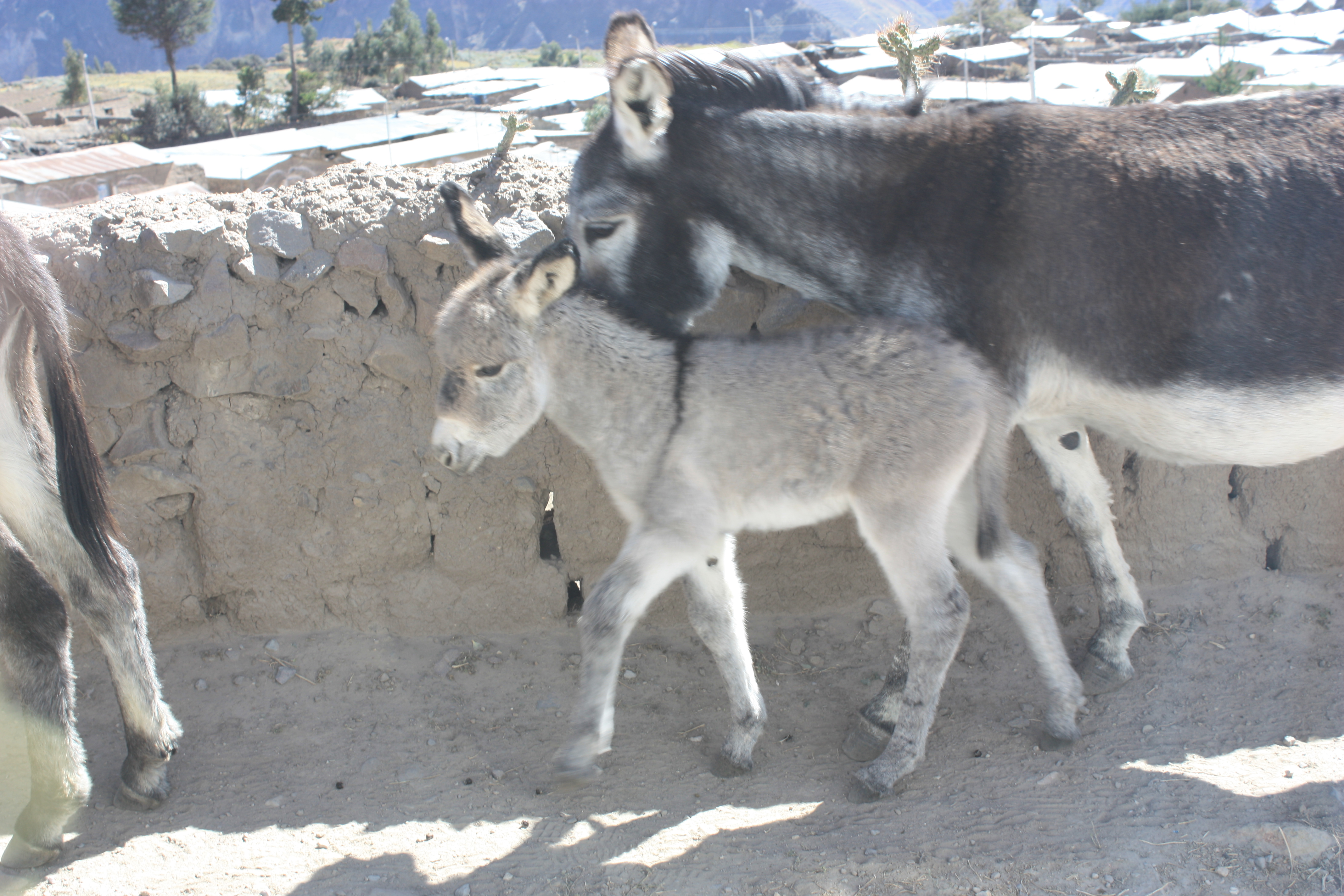
“The Donkey” by G.K. Chesterton [w/ Audio]

When fishes flew and forests walked
And figs grew upon thorn,
Some moment when the moon was blood
Then surely I was born.

With monstrous head and sickening cry
And ears like errant wings,
The devil's walking parody
On all four-footed things.

The tattered outlaw of the earth,
Of ancient crooked will;
Starve, scourge, deride me: I am dumb,
I keep my secret still.

Fools! For I also had my hour;
One far fierce hour and sweet:
There was a shout about my ears,
And palms before my feet.

“He Wishes for the Cloths of Heaven” by William Butler Yeats [w/ Audio]

Had I the heavens' embroidered cloths,
Enwrought with the golden and silver light,
The blue and the dim and the dark cloths
Of night and light and the half-light,
I would spread the cloths under your feet:
But I, being poor, have only my dreams;
I have spread my dreams under your feet;
Tread softly because you tread on my dreams.

NOTE: This poem is also sometimes entitled, “Aedh Wishes for the Cloths of Heaven.”

Five Seasonal Poems of Miura Chora [w/ Audio]

NEW YEAR

New Year's Day:
the ancient voice of a
nightingale.

SPRING

idyllic nights
and quiet days:
spring rains.

SUMMER

cold water, and
a couple of rice cakes:
it's summertime.

AUTUMN

morning glories
are tousled by
Autumn winds.

WINTER

lingering wind
and snow fall
upon me.

“Concentrated” [Poetry Style #4] by Sikong Tu [w/ Audio]

Evergreen woods and a rough-hewn shack.
The sun sets through clear sky.
I shed my hat as I walk alone,
Listening for songbirds.
No wild geese are flying
From whence my beloved lives.
But in my mind, we are close --
Close enough to touch.
Dark clouds stand over the sea,
But in moonlight river isles gleam.
My eyes and my words stop at
That great river that sprawls ahead.

NOTE: The late Tang Dynasty poet, Sikong Tu (a.k.a. Ssŭ-k‘ung T‘u,) wrote an ars poetica entitled Twenty-Four Styles of Poetry. It presents twenty-four poems that are each in a different tone, reflecting varied concepts from Taoist philosophy and aesthetics. Above is a translation of the fourth of the twenty-four poems.

“Silver” by Walter de la Mare [w/ Audio]

Slowly, silently, the moon
Walks the night in her silver shoon;
This way, and that, she peers, and sees
Silver fruit upon silver trees;
One by one the casements catch
Her beams beneath the silvery thatch;
Couched in his kennel, like a log,
With paws of silver sleeps the dog;
From their shadowy cote the white breasts peep
Of doves in a silver-feathered sleep;
A harvest mouse goes scampering by,
With silver claws, and silver eye;
And moveless fish in the water gleam,
By silver reeds in a silver stream.

“Fortuneteller’s Song” by Liu Yong [w/ Audio]

The maples have grown old;
Orchards have begun to wither.
The reds and greens have faded.
Climbing the heights, I
Feel the chill of late Autumn.
A ceaseless pounding sound
Drowns out the setting sun.
Remembered sorrows flock
To mind, making new sorrows.
We are separated
By a thousand miles;
From our two distant places
We can't even meet in dreams.
The rain stops, and the sky clears;
One can see the twelve green peaks.
Speechless, who could understand
My angst, as I stand cliffside.
I can write of my grief, but
Will the clouds bring a reply?

“All the World’s a Stage” [Soliloquy from AS YOU LIKE IT] by William Shakespeare [w/ Audio]

All the world's a stage,
And all the men and women merely players:
They have their exits and their entrances;
And one man in his time plays many parts,
His acts being seven ages. At first the infant,
Mewling and puking in the nurse's arms;
Then the whining school-boy, with his satchel
And shining morning face, creeping like a snail
Unwilling to school. And then the lover,
Sighing like furnace, with a woeful ballad
Made to his mistress' eyebrow. Then a soldier,
Full of strange oaths, and bearded like the pard,
Jealous in honour, sudden and quick in quarrel,
Seeking the bubble reputation
Even in the cannon's mouth. And then the justice,
In fair round belly with good capon lin'd,
With eyes severe and beard of formal cut,
Full of wise saws and modern instances;
And so he plays his part. The sixth age shifts
Into the lean and slipper'd pantaloon,
With spectacles on nose and pouch on side.
His youthful hose, well sav'd, a world too wide
For his shrunk shank; and his big manly voice,
Turning again toward childish treble, pipes
And whistles in his sound. Last scene of all,
That ends this strange eventful history,
Is second childishness and mere oblivion;
Sans teeth, sans eyes, sans taste, sans everything.

NOTE: Sometimes called the “Seven Ages of Man,” this soliloquy is spoken by Jacques in Act II: Sc. 7 of As You Like It.