BOOK REVIEW: Tai Chi Chuan Classical Yang Style by Yang, Jwing-Ming

Tai Chi Chuan Classical Yang Style: The Complete Form QigongTai Chi Chuan Classical Yang Style: The Complete Form Qigong by Yang Jwing-Ming
My rating: 5 of 5 stars

Amazon page


This book is one stop shopping for students of the Yang Style Tai Chi Chuan Long Form (i.e. 108 forms.) That’s not to suggest that it only describes the sequence of that form. It does that, but it also offers lessons in the history of the art, explanations of chi and qigong, and elucidation of the fundamentals of the art.

The book is divided into four parts. Chapter one examines the history of this martial art and places Tai chi chuan in the context of Chinese martial arts as well as the Yang Style within the context of Tai chi chuan. The nine sections of the first chapter also explore Tai chi chuan as a means to healthy living, and provide guidance to students on how to go about taking up the practice.

Chapter two consists of five parts that delve into the concept of chi (qi), or energy. This section mixes together mythology of traditional Chinese theory on chi with scientific explanations where science has something to say on the matter.

The third chapter describes the 13 postures of Tai chi chuan, which are a set of fundamentals that feature prominently in the martial art. This is a relatively brief section and is where the book becomes photo intensive.

The fourth chapter offers students guidance about the unarmed element of Yang Style of Tai chi chuan. While the capstone of the chapter is a systematic walk through the Long Form, there’s also coverage of some Yang Style fundamental movements as well as presentation of meditation practices taught in the system. It should be noted that this book doesn’t cover the sequence of the Yang Style Short Form (a.k.a. 24 Forms, or the Beijing Standard Form.) (I mention that because that’s the most popular form in the world and many students may want to learn about it specifically. This book offers many insights into the minutiae of the component forms, but doesn’t describe it as a sequence.) There is a fifth chapter, but it’s only a brief conclusion.

With respect to ancillary matter, like most martial arts books, it’s graphic-intensive. The bulk of the graphics are photos that are used in chapters 3 and 4 to clarify the movements and postures. Said photos have arrows and other figures drawn onto them to help clarify the movement involve. There are also a few line diagrams and maps, and chapter 2 has a many scientific photos, diagrams, and anatomical drawings.

There are three Appendices. The first provides a list of the forms of the Yang Style Long Form. The second is a glossary of the many Chinese terms mentioned in the book. The final Appendix provides information about the DVDs that are available to be used in conjunction with the book (there are markers throughout the book to provide suggestions of when students should turn to the video lessons.) There are end-notes of cited material, but I read the Kindle edition, and most of these were unavailable because Chinese characters didn’t convert to the electronic format. This was no big deal for me because I couldn’t read the Chinese reference material anyway, but if you read Chinese, you might opt for the hard copy of the book.

I learned the Yang Style short and long forms several years ago, and bought this book to provide some background and technical guidance. I found the book to be interesting and informative, and would recommend it—particularly if you’ve learned the Yang Style (but one may find the early chapters interesting even if one hasn’t.) The author uses a number of entertaining and educational stories and the book is readable and insightful for students of all levels.

View all my reviews

DAILY PHOTO: St. Peter’s Church by Night

Taken in December of 2016 in Vienna

DAILY PHOTO: Big Beasts Wading in the Marsh

Taken on June 26, 2017 at Amboseli National Park

DAILY PHOTO: Prowling Lioness

Taken on June 21, 2017 at Chobe National Park in Botswana


POEM: Stumbling into the Edge of Never

Running into an old gas station,
I found it but a thin facade.
I’d tripped into a simulation
coded by a tacky two-bit god.


I checked my watch, the world stood still.
Eternity lived on this back lot set?
Should’ve taken that damn red pill,
for this world has gone over-budget.

DAILY PHOTO: Elephants Greet at the River

Taken in June of 2017 at Chobe National Park

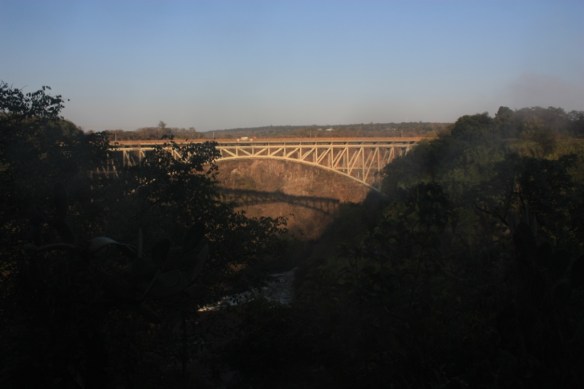
DAILY PHOTO: Victoria Falls Bridge

Taken on June 19, 2017 at Victoria Falls

DAILY PHOTO: Grazing Zebra

Taken on June 18, 2017 in Mosi-oa-Tunya National Park, Zambia

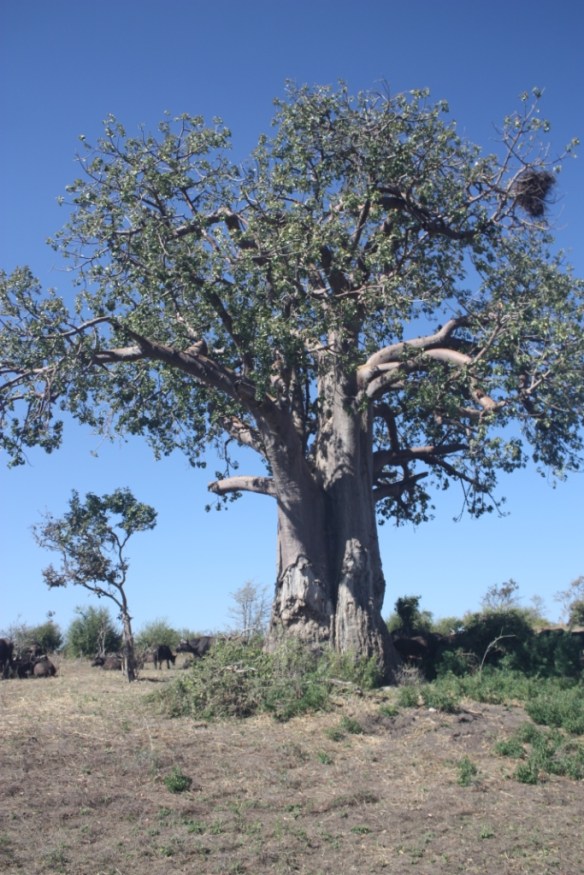
DAILY PHOTO: Baobab

Taken on June 20, 2017 in Botswana


BOOK REVIEW: The Circle by Dave Eggers

The CircleThe Circle by Dave Eggers
My rating: 5 of 5 stars

Amazon page


In Eggers’ novel, the Circle is a technology giant that looks a lot like Google + FaceBook + PayPal + Twitter all wrapped together under one corporate roof. Mae Holland, the book’s lead, is a young woman hired into the firm owing to her close friendship with a college roommate turned high level executive at the Circle, Annie. Even though Mae is brought in to work what is called “customer experience” (i.e. customer service) doing seemingly tedious work, Mae is in hog heaven. She left a job doing tedious work in a depressing environment with minimal support, and so this job personalizing boilerplate responses in a fascinating place with the opportunity to move up is a dream. The Circle is a utopian workplace where engineers are given free rein to experiment, where great minds and performing artists come to hang out, and where one gets handsomely rewarded for playing on one’s social media at work. All one needs to thrive at the Circle is a sharp mind and a willingness to accept that one’s days of privacy and solitude are behind one.

The Circle is the dystopia that some would say we are on the cusp of and others think we’ve already plunged into. It’s not Orwell’s gray dystopia of brutal state force. Neither is it Huxley’s bright and shiny dystopia of drugs and free loving. It’s a dystopia in which people willingly give up all privacy and negate the need for a neo-KGB by posting every idiotic thing that they do directly to the worldwide web. However, as in Huxley’s “Brave New World,” we see that the most nefarious character isn’t necessarily the most dangerous. The Circle is headed by an executive trinity. There’s the tech genius who we know little about until the book’s end–except that his life runs contrary to what the Circle seeks in its employees in that he’s fiercely private to the point of being mysterious. There is Tom Stenton who is the face of greedy capitalism, a loathsome character in every way imaginable. However, the real danger comes from the likable–and seemingly reasonable–Eamon Bailey who’s an idealist who thinks that people can perfect if they have no shadows in which to make mischief.

Mae is introduced to us as a likable character. She’s a hardworking but human girl next door. When we are introduced to Mercer, her ex-boyfriend and the face anti-Circle-ism, we assume that she’s being reasonable in her dislike of him. Even though he sounds reasonable, she knows him. Mercer rails against this corporatized surveillance state, and initially one may not be able to tell whether he’s a Luddite or the voice of reason. As the story goes on, however, the reader is likely to like Mercer more and more and Mae less and less. But the question remains until the end whether Mae will do the right thing as she becomes aware of the full—disturbing–picture of the Circle.

I got engrossed in this book. It’s absorbing both because of good character development and an intriguing story. That’s probably why the novel was made into a film that came out earlier in the year. It’s one of those books with the readability of popular commercial fiction, but which provides some food for thought. Some of the twists you may figure out, but the book keeps one wondering until the reveals.

I’d recommend this book for fiction readers—particularly if you have any pictures on social media with a drink in your hand or bad judgement in progress.

View all my reviews

The movie trailer, if you’re interested: