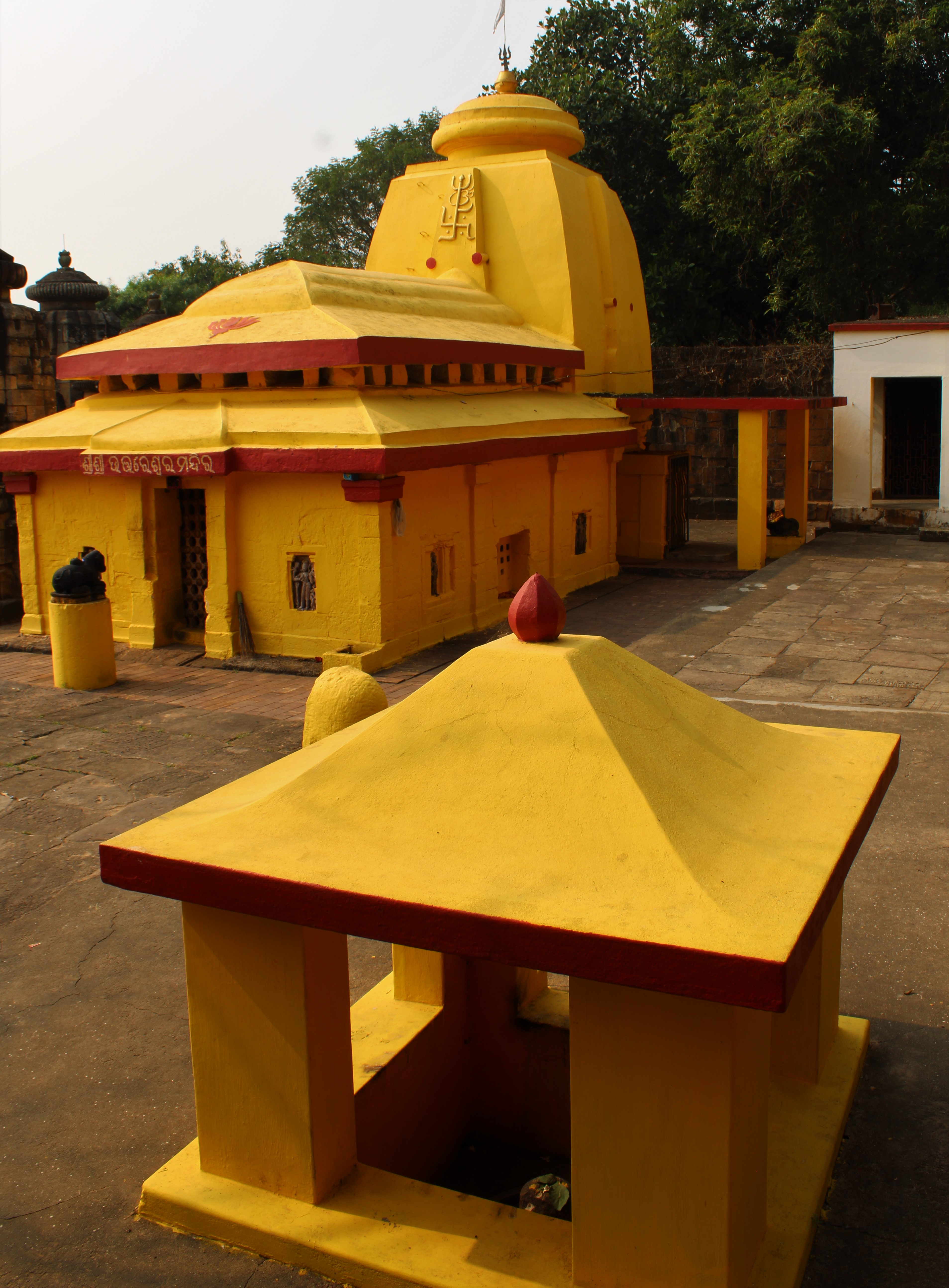
DAILY PHOTO: Sampige Siddeshwara Temple

Taken on September 11, 2021 at Chitradurga Fort

BOOK REVIEW: Ashes, Ashes by Jean-David Morvan

Ashes, Ashes #1Ashes, Ashes #1 by JD Morvan
My rating: 4 of 5 stars

Amazon.in Page

Out: October 5, 2021

[Note: The book I’m reviewing is the 144-page multi-issue story.]

This is the story of a technological apocalypse and a post-apocalyptic Alexander the Great who was born of it. The bulk of the story reveals the cataclysm and life in the early days of its wake. But there is an interspersed subplot that takes place in a present-day that is well after the apocalypse. The big difference between this “world-conqueror” (actually, it seems to be only a small area of what had been southern France) and other power-consolidating titans is his luddism. He vehemently hates [almost] all technologies and insists that all (but one) post-Amish technology be eschewed because he feels human innovation to be cause of humanity’s fall. Otherwise, he checks the boxes: narcissistic, nihilistic, and probably a psychopath.

The story is compelling, and it definitely draws one in. I thought the pacing was well-executed and the concept was intriguing. Both the art and story have a unique feel, though I don’t know that the book will be able to distinguish itself within an extremely bloated dystopian / post-apocalyptic sub-genre.

There were a few elements that felt clunky. First of all, the mid-twenty-first century technological landscape is strange. I didn’t think anyone still imagined flying cars on the near-future time horizon. I think they only existed here to make the moment of doom impressively fiery. Second, a romance is established with great effort that is allowed to flameout to a lukewarm puddle of nothing. Perhaps, this was the point — to show the romance as victim of the demands of life under an anarchic dystopia. (If so, it gets lost amid the more exhilarating happenings.) Third, there is one modern technology that the protagonist is quick to adopt. This might be an intentional way of showing his love of self far exceeds his hatred of technology, but it’s curious.

If you don’t have dystopia fatigue, you may want to give this book a look.


View all my reviews

BOOK REVIEW: Alcibiades I & II by Plato

Alcibiades I and IIAlcibiades I and II by Plato
My rating: 5 of 5 stars

Amazon.in Page

While these two dialogues feature Socrates questioning Alcibiades (a youth – apropos of nothing – for whom the philosopher has the hots,) they’re different. While it’s not certain that either was written by Plato, it’s much more widely accepted that the first dialogue was so authored. I found the first part to be the more engaging read.

In Part I, Socrates urges Alcibiades to put off going into politics (as the young man is about to do) until he’s more enlightened on the subject at hand – i.e. justice, expediency, and virtue as it pertains to matters of war and peace. In the second part, Socrates convinces Alcibiades that the subject of prayers should not be taken lightly, leading the young man to delay his sacrifice and prayer to a time he can be wiser about it.

The first part is more piquant. In it, Alcibiades on occasion seems to be holding his own (rather than being a talking head.) A great example of this can be seen after Socrates makes clear that Alcibiades’ education in language, the lyre, and wrestling hardly qualify him to advise Athens on matters of war and peace. Alcibiades turns the tables and asks whether it isn’t possible that he could attain the requisite knowledge of justice other than through formal education. Socrates admits that he could by discovery, but just when Alcibiades thinks he has the point, Socrates argues that the only way Alcibiades could make a discovery was if there was a time that the youth didn’t think he already knew. Socrates goes on to show that – even as a child – Alcibiades labored under the impression that he knew what was just.

The most interesting topic of the second dialogue is the question of whether lack of wisdom and madness are the same thing. In Phaedrus, Socrates explores several varieties of divine madness, and I wondered how closely this dialogue might echo that one. (It doesn’t because it’s more about madness that’s not so divine, but Socrates does refute Alcibiades’ equation of the two concepts.)

Definitely read First Alcibiades, and if you have time, the second one makes some intriguing points as well.

View all my reviews

Ruins in the Tall Grass [Free Verse]

Nature dresses up the detritus 
of our fallen civilizations.

After all but the most resolute
stonework has crumbled,

cool faces of stone
having sloughed off to
leave rugged, pitted rock,

all that stands testament 
to life is the tall grass
that sways in the wind.

DAILY PHOTO: Chandravalli Lake

Taken on September 10, 2021 at Chandravalli Lake

The Traveler’s Worldview in 14 [More] Quotations

SEE PART I HERE
Though we travel the world over to find the beautiful, we must carry it with us, or we find it not.
- Ralph Waldo Emerson


Love all, trust a few, do wrong to none.
-William Shakespeare, All's Well That Ends Well


Life is like riding a bicycle. To keep your balance, you must keep moving. 
-Albert Einstein 


Some beautiful paths can't be discovered without getting lost.
-Erol Ozan


Live as if you were to die tomorrow. Learn as if you were to live for ever.
-Mahatma Gandhi


There are only two ways to live your life. One is as though nothing is a miracle. The other is as though everything is a miracle.
-Albert Einstein


The journey itself is my home.
-Matsuo Bashō


No matter where you are, you're always a bit on your own, always an outsider. 
-Banana Yoshimoto


There are no foreign lands. It is the traveler only who is foreign.
-Robert Louis Stevenson


One's destination is never a place, but a new way of seeing things.
-Henry Miller


I don't want to die without any scars.
-Chuck Palahniuk, Fight Club


Tell me, what is it you plan to do with your one wild and precious life?
-Mary Oliver


Do not chase after what is true, only cease to cherish opinions.
-unnamed Zen master


If any man be unhappy let him know that it is by reason of himself alone.
-Epictetus


BONUS QUOTATION:

Respect the Gods and Buddha, but don't expect their help.
-Miyamoto Musashi

Bucktoothed Monkey Mastermind [Common Meter]

I saw a bucktoothed monkey sit
on the ground all alone.
It looked the doofus - its dental-
mental shortfall shone,
but is the size of incisors
a measure of one's smarts?
Has anyone done the study,
gathered data, made the charts?

What if that dentally-outsized
primate is a dreamer-
a mastermind, a supervillain,
or just a first-rate schemer?
What if it just wants us to think
that it's a huge dimwit?
So, it doesn't show its erudition,
or its razor-keen wit.

Instead, it waits for us to be
lulled to a false repose,
so that it can show us we're all
a bunch of biased schmoes.

DAILY PHOTO: Sira Fort Ruins [Kasturi Rangappa Nayaka Fort]

Taken on September 11, 2021 at Sira
Kasturi Rangappa Nayaka Fort

BOOK REVIEW: The Department of Truth, Vol. 1 by James Tynion IV

The Department of Truth, Vol 1: The End of the WorldThe Department of Truth, Vol 1: The End of the World by James Tynion IV
My rating: 5 of 5 stars

Amazon.in Page

This is the cleverest and most mind-blowing graphic novel I’ve read in a long time. Like the first “Matrix” film, it challenges one’s metaphysical certitude, making one question whether the world might – just might – work differently than we think. But, more importantly, it shines a light on one of the major problems of our age, and it does so in a smart way, recognizing a core conundrum – that there are no clear-cut right answers.

The sci-fi premise at the heart of this book is the idea that collective belief shapes reality, and, thus, conspiracy theories that gain enough of a following can manifest physical evidence of their truth. This is a fascinating concept, but – even without it – the book forces one to reflect upon what might be the single most important dilemma of our age. On the one hand, people would rather believe malarkey that confirms their worldview and ideology than truth that conflicts with it. On the other hand, if people don’t have the freedom to believe whatever they please, in what sense can they be said to be free?

As I read, there were many examples from our present pandemic in which one could see this conflict in action. I saw an article in which a person who took one of the COVID vaccines but mentioned that he felt quite sick afterward was ostracized as an “anti-vaxxer.” While I’m pro-vaccine and took my shots, I’m disturbed by the idea that “off-message” statements are being so vitriolically (and, sometimes, deceptively) attacked. “Truth at any cost” will incur a terrifying cost, I’m afraid. And, therein, lies the point of this book, that the issue is complicated and it’s by no means clear who the good and bad guys are.

I’d highly recommend reading this book.

View all my reviews