
Taken in Spring 2012
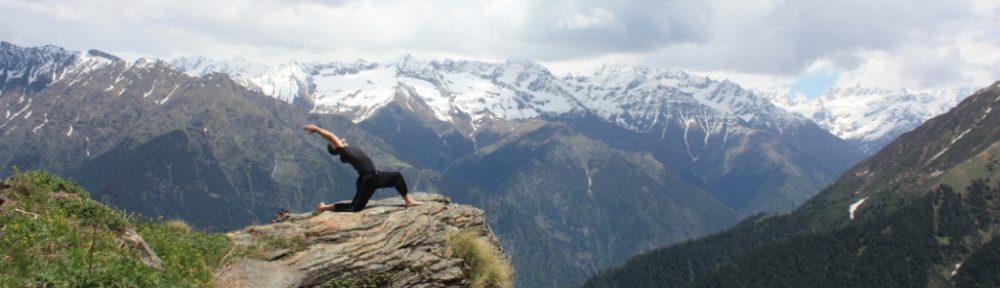
Taken in Spring 2012

Taken in the Summer of 2011 in Veresegyház, Hungary
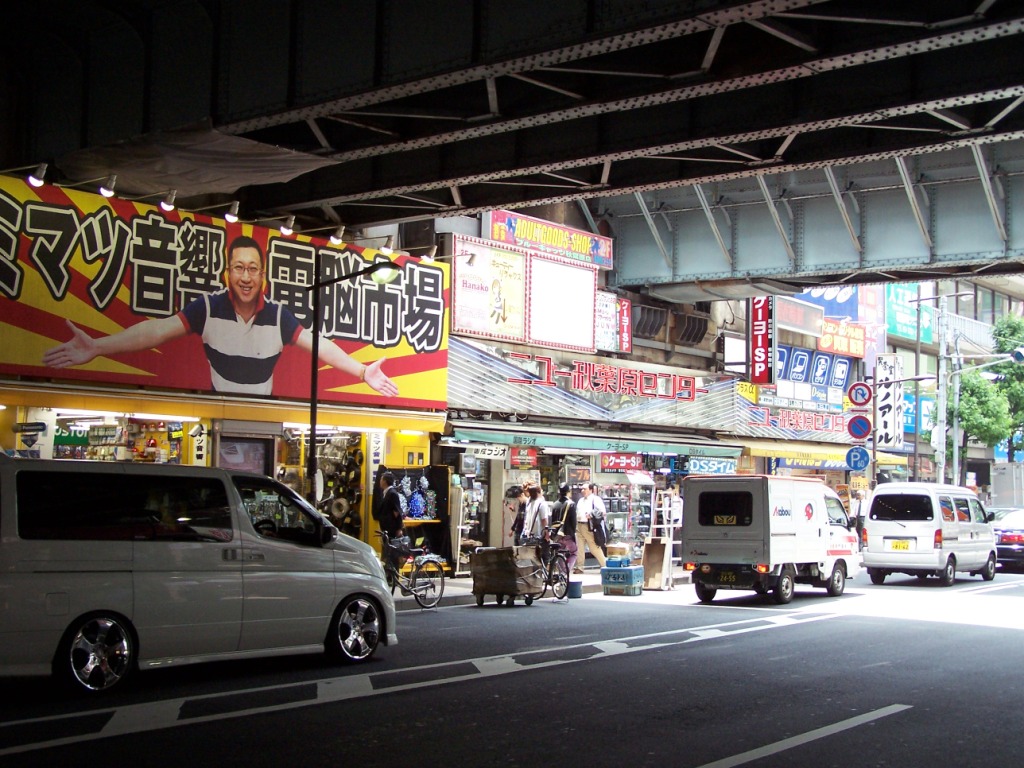
Taken in the Summer of 2008 in Tokyo.

Taken in October of 2012 in Chiang Mai, Thailand
I’ve been reading World War Z because I had heard it’s an interesting book and because it went on sale–presumably in anticipation of the movie that comes out next week that shares a name (but probably little else besides Zombies) with the novel. I don’t usually read zombie or vampire literature because there’s so much of it and rarely does it offer anything new or intriguing. (Once one’s read Bramstoker and Matheson, what more is there to be said on the undead.) Brooks’ book is an exception. Told as a series of oral histories collected by a UN employee who serves as a quasi-protagonist–but not necessarily a central character–of the book, World War Z chronicles the human dimension of the Zombie War.
The book tells a series of personal vignettes from the earliest sign of the pandemic through the cleanup afterward. One of the issues that is discussed is the mismatch between the skill sets the survivors had and the skill sets that were needed to survive in a post-apocalyptic world. In one of the interviews, a bureaucrat discusses the need for job retraining because they had all these information age analysts, managers, coordinators, etc. but few people who knew how to make new things, grow food, or repair damaged infrastructure. They had all these mid-level white-collar people and they needed blue collars.
This got me thinking. To be honest, I haven’t had a job that would be useful in a post-apocalyptic wasteland since I was a 22-year-old infantry-trained law enforcement officer. Everything since then has involved life in a cubicle or small office uncovering, creating, evaluating, analyzing, describing, modifying, and disseminating information. Then there has been writing, which I love, but which isn’t exactly going to pull humanity back from extinction. (Let’s not kid ourselves that “reading is fundamental” when society has to be rebuilt from the ground up–fed, clothed, etc.)
This isn’t to say that I would be altogether useless in a post-Zombie Apocalypse world. I lived years 0 through 18 on a working farm. That was a long time ago, but I’m sure I could remember something about how to engage in activities that are actually directly related to keeping people alive (as opposed to keeping them informed.)
So will you be useful post zombie apocalypse? What would you be interested in doing if your current Dilbert-esque work life became irrelevant?

Taken July of 2010 on Amantani Island in Peru
[This was previously posted in my blog, Strategic Ramblings.]
As I–and everyone else– follow the slew of articles on Edward Snowden, I saw the following quote from Lord Acton:
Every thing secret degenerates, even the administration of justice; nothing is safe that does not show how it can bear discussion and publicity.
I agree wholeheartedly with Acton’s statement. The debate revolving around the former Booz Allen Hamilton contractor raises some intriguing questions. Once upon a time, I held a security clearance–not a particularly high one–but nonetheless a promise to keep the secrets I was exposed to in the process of my job. I took that clearance deadly serious and recognized its value and importance. However, I had it easy. I never faced any great moral dilemma over keeping my promise. Snowden’s situation was quite different.
What does one do when one sees one’s employer engaging in behavior that is illegal and/or unconstitutional under the normal definitions of words as we commonly use them. That is, the government has creatively taken words like “facility” and “targeting” and put an Orwellian twist on them to make a wild violation of U.S. citizens’ reasonable expectation of privacy in order to lawyer the program into one that some might define as “technically” legal. (e.g. the Washington Post article said that huge sets of information data were labeled “facilities” [suspected involved in terrorism] in order to justify all that information being handed to the government.) Of course, the national security leadership has been singing a refrain of “we don’t target U.S. citizens.” What is left unsaid is that while they don’t “target” U.S. citizens they come into a lot of information on citizens because: a.) they have a very low standard for determining likelihood of foreignness, and b.) they are collecting information on individuals regardless of whether they are suspected of anything.
So if you are Edward Snowden, you are a low-level employee. Your superiors don’t give a damn what you think about the legality of the program. You can’t complain to anyone because no one who cares is cleared to hear it, and those who are cleared to hear it have a vested interested in maintaining (if not expanding) the intrusions. What would you tell Snowden if you were his friend, and not a complete stranger with your own feelings on the subject? That’s a tough one.
Secrecy may be necessary in some cases, but I’m uncomfortable writing the government a blank check. Officials will say, “it’s not a blank check, we have internal and external oversight.” First of all, the idea of “internal oversight” is not particularly confidence inspiring. That’s a little too much like “Otis” from the Andy Griffith Show letting himself in and out of the drunk tank as he saw fit for my taste. Second, how can any of us know that a judge acting on a FISA warrant treats it with the same seriousness as a case in which their decision will be open to public scrutiny? I don’t know, but I don’t hear of a lot of warrants in, say, bank robbery cases in which the phone records of millions of people unsuspected of a crime are to be handed over for a period of months. Yes, finding and uncovering terrorists is more difficult than building a case against other criminals, but I remain skeptical because–as Lord Acton said, “Every thing secret degenerates, even the administration of justice…”
[Note: This is posted in my Jissen Budōka blog as well.]

Source: Wikipedia; Status: Public Domain
Miyamoto Musashi, who was undefeated in over 60 duels, claimed that he never had a teacher. Some historians refute this claim. Whether one accepts it or not, the statement astonishes.
Musashi wasn’t talking only about martial arts, but about the many areas in which he was accomplished. Not being a painter or a sculptor, I can’t say how important a teacher is in such domains. But it’s easy enough for me to imagine a successful writer who never took a formal class in writing; someone who read profusely and practiced his (or her) craft relentlessly could do it. (Certainly, one can easily imagine successful writers whose formal education was in some area other than writing because there are so many of them–probably at least as many as those whose education was in writing. Examples include: Vonnegut [Chemistry], Crichton [Medicine], Zane Grey [Dentistry], Ursala LeGuin [Anthropology], and J.K. Rowling [French]. That’s not even to start on the many literary legends who dropped out all together– e.g. Dickens, Faulkner, Twain, H.G. Wells, and Jack London.) This isn’t to say that writing teachers don’t make writing better, but just that there is a path to this skill that doesn’t involve being fed lessons.
However, I struggle to imagine a martial artist achieving so much without a teacher. Boiled down to its most workaday definition, a martial art is a collections of lessons about what works in a combative situation. This is what separates the importance of a teacher in martial arts from that of a discipline like writing. In writing, one has the leisure to make one’s mistakes, learn from them, and self-apply course corrections. Musashi was in life or death duels; he couldn’t learn lessons at such a leisurely pace and in such an iterative fashion.
A martial arts teacher has a number of roles, such as preventing inertia (slacking) from taking hold in the training hall. However, the most fundamental purpose is to pass along the collection of lessons so that a student doesn’t have to learn them all by way of personal experience. Most of us aren’t Miyamoto Musashi; we can’t survive the process of learning all our own lessons.
Needless to say, I am a firm believer in the value of a good teacher. I’ve had several over the years, and I received valuable lessons from all of them–all with different, but no less valid, points of emphasis and flavor.
Having said all that proceeds, there’s much that cannot be taught. Such lessons may be described or discussed, but they cannot be learned except through the initiative of the student. I said that most of us can’t survive the process of learning all one’s own lessons, but I’ve increasingly come to believe that one can’t survive learning none of them either. In the beginning, one must be fed the lessons from a teacher in order grow. However, as the decades pass, one increasingly needs the space to learn one’s own lessons. If one lacks said space, one will stagnate and eventually the wheels will roll off one’s training altogether.
So what are the unteachable lessons? Knowledge can be conveyed, but not everything that a martial artist must learn is knowledge. Confidence cannot be taught. A teacher may explain–or even show–how he or she became confident, but that won’t translate one iota into the student being more confident. This is like a Buddhist monk telling one that “desire is the root of suffering.” One may understand that statement. One may believe the statement. However, one’s suffering won’t decrease because one has the knowledge. One’s suffering will only decrease if one conscientiously does the hard work of reducing one’s desires.
Another area of unteachable lessons are the lessons that the teacher has never learned. Loyalty is a great virtue, and so there may be a tendency to restrict one’s learning to the lessons of one teacher. However, even if one has an outstanding teacher and are practicing a great lineage, blind spots happen. The only way to learn whether there is anything of value obscured in those blind spots is to throw off one’s blinders and have a look for oneself.
What blinders? An excellent and tricky question. It’s like when someone says, “it’s not what you said, but the way you said it.” We all understand that there is some intangible character in language that is commonly understood but not easily seen or defined. In any culture (and a dōjō contains a culture, believe me) there’s always a collection of norms, rules of thumb, ideas, beliefs, mores, credos, etc. that come to be taken so much for granted that they become an invisible filter through which one sees the world. This isn’t an inherently bad thing, and it’s probably necessary to produce sufficient order in a chaotic world in which to learn and grow. Having said that, some of the ideas and beliefs in our cultural filter may be arbitrary, or at least not universal, but yet we don’t necessarily see the potential for error because we are seeing the world through the cultural filter. We take for granted that grass is green, but what if we see it through a yellow filter? Then it’s blue. Right?

Taken in the summer of 2011 in Helsinki

Taken June 8, 2013 in Little Mulberry Park (Dacula, GA)


