In Kuala Lumpur we came across this little wooded area to the side of an office tower. Planted among the trees were these curvy, ornately painted benches.
As I’ve mentioned before, being a weary traveler on occasion, I’m frequently dismayed by artists who take up valuable and precious bench space with their bronze creations. This on the other hand, was a magnificent find, art that one could sit down on and rest one’s feet. As you can see, the benches were quite popular.
If you’re at all familiar with Dr. Moshe Feldenkrais, most likely it’s for the system of bodily awareness and efficient movement that bears his name (i.e. the Feldenkrais Method.) You may be completely unaware that Feldenkrais was a first-rate judōka who trained under judō’s founder Jigoro Kano, and that his experience with judō played a major role in his understanding of the principles of natural and efficient movement. (It should be noted that Feldenkrais was neither a medical doctor nor a doctor in a medical / biological field, but was a physicist by training.)
Higher Judō was originally published in 1952, and was out of print for many years until a new addition was brought out in 2010 (with three new forwards and some additional back matter.) It’s not hard to imagine why the book made a comeback after such a hiatus–and 26 years after the death of Dr. Feldenkrais. The book explains the ground fighting techniques of judō, which are the basis of Brazilian Jujutsu (BJJ), and BJJ is a dominant form of ground and submission work within Mixed Martial Arts (MMA.) Given the immense popularity of MMA, and the desire of fighters to hone their technique to the utmost, it’s a good time to bring this half-century old book back to the fore.
The book consists of twelve chapters. The first half of these chapters deals with preliminaries such as principles of movement, philosophy, and basic movement exercises. The second half gets into the tactics of ground work. The arrangement for the latter chapters is largely by position of the competitors relative to each other (e.g. the mount, 12 o’clock, side control, in the guard, etc.)
The first half has few graphics, but the last half is packed with line drawings that are based on photographs (ostensibly it was cheaper or easier to reproduced the line drawings back in the day.) The line drawings offer sufficient detail so that one can see what is being done (to the degree one would be able to see it in a photo or even in person—i.e. some of the techniques are subtle and the written description becomes essential.)
The book is a good overview of the basics of ground work with a few unusual and rare techniques thrown in. Feldenkrais points out that some techniques are more important than others, and that one should drill a few of the most critical ones rather than focusing a lot of time on the more eccentric techniques. As I’ve written many times before, I don’t believe that one can learn a martial art from a book. However, if you’ve been taught these types of techniques, you’re sure to find this book an interesting reference with some ideas for approaching ground work training.
Some of the characteristics of the book could be taken as positive or negative, and I’ll leave it to the reader to decide. First, Feldenkrais avoids using names for techniques. He uses neither the common Japanese names for the techniques (e.g. there’s no reference to juji gatame, tomoe nage, or hadaka jime) nor the common English names. He goes by figure number attached to the aforementioned line drawings. Second, he has thoroughly cross-referenced the book such that you might be on the page containing figures 228 and 229, and he’ll make reference to figure 52. So the book involves a lot of turning back (I wrote in the page numbers where off-page figures were referenced so I wouldn’t have to find what page the figure was on each time.) Third, Feldenkrais is a scholar by training and is not averse getting a bit wordy and verging on abstruse. Of course, the flip-side of this is that he provides a great deal of precision in his language. That being said, I found this book readable and much less ponderous than one of his Feldenkrais Method books that I read.
I’d recommend this book for anyone interesting in gaining a better understanding of ground fighting. In the early sections of the book he provides excellent food for thought about the judō approach to movement, and in the latter half he catalogs the basics in a thorough and logical fashion.
Here’s the 2014 slate of sci-fi films. I didn’t include superhero films (because I did a post on them yesterday) nor did I include those that might be best classified in other speculative fiction genres (e.g. horror, supernatural, or fantasy.)
WELCOME TO YESTERDAY; February 21st
If you don’t think teenagers are safe to drive cars, imagine the chaos they’d create in a time machine.
DIVERGENT; March 21st
This is based on one of the popular dystopian Young Adult (YA) novels of late. I’m not saying that it’s just like the Hunger Games trilogy or Maze Runner–both of which also have movies coming out in 2014–but it’s clearly the subgenre du jour. In this YA dystopia, people are divided into five classes by testing, but some are divergent–defying classification.
UNDER THE SKIN; April 4th (US, previously released elsewhere)
An alien seductress lures hitchhikers into her van with nefarious purpose (and maybe lollipops.) Moral: if Scarlett Johansson tries to pick you up in a serial killeresque van, think twice; and then get in because it’s Scarlett-freakin’ Johansson.
EARTH TO ECHO; April 25th
Kids discover an alien. It sounds a lot like ET.
THE SCRIBBLER; May 1st
Supposedly based upon the graphic novel of the same name, which would make this about a girl with multiple personality disorder who partakes in an experimental treatment called the “Siamese Burn.”
GODZILLA; May 16th
The latest attempt to revive Godzilla–using CGI to make him bigger and uglier than previously imaginable.
EDGE OF TOMORROW; June 6th
Like Groundhog Day but with guns and explosions.
THE PURGE 2; June 20th
Sequel to the movie about a dystopian future in which all laws are set aside for a short period once a year.
DAWN OF THE PLANET OF THE APES; July 11th
This one takes place after the escape shown in the last PotA movie (w/ James Franco) and a pandemic and war that followed, but before humanity is completely enslaved by the damn, dirty apes.
JUPITER ASCENDING; July 25th
A nobody Earthling, played by Mila Kunis, turns out to be the most important woman in the Universe. Naturally, lots of people want her dead.
THE GIVER; August 15th
Based on the popular YA novel. One person’s utopia is another person’s hell.
RESIDENT EVIL 6; September 12th
Wow! They’ve made six of these? Way to milk it. Just kidding. I’m sure it will be novel and interesting.
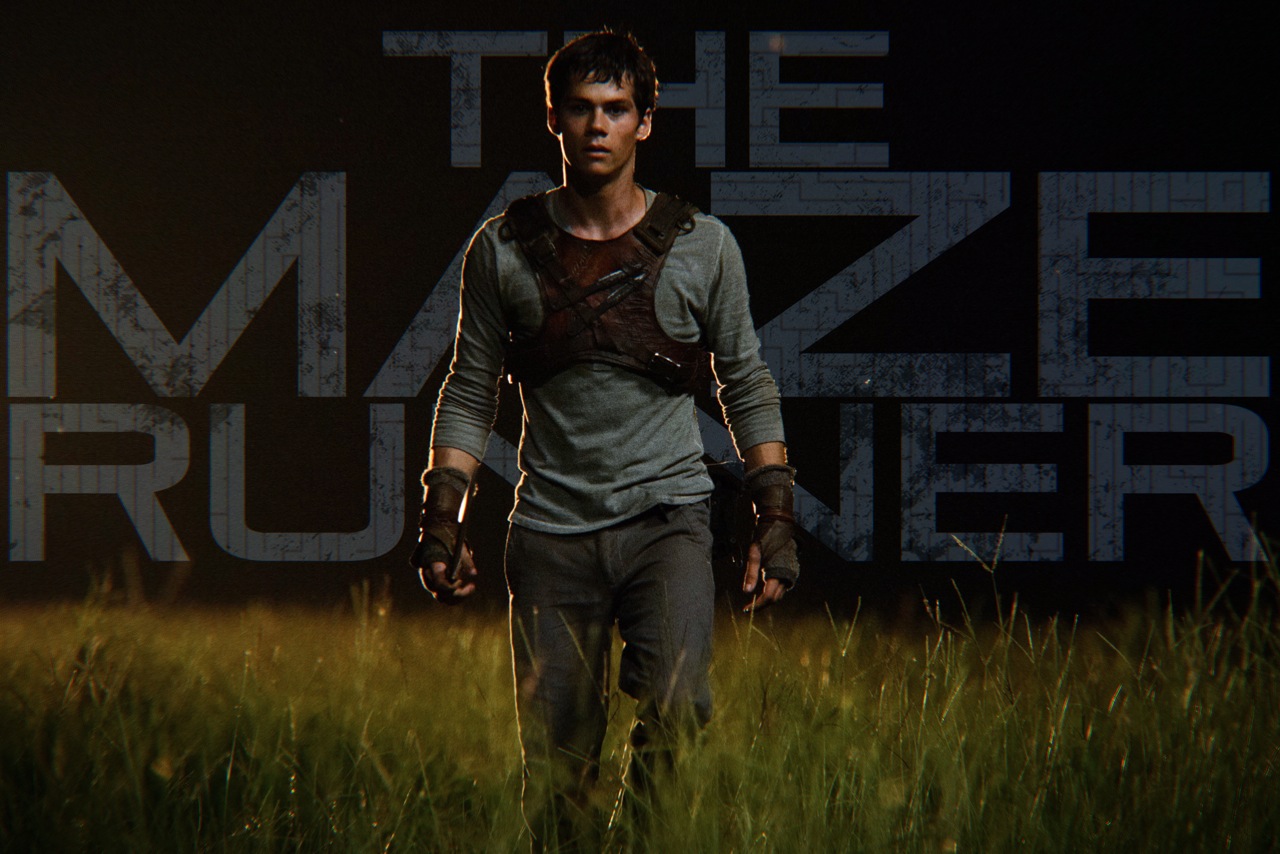
MAZE RUNNER; September 19th
Another YA dystopian adventure. Lord of the Flies meets Hunger Games?
INTERSTELLAR; November 7th
A huge Christopher Nolan film about interstellar travel.
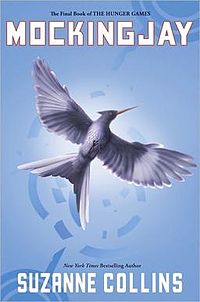
MOCKINGJAY, Pt. I; November 21st
The first part of the third book in this trilogy, because why make three movies based on three, thin YA novels when you can make four movies based on three, thin YA novels.
HOME; November 26th
This film is supposedly based on the above book. It’s about an 11 year old who must survive on her own after her mother is abducted by aliens.
Other potential sci-fi releases of unknown date and quality:
THE ZERO THEOREM; no US release date set; the UK release is supposed to be in March
It’s about a man trying to solve a theorem, but with all sorts of craziness in the mix.
MAX STEEL; based on a line of toys (promising.) SPACE STATION 76; that 70’s sci-fi movie. GLIMMER; more teen time travel [shudders]
If you enjoyed Joseph Heller’s Catch 22, which is to say you like gallows humor that scoffs at the folly of thinking of “bureaucratic logic” as anything other than an oxymoron, then Stanislaw Lem’s Memoirs Found in a Bathtub will be right up your alley. The premise is that future archeologists are trying to decipher what happened to humanity from a dearth of remaining documentation. One of the best and most extensive of these records is the memoirs of a bureaucrat telling of his experience in a subterranean complex that reads a lot like a spoof on the Pentagon. The 31st century timeline in which a future generation tries to understand the intervening dark ages is only discussed in the prologue, the remainder is the first person account of this bureaucrat of ill-chosen profession.
The narrator tells us about his final assignment, one that was so secret that his superiors couldn’t even tell him what it was. When he finally does get some written guidance, it’s stolen. Throughout the story, the author is shifting through various departments of this complex trying to figure out what is going on and with little initial success. At first he’s trying to figure out what his mission is, but later he’s just trying to figure out what’s real and meaningful–and if those concepts retain any usefulness. Along the way, odd and spectacular events occur that leave him thinking he’s being framed. He doesn’t know if he’s in a test, in the middle of a conspiracy, or amid a collection of lunatics.
There are sections that read quite like a Monty Python sketch, and the absurdist humor is sometimes like that of Douglas Adams–though more sparing and dark. There’s a scene featuring an officer who tries to talk the narrator into confessing, and I could only picture said officer in my mind as Eric Idle. Among the absurdist elements is the explanation of office operations. We are told that command was unable to deal with accurately and swiftly circulating memos because of the volume, and so they took to a random system in which paperwork was indiscriminately circulated until it happened upon the correct desk. There’s an officer who begins to chew and swallow envelopes to prevent information from falling into the wrong hands. One of the best examples of absurdist humor is a conversation with a cryptologist who suggests that everything is a code and, ignoring messages that seem to be of military value and that are not coded, takes to using a machine to “decipher” random literature into nonsensical messages.
Nothing is as it seems in this book, and the humor derives from the narrator being the only individual who insists on the world making sense. If you’ve ever been in a position where you had to interact regularly with a bureaucracy, you’ll understand the value of laughing at such humor to avoid weeping. Much of the humor comes from the desire to keep things secret while trying to know everything there is. The narrator keeps finding not-so-subtle fly-shaped spy devices on his coffee saucer. There are blatant lies about behavior that takes place right before the narrator’s eyes. When he’s institutionalized, it turns out that the other inmates are not at all who they seem to be either.
If Stanislaw Lem is not an author familiar to you (he’s a Polish writer who died in 2006), this is a good work to cut your teeth on. It’s not one of his most well-known pieces, but it’s humorous and easier to follow than Solaris. Fans of Kurt Vonnegut and Robert Heinlein are also likely to enjoy this book. I recommend it.
Taken in December of 2013 at Baan Krating in Phuket
If you’re looking for a nice quiet place to stay on Phuket, Baan Krating offers a good option. It’s on the southwest tip of the island down by Nai Harn Beach. This is taken on the footpath to a quiet section of beach it shares with an adjacent property. It does have another–even quieter–private section of beach, but that is even more rock strewn with razor-sharp shells and conical barnacle casings.
Here’s an overview of the upcoming year’s superhero movies.
I, FRANKENSTEIN; January 24th
Frankenstein’s monster may not the usual superhero, but it’s based on a graphic novel and the demon-battling premise seems heroic enough.
ROBOCOP; February 12th
This is also one you might not think of this as a superhero movie, I include it because there was a Marvel comic based on the movie and if Iron Man is a superhero…
CAPTAIN AMERICA: THE WINTER SOLDIER; April 4th
The second Captain America installment and the third of the five Marvel Phase II films. After taking on some high level conspiracies, Captain America finds himself battling his old sidekick’s villainous alter ego, i.e. The Winter Soldier.
AMAZING SPIDERMAN 2; May 2nd
The sequel finds Spiderman facing Electro and–to a lesser degree–Rhino.
X-MEN: DAYS OF FUTURE PAST; May 23rd
As the confusing title implies, this is a time travel story in which events in the past must be changed to avert a grim future. Wolverine is sent back to affect this change.
TRANSFORMERS 4: AGE OF EXTINCTION; June 27th
OK, this is more a toy movie than a superhero movie, but cars that turn into robots seem super in my book. That’s not to say there isn’t a better than average chance the movie will stink.
GUARDIANS OF THE GALAXY; August 1st
It’s still early. There’s no trailer out as of this posting.
TEENAGE MUTANT NINJA TURTLES; August 8th
No trailer or images out, and little is known except this is about as ridiculous a premise for a movie as is imaginable.
BIG HERO 6; November 7th
This is an animated Marvel project. A robotics prodigy and his creation team up with amateur crime-fighters to put an end to a nefarious plot.
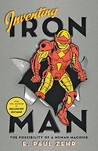
As the title suggests, this book examines whether Iron Man could exist in the real world. As with Michio Kaku’s book Physics of the Impossible, answering the question involves defining the various meanings of “impossible.”
One way to parse the question is, “Is Iron Man possible today given the existing state of technology?” In and of itself, this question is of limited interest because the answer is, “no.” There’s certainly a demand, and so if Iron Man could exist given current technology, he probably would. That’s not to say it isn’t interesting to learn about what technologies are holding us back and where the cutting edge of relevant technologies lies—both of which are addressed by the book.
Still, a more interesting inquiry is, “Will Iron Man ever be reality given the physical laws that we know to govern the universe?” While more intriguing, it’s also a harder question to definitively answer. It’s impossible to foresee all the technological developments that might come along to answer the seemingly insurmountable challenges (e.g. Tony Stark’s inevitable Traumatic Brain Injury (TBI).) The book deals with the critical question of what challenges would have to be overcome for Iron Man to be reality.
As Zehr suggests, the appeal of Iron Man is that he’s considered to be among superheroes for the common man. Like Batman, the sufficiently bright and diligent nerd may fantasize that, “That could be me.” You or I can’t be Superman or Wolverine, but given enough money, smarts, and training we could be Batman, or—even better—pilot the Iron Man suit. Put in this light, the book may seem like just another frivolous attempt to capitalize on the popularity of superheroes to sell books. However, there’s actually a great deal of food for thought packed in the book. Like others, I read the book because its title is Inventing Iron Man and not Neuro-motor control of a self-propelled armor system or some other suitably scholarly title.
Dr. Zehr has the bona fides to delve into this topic. He is a Professor who investigates questions of how the nervous system controls movement. That subject may not constitute the sum total of critical concerns, but it’s one of the most important challenges. For Iron Man to move the way he does in the movies and comic books, Tony Stark’s impulses to move have to be transmitted seamlessly to the servo-motors that move the suit. From dodging Col. Rhodes’ (i.e. War Machine’s) punches to ducking RPGs, Stark can’t be quick enough if he has to manually steer the device. Then, of course, there’s the issue of feedback. Any neophyte meditator who’s had his or her foot fall sound asleep will know how difficult it is to walk surefootedly when one can’t feel anything through one’s foot.
[Iron Man 3 spoiler commentary in this paragraph.] One of the most damning challenges for making Iron Man a reality is the high probability of severe concussions. Let’s say you make the suit out of a material that is virtually indestructible? This may be possible. However, the pilot’s mushy brain is still sloshing around inside that impenetrable armor. One can remotely pilot the suit in order to negate this (as has been done in the comic books and the third movie), but—at that point—is it still Iron Man? I know from a writer’s perspective it’s a lot harder to maintain tension if there’s nothing human on the line. In the third movie about 30 autonomously piloted suits get wiped out and the viewer doesn’t care—the only source of tension is that Tony Stark is without armor half the time.
Some of the most interesting discussions are about where the current state of the art lies with respect to: a.) direct mind control over mechanical systems; b.) a “flying suit”; and c.) robotic movement enhancers. Zehr conducts interviews with those engineers and technologists involved in such technologies, and finds out where we are presently. Letter “a” above seems to be the least developed of the three technologies, but they are all active lines of research.
I enjoyed this book and found it interesting. I think anyone who is interested in the state of technology and its limits will find it a nice pop-sci introduction to the subject. The use of superheroes as a pedagogic device may be overdone, but it continues to work because we are fascinated by the edge of possibility, and that’s what superheroes represent.
While it may sound like sacrilege to some, if you’re like me you reach the point when it’s enough already with the beach. That raises the question of what there is to do on Phuket if you need a day away from having sand in every bodily crevice and feeling punished by the sun. One should definitely assign a day to Phuket Town. A lot of your Phuket Town day will rightly be spent admiring the many Chinese shrines in the area (there are about five big ones.) [This, too, can be a break if your Thai travels have left you burnt out on the gleaming, golden Theravadan Buddhist temples.] However, Phuket Town also has interesting secular architecture–some of it run down, but much of it nicely restored.
[My 2015 Martial Arts Movies post can be visited here.]
Here are some of the known or suspected martial arts movies for the new year.
RAZE; January 10, 2014
A film to appeal to guys who make the RAARRW noise when they see two girls get in a fight, but to the extreme.
I, FRANKENSTEIN; January 24, 2014
OK, this is better labeled sci-fi as it’s based on the premise that Shelley’s monster lived into the future. However, I heard that Aaron Eckhart spent six months learning Kali for the film, so I’ll throw it in the pot. (Also, all martial arts films are cross-genre anyway.)
ENEMIES CLOSER; January 24, 2014 (US release)
A Jean-Claude Van Damme film in which two enemies must come together to avoid being killed by a common enemy.
SPECIAL ID; The Chinese release was in 2013, but there may be a US release in March 2014
This is a 2013 Donnie Yen action film that was not released in the US, but may be soon.
JOURNEY TO THE WEST; March 7, 2014
For those who liked Kungfu Hustle (and who didn’t) this one should appeal. It’s a period piece, but with the same kind of humor and visual affects as Kungfu Hustle.
THE RAID 2; March 28, 2014
This is a sequel to the 2011 Indonesian film produced by Gareth Evans.
ICEMAN; April 3, 2014
The latest Donnie Yen film. It’s about an ancient Chinese warrior who is unfrozen and kicks ass in the modern age.
TEENAGE MUTANT NINJA TURTLES; August 8, 2014
Another attempt to capitalize on the inexplicable popularity of this cartoon. But I’ll give it a chance.