“The Human Seasons” by John Keats [w/ Audio]

Four Seasons fill the measure of the year;
There are four seasons in the mind of man:
He has his lusty Spring, when fancy clear
Takes in all beauty with an easy span:
He has his Summer, when luxuriously
Spring's honied cud of youthful thought
he loves
To ruminate, and by such dreaming high
Is nearest unto heaven: quiet coves
His soul has in its Autumn, when his wings
He furleth close; contented so to look
On mists in idleness -- to let fair things
Pass by unheeded as a threshold brook.
He has his Winter too of pale misfeature,
Or else he would forego his mortal nature.

“Nature” by Henry Wadsworth Longfellow [w/ Audio]

As a fond mother, when the day is o'er,
Leads by the hand her little child to bed,
Half willing, half reluctant to be led,
And leave his broken playthings on the floor,
Still gazing at them through the open door,
Nor wholly reassured and comforted
By promises of others in their stead,
Which, though more splendid, may not
please him more;
So Nature deals with us, and takes away
Our playthings one by one, and by the hand
Leads us to rest so gently, that we go
Scarce knowing if we wish to go or stay,
Being too full of sleep to understand
How far the unknown transcends the
what we know.

Sonnet 73 by William Shakespeare [w/ Audio]

That time of year thou mayest in me behold
When yellow leaves, or none, or few, do hang
Upon those boughs which shake against the cold,
Bare ruined choirs, where late the sweet birds sang.
In me though seest the twilight of such day
As after sunset fadeth in the west,
Which by and by black night doth take away,
Death's second self, that seals up all in rest.
In me thou seest the glowing of such fire
That on the ashes of his youth doth lie,
As the death-bed whereon it must expire,
Consumed with that which it was nourished by.
This thou perceiv'st, which makes thy love more strong,
To love that well, which thou must leave ere long.

“Still will I harvest beauty where it grows” by Edna St. Vincent Millay

Still will I harvest beauty where it grows:
In coloured fungus and the spotted fog
Surprised on foods forgotten; in ditch and bog
Filmed brilliant with irregular rainbows
Of rust and oil, where half a city throws
Its empty tins; and in some spongy log
Whence headlong leaps the oozy emerald frog...
And a black pupil in the green scum shows.
Her the inhabiter of divers places
Surmising at all doors, I push them all.
Oh, you that fearful of a creaking hinge
Turn back forevermore with craven faces,
I tell you Beauty bears an ultra fringe
Unguessed of you upon her gossamer shawl!

BOOKS: “A Dome of Many-Coloured Glass” by Amy Lowell

A Dome Of Many Colored GlassA Dome Of Many Colored Glass by Amy Lowell
My rating: 5 of 5 stars

Project Gutenberg Page

This was Lowell’s first published collection (1912,) and my 5-stars notwithstanding, it is not everyone’s cup of tea. I think I understand why this is. If you read some of Lowell’s more popular and highly anthologized poems, you might find that this collection is unlike them in several ways. Many of those popular poems are highly imagist, emulate East Asian sparseness, and are free verse. These poems are by and large metered and rhymed verse and I would not be the first to say that they often feel conventional and pedestrian. As I was reading the final section, “Verses for Children,” I figured out what other key feature of Lowell’s poetry was largely missing from the lyric poetry and sonnets that preceded these Children’s poems — playfulness. [Fortunately, it’s on display in the kid’s poems.]
.
With all that said, there are some spectacularly evocative images presented within these poems. I particularly enjoyed poems like: “New York at Night” and “A Japanese Wood-Carving.” As I don’t have the aversion to metered verse that many poetry readers seem to have today, I wasn’t as dismayed by the collection as some readers seem to be. Though I will admit that the collection doesn’t just play it safe with form, it also infects the tone and content of the poems.

Still, I found the collection readable and pleasant reading. (But maybe this is because I like a good scavenger hunt for golden nuggets of beautiful verse.)

View all my reviews

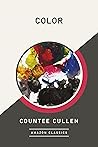
BOOKS: “Color” by Countee Cullen

Color (AmazonClassics Edition)Color by Countee Cullen
My rating: 5 of 5 stars

Available on Project Gutenberg

This excellent collection of lyric poetry is by one of the greats of the Harlem Rennaissance. The poems include a range of forms and sizes from single quatrain epitaphs to poems of several pages, with those in between (including a number of sonnets) being most common. Like Dickinson, Cullen had a fondness for common meter (a.k.a. hymn meter,) and it is prevalent throughout. The topics include serious matters, such as race and death, but there is no lack of whimsicality within these pages.

The book is divided into four sections: “Color,” “Epitaphs,” “For Love’s Sake,” and “Varia.” The first is the most serious of tone. (Interestingly, the epitaphs and other poems on death often take a lighthearted, even humorous, tone.)

I’d highly recommend this collection for poetry readers. It’s fun to read, and the poems are skillfully crafted.

View all my reviews

BOOKS: “Harlem Shadows” by Claude McKay

Harlem Shadows (AmazonClassics Edition)Harlem Shadows by Claude McKay
My rating: 5 of 5 stars

Project Gutenberg

This 1922 poetry collection is wide-ranging and beautifully composed. As the title hints, this is a product of that great literary and artistic movement known as the Harlem Renaissance.

The seventy-plus poems include sonnets and various other forms of poems, mostly lyric and rarely more than a couple pages in length. Besides being varied in form, they poems are also diverse of tone — from frank invectives on race to sweet love poems. They take New York as their home and tap into the verve of the day. The collection includes many of McKay’s best-known poems including: “If We Must Die,” “America,” and “Harlem Shadows.” Though bucolic beauties such as “Spring in New Hampshire” and “The Snow-Fairy” are not to be skipped over.

I enjoyed these poems and found them powerful and lyrical.

View all my reviews

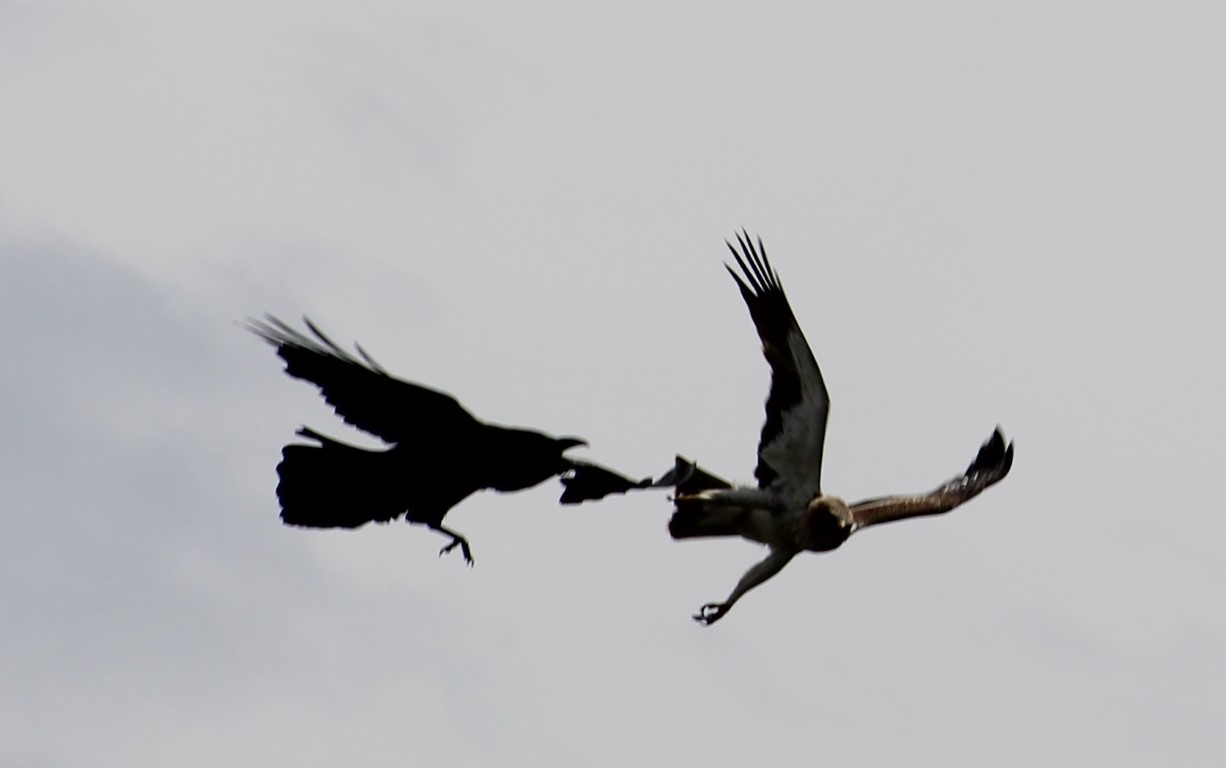
“Birds of Prey” by Claude McKay [w/ Audio]

Their shadow dims the sunshine of our day,
As they go lumbering across the sky,
Squawking in joy of feeling safe on high,
Beating their heavy wings of owlish gray.
They scare the singing birds of earth away
As, greed-impelled, they circle threateningly,
Watching the toilers with malignant eye,
From their exclusive haven -- birds of prey.
They swoop down for the spoil in certain might,
And fasten in our bleeding flesh their claws.
They beat us to surrender weak with fright,
And tugging and tearing without let or pause,
They flap their hideous wings in grim delight,
And stuff our gory hearts into their maws.

“If thou must love me” [Sonnet 14] by Elizabet Barrett Browning [w/ Audio]

If thou must love me, let it be for nought 
Except for love's sake only. Do not say,
"I love her for her smile -- her look -- her way
Of speaking gently, -- for a trick of thought
That falls in well with mine, and certes brought
A sense of pleasant ease on such a day" --
For these things in themselves, Beloved, may
Be changed, or change for thee -- and love, so wrought,
May be unwrought so. Neither love me for
Thine own dear pity's wiping my cheeks dry:
A creature might forget to weep, who bore
Thy comfort long, and lose thy love thereby!
But love me for love's sake, that evermore
Thou mayst love on, through love's eternity.

“Scorn not the Sonnet” by William Wordsworth [w/ Audio]

British (English) School; William Wordsworth (1770-1850) ; National Trust, Wordsworth House; http://www.artuk.org/artworks/william-wordsworth-17701850-130624
Scorn not the Sonnet; Critic, you have frowned,
Mindless of its just honours; with this key
Shakespeare unlocked his heart; the melody
Of this small lute gave ease to Petrarch's wound;
A thousand times this pipe did Tasso sound;
With it Camöens soothed an exile's grief;
The Sonnet glittered a gay myrtle leaf
Amid the cypress with which Dante crowned
His visionary brow: a glow-worm lamp,
It cheered mild Spenser, called from Faery-land
To struggle through dark ways, and, when a damp
Fell round the path of Milton, in his hand
The thing became a trumpet; whence he blew
Soul-animating strains -- alas, too few!