BOOK REVIEW: Captain America: Civil War by Ed Brubaker

Civil War: Captain AmericaCivil War: Captain America by Ed Brubaker
My rating: 3 of 5 stars

Amazon Page

Captain America has gone rogue. In the wake of the passing of a law that requires heroes to be registered and regulated, Steve Rogers (a.k.a. Captain America) leads a resistance movement. The arc conveyed in this four-book collection tells a story of the resistance at once battling S.H.E.I.L.D. Cape-Killers on the one hand and a HYDRA plot on the other. It should be noted that it’s at least as much a Winter Soldier collection as a Captain America one. In fact, the third book in the collection is the only one in which Steve Rogers / Captain America can be said to be the lead.

The books included are: “Captain America #22 [Civil War / The Drums of War, pt. 1],” “Captain America #23 [Civil War / The Drums of War, pt. 2],” “Captain America #24 [Civil War / The Drums of War, pt. 3],” and “Winter Soldier #1: Winter Kills.”

The first issue features Sharon Carter meeting with a S.H.E.I.L.D. psychiatrist, or so she thinks. Carter is the agency’s liaison with Captain America, and has developed a close relationship with him. While S.H.E.I.L.D. is trying to get her to exploit the relationship to bring in the Captain, others are manipulating Carter for their own nefarious purposes.

In the next issue, Bucky Barnes (i.e. the Winter Soldier) breaks into a secret facility at the behest of a disembodied Nick Fury in order tap into a fake robotic Nick Fury. Next, Winter Soldier takes on a group of “Cape Killers” (i.e. agents of the government working to bring down Captain America’s resistance forces using Tony Stark technology) in order to capture some of their technology.

In the third issue, Captain America breaks into a HYDRA facility on a mission that goes bad. When he’s discovered by Cape Killers, he’s “rescued” by Sharon Carter. During his infiltration, he learns something that will help him in his mission to defeat the Red Skull, if only he can succeed before the Red Skull destroys him.

In the final issue, the Winter Soldier is sent by a disembodied Nick Fury to interrupt a group of Young Avengers who think they are about to attack one of Tony Stark’s facilities when, in fact, it’s a HYDRA base. After a brief skirmish, the Winter Soldier succeeds in talking these young heroes out of their mission, only to be discovered. As a result, Bucky and his new group of young comrades are forced to take down the facility. The setting of the story on Christmas Eve, with flash backs to Christmas Eve 1944, are used to make the story more poignant.

As a collection, I didn’t care for this book. It didn’t provide a satisfying narrative arc. Though I’d say the individual issues were worth reading, and if the collection went a little further, it’d have something. But nothing is resolved at the end, and the jumping between Captain America and the Winter Soldier stories doesn’t provide the makings of character development. It’s a series of missions with varying objectives. The collection does offer quite a bit of action, much more than the “Iron Man: Civil War” collection that I recently reviewed. However, it doesn’t provide nearly as much of a story as that book, and is not as artfully grouped as the Iron Man collection. In summary, the tone setting and action are good, but it’s a collection of action that doesn’t go anywhere.

View all my reviews

BOOK REVIEW: Iron Man: Civil War by Brian Michael Bendis et. al.

Civil War: Iron ManCivil War: Iron Man by Brian Michael Bendis
My rating: 4 of 5 stars

Amazon page

With the “Captain America: Civil War” movie set to come out this year, one would have to be living under a rock to be unfamiliar with the basic premise of the Civil War story line. (Not that the movie will—or even can—follow the comic books exactly. But the gist is the same.” The government passes a Registration Act that would require superheroes to be registered, regulated, and trained. This splits the Marvel universe of heroes into two battling factions. (In the movies, it’s just the Avengers, but the comics include members of the Fantastic Four, X-men, etc.) One side, led by Tony Stark—a.k.a. Iron Man, supports the Registration Act. The other side, led by Steve Rogers—a.k.a. Captain America, staunchly opposes the new law. The four issues collected here offer insight into the mind of Tony Stark.

The four issues in this collection are: “Civil War: The Confession #1,” “Iron Man #13,” “Iron Man #14,” and “Iron Man / Captain America: Casualties of War #1.” Putting the issues in this order contributes to the somber tone of the storyline, as the chronological end of the events is put up front in the form of Stark’s confession. The start is a little like the very beginning of “Saving Private Ryan” (before the battle scene begins.) As with “Saving Private Ryan,” this opening does little to detract from the story and in fact builds immediate intrigue.

This isn’t the most action packed collection, but it is an emotional story line. Tony Stark is serious, somber, and sober (in both senses of the word.) This isn’t the cocky, witty playboy philanthropist one associates with Iron Man. It’s a man whose convictions are forcing him to fight his friends and comrades in arms. The irony of the situation is that Stark is certain the Registration Act is necessary because of people like him. In other words, if everybody was like his friend-turned-enemy Steve Rogers (i.e. a pinnacle of virtue) then the Act would be unnecessary.

There is some awkward expositional dialogue / monologuing in this book—a common problem among serial comic books. However, overall the story is engaging. If you want battle scenes, you may be disappointed, but this book makes one sympathize with Stark—even if you’ve previously thought him an arrogant douche.

View all my reviews

BOOK REVIEW: Adventures in Human Being by Gavin Francis

Adventures in Human Being: A Grand Tour from the Cranium to the CalcaneumAdventures in Human Being: A Grand Tour from the Cranium to the Calcaneum by Gavin Francis
My rating: 5 of 5 stars

Amazon page

Dr. Francis’s book of essays takes one on a fascinating anatomical cook’s tour—literally from head to toe. The book uses patient case histories, tales from med school, great moments in medical history, and even references to art and pop culture to intrigue the reader with the awesome nature of the human body. This isn’t the kind of book that tries to tell one everything there is to know on a subject. Rather it drills deep on specific subjects, but with humor and readability. While the book examines specific issues pertaining to the body part under consideration, it gives the layman reader the necessary background to comprehend even the most complex topics, often through interesting factoids.

In 18 chapters divided into seven parts by regions of the body, one will learn about topics such as: electroconvulsive therapy (ECT), the almost ancient art of cataract surgery, botoxing of Bell’s Palsy patients, how the Epley manoeuver is used to seemingly miraculously cure vertigo through snappy head movements, why Renaissance thinkers thought the soul resided in the lips, why having one’s blood circulated pulselessly causes problems, how a “Brachial stun” immobilizes an arm, why suicidal wrist slashers rarely succeed, where the nail goes in a proper crucifixion, how kidneys became the gift that keeps giving, how a scratch on the hand almost cost a gardener her life and what her liver did to save her, why your bowel movements matter, how fetoliths (i.e. “stone babies”) come to reside in the abdomens of older women, why–in some cultures–it’s necessary to eat the afterbirth while others insist on burying it under the house, why the hip’s blood supply is lacking, and how the foot is really more specialized and consequential to human existence than our hands and their well-publicized opposable thumbs.

My wife got me this book after seeing it on the list of the best books of 2015 put out by “The Economist” magazine. It was an excellent choice and it moved it quickly to the front of my reading list. I’d highly recommend it for anyone interested in science, medicine, anatomy, physiology, or the human body.

View all my reviews

BOOK REVIEW: The Strange Case of Doctor Jekyll and Mister Hyde by Robert Louis Stevenson

The Strange Case of Dr. Jekyll and Mr. HydeThe Strange Case of Dr. Jekyll and Mr. Hyde by Robert Louis Stevenson
My rating: 4 of 5 stars

Amazon page

This novella has become more than just another Victorian sci-fi story. The central idea is a kernel that has been revisited in so many popular characters, perhaps most notably Marvel’s “Incredible Hulk.” The titular characters often feature in books, movies, and stories that use the Victorian literary world as their stomping grounds (e.g. “The League of Extraordinary Gentlemen” and “Van Helsing.”)

It’s hard to imagine that anyone doesn’t know the gist of this story. [Spoiler, if you’ve lived under a rock your entire life.] Dr. Jekyll succeeds in splitting off his dark side, and soon comes to regret it. Whereas Mr. Hyde is usually portrayed as gargantuan on film, in the book he’s dwarfish—representing only a part of the whole. It’s telling that it’s impossible to get to reading this book without knowing the twist from a million references to it in pop culture—e.g. the Looney Tunes cartoons.

Still it’s worth reading the original. It starts with a lawyer telling one of his friends a ghastly tale in which a vile, little man—Mr. Hyde–runs into a girl, and then stomps over her body as he makes his exit. The lawyer becomes concerned when he learns that his good friend and client, Doctor Jekyll, is leaving all his worldly possessions to the dastardly Hyde for reasons the lawyer cannot fathom. The book may not be action packed by today’s standards, but it does have good pacing and revelation of information. The descriptions of grotesquery are also gripping. The story is also told in a manner that is very different from how it would likely be told today, and that also makes for interesting reading. Furthermore, it’s short–less than 100 pages over 10 chapters.

I’d recommend this book for anyone who is interested in the classics of science fiction and speculative fiction.

View all my reviews

Flexibility & Power in Kalaripayattu: Confessions of a Gravitationally-Challenged Student

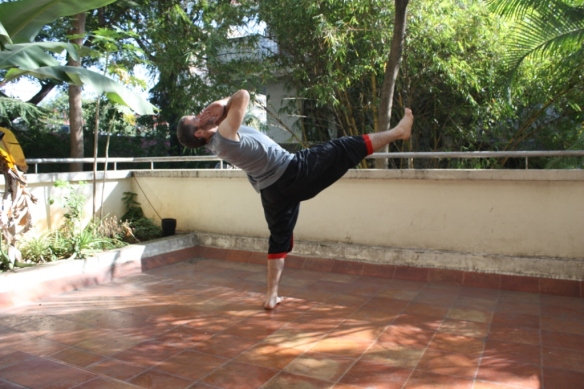
IMG_4269Learning third level material was when Kalaripayattu became daunting. Until then, it was just exhausting.


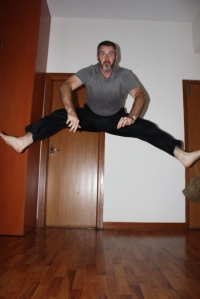
I’d been doing a lap of the kalari consisting of high kicks flowing into Hanumanasana (a scissors split.) Each split is on the opposite side from the last. By yoga standards, my split alignment was off. My hips weren’t perpendicular to my legs, but I’d allowed them to twist open to make the split easier. However, that was probably the least of my errors, and–unlike in yoga practice during which one might take minutes to ease into this intense split–the cadence in kalari was kick – split – struggle to one’s feet. [Okay, the “struggle” shouldn’t have been, but it’s an accurate description of my rendition.]


This wasn’t the hard part, by the way. I’ll get to that. The structure of the class up to that point was logically arranged to facilitate those splits. The practice started with warm ups of rapid repetitive motions that got the muscles and core warm. Then there were a series of kicking exercises that also served as dynamic stretches. Next, there was a vertical version of the splits done in a static form. With the inner edge of one’s bottom foot posted along the base board, the heel of one’s upper foot is slid up a piece of wood lathe worn smooth that has been tied vertically–perpendicularly to the steel burglar bars that one uses to pull oneself into the stretch. (This is an inner city kalari, and not the traditional version dug into the ground.) Then one revisits a high kick, swinging the leg with greater intensity. Only then does one do the lap of splits.

A traditional kalari looks like this. This is the Kalari Gurukulam in Chikkagubbi (parent school to the one at which I train.)

A traditional kalari looks like this. This is the Kalari Gurukulam in Chikkagubbi (parent school to the one at which I train.)


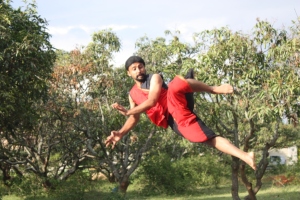
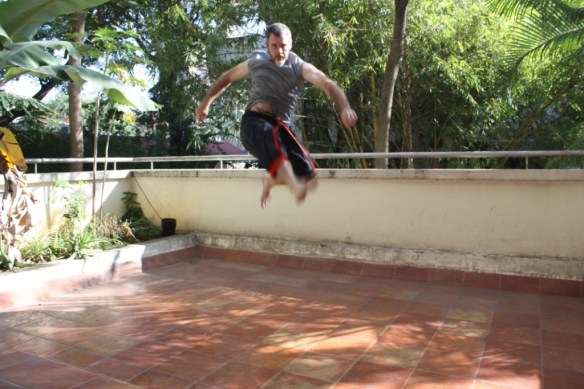
The next piece is where the third level kicked my butt. One’s hamstrings and quads stretched to the max, feeling more like limp noodles than coiled springs, one is now expected to work through a series of leaping maneuvers. There are seven leaping exercises (besides some basic warm-up leaps): a leaping circle kick, a spinning kick that takes one 360-degrees, a split kick in which one leaps up and kicks out laterally in both directions simultaneously, a split kick in which one leaps up spinning 360 degrees [theoretically] and does the same split kick in the middle, a flip kick in which one kicks up and forward and flips one’s body over in mid-air to come down on one’s hands and feet (in a lunged position with palms down next to the feet), and then there are two versions of leaping/spinning kicks that proceed down the length of the kalari.


IMG_1661Why does one do these plyometric techniques in the wake of such intense stretching? I suspect that experts in exercise science would tell me this isn’t the best way to improve my leaps. One should do the leaps when one’s muscles are more like rubber bands than al dente linguine. Still, I dutifully comply. Maybe there’s an ancient wisdom at work here. Maybe there’s not. There’s no way to find out without giving it a try. I fall down a number of times that first day, and on all subsequent sessions. As I write this, I’m now learning level five material, but I continue to revisit the leaps every session for two reasons. First, I’m not happy with my abilities. Second, I want to find out whether I can improve my balance of flexibility and power, and whether the kalari approach does the trick. (Note: I’m using the word “power” in the specific sense of work performed per unit time. In other words, it’s not synonymous with strength. It’s a function of both speed and strength.) At any rate, I still fall down.


IMG_2278However, looking beyond my own limited capacity to have my cake and eat it too (i.e. retain flexibility as I gain power), I see evidence of the success of this approach. There are a number of advanced people who’ve been using this approach for many years and have a preternatural balance of flexibility and jet propulsion. Said individuals seem to go from deep stretches to phenomenal vertical leaps without difficulty.


If nothing else, I’ve learned a great deal about my muscular composition. While I’m challenged by ballistic movements, my stamina is quite respectable. Type I (slow twitch) musculature seems to be disproportionately common in comparison to type II (fast twitch) in my body. While I’m including more power building training in my workouts, my progress is glacial. If I was smart, I’d take up long-distance running or some other endurance activity. But I tend to find such activities tedious, while I love the martial arts. And so I struggle.

IMG_4275


BOOK REVIEW: The Good Psychopath’s Guide to Success by Andy McNab and Kevin Dutton

The Good Psychopath's Guide to Success: How to Use Your Inner Psychopath to Get the Most Out of LifeThe Good Psychopath’s Guide to Success: How to Use Your Inner Psychopath to Get the Most Out of Life by Andy McNab
My rating: 4 of 5 stars

Amazon page

The central premise of this book is that psychopaths have a range of traits that help them succeed. These traits include thick skin, focus, fearlessness, charisma, and coolness under high pressure. The “good” in “good psychopath” is used to describe individuals who have psychopathic characteristics while retaining the ability to play by societal rules—at least to the extent necessary to stay in good stead with the law—as well as to recognize the ramifications of their personalities. If you thought you were going to learn how to get away with a tristate prostitute killing spree, you’re looking into the wrong book. The book does discuss what differentiates good from bad psychopaths, but it’s clearly addressing the former.

Unlike Dr. Dutton’s previous book, “The Wisdom of Psychopaths,” this book is a self-help book rather than pop science. It’s designed to help anyone channel their inner psychopath. If you’re already a psychopath, it may help you think about how you can apply your natural tendencies to getting what you want in life. If you’re not a psychopath, it’ll advise you on how to go about facilitating the growth of characteristics that serve psychopaths. McNab serves as the psychopath in-residence, offering stories and his own experience, while Dutton is the scholar trying to lend a more objective understanding of the subject.

The book’s organization is straight forward, there is a prologue plus three chapters that outline the subject and lay out the key concepts, and then chapters 4 through 10 each address one of the seven essential characteristics of the good psychopath. These include proclivities like non-procrastination, being confident, being oneself, taking criticism with ease, being persuasive, living in the moment, and reducing the influence of emotion in decision-making / behavior. These seven chapters are the heart of the book, and they explain how to think about and advance these personality characteristics.

One strength of the book is the use of stories and jokes to convey ideas in a reader-friendly manner. However, some of these stories are clichéd. On the other hand, a number of them come from the career of McNab, and he—as a former SAS member–had a more fascinating career than most. Also, many of tales and anecdotes come from the interaction of this scholar / warrior duo. The chapters also have quizzes that will help the reader evaluate their level of psychopathy, and the e-version of the book is linked to on-line versions of the quizzes.

I can imagine a range of responses to this book from love to hate. There’s one way to love this book (despite its faults), but two ways to hate it. The most obvious way to dislike it, but probably not the most common way, is substantive. One may object to a range of virtues such as coolness under pressure and living in the moment being labeled psychopathic. However, if this was a problem for the reader, one probably wouldn’t purchase (or, being psychopathic, steal) the book. Reading the blurb would tell one what to expect in that regard.

The more likely reason for hating this book is stylistic. The authors wrote it as though they were speaking to the reader, and we know there are good reasons for one’s written style of communication being different from the spoken word. The first such reason is that spoken language can confuse when one is lacking non-verbal information streams. In this case, there are two authors who haven’t merged into one voice, but instead retain their distinct voices. This means that one may have moments of not knowing who’s speaking. Such confused moments usually don’t last long because the authors work hard to create widely different personas. Dutton is the PhD with an erudite / nerdy bent, but who works to come off as the cool professor whose class one might enjoy taking. McNab is the psychopath, and he’s a soldier to the core. Still, even the occasional half sentence in confusion is distracting.

The second reason for writing differently than speaking is that one doesn’t know to whom one is speaking. Not everybody digs f-bombs and bawdy jokes. Those who do will probably find the style neither distracting nor offensive. Many readers won’t have a problem with the language, but will nonetheless find the authors’ attempts to come off as cool to be distracting or irritating. Working to appear cool wears well on 13 year olds, but seems a little pathetic in grown men talking to an audience of other adults.

I found this book interesting and I’d recommend it for people interested in personal development. However, I can’t say that I didn’t find the style of the book grating on occasion.

View all my reviews

2015 Top 10: Highlights From the Year That Was

These aren’t necessarily in any order.


1.) Trekking the Great Himalayan National Park [June]:

IMG_1898


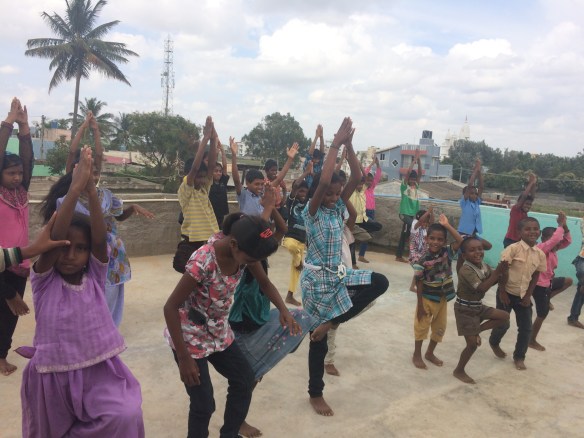
2.) Teaching kids at KAMMS and Socare [September & October]: I finished my RCYT course in April and have been teaching kids when I have a chance:

IMG_0101


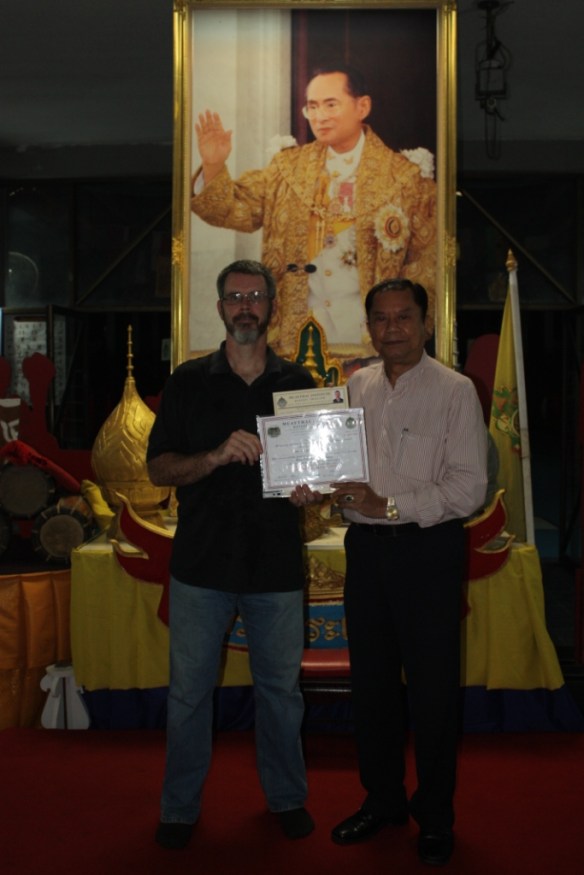
3.) Completing Level I Examination at the Muay Thai Institute [September]:

IMG_1926


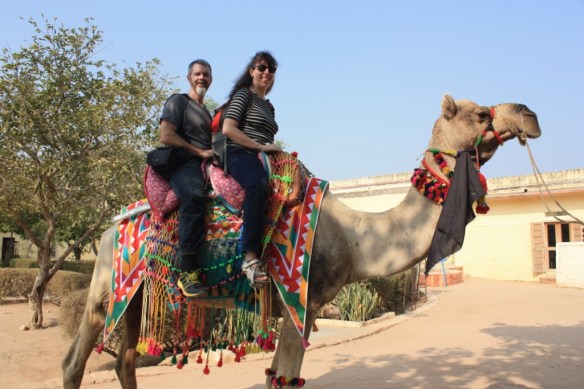
4.) Riding camels at Pushkar and Jaipur [November]:

IMG_3002


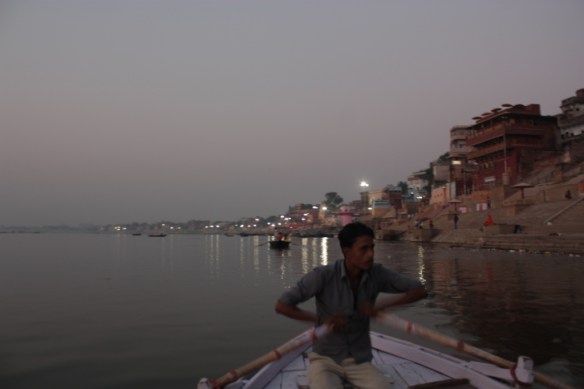
5.) Boating on the Ganges in Varanasi [October]:

IMG_3538


6.) Wandering around a coffee plantation near Chikmaglur [April]:

IMG_1966


7.) Completing the Level III and IV reviews in Kalaripayattu [February & August]:

IMG_4289


8.) Touring the Glenloch tea factory in Sri Lanka [May]:

IMG_0572


9.) 108 Surya Namaskara Against Child Trafficking [March]:

IMG_3331


10.) Junk boat tour of Ha Long Bay, Vietnam [December]: This may be jinxing us to put it on the list,  before we’ve been (we leave tomorrow) but I’m optimistic that our three weeks in Vietnam will be awesome, and I’m told Ha Long


What to expect in 2016? Lilla and I will be moving back to the States around mid-year. (To where, exactly, remains a mystery.) In January and February I’ll be doing an RYT-300 course to round out my 500 hour yoga teacher certification. I plan to make at least one more trip to Thailand to MTI for Level II. I’d also like to complete the 10-day Vipassana meditation course before returning. Lilla and I are thinking about another Himalaya trek for the summer.

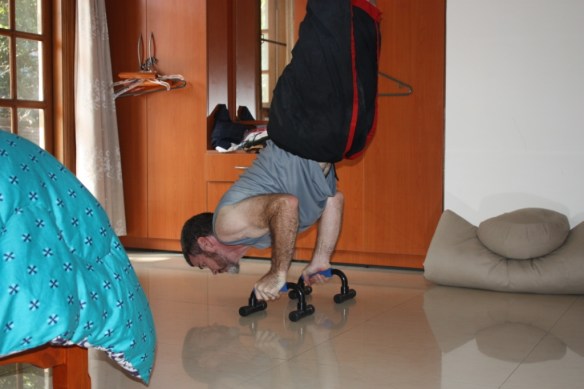
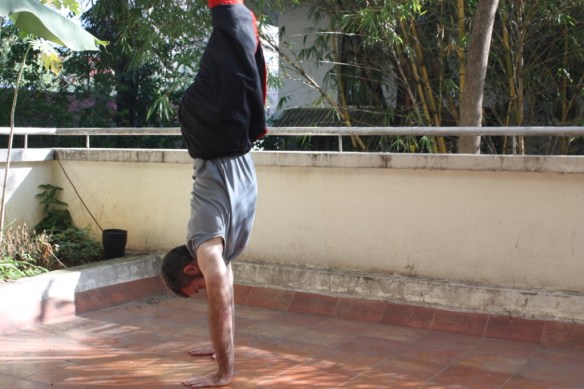
I’ll also be continuing to work on press handstand progression, as that’s been a focus for me of late and I still have a ways to go.

IMG_4354

IMG_4342

BOOK REVIEW: Yoga Education for Children, Vol. 1 by Swami Satyananda Saraswati, et. al.

Yoga Education for ChildrenYoga Education for Children by Swami Prakashanand Saraswati
My rating: 3 of 5 stars

Amazon page

This is the first of a two-volume set on teaching children yoga, and was the textbook for the Registered Children’s Yoga Teacher (RCYT) training course that I completed earlier this year. The focus is on integrating yogic teachings as part of a child’s broader education. It’s not just about how one can squeeze some postures into the life of a busy student, but about what yogic education can provide that mainstream education is lacking and how mainstream and yogic education can work together to produce healthier and more well-balanced children.

The book consists of three parts. Part I is entitled “Yoga and Education” and it considers a range of topics at the intersect of yoga and education. Here we learn why formal yogic education begins at age eight, and what the differences between children and adults are as they pertain to learning yoga—and learning in general. This section presents the specific practices that have historically been a child’s introduction into yoga (surya namaskara, nadi shoudhana [alternate nostril breathing], and a specific chant known as the Gayatri mantra.) The tone of the book is scientific, although it does vastly oversimplify some topics—e.g. the deterioration of the pineal gland—over what is being reported by scientists.

The middle section considers yoga as a therapeutic tool for emotionally troubled children, disabled children, and those with juvenile diabetes. This is the shortest part by far. It’s just three chapters, each linked to a subject mentioned in the topic sentence. The chapters are short and general. It should be noted, that the first section also addresses the issue of behavioral problems in a more general and less clinical sense.

The final part of the book, and the largest by page count, is yogic practices for children. There’s a brief section on pre-school exercises. As mentioned, children are formally introduced to yoga around age seven or eight. Younger children’s yoga training best takes the form of play. Therefore, the practices for younger children are more game-like. There’s a section on yoga for the classroom. In other words, practices that one can complete at a desk–as opposed to needing the full mat space.

The bulk of part three is taken up by asana. The postures are laid out as they are in the “Asana Pranayama Mudra Bandha” (APMB) book that is also put out by the Yoga Publications Trust of Bihar. For each posture there’s a line drawing, a description, and a list of benefits and contraindications. In some cases these posture listings look exactly the same as those in the APMB, but in many cases they are “marketed” differently. That is, a posture might be listed by its similarity of appearance to an animal or letter of the alphabet so that asana can be taught in conjunction with other topics—as well as be made more interesting for the young student. The grouping of asana is meant to assist in creating child-suitable lessons (as opposed to being grouped by type of posture–e.g. forward bends, back bends, twists, etc.)

The last part doesn’t deal only in asana, it also talks about pranayama practices suitable for children as well as other common practices like trataka (concentrating gaze) and yoga nidra (yogic sleep.) It’s important to note that not all pranayama practices are deemed suitable for children. Practices like yoga nidra have to be modified for children because they will not be able to sit still for extended periods, and so the yoga nidra practice must be abbreviated. Children may also have trouble following some of the instructions as used for adults.

I’d recommend this book for yoga teachers who are interested in teaching children. There are many unique features of teaching children that must be considered. This volume is under 300 pages, and the second volume is about the same thickness. I haven’t read volume two but it seems to take a similar approach, expanding on some items and focusing on a different set of practices. That volume also apparently reports on the findings of a couple studies on yoga in the educational environment.

View all my reviews

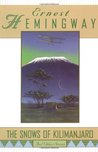
BOOK REVIEW: The Snows of Kilimanjaro and Other Stories by Ernest Hemingway

The Snows of Kilimanjaro and Other StoriesThe Snows of Kilimanjaro and Other Stories by Ernest Hemingway
My rating: 5 of 5 stars

Amazon page

This book collects ten pieces of short fiction penned by Hemingway. Each of them is a stand-alone short story; though there’s indication that they all take place in the same universe. Notably, the character Nick Adams recurs in four of the stories (“Fathers and Sons,” “In Another Country,” “The Killers,” and “A Way You’ll Never Be.”)

The first and last stories present intriguing similarities that make them interesting bookends to the collection. The first, and eponymous, story—“The Snows of Kilimanjaro”—follows the last hours of a man who is dying of gangrene from an infected wound he sustained on Mount Kilimanjaro. The dialogue pits a wife in denial against the man who seems resigned to the inevitability of his death. The last story, “The Short Happy Life of Francis Macomber” is also set in Africa and features a man and wife whose adventure goes awry. In this case the story begins with the man having been emasculated when he bolted in the face of a charging lion, and all in front of his harpy-esque wife. Francis Macomber manages to redeem himself only in the last seconds of his life.

Besides the aforementioned book-ending stories, among the most substantial and well-developed stories in the book include: “The Gambler, the Nun, and the Radio,” “The Killers,” and “Fifty Grand.” The first of these is about a gambler put in the hospital by a disgruntled competitor and the happenings in the hospital while he is on the ward. “The Killers” is about two hitmen who venture into a small town diner looking for a boxer who apparently owes someone money or decided not to take a dive. “Fifty Grand” is about an aging boxer who bets against himself (and will probably soon be in the same boat as the boxer in “The Killers.”)

There are a couple of stories that feel fragmentary, including: “A Clean, Well-Lighted Place” and “A Day’s Wait.”

This collection features the usual elements of Hemingway fiction, e.g. punchy and spare prose, artfully constructed dialogue, tales of manliness and inadequacy. It’s a short readable book of only about 150 pages.

The stories included are:

1.) The Snows of Kilimanjaro
2.) A Clean, Well-lighted Place
3.) A Day’s Weight
4.) The Gambler, the Nun, and the Radio
5.) Fathers and Sons
6.) In Another Country
7.) The Killers
8.) A Way You’ll Never Be
9.) Fifty Grand
10.) The Short Happy Life of Francis Macomber

I’d recommend this for readers of short fiction who haven’t gotten around to it yet.

View all my reviews

BOOK REVIEW: Ninja: A History by John Man

Ninja: 1,000 Years of the Shadow WarriorNinja: 1,000 Years of the Shadow Warrior by John Man
My rating: 3 of 5 stars

Amazon page

The author, John Man, isn’t the first historian to fall for the siren call of ninja history only to plummet into a catch-22, but he’s the one I’m reviewing right now. So, while his book isn’t exceptionally bad, it’s tremendously flawed in a manner common across ninja histories. What is said catch-22? On the one hand, ninja excite the imagination and a half-way decent book on them is sure to sell. On the other hand, there’s very little known about the ninja. If the myth of the ninja is an elephant, the ninja as we truly know him is a grasshopper. [So much so that the first Westerner to write such a history, Stephen Turnbull, has now spun 180, proposing that the ninja never existed but were purely a post-Warring States construct.] While it would seem that Turnbull goes too far given the existence of manuals and vague mentions, what we don’t know about are the nitty-gritty details of ninja missions and those are the stories that the reader desires but which time and the ninja’s legendary secrecy have put forever beyond our reach.

What is in the book? If not tales of ninja stealing into castles to abscond with information or to assassinate an enemy General, and the effect of those actions on the outcome of wars? First, there’s a lot of information that is already widely available in other English language books, such as the influence of Sun Tzu’s chapter on espionage on the birth of the ninja (probably spurious given the centuries in between) and description of the seven types of disguises. Second, there’s a lot of general Japanese history that is necessary to some degree as background, but at some point one realizes the author has ventured beyond background into padding. Finally, speaking of padding, about a third of the book by page count (cleverly disguised as only three chapters) occurs long after the end of the ninja. Don’t get me wrong; some of the World War II material is fascinating, but it’s as if one were reading a biography of Blackbeard and—all of a sudden—one finds oneself reading about a Somali hijacking of container ships in 2011. (Even while you are fascinated, you can’t help but feel that you’ve been the victim of bait-and-switch.) In short, the book has a lot of repetition and padding, and not much that’s both new and on topic. (One of the reasons that I didn’t give the book too low a rating is that if it’s the first book you are reading on the subject, it’s readable and interesting.)

There’s one more flaw that comes from the dearth of information. The author cites everyone and anyone who has said something interesting on the subject, but we don’t really know how reputable said sources are. Some may be sterling and others full-of-shit. It’s easy to say something fascinating about the ninja; it’s much more difficult to say something that’s true and fascinating.

So what does the book do right? It’s well written in terms of being readable and offering frequent mind candy. The author does challenge a few statements as he reports them. My last paragraph may have led one to believe that Man just shot-gunned information out there, but he actually takes a suitably skeptical view for addressing such a murky topic. The problem is that we don’t know how serious to take claims he refutes or those he appears to endorse because he’s not an expert in the field. He is an Asianist historian with a list of books that is all over the map. [I did see just one factual error in which he refers to the companion sword of a samurai as a tanto. A tanto is a dagger, the companion to the katana is the wakizashi. But I don’t know how big of a deal to make out of that sin as I can’t say that I noticed any others (not that I necessarily would as I’m no expert either.) On the other hand, a little fact checking…]

If you’ve never read a history of the ninja before, you’ll probably find this one interesting. If you’ve read the other books out there, it’s less clear that you will. However, I did find the discussion of Iga no Ran (the battle of Iga, a campaign meant to crush the ninja of Iga) to be intriguing. At any rate, as long as you realize the last one-third of the book is off-theme and are alright with that, you should find it palatable.

View all my reviews