Kolkata Limerick

There was a young scholar of Kolkata
who'd debate, Siddhartha to Sartre,
but it wasn't so wise
to philosophize
with guys who drive cabs in Howrah.

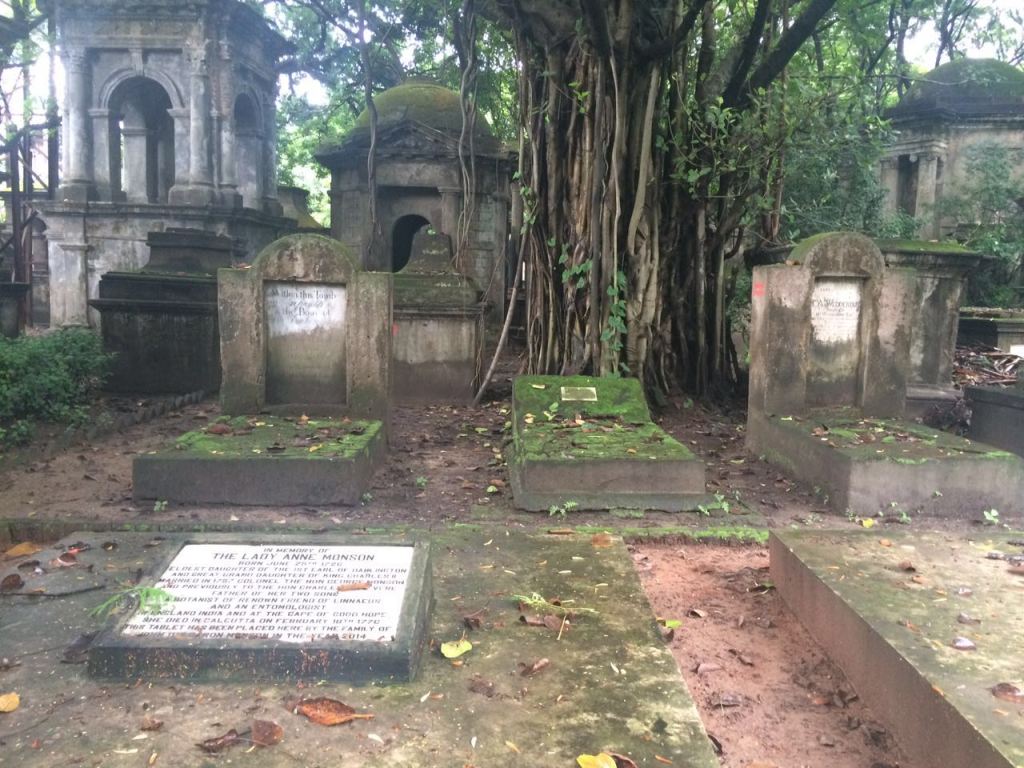
City Swallowed [Haibun]

Rubble cubes lie like piled dice. Temples and throne halls collapsed into mossy blocks brought low by the meager -- if inexorable -- forces of water drips and grass roots, roots that became wedges, splitting stone from stone. People push the blocks back together in homage to ancestors, but turn one's back and the hungry jungle consumes. Those ancestors crafted such sturdy stuff out of stout stone blocks. How much more quickly will our planned obsolescent cities be swallowed?


stout stone blocks -
toppled, dissolved, buried -
a city swallowed

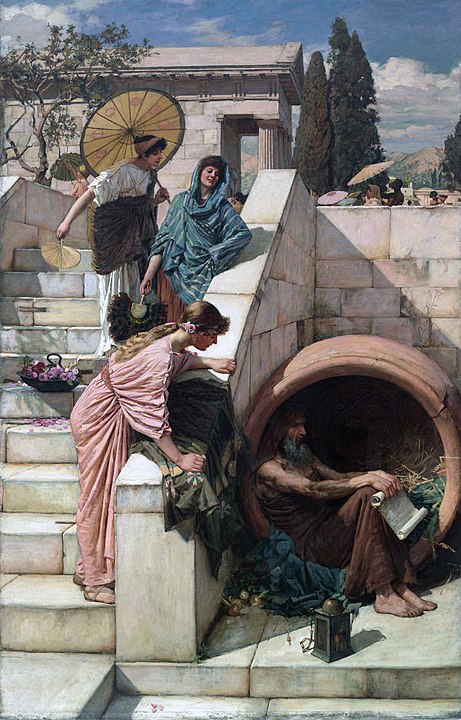
BOOK REVIEW: Ion by Plato

IonIon by Plato
My rating: 5 of 5 stars

Amazon.in Page

In this early Socratic dialogue, Socrates converses with a Homeric rhapsodist (i.e. performer of Homer’s stories) who shares the dialogue’s name, i.e. Ion. Socrates leads Ion to the conclusion that the rhapsodist is really a conduit of divine inspiration – as opposed to being an artist. To a large extent Socrates achieves this by showing (somewhat brutally) that there are experts infinitely more competent to comment on Homer’s epic poems that is Ion. For the most part, Ion accepts that expert artists would be more qualified to comment on the correctness of Homer’s words than is he – e.g. an expert on horsemanship would be more qualified to comment on the parts which reference horses. [The only point at which Ion offers a challenge is with respect to military general, where he believes himself equally competent to discuss military campaigns as would be a commander. (Though Socrates tries to disabuse him of this notion.)]

And despite this, no one would argue that Ion offers a special value that those various artists and experts cannot, a unique connection to Homer’s works. For Socrates that value lies in inspiration. The poet, too, Socrates argues isn’t so much a crafter of verse as one capable of receiving inspiration. The rhapsodist allows the intense emotional experience to transfer from the muse / poet intersect onward to the audience member. In less mystic terms, Socrates is trying to make sense of the artistic process and its largely unconscious process and its focus on the experience of emotional resonance, rather than on rational thought. One can see a bit of overlap with a later dialogue, Phaedrus, which discusses divine madness and its virtues.

This short and to-the-point Socratic dialogue is worth reading, even if does come down in needlessly otherworldly territory.

View all my reviews

Rishikesh Limerick

A visitor to scenic Rishikesh
met a wandering bovine in the flesh.
It's only notable
cuz it sought a table
in a mo-mo joint of old Rishikesh.

Tree & Pond [Haibun]

Beside a pond, a tree reaches, its branches stretched wide and skyward, blocking the harsh cloud-penetrating rays. Locals sit on the lush grass, their backsides wet, their backs resting on the rough and slanting trunk. They watch ripples echo outward from the mouth tips of feeding fish, those concentric rings etched into in the mirrored waters - and yet moving. In time, watchers will become ripple mesmerized, and will experience the stiff twitch and head nods of an impending nap.


sitting pondside,
ripples from feeding fish
lull my mind 

Mumbai Limerick

There once was a dabbawalla from Mumbai,
carrying curry, rice, roti, and dal fry,
got hit by an auto
whose driver was blotto,
but still made his deliveries on time. 

Debrecen Limerick

An old organist from Debrecen
couldn't decide which organ to play when.
The big church had two -
one old and one new,
and they sat them at opposite ends.