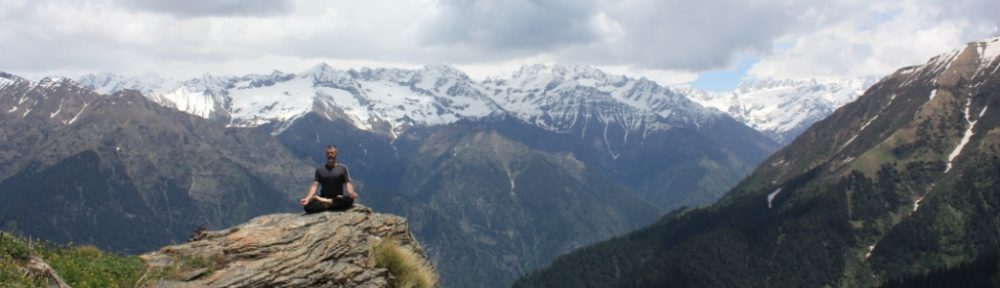
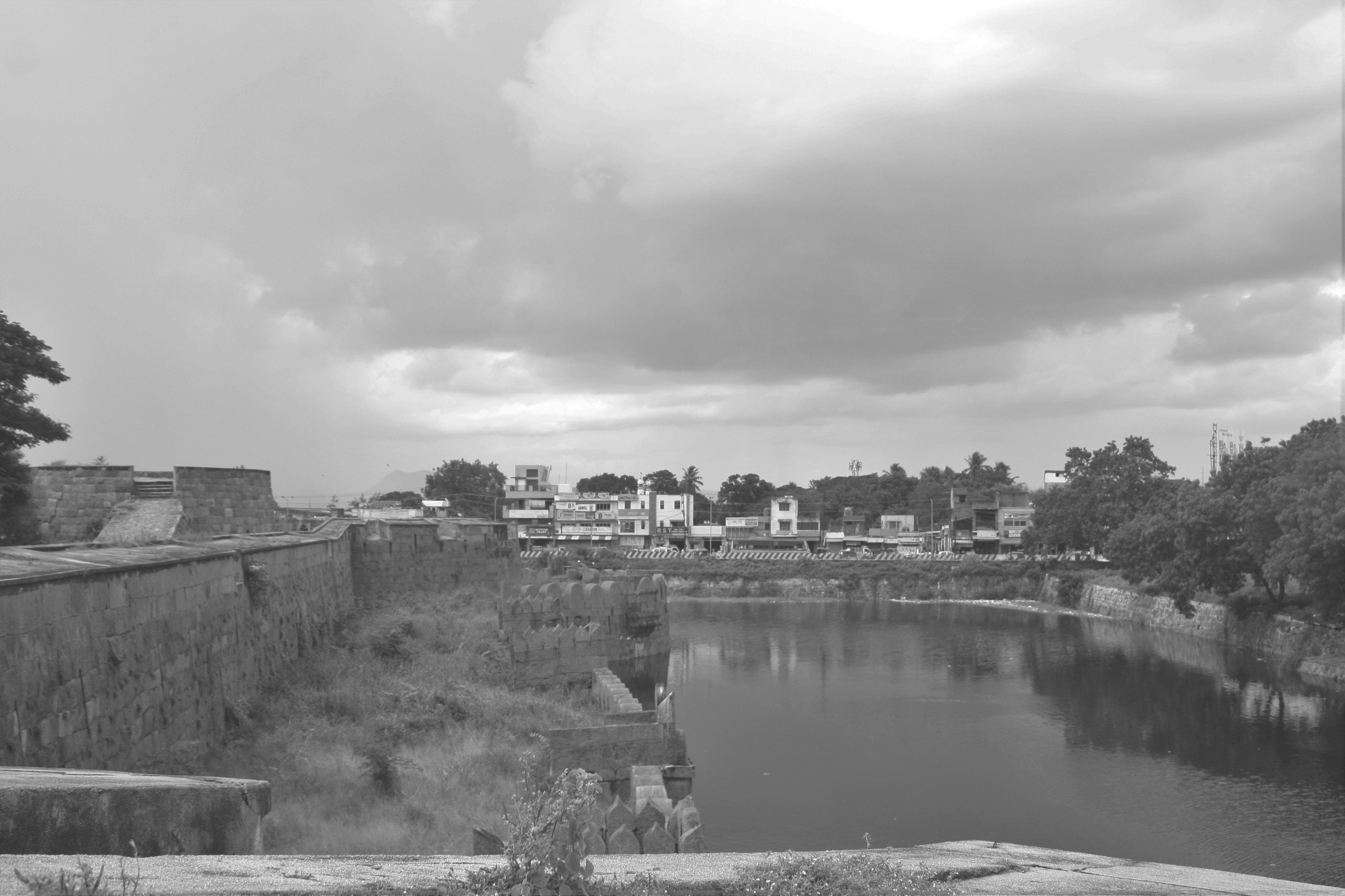
poets & artists sit in ornate houseboats, translating the clouds.
Kashmir [Haiku]
Reply
The trees will soon be barren, all. It is that time of year -- the Fall. The understory never was, and can't now house the insect buzz. And, so, the woods stand silently -- nothing treads in peace, nor violently. It's empty; devoid of motion: life hides below, as in Oceans. It does feel like we're out to sea - a strange place where both sides are lee. And - so - we're stuck, we can't move on, but can see promise over yon.
If one means “arts” in the broadest sense of the word, I’d have to say William Blake, because I like both his poetry and his graphic artistry, as well as his particular brand of madness.
If you mean visual artistry (which people often do when they use the term without a qualifier,) I generally enjoy fantastical and imaginative art, but not so fantastical or imaginative that it requires / shows no skill. So, artists like Vincent Van Gogh, Francisco Goya, Hieronymus Bosch, and M.C. Escher top the list.

I click on Google Maps;
a pin highlights for a cemetery,
and, here, I stumble upon
graveyard reviews.
These reviews intrigue me because
it seems to me that if one is capable
of writing a cemetery review,
then one is unqualified.
And, if one is qualified to comment
on the caliber of an eternal resting place,
then one is unlikely to be capable of
posting a review.
I read one of the one-star reviews
and see that the reviewer's principal complaint
is an overabundance of "pocong."
"What is a 'Pocong?'" you may ask.
It is a Javanese ghost that takes up
occupancy in death shrouds.
Why is there a Javanese ghost
infestation in a cemetery 4000 kilometers
from Java, and -- as near as I can tell --
with zero Javanese occupants?
The review does not say,
but I love that someone panned
a cemetery based on the presence
of foreign ghosts
[and not because it is simultaneously
phasmophobic and xenophobic.]
But because it shows an unbridled commitment
to one's imagination that is usually
only seen among children.