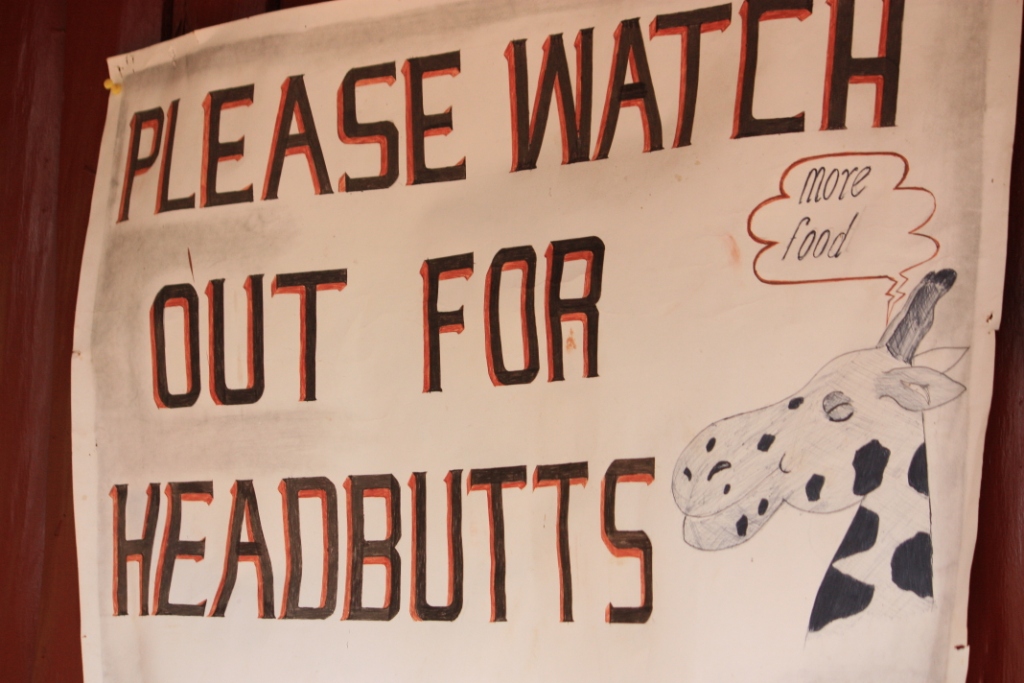
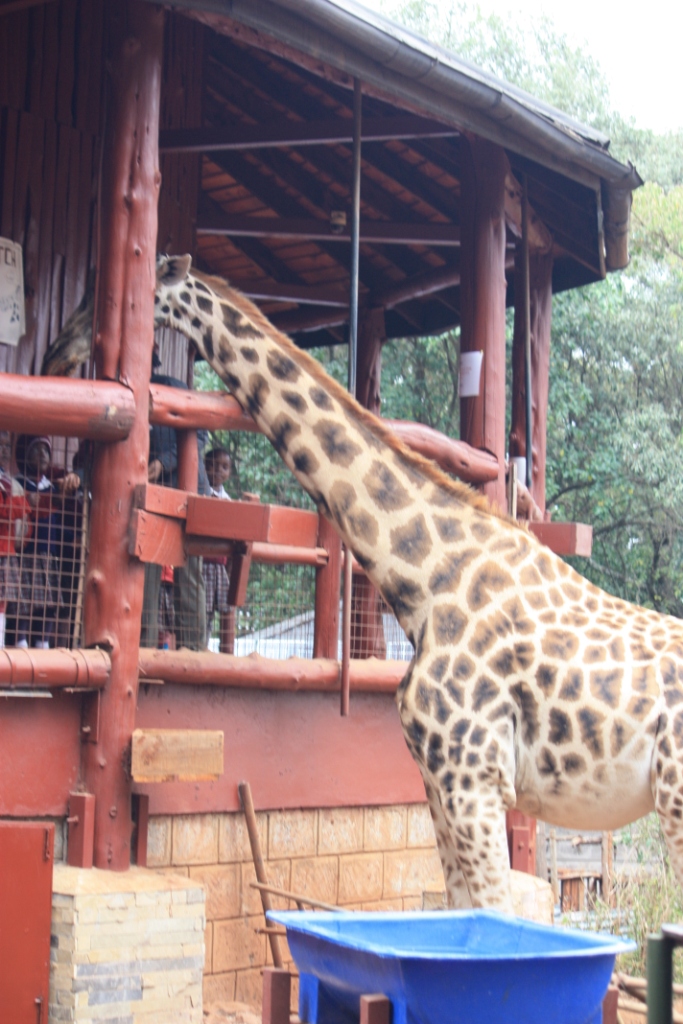
I was warned giraffes like to give headbutts.
   I told the man, "You must be nuts!
Even if true, my head 's far too low."
   "That's why we built a tower, now up you go!"
Tower built at the Giraffe Centre to put humans at headbutt level.
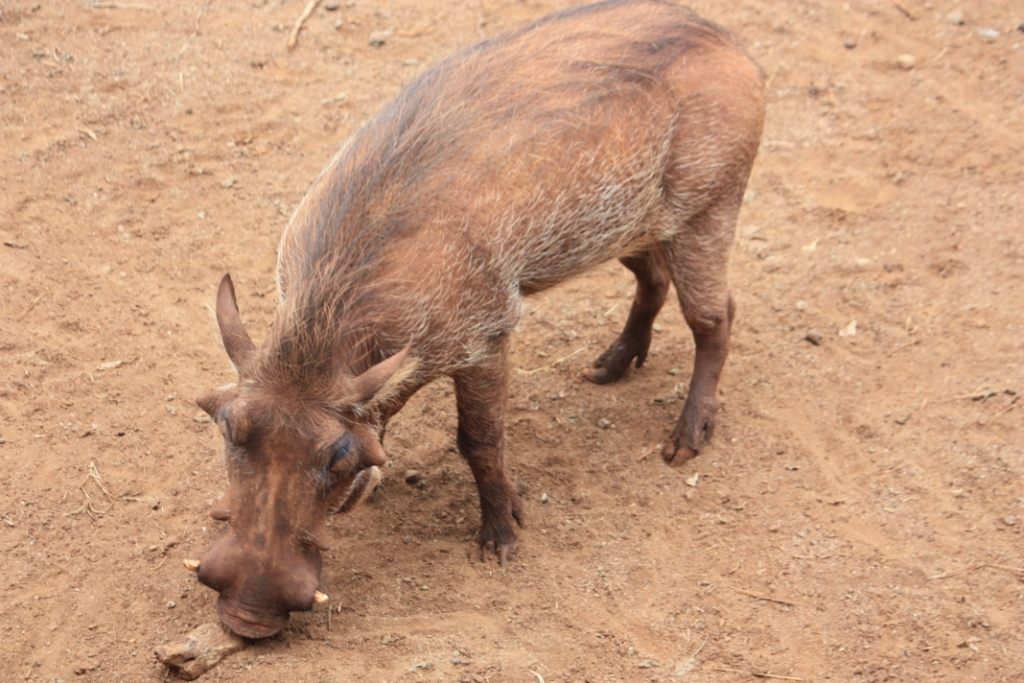
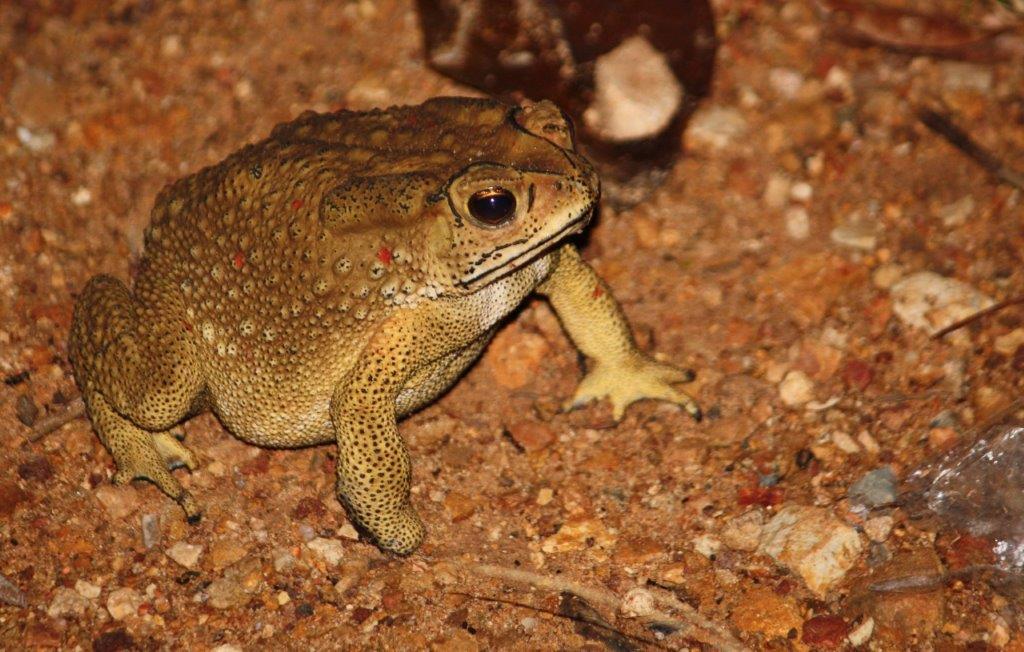
Given that "warts" and "hogs" are both unloved,
   Why not prybar letters, together shoved?
 A well-placed dash might do the trick,
    Would "War-Thog" sound too sci-fi bombastic?
At the beginning there was a huge drop of milk.
 Then Doondari came and he created the stone.
   Then the stone created iron;
   And iron created fire;
   And fire created water;
   And water created air.
 Then Doondari descended the second time.
   And he took the five elements
   And he shaped them into man.
 But man was proud.
 Then Doondari created blindness,
      and blindness defeated man.
   But when blindness became too proud,
 Doondari created sleep,
      and sleep defeated blindness;
   But when sleep became too proud,
 Doondari created worry,
      and worry defeated sleep;
   But when worry became too proud,
 Doondari created death,
      and death defeated worry.
   But then death became too proud,
 Doondari descended for the third time,
   And he came as Gueno, the eternal one.
     And Gueno defeated death.
NOTE: The Fulani (also known as Fula and Fulbe) are a West African herding tribe that live in Mali, Niger, Nigeria, Guinea, and Senegal.
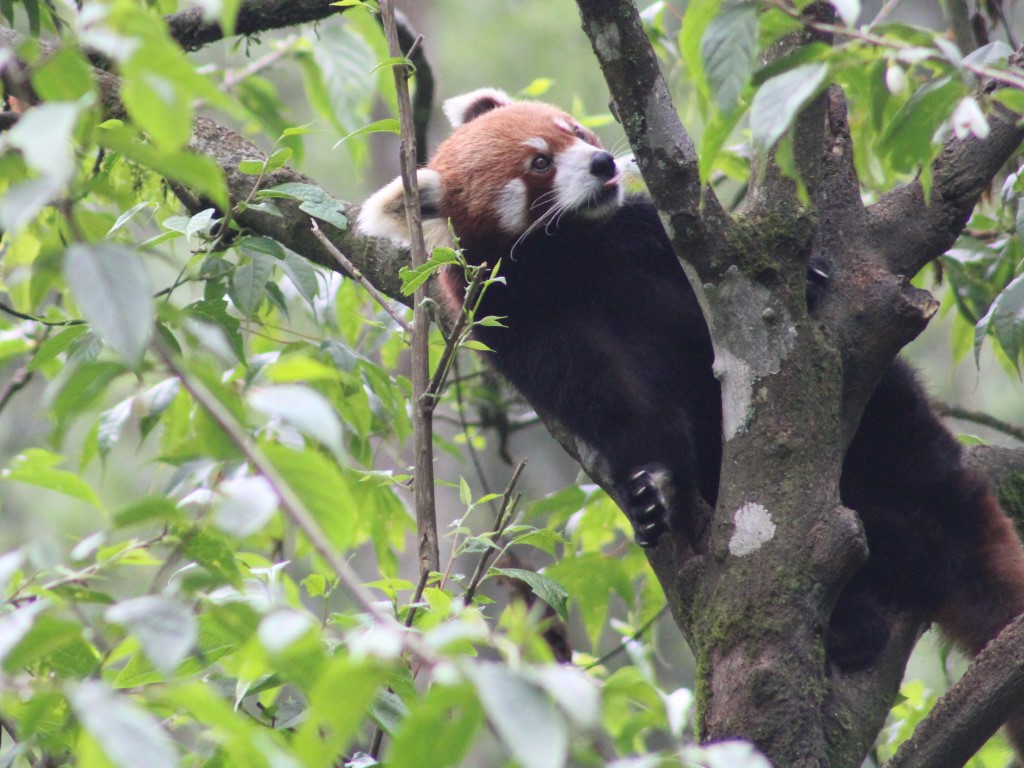
The Red Panda: more red than Panda Bear --
 I'll grant you similarity of facial hair.
 Why is it not "the Ginger Raccoon?"
 Too much like a bamboo-eating Irish buffoon?
Zenith
     These griefs
          These gardens on and on
 Where the toad croons a tender cry skyblue
 The hind of silence startled races by
 The nightingale that love has bruised sings in
 Your body's bush on which I've picked each rose
 Our hearts hang from the same pomegranate bough
 And in our gaze pomegranate blossoms blow
 That falling one by one have strewn the road