I
The grey sea and the long black land;
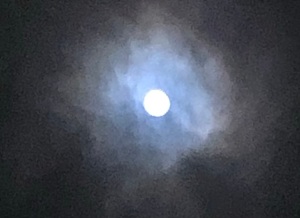
 And the yellow half-moon large and low;
 And the startled little waves that leap
 In fiery ringlets from their sleep,
 As I gain the cove with pushing prow,
 And quench its speed i' the slushy sand.

II
Then a mile of warm sea-scented beach;
 Three fields to cross till a farm appears;
 A tap at the pane, the quick sharp scratch
 And blue spurt of a lighted match,
 And a voice less loud, thro' its joys and fears,
 Than the two hearts beating each to each!
Amazon.in Page
I read the 1909 Cyril Scott translation of Baudelaire’s poetry collection. It consists of 54 poems, including “Condemned Women” but not including others of the six poems that were banned in early editions and which only came to be included in later editions. (I did look up and read a couple translations each for the six poems — because censorship can’t be allowed to prevail. Not surprisingly, they are calm by today’s standards. It should be noted that Baudelaire played in symbolism, and so his poems – while ahead of their time in subject matter – didn’t tend toward explicit vulgarity in the first place.)
The Scott translation is all in rhymed verse, the largest share of it presented as sonnets — though there are some longer pieces (longer, but not long. It’s a quick read.) “The Broken Bell” and “Spleen” were highlights for me, but the whole collection is intriguing, evocative, and readable.
I enjoyed this collection tremendously, even with such an old translation. The hedonism, eroticism, and macabre of Baudelaire’s work creates an intense tone.
I’d highly recommend this collection for all poetry readers.
I knew a simple soldier boy
 Who grinned at life in empty joy,
 Slept soundly through the lonesome dark,
 And whistled early with the lark.

In winter trenches, cowed and glum,
 With crumps and lice and lack of rum,
 He put a bullet through his brain.
 No one spoke of him again.

You smug-faced crowds with kindling eye
 Who cheer when soldier lads march by,
 Sneak home and pray you'll never know
 The hell where youth and laughter go.
The tide rises, the tide falls,
 The twilight darkens, the curlew calls;
 Along the sea-sands damp and brown
 The traveller hastens toward the town,
          And the tide rises, the tide falls.

Darkness settles on roofs and walls,
 But the sea, the sea in the darkness calls;
 The little waves, with their soft, white hands,
 Efface the footprints in the sands,
          And the tide rises, the tide falls.

The morning breaks; the steeds in their stalls
 Stamp and neigh, as the hostler calls;
 The day returns, but nevermore
 Returns the traveller to the shore,
          And the tide rises, the tide falls.
Life has loveliness to sell,
     All beautiful and splendid things,
 Blue waves whitened on a cliff,
     Soaring fire that sways and sings,
 And children's faces looking up
 Holding wonder like a cup.

Life has loveliness to sell,
     Music like a curve of gold,
 Scent of pine trees in the rain,
     Eyes that love you, arms that hold,
 And for your spirit's still delight,
 Holy thoughts that star the night.

Spend all you have for loveliness,
     Buy it and never count the cost;
 For one white singing hour of peace
     Count many a year of strife well lost,
 And for a breath of ecstasy
 Give all you have been, or could be.
Why fades a dream?
   An iridescent ray
 Flecked in between the tryst
   Of night and day.
   Why fades a dream? --
 Of consciousness the shade
 Wrought out by lack of light and made
   Upon life's stream.
   Why fades a dream?
That thought may thrive,
   So fades the fleshless dream;
 Lest men should learn to trust
   The things that seem.
   So fades a dream,
 That living thought may grow
 And like a waxing star-beam glow
   Upon life's stream --
   So fades a dream.