BOOK REVIEW: Modern Buddhism: Vol. 1 (Sutra) by Geshe Kelsang Gyatso

Modern Buddhism: The Path of Compassion and Wisdom - Volume 1 SutraModern Buddhism: The Path of Compassion and Wisdom – Volume 1 Sutra by Geshe Kelsang Gyatso
My rating: 4 of 5 stars

Amazon page


This is the first book in a three-volume overview of Buddhism that is available for free (or for the minimum Kindle book price on Amazon.) The book is written by a Tibetan Buddhist scholar-monk, and, therefore, emphasizes the Mahayana approach and specifically that of the Gelug school. (I’m a neophyte, but I don’t think this book goes into so much detail as to be controversial among Tibetan Mahayana Buddhists, but if you are thinking you’ll learn about, say, Zen or Theravadan Vipassana, not so much.) The theme of this volume is an overview of the Limram, which is a sutra describing the path to enlightenment.

The book is divided into four sections. The first offers a broad overview of Buddhism with particular discussion of the Kadam Lamrim (the specific sutra discussed) and Kadampas (which is the name for an individual who pursues practice of the Kadam Lamrim.) The other three sections describe the information needed by an initiate, middling practitioners, and advanced practitioners, respectively.

The section on persons of initial scope (i.e. initiates) emphasizes the need to recognize the limited scope of a human life, to reflect upon one’s imminent death, and to consider the importance of avoiding lower rebirth.

The section on persons of middling scope echoes the four noble truths. They are discussed by way of the four questions: 1.) What one should know? 2.) What one should abandon? 3.) What one should practice? And 4.) What one should attain? In essence, it suggests one understand suffering, the path to is cessation, and that one follow that path.

The largest section, by far, is the portion on individuals of great scope. It is divided into four parts. The first part describes the need to revise one’s approach to love by taking oneself out of the center and practicing loving-compassion for those that one doesn’t know. The second subsection outlines the six perfections (giving, moral discipline, patience, effort, concentration, and wisdom) and the importance of each. The third section is about emptiness and truth. The final section is a brief description of the Lamrim practice.

There are a small number of line drawn illustrations of important figures in the tradition. There are no notations, citations, or ancillary material.

I found this book to offer a concise overview of the subject of Buddhism—specifically from the perspective of the Gelug tradition of Tibetan Buddhism. While there are some historical stories, such as those drawn from the life of Milarepa, the book is not designed to be entertaining reading. It’s a straightforward transmission of knowledge. In that regard it does a fine job, it’s clear and concise.

I’d recommend this book for one who’s interested Tibetan Buddhism, but one should be aware that it’s not a nonsectarian overview of Buddhism as the title might suggest to a reader.

View all my reviews

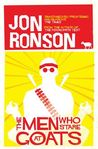
BOOK REVIEW: The Men Who Stare at Goats by Jon Ronson

The Men Who Stare at GoatsThe Men Who Stare at Goats by Jon Ronson
My rating: 5 of 5 stars

Amazon page


Ronson investigates the US military intelligence community’s forays into extrasensory perception (ESP) and mind control. Those who’ve seen the movie loosely based on this book will be aware of the quirky-humorous tone it takes. (If the title wasn’t enough to convey that the author was aiming for quirky humor.) Ronson’s style, favoring punchy simple sentences, offers a kind of deadpan delivery that supports the tone of the book.

That said, the book also has a sad edge as it can be seen as a commentary on military officers who came back from the war in Vietnam damaged and grasping at straws as to how to prevent history from repeating itself. It’s as if what these men experienced made some eager to believe because they so wanted to believe they could win with the mind and avoid the carnage of war.

While the book’s sixteen chapters are not divided by the author, they can be roughly divided into three parts. The first is the pursuit of ESP starting in the late 1970’s. This includes remote viewing and the titular psychokinesis (i.e. starring goats to death.)

The middle section is the resurgence of these esoteric approaches in the late 90’s and, especially, after 9-11 (also speaking to how dire blows to the psyche lead to wild approaches.) Much of this section is about mind control rather than ESP. One may remember the news story of the “I Love You, You Love Me” song from Barney [i.e. the purple dinosaur] being played over and over again to break terror suspects. The question remaining unanswered is whether there was anything else going on besides torture by Barney song (i.e. subliminal messages or sonic / ultrasonic frequencies [as used in non-lethal weapon technology.])

The latter section deals with the famous case of a scientist who jumped from a hotel room window to his death. It was later admitted that the scientist had been the unwitting victim of hallucinogen experimentation as part of the famed MKUltra project, and his death was written off as a trip gone bad. Ronson presents the story of the scientist’s son, a man who firmly believes that the story copped to was neither the full story nor the true story.

This book is interesting and entertaining, despite the fact that many of the questions that Ronson sets out to answer remain unanswered and probably always will. While the author got several key people to talk to him, the projects discussed are highly classified and the possibility of disinformation is ever-present.

Ronson manages to walk a fine line throughout the book. He presents all this quirky and bizarre activity in a way that neither comes across as mocking nor even particularly skeptical. (His punchy delivery does hint at this intention on occasion.) He lets the reader do the mocking and be the skeptic. At times he comes across as a believer. That is, while many of the happenings of the book reflect bat-shit crazy behavior / decisions, he suggests that all but the most hardened skeptics would believe that some of the people involved had inexplicable gifts.

I’d recommend this book. If you’re interested in government sponsored esoteric activities like psi and mind control and related scandals / conspiracies, you’ll find it fascinating. On the other hand, even if you’re not, it’s still an entertaining read that provides a sort of commentary on the effects of war on the psyche.

View all my reviews

BOOK REVIEW: A South Indian Treatise on the Kamasastra ed. by Swami Sivapriyananda

A South Indian Treatise On The KamasastraA South Indian Treatise On The Kamasastra by Swami Sivapriyananda
My rating: 4 of 5 stars

Amazon page (note: they have a different edition, I can’t comment on its commentary and art.)


This book was originally entitled “Rati Ratna Pradipika.” It’s an unfinished manuscript penned by a member of the Wadiyar (Wodeyar) Kingdom over 350 years ago. The Wadiyars were a south Indian royal family that ruled out of Mysore from 1399 to 1950. Like the “Kamasutra,” which heavily influenced this text, it’s a sex manual. Readers of the “Kamasutra” will not find anything new herein. This book serves more as a window into sexuality, culture, and their overlap for the place and time written. That said, it’s a quick read to appease one’s curiosity. The edition I read was only slightly more than 100 pages and that includes extensive commentary, artworks, and front and back matter.

This treatise consists of seven chapters. Chapter one is largely about astrology and what sex acts are most auspiciously practiced on which days of the month, but it starts with a brief classification of women with regards sexual promise. There’s not much content in this chapter that has any validity outside of the culture and times of its writing, and one wouldn’t want to consider this information to be a relevant guide to one’s behavior in the present day.

Chapter two delves into greater detail in classifying women and men (by body type, demeanor, and genital size / characteristics.) Women are classified as gazelle, mare, and elephant and men as hare, bull, and horse. There’s a brief discussion of which classes are ideally paired. The influence of dosha (i.e. kapha, pitta, vata)–a three-fold classification scheme broadly referenced in yoga and ayurveda—is also described herein.

Chapter three describes “outer play” which—as the name suggests—consists of acts that don’t involve bodily penetration (at least not beyond the so-called “French kiss.”) There are subsections for embracing, kissing, nail marks, and bite marks. The nexus of pain and pleasure is seen in the discussion.

Chapters four and five both concern the practice of “inner love.” The first of these chapters discusses 27 styles of intercourse. The 27 ways of intercourse are functions of genital size, time to orgasm, and level of passion. Chapter five elaborates on the subject that most people think of when they think of Indian sex manuals, and that is the physical positions. As with the “Kamasutra,” these postures range from simple and straight-forward to contortionistic.

Chapter six describes sixteen varieties of oral sex (i.e. eight female to male, and the same number vice versa.) Perhaps reflective of the misogyny of the times, the male to female varieties reflect different physical approaches, whereas female-on-male oral includes varieties such as “post-quarrel.”

Chapter seven is sort of a miscellany chapter that describes approaches to “love blows,” sounds, and a tour of the traits of women of various regions of India. As with the rest of the book, there are some entries that read comedically. (e.g. “While the woman is either sitting on his knee or on a bed the man lovingly punches her with his fist.”… “In response to this cruel violence she will cry like a goose, cuckoo, or duck.” However, the commentary clarifies and reduces confusion over what is presumably an attempt to translate as literally as possible.

The edition that I read (ed. by Swami Sivapriyananda with art by Raghupati Bhatta) was well done. The commentary did a great job of elaborating on confusing elements in the text as well as clarifying points which are incongruous with what we’ve come to know about sex and sexuality through the lens of modern science.

As mentioned, the edition I read had artworks to help clarify the text. These paintings / drawings are exaggerated (not unlike Japanese erotic artwork) and stylistic, but give one the gist of what the author was trying to convey. Most of the pictures are in chapters five and six where they are most helpful, but a few are placed for aesthetic purposes in other chapters. There’s also a brief bibliography in the edition that I read.

I’d recommend this book for anyone who’s interested in the nexus of sex, culture, and yogic / ayurvedic thought.

View all my reviews

BOOK REVIEW: Lumbar Herniated Disc by Veritas Health

Lumbar Herniated Disc: The Essential Guide to Finding Back Pain ReliefLumbar Herniated Disc: The Essential Guide to Finding Back Pain Relief by Veritas Health
My rating: 3 of 5 stars

Amazon page


I picked up this 60 page guide when I was having low back problems involving a slight nerve impingement. The good news is that it provided enough information to eliminate lumbar herniated disc as cause of my particular problem. That’s not saying nothing because low back problems are notoriously difficult to pinpoint and a cause often remains undiagnosed. The bad news is that this, inexpensive but not free, guide didn’t offer anything that couldn’t be found at respectable online sites like WebMD or The Mayo Clinic for free.

The guide is organized into 11 brief chapters that run from understanding what a lumbar disc is and how it becomes herniated through various treatments (self- and doctor-administered.) It also explains when the situation warrants seeing a doctor.

There are plenty of graphics in the book from computer-generated anatomical imagery to simple line drawings. They are beneficial to understanding the nature of the condition.

My recommendation would be to consider whether you need to have access to this information at times when you don’t have access to the internet. If that’s the case, it’s worth the small cost. If not, you’ll probably feel it didn’t really offer any value-added over free online sites.

View all my reviews

BOOK REVIEW: Publish on Amazon Kindle with Kindle Direct Publishing

Publish on Amazon Kindle with Kindle Direct Publishing Publish on Amazon Kindle with Kindle Direct Publishing by Kindle Direct Publishing
My rating: 4 of 5 stars

KDP website


This is a short guide to self-publishing using Kindle Direct Publishing (KDP) that was put out by KDP. I’m not sure this particular e-book exists any more, though all the information in it will be on the KDP website. There are about a billion (exaggeration, maybe) Kindle books that have taken this information and made their own book, using similar names. I can’t comment on any of them. I’m sure some include helpful tips for increasing your sales and making your product more appealing, and some of those tips are likely much better than others.

This is a straight up guide to using KDP. It covers topics like how to set up an account, what formats are accepted (several) and which is best (HTML), royalty options (there are two, and the lesser royalty allows one greater freedom of pricing one’s book, i.e. if you want to sell it at cut-rate to get some sales volume or if you’re a narcissist who thinks their self-published masterwork is worth $200 USD per copy), and how / when payments are made (varies by EFT [electronic funds transfer] v paper check options.)

This guide provides all the information needed to get your book up on Amazon. However, if you want insight into other topics (how to market your book, covers, etc.) you’ll need to look elsewhere.

If you can find it, I’d recommend this handy guide. But it may be quicker to just go to the KDP website.

View all my reviews

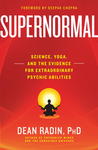
BOOK REVIEW: Supernormal by Dean Radin

Supernormal: Science, Yoga and the Evidence for Extraordinary Psychic AbilitiesSupernormal: Science, Yoga and the Evidence for Extraordinary Psychic Abilities by Dean Radin
My rating: 4 of 5 stars

Amazon page


With this controversial book, Dean Radin presents the scientific evidence for an array of psychic powers, but he frames the discussion in terms of yogic siddhis. “Siddhi” is a Sanskrit term for an ability that isn’t seen among the general population–at least not reliably so– and for the most part these “accomplishments” correspond to the categories discussed in parapsychology (i.e. telepathy, precognition, psychokinesis, and clairvoyance.) [Note: As mentioned, this is a controversial book. I will attempt to provide as unbiased a review as possible. I am generally skeptical, but don’t believe in poo-pooing the study of subjects because they offend my skeptical sensibilities. Furthermore, I try to keep an open mind because: 1.) there is no scientific consensus about what consciousness is or how it works, 2.) quantum biology is a subject in its infancy and we may yet learn there is more quantum “spookiness” going on in the brain than we think. 3.) for all I know we are in an simulation and then it’s all a matter of programming.]

The yogic emphasis doesn’t change the book much from the pop psych literature review of parapsychology studies it would otherwise be, except to necessitate background information on yoga and siddhis. However, this emphasis may or may not have opened up a huge additional readership. Outside of a fringe, siddhis aren’t much in vogue among yoga practitioners these days. Among modern day yogis and yoginis, there are some who believe in them and some who think they’re throwbacks to an era of superstition, malnutrition, and wishful thinking. However, even among the former, siddhis are generally considered a distraction. The advice of most of the great yogis has been to not get lost in the pursuit of such powers because chasing siddhis can derail one from one’s ultimate objective (e.g. liberation.) Still, if even a small fraction of yoga practitioners take an interest, that’s a fairly large readership.

So what exactly is the controversy? Obviously, there are many divergent demographics with differing views on the topic. For hardcore skeptics, parapsychology is right up there with alien abduction, bigfoot /yeti sightings, and the anatomy of the Loch Ness monster with respect to being a legitimate topic for scientific study. On the other hand, there are believers who are offended by the mere notion of studying such phenomena with science, and who say such investigations are an assault on their beliefs.

But that’s not a very interesting controversy—i.e. there are some people who won’t believe in such abilities no matter what the evidence, and others who will believe in them no matter what science has to say. So let’s chop off the hardcore skeptics and hardcore believers and ask what the controversy is as it pertains to those of us who consider evidence when drawing conclusions.

The root of the controversy can be stated rather quickly and clearly. Here it is: the effect size is small but statistically significant. What does that mean? Say this study asks a subject to determine which of five randomly selected shapes has been chosen using nothing but his / her mind. Using pure guessing, one would expect to be right 20% (i.e. 1/5th) of the time. If a person happened to get 32% right in a given trial, that means nothing because small samples don’t give one a convergence towards a mean value. (i.e. Intuitively, you know that if you flip a coin 10 times and get 7 heads, it doesn’t necessarily mean anything. If you repeat that 10-flip set 10,000 times, and still get 70% heads, then you probably have a trick coin or something else odd is going on.) So the issue is that even when experimenters repeat the experiment over and over again such that the average value should converge on 20%, it doesn’t. It stays at, say, 30% (exact effects vary but it’s on this order.)

At this point the reader might be thinking of all the factors that could result in this effect (i.e. cheating [insider or outsider], subconscious observation of facial expressions, random selection that is biased, etc.) Well, so have the scientists. In any study, one wants to account for alternative explanations to the utmost. Over the years, researchers like Radin have put all manner of protections in place from quantum random number generators to booths with extreme sound-proofing and Faraday cages (prevents radio signals from transiting.) Still they get this small positive effect that can’t be explained by alternative explanations.

There is also the issue of the filing drawer problem, which Radin devotes considerable space to discussing. It’s the idea that when drawing conclusions from many similar studies, one must accept that there may be many unpublished studies that sit in file drawers because they didn’t produced negative results. These filed / unpublished studies could negate the outcome of the body of studies of that nature. While this remains an open criticism, there is mathematics for determining how many negative studies would have to be turned up to make the results insignificant. Radin argues that the numbers calculated strain credulity.

So this “small but statistically significant effect” is generally agreed upon by all, excepting conspiracy theorists. Now we get to the controversy, which is how to explain this effect. Skeptics run the gamut from hot-blooded haters who claim that it’s all just a scam perpetrated by hoaxers with tenure, to more diplomatic challengers who provide thoughtful, plausible, and non-nefarious explanations for what they believe are false results. Said objections include file drawer problems, statistical “crud factor” (an observed effect in which large sample size studies can show a significant correlations between any two random variables—i.e. everything is correlated with everything else to some degree), and outlier effects.

The latter is a particularly revealing controversy. Say your study results in this 30% instead of 20% effect, and there’s one subject in the study who (over many trials) got the shape right 80% of the time. If you’re a skeptic, you call that an outlier and you want to cut it out of the study because it may be causing part, most, or all of the effect you see. Your assumption is that that this outlier could be anything from a data entry error to an outright cheater, but it’s obviously not a gifted psychic. If you’re a believer, not only do you want to keep that result, you want to find that person and study them to find out if the result was a one-time fluke, or if you have some rare, gifted person.

The book is arranged into three parts. The first part offers background on yoga and siddhis. The second part is the heart of the book and it presents an overview of results from studies of precognition, telepathy, psychokinesis (both of animate and inanimate objects), clairvoyance, and the effect of meditation on these abilities (which also shows a small positive effect, i.e. the general population outdoes probability by a little bit and experienced meditators outperform the general population by a little bit.) The last section is just a couple chapters about the future of parapsychology.

I found this book to be interesting and thought-provoking. Radin comes across as a reasonable investigator who is willing to accept that there is a lot of duplicity going on out in the world, but yet when one uses the methods of science one obtains results that would be generally accepted as successful across the social sciences. At times he does go on anti-skeptic rants. On the other hand, one can imagine his frustration in dealing with individuals unwilling to pin down how much higher the bar must be for parapsychology results over results in more mainstream topics. I think Radin’s greatest mistake was in discussing levitation. Besides at a quantum level, the effects of gravity are well-understood and non-negotiable. While our lack of understanding of consciousness leaves wiggle room to at least consider some unusual happenings, levitation seems a non-starter. Fortunately, as it hasn’t been studied, Radin just presents a couple historical anecdotes and moves on (while—to be fair–acknowledging the fundamental risk in relying on anecdotes.)

I’d recommend this book. I can’t say it swayed my belief on the topic, which tends skeptical, but it did inform my confusion. (It should be pointed out that not all these abilities are equally reviled by science. Precognition is the most fundamentally opposed because it seems to violate the fundamental cause and effect nature of the universe at our scale and larger [as opposed to the quantum level were all sorts of weird happenings transpire.]) I do agree with Radin that there shouldn’t be taboos in science in which scientists are afraid to study a subject of interest because the prevailing notion is that it probably doesn’t have merit. If there weren’t scientists with the cojones to study “crazy stuff” we’d no doubt be far behind our current understanding of the world.

View all my reviews

BOOK REVIEW: Our Mathematical Universe by Max Tegmark

Our Mathematical Universe: My Quest for the Ultimate Nature of RealityOur Mathematical Universe: My Quest for the Ultimate Nature of Reality by Max Tegmark
My rating: 4 of 5 stars

Amazon page


In this book, physicist Max Tegmark makes an argument for the possibility of a reality in which the universe is a mathematical structure a theory that predicts a Level IV multiverse (i.e. one in which various universes all have different physical laws and aren’t spread out across one infinite space [i.e. not “side-by-side.”]) Nobel Laureate Eugene Wigner wrote a famous paper entitled, “The Unreasonable Effectiveness of Mathematics in the Natural Sciences.” The article describes one of the great mysteries of science, namely, how come mathematics describes our universe so well and with such high precision. Tegmark’s answer is because the universe is fundamentally mathematical—or at least he suspects it could be.

The first chapter serves as an introduction, setting the stage by considering the core question with which the book is concerned, “What is reality?” The book then proceeds in three parts. The first, Chapters 2 through 6, discuss the universe at the scale of the cosmos. Chapters two and three consider space and time and answer such questions as how big is the universe and where did everything come from. Chapter 4 explores many examples of mathematics’ “unreasonable effectiveness” in explaining our universe with respect to expansion and background radiation and the like (a more extensive discussion is in Ch. 10.) The fifth chapter investigates the big bang and our universe’s inflation. The last chapter in part one introduces the idea of multiverses and how the idea of multiple universes acts as an alternative explanation to prevailing notions in quantum physics (e.g. collapsing wave functions)—and, specifically, Tegmark describes the details of the first two of four models of the multiverse (i.e. the ones in which parallel universes are out there spread out across and infinite space), leaving the other two for the latter parts of the book.

Part two takes readers from the cosmological scale to the quantum scale, reflecting upon the nature of reality at the smallest scales—i.e. where the world gets weird. Chapter 7 is entitled “Cosmic Legos” and, as such, it describes the building blocks of our world as well as the oddities, anomalies, and counter-intuitive characteristics of the quantum realm. Chapter 8 brings in the Level III approach to multiverses and explains how it negates the need for waveform collapse that mainstream physics requires we accept (i.e. instead of a random outcome upon observation, both [or multiple] outcomes transpire as universes split.)

The final part is where Tegmark dives into his own theory. The first two parts having outlined what we know about the universe, and some of the major remaining mysteries left unexplained or unsubstantiated by current theories, Tegmark now makes his argument for why the Mathematical Universe Hypothesis (MUH) is at least as effective at explaining reality as any out there, and how it might eliminate some daunting mysteries.

Chapter 9 goes back to the topic of the first chapter, namely the nature of reality and the differences between our subjective internal reality, objective external reality, and a middling consensus reality. Chapter 10 also elaborates on the nature of reality, but this time by exploring mathematical and physical reality. Here he elaborates on how the universe behaves mathematically and explains the nature of mathematical structures—which is important as he is arguing the universe and everything in it may be one. Chapter 11 is entitled, “Is Time and Illusion?” and it proposes there is a block of space-time and our experience of time is an artifact of how we ride our world lines through it—in this view we are braids in space-time of the most complex kind observed. A lot of this chapter is about what we are and are not. Chapter 12 explains the Level IV multiverse (different laws for each universe) and what it does for us that the others do not. Chapter 13 is a bit different. It describes how we might destroy ourselves or die out, but that, it seems, is mostly a set up for a pep talk. You see, Tegmark has hypothesized a universe in which one might feel random and inconsequential, and so he wants to ensure the reader that that isn’t the case so that we don’t decide to plop down and watch the world burn.

While this book is about 4/5ths pop science physics book, the other 1/5th is a memoir of Tegmark’s trials and tribulations in coloring outside the lines with his science. All and all, I think this serves the book. The author avoids coming off as whiny in the way that scientists often do when writing about their challenges in obtaining funding and / or navigating a path to tenure that is sufficiently novel but not so heterodox as to be scandalous. There’s just enough to give you the feeling that he’s suffered for his science without making him seem ungrateful or like he has a martyr complex.

Graphics are presented throughout (photos, computer renderings, graphs, diagrams, etc.), and are essential because the book deals in complex concepts that aren’t easily translated from mathematics through text description and into a layman’s visualization. The book has endnotes to expand and clarify on points, some of which are mathematical—though not all. It also has recommended reading section to help the reader expand their understanding of the subject.

I enjoyed this book and found it to be loaded with food-for-thought. If Tegmark’s vision of the universe does prove to be meritorious, it will change our approach to the world. And, if not, it will make good fodder for sci-fi.

View all my reviews

BOOK REVIEW: The Life of Milarepa ed. by Lobzang Jivaka

The Life of Milarepa: A New Translation from the TibetanThe Life of Milarepa: A New Translation from the Tibetan by Lobsang P. Lhalungpa
My rating: 5 of 5 stars

Amazon page


Superhero stories can be surprisingly hard to make interesting. The hero’s vast powers make it hard to build obstacles that seriously challenge him. Make no mistake; while this book may be the biography of a Tibetan Buddhist yogi who was born in the eleventh century, it’s a superhero story as well. At various points, the titular character can control the weather, fly, read minds, predict the future, and cover a distance that would take a mere mortal months in just days. Milarepa is basically the entire cast of the X-Men rolled into one monk. [Note: the introduction of 1962 Lobzang Jivaka edition features a series of rants against Westerners that put a bad taste in my mouth early in the reading–basically suggesting the reality of these magic powers should be taken as a given even though the deficient Western mind has trouble wrapping its head around difficult concepts. It made me think I’d probably not like the book, but I’d forgotten it by the time I got around to the end of the book.]

“The Life of Milarepa” is essentially a hero’s journey, which begins with his widowed mother, his sister, and he being taken advantage of by a mean Uncle and Aunt. Milarepa takes up Black Magic to influence the weather so that he can exact revenge. Doing so makes him feel great shame, and puts him on the path of a religious ascetic. After his initial training, he is put through a great series of trials by Marpa, the man who will eventually his guru. Were it not for the encouragement and support from Marpa’s wife, Milarepa would never have made it through the training, and at one point—in fact—he goes away to learn from one of Marpa’s most advanced students because it seems Marpa unwilling to teach him.

Eventually, Milarepa ends up returning to his home and, thereafter, meditating on his own. Here he runs into the aunt and uncle (now separated) who made his family’s life hell after his father died. These elders aren’t the only ones who think Milarepa is a ne’er-do-well. However, most people are too scared of his superpowers to create problems for him, at first. He eventually wanders off and becomes the poorest of ascetics—with not so much as covering for his naked body as he live off nettles.

There are oddities in the book. The Buddhist teachers he studies under both use him as weapon (i.e. his hailstorm magic) as a requirement to taking him on as a student, despite the fact that this will pile onto his Karmic debt (and ostensibly theirs), and it leaves him feeling horrible—as well, it seems, these black magic powers make Marpa hostile to the young man and not take him seriously as a student until the guru receives an omen.

So why does this story turn out to be so satisfying? For one thing, for all his powers, Milarepa is constantly confronting challenges that keep the story tight. (I should again emphasize that this is nominally a work of biography. It just doesn’t read like one because of all the magic and the classic story elements. Few people have such a novel-shaped life. A hagiography is a more apt descriptor but instead of only displaying Milarepa’s good side (boring), this book presumably dances around facts to make a more engrossing product.) While Milarepa could concoct all manner of magic, he mostly doesn’t with the exception of some ESP. After Marpa has taught him, Milarepa deals with people with calm and compassion. (His return home is a little like Alex’s from “A Clockwork Orange” in that people have ill feelings about him because of his past, but at first they are afraid of him. When they discover he can’t defend himself, they start to lay into him.) For another, we can see Milarepa’s growth and we come to respect his intense devotion tremendously as he becomes quite virtuous of the course of the book. While he is a superhero, he’s also an ascetic who denies himself with the utmost of discipline in pursuit of liberation.

I’d highly recommend this book for those who like biographies—especially if you like to learn about Buddhism in the process. In the latter half of the book there are some lessons transmitted through the text as Milarepa interacts with students and other people. Eventually, even his loathsome aunt becomes a student.

View all my reviews

BOOK REVIEW: How We Feel by Giovanni Frazzetto

How We FeelHow We Feel by Giovanni Frazzetto
My rating: 4 of 5 stars

Amazon page


Frazzetto’s book tells us what neuroscience can and can’t tell us about seven core emotions: anger, guilt, anxiety, grief, empathy, joy, and love. Doing so puts the neuroscience of emotion into a broader context of art, philosophy, the humanities, and the legal / political domains. Most often this serves to make the book more interesting by offering stories beyond the case files of neurologists and neuroscience researchers, but it does result in occasional editorializing.

The book consists of seven chapters, each of which is linked to one of the emotions listed in the preceding paragraph. These chapters always tell us the rudiments of what science has learned about the brain’s role in said emotion, but they often offer insights from other disciplines as well as providing more general information about the brain that the author found particularly relevant to the topic at hand.

The first chapter delves into anger. Besides the neuroscience of rage, we learn a bit about the expression of emotion (e.g. through facial appearance; a theme revisited in other chapters), and the degree to which genetics plays a role in proclivity towards anger. This chapter serves to set up general concepts, and so we also learn about what an absence of emotion looks like (e.g. indecisiveness.) And in compliance with the law that every pop science book on neuroscience tell the story of Phineas Gage (the foreman who got rebar shot through his brain and lived to tell the story—though in an uncharacteristically hostile way), Frazzetto knocks it out early.

Chapter two explores the topic of guilt. It should be noted that some of these chapters discuss more than one related emotion, and here we learn how shame and regret are differentiated from guilt. There’s an interesting story about Caravaggio and how his own guilt-ridden story influenced one of his most famous paintings.

Chapter three is about anxiety, and also takes on fear. In addition to the neuroscience, we get a discussion of relevant philosophy, specifically that of Heidegger. Here, the author also describes brain plasticity.

The next chapter investigates grief. As I suggested above, there are multiple points where emotional expression is discussed, and this chapter has one of the most extensive of such discussions. In terms of general concepts, Frazzetto introduces the reader to neurotransmitters. One also learns how grief is related to physical pain.

Chapter five elucidates empathy. A lot of this chapter discusses acting, and the need for actors and actresses to be able to acquire empathy from the audience. The reader learns the story of Stanislavski, and how he went about creating his self-named acting system which remains widely used. This chapter also explains mirror neurons that allow one to recognize expression and to mimic others.

The penultimate chapter is about joy, and here we learn more about expression of emotions and, specifically, the seeming universality of smiles. There is a discussion of poetry as it pertains to the emotion at hand. Having introduced neurotransmitters earlier, the reader learns about dopamine, its role in happiness, and how a number of drugs have been created that increase our natural dopamine’s effect or mimic it.

The last chapter is about love. Of course, we learn about oxytocin and vasopressin, two neurochemicals famously associated with loving behavior. There is also a fascinating discussion of Capgras Syndrome. In this condition, the patient feels that his loved ones have been replaced by impostors. That may not seem relevant until one realizes that the proposed mechanism for this illness is damage to parts of the brain that control emotional connection. Without an emotional connection, the person feels that said individuals can’t be his / her dearest friends and family—though his senses register that they are exact duplicates in every way. The brain builds a rationalization that they must be impostors. Of course, no emotion evokes more resentment towards materialist explanations rooted entirely in biology than that of love.

The book is extensively annotated and also has a bibliography. There are many graphics throughout the book from line drawn diagrams of brains to photos of brain scans to the artwork “David with the Head of Goliath” mentioned relative to the discussion of Caravaggio’s guilt.

There are a number of books in this domain (i.e. the neuroscience of emotion) and if you were only going to read one, I don’t think I’d recommend this one as it. However, if you are into this topic, it is definitely worth a read. It’s interesting and insightful, and has a unique approach.

View all my reviews

BOOK REVIEW: Sitting Still Like a Frog by Eline Snel

Sitting Still Like a Frog: Mindfulness Exercises for Kids (and Their Parents)Sitting Still Like a Frog: Mindfulness Exercises for Kids by Eline Snel
My rating: 4 of 5 stars

Amazon page


Anyone who’s ever taught children mindfulness, concentration, or relaxation knows that one can’t use the same tried and tired approach one does with adults. One must recognize the strengths and weaknesses that children’s level of cognitive development brings. [That said, I’ve found myself in front of a room full of kids who sat with the unflinching stillness of bronze Buddha statues, but that’s because regular practice was part of their school experience.] This is the twin premise of Snel’s book: that one needs to tailor one’s approach to teaching children to be mindful, and that their practice needs to be integrated into their life on the whole.

It should be pointed out that the book isn’t just a collection of exercise for children. It’s also a book for parents to help them align their approach to parenting to the mindfulness that the child is developing. It’s also a book of application. That is, it’s not about practicing mindfulness meditation in the abstract; it’s about using the understanding that arises from that practice to improve behavior and emotional coping.

Chapter 1 introduces the topic of mindfulness and sets up the book’s approach as well as explaining the use of the audio exercise that go along with the book. The second chapter explains a mindful approach to parenting by which parents can adopt a calmer and less emotionally charged approach to interacting with their child. Chapter 3 explains how and why breath is used as the basic anchor point to life in the here and now. Chapter 4 suggests how attention can be improved, and mindful eating is used as a tool to advance this objective. The next chapter explores how mindfulness can be practiced using the body as a means to anchor one’s awareness while simultaneously being more aware of what’s going on with one physically. There is discussion of mindful walking, but most of the chapter is about teaching children to be more cognizant of what they feel as a precursor to being more emotionally aware.

The next several chapters cover emotional awareness and how to improve response to emotional situations (both for the child and for the parent.) Chapter 6 uses the analogy of a weather report as a means for children to evaluate their emotional state. Chapter 7 expands on the topic by considering how one can manage one’s response to emotions. The crucial topic of witnessing the changing nature of emotional states is the subject of Chapter 8.

The last two chapters examine how to cultivated desirable character traits in children. The penultimate chapter describes how kindness can be fostered as a skill in children. The last chapter is entitled “Patience, Trust, and Letting Go” and that probably adequately describes the gist of the topics covered. The concept of an “inner movie theater” is discussed as a tool to facilitate building the desired characteristics.

There’s a single page bibliography and a table of audio exercises at the end. As far as graphics are concerned, they are mostly whimsical drawings of frogs.

I found this book to be concise, informative, and designed to appeal to the child’s need for concrete–as opposed to abstract—conceptualization of this, otherwise cerebral, topic.

I’d recommend this book for parents, teachers, and others who interact with children.

View all my reviews
