BOOK REVIEW: Perfect Breathing by Al Lee and Don Campbell

Perfect Breathing: Transform Your Life One Breath at a TimePerfect Breathing: Transform Your Life One Breath at a Time by Al Lee
My rating: 4 of 5 stars

Amazon page


It’s not an exaggeration to say that there is no set of yogic practices with a greater power to transform one’s life than breathing exercises (pranayama.) With this in mind, I’m always on the look out for new sources of insight into breathing – be it from free-divers, Buddhists, sports scientists, yogis, martial artists, or else-wise. This book provides an overview from a diverse set of experts with descriptions of a number of different breathing practices (e.g. Taoist qi gong, yogic pranayama, a practice for runners, etc.,) but it takes as its central tenet a six-second breath that it recommends as the titular “perfect breath.”

Breathing practices are often underestimated. People, after all, figure that they’ve been breathing every day of their lives, so who can teach them anything on the subject. The idea of reading a book on breathing is right up there with watching the paint dry or the grass grow for excitement. Unfortunately, in parts – many densely pack up front – the authors do too little to dissuade readers of this belief. In early chapters and sprinkled throughout, the book is rife with truisms and banal comments that will leave the rankest neophyte thinking they aren’t going to learn anything of value. That said, I’m glad I kept with it, because the authors convey some powerful insights by telling the stories of people from various walks of life who’ve achieved great things by improving their breath.

The book is organized around a central structure of breathing as a tool for improvement of body, mind, emotion, and spirit. This is sound approach to covering the topic, and the discussion of breath as a means to emotional control is particularly beneficial and welcome. It could be argued that the coverage of the topic of spirituality could have been jettisoned without much loss. The authors talked around the subject in away that was vague and insubstantial. To be fair, they may have been trying to avoid running afoul of individuals who were either secular / scientific (non-spiritual) or who had strong sectarian beliefs on spiritual matters.

The book has seven parts. Part I consists of two chapters that offer an introduction into the topic. These could have been pared down without substantial loss of value. Part II (Ch. 3 – 8) is entitled “Your Perfect Breath” and it discusses developing awareness of breath, body, emotion, spirit, and introduces the fundamentals of how one should breath the “perfect breath.” Part III (Ch. 9 – 12) explores the role that breathing practices can have on improving health outcomes. It’s well established that the body puts healing / rebuilding on hold under high stress, when the sympathetic nervous system is engaged. Breathing practices can help trip parasympathetic (rest and digest) activity. Part IV (Ch. 13 – 15) is of particular interest to athletes and those who want to perform better at some physical or mental activity. In addition to discussing both physical and mental performance, the authors devote a chapter to what is sometimes called Flow (Csikszentmihaly) or The Zone, and how breath can play into quieting the mind to facilitate said state. Part V (Ch. 16 – 19) is about breathing as a means to take control of one’s emotional life. People in the throes of emotional turmoil are unlikely to notice how that turmoil influences their breath, but it has a major impact — and it’s a two-way street, i.e. one can help mitigate excessive emotional response through breath. Part VI (Ch. 20 – 21) is devoted to spirituality and the nexus of breath and prayer or meditation. The final part (Ch. 22) explores the idea of the final breath. I thought this was a valuable discussion, given the tremendous anxiety of coming to one’s last breath and its impact on people’s lives.

There are no graphics in the book. They aren’t greatly missed, but might have been useful in places. (It’s probably more accurate to say the authors could have gone into more depth if they’d used graphics and not stayed in such vague territory.) There is an appendix that lists and briefly describes the included exercises, and the e-book / Kindle version includes hyperlinks to the detailed description in the book’s interior. Having a link to the practices is a useful feature. There is also a short section of recommended readings.

While it took me a bit of time to get traction in reading this book, once I did, I learned a great deal. I would recommend it for anyone who is interested in an overview of breathing practices for health, emotional control, and increased physical performance. The authors transmit expertise from a broad range of experts from various walks of life.

View all my reviews

BOOK REVIEW: The Drunken Botanist by Amy Stewart

The Drunken Botanist: The Plants That Create the World's Great DrinksThe Drunken Botanist: The Plants That Create the World’s Great Drinks by Amy Stewart
My rating: 5 of 5 stars

Amazon page


This book is about how plants are used in the making of alcoholic beverages from vegetative matter that serves as the primary ingredient in fermentation to obscure herbs and berries used to lend subtle flavoring. The book covers a lot of ground, being at once a guide to the chemistry of fermentation and distillation, a mixologist’s recipe book, and a guide to growing the plants used to make booze.

I will admit, if I weren’t such a neophyte to both subjects at hand – botany and alcoholic beverages – I probably wouldn’t have rated this book so highly. For me, almost every page offered new fun facts about alcoholic beverages, some of which I’ve consumed and many of which I never have. So if you have a high degree of understanding about one or both of these subjects, you may not find the book as intensely satisfying. Also, at times the book comes off a bit pretentiously – hardcore drunks probably don’t want to be shackled with so many rules for optimal alcoholic consumption (e.g. what type of glass they should drink a given drink from, etc.), but hardcore drunks are probably not a huge readership demographic. (It should also be noted that the reader gets some knowledge to fight pretentiousness as well, such as against gin drinkers who say they would never drink vodka when, in fact, they are drinking juniper berry-flavored vodka.)

The book consists of three parts. The first part describes fermentation and distillation and then offers two sub-parts dealing with the most everyday bases for alcoholic drinks (e.g. corn, grapes, potato, and wheat) as well as some of the more obscure and unusual objects of fermentation, respectively.

The second part delves into the plants that are added for flavoring or the like, and these are organized by: 1.) herbs and spices, 2.) flowers, 3.) trees, 4.) fruit, and 5.) nuts and seeds.

The final part gives some guidance on how some of these plants can be grown. It should be noted that this section is a bit thinner because a lot of information on growing the plants is covered in side-bars in the earlier sections and also this isn’t the book’s main thrust. The third part is similarly divided up between herbs, flowers, trees, berries & vines, and fruits & vegetables.

There are quite a few graphics, mostly in the form of line drawings, throughout the book – some are purely aesthetic and others are informative (e.g. drawings of plants.) There is also a recommended reading section that proposes further books to expand one’s understanding at the nexus of booze and plants. The book presents a lot of material in text boxes that set the information aside. These boxes include recipes, but also insights into how to best grow these plants with particularly emphasis given to how the process is optimized for those growing for beverage production (e.g. sometimes the optimal variety isn’t the most common variety.)

I enjoyed this book. It was readable, full of fun bits of information, and written in a light-hearted style. If you’re looking for a book on plants and alcoholic beverages, this is a good starting point. It doesn’t get too deep in the weeds but yet offers some obscure but amusing factoids.

View all my reviews

BOOK REVIEW: Raoul Wallenberg by Ingrid Carlberg

Raoul Wallenberg: The BiographyRaoul Wallenberg: The Biography by Ingrid Carlberg
My rating: 5 of 5 stars

Amazon page


This is the most recent of the many biographies of Raoul Wallenberg. Wallenberg was a Swedish diplomat during the Second World War who is credited with saving thousands of lives. He was posted to Budapest with an assignment of issuing protective passports to Hungarian Jews. Hungary was a last bastion of Judaism among Nazi controlled / allied countries, but in the summer of 1944 they began mass deportation to the death camps in Poland. Protective passports from the neutral country of Sweden staved off deportation for many.

As dangerous as Wallenberg’s life was during his assignment to Budapest when he was constantly at odds with the Arrow Cross Militia (the Hungarian fascist party) and the Nazis who put them in power, the most intriguing part of Wallenberg’s life story may be his disappearance. In January of 1945, as he was seeking contact with the commander of the Red Army in Hungary to facilitate a post-War reconstruction of Budapest, he was arrested by the Soviets and surreptitiously moved to Lubyanka Prison in Moscow. The Soviets denied having Wallenberg, but facing overwhelming evidence from released prisoners who came into contact with Wallenberg in Lubyanka and Lefortovo prisons eventually made the Soviets recant. In the 1950’s they admitted they’d had him while making the suspect claim that he’d died of natural causes in 1947. There remains a great deal of mystery surrounding the case. Why they arrested Wallenberg in the first place? Why didn’t they release or exchange him like other foreign diplomats they had in custody. If they executed him – why’d they do it and why’d they do it when they did it. [There were claims by prisoners stating that they’d met Wallenberg in Gulag camps in the 1960’s and even into the 70’s (though the latter claims are more suspect.)]

In a bold move, this book is written in the old school style, which is to say chronologically. This may not seem odd for those who’ve been reading biographies and autobiographies for a long time. It’s how historians always used to write their books, and it certainly seems like a logical arrangement for the telling of historical events. However, the mode today is to start in media res, or in the middle of the exciting bits, and to sprinkle in only what is absolutely necessary of backstory as one goes along. Because of a combination of intense competition for one’s reading time and what seems like the diminished attention span of today’s average reader, it’s really quite brave for Carlberg to start with 150+ pages discussing: Wallenberg’s parents and grandparents, his days in America as an architecture student studying a form of building design that would be considered virtually useless when he returned to Sweden, and his attempts to get started in business in the years between his return to Sweden and his entry into the diplomatic corps. That said, this first of the three parts that make up the book is well done and more interesting than one might expect. It doesn’t suffer from the painful dryness that is so common when one discusses ancestors and the subject’s childhood. It’s not just that Carlberg keeps an eye on what data might be useful for the reader later in the book. In fact, I’d say that what makes the first part interesting isn’t that it shows us how Wallenberg’s youth forged him into an inevitable hero. Rather, it’s that we come away with a picture of a somewhat shiftless kid from the least wealthy limb of a family tree of a rich family. It’s not that he was born to be a hero that makes his background fascinating; it’s that he was in many ways an ordinary fellow whose decisions at critical moments made him a hero.

As mentioned, the book’s 23 chapters are divided into three parts. The first part, as described, is Wallenberg’s background. The second part explores his actions while posted to Budapest. This is when he had to deal with the likes of Adolf Eichmann and – at the very end – rogue elements of the Arrow Cross Militia who were engaged in killing sprees. The third part covers the period of Wallenberg’s arrest and disappearance at the hands of the Soviet Union. Many of the popular biographies of Wallenberg were written in the 1980’s, during a period of reawakened interest in his fate but when the Soviets were just beginning to loosen up, and so this version does contain a little bit of new information that came out during the Glasnost years and subsequently.

The book has a substantial group of black and white pictures of relevant people and documents. There are also modern-day descriptions of the author’s visits to various key places in Wallenberg’s story including various offices and residences, as well as Lefortovo prison. These are short (a few pages at most) and are interspersed with the chapters around which that locale was relevant. Some of them involved talking with people who had insight into Wallenberg’s life and other places are occupied by individuals with little to no knowledge of Wallenberg. There is a detailed accounting of sources, including both a bibliography and lists of interviewed individuals and unpublished sources.

I found this book fascinating. I will admit that I didn’t get hooked right away. While there was enough in part one to keep me interested, the book doesn’t become truly gripping until the second and third parts. In part three, it becomes genuinely hard to put down.

That said, if one is hoping for a work that resolves all questions, that work doesn’t yet exist, and it’s less and less likely that it ever will given the way the Soviets purged Wallenberg from documentation (very few references were found during the Glasnost era investigation) and apparently cremated his body. Few people remain alive who were involved and their memories are adversely effected by time. Still, Carlberg offers excellent insight into what went wrong on the Swedish side that may have contributed to Wallenberg’s demise. The Swedish diplomat jumped to conclusions that probably hurt Wallenberg’s survival odds. There are a few brief scenes in the book that are visceral, and one of these involves the degree to which that one diplomat was haunted by his missteps in the case. (Another involves a cudgel-wielding former KGB-interrogator who threatened Wallenberg’s step-brother when the relative tried to visit to find out more. If the sparse documentation is to be believed, the retired KGB man may have been the last person to speak with Wallenberg. But the man clearly wanted to put that behind him.)

There were just a couple of questions that I wish had been addressed by the book that weren’t. Carlberg is keen to point out that it appeared that the Soviets were hinting that a teen-aged Baltic refugee, Lydia Makarova, could be a possible exchange for Wallenberg. (The Swedish diplomats were too dense to get this at first because one had concluded Wallenberg died in Hungary and another – higher up — didn’t believe in quid pro quo life trades.) I can see how this Lydia Makarova wasn’t really relevant to Wallenberg’s story. She was just an extremely high value subject, but I couldn’t help but wonder why they would want a teen-aged girl so badly that they’d have been willing to take the public relations nightmare of admitting they abducted a diplomat regarded as an international hero. With the book weighing in at over 600 pages, I can see why there was reticent to investigate this further just to scratch an itch of curiosity, but still the itch remains.

I’d highly recommend this book. I’ve read other books on Wallenberg, and believe that this book offered substantial value added – particularly regarding the investigation of Wallenberg’s disappearance.

View all my reviews

5 Works of Nonfiction That May Be [at least in part] Fiction

NOTE: There are many famous examples of books presented as nonfiction that turned out to be partially or completely fabricated (e.g. Go Ask Alice, A Million Little Pieces, Three Cups of Tea, The Teachings of Don Juan, and Papillon are examples that spring to mind.) That’s not what I was going for when I started this list. Instead, I was thinking of examples of books that may well be true to the best of the author’s knowledge, but which may also be examples of false memory syndrome. I became interested in this while reading Julia Shaw’s The Memory Illusion, which discusses how faulty memory can be — to the point that people can be led into false memories of something as traumatic as committing crimes that never occurred. Meredith Maran wrote a book entitled My Lie: A True Story of False Memory about what she discovered were false memories of childhood sexual abuse. So, I’m not saying these books are fabrications, and — for all I know — some may be completely true. After all, some of the featured individuals think they were exploited by the MK Ultra mind-control shenanigans, and some of them may have been, but it’s also possible some weren’t.


5.) Secret Weapons by Cheryl and Lynn Hersha: The Hersha sisters say they were in a program that turned them into femme fatales.


4.) Psychic Warrior by David Morehouse: I read about Morehouse in Jon Ronson’s The Men Who Stare at Goats. Sadly, it’s not in question that the military maintained a program of psychics, nor that Morehouse was involved in said program. What is in question is the degree to which the program had successes.


3.) Communion by Whitley Strieber: This is the most famous alien abduction story. I don’t know what really happened, but I seriously doubt it’s what the author proposed.


2.) The Control of Candy Jones by Donald Bain: This is a more well-known case similar to that of the Hersha sisters in which a woman was said to be reprogrammed by a nefarious psychiatrist in a mind control program. Candy Jones was famous as a pin up girl. After she got married, her behavior changed radically, and her husband asked her to participate in sessions of hypnosis which are said to have turned up a buried second personality.


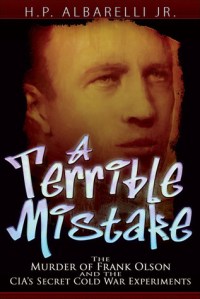
1.) A Terrible Mistake by H.P. Albarelli Jr: This is another example of a case in which there are certain remarkable facts that aren’t in dispute, but the degree to which the fine details are accurate is hard to judge. The fact is that Frank Olson was a biologist in the employ of the government, he was dosed with hallucinogenic substances, and thereafter he took a fatal plunge out of a hotel window. Whether he was murdered as a cover up or just had a bad trip has always been an open question.

BOOK REVIEW: Bring Me the Rhinoceros by John Tarrant

Bring Me the Rhinoceros: And Other Zen Koans That Will Save Your LifeBring Me the Rhinoceros: And Other Zen Koans That Will Save Your Life by John Tarrant
My rating: 5 of 5 stars

Amazon page


This book is an examination of fifteen classic Zen koans selected by John Tarrant, founder of the Pacific Zen Institute (PZI.) Koans are statements or stories that are designed to help students of Zen Buddhism escape their usual ways of thinking because the absurdity of koans cannot be meaningfully answered with the usual approach based in logic and reason. Even if the concept isn’t familiar, readers are sure to have heard the famous koan: “What is the sound of one hand clapping?” [Though one may have missed the value as a tool of the mind, and dismissed the koan as a sage’s attempt to be abstruse and esoteric.]

Each chapter addresses one koan in great detail. First, the koan is presented in a simple fashion. It should be pointed out that some of these koans are a single line and others are as long as several paragraphs. Next, there is a sort of introduction to the concept or point being addressed in the koan. Tarrant knows the value of story, and this frequently involves a narrative approach. Next, there is a section describing the koan in more detail than in which it was first introduced. Here the author elaborates and provides background. The final section of each chapter is about “working with the koan” and offers a bit of insight into how to start considering the lesson of each koan.

I enjoyed this book. It’s a good selection of koans that cover a wide range of styles and approaches. As I mentioned the author uses stories and anecdotes – both historical and contemporary – to help get his point across. The titular use of a particularly absurd koan “punchline,” gives one a taste of the author’s willingness to engage in the whimsical.

I’d highly recommend this book for those who are seeking to better understand koans, either as students of Zen or as individuals interested in the workings of the mind more generally.

View all my reviews

BOOK REVIEW: How to Hypnotise Anyone by The Rogue Hypnotist

How to Hypnotise Anyone - Confessions of a Rogue HypnotistHow to Hypnotise Anyone – Confessions of a Rogue Hypnotist by The Rogue Hypnotist
My rating: 4 of 5 stars

Amazon page


This is the first book in a popular eBook series on hypnosis. The series is written by an anonymous hypnotist and neuro-linguistic programming (NLP) practitioner from London. As the first book, it addresses the basics of hypnotic induction, including background about what a hypnotic trance is and how it’s achieved, as well as fundamentals of voice and word choice that can influence the hypnotist’s effectiveness. The book also introduces “convincers” and “deepeners,” practices that help get the subject in the right state of mind for hypnosis and which take them deeper into trance, respectively. [Though, the author argues that the former aren’t really necessary.]

This short book consists of 29 chapters and 5 appendices. The “chapters” are as short as a single paragraph and lay out the concepts, and the appendices are scripts for hypnotic induction or trance deepening. This is a short book, and some have complained that it reads more like a detailed outline than a book. While it’s true that it’s a “just the facts” kind of format, many will find that preferable, depending upon how one likes to take in information. As long as you’re not expecting a lot of narrative examples, you may find it’s just what you are seeking. It’s written in a conversational style as if the author were telling one the information in person.

Given the controversial title, a reasonable question to ask is whether the book is practical or a lot of pie-in-the-sky ramblings by someone who doesn’t know what they are talking about. What’s the controversy? While there are many hypnotists and would-be hypnotists who claim that they can induce a hypnotic trance in anyone, regardless of the individual or the situation, the science suggests that there is continuum of degrees of hypnotizability. The distribution along this continuum follows a bell curve. What’s this mean? Almost everyone can be hypnotized to some degree, but at one tail there are people who are extremely suggestible – however, at the other end there are people who just can’t be induced. Because there are so many Hollywood misconceptions (see: “Now You See Me”) and hypnosis related fantasy and fiction, it’s not surprising that there are a lot of wrong ideas out there. [I should point out that everyone probably achieves a trance state at some point organically, but some people seem unable to be induced into that state because of anxiety, resistance, or otherwise.] Having said all that, it seemed that the author knew of what he wrote and was quite open about the myths, misconceptions, and limitations.

Later titles in this series address such topics as the details of language for hypnosis, escaping cultural hypnosis, applications for anxiety reduction, uses for combating addiction, as well as the more bizarre and arcane side of the subject.

I’d recommend this book for anyone looking for a primer on hypnosis. I was not bothered by the sparse approach. It’s quick and readable, and seemed to offer well reasoned approach to hypnotism.

View all my reviews

BOOK REVIEW: The Harvard Psychedelic Club by Don Lattin

The Harvard Psychedelic Club: How Timothy Leary, Ram Dass, Huston Smith, and Andrew Weil Killed the Fifties and Ushered in a New Age for AmericaThe Harvard Psychedelic Club: How Timothy Leary, Ram Dass, Huston Smith, and Andrew Weil Killed the Fifties and Ushered in a New Age for America by Don Lattin
My rating: 4 of 5 stars

Amazon page


The title and subtitle say it all when it comes to Lattin’s controversial thesis that four individuals who were at (or — in Smith’s case — “near / working with”) Harvard University single-handedly (octa-handedly?) gave birth to the sixties’ counterculture through their research and advocacy of hallucinogenic substances (first psilocybin and later LSD.) Before I obtained a copy, I was perusing the reviews, and one overarching criticism stuck out amid a sea of generally complimentary comments. Having now read the book, I’d have to agree with both that criticism and much of the praise.

The criticism is that Lattin arbitrarily lumps four individuals together and emphasizes their connection to the prestigious Harvard University in order to support a [sub-titular] claim whose reach exceeds its grasp. Now, some critics may be defending their alma mater. No matter one’s perspective, Harvard gets a black eye from the story of Timothy Leary and Richard Alpert (a.k.a. Ram Dass.) For some people, that black eye results from the fact that the pair of psychologists were able to carry out such wild and woolly experimentation in the first place. For others, it results from the fact that the university ultimately fired the two and ended research into the benefits and hazards of hallucinogenic substances [and how to tap the former without succumbing to the latter] — a line of research just starting to show results. (To be fair, the CIA’s shenanigans with hallucinogen experimentation [i.e. MK ULTRA] likely did more to kill this line of research than did the firing of Leary and Alpert.)

As one can see, tying the stories of Leary and Alpert together is reasonable. They were faculty members who worked together, were ultimately fired together, and for a while after said firing they continued to work together to advance their agenda outside the constraining halls of academia. Smith and Weil have roles in this story, but presenting them as though they were working shoulder-to-shoulder to advance psychedelic substance use is a bit of a stretch. While Weil’s work eventually suggested that marijuana wasn’t particularly harmful and could be beneficial, as his story intersects with the Leary / Alpert story his role was adversarial. As an undergraduate and writer for the school newspaper, Weil was the one who broke the story that Leary and Alpert were giving at least some undergraduates hallucinogenic substances (a big no-no as per their agreement with Harvard.)

Huston Smith’s story is yet more tenuously connected. While he was on faculty at MIT, he worked with Leary and Alpert on a study with divinity students to determine how psychedelically-induced mystical experiences compared to ones that weren’t influenced by mind-altering substances. While Leary followed his own advice to “drop out,” becoming a counterculture / hippie bad boy, and Alpert went on to pursue the mystical life of a spiritual seeker under the alter-ego of Ram Dass, Smith had a long career as a mainstream academic – retiring as Professor Emeritus from Syracuse University. Weil had some karma pains early in his career, being marginalized by his colleagues for his work with controlled substances as Leary and Alpert once had been, but ultimately he became a health food / holistic medicine celebrity and co-director of the Center for Integrative Medicine at the University of Arizona.

While I agree that Lattin overstates his case on the book’s cover, once one delves into its pages, I think he does some intriguing and honest reporting of the stories of these four men. It’s certainly a story with a lot of tension. There’s the strained relationship that ultimately develops between the polar-opposite partners of Leary and Alpert. The two psychologists’ differences were complements in some ways, but the partnership was ultimately doomed. Of course, both of the above men had a problem with Weil, and the latter’s attempts to reconcile with them is integral to the post-Sixties part of the book. As suggested above, Smith’s is a side story that exists outside this drama, and only really has the one point of intersection.

This book kept me reading. Timothy Leary and Ram Dass were only vague pop-culture references to me, and I knew nothing of Weil or Smith before reading, but the overarching story (as well as the individual ones) is a fascinating one. While these four men may not have birthed the Sixties into being, they did have interesting stories while living through an interesting time. I’d recommend this book if you want to learn about the early civilian (i.e. transparent) research into hallucinogens (note: there is only a small reference to the parallel, secretive, government-sponsored work on LSD, and this isn’t the book to learn about that subject.) It’s also a good book to get a view of how the sixties unfolded, and the states of mind that led to it. As I said, these four men weren’t particularly integral to the Sixties being what it was. Aldous Huxley’s essays were out there; the Vietnam War, political mistrust, and other ingredients of the counter-cultural tide were all present. But, while the Sixties might have transpired without a glitch if none of these men had ever been born, they did have front row seats to what was going on, and one sees in their actions (drug use, spirituality, radicalism, etc.) the era in miniature.

View all my reviews

BOOK REVIEW: A Brief History of Vice by Robert Evans

A Brief History of Vice: How Bad Behavior Built CivilizationA Brief History of Vice: How Bad Behavior Built Civilization by Robert Evans
My rating: 5 of 5 stars

Amazon page


This book’s title and subtitle suggest its central theme, but it doesn’t tell the whole story. As the title suggests, drugs, sex, and sundry bad behavior aren’t just the abhorrent actions of a marginalized few who society seeks to reign in. In some cases, culture and civilization are built on said behaviors. Evans devotes a fair amount of space to discussing research on vices’s role in the growth of civilization. These hypotheses and theories run a gamut from the non-controversial and well-established to more sweeping claims such as that the agricultural revolution was largely driven by the dictates of beer production (i.e. both the need to produce a lot of grain and to be homebodies through the fermentation process) and that the dawn of religion may be linked to the ingestion of mushrooms of the magic variety. Despite the book’s light and humorous tone, it should be noted that the author treats the latter type of claims with the requisite skepticism.

But this isn’t just a book of history, anthropology, and evolutionary biology as pertains to the origins of vice and its linkage to civilization and culture; it also offers humorous anecdotes of the author’s experiments into how to replicate some of the vices of the ancients – as well as offering step-by-step directions for readers to conduct their own such investigations. As might be expected, there’s a lot of humor in the book. Just the idea of debauchery building civilization offers plenty of opportunity for the subversion of expectations that makes comedy, but then one adds in stories of people (and occasionally other species) making decisions under the influence of mind and mood altering substances (or even under the influence of horniness) and one enters territory ripe for hilarity.

The book consists of 15 chapters that cover both expected and unexpected topics. Not surprisingly, discussion of drugs – legal and illicit — takes up a large portion of the book. [I should make clear that the discussion of illegal substances is purely historical, and the “how-to” sections describe “experiments” that were legal in the author’s jurisdiction and that will be for most readers.] Ten chapters are about various consciousness and mood altering substances including: alcohol (ch. 1 & 4), psychedelic substances (ch. 7, 8, and 10), tobacco and marijuana (ch. 9; treated together because historically they had more in common than in their modern use / legal status), the ephedra shrub and derived products ranging from Mormon tea to Methamphetamine (ch. 11), coffee and caffeine (ch. 12), designer drugs ranging from ayahuasca [made from two different plants that don’t live together and which only work when used together] through pain killers and on to the dangerous scourge of synthesized substances created in labs to get around drug laws for a few days until they will be added to the schedule of illegal substances.) The final chapter (ch. 15) is devoted to the search for the mythical salamander brandy of Slovenia (claimed to have hallucinogenic qualities owing to a toxin emitted by the submerged reptile.) I should point out that I have oversimplified with this division of chapters for simplicity’s sake. Some of the chapters dealt with more than one type of substance. For example, Chapter 10 is really about drug cultures and how they kept people safe in, for example, shamanic tribal societies, and how the loss of such culture is part of the reason we have a more severe problem with substances in modern society.

No investigation into the role of vice on civilization would be complete without discussing sex, though there are only two chapters about it. The first, chapter 6, discusses prostitution / sex work. There’s a widespread tongue-in-cheek reference to “the world’s oldest profession” that hints that sex work is both ancient and that past civilizations sometimes viewed these activities in a much different light than do we in modern, Western society. The second chapter on sex, chapter 13, addresses a different question altogether, but one which has captured the attention of many a scholar (as well as being fruitful territory for humorists), and that’s why there’s such a vast range of sexually titillating activities. It’s not difficult to figure out the evolutionary advantage of extreme pleasure being linked to sexual intercourse. However, it’s much less clear why there are such a huge range of fetish behaviors that are intensely arousing for some while ranging from being boring to disgusting for others. [It’s not cleared up by thinking that there is just a tiny fraction of the population that is into everything. A person who gets excited by wearing a head-to-toe rubber suit while being failed with a halibut might find a foot fetish utterly disgusting.]

For those who are counting, that leaves three chapters on miscellaneous forms of vice. Chapter 2 discusses music, particularly as a lubricant of social activities, and it presents an intriguing theory that Stonehenge may have been built for its acoustic qualities – i.e. to facilitate ancient raves. Chapter 3 explores celebrity worship, an activity which we tend to think of as both recent and as harbinger of doom for humanity, but which actually has a long history – so long that it may date back further than humanity, itself, does. That leaves chapter five, which delves into a grab-bag of bad habits that would today be collectively labeled “douchiness.” This includes narcissism, inexplicable overconfidence, and a tendency toward lying, bragging, and delusions about self or others.

The book has a range of graphics from photographs to diagrams. Some are for educational purposes (e.g. to help the reader conduct their own experiments) and some are mostly for comedic effect. The “side-bar” discussions of how to reproduced the results of the ancients (and the author, himself) are presented in text-boxes for the sake of clarity. There are one or two of these text-boxes in most chapters. As mentioned, the subjects for these “hands-on” activities are chosen to avoid running afoul of the law.

I enjoyed this book. It’s at once amusing and thought-provoking. I think the author hits a nice medium between doling out humor and educating the reader. I’d recommend reading it (though not necessarily conducting every one of the experiments) for anyone who finds the subject intriguing.

View all my reviews

BOOK REVIEW: Conversations on Consciousness ed. by Susan Blackmore

Conversations on Consciousness: What the Best Minds Think about the Brain, Free Will, and What It Means to Be HumanConversations on Consciousness: What the Best Minds Think about the Brain, Free Will, and What It Means to Be Human by Susan Blackmore
My rating: 4 of 5 stars

Amazon page


Blackmore gathers together interviews from a veritable who’s who of consciousness experts from neuroscience, philosophy, physiology, psychology, and physics. While the interviews are in part tailored to tap into the special insights of the given expert, a consistent series of questions is asked of each of the interviewees. Each expert is asked what they think is challenging about consciousness, what they think about the feasibility of philosopher’s zombies (a popular thought experiment about an individual who seems to behave like an ordinary human but who has no conscious experience), what they think about the existence of free will, what happens to consciousness after death, and what got them interested in the subject. This makes it easy for the reader to see not just differences in thinking across disciplines, but also different schools of thought within disciplines. There’s enough variety to make for intriguing reading. There is also a mix between individuals who have experience with meditation (e.g. the interviewer) and those who don’t, and so it’s interesting to compare views of those with such insight to those who study consciousness entirely abstractly.

I won’t list all the authors, but they include: David Chalmers (who famously coined the term the “hard problem” of consciousness, which is one of the most widely discussed ideas in the book), Francis Crick (of DNA fame who later shifted focus), Daniel Dennett (a well-known philosopher), V.S. Ramachandran (a neuroscientist famous for work on phantom limbs and behavioral neurology), and Roger Penrose (a physicist who believes that quantum mechanics may prove crucial to figuring out consciousness.)

It’s a straightforward book. There’s an Introduction by Blackmore and then the 20 or 21 interviews (one “chapter” is a married couple – Pat and Paul Churchland — whose insights are presented together.) The only back matter is a glossary, which is quite in-depth and which helps to clarify the many confusing concepts from various disciplines. There are a few cartoon drawings that lighten the tone, but serve no essential purpose.

I enjoyed this book and found it thought-provoking. It’s quite old at this point – having come out in 2005 – but since consciousness is so intractable, it’s not like any of the questions have been cleared up. (If it were a book on AI, I’d probably say it was worthless at this point, but not this book.) I’d recommend it for anyone looking to understand the lay of the land with regards thinking about consciousness.

View all my reviews

BOOK REVIEW: The Spread Mind by Riccardo Manzotti

The Spread Mind: Why Consciousness and the World Are OneThe Spread Mind: Why Consciousness and the World Are One by Riccardo Manzotti
My rating: 3 of 5 stars

Amazon page


Manzotti puts forth a bold and intriguing hypothesis that one’s mental experience is the physical world and not a model or representation of the world. Unfortunately, his book doesn’t make a compelling case for “The Spread Mind” (as he calls it) over its competition. Consciousness is one of those still dim corners of our world that isn’t yet fully understood by anyone, and this has spurred many competing ideas ranging from: a.) it being illusory; b.) it being purely a construct of a complex brain; c.) it hinging on some quantum mechanical action not yet understood; d.) panpsychic (all-pervading consciousness) arguments that may or may not resonate traditional Indian / Eastern conceptions; and e.) this idea that consciousness is identical with the physical world of which one is conscious.

However, for simplicity’s sake, one can contrast Manzotti’s idea with the most widely accepted view offered by science, which is that our brains construct mental models of the world often based on [but not identical to] sensory information they take in. (If my statement isn’t clear, you can check out neuroscientist Anil Seth’s TED Talk on “how our brains hallucinate reality,” which is as diametrically opposed to Manzotti’s hypothesis as one gets – and which, unfortunately for Manzotti, also makes a more cogent argument.)

At first blush, Manzotti’s idea might look appealing. It does, after all, simplify the picture. It eliminates the middle-man of mental models and seemingly solves the mind-body problem. The mind-body problem is how to reconcile how the body (wet, physical, objectively observable matter) relates to mind (intangible, subjective, ephemeral thoughts and feelings,) — if it does. Descartes famously suggested that mind and body were simply two separate things (i.e. dualism), and while that notion has remained popular with homo religiosis it’s all but dead in the world of science. However, there is no one monism that has unambiguously replaced Cartesian dualism. The most popular variant among those who study the brain is that some action in / across neurons creates a series mental imagery, internal monologuing, and emotional sensations that make up our mental experience. The mechanism by which this could happen is still not understood, but it’s an inherently hard problem to peer into because on can’t observe mind states directly and the best tool for studying it – i.e. functional Magnetic Resonance Imaging (fMRI) is only a couple decades old (and it’s still looking at brain blood flow and not consciousness, itself.) [I defend that this mechanism isn’t yet explained because one of Manzotti’s points seems to be: neuroscience hasn’t yet explained how neurons produced mental experience so just believe in my hypothesis which offers not even a hint of a mechanism by which it could work.] Manzotti’s is also a physical monist argument, but one that denies the mind is anything more than our experience of the physical world. In other words, there is a spoon, but there’s no mind separate of it.

So, what’s the problem? The reader may have already thought of some challenges confronting Manzotti’s hypothesis, and many of the most common ones the author refutes in the middle portion of the book. Dreams, hallucinations, fantasies, and even memory (certainly false memories, which we know are a wide-spread phenomenon) should utterly destroy the Spread Mind, given the simple definition we’ve given so far. After all, if your mental experience consists entirely of the physical objects that you are exposed to, then how does one explain the doughnut-shaped, sprinkle-breathing dragon that you hallucinated when you did ayahuasca on your trip to Iquitos? OK, you say you’re not such a wild child? Alright, how do you explain your detailed remembrance of putting that water bill into the mailbox, but then finding it under the seat of your car after you got a late notice from the water utility? If our mental experience is identical to the physical objects we experience, mentally experiencing things that don’t exist or events that never happened should never occur.

Manzotti elaborates upon Spread Mind to fend off these crippling attacks to his “theory.” (I use quotes because a theory is usually defined as “a well-substantiated explanation of a phenomenon” and it doesn’t seem to me there’s much in the way of substantiation of this idea.) There are two main prongs to his defense, one of which is unproven but soundly stated and consistent with the thinking of many physicists. The other defense seems to simply be a post-hoc rationalization used to make his “theory” work. Even though these ideas are presented in the opposite order in the book, I’ll deal with the first one I mentioned first because it’s relatively simple to cover. That’s the idea that past and present all exist always and at the same time. That may seem like an out-there idea because we can only ever be in touch with a moment we think of as the present and everything else is memory or fantasy /forecasts. However, it’s not exactly a rogue notion in science, especially once one starts thinking about making sense of Einsteinian Relativity. So, without this idea, if Spread Mind was correct, we could never have that fond memory of Mr. Fluffers, the pet we had in first grade who died decades ago. If our mental experience is Mr. Fluffers and not our mental model of Mr. Fluffers, we can’t have such an experience so long after he passed away. But if all time exist simultaneously, then one can conceive of how such a remembrance could happen. The only thing special about the present in Manzotti’s conception is that it’s the time during which we can interact with objects that also exist in the same time. This may or may not prove to be true. If it proves false it will kill Spread Mind, but if proves true the theory still has many questions to answer to prove itself worthy.

The second, and far less well-supported, defense could actually be divided in two ideas, but I’ll deal with it as a unit for simplicity’s sake. The parts of this defense our: a.) misbelief about our mental experience can happen, somehow [potential mechanisms by which this might occur are not described and that’s a huge problem for the author]; b.) objects we’ve experienced can be reshuffled to make objects appear to be entities that we know do not exist [Again, the mechanism by which this could occur is never explained or even seriously speculated about.] Let me give an example to explain how these defenses work. Say you drop a tab of acid and are having a hallucination of a dragon flying through the sky. Manzotti’s idea is that you are experiencing a reshuffled creature consisting of legs, a serpent, maybe some fire, a backdrop of sky, and you have a misbelief that all these constituent parts are in the present and co-exist together in space and time (as opposed to being disparate objects from varied past times.) This is a very convenient idea for Manzotti’s “theory” but it’s not really clear why we should buy it. In the competing notion that a mental model is built, one can imagine how the mind might construct something that doesn’t exist due to neuronal cross-firing or something like that. (The bigger question, in fact, might be why it doesn’t happen more often.) However, if our experience consists of objects that we’ve shared space-time with at some point, how and why should such weirdness occur? If the author made a compelling attempt to explain how this occurrence is reasonable, one might leave the book thinking his “theory” is – in fact — a theory and give it equal or superior footing to other approaches to consciousness, but as the book mostly offers gratuitous statements telling us to accept this all as a given, it’s not very powerful.

I’d like to get into one crucial example where I think Manzotti’s thinking is flawed in a way that could prove devastating to the Spread Mind. The author admits that an extraordinary hallucination would kill the Spread Mind. He defines an extraordinary hallucination as one consisting of objects that are non-existent in our world. Earlier, I used the example of a dragon which we know doesn’t exist, and we can be reasonably certain never existed. However, Manzotti would say that it’s just a reshuffling of parts like legs and snakes that we do know exist, combined with a misbelief about when these objects exist and that they co-exist in the same time. Manzotti says that there is no evidence that a hallucination that can’t be explained by reshuffling and misbelief ever existed. I have no doubt that if one read accounts of hallucinations; one could come away with that conclusion. However, I think it’s more convincingly explained by the nature of language as a unit of communication (hence necessitating common vocabulary.)

Example: Let’s assume for a minute that I had an extraordinary hallucination, and I decide to document it. I could take one of two approaches. On one hand, I could describe every completely novel element with a new word. I could say I saw a gruzzy-wug which had three separpals and a florgnak and a long and bushy krungleswam. Of course, I’m not communicating at this point because communication requires common vocabulary. Manzotti would likely argue that I’m just reshuffling letters [linguistic objects] to make up non-sense. On the other hand, as soon as I use a common vocabulary and analogy saying such and such is “kind of like a leg, but sort of with a curly-cue spiral and a mouth on top” Manzotti would say, well it’s a reshuffling of a leg and a pig’s tail and a mouth all of which the individual has seen before.

However, an even more devastating oversight is ignoring vast tracks of what most people would consider their mental experience. It’s the penultimate chapter before the book even touches upon emotion, which most would argue is a huge part of mental experience. Throughout most of the book, one is left wondering whether the author thinks of such things as emotion and language as part of consciousness. One imagines Manzotti’s experience of the world is one physical object after the other (mostly red apples with the occasional pink flying elephant – examples he uses ad nauseam) without any conceptual experience. Manzotti does explain that one must revise one’s conception of an object to think in terms of the Spread Mind, and one can see how this might explain language – which has a huge and powerful role in one’s mental experience and which is left unexplored by the book. But while language could arguable be explained as consisting of objects, emotional experience seems hard to fit Manzotti’s hypothesis.

The book consists of nine chapters. It has graphics and bibliography as one would expect of a scholarly work

I think most readers will find this book to be repetitive and frustrating in its lack of explanation. It’s not that it’s speculative; it’s that it just bludgeons the reader with gratuitous assertions that we expect will pay off in at least a hint of how the Spread Mind could work, but it never does. (For example, I greatly enjoyed Max Tegmark’s “Our Mathematical Universe” that speculates that our world is a mathematical structure – not that it can be described mathematically but that it fundamentally is mathematical.) Spread Mind is an interesting idea, but I can’t say I’d recommend the book unless one is really interested in knowing all of the varied lines of thinking about consciousness that exist out there. I must say it was a beneficial read because it made me consider some interesting ideas, but nothing in it swayed my thinking.

View all my reviews