BOOK REVIEW: A River in Darkness by Masaji Ishikawa

A River in Darkness: One Man's Escape from North KoreaA River in Darkness: One Man’s Escape from North Korea by Masaji Ishikawa
My rating: 5 of 5 stars

Amazon page


This tragic memoir tells the story of a man of mixed Japanese – Korean heritage who was, as a boy, moved to North Korea under a “repatriation” program that was designed to provide North Korea with laborers while conveniently reducing a minority problem for the Japanese. During the Second World War, Japan had imported labor from Korea for the war effort. As it happens, Ishikawa’s father was from South Korea, but – in the wake of the Korean War — it was North Korea that was looking for rank-and-file laborers.

The author’s father was eager to get out of Japan because he was treated as minorities frequently are – especially ones as rough around the edges as he, and so he swallowed the propaganda of Kim Il Sung’s regime hook-line-and-sinker. The author’s mother (and the author, himself) didn’t want to leave Japan because she didn’t speak the language and was ethnically Japanese (putting her in the minority shoes.) Little could any of them have known how bad life in North Korea would be, and how dire a mistake it was to agree to the move.

Life in North Korea was hard on everybody (except the party elite), but it was particularly hard on this family because: a.) they were discriminated against and could only attain the lowest-of-the-low in farm sector jobs; b.) they were accustomed to life in Japan and so they knew exactly how backwards North Korea was compared to its neighbors; and, c.) the wife’s family in Japan disowned them, and so even when other transplanted families began to be able to receive wealth from their kin in Japan, their family was cut off (but assumed by neighbors to be receiving packages.) From constantly having to game the system to get enough calories to survive to a series of tragic events that were largely tied to the country’s impoverished nature (e.g. inadequate healthcare,) the book features one soul-wrenching turn of events after the next.

Ishikawa grew to manhood in North Korea, married twice, and had children, but when the famine struck in the 1990’s he fled the country into China across the Yalu River, leaving his family behind. The book’s last chapter deals with Ishikawa’s challenges living in an expensive first world country – Japan – while trying to get his family back. It’s difficult to know whether Ishikawa ever serious could have thought he could get his family out once he was gone. Certainly, he proposes that he did think that, and he spoke to Japanese diplomats (who felt horrible about what had come of people like him) about it. Still, it’s hard to imagine how he could have thought so, being familiar with how the Kim dynasty operated. Still, one may have to grant a man his delusions when he makes such a hard decision while he is literally starving to death. Ishikawa was able to discover what happened to at least some of his family members, and that information is in an epilogue.

I found this book gripping and fascinating. It’s depressing reading throughout, there’s no getting around that, but it gives insight into how people live in the villages of North Korea that is not so extensively described elsewhere – not to mention what it’s like to be a member of a minority group, labeled a “hostile” and essentially relegated to a low-caste life. I would highly recommend this book for all readers. It’s one the best books of 2018 that I’ve read this year.

View all my reviews

BOOK REVIEW: How to Change Your Mind by Michael Pollan

How to Change Your Mind: The New Science of PsychedelicsHow to Change Your Mind: The New Science of Psychedelics by Michael Pollan
My rating: 5 of 5 stars

Amazon page


Psychedelics have been coming back into mainstream interest of late. Until recently, this renewed interest mostly occurred quietly through a continuation of scientific study, a promising line of inquiry that was aborted in the late 1960’s. There is growing evidence that these substances may be useful for combating depression, anxiety, and addiction – as well as their other, long-known benefits. (It should be noted that while it seems the writing is on the wall for these substances to become medically legitimate, it remains controversial whether they will be legalized for use by well individuals – though some were legalized in the US for a small religious group that takes them as a sacrament of their faith.) This book by the immensely popular immersion journalist, Michael Pollan, has brought the topic front and center into mass awareness, and may help turn the tide of a sullied public image.

Because these substances remain widely unknown or misunderstood, allow me to present some background — much of which Pollan discusses in varying degrees. Unfortunately, the term “psychedelic” has become so loaded with layers of meaning that it’s not optimal for discussing the topic at hand. Literally, psychedelic means “mind manifesting,” but its common meaning is tied up in notions of 1960’s counter-culture and even with styles of art and music. However, alternative terms are also troublesome. “Psychoactive substances” (i.e. chemicals that change mind states) encompasses a much broader selection of molecules and medicines – though it’s probably the most neutral term used popularly today. “Hallucinogens” is also problematic because a large portion of consumers of these substances don’t have hallucinations – at least not of the full-blown variety people normally associate with that term (i.e. seeing sights that one genuinely believes exist, but don’t.) Pollan opts to largely stick with the loaded term of psychedelic, and thus will I throughout this review.

Psychedelics are chemical substances that change one’s mindset, typically creating euphoria, shutting down “I”- centric parts of the brain such that one feels a “oneness” commonly described in the mystical traditions from around the world, and which, yes, often generate sensory experiences that aren’t reflective of the actual environment (hallucinations.) The downside is found in the fact that the substances produce constructive experiences, which means they amplify what’s in the subject’s mind, and, therefore, can result in “bad trips” in which people hallucinate terrifying products of their own subconscious mind. Pollan focuses heavily on three of the most popular psychedelics: psilocybin (naturally produced in a common species of mushroom), LSD (a chemical synthesized from ergot fungus that grow on rye), and DMT (which is most famously an active ingredient in Ayahuasca, a concoction long brewed by Peruvian Shamans.) Mescaline, which is well known from the writings of Aldous Huxley, is another popular psychedelic, but one which Pollan only mentions in passing.

To wrap up the background portion of the review, a little history. Psychedelics have been used by shamanic traditions around the world since time immemorial. In 1938, Albert Hofmann, a chemist for Sandoz Laboratories, accidentally synthesized LSD. That marked the (re-) introduction of psychedelics to the modern Western world (the ancient Greeks were believed to have mixed something with their wine that sounded like it had psychedelic properties.) Unbeknownst to most, between Hofmann’s invention and the late 1960’s, there was a promising line of research on the use of psychedelics for various conditions as well as in non-medical domains – e.g. relating the psychedelic experience to religious / mystical experience.

Unfortunately, there was a two-pronged turn of events that would end in these substances being made illegal and categorized “Schedule I” (which deems them not only risky / requiring care of use, but also denies they have any legitimate medical use – the latter seems to be proven demonstrably incorrect.) The well-known prong in the death of psychedelics resulted from the substances becoming tied into the 1960’s counter-culture, at first through shoddy scholarship by academics – most famously Timothy Leary – and then through recreational use that typically stripped away the rituals and “protocols” that had allowed shamans and mystics to safely use these substances for millennia. The second prong was government-sanctioned shenanigans in which LSD was used and misused in an attempt to create everything from truth serums to mind-control agents – most famously the MK-Ultra Program, and its sub-projects such as Operation Midnight Climax during which the CIA illegally used prostitutes to “roofie” their customer’s drinks with LSD so that a spy could covertly watch to determine whether the johns got loose-lipped or not. (Note: Pollan writes at length about the former aspect [i.e. Timothy Leary, Ken Kesey, et. al.] though not as much as books like Lattin’s The Harvard Psychedelic Club or Wolfe’s The Electric Kool-Aid Acid Test. However, Pollan only gives passing mention to MK-Ultra.) Psychedelics might have remained out of the popular consciousness and only of interest to the fringe of society that was involved with “hard drugs” had it not been (in addition to renewed scientific interest) for a blooming interest by Silicon Valley engineers and executives who took to “micro-dosing” psychedelics to obtain creativity gains.

Now, I’ll get to the review, proper: As I mentioned, Pollan refers to himself as an “immersion journalist,” which means that he provides a two-in-one book. The first element is what one would expect in a popular science book on psychedelics, i.e. he reports on the scientific findings, the key history and background information, and delivers quotes from people he interviewed. The second element, however, is description of his own psychonautic journey. Pollan consumed psilocybin mushrooms, LSD, ayahuasca (DMT), and also a substance excreted by a toad that lives in Mexico and the Southwestern US. The reader gets both Huxlian “trip reports” (though Pollan remains much more scientific-minded and less mystical than Aldous Huxley) as well as the objective overview of the topic.

The book consists of six chapters as well as front and back matter. The first chapter discusses the psychedelic “renaissance,” i.e. how it came to be that these substances brought back from the dead – i.e. being purely of interest to “druggies” and far-flung shamanic traditions. Chapter 2 deals largely with mushrooms, and specifically psilocybe mushrooms that are the most popular and common type of psychedelic mushroom. Pollan spent time with Paul Stamets, a world-renowned expert on all-things fungi and the man who – literally – wrote the book on psilocybe mushrooms. Chapter 3 focuses heavily on LSD, including its development and rocky history. The fourth chapter is a “travelogue” in which Pollan discusses his own experiences in taking these substances. The penultimate chapter is about the neuroscientific findings. There is much that remains to be known, but yet somethings are well-known. These substances generally mimic the neurotransmitter serotonin (though mescaline, for example, mimics dopamine.) There is also a fascinating discussion of how these substances may temporarily reduce activity in the default mode network, which is prominent in generating one’s sense of self. The final chapter examines the findings of research into the use of psychedelics as a treatment for medical conditions – particularly depression, anxiety (especially death anxiety of terminal patients), and addiction (contrary to a widespread notion, resulting from these substances being lumped in with “hard drugs,” psychedelics not only aren’t addictive, but – in many patients – they counter addictions to more dangerous drugs, such as alcohol – yeah, you read that right.)

The book contains the usual ancillary matter, including: a glossary, bibliography, and notations. As the approach is narrative, graphics are minimal.

I found this book to be highly informative and extremely readable. The use of stories to convey information makes it engaging while it educates. I would highly recommend this book for any readers who are interested in psychedelics as medicine or a mystical experience.

View all my reviews

BOOK REVIEW: Superhuman by Rowan Hooper

Superhuman: Life at the Extremes of Our CapacitySuperhuman: Life at the Extremes of Our Capacity by Rowan Hooper
My rating: 4 of 5 stars

Amazon page


There are mounds of books out on the science of maximum human performance, be they on mind-hacking, sports & exercise science, or some combination thereof as applied to a particular pursuit. Hooper creates his niche by way of a broad and varied selection of topics, including: language learning, singing, running, achieving longevity, and sleeping. For the reader who is interested in the topic of how top performers in a given domain achieve that supernormal performance, it makes for an interesting read. However, it may leave some readers scratching their heads as to who the book is aimed at. It should be noted that several of the topics addressed are of much more broad-ranging appeal than those I mentioned (e.g. focus / attentiveness, bravery / courage, and resilience.)

The book is divided into three parts on “thinking,” “doing,” and “being,” respectively. The four chapters in the first part investigate the heights of intelligence, memory, language, and focus. The chapter on language deals with how some people are masterful polyglots, speaking many languages, as opposed to the harder to investigate question of how someone becomes William Shakespeare. Throughout the book, there is a mix of stories and interview insights from those who are peak performers as well as discussion of what scientific studies have found. The former makes up the lion’s share of the discussion, and the central question with of science is how much of peak performance is genetic and how much is built.

Part II, on doing, has three chapters, exploring the topics of bravery, singing, and running. This is where one really sees the book’s diversity. Books like Amanda Ripley’s “Unthinkable” address the question, among related questions, of why some act heroically, and there are a huge number of books on how to be the best runner or singer one can be, but not a lot of books take on all three questions in one section. The book on singing focuses on opera singers who belt out their tunes largely sans technology – i.e. there’s no Milli-Vanilli-ing L’Orfeo. The chapter on running gives particular scrutiny to endurance running.

Part III investigates why some people live longer, are more resilient, sleep better (or do well with less sleep,) or are happier. Since Buettner’s “National Geographic” article on “blue zones” (i.e. places where a disproportionate percentage of the population live well beyond the average human lifespan,) there’s been a renewal of interest in what science has to say about longevity. As mentioned, the chapter on sleep covers the topic from multiple vantage points. Everyone needs sleep, but some perform best with ten or more hours of sleep while others are extremely productive on four hours a day, and some can cat-nap periodically through the day while others need a single extended and uninterrupted period of sleeps. Wisely, Hooper doesn’t simply take on the question of why some people are happier than others in the book’s last chapter, but rather he asks the more interesting question of why some people who have every reason to be morose (e.g. paralyzed individuals) manage to be ecstatically happy.

The book has a references section, but there isn’t a lot of ancillary matter (i.e. graphics, appendices, etc.) It’s a text-centric book that relies heavily on stories about Formula-1 racers, opera stars, ultra-marathoners, and other extraordinary individuals while investigating the subject matter.

I enjoyed this book. I am intensely interested in optimal human performance across a range of skills and characteristics. So, I guess when people inevitably ask who the book is directed at, it’s directed at me and others with this strange fascination. If you have that interest, it’s for you as well.

View all my reviews

BOOK REVIEW: Psilocybin: Magic Mushroom Grower’s Guide by O.T. Oss & O.N. Oeric

Psilocybin: Magic Mushroom Grower's Guide: A Handbook for Psilocybin EnthusiastsPsilocybin: Magic Mushroom Grower’s Guide: A Handbook for Psilocybin Enthusiasts by O.T. Oss
My rating: 4 of 5 stars

Amazon page


This booklet, at around 80 pages, offers step-by-step guidance about how to grow mushrooms – specifically psilocybe cubensis, which are referred to as stropharia cubensis throughout this book. (The book was published in the 1970’s and the mushroom has since been reclassified.) This species is known to induce hallucinations, euphoria, and altered perception in those who ingest it because of the presence of psilocybin, which – converted to psilocin — interacts with serotonin receptors. Most of the information presented could be applied to cultivation of any mushroom (excepting information about identification in Ch. 1, which applies to that one species, and the information about dosage in Ch. 5 that doesn’t matter for edible mushrooms.) The authors did specifically develop this process, but I think that had more to do with the need for a process in between the vagaries of foraging and the large-scale agricultural approach that couldn’t be exploited for the “hobbyist,” than it had to do with the specific needs of this fungi.

The body of the book is divided into five chapters, which follow the progression of steps required to cultivate mushrooms. The first chapter covers locating and identifying psilocybe cubensis as well as how to collect and germinate the spores. The second chapter is about growing mycelial cultures on sterile agar. One of the major challenges presented in the book is keeping mold and other undesirable species from growing on or amongst one’s mushrooms. In the third chapter one learns how to grow the mycelia on sterilized rye. The penultimate chapter explores covering the mycelia infused rye with soil in a process that commercial fungi agriculture calls “casing,” which ultimately results in the generation of the fruiting bodies that we traditionally think of as mushrooms (though in the wild most of the organism is below ground.) The last chapter is about harvesting the mushrooms, preserving them, and determining dosage.

There is a substantial amount of front and back matter book-ending the aforementioned chapters. The front matter gives the reader some history of psychedelic mushrooms as well some insight into their effects. (The Preface and Forward are explicitly written by Terrence McKenna, but it’s said that the entire book is written by McKenna and his brother, Dennis.) The Forward and Introduction are where the book feels less like an agricultural how-to manual, and more like a guide to psychedelics, but the reader should be aware that this book is – first and foremost – a how-to guide. The back matter includes a range of helpful appended sections including a glossary, a bibliography, a timeline of psilocybin mushroom happenings, and a section to help one make conversions — particularly between volume and weights for various materials that are used in cultivation.

There are many graphics employed throughout the book. Most importantly, there are several series of black-and-white photos that help clarify the process being described textually. There are also some line-drawn artworks that depict psychedelic mushroom in their cultural context – both in the ancient shamanic tradition and the more recent wave of use.

This is a quick read that gets into all the processes needed to cultivate mushrooms. The authors compare it to canning preserves in terms of the degree of complexity. (That rings true as both processes rely heavily on sterilization.) It is a how-to guide, and if one isn’t interested in the process of cultivation, one might find the book a bit dry. I found it interesting to learn about the cultivation process as well as the information from the Forward, Introduction, and Chronology about psychedelics, specifically. If you’re interested in cultivating mushrooms or are very curious about fungi, I’d recommend this book.

View all my reviews

BOOK REVIEW: The Electric Kool-Aid Acid Test by Tom Wolfe

The Electric Kool-Aid Acid TestThe Electric Kool-Aid Acid Test by Tom Wolfe
My rating: 5 of 5 stars

Amazon page


This book offers an account of the activities of Ken Kesey and the Merry Pranksters during the mid-1960’s. Kesey is best known as the author of “One Flew Over the Cuckoo’s Nest,” a best-selling novel that was adapted into an Oscar-winning film starring Jack Nicholson. The charismatic Kesey led a group of nomadic hippies who came to call themselves “the Merry Pranksters.” There were many counter-culture strains during those years. Some looked East, and pursued spiritual traditions like yoga and Zen. Some were academics who sought to maintain scholarly rigor in adventures through the doors of perception. Kesey and the Merry Pranksters occupied more whimsical territory. As the “prankster” name suggests, taking things seriously wasn’t their way. Their mythology was in comic book superhero tales, and their moral code hedonistic. The titular prank had to do with spiking Kool-Aid with LSD (a.k.a. Acid) – not to be confused the Jim Jones cult which poisoned Kool-Aid and engaged in collective suicide over a decade after the events described in this book took place.

LSD plays a major role in the events of this book. While it’s not mentioned in Wolfe’s book, an interesting thing to note is that Kesey was introduced to hallucinogens through a program funded by the CIA’s nefarious MK-Ultra program. Kesey was working as an Aide at the Menlo Park Veterans’ Hospital, and he volunteered for a study on the effects of a number of psychoactive / hallucinogenic drugs. It seems that Kesey took a shine to these substances (most notably LSD) because he kept pursuing psychedelic experiences long after the study was over and even after he’d run afoul of the law (though his arrests were marijuana-related and not about hallucinogens.)

Tom Wolfe used beat-poetic prose to convey the feel of Merry Prankster life. There are even a few free verse poems in the book as well. And, of course, the dialogue conveys the tone of this community. The language is often fun and trippy in a way that contributes to the story. Wolfe put an author’s note amid the book’s back matter that explains his desire to not only tell people about the events but to convey the atmosphere, and I felt he did a nice job in that regard.

The central story hinges on Kesey faking his death (not skillfully) and fleeing to Mexico to evade punishment on his initial marijuana charges, and then — after some time in Mexico — he returned to the US, ultimately doing his time. Over the course of the book, the Pranksters develop a rapport with the Hell’s Angels, they cross paths with the likes of Beat giant Allen Ginsberg and the founders of the Grateful Dead. While it’s nonfiction, and thus not meant to follow a story arc approach beat for beat, Wolfe does tie things up with a nice bow, ending with the Prankster “Graduation” which would see the end of that group before Kesey went off to serve time on his combination of marijuana and evading justice charges. We see a change in Kesey in the last couple chapters as he’s advocating pursuit of the psychedelic state of mind without the use of drugs. It’s hard to say how much of this is trying to cooperate to get better terms, how much it was just growing up, and how much it was a true change in his core beliefs.

I enjoyed this book. It’s fun to read and offers insight into an era with which I wasn’t particularly familiar. I’d only known Kesey from his blockbuster book and a vague reference to his being a participant in a MK-Ultra funded program, and so it was interesting to learn about the intriguing life of this author.

View all my reviews

BOOK REVIEW: Be As You Are ed. by David Godman

Be As You Are: The Teachings of Sri Ramana MaharshiBe As You Are: The Teachings of Sri Ramana Maharshi by Ramana Maharshi
My rating: 4 of 5 stars

Amazon page


In the early days of yoga, before there was Power Yoga or Yin Yoga — or even Hatha Yoga or Raja Yoga, there were three approaches to yoga. Bhakti yoga was devotional yoga, the yoga of the believers who pursued the path through worship. Karma yoga was the yoga of action: practiced by doing selfless deeds. Jnana yoga, often said to the hardest, was the path of knowledge, and it involved intense study and – in particular – introspective study of the jnani’s own mind. Sri Ramana Maharshi was one of the most well-known Jnana yogis of modern times (he lived from 1879 to 1950.)

This book presents Sri Ramana’s teachings in a question and answer format. The editor, David Godman, begins each chapter with an overview of Ramana’s views on the subject at hand, and he then launches into the Q&A exchange that makes up most of each chapter. The preludes are beneficial not only because they set up the topic, but also because they help separate Ramana’s core beliefs from the way he occasionally explained matters to non-jnani’s or those who weren’t ready to grasp what he believed was the fundamental teaching. (There’s a fair amount of, “Until you realize the self, X is true, but after you achieve self-realization Y will be true.)

Sri Ramana’s central teaching is that the jnani must actively inquire about the nature of the true self (a practice called atma-vichara, or self-inquiry.) As such, the book is organized as a guide to building a practice of self-inquiry.

The book’s 21 chapters are divided among six parts. The first part investigates the self as Sri Ramana refers to it. This isn’t the individual self that one is normally referring to in common speech. Part II is entitled “Inquiry and Surrender” and three out of the four chapters, herein, discuss the process of self-inquiry. Three chapters may sound like a lot, but this practice really is the core of jnana yoga. These chapters not only explain how self-inquiry is done and what it’s supposed to achieve, they also contrast the practice with others that bear a resemblance to atma-vichara, such as reciting “Who am I?” as a mantra, as well as, neti-neti — an exercise in negation in which one considers all the things that aren’t the self (e.g. “I am not my body.” “I am not this thought,” etc.)

Part III is about Gurus and transmission of teachings. It takes on such questions as: is a Guru necessary, and what constitutes a Guru (i.e. must it be a living human? Can it be a book?) The second chapter in this part is about sat-sang, which may be literally translated as “sitting with the guru,” but refers to a kind of transference that flows from being together.

Part IV is on meditation and yoga. Sri Ramana differentiates self-inquiry from meditation, though superficially they seem to be similar activities. He discusses dharana (concentration) and mantras in these chapters as well. One inclusion that may seem unrelated to the general theme is chapter 12, which is about the four-stage model of life called the asramas (student, householder, hermit, ascetic.) The chapter on yoga is about the eight limbs of yoga described by Patanjali, and their relevance to the practice of Jnana yogi. It should be noted that Ramana downplays the importance of these practices to the jnana yogi (a.k.a. Jnani) with the exception of pranayama (breathing exercises.)

Part V discusses samadhi, siddhi (supernormal psychic powers that some yogis believe can be achieved), and other challenges and phenomena that may be experienced during one’s practice of self-inquiry. While superpowers sound cool, Sri Ramana (as well as Patanjali) warned against he pursuit of these abilities as they become distractions from obtaining self-realization.

That last five chapters are grouped under the title of “Theory.” These chapters deal in the big “meaning of life” kind of philosophical questions. Much of these chapters consist of Ramana telling the interviewer to stop over-intellectualizing about obscure philosophical matters and start asking oneself who is asking the question (in other words, get back to self-inquiry and forget about abstract navel-gazing.) At any rate, the questions include: was the universe created, and – if so – how? is reincarnation real? what is the nature of god? is karma real? is free will real? etc. They are fascinating questions, and Ramana offers a few intriguing ideas, but mostly discounts the value of philosophizing.

There are no graphics in this book, but there is a glossary, notes, and a bibliography.

I found this book to be thought-provoking. At times it can be a bit repetitive. The key point that Ramana sought to get across is (in theory, not practice) straightforward. At times it seems like the questioner is badgering the witness because he doesn’t like the answer, such as when Godman wants Sri Ramana to elaborate on the nature of suffering and the need for compassionate acts. Ramana keeps telling Godman to just go back to self-inquiry and all will take care of itself. That said, Sri Ramana offers some fascinating thoughts, and generates beautiful food-for-thought.

I’d recommend this book for anyone who wants to know more about jnana yoga or to get a different take on the philosophy of yoga in general.

View all my reviews

BOOK REVIEW: Edgar Allan Poe: The Fever Called Living by Paul Collins

Edgar Allan Poe: The Fever Called LivingEdgar Allan Poe: The Fever Called Living by Paul Collins
My rating: 4 of 5 stars

Amazon page

Edgar Allan Poe is one of the most intriguing writers in American literature. His short life (he died at 40) was productive and inventive. He’s often credited with the invention of the detective story (i.e. “Murders in the Rue Morgue”), and was prolific as a writer of stories, poetry, and criticism. We know him for macabre tales like “Tell-Tale Heart” and the poem, “The Raven.” Few authors invoke such a benighted image.

Yet the popular image of Poe is a bit of a dark caricature, reflecting truths but exaggerating features for effect. Part of this exaggeration probably owes to our collective desire to romanticize the tortured artist – and Poe is as tortured as they come. However, some of the exaggeration of Poe’s faults owe to the fact that he was a harsh critic, and at least one of the authors who felt the sting of his pen found an opportunity to amplify the “drug-addled lunatic” aspect of Poe’s nature in a biography after the great author’s death. That’s not to deny that Poe had an addictive personality. He was both an alcoholic and prone to gambling away whatever funds graced his pockets.

This short biography (less than 150pp.) gives one insight into Poe’s life from birth to death in five chapters. The first of these chapters describes Poe’s childhood, which was marred by the death of his mother, abandonment by his father, and being taken in — but not adopted — by a foster couple. Granted the foster couple was wealthy, but Poe’s foster-father could be a harsh man and the uncertainty of not being formally adopted seemed to have weighed on Poe’s mind.

The middle chapters give special attention to Poe’s life as a writer, noting under what circumstances he was published, starting with a self-published chap book and moving through to becoming one of America’s great men of letters (though he never made enough money to live in comfort.) Poe famously married a cousin who was very young (though of legal age) at the time, and we get some insight into that relationship, which ended not terribly long before his own death. The last chapter gives the details of Poe’s demise.

I found this book interesting and educational. Collins neither gets lost in the minutiae nor give’s Poe’s life short shrift, and it feels as though he reveals the true Poe and not the T-shirt version. I would recommend this book for fans of Poe’s work and for those who are interested in the literary history of America.

View all my reviews

BOOK REVIEW: Bodyweight Strength Training Anatomy by Bret Contreras

Bodyweight Strength Training AnatomyBodyweight Strength Training Anatomy by Bret Contreras
My rating: 4 of 5 stars

Amazon page

This book combines a calisthenics manual with the anatomical drawings and descriptions necessary to explain the muscle activations involved in each exercise. It takes a very straightforward approach, being organized by body part. Each chapter discusses the component muscles of said part and their unique features, and then gives a series of exercises to work said part. For each exercise, at least one anatomical drawing is provided, showing the primary and secondary muscles being worked in the exercise. In some cases, more than one drawing is needed to convey the full range of motion of the exercise, but in many cases one drawing is sufficient. Each exercise also receives a brief bullet-point description of the action, a textual list of muscles utilized, and notes on issues and cautions to keep in mind to get the most out of the exercise.

Chapter 1 sets the stage for the rest of the book. It discusses general principles to be kept in mind like the need to balance opposing muscle groups, and it also lays out the advantages and limitations of calisthenics, or bodyweight, workouts over other approaches to fitness. Like a number of other calisthenics’ books, this one emphasizes the advantage of not necessarily needing any equipment. In other words, with a little creativity and some quality doors, robust furniture, or park access, one can do all of these exercises without either a gym membership or costly trips to the sporting goods store. Of course, one does need sturdy stationary objects to pull against, particularly to maintain a balanced upper body. What I like about this book more than some others I’ve read is that it emphasizes the need for safety in taking the equipmentless approach. I’ve cringed before in seeing some of the improvised set ups that have been jury-rigged as examples in other calisthenics manuals, but this book uses stout furniture and rafters to get the point across.

Chapters 2 through 9 each focuses on a particular body part, including (respectively): arms, neck and shoulders, chest, core, back, thighs, glutes, and calves. Each chapter starts with some general information on muscle action before launching into the exercises. If you have a particular interest in developing your glutes (i.e. your butt, your backside), then this is definitely the book for you. The author specializes in glutes, and while there are about a typical number of exercises for that musculature, the background information up front is more extensive than for most of the other chapters. For many of the exercises, the author proposes regressions and progressions — that is, easier and harder variants of a fundamental for those who either aren’t up to the basic yet or who need a harder version to challenge them.

The penultimate chapter, Ch. 10, presents whole-body exercises (e.g. burpees, mountain climbers, etc.) and discusses the benefits of including such exercises in one’s workout regimen. Included in this chapter is an introduction to both high-intensity interval training (HIIT) and to Metabolic Resistance Training (MRT.)

The final chapter offers an overview of all the factors to keep in mind when arranging exercises into a program (e.g. number of sets, repetitions per set, and how such considerations are varied depending upon one’s goals.) There’s a lot to consider when putting together a workout regimen, including: the necessary rest periods, balancing one’s workouts to avoid structural imbalances, and how to vary one’s approach depending upon one’s individual goals. A section on exercise for fat loss is included, which is important not only because there are so many people interested in that subject but also because there is so much misinformation out there.

As mentioned, most of the graphics are anatomical drawings showing the muscles in cut-away as the action of the exercise is being performed. There are a few other graphics to help clarify information, as well as tables in the last couple chapters to present information in an organized and easy to use fashion.

I found this book to be informative and well-organized. It’s a straightforward presentation of the skeleto-muscular action involved in various calisthenics exercises. If that’s what one is looking for, or even if one is just looking for a guide to bodyweight exercises, this book will meet your needs.

View all my reviews

BOOK REVIEW: Anarcha Speaks by Dominique Christina

Anarcha Speaks: A History in PoemsAnarcha Speaks: A History in Poems by Dominique Christina
My rating: 5 of 5 stars

Amazon page


This collection of poems, written by Dominique Christina and selected / arranged into a story by Tyehimba Jess, tells the story of a slave woman who was used for medical experimentation. Most of the poems are in the voice of this woman, Anarcha, and are conveyed in a slave dialect. However, a few are from the perspective of Dr. Marion Sims, the doctor who used Anarcha (and other slave women) for research and experimental procedures. Even without the cues in the poem titles, it’s easy to tell when these switches in voice occur because the doctor’s poems are in “proper” English, as opposed to Anarcha’s dialect. I should point out, while I can’t tell you how accurate the slave dialect is, I can say it presents no challenge to the reader’s understanding of the story or of the imagery or metaphor of the poetry.

The events described in these poems are based on a true story. Anarcha developed a fistula (a hole in bodily tissues that’s not supposed to be there) as a complication of carrying a child, and as a result suffered persistent bleeding. Anarcha’s owner handed her over to Dr. Sims to repair the fistula and stop the bleeding, which would require the development of a new procedure. Sims is often called the father of modern gynaecology, and was lauded with statues and honors. However, in recent years, his image has been tarnished by the fact that many of his advancements were only possible through the non-consensual examination of, and experimentation upon, slave women.

I should point out that, while reading this book has made me interested in learning more about the details of the story, I can’t really comment on the degree to which the poems accurately convey history. From the little I was able to garner from quick internet research, there are wide-ranging views on Dr. Sims and his research. Some think Sims belongs in Josef Mengele’s corner of hell. (Note for non-history buffs: Mengele is the Nazi doctor who experimented on Jews and other prisoners during the Second World War.) Others believe Sims was genuinely working to heal the slave women and wasn’t solely motivated to find a treatment for paying patients, and that — in the context of his times — he should be considered a fine, if fallible, doctor. I don’t know how much is know about what was in Sim’s mind or how it matched his behavior, but at a minimum he seems to have been much less delicate with his slave subjects than he would have been with his patients in terms of subjecting them to pain and humiliation.

I will say that the poems in Anarcha’s voice feel authentic, i.e. they feel like they convey truth about what would go through a person’s mind when put in her position. Her humanity is felt. In a few cases in the Dr. Sims poems, that authenticity feels like it breaks down, and one thinks, “no one sees themselves that way” – an instance of self-deification springs to mind. That said, perhaps it’s an accurate depiction. More than one doctor has been known to be colossally narcissistic on occasion.

That said, this is a poetical work and not a historical account, and so the beautiful language, clever metaphors, and emotional resonance of the work are what serve to make it a book that should be read. I would highly recommend this book for all readers. Even if you aren’t typically a poetry reader, you’ll find this free verse collection readable because of its story and the insightful view into the mind of Anarcha it presents.

View all my reviews

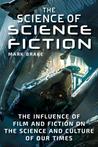
BOOK REVIEW: The Science of Science Fiction by Mark Brake

The Science of Science Fiction: The Influence of Film and Fiction on the Science and Culture of Our TimesThe Science of Science Fiction: The Influence of Film and Fiction on the Science and Culture of Our Times by Mark Brake
My rating: 4 of 5 stars

Amazon page


This book grew on me. The reason I didn’t like it at first has to do with how the title sells the book in the wrong direction. When one sees the title “The Science of Science Fiction” one expects a book like those by Michio Kaku (e.g. “Physics of the Future” or “Physics of the Impossible” – or perhaps like Kakalios’s “The Physics of Superheroes.” In other words, one is expecting a book that teaches one about science through examples of science fiction, i.e. using science fiction to make science interesting and relatable. If you are expecting that kind of book, I suspect you’ll be disappointed.

The book doesn’t go into any depth on scientific issues. Instead of a book about the nexus of science and science fiction, one gets a book about the nexus of the history of science fiction, the history of science, trends in scientific progress, and trends in science fiction. (The confusing title is a little bit justified, therefore, given the broad territory of the books “niche,” but it could lead to confusion.) If you are interested in questions such as which came first the fictional atomic bomb or the real one, you’ll be reading the right book. If you are interested in whether or not quantum entanglement can be used for an ansible (faster than light communication) or how fast Superman has to jump to orbit the planet, you’ll find this book a disappointment.

The book is divided into four parts and has many brief chapters in each. Most of these chapters take as their lead a recent work of science fiction (usually a movie) though the book is at its strongest when it’s teaching the reader about the history of science fiction and how that history was influenced by – and influenced – real world events.

The first part is about space. It considers such questions as whether we will see alien visitor or invaders, the likelihood of parallel universes, and when we can expect to colonize other worlds.

The second part is entitled “time” and it considers the many ways time has been explored through science fiction. The time machine is considered from several dimensions and through movies such as the “Terminator” series and “Looper.” However, other time-related plot devices are also given scrutiny, such as precognition.

The third part is about machines and the interaction between man and machine. What can we expect from the rise of artificial intelligence (AI) and robots? The reader learns about the earliest use of the term robot and how historical science fiction compares to the realities coming to fruition.

The fourth, and final, part is entitled “Monster” and it investigates the realm of biology. Can monsters or supermen be created through super-serums or genetic modification? What are the limits of the human body and mind? These are the type of questions that are investigated.

There are no graphics, notes, or back matter in this book. However, I did read a review copy, so your results may vary.

If you are interested in the history of science fiction and how science fiction relates to scientific progress and the effect of science on culture, then I recommend this book. As I said, if you’re wanting to learn about science through the lens of examples from science fiction, then this is probably not the book for you. As I said, the book is at its strongest when it explores the history of science fiction.

View all my reviews