The Most Intense Blockbuster You’ll Never See

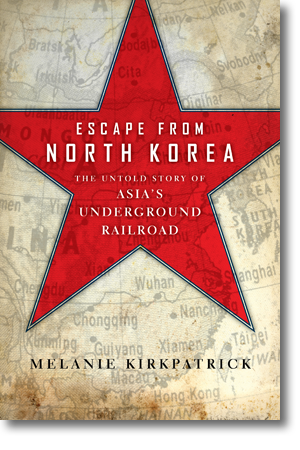
REV_Kirkpatrick-designAmong the Kindle Daily Deals yesterday was a book entitled Escape from North Korea: The Untold Story of Asia’s Underground Railroad by Melanie Kirkpatrick. It was well-timed to a news story about a Korean War Veteran, Merrill Newman, whose video statement as a prisoner of the DPRK was released the same day. Anyway, I bought the book and I’m hooked. The stories it contains are a mix of chilling and thrilling.

As I began reading, I wondered why no one had made a major Hollywood blockbuster based on an escape from North Korea. It’s a journey fraught with peril. There’s so much to go wrong from being shot in the back crossing the Tumen River to being repatriated to being double-crossed by smugglers to falling into the hands of traffickers or other predators. Adding to the challenge is the fact that most North Koreans are severely undernourished, and each is on his or her own for the first part of the trip–getting across the border. Furthermore, it’s not uncommon for North Koreans to stick out physically because they’re unusually small and, as pointed out by one of Kirkpatrick’s sources, prone to bad hair and split ends.

I know these are words that writers despise but the screenplay practically writes itself.

Then I remembered, oh yeah, this will never be a movie because China’s government would be one of the villains, and Hollywood isn’t in the business of making films that PO the Chinese any more. Why is China the villain? Well, it’s not the main villain. That distinction, of course, goes to the Kim dynasty, presently personified by Kim Jong Un–who has been the biggest bastard yet when it comes to escapees. China’s policy is one of repatriation. It would be kinder for China to just execute the North Koreans themselves. One of the stories early in the book is about an entire family that was to be sent back who–having eaten their first decent meal in a long time–decided to die full and committed suicide while in Chinese custody. Lest one think that this is a Communist thing, Kirkpatrick points to Vietnam as one of the countries that quietly helps North Korean escapees get to safety. Like the democracies that do so, Vietnam keeps this on the down-low to avoid cheesing off the Chinese, but at least they do it.

Why would such a movie be good? Because everybody needs to know what’s going on, and movies are the surest injection point into the public consciousness. There have been books and documentaries about this for years, but I don’t think most people realize how bad it is.

I should point out that there have been films on the subject. The Crossing, made in South Korea, is probably the most well-known feature film on the subject. It’s about a father who crosses the border to get medication for a wife, but ends up stuck on the other side of the border during which time his wife dies and his boy becomes–for all intents and purposes–an orphan. This film is apparently based on a true story.

And there have been a number of documentaries on the subject. The Defector: Escape from North Korea is one of the best.

This is the book trailer for the Kirkpatrick book.

BOOK REVIEW: Ender’s Game by Orson Scott Card

Ender's Game (Ender's Saga, #1)Ender’s Game by Orson Scott Card

My rating: 4 of 5 stars

Amazon page

Ender’s Game is the story of a boy, Ender Wiggin, whose intelligence and capacity for ruthlessness lead the military establishment to believe that he’s the last hope for mankind. The book is set in a future after the Earth has been invaded twice by an alien species called the buggers, and now the Earth is planning its own “preemptive” invasion to end the bugger threat once and for all.

The novel follows Ender’s life from his short home life as a “third”—a rare third child for which special permission must be granted—through his post-war life. (This entire timeline transpires before adulthood.) The bulk of the novel takes place in Battle School, where Ender receives his training in military tactics and strategy and spends much of his time in zero gravity war games. He rises up through the ranks quickly, as expected, but not without stirring some animus in the process. He learns strategy both through war games and through the mind-field of real world animosity by others who are jealous or feel insulted by his brilliance.

As Commander material, Ender is considered to be in the Goldilocks zone. His older brother, Peter, is too cruel; his sister, Valentine, is just too kind. (All three Wiggin children are geniuses.) Ender has the right mix to fight the buggers. His problem is that the world forces him to be ruthless and his compassionate side makes it hard to cope.
While Ender leaves home young and early in the novel, there is a subplot involving the older Wiggin children that is revealed over the course of the book—showing the reader more of the tormenting brother and the loving sister who shaped his worldview. Ender does interact with Valentine in person on a couple of occasions, but his only interaction with Peter is a brief mention of correspondence at the end of the book.

Ender is an intriguing character. He is always the outsider, by birth as a third and then through isolation in Battle School that is facilitated by the conflicted head of the Battle School, Col. Graff.

I won’t get into the ending except to say that there is a twist at the novel’s climax. I will say that the reveal of this twist felt a little anti-climactic to me. However, as the real story isn’t about fighting the buggers, but Ender’s internal struggle, this isn’t as dismaying as it might otherwise be.

One can tell that this is a series book because it climaxes and resolves relatively early, leaving a fair amount of space to set up the next book. This actually helps the twist offer some surprise because the reader sees that there are so many pages left for the novel to resolve itself.

Card does an interesting thing in making the central character stronger than everyone around him–at least until he’s introduced to his new guru, Mazer Rackham–the Commander who won the key battle of the second bugger invasion and who is alive by virtue of a relativistic trip. Ender’s superiority seems like a recipe for boredom, but it works because what we don’t know is whether Ender is stronger than everyone else pitted against him combined, and, moreover, we don’t know whether he is strong enough inside to withstand all the horridness to which he is subjected. A lot of the tension of the novel is really internal to Ender. Unlike Peter, who would revel in ruthlessness, Ender is tormented by all of the violence he must perpetrate.

I’d recommend this novel. It has its flaws, but it is quite readable and Ender’s character is intriguing from start to finish.

The movie version is coming out tomorrow. I haven’t seen it, but here is the trailer.

View all my reviews

DAILY PHOTO: Mustache Machismo

Taken September 5, 2013

Taken September 5, 2013

India is the last bastion of the luxuriant mustache as a font of machismo. While the thick, droopy stache may have fallen out of favor with male porn stars and deep South State Troopers, it remains emblematic in Bollywood.

One day, when the Freddie Mercury mustache returns to its former glory, Indian men will be able to hold their heads high, certain in the knowledge that they never abandoned the stache.

It should be noted that the power of the stache goes way back here. On the elaborately towering Hindu temples, one will see such figures. I have yet to learn which deity sports the stache (often along with a pot belly,) but it’s not Ron Jeremy–that much I know for certain.

BOOK REVIEW: Man of Steel by Greg Cox

Man of Steel: The Official Movie NovelizationMan of Steel: The Official Movie Novelization by Greg Cox

My rating: 3 of 5 stars

Amazon page

This is the first novelization of a movie I’ve reviewed. In fact, I haven’t even seen the movie yet. However, from the trailers I can see a little of how the book describes the events of the movie. In the afterword the author, Greg Cox, indicated that he hadn’t yet seen the completed movie. (Not surprisingly, considering the desire to get the book out in time.) He presumably worked mostly from the screenplay, and perhaps some unedited scenes from the movie. At any rate, unlike a movie adaptation of a novel, one expects a novelization to be spot on with the movie’s story.

As I’ve said in other posts, it’s hard to do Superman really well. Stories are all about tension, and it’s hard to build tension if your hero is indestructible and has god-like powers. [The sequel is supposedly Batman v. Superman, and one has to wonder how this can be done well. Batman is formidable, but the Joker sometimes gets the best of him, and the Joker is no Superman.] At any rate, I think this rendition does a better job than most, and vastly better than the epicly-awful 2006 Superman Returns.

The story begins on a dying planet Krypton as a coup led by General Zod takes place. Both Jor-El (Superman’s father) and Zod believe the planet is dying, and that urgent steps need to be taken to save the Kryptonian race. However, they differ vastly on how to go about saving the race. Zod believes in saving certain blood lines, and Jor-El believes in a much more balanced and progressive approach.

When we are introduced to Clark Kent/Kal-El/Superman, he is a young man who is living a secret life. He engages in episodes of heroic derring-do, but has not yet donned the costume and is forced to move nomadically from one dead-end job to the next as his powers are revealed. There are also many flashbacks to cue us in to his troubles and dilemmas as a child.

Shortly after Kent realizes who he is and gets some Kryptonian backstory, Zod and his band of zealots shows up–newly escaped from the phantom zone. The climax and resolution of the movie involve Superman’s battles with Zod and the General’s fierce underlings–with a love interest subplot between Lois Lane and Superman.

What this story does right is to introduce a strong foe for Superman to battle. Not only does Zod have a numerical advantage, he is a life-long warrior and is thus more experienced. Zod’s second-in-command, Faora Hu-ul, is a worthy adversary in her own right. This is not Superman versus a green, glowing rock.

The challenge of this type of story (as with movies like The Avengers) is that, having set up an “immovable object meets irresistible force” scenario, it’s extremely hard to resolve the tension in a manner that is both logically and emotionally satisfying. While I have criticized movies for this, if the visuals are impressive enough it seems to work with viewers. It works because it creates enough emotional satisfaction for one to suspend concern about whether the resolution makes any sense based upon what is known from earlier in the story. It’s harder to reliably do this in writing. Therefore, you may find the ending a bit flat after an intriguing build up.

I doubt it’s worth reading the novelization and seeing the movie, except if one is interested in how one’s internal view of it matches with the movie (in which case one should avoid the trailers and read the novelization first.)

View all my reviews

For those who do want to view the trailer.

Shame List: 10 Iconic Movies That I’ve Never Seen

Last week I made a confession about 25 books that I haven’t read that everyone else seems to have. This week, I thought I do the same for movies. These all feature prominently in pop culture, and one can’t go through life without hearing references to them.


1.) Apocalypse Now: I caught a part of the 2001 Redux, but I’ve never seen the original 1979 movie. I know the general plot, but otherwise all I know is that Lt.Col. Kilgore says, “I love the smell of napalm in the morning. Smells like… victory.”


2.) Citizen Kane: This is at the top of many a list for the best movie ever.


3.) The Crying Game: I, like everyone not living under a rock, know its surprising twist ending.


4.) Gone with the Wind:: As someone who has lived much of his adult life in Atlanta, this is a particular disgrace.


5.) The Killing Fields: I’ve been to Cambodia. I’ve read about the Khmer Rouge, but…


6.) Poltergeist: “They’re here.” That’s all I know.


7.) Psycho: Norman Bates and his mother, hwew, right?


8.) Raging Bull: The name Jake LaMotta rings a bell.


9.) Scarface: “Say hello to my little friend. [delivered in thick, Cuban accent]” Yeah, I know that part.


10.) Taxi Driver: “You talkin’ to me?” That’s all I know.

Are Action Movies Dazzling Us Stupid?

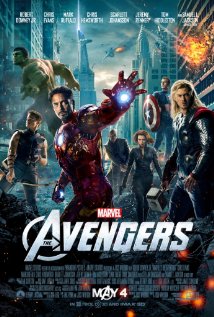
AvengersJust like everyone else, when I first watched The Avengers, I was awed. As I digested the experience, however, I realized how appallingly flawed the story was. Can a film that is visually impressive enough dance over the hard parts of story?

Alright, it’s not just being visually impressive. If it were, then the Transformers movies (I’m thinking particularly of the second one) wouldn’t be so sucktacular. No. Filmmakers also need clever quips. This feeds an inexplicable urge of young people to repeat the witty remarks of movie characters ad infinitum. (Confession: I’ve always longed for an excuse to say, “I’m your Huckleberry,” as per Doc Holliday’s words to Johnny Ringo in Tombstone.) It’s not just that the Hulk bashes a marble floor to dust using Loki’s lanky frame, but that he delivers that witty, two-word rejoinder. Together the CGI and the quip seal the scene in one’s mind.

[Spoilers ahead] If one looks up deus ex machina in the dictionary, one learns that it means: “someone or something that solves a situation that seemed impossible to solve in a sudden and unlikely way, especially in a book, play, movie, etc.” If one’s dictionary is online, one would then probably be treated to a video clip of the scene in which Professor Selvig is knocked on the head, becomes unenslaved, and consciously realizes that his subconscious built a backdoor that will allow him to shut down the portal that were previously told can’t be shut. The clip could then continue through the end of the movie (minus the post-credit shawarma scene.)  The following are key incidents of deus ex machina in this film:

-a bump on the noggin releases one from the mind-control of a god (A “puny god,” indeed.)
-a conscious mind (in a waking and non-meditative state) knows in great detail what happened in the subconscious
-an attack on the mothership disables all troops on the ground, Independence Day style (worst command and control ever.)

One may be thinking that I’m just one of those douches who picks nits, but I’m really not. These flaws are fundamental to how the story is resolved. They are cheats that make everything that happened leading up to the climax irrelevant. Think about it; if the Professor had gotten knocked on the head 20 minutes earlier, the massive Avengers battle through Manhattan would never have been necessary. They could have called the movie “Professor Selvig’s Magical Mind” and left the Avengers out of it all together.

I’m willing to sustain disbelief about the small things. There are plenty of critics who get into the minutiae of continuity gaffes and the like. A couple of my favorites are below.

Lest one think that I’m picking on The Avengers, that’s only because it’s the third highest grossing film ever and first in the superhero genre. If you’re spending hundreds of millions on a film, you’d think you could throw some chump change into good story-building.  I realize that filmmakers have a jaded audience to contend with, and that they have to ramp up the peril to impossible heights to impress. Maybe they are forced to then throw away the resolution of story. Those who read my recent review of The Wolverine, will know that my criticism isn’t restricted to The Avengers.

Well, I’ve got nits to pick.

MOVIE REVIEW: The Wolverine

I don’t normally do movie reviews because, for one reason, I don’t watch that many movies–at least not in the timely fashion necessary to be relevant. However, I figured I’d do one for The Wolverine because I did a book review of Clairmont & Miller’s Wolverine.

The Wolverine shares superficial common ground with the Clairmont & Miller book.  The setting for each is largely Japan. The movie and the book share almost the same slate of major characters. However, the characters don’t necessarily have the same relationships to each other or the same personalities as in the book.

If you’ve seen the trailers, my synopsis will be largely spoiler/surprise free. The movie opens with Logan saving a young Japanese officer. It then flashes forward to Logan living in the wilderness of the Pacific Northeast. The primary reference to the earlier films is that he is tormented by killing Jean Grey in X-men: The Last Stand (a.k.a. X-Men 3.) Yukio (a female warrior who the movie makes friendly to Logan from the get go) tracks Logan down to take him to see her employer, the same individual he saved during the war. That individual offers him mortality. After their meeting, Logan’s principal goal shifts from living by a vow to not kill to one of keeping Mariko safe. Mariko is the granddaughter of the officer Logan saved and she becomes his love interest. As in the book, Mariko is tangled in intrigues of family and company (i.e. kairetsu), but the nature of these intrigues is somewhat updated in the movie. In the book, Mariko is a helpless damsel-in-distress, but in the movie we see her strength.

The biggest strength of this movie is that Wolverine becomes mortal in the film–at least for a time. This creates stakes for Logan where none usually exist. The problem with Wolverine’s combination of rapid healing and indestructible skeleton is that there’s no nail-biting over his fate. You know no matter how much he gets tossed around, he’s going to get up and within a minute he’ll be right as rain.

In my opinion, the biggest flaw of the movie is the creation of a twist ending that fails to surprise but yet requires distorting a character. I realize it’s hard to write a good twist ending. If one foreshadows too much, one gives away the surprise. If one fails to foreshadow, then one annoys the audience with a “gotcha” type ending. In this case, one of the characters behaves in a manner that is out of character with the first act portrayal. This is a “gotcha,” but one that one couldn’t help but thinking was a possibility. There are a number of little forgivable sins that I won’t discuss, and which may be inevitable in film.

The film also contributes to the general continuity muddle of X-men films. Because this film attempts to be a standalone film, it may not seem fair to critique this point. However, by using the aforementioned piece of the X-Men 3 timeline, I think they open themselves up to this criticism. As an example, while in the X-Men Origins: Wolverine film we are told that Wolverine can’t grow back his memories, he apparently grows back his memories of what happened in WWII just fine. There’s a post-credit scene which happens three years after The Wolverine timeline that is a set up for X-Men: Days of Future Past and Professor X appears in it, but they hint that there may be an explanation for this (Xavier died in the same X-Men 3 that this film references through about half a dozen dream sequences.) This is not so much an example of  discontinuity, also because the upcoming film features time travel prominently, but may or may not be example of the general X-Men muddle.

I’d recommend seeing this movie, but only if one goes in thinking of X-Men Origins: Wolverine. If one does that one will find it an enjoyable step up. However, if one goes in expecting a movie of The Dark Knight caliber, one will be sorely disappointed.

Sharknado: or, the Rock Band or Cheesy Movie Game

Somebody on Facebook made an offhand reference to Sharknado the other day.  I had no idea what a “Sharknado” could be, except the mind-numbingly stupid idea suggested by the phonetics of the “word.” It turns out that is exactly what it was. Despite the fact that sharks exist in places like Florida and tornadoes exist in places like Oklahoma (not a lot of overlap there), the movie is about tornadoes that pick up sharks and throw them through the air at unsuspecting people. (The sharks are, of course, still alive and hungry contrary to everything we know about biological entities that get picked up in twisters.)

I once wondered why the “Sci-fi” channel changed its name to the “Syfy channel.” I now know that it must have been the threat of false advertising lawsuits that spurred this change. (Of course, this doesn’t explain why the “History channel” isn’t the Sasquatch Alien channel.) Sci-fi is short for science fiction. Let’s break that down. First, the reference to “science” means one would expect some speculative universe which is constrained by scientific laws–either the laws of physics as we know them or some reasonable set of scientific principles by which a universe could be held together. It is not a magic universe, as required by Sharknado. The target demo for science-fiction is geeks and nerds (said in the most complimentary sense of those words)–in other words, people who overthink (or, at least, think.) The target demo for Sharknado seems to be pubescent boys failing science and in need of an opportunity to masturbate to Tara Reid.

Second, fiction is a creatively-engineered story, and I’m not even sure Sharknado qualifies on this front either. The creative component seems to be limited to cramming two things that terrify people together into one word or phrase. This may work in some cases, such as with the term “divorce lawyer.” However, the two concepts that one smashes together have to have some credulity as a unified threat. The fact that motherf#$%ing Samuel L. Jackson couldn’t save Snakes on a Plane, should have made this apparent to all.

As a thought exercise, let’s try some examples:

1.) Which of the following terror-inspiring dualities are devices around which a movie plot could be built, and which are just awesome rock band names?

a.) Clown-Pirates

b.) Hobo-Scorpions

c.) Black Mamba-Teen Driver

d.) Bear-Proctologist

e.) Spiders in a Tuk-tuk

f.) Karaoke-Mugger

g.) Robo-gynecologist

h.) Newborn-Arsonist

i.) Mother-in-Law / Attorney-at-Law

j.) Anthrax-blizzard

By the way, if the Syfy channel comes out with any of the above movies or series, please shoot me an email so I can claim my Executive Producer credit. It’s more likely this will be the starting line up for Lollapalooza 2025.

Bear with bubbles

The Good and Ugly of Olden Times

This was posted in my martial arts blog, Jissen Budoka, as well.

I’ve been doing a lot of reading about Japan’s past recently. In my spare time, I’m working on rewrites for a novel in which 14th century Japan features prominently. Being my first foray into historical fiction, I’m finding the need to go back and do a lot of research about the time because the quick and dirty draft I wrote needs a lot of gussying up. I just finished reading Charles Dunn’s Everyday Life in Imperial Japan,  which is about a later period but one which would have shared much in common when it comes to everyday life. Presently, I’m reading The Taiheiki–which is about the 14th century, but which blends fact and fiction.

Doing such research encourages one to consider what it meant to live during that time. We all build constructs of the world to adjust for our limitations in knowledge. Some of these constructs hold up better than others, but they’re all simplifications. When one reflects upon a time before one’s experience–and particularly regarding a place with which one has limited familiarity–there are two major forms of fallacious reasoning that can take hold:

1.) The Golden Age Fallacy: This is the thought that everything was better back in the day–back before humanity started slouching toward craptasticness.

2.) The Outhouse Fallacy: This is the idea that any society that couldn’t manage indoor plumbing couldn’t possibly be worthy of emulation.

Of course, these simplifications are both true and false in some regard, and–as absolute statements–are absolutely false. The truth is something more like what Ralph Waldo Emerson suggested in Self-Reliance. Emerson described society as a wave, receding on one side as quickly as it advanced on the other. In other words, changes maybe seen as progress, but they also bring about the destruction of valuable knowledge. In martial arts terms, the spear becomes obsolete and the art of spear-fighting dies.

LastSamuraiThe movie entitled The Last Samurai revolves around this premise. Of course, in Hollywood fashion the forces of modernity are made entirely villanous and our heroes, the samurai, are entirely virtuous. In a way the movie is perverse in that it suggests we root for the medieval approach over our own.

When considering feudal Japan, Golden Agers point to it as a time during which virtue was paramount, craftsmanship was exquisite, and much culture flourished. They are right; but don’t set your time machine just yet because Outhouse Agers are also correct when they say that it was a time during which most of the population had no rights, wars ravaged the country, and in which farmers were not allowed to partake of many of the products they produced–but rather had to feed and cloth their families with inferior substitutes.

One should be careful to neither romanticize nor vilify the samurai. We should keep what is of value of the old ways without being a slave to the worst ways of our predecessors’ nature. One shouldn’t abandon everything old on the assumption that by definition everything abandoned to the past is refuse.

BOOK REVIEW: World War Z by Max Brooks

World War Z: An Oral History of the Zombie WarWorld War Z: An Oral History of the Zombie War by Max Brooks

My rating: 4 of 5 stars

Amazon page

World War Z, as the subtitle suggests, is written as a series of interviews of key (or in some cases typical) people involved in the Zombie War. The viewpoints addressed include various political leaders, military service members of various branches and nations, strategic planners, doctors, and even civilians caught up in the diaspora that resulted from the plague.

The approach of the novel is unusual. To the degree there is a lead character, it’s the UN employee who conducts all the interviews. However, we don’t experience the interviewer’s story arc and are left with very little insight into this individual. Rather, the story is a global arc of mankind’s experience of zombies from “patient zero” through the clean up in the years following the war. And, it is a global tale. The stories of these individuals take one to places like Chongquing, Meteora, the Amazon, Barbados, Johannesburg, the Alang ship breaking yard (an excellent choice for a post-apocalyptic setting, I must say), Denver, and even onto a ballistic-missile-toting submarine sitting on the ocean floor.

Where Brooks’s book excels is in making one think, and in that regard it does an excellent job. This isn’t about edge-of-the-seat adrenaline injections to which most Zombie book authors aspire. I don’t deny that there are emotional parts to the book, but the tension is reduced by virtue of being a collection of survivors’ tales. That is, we know the story-tellers survived more-or-less intact. Also, because of the intrusions of the interviewer and the authenticity of responses (some are more skilled and open story tellers than others), we never lose sight of the fact that this is a couple of people talking war stories.

That being said, we take a cook’s tour of gut-wrenching food for thought over the course of the novel. Consider a government that abandons its citizenry, and even uses some as bait to help save others. Brooks tugs at the readers’ heartstrings through an interview with a K-9 soldier who describes the role of man’s best friend. Brooks portrays the best and worst that mankind has to offer–as one would surely expect to experience them in such a world gone wrong.

I must admit, some of the topics may be more interesting to me as a social scientist than they will be to others. One interviewee discusses the mismatch between job skills needed and job skills available in a rapidly evolving post-apocalyptic landscape. This speaks to present-day society as much as it does to a dystopian future. The author devotes an interview to questioning the man responsible for reestablishing trust in the dollar in an economy that has by necessity reverted to barter. There is also discussion of revolutions in governance that find their catalyst in the Zombie War. There are intriguing turns of events such as the makeshift flotillas of U.S. citizens converging on Cuba because Fidel’s authoritarian regime was uniquely prepared to close itself off during the earliest days of the outbreak.

With the movie coming out this Friday (June 21), I will say that I can’t see much in common between the book and the trailers for the movie that I’ve seen to date. However, I can imagine the movie being an extension or outgrowth of one of the many vignettes expressed in the book. This is not to say that the movie will be bad (or that it won’t be), but if one sees the movie one will still be left with impetus to read the book.

I enjoyed World War Z because it makes one think–a feat that isn’t the strong suit of Zombie literature.

View all my reviews