No matter what style of meditation you practice, you’ve probably heard the following refrain: “And if you find your mind wandering, non-judgmentally make a note of where your mind went, and let that thought drift away as you return your awareness to __________.”
I’ve certainly heard many takes on that teaching, and had plenty of opportunity to implement that advice. In the process, I’ve noted that the places my mind wanders can be classified into several categories.
5.) The Planner: Our conscious mind is first and foremost about answering the question, “What’s the worst that can happen, and how can I make that worst case less bad?” The mind wants to anticipate undesirable events and either make an end run around them or figure out a way to make them less troubling. The Planner wants to rehearse everything from making dinner to being interviewed for a job to having a dreaded conversation.
4.) The Entertainer: This is the mind that sticks songs in your head and replays clips of movies.
3.) The Walter Mitty / The Bolsterer: This is the daydream mind which cooks up scenarios in which you are the hero.
2.) The Subconscious Image Generator: In a relaxed state in which the conscious mind is quieted, one may find oneself seeing images that probably don’t make a lick of sense. The pictures may come and go in a way that make them hard to maintain even a glimpse of. This is the same kind of imagery that one experiences in the hypnagogic state–as one is drifting towards sleep.
1.) The Critic: Saving the most despicable for last; this is your inner critic. The one who thinks that you won’t succeed at any given task.
Category Archives: Meditation
5 Tools to Hulk Your Way Out of Your Comfort Zone

5.) Take a class / Join a group: While I’m partial to yoga and the martial arts, the class could be in any area that presents a challenge. However, there are a couple of advantages to the aforementioned two (to which I would add dance.)
First, these disciplines train one to be expressive with one’s body and to move more freely. This can do wonders for confidence. People store tension in their bodies without even realizing it. Many have postural problems that effect confidence and self-perception. A 2014 New Zealand study found that posture can have a strong effect on emotional state.
Second, no matter who one is, one will be challenged by new approaches to movement. The average person has great difficulty learning to use their body in new ways. One needs to drill in movements conscientiously to achieve competency. Our conscious mind, frequently gets in the way. Even the most athletic and coordinated people will need to work it, failing repeatedly until they succeed.
Why is the challenge so important? Many people go through life afraid to fail, but far too few fear never failing. Sounds idiotic. Nobody wants to fail. I have some hard news. If you’ve never failed, it’s not because you are unmitigatedly awesome in all things. It’s because you’re living in a box and cherry-picking life experiences that feel unthreatening.
If, like me, you’re an introvert, this approach offers the additional benefit of social interaction that is of a predictable / schedulable nature. One needs the interaction, but the problem comes when one has social interactions and / or sensory stimulation that go on too long and in an unpredictable fashion. Therefore, being able to schedule such time is a good way to go about being a more productive introvert.
4.) Writing / Visualization: These two approaches to mentally rehearsing allow one to keep one’s inner critic in check. The problem with simply day-dreaming it is that critic can chirp in without being that cognizant of it.
In visualization, one quiets the mind and can then non-judgmentally acknowledge and dismiss the negative thoughts. In writing–be it as a journal entry, poem, or a story–we may not notice the nagging voice of the inner critic on the first draft, but you can take note of it and undo it in rewrites.
3.) Travel / Living abroad: I should point out that not just any old travel will have the desired effect. Many people plan their travel with the objective of being comfortable at the fore. They eat at places that serve the same kind of food as at home. They stay in hotels with virtually all of the comforts of home, and sometimes many more. This is understandable because the traveler might just be seeking rest. However, if one is seeking the epiphany or enlightenment experiences talked of by backpackers and ashram-dwellers, that’s not something that comes from staying in resorts or eating at American fast food joint. Those kinds of brain changing experiences come when one is stripped from the familiar and has to surrender one’s attachments to the way one thinks the world should be. One’s perception of culture and worldview changes radically when immersed in a foreign environment.
2.) Game it / Roleplay: There’s a big movement to gamify all manner of everyday activities. In her book, “Reality is Broken,” scholar of game design Jane McGonigal describes a game called “Chore Wars” that incentivizes the doing of mundane household chores.
What is it about games that help one move beyond one’s limits? First of all, it incentivizes actions. And if you’ve ever noticed people playing games on their phone or FB for hours on end, you’ll note that it doesn’t take much reward to keep people plugging away—as long as the game is structured well.
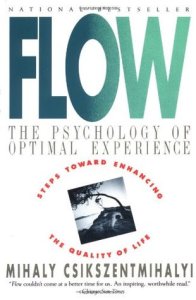
Second, good games provide a built-in process of “leveling up.” This means that the challenge keeps being intensified as our skill level advances. Those familiar with Csikszentmihalyi’s conception of “Flow” will recognize that matching skill level to challenge level is one of the most crucial elements in facilitating flow-state.
Roleplaying is a bit like the previously mentioned tools of visualization and gaming in that it’s a way to have a low-cost rehearsal. If one has someone with whom one can engage in such a roleplay, than one also has someone to help make you aware of your inner critic and its deleterious effects. And that brings us to the final tool:
1.) Have a spouse, partner, and or confidant: In “Why Zebras Don’t Get Ulcers” Robert Sapolsky tells a story of being interviewed by a magazine. He was asked what the number one thing that they could tell their readers about reducing stress. To which he replied that the most well-established factor in stress reduction is to have a spouse / life partner with whom to share one’s challenges. Unfortunately, this was a magazine for women business leaders, a significant portion of whom had given up on permanent relationships and families. They, therefore, asked him what else he had. Still it’s hard to overlook the anxiety-fighting effects of having someone around with whom to share one’s dread.
POEM: River to Sea
The river twists through a barren landscape.
Filling with flotsam, detritus, and silt,
dragging death downstream,
it will pour into a bright, blue sea.
You should savor that scene,
but your view is from above,
and so you see a shit-colored plume
splaying into the clear, calm waters.
And you fear the shit stain
will spread across the sea.
But it doesn’t.
It seems to settle.
You never knew the clear and calm could
subdue those murky, mucky waters.
5 Neuroscience Fun Facts for Yogis & Yoginis
5.) IDEA: While our conscious mind feels like the sum of our mental world, in fact, it’s the tip of the iceberg of mental processes. Our decisions and actions are guided to a large degree by happenings below the waterline.
INTRIGUING EXAMPLE: In one study, interview subjects were randomly assigned to hold either iced or hot coffee. No attention was drawn to the coffee and it was set up as a mere accident of happenstance (the HR person directing the interviewees had her hands full.) The coffee was retrieved before the subjects made handshakes with interviewers. Unrelated to their verbal responses, those who had held the iced coffee were disproportionately described more in terms suggesting a cold personality (e.g. calculating, devious, etc.) and those who had held hot coffee were credited with a warmer personality.
RELEVANCE: Get your hands warm before you start making corrections.
REFERENCE: The coffee study is discussed by David J. Linden in his book Touch. However, there are many books on this topic, several that I’ve reviewed. In particular, I can recommend Eagleman’s Incognito and Mlodinow’s Subliminal.
4.) IDEA: Emotions play a crucial role in decision-making. We aren’t nearly so rationale and calculating as we think ourselves to be–particularly when there is uncertainty in the mix.
INTRIGUING EXAMPLE: Giovannni Frazzetto’s book describes cases of patients with lesions in their medial prefrontal cortexes who would deliberate ad nauseam and still couldn’t reach a decision.
RELEVANCE: This is why we don’t silence or stamp out emotions, but rather watch them dispassionately while avoiding a mental drift into a frenzy of illusion building.
REFERENCE: The Frazzetto book I referenced is: How We Feel, and it deals with anger, guilt, anxiety / fear, grief, empathy, joy, and love. However, the patients described in his book were those of Antonio Damasio, and so you may want to check out Descartes’ Error, which I’ve heard good things about, but haven’t yet read.
3 .) IDEA: Experiences once thought to be supernatural, mystical, or fraudulent are increasingly being understood in scientific terms.
INTRIGUING EXAMPLE: For some, an Out-of-Body-Experience (OBE) is an impossible flight of fancy, while for others it’s a mystical / transcendent state beyond the physical realm. However, in recent years scientists have not only confirmed that people have these experiences, they’ve come a long way toward understanding such occurrences by actually inducing them via electrodes applied to the right angular gyrus. It seems that area of the brain is responsible for integrating sensory information from various senses, and its disruption creates an illusion of one’s consciousness floating outside the body.
RELEVANCE: As many have wisely advised, don’t spend a lot of time chasing siddhis–not only might it stunt your growth toward the ultimate goal, it might just be running after tricks of the mind.
REFERENCE: I highly recommend Anil Ananthaswamy’s The Man Who Wasn’t There. The book looks at the various ways in which “self” has been defined (one’s memories, one’s body, etc.) and it shows how neuroscience has learned a thing or two about the various dimensions of self, and how none of them fully defines an “I.” (i.e. The Buddhist conception of the self as illusion might turn out to be not far off the mark.)
2.) IDEA: Our brains can be rewired through practice and training. The property is called neuroplasticity, and it’s often described by the verse: “neurons that fire together, wire together.”
INTRIGUING EXAMPLE: You may have heard about how London taxi cab drivers develop an enlarged hippocampus, which helps them meet the vast spatial memory needs required of the job. However, an even more fascinating example may be how some blind people have developed a capacity for echolocation–i.e. their mind registers changes as sound bounces off walls, curbs, and other obstacles.
RELEVANCE: One takes advantage of neuroplasticity when one works to be more kind and compassionate by recognizing and changing one’s behavior patterns.
REFERENCE: Fascinating reading on the topic can be gleaned from Kathleen Taylor’s book Brainwashing, but the most widely-cited book on the topic may be Norman Doidge’s The Brain That Changes Itself.
1.) IDEA: We have neural circuitry that predisposes us to spiritual belief and inclinations toward the sacred.
INTRIGUING EXAMPLE: The evidence suggests that it’s not so important who or what you believe in, but the more positive the message the better. People of religion have demonstrated both better and worse health outcomes–all else equal–and it seems linked to whether you have one of those smiting gods or a more compassionate one.
RELEVANCE: Belief and surrender–religious or secular–can play an important role in one’s personal development.
REFERENCE: Newberg and Waldman’s How Enlightenment Changes Your Brain deals with these issues in detail.
BOOK REVIEW: How Enlightenment Changes Your Brain by Andrew Newberg and Mark Waldman
How Enlightenment Changes Your Brain: The New Science of Transformation by Andrew Newberg
My rating: 5 of 5 stars
This book busted me over the head with some profound food for thought. I’d been skeptical of the notion of Enlightenment. [Note: the authors distinguish big-E Enlightenment as a permanent and substantial brain change, in contrast to the little-e enlightenment which is just a momentary epiphanies or insight—a number of which may precede the big-E Enlightenment.] It’s not that I disbelieved that some people had life-changing and / or perspective-changing experiences, but rather that such events represented permanent change. My skepticism was influenced by the many gurus who have been said to be Enlightened, but who behaved to all appearances like petty, materialistic douche-bags. It’s not that I couldn’t believe that these teachers achieved some momentary heightened state of consciousness during their youth, but—if they had—they clearly couldn’t maintain it under the pressure of being idolized. I’d, therefore, come to think that life is a perpetual struggle to try to be a better version of oneself, and backsliding can and will happen at any moment. This book, however, suggests there is a possibility for permanent brain changes. [Though Dalberg’s “Absolute power corrupts absolutely” seems to still apply.]
Andrew Newberg is a neuroscientist who has made a career out of conducting brain imaging studies of people engaged in various spiritual, religious, and meditative activities. His co-author is a psychologist, Mark Robert Waldman, who works on applying neuroscientific understanding to positive psychology. In this book, the two examine what Enlightenment is from a neuroscientific standpoint and then try to cull the common features across a population of cases of Enlightenment / enlightenment. Discovering the common elements of Enlightenment is no easy task. While it seems everybody is theoretically capable of achieving Enlightenment, it also seems that the experience is different for everybody and the collection of systems (religious, spiritual, and secular) by which it’s pursued is vast. However, the authors present a five-step outline by which readers can prime themselves to achieve Enlightenment, and it can be personalized depending upon one’s beliefs (or lack thereof—Enlightenment occurs among agnostics and atheists as well as religious practitioners) and background.
The book consists of 12 chapters divided among three parts. Part I (Ch. 1 to 5) lays the groundwork for readers to understand what Enlightenment is, how it feels, how it’s experienced between people with radically varying belief (and disbelief) structures, and it presents a model of human awareness that is crucial to the later discussion. Part II (Ch. 6 to 9) considers what happens in the brain during various practices by which individuals advance towards Enlightenment. Concepts like unity, surrender, and belief are explored in detail. Part III (Ch. 10 to 12) describes the process by which readers can pursue Enlightenment for themselves. If one is inclined to chart one’s own path, versus adopting an existing program, one has all the insight and tools to begin constructing one’s personal method by the time this section is complete.
The book has graphics as necessary (e.g. brain diagrams) that largely consist of line diagrams. There is an appendix that consolidates tools and resources, and the book is annotated by chapter.
I found this book to be both interesting and potentially beneficial to readers who take it beyond a popular science book and into the realm of self-help. The authors do a great job of navigating the waters between religion and science. Obviously, they are scientists and are agnostic about that which cannot be proven, but they don’t question other people’s beliefs and–if anything–error on the side of being open-minded. Still, I suspect that there will be religious types offended by the very notion that all humans are biologically primed to achieve this heightened state. It should be pointed out that the book could be supremely useful for such individuals because it points out the need to engage in exercises to challenge one’s most closely held beliefs. (Those with less mental flexibility and capacity for tolerance seem to be less likely to achieve Enlightenment.)
I’d recommend this book for anyone trying to figure out how to be the ultimate version of oneself.
POEM: Sitting
BOOK REVIEW: Head in the Game by Brandon Sneed
Head in the Game: The Mental Engineering of the World’s Greatest Athletes by Brandon Sneed
My rating: 5 of 5 stars
There are many factors that influence whether an athlete can reach an elite level. Physical factors such as VO2 max (maximum oxygen consumption) and musculature have long been at the fore in the minds of coaches and trainers, but they’ve never told the full story. There are athletes who have the muscles, lungs, and general physiology to dominate their sports who fall apart under pressure. One also sees the occasional athlete who is consistently good even though he seems puny by comparison to his peers. It used to be that mental performance was considered an endowed X-factor–you either had it or you didn’t. Coaches didn’t know how to coach for issues of the mind and often exacerbated problems with old school attitudes and approaches.
We’ve now entered a new era in which a bevy of techniques and technologies are being exploited to strengthen the mind and improve psychological deficiencies, just as gyms have always been used to build the body and combat physical deficiencies. These range from techniques of meditation and visualization that have been known to yogis and Buddhists for centuries to advanced technologies that have only become available in recent decades and which are constantly improving and being made obsolete. Sneed examines the gamut of these approaches as they are applied to improving performance in sports: from the meditative or therapeutic to the electronic or pharmacological. One no longer need give up on athletes who are great at their best, but who get the yips at the worst possible times. The performance of mediocre athletes can be improved and that of the best can be made more consistent.
Sneed has a unique qualification to write this book. He counts himself among the athletes who couldn’t reach his potential because of inconsistency rooted in psychological challenges. His willingness to be forthright about his own problems makes the book more engaging. His own stories are thrown into the mix with those of athletes from football, basketball, soccer, baseball, adventure sports, and mixed martial arts (MMA.)
The book’s 19 chapters are divided among four parts. The first part lays the groundwork, helping the reader understand the rudiments of how the brain works, doesn’t work, or works too hard for a competitor’s own good. A central theme is that the ability to analyze and train through the lens of neuroscience has removed some of the stigma that has always been attached to psychological issues in sports (not to mention the days when they were written off as weakness.) Much of the six chapters of Part I deal with assessment of the athlete’s baseline mental performance. The last chapter (Ch. 6) covers a range of topics that have been around a long time as they’ve been reevaluated through modern scientific research. These include religion, faith, superstition, meditation, visualization, and the immortal question of whether sex is good or bad for athletic performance.
The second part consists of five chapters taking on one fundamental truth: mind and body are not two disparate and independent entities. This section starts at the most logical point: breath. Practitioners of yoga (i.e. pranayama) and chi gong have known for centuries that breath can be used to influence one’s emotional state and level of mental clarity. Sneed evaluates the technology that is being used to help athletes master the same age-old lessons. Having laid the groundwork through breath, the section advances into biofeedback technology. There are two chapters in the book that deal with pharmacological approaches. One is in this section and it deals with legal (at least in some locales) substances such as caffeine, alcohol, nicotine, nootropics (alleged mind enhancing drugs), and marijuana. (The other is in the final part and it deals with hallucinogens.) There are also a couple of chapters on technologies used to produce or enhance desired mental states.
For most readers, the third part will be seen as the heart of the book. Having considered how to evaluate an athlete’s mental performance (Part I) and how to influence mind states by way of the body (Part II), this part explores the range of technologies that are used to exercise the mind in a manner analogous to working out the body. These technologies focus on a range of areas including improving the nervous system’s ability to take in information, process that information, and respond appropriately. Much of this part focuses on video games; albeit video games using state of the art virtual reality and which are customized to improvement of athletic performance. Some of the games are used to train general cognitive performance (e.g. Ch. 13) but others are specifically tailored to the game in question (i.e. Ch. 14.) Just as simulators are used in aviation, part of the advantage of these games is the ability to put players in progressively more challenging conditions.
The last part of the book was the most interesting to me, personally. [It’s also the part of the book that will be the most relevant and readable a few years down the road because it’s not as modern technology-centric as most of the book—especially Part III–is.] It’s entitled “The Spirit” and it explores X-factors to performance, but sans the assumption that these are endowments, but rather under the assumption they are trainable. The part has an important introduction that presents the research about how “soft” factors like gratitude play into outlook and performance. Then there are the Part’s three chapters. The first describes an experiment involving taking elite athletes into physically arduous conditions of the kind normally experienced by military special operations forces in survival training. The second tells the story of MMA fighter Kyle Kingsbury’s use of hallucinogenic substances (most intriguingly, ayahuasca, a powerful drug long used by Peruvian shamans.) Finally, the last chapter deals with sensory deprivation—a technology some will associate with the movie “Altered States” but which many athletes swear by.
The book has an extensive section on notations and sources organized by chapter. There are no graphics.
I enjoyed this book and found it to be informative. There are a number of books that explore the techniques and technologies of optimal mental performance, but this one develops a niche by focusing on the realm of sports and some of the technologies that are only available with the kind of deep-pockets seen in professional sports. The book is heavily weighted toward the technology part of the equation, which is both good and bad. If you’re reading it now (2017), it’s great because you’re getting an up-to-date discussion of the subject from the perspective of entities that are awash in money for tech. The downside is that this book won’t age well, at least not as well as it would if there was more emphasis on approaches that aren’t based on cutting-edge technology.
I’d recommend this book if you are interested in optimal human performance, and if you have an interest in sports, all the better.
5 Thoughts on the Conscious Mind in Martial Arts Training
In recent years I’ve spent a lot of time trying to quiet the conscious mind in order to let the subconscious do what it does best. There’s a lot of terminology that’s used to describe the mind state in which one’s actions are effortless and one can adjust swiftly to unforeseen challenges: e.g. “in the zone,” the Flow, Zen mindset, and (in the Kotler and Wheal book I just reviewed) ecstasis. However, regardless of the name, one key to this state is a reduced activity of the part of the mind that’s self-critical and overly cautious, and that requires not letting the conscious mind do what it’s prone to do.
However, taking a course on mauythai advanced fundamentals recently has reminded me of the important roles the conscious mind plays in learning. The challenge is to use the conscious mind effectively–without letting it running amok.
The conscious mind is largely driven by anxiety about uncertainty. This makes the conscious mind a planner and worst-case scenario generator extraordinaire. (In meditation, I’ve begun to not only note what thought popped into my head before I dismiss said distraction, but I also have a classification scheme of kinds of thoughts, and “planning thoughts” are probably the most common type of thought to hijack my mind.) This planning / forecasting proclivity can be beneficial if one is doing a job that requires such planning, anticipation of possible hazards, and the need to adjust to complex difficulties. However, it can also make one neurotic, overly risk-averse, and pessimistic.
So, here are my five thoughts on the conscious mind in martial arts training.
5.) Feed the right wolf: There’s a well-known story about a Native American man telling his grandchild that inside each person there are two wolves at war, one good and one evil.
The child asks, “Which one wins?”
The old man replies, “The one you feed.”
This is a variation on the theme–not so much about good and evil as about positive and negative outlook. In martial arts training there are often competing emotional states. On one hand, there is often anxiety about either being injured or even about the embarrassment of being bested. (Surprisingly, it seems like the magnitude of the latter is often greater than the former.) On the other hand, there is an intense thrill that comes with making progress. For those who don’t understand how martial artists can put themselves through what they do, this is the part for which you’re probably not understanding the intensity of the high. When it clicks and you’re getting it right more often than you previously did, the feeling is transcendent.
So, when one sees either of these two feelings arising, choose the latter. If one notices the anxiety, remind oneself the promise of that awesome feeling of having it fall together.
4.) Scanning for lapses in form: The process of learning a martial art–like any movement art–is repetition of the movements until they become ingrained in one’s procedural memory. Early in the process, this feels clunky as one has to scan for imperfections in form with one’s super-intelligent but slow and cumbersome conscious mind. However, increasingly, the body begins to incorporate these movement patterns and they start to become second nature. The trick is to keep this in the moment and not let one’s thoughts linger on what one just got wrong, or any perceived ramifications of getting it wrong.
3.) Try visualization: This once would have been thought hippie guff, but now it’s entered the mainstream. Of course, the advice from #5 must be kept in mind. When I think of the technique of visualization, I’m reminded of a story that Dan Millman told about a girl that he was coaching in gymnastics. He came to check on her only to find her repeatedly cringing and grimacing. He asked what was going on, and she said she kept falling off the balance beam whenever she visualized her routine. It sounds silly, but attitude is a powerful thing, and I lot of people sabotage themselves in ways not much different from this. It’s your mind, you have the power to do the move perfectly every time, if you take the proper mindset.
2.) Conscious mind as governor of action and agent of trust: The subconscious mind can be feral. As one spars, one has to match speeds with one’s opposition so that learning can take place. While sparring looks reminiscent of fighting, the goal of sparring is learning, whereas the goal of fighting is winning (or–as a minimum in actual combat–not being destroyed.)
This is another role for the conscious mind. It can keep reminders to the fore to keep one’s movement appropriate to the occasion. It can inject an awareness that there’s a relationship of trust rather than warring competitiveness between. That one needn’t respond at the same magnitude that one would under attack.
1.) Dropping the Conscious Mind Out of the Equation: While the conscious mind is critical in the learning process, eventually one must do something that feels uncomfortable, which is shifting subconscious operations to the fore and quieting the conscious mind. Overthinking can be death in tests, competitions, not to mention, I’m told, actual combative situations. At some point you’ve got to have some trust in what you’ve trained to do up to that point. It might fail you, but not necessarily as spectacularly as if you let your conscious run amok, getting caught in a death spiral of self-criticism and futile guesswork.
Since I’ve been watching quite a few muaythai fights recently at the Rangsit Boxing Stadium, I’ve begun to wonder just how useful corner advice is. I know that people think it’s beneficial because it’s done in droves. Not only is the fighter’s trainer trying tell them what to do, but also his parents, his siblings, his granny, and a hundred random people who may or may not have put money on him. It would be interesting to see a scientific study of how fighters performed who tuned everything out between rounds versus those who tried to take in all the advice. I tried to look up whether any such study had been done, but a cursor Google search came up empty.
BOOK REVIEW: Stealing Fire by Steven Kotler and Jamie Wheal
Stealing Fire: How Silicon Valley, the Navy SEALs, and Maverick Scientists Are Revolutionizing the Way We Live and Work by Steven Kotler
My rating: 5 of 5 stars
“Altered states of consciousness” conjures visions of rogue scientists hitting hallucinogens and then sealing themselves up in sensory deprivation tanks until they either have a breakthrough or a breakdown. This book may touch on such activities, but it’s about something else. It’s about the states of consciousness in which the part of the mind that is critical, overly cautious, and always creating worst case scenarios fades into the background, allowing one to be more effective, happier, and to drop one’s neurotic tendencies. Kotler and Wheal refer to this as ecstasis, borrowing from the Greek word meaning “to get outside oneself.” They differentiate it from the Flow of Mihaly Csikszentmihalyi with which it clearly has overlap. (One of the authors, Kotler, wrote a great book on the exploitation of Flow by extreme athletes entitled “The Rise of Superman.”) [I’d love to see a Venn diagram of how they see these states overlapping, but—alas—one isn’t provided, though there is some discussion of it.]
The book is organized into three parts. The first part consists of three chapters and it both explores what ecstasis is and why it’s so hard to find. The story of how the Navy SEALs designs training to build group Flow states on command is illuminating as is the second chapter’s discussion of how Jason Silva found ecstasis through freewheeling philosophizing. The third of the chapters describes three prominent barriers to achieving these states of mind. These barriers are among the reasons for the rarity of these altered states even though they’re available to everyone.
The heart of the book is the second part which describes four avenues by which people pursue these altered states of consciousness: psychology, neurobiology, pharmacology, and technology. The chapter on psychology uses a dialogue series between Oprah and Eckhart Tolle as a stepping off point, probably more because of what it tells us about the scale of yearning for ways to get outside of one’s head than because of the dialogues’ value in facilitating that condition. Positive psychology as recipient of a mantle once held by religion and spiritualism is an important theme in this chapter.
The neurobiology chapter isn’t just about the biology of the brain and nervous system; it’s about the integration of brain and body. In it, we learn about how expressions, postures, and gestures can influence our state of mind.
Many apparently believe that the story of pharmacology is a much bigger part of this book than it actually is, but it’s a part that’s hard to ignore. As one who seeks non-pharmacological approaches to Flow (I’m more about yoga, meditation, and movement) I still found this chapter fascinating, and perhaps most so in its discussion of other species’ pursuit of chemically induced highs [particularly that of dolphins.]
The technology discussed covers a range of approaches from biofeedback devices designed to help one navigate one’s way into the zone, to gear to help one engage in trigger activities at lower risk. For example, the mix of defiance of gravity and high-speed gliding experienced wing-suiting seems to be a potent trigger for ecstasis. It also seems to kill anyone who keeps doing it long enough. So the question is whether one can create the sensation and still achieve the trigger without inevitably experiencing an untimely demise.
The grimness of that last paragraph is an apropos lead-in to discussion of the book’s final part, which considers how one can organize one’s pursuit of ecstasis without running into the many pitfalls that coexist with it—from becoming a pleasure junky to dropping out of life to killing oneself. The first of three chapters in the final part discusses the Burning Man festival phenomena in great detail as well as other avenues by which people find themselves drawn into the pursuit of altered consciousness. The next chapter describes how both government and commercial firms have sought to exploit the bliss of these altered states. The last chapter is about how to merge daily life and pursuit of ecstasis in a balanced way so one avoids becoming a pleasure junky who runs his life aground on rocky shoals in pursuit of the next ecstasis fix.
The book is endnoted, and has some nice ancillary features—a number of which are available online with the link being given at the back of the book. An appendix that I found interesting was one entitled “Notes on Inside Baseball.” This section discussed a number of controversies that were outside the scope of the book, but which readers might wish to research in greater detail.
I found this book to be highly engaging. The authors use the narrative approach throughout to keep it interesting, while at the same time conveying complex ideas in an approachable fashion. They scour many disparate realms in search of this altered consciousness, and so there’s never a dull moment.
I’d recommend this book for anyone interested in learning more about how to shut down that perpetually critical and gloomy part of the brain so that one can achieve one’s optimal potential.
5 Ways to Manage Your Email & Social Media Addiction
Addiction? That seems harsh. It feels like I’m equating a person who has his phone in hand several times every hour with a heroin junky or a nymphomaniac. But, the difference is in the word “Manage.” I wouldn’t write a post entitled “How to Manage your Heroin Addition.” I’d write one called, “Quit that Shit Before it Kills You.” I’m not suggesting that one needs to do away with checking email and social media. These are great tools that allow us to be much more productive (potentially.)
Still, if we’re honest about it, most of us at some point get caught up in the compulsive checking of emails, social media, internet feeds, click-bait sites, sale pages for online retailers, and stats pages. There’s no denying it. A pile of evidence has accumulated about the extent to which people are dismayed by their own e-world activities. I just started reading Kotler and Wheal’s “Stealing Fire” (out February 21, 2017) and they site a study that found that about 2/3rds of those surveyed admitted checking their status page when they woke up in the middle of the night. It might seem off topic for book about altered states of consciousness to report on such matters, but its not because it’s all about the pursuit of a neurochemical bump. (Also, as I’ll discuss, a major problem of this addiction is in keeping one from slipping into the Flow with one’s work, family, or hobby activities.)
So, below are five methods I’ve found useful in my own on-going struggle with this addiction.
5.) Set a timer: The problem with this addiction is that when one falls into habitually checking one’s status, one isn’t able to stay on task, and that means that one won’t achieve that elusive state of optimal performance called Flow. One needs time to immerse oneself in a task.
When I’m writing and editing, I set a timer, and until it beeps I do nothing off topic. I don’t make it some Herculean effort. I use 60 and 90 minute intervals. After the alarm rings, I can check email, do Tai Chi, get a cup of coffee, or work on my handstands. A longer time period may be more–or less–beneficial for you. (Isaac Asimov was said to only take a break after 5,000 words, but few writers have that in them.) The point is to make it long enough that one can get into a focused state of mind, but not so long that you become distracted and run down.
4.) Know your high energy period: This point relates to the last because it’s about blocking one’s productive time, and putting the more Flow-demanding activities when one is at one’s best. e.g. Are you a lark or an owl? (i.e. morning person or evening person.)
For example, I’m a morning person. This creates a potential problem. While I find it easy to get up with the sun, I’m at risk of saying, “Oh, I’ll just check emails, Facebook, my blog stats, a couple YouTube channels, and then I’ll get to work.” Then it’s noon, and the hours in which my mind was at its very best are gone. From 7pm until I go to sleep is when I should check these feeds because by that time my mind isn’t good for editing or writing tasks that require a high level of attention to detail.
3.) Go Cold Turkey [for a few days]: Sometimes it’s easier to make changes when one is forced by circumstance to quit. Then one can be more conscientious in resumption of the activity in question. (Moving to India helped me break a lot of bad habits.) If nothing else, this will help to give you confidence that the Earth won’t roll off it’s axis just because you aren’t checking on it twice an hour.
I can offer two examples from my own life. Every year my wife and I go on an extended trek in a place where there are no bars and saving batteries is essential. The past couple years, this has been in the Himalayas because we’ve been living in India, but anywhere remote will work. I also did the Vipassana Meditation Course last year. (If you’re interested in the latter, you can read my account of it here.)
2.) Meditate: Why? Because when you start meditating regularly, you tend to do less and less out of mindless habit. You become conscious of what you’re doing, and that’s the first step to making changes. You also start to become attuned to those very subtle dopamine bumps, and in that way you aren’t fighting it the impulse blindly. The high of the click is infinitesimally more subtle than taking mind altering substances, and so it’s easy for this all to take place below the waterline (analogizing the mind to an iceberg but instead of the majority of the mass of ice below the waterline, it’s the conscious mind above and the subconscious below.)
1.) Substitute: In the immortal word of the rock band “The Who.” If your problem is so extensive that it does more than block your attempts to hit the Flow, you may need to find a healthier alternative to wean yourself away.
What does one look for in a substitute? If it’s going to fill the same space, it requires immediate feedback and a mix of “fails” mixed in with “successes.” These are the components that make the e-world so addictive. We know immediately whether we got something or not, and that keeps us clicking–not unlike the famous rats that would keep pressing a button for pleasure even to the point of forgetting to eat.
Some people may work on games that will help build their brain. (Warning: just don’t trade one unproductive addiction for another.) I’m an advocate of working on physical activities (e.g. trying to develop new capabilities in calisthenics or yoga), but these often involve a demoralizing amount of fails to reach the optimal level (the optimal being that one has enough fails to keep it from being boring but not so many that one is brutalized.)