“Butterflies in Love with Flowers” by Zhu Shuzhen [w/ Audio]

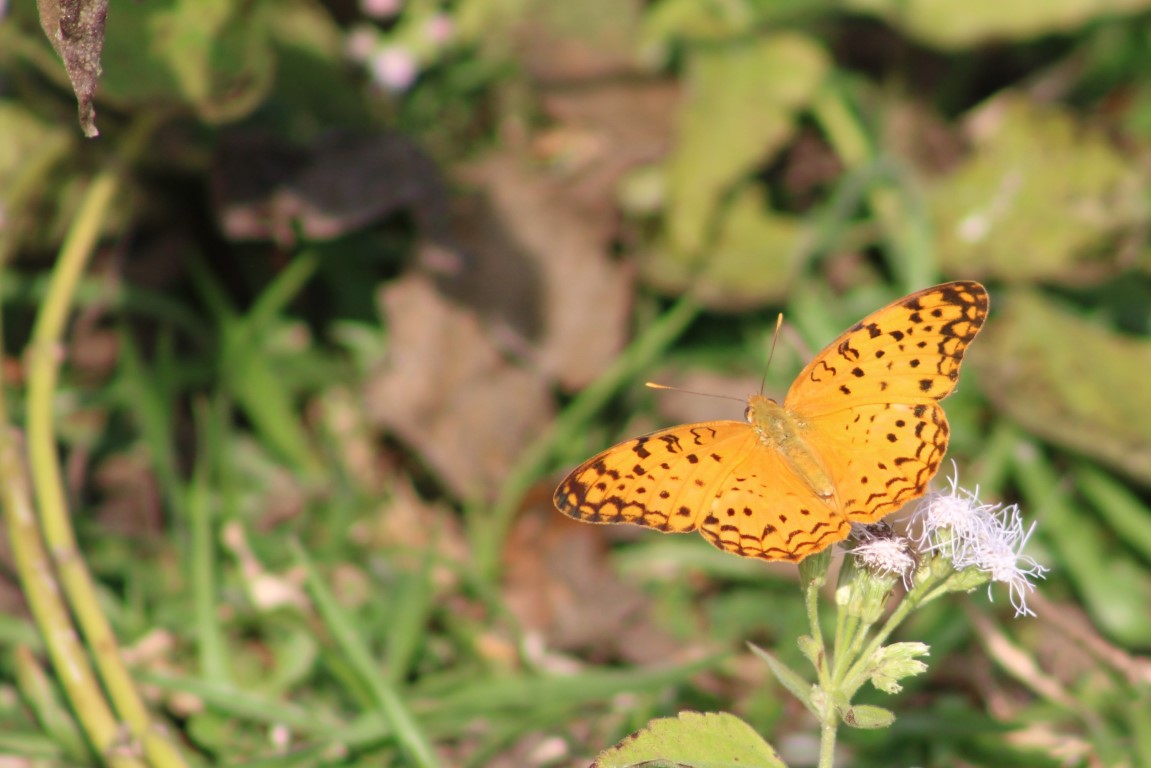
Thousands of willow twigs beyond my bower sway;
They try to retain spring, but she won't stay
For long and goes away.
In vernal breeze the willow down still wafts with grace;
It tries to follow spring to find her dwelling place.
Hills and rills greened all over, I hear cuckoos sing;
Feeling no grief, why should they give me a sharp sting?
With wine cup in hand, I ask spring who won't reply.
When evening grizzles,
A cold rain drizzles.

Translation: Xu Yuanchong [translator]. 2021. Deep, Deep the Courtyard. [庭院深深.] Cite Publishing: Kuala Lumpur, pp. 146-147.

“Reply to Caishu’s ‘Ancient Temple by a River'” by Mei Yaochen [w/ Audio]

Old trees with tangled hanging tassels
by a deserted temple open to the river.
Rain, rain threw down the clay statues
and wind blew down this ancient building.
Wild birds nest in dusty shrines,
fishermen hold a bamboo lottery cup.
About to play the tune "Mountain Ghost," I stop:
the Verses of Chu make me too sad.

Translation: Barnstone, Tony and Ping, Chou. 2005. The Anchor Book of Chinese Poetry: From Ancient to Contemporary. New York: Anchor Books.

“Walking to Guanghua Temple by Moonlight” by Ouyang Xiu [w/ Audio]

Sound of water cascading over rock.
A silent mountain in the night.
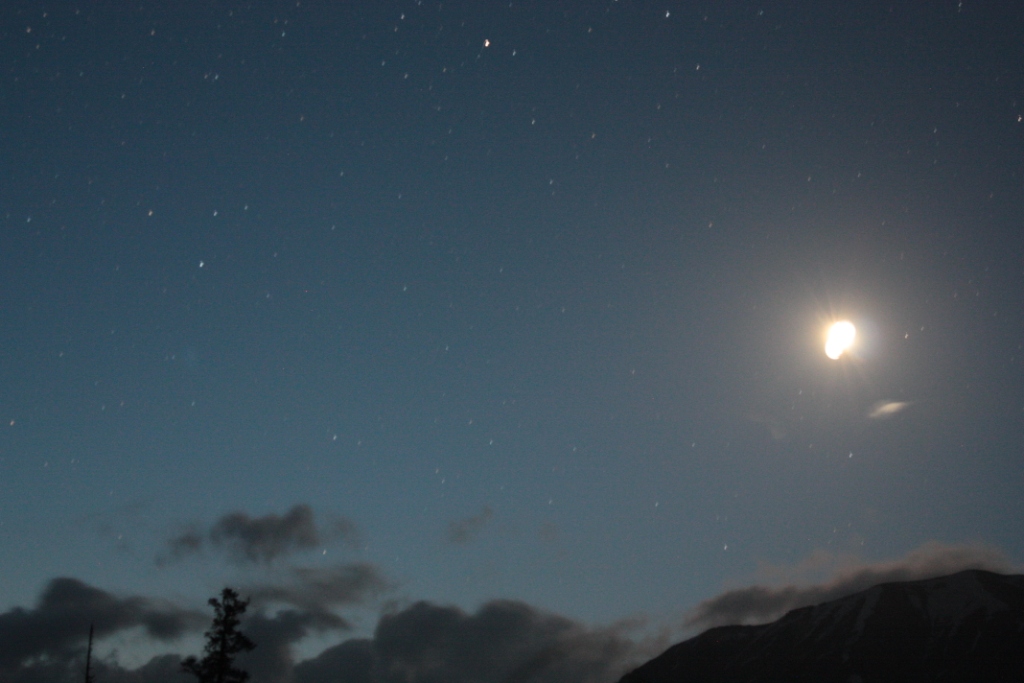
Bright moonlight washes over the pines.
One thousand peaks, all in one color.

“Drunk in the Fairyland” by Huang Tingjian [w/ Audio]

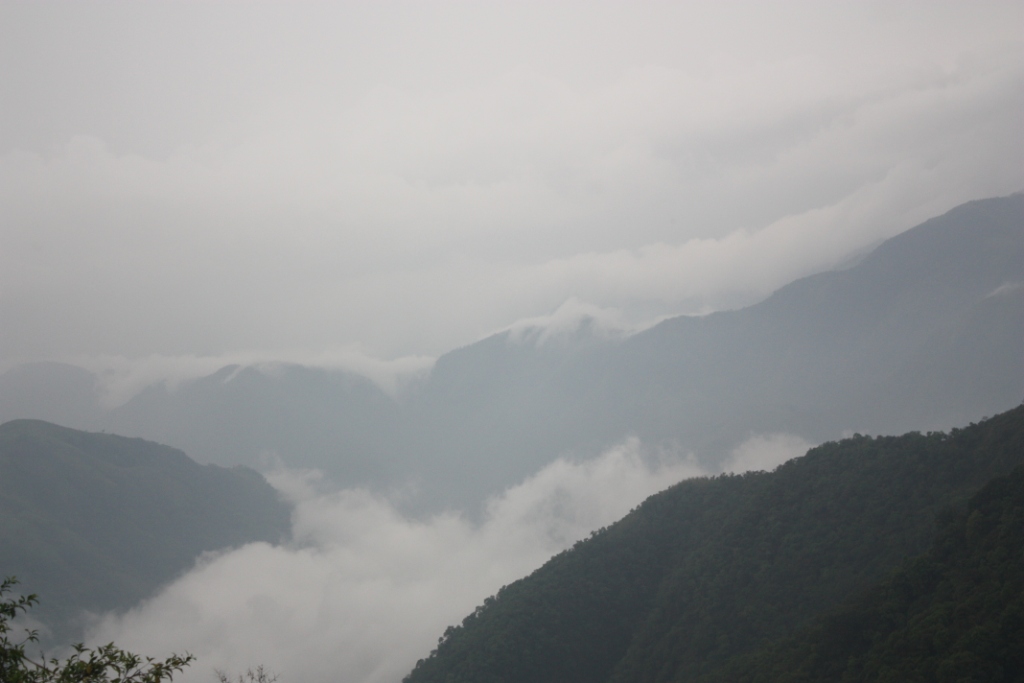
In the face of heavy morning cloud again
And drizzling evening rain,
Leaning on each other, rugged the hills remain.

The Gorge of Witch and lofty peaks
Lock in the Southern Palace rosy cheeks.

In spring the halberds move in force,
Maids in fair dress welcome heroes on horse,
To the riverside town they go only.

I come to the wasteland a thousand miles away,
With my shadow so lonely.

How can I become cheerful and gay?

It is said the Southern land is so high,
It nearly scrapes the sky.
To the capital I stretch my eye,
I see but misty water far and nigh.

When I drank in the hall,
My friends were talents all.

Songstresses sang with rosy face
And dancers danced with grace,
Drunk, they intoxicated the place.

Hearing the cuckoo's home-going song
All the night long,
Could I resist my yearning strong?

Translation: Xu Yuanchong [translator]. 2021. Deep, Deep the Courtyard. [庭院深深.] Cite Publishing: Kuala Lumpur, pp. 191-192.

BOOKS: “One Hundred Poems of Kabir (1915)” Translated by Rabindranath Tagore

One Hundred Poems of KabirOne Hundred Poems of Kabir by Kabir
My rating: 4 of 5 stars

Amazon.in Page

Kabir was a fifteenth century Indian poet and mystic. This collection was translated by the Bengali Indian Nobel Laureate Rabindranath Tagore, and Tagore’s stylistic imprint is felt in these poems. The poems are overwhelmingly of a mystic / spiritual nature. Kabir was non-sectarian but extremely oriented towards mystic belief. He references the Koran and Vedas alike, but is more likely to communicate in secular, if mystical, terms.

How much the godly emphasis works for the reader will vary greatly. For me it was a bit excessive, often reading more like prayers than poems, but your results may vary.

The only thing I found actually disturbing was the repeated romanticization of sati, a practice in use during Kabir’s lifetime in which widows would be burned alive on their husband’s funeral pyre. Kabir repeatedly writes of sati as if it was always a completely voluntary act of raw passion and connection and was never motivated by being old and destitute (not to mention being societally pressured or, even, physically forced into it.)

The poems are well composed and engaging, and if you can get past the periodic sati propaganda, it’s a pleasant, almost euphoric, read.

View all my reviews

“There Is a Bird in the Tree” by Kabir [w/ Audio]

On this tree is a bird:
It dances in the joy of life.
No one knows where it is:
And who knows what the burden
Of its music may be?
Where the branches throw a deep shade,
There does it have its nest:
And it comes in the evening
And flies away in the morning,
And says not a word
Of that which it means.
None tell me of this bird
That sings within me.
It is neither coloured nor colourless:
It has neither form nor outline:
It sits in the shadow of love.
It dwells within the Unattainable,
The Infinite, and the Eternal;
And no one marks
When it comes and goes.
Kabir says, “O brother Sadhu!
Deep is the mystery.
Let wise men seek to know
where rests that bird.”

NOTE: This is the translation by Rabindranath Tagore from the 1915 text, One Hundred Poems of Kabir. This is poem #30 (XXX) of that volume.

“Placid” [Poetry Style #2] by Sikong Tu [w/ Audio]

It thrives in silence and with calm --
ephemeral and gossamer.
It's ever-flowing harmony,
gliding with a solitary crane,
wisping like the gentle breezes
that rustle and billow one's robe,
trilling softly like a bamboo flute.
How does one become one with it?
A chance meeting, lucked into, but
don't lunge forward, or it'll vanish.
When you think it's attainable,
it twists in your hand and is gone.

NOTE: The late Tang Dynasty poet, Sikong Tu (a.k.a. Ssŭ-k‘ung T‘u,) wrote an ars poetica entitled Twenty-Four Styles of Poetry. It presents twenty-four poems that are each in a different tone, reflecting varied concepts from Taoist philosophy and aesthetics. Above is a translation of the second of the twenty-four poems.

“Song of More Sugar” by Liu Guo [w/ Audio]

Reeds cover the tiny island.
Shallow streams cut through the cold sand.

I see the Southern Tower for
The first time in two decades.

How many days since I moored
Under this willow tree?
Mid-Autumn Festival is almost here.

On the rocks of Yellow Crane,
Do my friends still reside?

This old place has many new sorrows.

If I bought wine and we cast off together,
Could we be young again?

“Written While Moored on the Qinhuai River” by Du Mu [w/ Audio]

Mist touches cold water and moon embraces the sand.

I’m moored for the night near a tavern on the Qinhuai.

The singing girl doesn’t know the empire is in bitter ruin.

Across the river I hear her singing “Blossom of the Inner Court.”

Translation: Barnstone, Tony and Ping, Chou. 2005. The Anchor Book of Chinese Poetry: From Ancient to Contemporary. New York: Anchor Books.

Four Seasonal Haiku of Ryōkan [w/ Audio]

Spring

rainy days
make the monk Ryōkan
feel sad.

Summer

the moon in my window
is all the thief left behind.

Autumn

an autumn wind
chills the dangling persimmons,
and my testicles.

Winter

little birds have
gathered in the brushwood
on a snowy morn.