
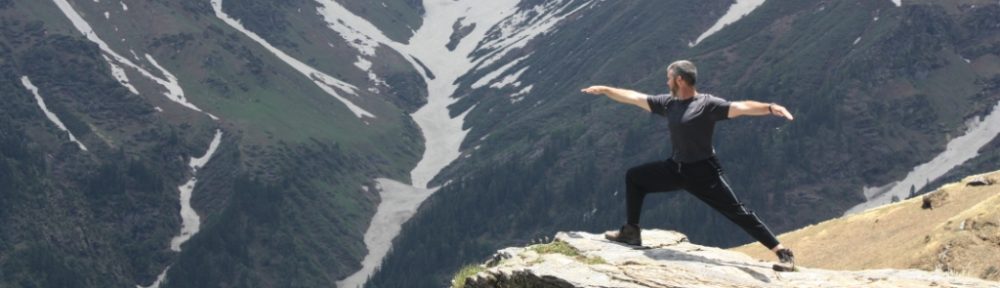
Taken March 23, 2014 at Nandi Hills.
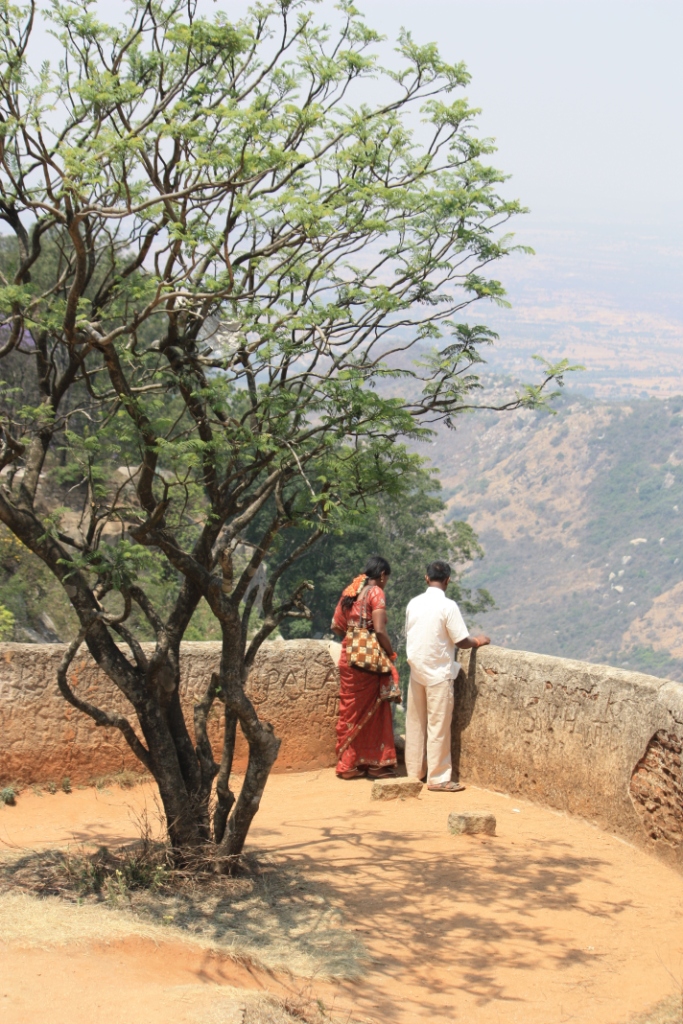
Taken on March 23rd at Nandi Hills.
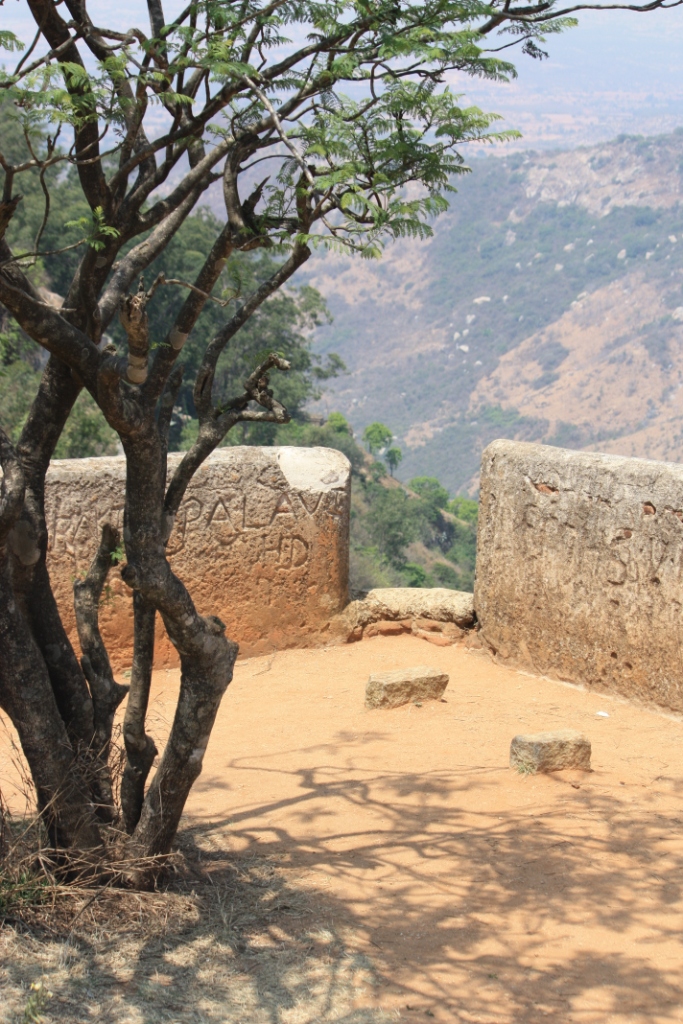
No. I didn’t push them off.
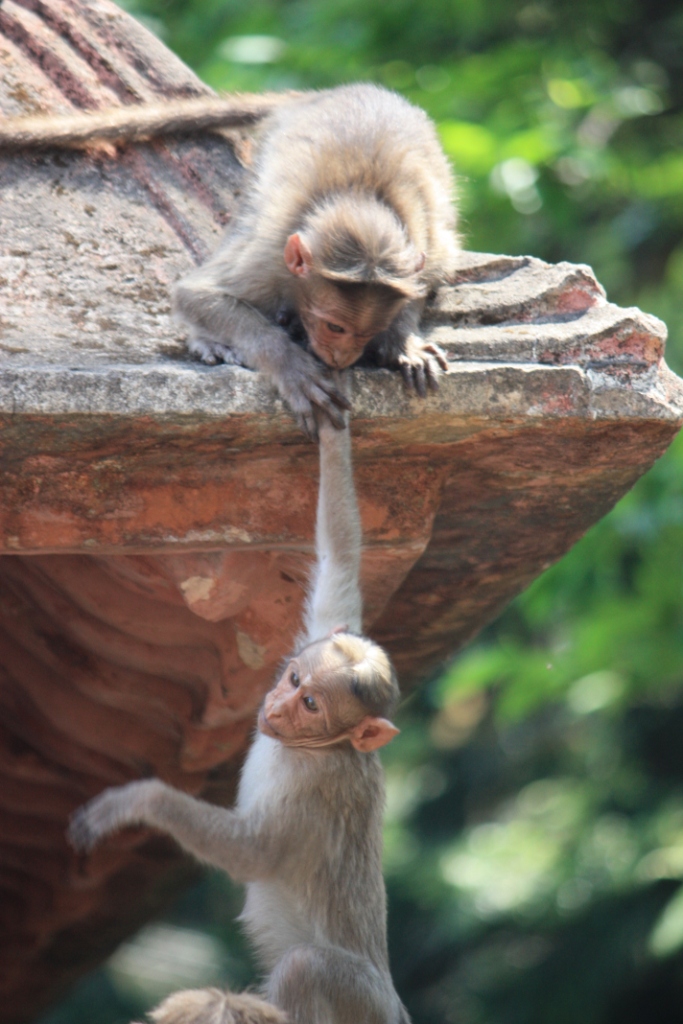
Taken on March 24, 2014 at Nandi Hills.
One monkey was hanging off the fascia of Tipu Sultan’s old hunting lodge. The other was either being a helpful monkey–trying to help his brother up–or being a mischievous monkey–trying to make him fall.
You figure out which.
Here’s a photo from moments later.
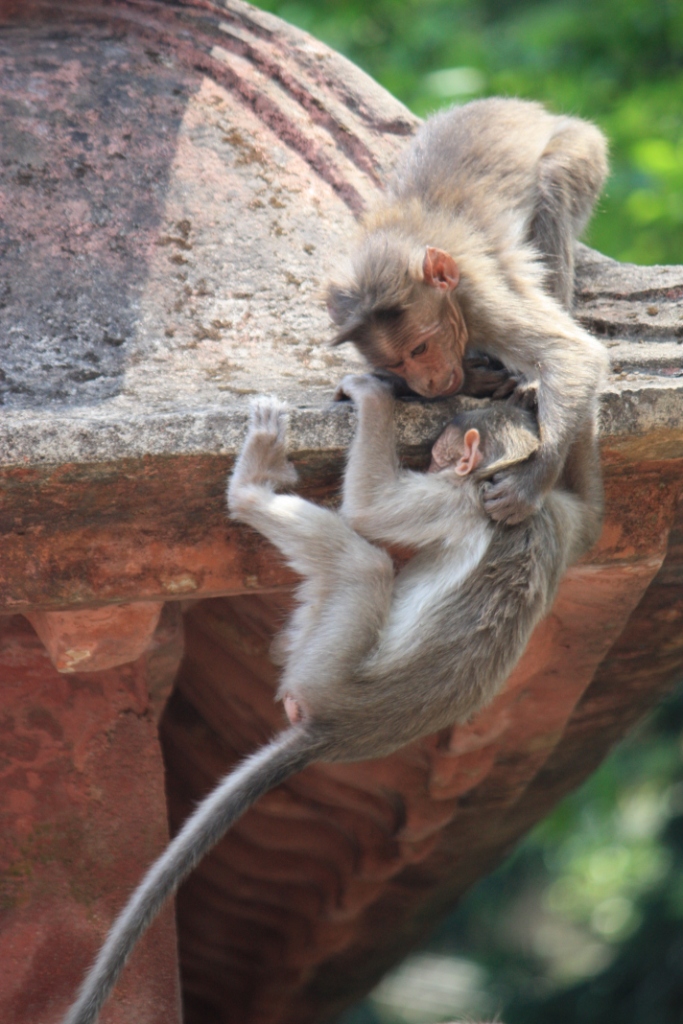 Still can’t tell?
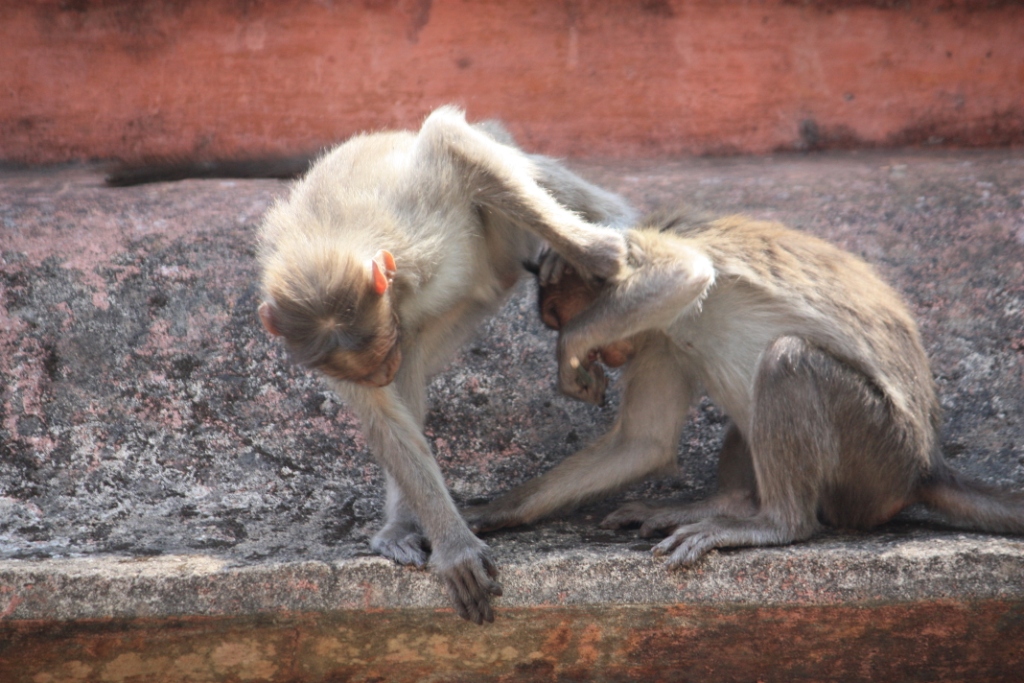 If you said they were in the middle of a mixed martial arts knock-down-drag-out, you were correct. Here you can see the monkey who had been hanging getting a single-leg take-down on his tormentor.
FYI- For those who think one needs to get all “roided up” for strength building: Note this apparently puny monkey had the upper body strength to pull himself onto a roof while successfully fighting off an attack.
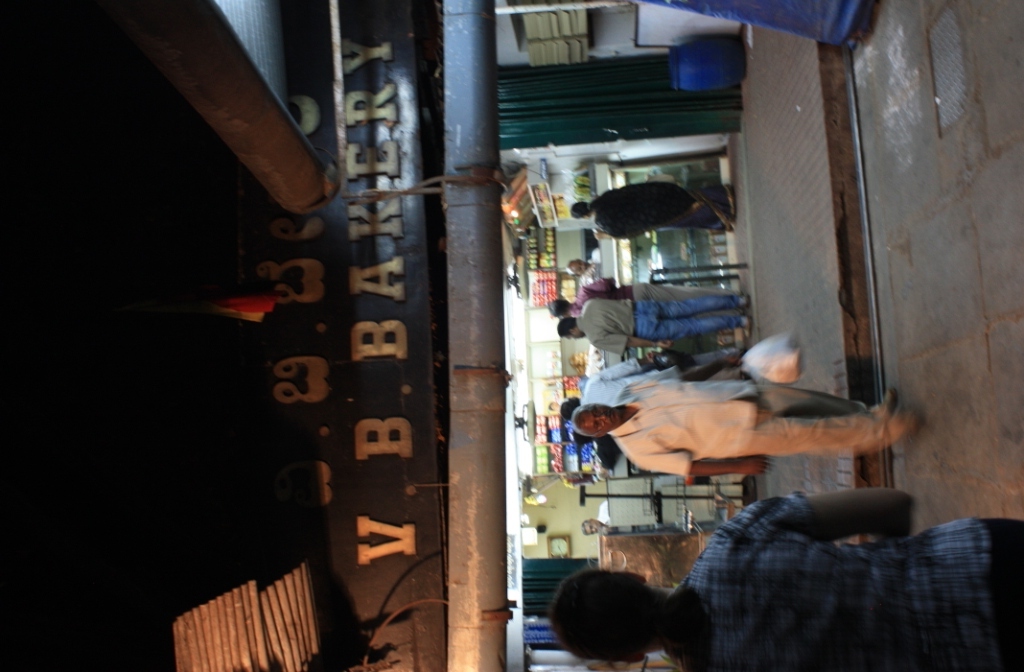
Taken March 22, 2014 in Bangalore.
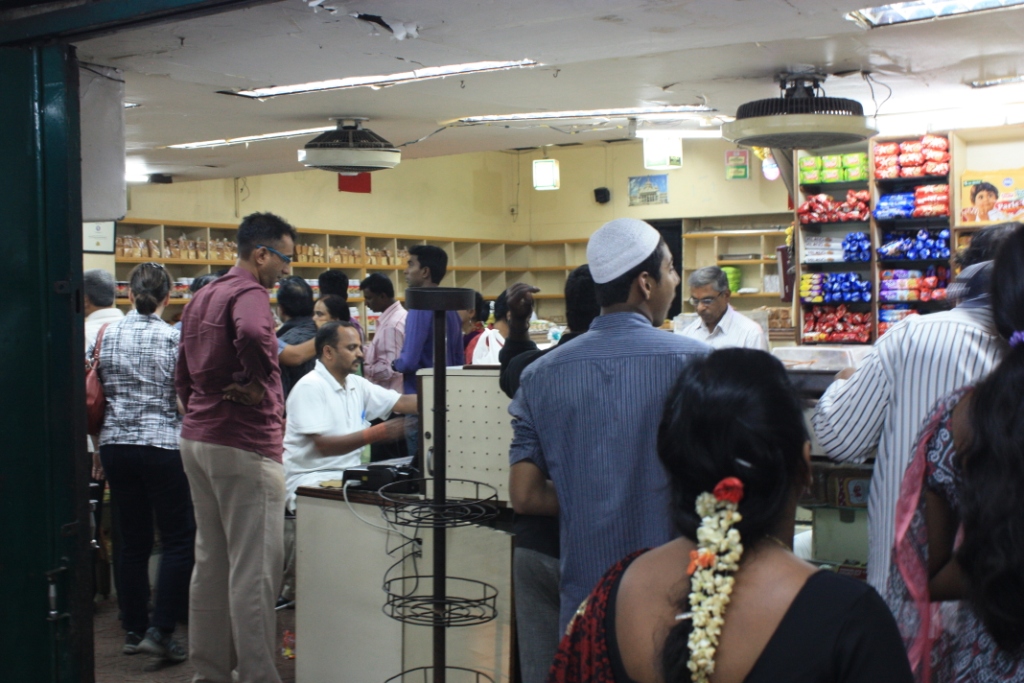
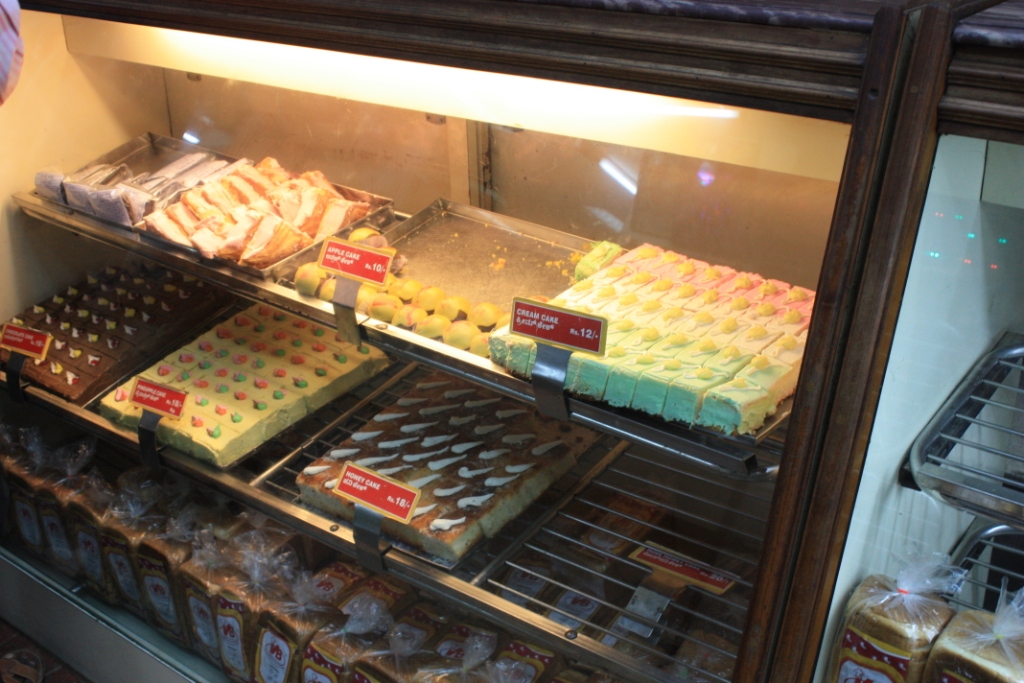
V.B. Bakery is a 60-year-old Bangalore institution located on Food Street (proper name: Old Market Road) in Visveswarapuram (a.k.a. VVpuram.) As you can see from the middle shot, it was thronged on Saturday night.
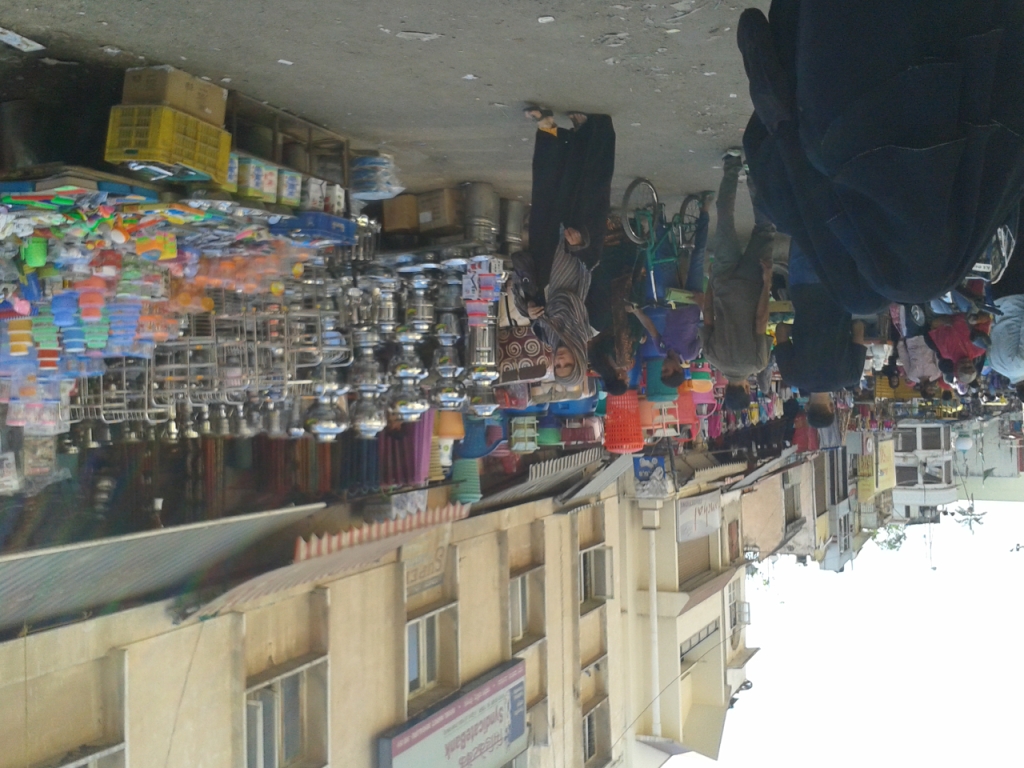 If you though I was going to say “Passport and FRRO Registration”– WRONG! First of all, that would make the most boring blog post ever–not a distinction for which I have aimed (but I wouldn’t turn down the award for it, if it comes with a cash prize.) Second, I’d keep those items some place safe–like a hollowed out Ganesh (but that’s not where I keep mine, so don’t get any ideas.)
1.) Tiny pictures of yourself: After about the ninth time I went someplace random and was matter-of-factly asked for a “passport size” print or a “stamp-size” print, I asked whether it was common for Indians to carry a bunch of photos of themselves around on their person–because there seemed to be such a presumption that I would have a stack of selfies on hand at any random moment. The answer was “Yes, yes we do keep photos on hand.” Not only is it common to carry a small pack of passport pics–some keep a stock in various sizes. Long story-short, a lot of places will want a photo besides government offices–more than you might expect.
Americans just take a billion pictures of themselves and post them to Facebook, and would be self-conscious about the apparent narcissism of carrying around physical pictures of oneself. The only Americans who carry physical pictures of anybody are grandmothers who haven’t figured out how to use their phones (admittedly, a large but shrinking demographic) and they carry pics of munchkins–not themselves.
2.) Change: That’s “change” as in coins and small bills–I’m not getting abstract on you. India has a crisis of change–still not being abstract. I’m not just talking about the auto-rickshaw driver who negotiates a fare that is merely twice the metered rate, and then when you get to your destination they inform you that they have no change for a 100 rupee note (and because only someone who values “the principal of the matter” at more than 30 cents will argue, you end up paying too much.) I’ve gotten the evil eye at such places as restaurants, stores, and even the Metro counter (who should have coins in stock if not the metro counter?) In India, there isn’t a strong expectation that the business will be the one who makes change in a commercial transation–like it is in …well, every other place in the world that I’ve visited.
I’m not sure if this change crisis is created by an inability of the Central Bank to calculate how much small currency to release into the economy, or whether the vast number of beggars are bogarting all the coin.
At any rate, if you are a nice guy and always make change for every business you deal with, you will inevitably end up in a situation in which you desperately need a pay toilet and the smallest money you have on you is a 1000 rupee note. As paying 1000 rupee to visit the most disgusting place on Earth (a third-world public toilet) is demoralizing, I suggest you horde change like everybody else.
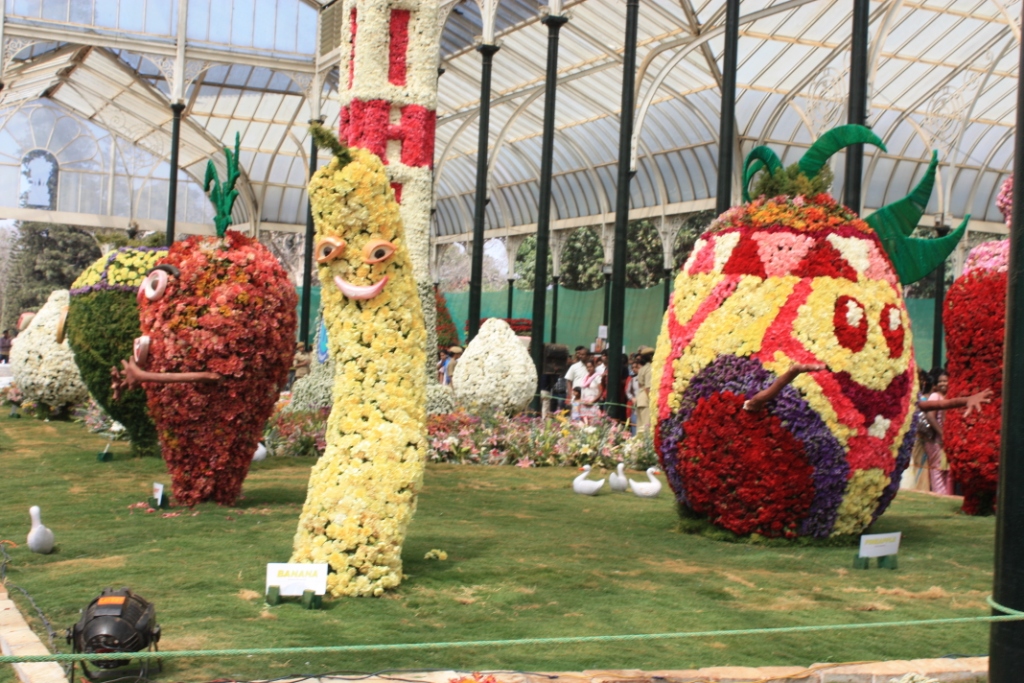
Taken January 26, 2014 at Lal Bagh Gardens.
So, I spent an hour Googling what the correct term was for a “sculpture” made out of flower blossoms. I’m sure there’s some lingo used amongst the Flower & Garden Show crowd (but you must need to know the secret handshake.)
However, after viewing the websites for many flower shows around the world from Philadelphia to Hong Kong, all I was able to learn is that–whatever they are–these examples from the Bangalore Republic Day 2014 Flower Show… well, they aren’t good. I hesitate to say this because someone may come back and say, “You monster, those [whatever they are] were constructed by children with Down Syndrome.”
If that is the case, I stand corrected and must say that those are the finest examples of [whatever they are] that I have ever seen made by children with Down Syndrome. I may also be showing my ignorance of Down Syndrome because perhaps children with Down Syndrome do ikebana like Rain Man counted match sticks–which is to say freakishly well.
The [whatever they are] just seem a little misshapen compared to those from, for example, the Hong Kong Flower Show. If the Hong Kong arrangements are the X-Box 360 version, these are clearly the mid-1980s Atari Pong version–not that there is anything wrong with that.
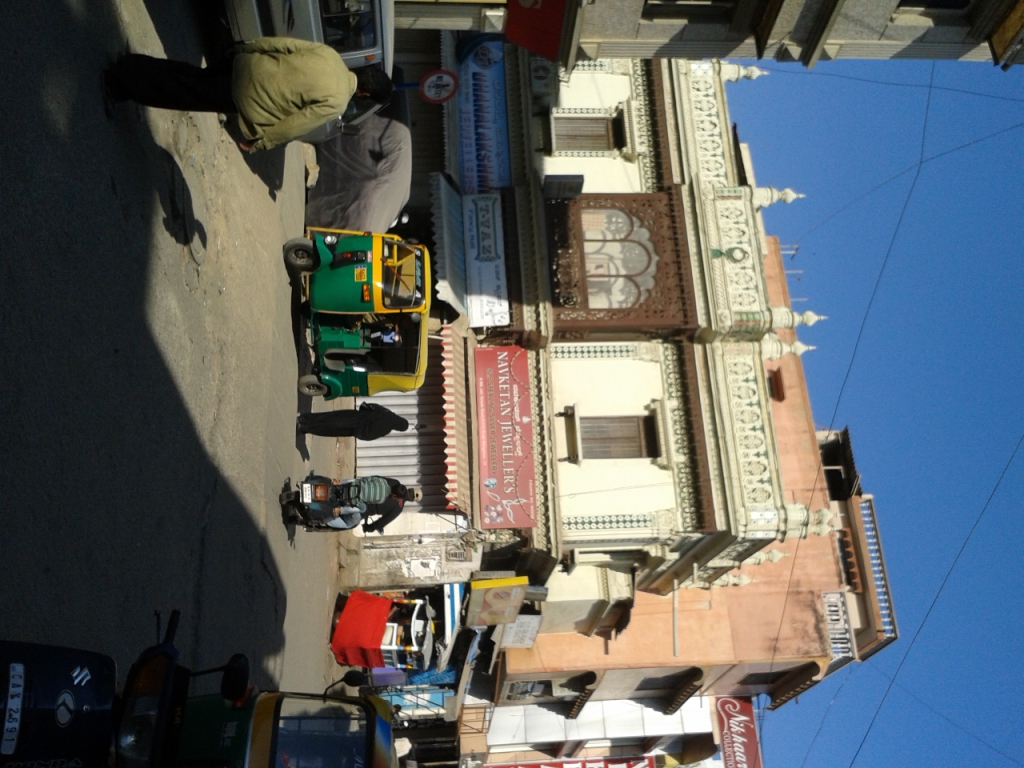 Taken in the area of Russell Market on Sunday March 16, 2014.
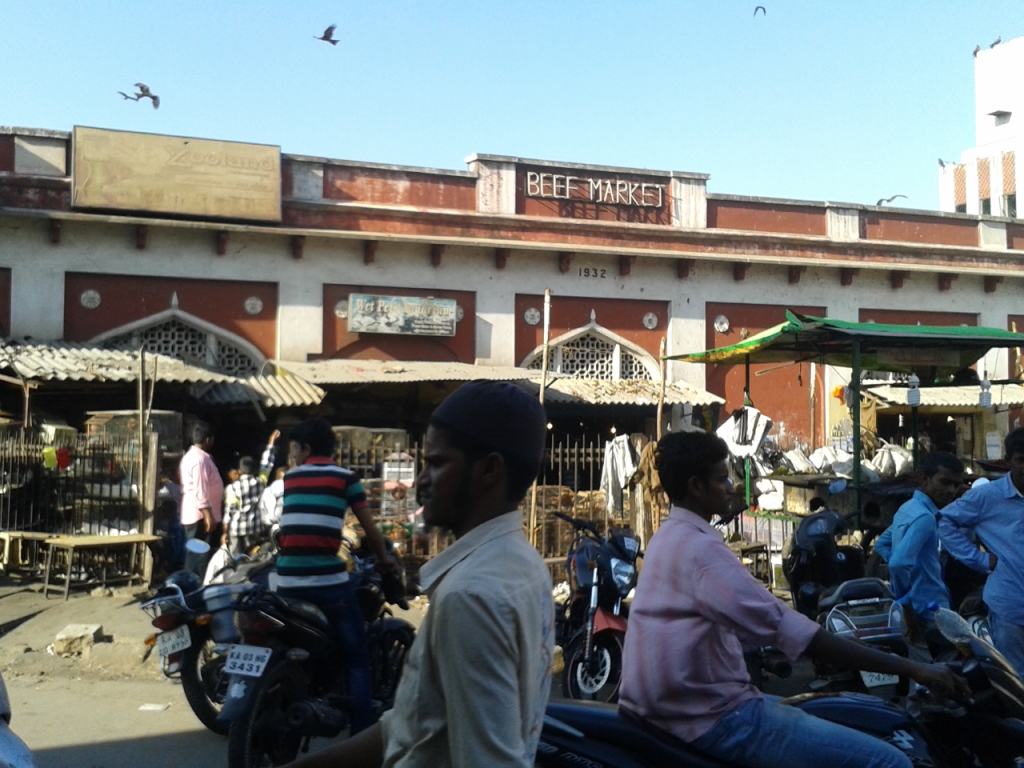
Taken on March 16, 2014 in Bangalore.
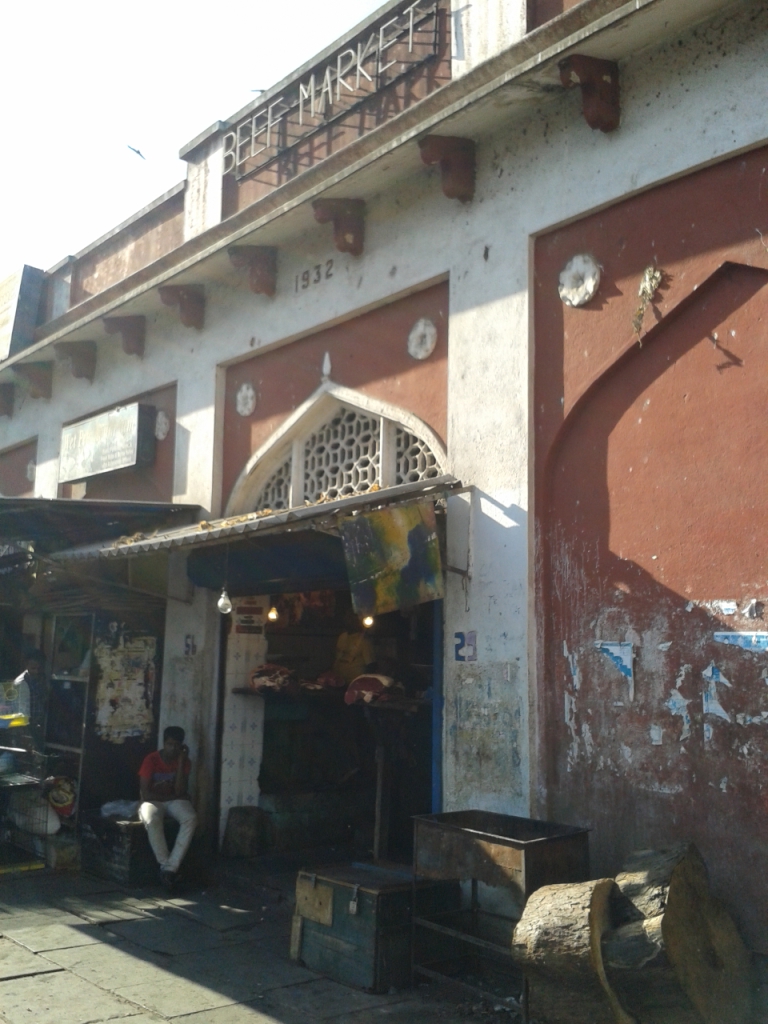
Taken on March 16, 2014 in Bangalore.
You may be curious about whether one can get a steak or a burger in the land in which McDonald’s restaurants substitutes [chicken] Maharaja Macs for the iconic beef Big Mac. Indeed one can, and it’s not that hard to find, nor that expensive–though it does often involve going a little out of one’s way. A typical supermarket–if they sell meat–sells only chicken and mutton (the two globally non-offending meats–except among the vegetarian/vegan crowd.)
As one might expect, the beef trade is dominated by Muslim merchants.
I couldn’t recommend this particular place. (I have a robust digestive system by Western standards, but eating a steak acquired here would probably kill me instantly.) While you could probably get an animal butchered right there–insuring the ultimate freshness–I suspect these are mostly the garbage-eating cows seen around the city. The fact that there is a pet store attached to the beef market and that carrion eaters are constantly circling overhead is enough for me to shop elsewhere.
The Beef Market is located quite near the Russell Martket, near Commercial Street.
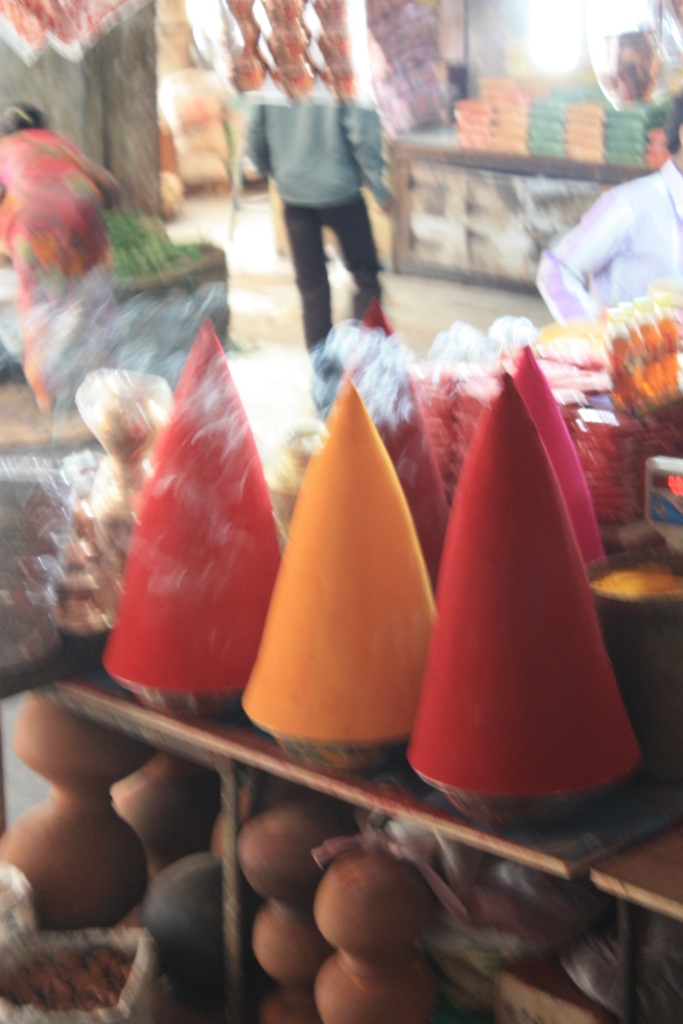
Taken in October of 2013 in KR (City) Market in Bangalore.
As I skipped posting Daily Photos over the weekend, I’m posting two today–in honor of a Western and an Indian holiday respectively. Holi is the festival of colors, and today one can see plenty of people with faces and clothing powdered in vivid colors. In the markets one sees these conical piles of color defying gravity in a most stubborn fashion. FYI- Today isn’t the day to wear your finest, pristine white dress shirt.
 This is Saint Patrick’s Church in Bangalore in honor of St. Paddy’s Day.


