
The Non-shopping Firang

20140316_160803With the notable exception of books, I hate shopping. There are few endeavors more painfully tedious to me than wandering through stores looking for clothes, tsotchkes, knick-knacks, bric-a-brac, widgets, or doo-dads. I do go shopping, in part because I like to eat, and in part because societal conventions require that I wear clothing (you’re welcome.)


Were I not married, I’d be a complete fashion nightmare because I have only three questions when shopping for clothes. 1.) Does it look like it fits? 2.) Does it look comfortable? 3.) Is the price reasonable? (i.e. given that I’m a cheapskate for which stylishness and/or trendiness mean diddlysquat.) If the price of two shirts of the same size is identical, I will buy the one that’s closest to the cash register–or which will otherwise get me out of the store the quickest.


You’ll note, I didn’t include the question: “Does it match?” Correct. I’m not even sure I know what that means. If it’s a shirt, it matches pants because you wear them together, right? A shirt would not match another shirt, unless one could wear one over the other? If you can’t wear the two items at the same time, they definitely don’t match, but that doesn’t come up often. (I know all the bits that need covering, ergo, I can succeed at picking a group of garments that covers all the essential anatomical area.)


I also didn’t include “Does it look good?” It had to look good to someone–they made the damn thing. Who am I to say my taste is better than theirs? I think we’ve already established that I know not thing-one about being fashionable. Now, if it has feathers or a cape, I wouldn’t buy it on the grounds of lack of functionality (have you ever gotten your cape caught in an elevator or escalator?), but I don’t judge on taste. There but for the grace of my wife, go I… looking like non-sparkly Elton John.


So where am I going with this, you may ask? What’s intriguing is that, despite the fact that I hate shopping, I get asked if I want to be taken to a market, mall, or commercial district about four times per day (fyi, that’s roughly the number of times I go shopping per annum.)


Imagine a white person walking down the sidewalk wearing a t-shirt and sweatpants, said person has a full duffle-bag on their shoulder that is long enough to accommodate a standard size yoga mat when rolled up. Where is this person going?

A.) He /she is going to the yoga studio.

B.) He /she is going to a gym.

C.) He / she is going to a martial arts studio.

D.) There isn’t enough information to determine between A,B, or C.

E.) He /she desperately wants to go shopping.


If you answered “D” you’re a keen and astute observer. If you answered A, B, or C, you have drawn a reasonable conclusion, but did so too quickly and without sufficient information for that degree of specificity.  If you answered “E,” you drive an autorickshaw (tuk-tuk) for a living.


For a while, I thought that this was just blatant ignorance, as all forms of racism are. Could these drivers truly not fathom–despite all evidence to the contrary–that I (i.e. whitey) spent my time doing things other than shopping? Did they really think that my days were divided between counting infinite piles of cash and spending it on crap for which I had no real need?


Then I realized that it was tenacious hope that drove these inquiries, and not biases. I came to this conclusion as I was watching a few of the recent Superbowl ads. If I don’t get enraged at Madison Avenue, I can’t really get mad at the aforementioned driver. Advertisers and that driver are both just trying to persuade me that something that I don’t need and have no interest in is somehow pursuit-worthy.


The driver knows that I’m going to yoga or kalari or a funeral (or wherever the evidence might suggest I’m headed at the moment), but they’re just holding out the thin hope that I can be diverted from that funeral to go buy some gee-gaw from which they can obtain a commission. In a way, they’re like the guys (or girls, to be non-discriminatory) who hit on a person who is way out of their league. It takes a lot of confidence to suffer repeated crushing rejection with such low probability of success. There’s a guy in the building where I get both my haircuts and Tibetan thukpa, who invites me into his carpet shop every single time I enter the building–despite the fact that the first 100 times I’ve shown zero interest. As long as said persistent wooer doesn’t resort to stalking, it’s kind of endearing. (Of course, it’s a thin line into stalker territory, and then it becomes instantly intolerable.)


There’s another reason I’ve discovered I shouldn’t hold this persistence against the drivers. That’s that they’re stereotyping isn’t without basis. Most of my expat compatriots do love themselves some shopping. I’m very curious about the root of this behavior. I suspect that it’s the vestigial evolutionary programming of hunter/gatherer behavior carried over into people who don’t like to get their toes muddy, to have to touch anything “icky,” or–in general–to be outdoors.


However, I’m a little out of my league, because I only have this compulsion to shop for books. I’m sure that’s residual hunter / gather behavior, but there’s a goal that can be understood. Through book shopping, I’m searching for a kind of nourishment–not the kind that ends hunger pangs, but the kind that’s an assault on my stupidity. I still don’t have a theory for how this applies to Hello Kitty stickers, Chia Pets, a second (or 403rd) pair of sneakers, or any of the other inane crap the people really–but unbelievably–purchase.

IMG_2160

10 Easy Pieces of Wisdom: and, Why “Secret Wisdom” is Bullshit

IMG_0438

Having lived in India–land of sages–for over a year now, one may wonder whether enlightenment has taken hold. Let me share some of the nuggets I’ve gleaned. This isn’t what I found chiseled on walls in Sanskrit. It’s what living and thinking in the modern world have wrought.


1.) Anger is just fear in a red dress.

It’s all just frustration / unease / discontent with one’s limited domain of control.

On a related note, I read a relevant quote from Irmgard Schloegl recently: “Look at getting mad from this perspective. If you had but five more minutes to live, and it would still be worth getting mad over, then by all means do so.”


2.) Secret paths to wisdom are bullshit–the theory is simple the practice is arduous.

It all boils down to living in the moment more, being aware of your mind, and exercising your will.

First, you start becoming aware that you were recently a jackass.

Next, you begin to realize you’re in the process of being a jackass.

Then realize that you’re about to be a jackass–but you can’t help yourself and end up with jackass’s remorse.

Finally, you begin to preempt your inner jackass.

The latter is wisdom, and it’s not for lazy people who like shortcuts.


3.) There’s no ratchet effect on wisdom–no one-way trip to enlightenment or nirvana.

Either you accept that life is a glorious lifelong struggle to be the best version of yourself, or you wallow in a sty of mediocrity.


4.) The words “just a…”–as Catholic nuns say of masturbation–result in immediate blindness.

There’s nothing that will blind you to the deepest beauty of a person, place, or animal faster than saying it’s “just a…”


5.) Stop thinking of the body as an “empty vessel.”

It results in your treating it like a rental car. You aren’t a bar of gold being hauled around in a manure spreader. You were endowed with a Rolls Royce with on-board access to a Cray super-computer, and you risk turning into a Yugo with an abacus when you fail to keep it tuned and quietly revel in its magnificence.


6.) If a teacher is happy that his students  almost reach his level, he’s part of a dying tradition.

In a growth tradition, some students will surpass their teachers, and that’s only likely if the teacher wants it to be that way.


7.)  Be a scalable hero.

Human beings are terrified by their smallness, impermanence, and ultimate insignificance. In geologic time, everybody is an inconsequential blip. You can’t get around this, but you can pick a scale of time and space in which you matter. That space is here, and that time is now. In the here and now, you can be a giant–figuratively, of course. Here and now you can’t be everybody’s hero, but you can be somebody’s.


8.) Start your pursuit of virtue by doing no harm.

Begin being virtuous by capturing the advantage in those quiet moments that need nothing but a lack of interference or insinuation. Then go on to active expressions of virtue.


9.) Vicarious living ain’t living.

Don’t sit around watching others live life.


10.) Don’t count yourself free if your impulses overwhelm your conscious mind.

People worry a lot about the control that external forces and authorities exercise over their ability to act, but often spend far too little time on whether they’re working towards liberating themselves from raw impulse, habit, and reactionary living. Epictetus used to piss high society types off by asking them whether they thought they were truly free.

If you’ve been following the science of free will, you’ll know that the current prevailing thought lands against the notion of free will. This is because brain imaging has made it possible to see how decisions are biochemically made before the mind consciously ruminates and “makes a decision.” However, the verdict is still out. The question isn’t whether we ever fail to exercise conscious free will. Of course, there are many times we fail to, maybe even most times. The whole point of emotions is to help us make decisions without adequate information to make rationally optimized decision. However, the question is whether we can learn to exercise free will. Scientist long ago verified that some yogis and monks can exercise conscious control over autonomic bodily functions (e.g. controlling heart rate from a static position.)


There it is: wisdom for the modern age stuffed in a nutshell of bullet points.


DAILY PHOTO: Szentendre Steeple

Taken in December of 2014 in Szentendre, Hungary

Taken in December of 2014 in Szentendre, Hungary

Does That Mean What I Think It Does? No, No It Does Not

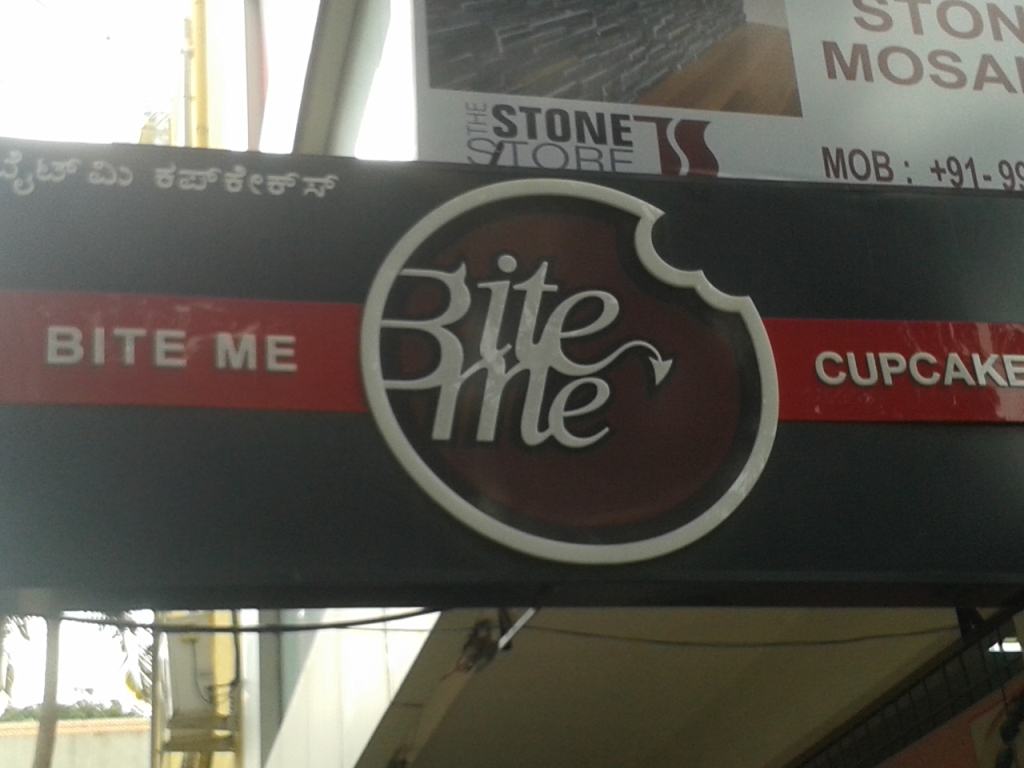
Would you like a kick in the crotch with your cupcake?

Would you like a kick in the crotch with your cupcake? (The name reads a bit hostile for an American.)

Cultural idiosyncrasies of language matter. In India on a daily basis I find myself asking, “They don’t mean what I think they mean, do they?” Here’s a few examples.

You mean you're selling clothes, just clothes?

You mean you’re selling clothes, just clothes? (The “Happy Ending” sale just seems a little risqué to me. If the smiley face was winking it would really be suggestive.)

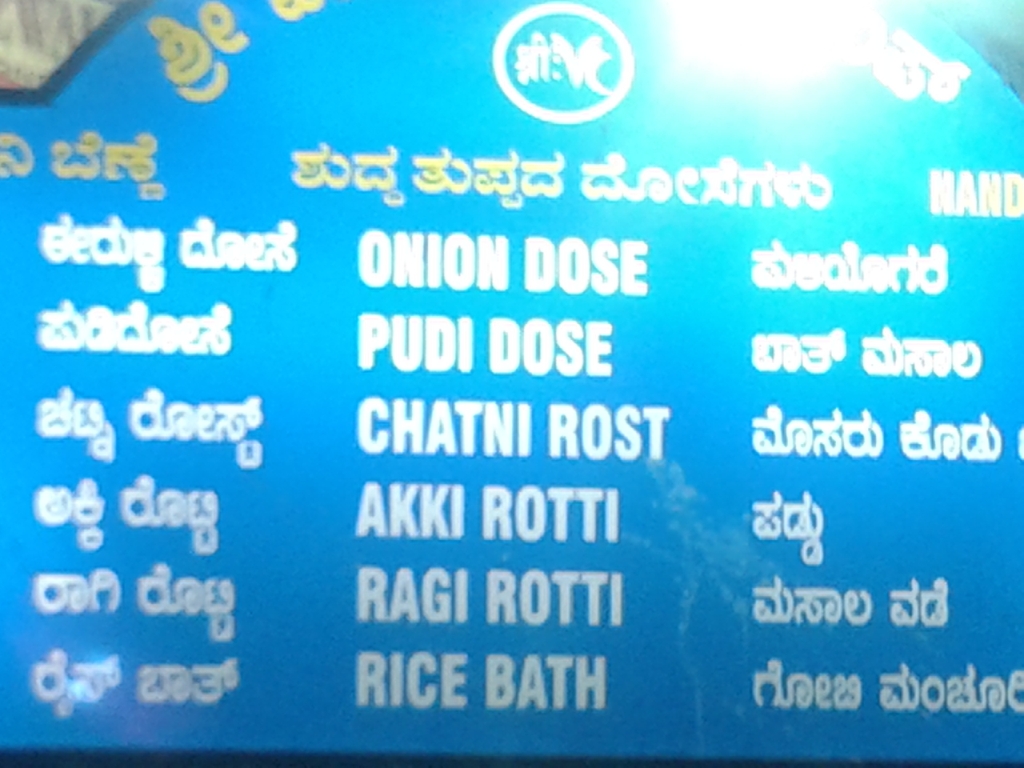
No, Sir, I will not loofah you just because you bought the rice bath!

No, Sir, I will not loofah you just because you ordered the rice bath! (FYI: rice bath is a Karnataka rice dish with lentils.)

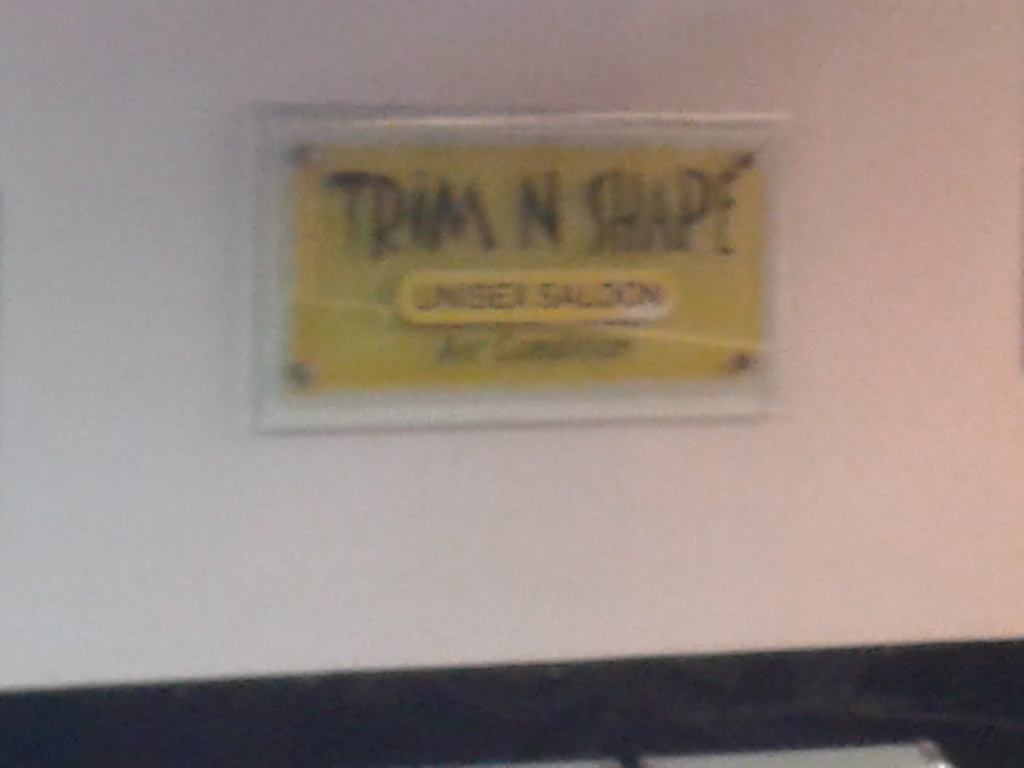
Cut my hair? I thought this was a saloon?

Cut my hair? I thought this was a saloon?

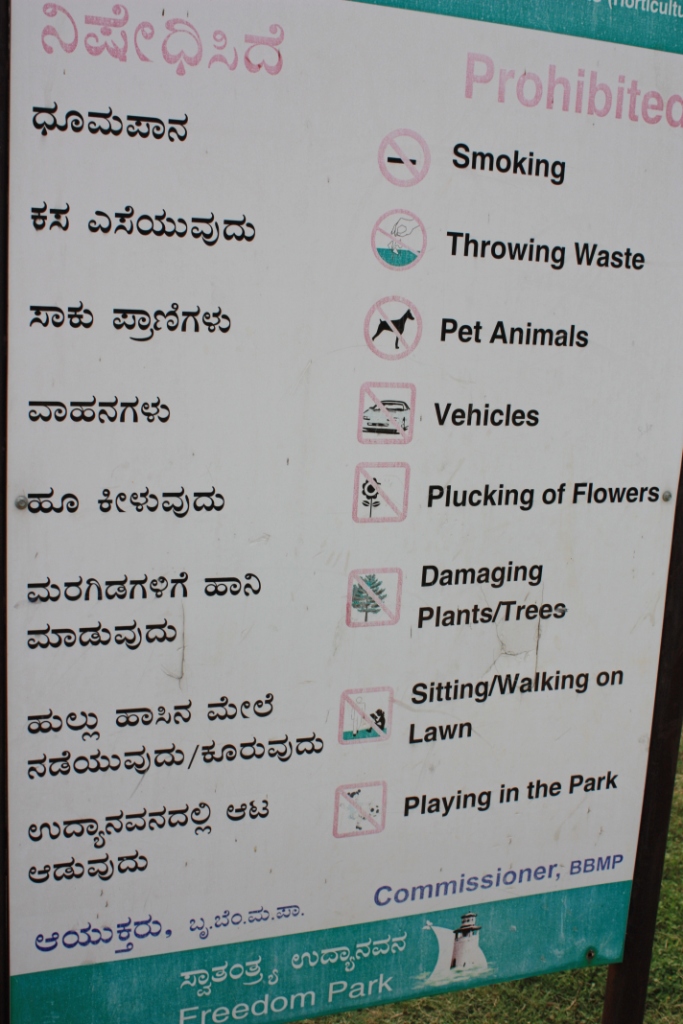
"Playing in the Park" is prohibited. Dear Park, What the hell are you good for? Signed Concerned Resident.

“Playing in the Park” is prohibited. Dear Park, What the hell are you good for? Signed Concerned Resident


Thailand Can NOT Catch a Break: Monk Pimp-Slaps an Expat

No, you didn’t read that sub-title wrong. A Buddhist monk delivered a series of slaps to a farang. It’s not clear whether the slaps were issued because the victim was a grown man wearing capri pants. But seriously though, it’s pretty well established that the slappings were delivered as the result of a communication mishap in which the monk heard one offensive word, but the victim says he said another (non-offensive) word–apparently corroborated by nearby witnesses. The story is here.


This is a minor incident, except that… well, it was  Buddhist monk. When men of peace get all slappy people start to wonder if there isn’t some greater underlying anti-farang sentiment. I mean, a monk is the last person you expect to slap the snot out of a person who’s just sitting there, and–if they are the last–that means that all the other Thais have been slapping around foreigners already. For the record I only got pummeled about the head and neck in the Muaythai gym, so it was in context.


There’s good reason why Thailand is one of the most beloved tourist destinations in the world. The people are awesome. The food is delectable. It’s easy to get around to see the country’s many impressive sights and serene beaches. It’s laid-back, and, unlike some tourist destinations, it’s a country that’s eager to have you whether you’re a poor backpacker or a wealthy industrialist.


However, lately Thailand cannot catch a break on the tourism front. First, the country is under martial law. I can say from experience that there isn’t much evidence of change if you’re a traveler. However, it probably still keeps some people out. Some governments even issued warnings to citizens out of fear that violence might erupt if citizens tire of the situation. “Martial law” doesn’t exactly scream safe travel destination.


Then in September (around the time I was last in Thailand) a couple was brutally murdered with a hoe on Koh Tao. This might have been even worse for the tourist trade than the martial law. For one thing, it got a lot of press because the couple was really, really nice looking, making it easy to plaster their faces across every media outlet in the world. For another thing, they were killed with a hoe. Who kills someone with a hoe, really? The only way it could have been worse was if it was murder by Garden Weasel (as seen on TV.) (I’m not saying that if it had been an ugly couple that got shot or stabbed with a knife, that the effect on tourism would have been minimal, but…)


As it was, it resulted in the need to put out a new tourism video entitle “I hate Thailand”, that oddly makes Western tourists seems like even bigger pricks than they (we) really are in an effort to attract tourism.

All that said, you should go to Thailand.

Seeking Expert Answers About A Possible Bengaluru Ratzilla

This fake rat is kind of large, but if you asked me   how it differed from real Indian rats, I'd have to say the bling. Indian rats aren't ostentatious, and rarely wear jewelry.

This fake rat is kind of big, but if you asked me how it differed from real Indian rats, I’d have to say the bling. Real Bengaluru rats aren’t ostentatious, and rarely wear jewelry.

Occasionally, I will see a rat–usually the carcass thereof–that makes me exclaim… Duh-uh-AAAaaammmmm! They often look like beavers, sans the distinctive paddle-tail, but with a whip-like, hairless rat tail in its place.


These sightings have raised some intriguing questions:


The first question is for any biologists or geneticists who–quite improbably–might read this post. Is it possible for the offspring of an English Bulldog and a Norwegian Rat to survive? If so, I’m pretty sure that I’ve seen one. If I find out where it lives, will they name it after me? Can I pay them not to?


The second question is for statisticians–particularly bio-statisticians. Let’s say that 95 percent of rats successfully live their lives underground, in walls, and out of sight. Let’s further say that I’ve seen a rat that was 1.5 feet long and 0.75 feet wide. Is it possible to calculate how large the biggest statistically likely rat would be. I’m thinking, lurking somewhere in the sewers, there is a three-foot long and foot-and-a-half wide ratzilla–probably chomping on a cigar and belching occasionally.


The third question is for an ecologist.  I know that cats and other predators will attack–often successfully–prey that are larger than they are. However, given the freakish disparity in sizes that we are seeing, will the existing ecological order be overturned, and to what effect? Bangalorean cats are about the same size as American cats, but Bangalorean rats are about the size of American pigs–not the cute little pot-bellied variety but rather the kind that take a blue ribbon at a 4H County Fair. I know humans were once primarily prey, and only quite recently became dominant predators. This worries me because I know that humanity’s prey-like predilection to be scared of everything, combined with its unprecedented predatory weapon set, has fucked up the world but good. I can only image what a rat would do with a hydrogen bomb.


The fourth question for a rat neurologist. Are rats really that much smarter than turtles? I know the Teenage Mutant Ninja Turtles follow their Rat Sensei unquestioningly. I googled it. Rats live about 1 year and turtles can live to be about 40. So Splinter must have learned much faster in addition to being much smarter.


OK, the last one was not a serious question (but it’s a serious plot-hole for TMNT), but I do have one last question for the general public.


Which do you find more disturbing: a.) when you see a single mammoth rat? or b.) when you see an elaborate Vietcong-style series of tunnel openings and you know there is a billion rat army wriggling all over each other just centimeters below your feet?


Please don’t think I’m anti-rat. I know that, while we fear the plague-infested rats, it was really the fleas that gave us the Black Plague. I also know there are places like Karni Mata Temple in Rajasthan where rats are treated deferentially. There are an estimate 20,000 rats living on the temple grounds.

Source: Wikipedia entry on Karni Mata Temple in Rajasthan.

Source: Wikipedia entry on Karni Mata Temple in Rajasthan.

I guess this raises one more question for a rat nutritionist. How come these rats, which are fed and cared for, don’t get huge like the one’s lurking in the back alleys of Bengaluru.


Robot Karateka Threat Underwhelming

Worried that Terminator-like robots may kick humanity out its pole position among sentient beings? You can sleep well tonight. A news report today suggests that the Karate Kid’s kicking dominance is not yet under threat by Robo-karateka.  In other words, Ralph Macchio can still out kick the state of the art karate robot. The Cobra Kai’s plans to achieve world dominance via a fleet of Karate androids have been thwarted for the time being.


How to Kill a “Cereal Killer” and Restore Halloween

cereal killerI know what you’re going to say. Why would I want to murder a cereal killer, a taco belle, a holy cow, a pig in a blanket, a deviled egg, or any of the other bearers of bad Halloween punnery? First, you want to kill someone.  You don’t have to admit it to me and I’d advise against admitting it to the District Attorney, but at least admit it to yourself. Second, if you kill the person you really want to kill (e.g. your boss, the tax man, your personal trainer, or your hairdresser—sorry, low blow) you’ll be the lead suspect. Therefore, you need to find a way to vent your homicidal rage into productive outlets, and I’d argue that the killing of punsters is community service. You shouldn’t even think of it as murder. It’s more like culling the Halloween herd. Forest fires kill, but the next year the forest is more lush and beautiful than ever before.


Now let’s get down to the real reason to conduct your own Halloween killing spree. Because it’s the perfect time for the perfect crime. Think about it.

  • Anonymity: Except for the lazy people who wear a T-shirt with “Halloween Costume” printed in unimaginative block letters, everybody is in makeup or has their head stuffed in some stinking mask that five people have thrown up in within the last three years. This makes it almost impossible to identify suspects. The lazy bastards would be eliminated immediately anyway because it takes commitment to be a homicidal maniac.
  • Relative Inconspicuousness: You won’t be the only one who’s apparently blood spattered. Besides Marti Gras and full moons, what other nights can one say that. There will be large numbers of people wielding weapons and looking creepy. What better time to blend in?
  • Distraction: If I might be granted a brief diatribe. Halloween used to be the holiday of terror, but no more. Valentine’s Day may be the holiday of romance (or florists), but Halloween is the holiday of sex. However, you can use this trend to your advantage. There’s a great deal of distraction to be garnered from the proliferation of sexy nurses, sexy waitresses, and sexy actuarials. When the girl whose costume is painted on rather than worn walks through the room to get a single potato chip, that’s a good time to jab the hypodermic into the neck of the nearest drunk pun and get the hell out of dodge.


So how will you choose your target? First, as indicated, it’s best to pick someone who’s inebriated because no one will realize they’re dead–and not just passed out–until they begin to stink. Don’t worry, finding a drunk won’t be hard. At a given Halloween party there will be four designated drivers for the 150 people in attendance—so 148 people will be completely hammered. [No, my math is not that bad. Two of those designated drivers are cheating bastards. If you kill a pun who’s a cheating designated driver you’ve hit the trifecta—OK, maybe my math is that bad. At any rate, you get bonus points. ]


Next comes the question of determining whether the costume is a pun or not. This can be harder than it seems. Sure there are the easy ones I mentioned above (and others like Kevin “Bacon” [Kevin nametag on a meat vest], “Bat” Man [w/ Louisville Slugger], Down for the Count [Dracula with a blowup doll orally affixed to his crotch region], Spice Girl, Dust Bunny, Formal Apology [tuxedo-clad man with “sorry” written on his tie], etc.) that will be immediately obvious.


However, what if one sees a guy in a Grim Reaper costume with a bag of pot. Perhaps this is just someone who likes to imbibe. However, if the pot is dayglow green, then you may have a “the grass is greener on the other side” who desperately needs killing. The key is that one must pay attention to the details. Sometimes the costume will be poorly done. Imagine a fine “Tom the Cat” costume with three misshaped spheres feebly stapled to the crotch region. This is a “horny as a three-balled tom cat” who must die.


On the other hand, you should avoid reading too much into costumes. Say you see a girl who looks like a stripper. You shouldn’t engage in some Rube Goldberg-esque thought process in which you conclude that she is saying, “All that glitters is not gold–because sometimes it’s a stripper.” Said woman may merely be costumed as a stripper, or might be a stripper who just got off stage and didn’t have time to go out looking for a costume.


When in doubt, if the costume doesn’t seem to make a lick of sense, it’s probably someone’s sense of clever gone awry and you shouldn’t feel bad about friendly fire against a non-pun.


Finally, some general rules of thumb (BTW: feel free to kill anyone dressed in a giant mitten with a page of the tax code taped to the thumb):

  • Only kill one pun per party. Being a killer of puns is like being a Marine Sniper—except that it’s completely illegal and involves no honor whatsoever—my point is that if you loiter in place you’ll get pinned down by the Vietcong. It doesn’t matter whether the party in question has the best pigs in a blanket (i.e. the hors doeuvres, not the cutesy couple costume), the best DJ, or the sluttiest witches, maids, librarians, or geologists in town. Don’t get greedy. Get in and get out—well, you can grab a handful of those delectable pigs in a blanket on the way out, but then get out of the house!
  • Never wear the same costume to more than one party. The police call that a clue. You have to be like Kathrine Heigl in that 27 Dresses  movie—which I never saw. Do the quick change like Clark Kent between parties. That brings me to an alternative killing scheme whereby you can kill anyone who’s dressed as a character from a romantic comedy.
  • Don’t consume a lot of legumes, high fiber foods, beer, or Taco Bell before your outing. Just because no one will see your face inside that barf-splotched mask doesn’t mean they won’t be able to smell you. Plus the zippers in costumes are unreliable, and you don’t want a case of Taco Trots to hamper your evening’s fun.
  • Don’t wear a costume that’s too menacing. You want to be able to point to someone who is nearby, completely innocent, and who looks like a killer and say, “she did it.” Also, don’t wear the “Identity Thief” costume in which one has name tags all over one’s outfit with different names. First, it plants the seed of criminality in the mind of those around you. Second, it’s a bad pun and may result in your being stabbed. Which brings me to the ultimate rule:
  • Don’t wear a pun costume yourself, it may result in your being stabbed. I’m not saying that I once stabbed a prostitute with a Seeing Eye dog who turned out to be just another good-hearted Halloween killer because “love is blind,” but…


I hope this guide to perpetrating a Halloween massacre has been helpful. I think we’d all like to bring the fear back to Halloween like all the Saints who partied down on All Saints’ Day Eve intended. So, whether you’re a first time killer or you’ve been around the block (another potential costume cliché to kill), a few simple steps will keep you out of the hands of the slutty cops—or regular cops.

BOOK REVIEW: Sorry I Ruined Your Orgy by Bradley Sands

Sorry I Ruined Your OrgySorry I Ruined Your Orgy by Bradley Sands

My rating: 3 of 5 stars

Amazon page

Contrary to the title, this isn’t an etiquette primer on how to make amends for a poor performance at a friend’s sexual soiree. It’s a collection of absurdist flash fiction that takes its name from a its introductory story in which a man shows up to an orgy wearing a bear costume and proceeds to behave badly.

Most of these stories are under a page long and few are longer than three pages. The stories don’t make sense, and are not intended to. (If they do make sense, the author has failed.) Instead, they are designed to subvert expectations to the maximum extent possible. Subverted expectations being the foundation of humor, there will be chuckles. However, it’s not just humor. It’s about defying one’s ability to judge what’s around the next corner by resisting any temptation to observe socio-cultural conventions about what could possibly and properly come next. Like spoken word acts, these stories are meant to invoke a response in the reader by surprises of language—often jarring surprises—more than by way of meaning.

If you are the type who doesn’t take words too seriously and take to absurdity like it’s a Zen koan, you might enjoy this brief work for the tickling it gives one’s mind. If you’re the type who takes words very seriously and are prone to get bent out of shape by “inappropriate” or loose word use, you will hate it and should avoid the trauma of reading it.

I’ll elaborate on my last statement. Irreverence, impiety, and a proclivity for the shocking are a few of the characteristics that go hand-in-hand with subverting expectations and conventions. Because of this, there’s a fair amount of profanity and jarring concepts included in the mix. I’ll offer one example of such a jarring concept that’s included in the book: “rape camp.” If you’re prone to be offended by the loose use of the word “rape,” then probably the only more reprehensible phrase than “rape camp” would be “rape fiesta” (though, to be fair, in the book a rape camp is more like a concentration camp than a summer camp.)

As a litmus test of how you’ll respond to this work, imagine opening a Hallmark card and reading the following sentence as contained in this book, “Sorry your grandma died! She molested me when I was eight.” If—despite realizing that it’s so wrong—you can’t help but grin, you’ll like this book. If your impulse is to write the author hate mail, you should avoid reading it.

It should be noted that the book is not all rape, molestation, and orgies. The book mostly consists of less prurient attempts to achieve the unexpected and/or shocking.

View all my reviews

TRAVEL TIP: Know Your Country’s Go-to Collision Avoidance Device

Bangalore

Bangalore traffic

It took me several months to master the art of crossing streets in India. Pedestrian crossing signals are as rare as gold crappers, and as useful as wings on a goat. There are many streets that one can’t cross in one fell swoop between the hours of 8am and 11pm. So, if you don’t want to spend the day trapped on your block like a jittery puppy, you need to plunge into traffic and take it one lane at a time.

Fearlessness. That’s the key–pure and simple. One will have crosstown buses whizzing past on either side. In the military, during Basic Training, we got inoculations via cattle vaccination-guns. It was an assembly line of shots. Take one step forward get a shot, one more step and get another shot. The clinic staff had a lot of recruits to inoculate that were standing between them and their morning coffee. The warning was, “Take one step and stand perfectly still.” Because as soon as you stopped, they would  “shu-shunk” that shot into your deltoid. If you wavered, the gun wouldn’t make a nice solitary puncture, but rather would gouge out a slit. Or so we were told. At any rate, the advice to a Bangalore pedestrian is the same, “Step onto the dashed line and remain perfectly still, because if you cringe, you’ll get a truck mirror up side the cranium and you’ll die.”

I traveled to Thailand this past month. I’ve been to Thailand on a couple previous occasions, but not with the implicit rules of Indian traffic ingrained in me. My first official act in Bangkok was to almost cause a multi-car pile up accident. Why? Because Thai people do this strange thing when a  pedestrian wanders into the street or an intersection in front of them, they apply the brakes. Now every Indian knows that the proper device to employ when someone crosses into traffic in front of one is the horn. As a matter of fact, the horn is the go-to Indian driving tool for almost every eventuality. It wouldn’t occur to most Indians to apply the brakes and certainly not to make a lane change for an encroaching pedestrian or other driver. If the pedestrian doesn’t get out of one’s way, you simply lean into the horn, putting all your body weight into it.

Now, it may sound like I’m giving Indian drivers a hard time. However, it occurred to me that either system works as long as everybody is on the same page. Those who’ve experienced roundabouts will tell you that they are at least as safe–and probably more so–than crossroad intersections. Even though roundabouts seem terrifying for novice drivers, they have a prevailing logic that is sound. By the same token,  it may be that the Indian approach is at least as safe. (It certainly makes a pedestrian more cautious.) The Thai approach, which is widespread though most of the world, is at once more polite but less trusting than the Indian approach.


BONUS TRAVEL TRAFFIC ADVICE: Anywhere in the developing world, always look both ways when crossing one-way streets. The prevailing view is that lane directives are optional for scooters and small motorcycles.