BOOKS: “Sweet Tooth, Vol. 2: In Captivity” by Jeff Lemire

Sweet Tooth, Vol. 2: In CaptivitySweet Tooth, Vol. 2: In Captivity by Jeff Lemire
My rating: 5 of 5 stars

Publisher’s Site

This volume interweaves the continuing stories of Gus and Jepperd, separated at the end of the debut volume. As outlandish as this story might seem, human-animal hybrid babies and all, the basic forces that drive the story are straightforward and relatable. Jepperd’s is essentially a love story as he attempts to do right by his wife in a post-pandemic dystopian world. Gus, having been motivated by a desire for new adventure in the first volume, just wants to get home now that he has confronted the fundamental crumminess of the human world.

While this volume is largely filling in the backstories of the two main characters, it does so skillfully through a mix of flashback and current timeline events that advance the story. It certainly has me hooked to learn more about these characters.

I found this story to be emotionally moving and compelling and would highly recommend it for comic book readers.

View all my reviews

BOOKS: “The Penguin Book of Indian Ghost Stories” ed. by Ruskin Bond

Penguin Book of Indian Ghost StoriesPenguin Book of Indian Ghost Stories by Ruskin Bond
My rating: 5 of 5 stars

Publisher’s Website

This is an anthology of stories of the supernatural set in India or built around characters and contexts of India. About half of the stories are by writers of non-Indian ancestry, though some were born or lived extensively in India (e.g. Rudyard Kipling and C.A. Kincaid.) Not all of the pieces are “ghost stories” in a technical sense, but they all revolve around the supernatural or surreal experience.

I enjoyed all the stories in this collection, but among my favorites were: “The Brown Hand” by Arthur Conan Doyle; “The Strange Ride of the Morrowbie Jukes” by Rudyard Kipling; “The Fire-Jogi” by A.C. Renny; “Fritz” by Satyajit Ray; “Anath Babu’s Terror” by Satyajit Ray; “The Yellow-Legged Man” by Sudhir Thapliyal, and “Topaz” by Ruskin Bond.

If you enjoy scary stories, I’d highly recommend this book.

View all my reviews

BOOKS: “Mythos: The Illustrated Edition” by Stephen Fry

Mythos: The Illustrated Edition: The Illustrated Edition (Stephen Fry's Greek Myths)Mythos: The Illustrated Edition: The Illustrated Edition by Stephen Fry
My rating: 5 of 5 stars

Publisher Site

This book offers a humorous telling of many stories from Greek Mythology. One gets the well-known tales such as Prometheus, Sisyphus, and Pandora, but also the myths involving a number of lesser-known characters: god, demi-god, and mortal. As these myths are being told, there is also a substantial amount of nonfiction information presented by footnotes and such — e.g. how later authors (Shakespeare, for example) presented these myths or tales built upon them, how the myths inform popular culture and language to this day, and how Greek and Roman mythology related.

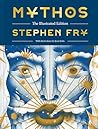
The art is nice, though I can’t say that it added much to the reading experience for me, personally. The art is done in a consistent style throughout and is colorful and visually interesting, though I couldn’t say much else about it in an intelligent fashion. It somewhat reminded me of William Blake’s art and somewhat of Soviet posters.

I enjoyed this book. It is light-hearted and even humorous without detracting from the tone of the myth and is a highly readable way to learn more about Greek Mythology.

View all my reviews

BOOKS: “Best Literary Translations 2024” ed. by Jane Hirschfield, et. al.

Best Literary Translations 2024Best Literary Translations 2024 by Jane Hirshfield
My rating: 5 of 5 stars

Publisher Site

This “best of” annual celebrates the unsung translator. Many of the original works are recent but some are old or even ancient; it is these translations to English that are in all cases recent. Spanish and Arabic translations are well-represented, but with respect to the twenty or so languages included, almost all are the sole representative for that particular source language. Poetry makes up the bulk of the collection (including prose poems,) but there are several pieces of short fiction and a piece of creative nonfiction or two.

Among my favorites were: “Grazing Land” (Greek,) “The Snail’s Spiral” (Spanish,) “The Lion” (Kurdish,) “Deterioration” (Persian,) “Graceless” (Chinese,) “Our Village” (Tigrinya,) and “The Sea Krait” (Tagalog.) But, as one would expect of a carefully curated “best of” collection, there were no stinkers in the batch.

If you enjoy literature in translation, this book is well worth investigating.

View all my reviews

BOOKS: “Gothic Tales” by Marquis de Sade [Trans. by Margaret Crossland]

Gothic TalesGothic Tales by Marquis de Sade
My rating: 5 of 5 stars

Amazon.in Page

Release Date: September 3, 2024

This collection of short fiction is an excellent entry point for the reader wishing to be introduced to the philosophy and literary stylings of the Marquis de Sade. It is less visceral and explicitly violent than the works for which Sade is most famous (i.e. Justine, 120 Days of Sodom, and Philosophy in the Boudoir.) While it does deal in libidinal issues throughout and has a few stories that are explicitly erotica (notably the last couple pieces,) it never ventures up to or over whatever thin line separates erotica from pornography.

While all the pieces share Sade’s signature philosophy and interests, it is in other ways a quite diverse collection of writings. The first piece, “Eugenie De Franval,” is a novella that takes up about half the book, and it is followed by a piece that, in today’s parlance, might be called flash fiction, “The Horse-Chestnut Flower.” Pieces such as “Eugenie De Franval” and “Florville and Courval” are tragedies while the comedies include: “Emilie De Tourville,”[granted with grim elements] “The Husband Who Played Priest,” “Room for Two,” and “The Self-Made Cuckold.” Those last three – as well as “The Horse-Chestnut Flower”– are comedic in a modern sense, not just the literary sense.

I can’t say how much of the difference in tone and intensity of these pieces from Sade’s other stories is owed to the selected source material and how much is owed to translation and editorial decisions, but it makes for a read that is more intriguing in story and less shocking and disturbing than many other translations of Sade’s work.

I enjoyed these stories. They had many clever twists and turns that I don’t recall experiencing in Sade’s novels. Several stories rely on a great deal of deus ex machina coincidences, but I think that works just fine — particularly in the more humorous stories. I’d highly recommend this for readers looking to ease into the work of the Marquis de Sade.

View all my reviews

BOOKS: “Water Margin” by Shi Nai’an

Outlaws of the marsh (the Water Margin)Outlaws of the marsh by Shi Nai’an
My rating: 5 of 5 stars

Amazon.in Page

Water Margin is one of the four classic Chinese novels. The English language translations of the novel go by many names, but in Chinese it’s called Shui Hu Zhuan (i.e. 水滸傳.) The book tells a tale of war and brotherhood in a world in which a person’s virtue and his station in life are often topsy-turvy. It’s one of the most engaging pieces of fiction I’ve read in some time. While it’s a sprawling epic (close to a thousand pages in the unabridged translation,) it draws the reader in and keeps one reading by way of clever plotting and intense intrigues.

The story revolves around 108 individuals of varied checkered pasts who end up together as a band of outlaws in the Liangshan Marsh (hence, one of the most common translated titles is “Outlaws of the Marsh.”) Under the leadership of an exceptionally virtuous and beloved leader, Song Jiang, these outlaws are united into, first, a band of outlaws and, later, (having been pardoned by the emperor) as an incomparable military force that quells threats to the nation.

About the first half of the book consists of the individual stories of the most central of the 108 outlaw chieftains. The next quarter of the book describes their time together as outlaws and, particularly, how they repeatedly defeated government attempts to crush their band. The final quarter of the book is about the band’s Imperial service: first in defeating Tartar invaders from the North and then in crushing a kingdom that arose in the south by uprising of a self-declared king.

If the reader is thinking that 108 primary characters is too many to contend with, I would say that: a.) there are a small set of characters that are so substantially discussed and developed that you’ll be able to always keep them straight; b.) not all of the 108 are crucial to keep straight to follow the flow of the story, but c.) yes, it is not easy to keep them all straight — particularly for a non-Chinese reader who will find a number of the names quite similar (e.g. Wu Yong and Wu Song.)

I should note that the book can be extremely visceral, too much so for some readers. This intensity largely has to do with the stories involving one of the chieftains, Li Kui. Li Kui is the worst. He has a horrific temper, a blood lust, is completely out of control, and almost always turns anything he touches into a bloody mess. His only saving grace is that he recognizes in Song Jiang’s virtue something that must be followed, such that he does his level best to do anything Song Jiang tells him to and (often more importantly) not do whatever he is told not to do. Many readers will hate Li Kui, finding him completely despicable. However, there is a good chance that thinking about why Li Kui is kept around and tolerated after constantly fouling things up will be a productive thought exercise for those who can get through the gore. One may want to consider that question in relationship to the fascinating fact that Song Jiang, the undisputed leader who all the men insist take the position of head chieftain, is the only member of the band who has no kung fu. The other 107 chieftains are all martial arts masters-extraordinaire, most with specialties in particular weapons or tactics.

I won’t say there aren’t clunky plot devices and repetitive elements, but they didn’t bother me much for a few of reasons. Firstly, this novel is from the fourteenth century, and — given that — the readability and emotional resonance of the book is phenomenal. Secondly, I have no way of knowing how much the cheapening plot devices are a product of the original versus of the translation. Finally, those elements are more than made up for by skilled story crafting.

I’d highly recommend this book for all readers who can feasibly get through an 850-page novel with hundreds of characters. Martial artists and travelers may find it of particular value.


View all my reviews

BOOKS: “Eternals” (2006) by Neil Gaiman and John Romita Jr.

EternalsEternals by Neil Gaiman
My rating: 4 of 5 stars

Amazon.in Page

The Eternals is one of the lesser-known superhero groups, a collection of immortal, god-tier heroes who protect the Earth from a specific set of enemies (Deviants) and serve a specific master (Celestials.) [The Eternals are a little better known now, given Marvel’s “every hero, everywhere, all at once” strategy led them to make a movie based on the team, and — like many products of that phase — it was not loved.] I am usually not a big fan of god-powered comic book characters because it’s an uphill battle to make them interesting. However, I am a big fan of the story-crafting of Neil Gaiman, and this story had the promise of the heroes not knowing they were heroes, at least through the early part of the book.

I found the story to be coherent, despite its outlandishness, and I was a fan of having the heroes living under the impression they are ordinary people. I think that device created fine conditions for tension and intrigue. Still, the volume does not read with the visceral intensity one would expect of a story with stakes as high as they are stated to be. There was some distance created by a lack of intense connection to the characters and the clunkiness of the premise.

If you’re looking for stories of a hero team stranger than the Avengers, but not as strange as Guardians of the Galaxy, this may be your cup of tea.

View all my reviews

BOOKS: “Ali and Nino” by Kurban Said

Ali and Nino: A Love StoryAli and Nino: A Love Story by Kurban Said
My rating: 5 of 5 stars

Amazon.in Page

I read this book as travel literature for a trip to Azerbaijan and was pleased that it both met my needs as travel literature (i.e. offering insight into the local culture(s),) and it turned out to be an engrossing story, as well. You may have caught that “turned out to be.” It’s true that the first one-third to half of the book is a slow-burn on the story front. Through those early chapters, the book is the character-driven, plotless novel one frequently sees among literary fiction. Don’t get me wrong, it is still interestingly written and engaging (if you’re a literary fiction reader,) and it definitely met my needs for travel literature. But just as I’d resigned myself to this character-driven literary fiction formulation, it shifted into being a compelling and even action-packed story.

This is a tale of star-crossed lovers but set in the Caucuses in the WWI era (i.e. the time of the Armenian Genocide, when the Ottoman Empire was in its violent death throes.) Unlike Romeo and Juliet, in which the lovers came from feuding clans that were culturally quite similar, cultural divergence is the crux of the matter for Ali and Nino. While the families of the two kids get along fine enough, Nino is from an aristocratic Georgian family of progressive Western (and Christian) proclivities. The protagonist, Ali, is also from an upper-crust family, but they are of a much more conservative Muslim bent. While Ali, himself, is an educated and moderate personality and somewhat of a bridge between the old world Persian mindset of his family and the liberal European one in which he was educated, he has friends and family that it would not be unfair to call fanatics. So, while the families bless the union, it is ill-fated because the worldviews of Ali and Nino make it so there is no place they can both be happy living, except a Baku that is being contested by the Ottoman Empire and a Russia in the midst of its own transmutation. In Persia, Nino is a soulless possession who is not allowed to interact with anyone but Ali, eunuch and female servants, and her own family when they visit. On the other hand, Ali can’t bear to go to Europe or America, where he’d be so far out of his element. So, they are stuck with a Baku besieged by multiple entities.

The writer made a couple of unconventional but clever choices that I found to be brilliant. I’d highly recommend this book for readers of literary fiction and / or historical fiction.

View all my reviews

BOOKS: “Constantine, Vol. 1: The Spark and the Flame” by Ray Fawkes & Jeff Lemire

Constantine, Vol. 1: The Spark and the FlameConstantine, Vol. 1: The Spark and the Flame by Ray Fawkes
My rating: 4 of 5 stars

Amazon.in Page

This is your basic “race to acquire the components of a multi-part MacGuffin” story line. There is a magic compass that John Constantine is eager to keep out of the hands of a shadowy organization of powerful magicians. Why do we care? First of all, because this is a vaguely but extremely powerful artifact that can rain utter destruction on the world in some ill-defined way. Secondly, because Constantine is just such an intriguing character. Mostly the latter, because the former is ill-defined and doesn’t merit much emotional traction.

That’s mostly what the story is about, but there are various seemingly haphazard story elements (probably too many for the first volume in a series.) This being marketed as a “Volume One” is where much of the book’s problems lie. We pick up pretty much in medias res and when an event occurs that we’re supposed to care about enough to want to see a resolution late in the volume, it’s really hard to care about because it’s been raced through. If you are picking this up after reading the previous series, it’s undoubtedly much more satisfying as a story. Picking up the story with this “Volume 1” is a bit chaotic and lacking in emotional resonance.

That said, John Constantine is one of the most interesting characters in comics and he’s written and drawn well in this book. (Not to mention supporting characters like Papa Midnight.) The story is fast-paced and the broad brushstrokes of it are comprehensible.

If you’ve read the previous Hellblazer / Constantine works, you’ll probably enjoy this volume. Taking it on as a standalone may leave one a bit befuddled.

View all my reviews

BOOKS: “Pawan” by Sorabh Pant

Pawan: The Flying AccountantPawan: The Flying Accountant by Sorabh Pant
My rating: 4 of 5 stars

Amazon.in Page

On one level, the more superficial level, this is a superhero fantasy featuring a Vanara (a supernatural monkey-man creature from Indian mythology,) on another level it’s a political satire that riffs on the geopolitics and the military-industrial complex of India. It’s cleverer as the latter than the former.

The story has some clunkiness, including the occasional hard to follow description and sloppy story elements (e.g. the deus ex machina.) That said, it’s pop genre fiction and with regards sloppy story elements they’re par for the course in superhero fiction. My point being that the fact that it’s amusing and mostly readable means it hits its target, strained credulity and logical inconsistencies aside.

The humor is of the broadest range with occasional laugh-out-loud hilarity, lots of mildly amusing jokes, and a few groan-worthy lines that go down like a lead-balloon. That’s not a terrible ratio for a novel.

If you want to check out a book featuring an Indian mythology-based superhero, and you don’t mind a lot of jokes directed at political and national security apparatus leadership, this book is worth looking into.

View all my reviews