BOOKS: “Language” by Xiaolu Guo

LanguageLanguage by Xiaolu Guo
My rating: 5 of 5 stars

Publisher Site

This book is excerpted from a full-length novel entitled, A Concise Chinese-English Dictionary for Lovers, and it conveys what it’s like to be a stranger in a strange land — particularly when one has only a rudimentary grasp of the local language. Specifically, the story revolves around a young Chinese woman who moves to London to pursue her studies. In London, the young woman becomes involved with an older man, and much of the story looks at how culture — and particularly language — impacts the nature of the relationship. (And, also, how being in a relationship with a native of her new home impacts her language learning.)

Perhaps the most important factor influencing whether a reader will like or loath this book is how one feels about reading broken English. Like the dialectic poetry of Paul Laurence Dunbar, this book isn’t written in grammatically correct standard English. The broken – “learner’s” – English is quite effective at conveying the struggle of language learning and how culture and language are intertwined. But if reading grammatically incorrect writing gives you a headache, then this book is not for you.

As for why this book consists of excerpts, it’s part of a series called “Vintage Minis” that consists of short (or excerpted) works from prominent authors from around the globe, generally with a straightforward unifying theme. [Vintage Classics is an imprint of Penguin Random House.] The fact that the book was an excerpt didn’t create a problem for me. The origin material is a literary fiction novel and doesn’t seem to be significantly plot-driven. It’s much more character-driven, and thus getting a limited picture doesn’t open up a lot of unanswered questions about what will come next. In other words, it felt like it could have been a full piece of short, character-driven literary fiction.

I enjoyed reading this slim volume. I think it offers interesting insight into being a language learner abroad. If you’re interested in the challenges of language and culture in an unfamiliar place, this thin book is well worth reading.

View all my reviews

BOOKS: “Meschugge” by Benni Bodker

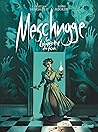
Meschugge: Le Labyrinthe du fouMeschugge: Le Labyrinthe du fou by Benni Bødker
My rating: 4 of 5 stars

Seller Site

This graphic novel reminded me of “The Alienist” TV series (based — itself — on a popular novel,) particularly the Sara Howard (Dakota Fanning) arc in which a young, upper-class woman becomes a detective in the (turn of the 20th century) world which sees women as too delicate to be subjected to such horrors.

While the lead in this book bears striking resemblance to Sara Howard and the settings are quite similar, the book also features major differences that make it its own unique story. First of all, Kabbalistic Judaism plays a central role in the crimes in this book. Secondly, this story creates the impression that the supernatural might be involved. I don’t believe it is unambiguously supernatural, one could explain things in a rational way as well, but “The Alienist” takes a clear rationalist approach.

I enjoyed the story, and it kept me reading. There were a couple points in the story that didn’t make sense to me, particularly an occurrence in which a character is being pursued and seems to be in a dire situation, and then suddenly is free. This mechanism is sometimes used with characters who’ve been established as being extremely capable individuals because it is as if to say, “I don’t even need to show you this person getting out of this spot because it’s not a big enough trouble to fuss about,” (it’s also often done in poor TV and movies for budget reasons,) but this character is not a master escape artist (being out of her depths is part of what creates such great tension throughout the story.)

An exciting premise and interesting characters, but with a few rough edges in plotting.

View all my reviews
BOOKS: “Sweet Tooth, Vol. 3: Animal Armies” by Jeff Lemire

Sweet Tooth, Vol. 3: Animal ArmiesSweet Tooth, Vol. 3: Animal Armies by Jeff Lemire
My rating: 5 of 5 stars

Publisher Site – DC Comics

This is an action-packed entry in Sweet Tooth saga. It’s also a very satisfying story arc for a serialized comic book such as this. We see important events in the character development of Jepperd as well as a secondary character, Johnny (brother to Abbot — the lead antagonist.) Dr. Singh gains some important information as well, though that largely serves to advance the story and extend the mystery, rather than to conclude this segment of the story. That said, this episode is brought to a solid conclusion while leaving one waiting to see what happens next.

I’d highly recommend this series for comic book readers.

View all my reviews

“American Vampire, Vol. 4” by Scott Snyder

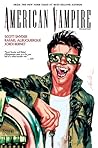
American Vampire, Vol. 4American Vampire, Vol. 4 by Scott Snyder
My rating: 5 of 5 stars

Publisher’s Site

The American Vampire saga enters the 1950’s, at least with two of the three storylines presented in this volume. The central arc takes place in Glendale, California in 1954 and features Fonzi-like vampire hunter, Travis Kidd, against the series’ central villain — Skinner Sweat. But the main story is bookended by two shorter stories. The opener is a cowboys v. indians tale, set in New Mexico Territory in 1871, that provides backstory on Skinner Sweat and James Book. The closing story is also set in 1954 but takes place in Alabama and features a black vampire hunter in the Deep South.

I found all three stories to be compelling and have greatly enjoyed this series.

View all my reviews

BOOKS: “The Sandman, Vol. 3: Dream Country” by Neil Gaiman

The Sandman, Vol. 3: Dream CountryThe Sandman, Vol. 3: Dream Country by Neil Gaiman
My rating: 5 of 5 stars

DC Site

If you love a good story, you really can’t go wrong with Gaiman. This volume consists of four standalone pieces of short fiction set in the Sandman universe.

“Calliope,” like Greek Mythology, envisions an anthropomorphized muse, but takes the idea into a dark and modern twist as said muse is held captive and violated.

“A Dream of a Thousand Cats” imagines dreams do shape the real world and asks what if animals dreamt as big as humans.

“A Midsummer Night’s Dream” is built around the premise that Shakespeare had a patron, none other than Morpheus, a.k.a. Dream, himself.

“Facade” is about a supernatural woman who can only go out in public by taking risky measures to look “normal,” and explores her lonely existence.

All of these stories are clever and compelling, and I’d highly recommend this collection for readers of speculative fiction.

View all my reviews

BOOKS: “DC vs. Vampires, Vol. 1” by James Tynion IV & Matthew Rosenberg

DC vs. Vampires, Vol. 1DC vs. Vampires, Vol. 1 by James Tynion IV
My rating: 4 of 5 stars

Publisher’s Site

In this opening volume in a series that pits a set of the DC pantheon of superheroes against a shadowy vampire cabal, we learn that the vampires are preparing for attack and that they’ve infiltrated all levels of society to degrees unknown — even the Justice League. This volume focuses heavily on the extended “Bat-Family” along with Oliver Queen’s smaller Green Arrow team, but includes many more superpowered characters in varied roles. Though it also ignores some of the most powerful characters, a big risk for such a huge ensemble cast. (One wants to save some big guns, but it begs the question of whether Superman is fiddling while the world burns.)

I like how tension was built in this story, and how information is revealed to the reader, allowing one to be gripped by questions of how the characters will learn what one already knows and with what consequences. The volume ends with a big reveal, though not with any kind of resolution. So, it’s not a standalone story in my view.

I found the volume engaging, but feel it suffers from the unavoidable problems of having too many characters, particularly characters of the god-tier variety.

View all my reviews

BOOKS: “Sweet Tooth, Vol. 2: In Captivity” by Jeff Lemire

Sweet Tooth, Vol. 2: In CaptivitySweet Tooth, Vol. 2: In Captivity by Jeff Lemire
My rating: 5 of 5 stars

Publisher’s Site

This volume interweaves the continuing stories of Gus and Jepperd, separated at the end of the debut volume. As outlandish as this story might seem, human-animal hybrid babies and all, the basic forces that drive the story are straightforward and relatable. Jepperd’s is essentially a love story as he attempts to do right by his wife in a post-pandemic dystopian world. Gus, having been motivated by a desire for new adventure in the first volume, just wants to get home now that he has confronted the fundamental crumminess of the human world.

While this volume is largely filling in the backstories of the two main characters, it does so skillfully through a mix of flashback and current timeline events that advance the story. It certainly has me hooked to learn more about these characters.

I found this story to be emotionally moving and compelling and would highly recommend it for comic book readers.

View all my reviews

BOOKS: “The Penguin Book of Indian Ghost Stories” ed. by Ruskin Bond

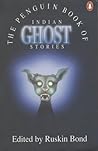
Penguin Book of Indian Ghost StoriesPenguin Book of Indian Ghost Stories by Ruskin Bond
My rating: 5 of 5 stars

Publisher’s Website

This is an anthology of stories of the supernatural set in India or built around characters and contexts of India. About half of the stories are by writers of non-Indian ancestry, though some were born or lived extensively in India (e.g. Rudyard Kipling and C.A. Kincaid.) Not all of the pieces are “ghost stories” in a technical sense, but they all revolve around the supernatural or surreal experience.

I enjoyed all the stories in this collection, but among my favorites were: “The Brown Hand” by Arthur Conan Doyle; “The Strange Ride of the Morrowbie Jukes” by Rudyard Kipling; “The Fire-Jogi” by A.C. Renny; “Fritz” by Satyajit Ray; “Anath Babu’s Terror” by Satyajit Ray; “The Yellow-Legged Man” by Sudhir Thapliyal, and “Topaz” by Ruskin Bond.

If you enjoy scary stories, I’d highly recommend this book.

View all my reviews

BOOKS: “Mythos: The Illustrated Edition” by Stephen Fry

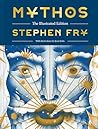
Mythos: The Illustrated Edition: The Illustrated Edition (Stephen Fry's Greek Myths)Mythos: The Illustrated Edition: The Illustrated Edition by Stephen Fry
My rating: 5 of 5 stars

Publisher Site

This book offers a humorous telling of many stories from Greek Mythology. One gets the well-known tales such as Prometheus, Sisyphus, and Pandora, but also the myths involving a number of lesser-known characters: god, demi-god, and mortal. As these myths are being told, there is also a substantial amount of nonfiction information presented by footnotes and such — e.g. how later authors (Shakespeare, for example) presented these myths or tales built upon them, how the myths inform popular culture and language to this day, and how Greek and Roman mythology related.

The art is nice, though I can’t say that it added much to the reading experience for me, personally. The art is done in a consistent style throughout and is colorful and visually interesting, though I couldn’t say much else about it in an intelligent fashion. It somewhat reminded me of William Blake’s art and somewhat of Soviet posters.

I enjoyed this book. It is light-hearted and even humorous without detracting from the tone of the myth and is a highly readable way to learn more about Greek Mythology.

View all my reviews

BOOKS: “Best Literary Translations 2024” ed. by Jane Hirschfield, et. al.

Best Literary Translations 2024Best Literary Translations 2024 by Jane Hirshfield
My rating: 5 of 5 stars

Publisher Site

This “best of” annual celebrates the unsung translator. Many of the original works are recent but some are old or even ancient; it is these translations to English that are in all cases recent. Spanish and Arabic translations are well-represented, but with respect to the twenty or so languages included, almost all are the sole representative for that particular source language. Poetry makes up the bulk of the collection (including prose poems,) but there are several pieces of short fiction and a piece of creative nonfiction or two.

Among my favorites were: “Grazing Land” (Greek,) “The Snail’s Spiral” (Spanish,) “The Lion” (Kurdish,) “Deterioration” (Persian,) “Graceless” (Chinese,) “Our Village” (Tigrinya,) and “The Sea Krait” (Tagalog.) But, as one would expect of a carefully curated “best of” collection, there were no stinkers in the batch.

If you enjoy literature in translation, this book is well worth investigating.

View all my reviews