READING REPORT: February 20, 2015

This week’s Reading Report will be short. I didn’t complete any books this week.


Most of my reading was divided between two books that I’ve mentioned in earlier reports. The first is Zen and the Brain by James H. Austin. This is probably the most expensive book that I’ve purchased since the ridiculously overpriced textbooks of college. While I’ve been known to pan decent books for being overpriced (e.g. most recently Zen Mind, Strong Body by Al Kavadlo), I will say that I’ve found this book to be worth it. There are vast numbers of books on the fascinating findings of neuroscience research. Also, there is a vast canon on Zen, meditation, and the quieting and mastering of the mind. However, there are only a small (though growing) number of books that deal with the intersection of these two subjects, and none covers the subject in as much depth as Austin’s work–as far as I’ve seen. The chapters I’ve been reading of late deal with emotions, visceral drives, and memories–all relevant issues for one who is seeking personal development in a scientifically-minded manner. The next chapter will deal with GABA. I’m looking forward to this because I know there is scientific evidence that yoga can reduce depression through its effect on GABA levels, and I look forward to having a better understanding of how this works.
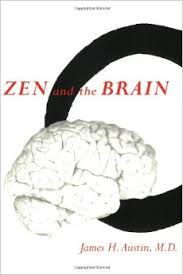
Zen&Brain


The second book that’s consumed a lot of my time over the past week is The Pyjama Game. I’m about 2/3rd of the way through this book and will finish it in the upcoming week. It is in part a micro-history of judō and in part an account of what it’s like to be a practitioner of the martial art of judō. While the micro-history chapters are chronological, they’re interspersed with chapters that are more of a personal accounting of the author’s experience (and the experience of individuals with which he interacted with first-hand–i.e. other amateurs.)  The era that was covered in my reading of the past week was an interesting one. It chronicled judō’s shift from a time in which Japan completely dominated the sport to one in which Russians, Europeans, and Americans started to make headway and—in some ways–unique contributions to the art. This includes judō‘s rise to Olympic status, and how the sport has progressed since that time.

pyjamagame


There were another couple of books that I read substantial parts of as research for the novel I’m writing. The first of these is The Taiheikiwhich is–as was the style in medieval Japan–a mix of part history and part literature. It tells the story of Emperor Go-Daigo’s retention of power, largely through the efforts of valiant loyalist warriors–most notably the famous Kusunoki Masashige.
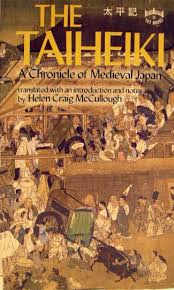
Taiheiki


The second research work is entitled Fighting Techniques of the Oriental World: AD 1200 – 1860As my novel takes place partly in 14th century Japan, China, and Southeast Asia, this reference comes in handy for learning about the activities of warriors across several nations.

FightingTechniquesOrientalWorld


I purchased three books this week. In a way, I was successfully (and happily) suckered. For those who haven’t realized, Amazon is very clever. If you look at a book once or twice, the price will often rise a little when you go back. This drives a few suckers to buy it at a higher price before it rises to some imagined peak price. I’ve noticed this on enough occasions to believe that it’s not just coincidence. Furthermore, as one trained as an economist, I know this is a sound pricing strategy. What I’d not yet experienced is that if one keeps periodically checking on the books–but not buying–the prices will creep back down to a new low, probably only a tiny bit under the first price you saw. I bought three books that I’ve been looking for both on Kindle and at my local bookstore, but which have stayed above my reservation price.


The first, and most expensive, was Buddha’s Brain, which is along similar lines to the aforementioned Zen and the Brain. The book is by a neuroscientist who specializes in neuroplasticity, and who examines how one can go about “rewiring” one’s brain to be happier and more well-adjusted.

BuddhaBrain


The second book is called The Relaxation Response. It was the cheapest book of the three and is much older than the book Buddha’s Brain. In it Dr. Benson (Harvard MD) describes the relaxation response as the body’s counterpoint to “fight or flight” mode. In this state of relaxation, the body–among other things–goes to work on repairing what ails it. There’s a lot of evidence that a human body can repair most of what can ail it if it gets enough rest–i.e. sufficient break from stress.
Relaxation Response


My final purchase was A Confederacy of Dunces. This book is considered to be one of the best comedic novels in American literature. It’s also a book that all depressed writers (which is to say all writers struggling to get things published) should read for the cautionary tale of the novel’s tragic back story. The author, John Kennedy Toole, committed suicide (at least in part) because he couldn’t get it published. His mother then took up the torch, shopping it around. It took her seven years, but she finally got it published after convincing the novelist Walker Percy to look at it, and having achieved his recommendation. In 1981 it won the Pulitzer Prize for fiction.
confederacy of dunces

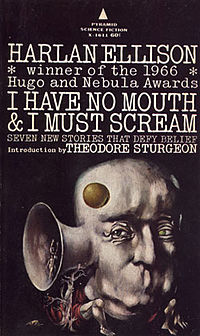
BOOK REVIEW: I Have No Mouth & I Must Scream by Harlan Ellison

I Have No Mouth and I Must ScreamI Have No Mouth and I Must Scream by Harlan Ellison

My rating: 4 of 5 stars

Amazon page

This collection of short fiction by Harlan Ellison consists of only seven stories. It was originally published in the late 1960’s and a second edition was released in 1983—the latter being the edition I read. Despite a bit of Cold War zeitgeist–most notably in the title story—this collection holds up well to time.

I’ll proceed by discussing each of the seven stories.

1.) I Have No Mouth & I Must Scream: It’s after World War III, the Soviets, Americans, and Chinese had built artificial intelligences (AIs) to help prosecute the war. The AIs ganged up against humanity and exterminated all humans—excepting five individuals (4 men and 1 woman.) The AI finds a way to indefinitely extend the lives of the five so that it can keep its playthings around. The AI is kind of like a sadistic child with an ant farm. The story is told from the perspective of one of the five remaining humans.

2.) Big Sam Was My Friend: A folksy narrator tells the tale of how a fellow interstellar circus performer met his ends. The deceased, Big Sam, was capable of teleportation, like the character Nightcrawler (Kurt Wagner) in the X-men. Ellison does an excellent job of creating a unique character and tone in this story.

3.) Eyes of Dust: On a planet of beautiful people, there remains a family of uggos–and the child is the ugliest of all. However, ugliness isn’t the boy’s only unique trait. This is one of the weaker stories of the collection in my opinion, but it’s not bad.

4.) World of The Myth: The three-person crew of a spaceship crashes on an unfamiliar planet. The planet is inhabited by ant-like creatures that can form complex shapes, and through such displays the creatures can reflect the essence of who a person is back at them. This proves more than the despicable captain of the small crew can bear.

5.) Lonelyache: This story is more realism than speculative fiction—or at least I interpreted it that way. It’s about a guy who’s gone through a divorce recently, and is living alone. The story intersperses recurringly-themed dreams in which men are trying to kill the lead character, with waking sequences which revolve around the man’s troubled relationships with women.

6.) Delusion For a Dragon Slayer: In the Introduction, we are told by Theodore Sturgeon that the description in this story is very much how people on hallucinogens experience the world. I can see what Sturgeon is saying. The story begins with a series of vignettes about people who died for no logical reason and at the least likely times. The story then tells an extended tale of one such death, that of the lead character, in a way that mixes dream and reality in a way that’s hard to differentiate.

7.) Pretty Maggie Moneyeyes: A man in Las Vegas hits the jackpot on a slot machine. He feels compelled to engage in the very sucker-like behavior of playing the same machine again, but he wins again and then keeps winning. The casino obviously suspects foul play with the second jackpot, but they can’t find anything wrong with the machine or any way in which the man might be cheating. All their investigation reveals is that a woman had died playing that machine some time before.

I’d recommend this book for those who like short speculative fiction. The best of the stories are outstanding, and the worst of them are still intriguing and readable. I will say that it’s not a collection for readers with delicate sensibilities–including young readers. (e.g. Rape is a theme that repeats in a couple of stories.)
View all my reviews

READING REPORT: February 13, 2015

Welcome to a special Friday the 13th edition of the Reading Report. What’s so special about it? If you’re not deluded by superstition, then not much. If you are superstitious, reading this post may cause you to suffer a plague of locusts (or whatever plagues your particular geographic area.)


Now that we’ve gotten rid of the illiterate ninnies, we can get down to discussing books.


I finished two books this week–one nonfiction and one fiction. I’ll be posting book reviews within the next couple weeks.


The nonfiction book was called Yoga Body: The Origins of Modern Posture Practice. The author’s intriguing and controversial thesis is that yoga as it’s practiced in studios around the world today nothing to do with traditional Indian yoga, but, instead, owes it’s existence to European calisthenics and bodybuilding systems and the Indians that borrowed from them. I didn’t find the author’s argument compelling for a number of reasons that I’ll get into in my review. This isn’t to suggest that I’m certain he’s wrong. He may be right, but the way he constructed his argument left a great deal of room for doubt.


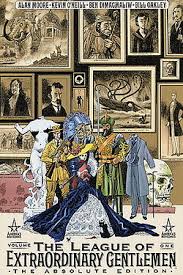
TLEG_Vol1

The fiction book was a graphic novel entitled The League of Extraordinary Gentlemen (Vol. 1). For those of you who haven’t seen the movie featuring Sean Connery, this comic book gathers together a team of protagonists from 19th century science fiction and adventure novels. The team consists of Mina Harker (of Bram Stoker’s Dracula), Allan Quatermain (of H. Rider Haggard’s King Solomon’s Mines), Captain Nemo (a Jules Verne recurring character), Dr. Jekyll/Mr. Hyde (Robert Louis Stevenson’s title characters), and Hawley Griffin (of H.G. Wells’ The Invisible Man). One needn’t have read all those classic stories to follow this book, but being a fan of 19th century tales of the fantastic definitely makes it more fun. The story depicted in this volume has nothing to do with the movie plot.


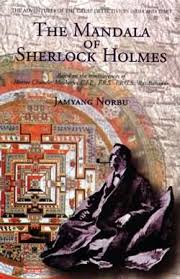
mantraSherlockHolmes

I’m more than halfway through a couple of books that I mentioned in earlier Reading Reports, they are Why Do People Get Ill? and The Mandala of Sherlock Holmes.  I read chapters 7 through 9 of the former book, which had to do with the expression of symptoms, the heart as a symbol and that symbol’s expression in illness, and the impact of mother’s experiences on infants and children. In the latter book, Holmes has arrived in Tibet, and the plot thickens. The author is Tibetan, and so has some unique insights. However, some chapters advance the story with action, and others are almost like travelogue.


I’m still early into reading two books that I’ve previously mentioned. The first is Zen and the BrainIn this book I’ve transitioned out of the part explaining Zen and the author’s experience of that tradition, and am now into the part that lays down the basic neuroscience. While the author writes in a readable style, for a neuroscientist, this is still challenging reading because of its scientific nature and the complexity of the brain. However, the chapters I read recently both raise some fascinating questions and provide useful information. The chapter I just finished dealt in part with the neurochemistry of addiction. I like that this book is divided up into short chapters. This is beneficial for taking in such complicated information. I need frequent think-breaks to ruminate on what I’ve read.
 

pyjamagame

The second is The Pyjama Game. After a slow start, the last two chapters have contained some fascinating information. One of these chapters dealt with the history of jujutsu, particularly as Japan transitioned from medieval to modern. The other chapter outlined Kanō Jigorō‘s development of judō.


I bought three books this week.


The first is entitled Healing Moves, and is by a married couple consisting of a fitness writer and a cardiologist. This book addresses a topic that is a prevailing theme in my nonfiction reading as of late, which is what movement, exercise, and physical activity can do to improve one’s health (not just one’s fitness.)

HealingMoves


The second book is Greatest Ever Boxing Workouts.  This book presents information about what boxers like Mike Tyson, Manny Pacquiao, and Floyd Mayweather do to prepare for fights. It’s a follow-up to an earlier book that included fighters like Muhammad Ali and Roy Jones Jr.

BoxingWorkouts


Finally, I just got a short story collection on Kindle Daily Deal the other day entitled Lovecraft’s Monsters.  This isn’t a collection of H.P. Lovecraft stories, but rather is an anthology of stories inspired by Lovecraft’s work.

LovecraftsMonsters

BOOK REVIEW: Quarantine in the Grand Hotel by Jenő Rejtő

Quarantine In The Grand HotelQuarantine In The Grand Hotel by Jenő Rejtő

My rating: 4 of 5 stars

Amazon page

[Note: This book is published by Corvina Books, which is a Hungarian publisher that—among other things—specializes in translations of Hungarian literature (into mostly English and German.) I bought the book on a recent trip to Budapest. I mention these two facts because this seems to be an expensive and / or difficult to acquire work outside of Hungary. A cursory Amazon search brought up copies only at an exorbitant rate. In Hungary I paid 2500 forint (about $9 USD at the time), which I would consider on the high side of what the book is worth. It’s a good book, but it’s a 160-page pulp-fiction paperback novel written about 80 years ago.]

Quarantine in the Grand Hotel is a murder mystery set on a fictional resort in Indonesia (or thereabouts.) However, it’s not your typical dour mystery. It’s as much of a satirical humor novel as it is a mystery. I was hooked with the first paragraph, which reads, “When Maud returned to her room, she saw a man emerge from her wardrobe. Dressed in pyjamas and wearing a bright green lampshade on his head, the stranger beamed a friendly smile at her.” From that point, I had to know who the man in the pyjamas is and how he got there, and that information doesn’t come immediately or without false leads.

The premise is that the resort is quarantined and a murder takes place there (actually two murders.) It’s not a creative premise. The hotel setting allows the author to bring together an international cast of characters (suspects) some of whom would believably have secrets or be leading double lives. Where the creativity comes in is both in the humor, and in the skilled reveals. Rejtő used cliff-hanger chapter closings to good effect. He also plants false information, e.g. in the form of false confessions designed to protect loved ones that may or may not have actually committed a crime.

Rejtő (who wrote under the nom de plume “P. Howard”) was a Hungarian journalist and author. He wrote this and most of his books in the 1930s. He died in a forced labor camp in axis-controlled Soviet territory during World War II. He’d displeased the Hungarian Arrow Cross Militia (i.e. the Hungarian fascists) and was sent to a labor camp at the front.

I’d recommend this book for those who like light, humorous novels. If you’re a hardcore mystery fan, it might seem a little silly and ham-handed. If you are looking for a novel that offers insight into Hungarian literature, I don’t think this one is for you. The setting is not Hungarian, the major characters are not Hungarian, and I would hazard to say that most people wouldn’t know that this translation wasn’t written by a British, or other English-language country, author.

View all my reviews

READING REPORT: February 6, 2015

I polished off three books this week. That’s not as impressive as it might seem; they were all slim volumes. I’ll do reviews on these books in the near future, but a few words about each will suffice here.

The first was Zen Mind, Strong Body; a book about which I had mixed feelings. It’s by a calisthenics expert named Al Kavadlo, who is a personal trainer, author, and YouTube phenom. On the positive side, Kavadlo is a sharp guy with many useful insights into bodyweight exercise and fitness in general. Additionally, Kavadlo eschews the snake-oil salesmanship that is rampant in the fitness world.

On the other hand, the book is basically a rehash of blog posts, and the “new / first time seen pictures” aren’t useful for learning the exercises because they’re mostly just the author standing in random places with his shirt off. Furthermore, there’s no such consolidating theme to the book as is suggested by the title. I think it just has that title (a take-off on DT Suzuki’s classic work on Zen) because “The Best of Al Kavadlo’s Blog Posts” doesn’t scream “buy me.” I thought a little extra value-added could have been provided for the people who paid for the book, but you will learn from it.

The second book was Quarantine in the Grand Hotel. This novel brings satire and humor into a locked-door mystery. It was written by a Hungarian author in the 1930’s, but remains a readable and enjoyable book.

IHaveNoMouthThe third book was the short story collection by Harlan Ellison that I mentioned I would begin this week. I Have No Mouth and I Must Scream consists of seven stories that are nominally in the genre of science fiction, but could also be classified as tales of the strange. This book was first published in 1967. Ellison writes stories in a readable style, though one that can sometimes be called “trippy.” If I were going to award a “book of the week” for the book that I found most engaging, it would be this one.

I only got a couple of chapters each into the Mo Yan novel Life and Death Are Wearing Me Out and the epic poem The Aeneid. The former is readable has a fascinating premise, but the latter–not unexpectedly– is a little more of a chore to read (but is a classic and seems worth the difficulties.)

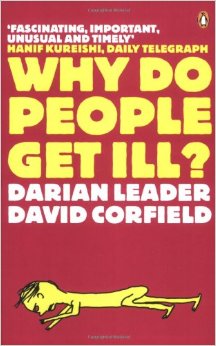
Having finished off some nonfiction in the preceding week, I made room to resume reading a book that I started a couple of months ago entitled Why Do People Get Ill? A two-man team consisting of a psychoanalyst and a neuroscientist joined together to write this book. It examines the role that stress and the mind play in illness. Yes, things like germs (i.e. bacteria and viruses) cause illness. However, that’s not the whole story, and a couple of key questions remain. First, how come some people can be repeatedly exposed to causative factors and their bodies knock out disease leaving them asymptomatic. Second, how come others readily come down with ailments–sometimes even when they haven’t been exposed to causative factors. To put matters in scholarly terms, germs may be a necessary condition for disease, but they are rarely a sufficient condition.

WhyDoPeopleGetIll_Leader&Corfield


I didn’t do much yoga or martial arts specific reading this week. However, today I finally began The Pyjama Game, which is a book about Judō that I mentioned in one of my previous Reading Reports.

I purchased four books this week, all on Kindle and mostly on sale.  Those books, which I’m sure to be discussing and reviewing on later dates are:

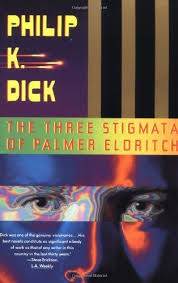
TheThreeStigmata

The Three Stigmata of Palmer Eldritch: Because I’m a huge PKD fan, and this is said to be one of his best books–of his books that I haven’t yet read. This was in the Kindle Monthly Deals.

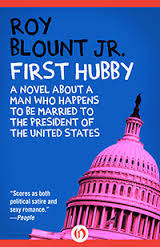
FirstHubby

First Hubby: This will be my first Roy Blount Jr. book, but I did enjoy him on that NPR game show (i.e. Wait Wait… Don’t Tell Me!) This was also a Kindle Monthly Deal as I recall.

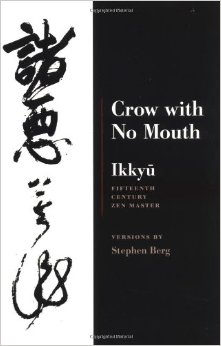
Ikkyu_Berg

Ikkyu: Crow with No Mouth: This is the story of a Zen master who lived in Kyoto in the 15th century. He sounds like a fascinating man, and was also a skilled poet. This one wasn’t on sale, but neither was it expensive at the usual price.

TheElementsThe Elements: This book is a Kindle Daily Deal as I’m writing this. I love me some science. I did have to look through the sample pages before buying. Even though it was inexpensive, I was concerned that it might not have much usefulness on my black&white, base-model Kindle because the graphics are an important part of the book. However, it looked like there was enough text explanation to be worth the $2.00–even if the graphics don’t show up well.

And that was my week in books.

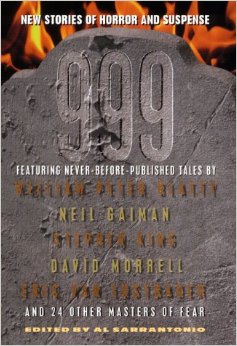
BOOK REVIEW: 999 ed. by Al Sarrantonio

999: Twenty-nine Original Tales of Horror and Suspense999: Twenty-nine Original Tales of Horror and Suspense by Al Sarrantonio

My rating: 4 of 5 stars

Amazon page

999 is a collection of 28 short stories and one novella that are all in the genre of horror and dark suspense. The collection includes some superstar authors such as Stephen King, Joyce Carol Oates, Neil Gaiman, and David Morrell, but all of the authors are established writers and most will be familiar to readers in this genre.

I won’t go into each story in-depth, but will list and briefly describe each. A few of the stories stuck with me, while others were quite forgettable—so I’ll point out which were which. Your results may vary.

1.) “Amerikanski Dead at the Moscow Morgue” by Kim Newman: This is a Cold War Zombie story. It was intriguing.
2.) “The Ruins of Contracoeur” by Joyce Carol Oates: The family of a disgraced Judge move to a remote area to stay out of the limelight, and faceless monster sightings ensue. How bad could a Joyce Carol Oates’ story be? It’s solid and well-written. It wasn’t among my favorites.
3.) “The Owl and the Pussycat” by Thomas M. Disch: An “inanimate” stuffed owl and plush-toy cat converse about their wicked, spouse-abusing owner. Creepy, but not one of the strongest entries. The stories in this collection range from realism to far-fetched speculative fiction. This work is toward the latter end of the spectrum.
4.) “The Road Virus Heads North” by Stephen King: A mutating “killer” picture is obtained at a yard sale. This is among the stronger stories.
5.) “Keepsakes and Treasures: A Love Story” by Neil Gaiman: About a collector of the “exotic.” While Gaiman is my favorite author of this bunch, I can’t say this is story was among my favorites of the collection. I will say that it has some of the cleverest wording of any of the stories (as one would expect of Gaiman), but maybe that humor works at right-angles to the story. You decide.
6.) “Growing Things” by T.E.D. Klein: About a husband / Mr. Fixit and his following of advice columns on a growth. This is a short piece, but not among the more memorable stories. It’s innovative, but not the least bit intense.
7.) “Good Friday” by F. Paul Wilson: A vampire story set in a convent. A good story, but obviously not particularly innovative. However, if you like the idea of nuns battling vampires, here’s your story.
8.) “Excerpts from the Records of the New Zodiac and the Diaries of Henry Watson Fairfax” by Chet Williamson: A swanky dinner club that rotates hosts and each host tries to outdo the last in the presentation of “exotic delicacies.”
9.) “An Exaltation of Termagants” by Eric Van Lustbader: I’ll have to be honest; this was the least memorable of these stories. When I flipped back through to write this review, I found that I’d completely forgotten the piece. I think its lack of memorableness speaks for itself. It’s about an unappealing man and his sucky life that’s tied to his poor relationships with women. I think the problem is two-fold. First, it’s one of the longer stories in the collection. Second, unlike Joe R. Lansdale’s “Mad Dog Summer,” it’s a long short story without memorable characters or a taut story arc. In short, if you’re going to go long, you’ve got to give us characters we can either love or despise, and you’ve got to give us a pace that keeps us intrigued. This story does neither. I know it’s all subjective, but I think this collection without this story would be improved.
10.) “Itinerary” by Tim Powers: A mysterious caller asks the protagonist to tell an unknown woman caller that said caller “just left” in response to her inquiry. From there the story meanders into personal tragedy before bringing it all back together in the end. It was so-so. I liked the premise, but it didn’t have that x-factor in execution.
11.) “Catfish Gal Blues” by Nancy A. Collins: A river catfish mermaid story. This was a weird but highly memorable story.
12.) “The Entertainment” by Ramsey Campbell: Man thinks he’s checked into a hotel, but it’s really some sort of asylum. Not the most memorable, but not the least either.
13.) “ICU” by Edward Lee: Man awakes in an ICU, and is informed that he’s a gangster involved in pedophilia and other hardcore taboo pornography. Vivid and well-crafted.
14.) “The Grave” by P.D. Cacek: A young woman with a horrible mother discovers a grave in the woods that she’s never seen before. This one is eery and visceral.
15.) “The Shadow, The Darkness” by Thomas Ligotti: About a tour group promised “the ultimate physical-metaphysical excursion.” This paranormal story is just OK.
16.) “Knocking” by Rick Hautala: Remember Y2K? It was the idea that the entirety of the world of computing would come to a screeching halt because their little (inadequately programmed) computer minds would be blown by a date starting in “20?” This story is based on that notion.
17.) “Rio Grande Gothic” by David Morrell: A cop keeps finding shoes left in the same section of road, and eventually begins to wonder if someone isn’t trying to tell him something. This story does a good job of capturing one’s curiosity and keeping one’s attention.
18.) “Des Saucisses, Sans Doute” by Peter Schneider: This is one of the shorter stories in the book, and it’s also an almost absurdist dark piece. You may laugh or you may vomit, either way the writer had an effect.
19.) “Angie” by Ed Gorman: This story is white-trash gothic. It’s about a couple that are “stuck” with this kid, and are concerned that the child has learned their dirty, little secret and will turn them in. It was one of the stories that stuck with me most intensely. The unlikable character development is exceptional.
20.) “The Ropy Thing” by Al Sarrantonio: A couple of kids in a neighborhood assaulted by a thing that is… well, ropy (rope-like.) Not one of the better pieces, but it has the virtue of being short.
21.) “The Tree is My Hat” by Gene Wolfe: A man befriends an outcast on island in the South Pacific. It’s a solid piece.
22.) “Styx and Bones” by Edward Bryant: A cheating man comes down with a mysterious ailment. This is a well-executed story.
23.) “Hemophage” by Steven Spruill: Another vampire story, this one set inside a detective story.
24.) “The Book of Irrational Numbers” by Michael Marshall Smith: It’s about a guy from Roanoke, Virginia who is obsessed with numbers. As there aren’t many math short stories, if you are a big fan of math fiction you may find this interesting. The writing style is fun. If you aren’t a math fan, you may lose the story.
25.) “Mad Dog Summer” by Joe R. Lansdale: A man recounts a story of murder from his youth living in a rural community. This is one of the strongest stories in the collection. It’s also one of the longest, but the author does an outstanding job of keeping one’s attention throughout.
26.) “The Theatre” by Bentley Little: A clerk at a bookstore ventures into a forbidden floor above the store to find a creepy theater that will change his life. It’s a good, creepy story.
27.) “Rehersals” by Thomas F. Monteleone: I don’t know that I would have put this in the same genre as the other stories, but it’s an excellent story—and so I can see why the editor was eager to include it. It is speculative fiction, as opposed to being realist, but I wouldn’t count it as either horror or suspense. It’s about a man handling props in a community theater who is given glimpses into what his life could have been like if he’d stood up to his abusive father. It’s one of the best stories in the collection.
28.) “Darkness” by Dennis L. McKiernan: A man moves into a beautiful house willed to him by an eccentric uncle. The problem is that the lights in the house are so bright as to be an assault on the eyes—leaving not a shadow or dark space in the house. The lights are wired to be either all on or all off. It doesn’t occur to the nephew that the lights might be that way for a reason.
29.) “Elsewhere” by William Peter Blatty: This is the longest piece–a novella / very short novel and not a short story. It’s about a realtor who’s trying to sell a house that’s haunted. She brings together a writer and a couple “experts on the paranormal” to debunk the haunting so that the house will become salable. But everything is not as it appears.

This is a good collection of stories. Some are better than others, but the best are extraordinary. I’d highly recommend it for anyone who likes horror, dark suspense, or the macabre. Within that genre, it’s an eclectic mix of stories in form, substance, and style.

View all my reviews

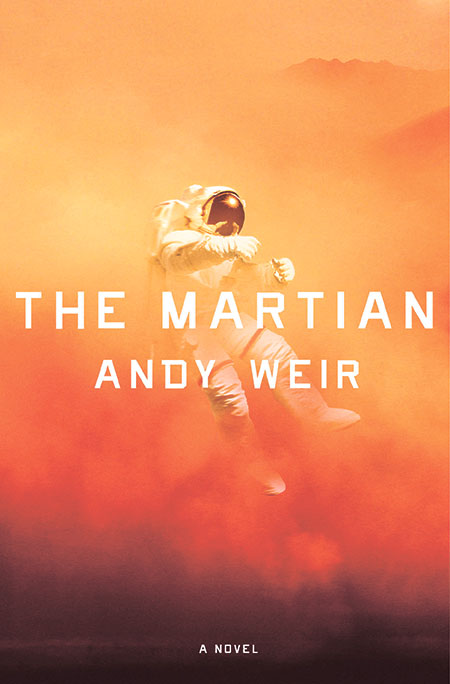
BOOK REVIEW: The Martian by Andy Weir

The MartianThe Martian by Andy Weir

My rating: 5 of 5 stars

Amazon page

If you like suspenseful science-fiction, humor, and are fascinated by science, you must read this book. I’m not kidding.

The premise is a simple cast-away story, except that it takes place on Mars—an environment in which a human can’t last for seconds without a lot of properly functioning technology. Astronaut Mark Watney is left for dead when a severe storm blows in, impaling him with a piece of metal, knocking out his vital statistics monitor, and blowing him into a drift. Having lost visual contact with Watney, showing no vital statistics, and facing the toppling of the crew’s escape vehicle by high winds, the mission commander decides that she can’t risk the lives of the entire crew to cart Watney’s body back home. The thing is; Watney isn’t dead.

The book is a rollercoaster ride of highs and lows associated with events that nearly kill Watney—either in an instant or by making his long-term survival impossible. The botanist / engineer must figure out how to survive for four years (until the next Mars mission is due—if it doesn’t get cancelled) with less than six months of supplies. (The mission was supposed to be one month but was aborted in the first week, but there were five other crew members whose rations were left behind.) If you think Tom Hanks had it bad in Cast Away, imagine having to produce food on Mars.

This book taps into the visceral feeling that works so well in the movie Gravity (but Weir does more homework on the science.) For tension, it’s hard to beat being adrift in space, utterly isolated from one’s species—or any species for that matter–and knowing you will die when your resources run out.

The main character, who is the only character for the first six chapters or so, is intensely likable. Mark Watney is funny, intelligent, self-deprecatingly humble, and can confidently problem solve in the midst of any crisis. If there’s a critique of the realism of this story (as sci-fi goes it is extremely realistic), it’s that Watney is preternaturally skilled at adapting to complete solitude. However, I don’t deduct for this, because if it showed him at the depths of despair that someone in his circumstance would inevitably go through, it wouldn’t be nearly as pleasing a book to read. If you’ve read a lot about sensory deprivation and / or what happens to prisoners over long stints in solitary confinement, I’d suspend the disbelief that might come from that knowledge and just accept that Watney is exceedingly good at saying, “Pity-party over. It’s time to make this work.” In short, humorous Watney is just a lot more fun to read than would be a despondent astronaut.

I think I’ve been clear that this is an outstanding book, and everyone should read it. I guess if you absolutely hate science (of any kind–because there’s botany, biology, physics, chemistry, engineering, etc. all rolled up into this book), you may find that it’s hard to stick with the glut of scientific / engineering discussions coming at you. Still, you shouldn’t hate science that much—what the hell is the matter with you. Weir writes in a readable style and the reader doesn’t get awash in minutiae. (For example, Watney even names the unit kilowatt-hour/sol [sol=a Mar’s day] the “Pirate-ninja” to make it more palatable and humorous.)

Read it. You’ll like it. Also, don’t wait because the movie is supposed to come out in the Fall.

View all my reviews

READING REPORT: January 30, 2015

Welcome to my second weekly dispatch on what I’ve been reading. Owing to my weird approach to reading, I tend to finish books in clusters, and this week I polished off the novel The Martian, the horror short story anthology 999, and three nonfiction books (Principles of Tibetan Medicine, The Key Muscles of Hatha Yoga,  and How Pleasure Works.) The only one of these that I’ve completed a review on is Principles of Tibetan Medicine, but reviews of the others will be in the works in the upcoming week(s.)


The star of my completed pile was Andy Weir’s The Martian. It’s a spectacular science fiction read that’s engaging from beginning to end. Readers who love science will find it particularly fascinating and well-researched. For the yogis and yoginis out there, Ray Long’s book on muscles as applied to Hatha Yoga is well-organized, easy to follow, and easy to use.


The completion of several books this week creates openings in what fiction and poetry I’ll be reading on Kindle in the coming weeks. Drum-roll please… I will be starting the following books this week:


MoYan_LDWMO

1.) Life and Death Are Wearing Me Out by Mo Yan: Mo Yan won the Nobel Prize for Literature back in 2012, and this 2006 book is about a benevolent land owner who is killed on orders by Mao Zedong, and is subsequently reincarnated as a series of farm animals.


IHaveNoMouth

2.) I Have No Mouth And I Must Scream by Harlan Ellison: The title of this collection of short stories is also the title of the most prominent piece in it. The 1968 Hugo winning story is a post-apocalyptic tale of artificial intelligence run amok.


Aeneid

3.) The Aeneid of Virgil: I’m overdue to read this epic poem by the famous Latin poet written during the first century B.C.


In nonfiction, I made an impulse purchase this week that I’m about half way through reading. It’s called Zen Mind, Strong Body and it’s by Al Kavadlo. I’m having minor buyer’s remorse, not because it’s a bad book, but because it turns out to be a collection of blog posts, and so I could have probably gotten all this for free by digging around the world wide web a little. (Moral: always read the fine print on the dust jacket. I wouldn’t mind, but it was a bit pricey for rehashed blog posts.) Kavadlo is a personal trainer and advocated of calisthenics and advanced bodyweight exercises, and he has many interesting ideas on both mind and body. It has provided some interesting food for thought, but I don’t really need the hundreds of pictures of the author with his shirt off.

ZenMindStrongBody


I’m about halfway through Nassim Nicholas Taleb’s latest book, Antifragile, and would like to make some headway on that in the upcoming week. While I’m a fan of Taleb’s work, I’ve gotten bogged down in this one because it keeps going and going and going on about a rather simple concept–i.e. that some things become stronger or more robust when exposed to stressors. I’m not sure the book needed to be this long. I suspect that Taleb is the kind to throw a world class tantrum if an editor took a hatchet to a word of his writing–and now he has the following to make it work. He’s a smart guy and raises many excellent points, but he seems like a major prima donna. At any rate, maybe he’ll surprise me in the second half with something novel and interesting–in lieu of endless restatement of his (admittedly fascinating) thesis.

Antifragility


I also started a book a few weeks back called Zen and the Brain by James H. Austin that I’d like to get back to. It examines what science has to say about the practice of meditation from the perspective of a neuroscientist who’s also a Zen practitioner.

Zen&Brain


At the end of last year, I did a post about the Book Riot 2015 Read Harder Challenge. It’s a sort of scavenger hunt for readers. There are 25 categories of books, of which one is supposed to read at least one book each. If you can count the same book for several categories (I don’t see why not as long as they fit the description) then I have so far covered seven categories. (Not bad for the first month of the challenge.)

-Collection of short stories: 999: New Stories of Horror and Suspense

Author of a different gender: Tears in Rain (Rosa Montero) and Principles of Tibetan Medicine (Tamdin Rither Bradley) [Both females]

Science-fiction novel: The Martian

Collection of poetry: Leaves of Grass

A book recommended for you by someone else: The Key Muscles of Hatha Yoga

-A book originally published in another language: Tears in Rain  (Spanish)

A book published in 2014: The Martian (Some might dispute this as it was self-published in 2011, but not picked up by a publisher until 2014.)

READING REPORT: January 23, 2015

If I were a kid today, I’d be diagnosed with ADD in a heartbeat. I rarely read one book straight through. However, I read a lot, and that means I switching from one book to the next–reading a chapter at a time. I do try to read no more than one book of a given type/genre at a time–often unsuccessfully, as you’ll see. With this in mind, I thought I’d experiment with a weekly post on what I’ve been reading that week.

Book-Review-The-Martian

Fiction: The novel that I’m currently reading is Andy Weir’s The Martian. This book is gripping. It’s considered to be one of the best–if not the best–science fiction works of 2014, although it was self-published in 2011. This is a great example of a book that couldn’t get published despite being spectacular, and which will now make a bazillion dollars. It also explains how a 2014 novel is set to have a big budget movie adaptation come out in late 2015. This book is like the movie Gravity set on Mars, except that it’s smarter.  It taps into that visceral fear of what it would be like to die alone in space–not in a flash but with time to know you are going to die. An unlikely, but plausible sounding, set of circumstances result in astronaut Mark Watney being left for dead on the surface of Mars. But, of course, he’s not dead. Watney has to be creative to figure out how to live for four years in hopes that the next manned Mars mission will go forward as planned. It’s a roller coaster ride between him thinking he will surely die and him coming up with clever solutions. If you are into science, it’s particularly intriguing. I’m about 20% of the way through.


Foreign Fiction: I’ve also continued to read a Hungarian novel called Quarantine in the Grand Hotel by Jenő Rejtő. This is a silly (in a good way) locked-door murder mystery. I picked it up in Hungary over the holidays, and will probably finish it in the next week or so. (I’m about 2/3rds of the way through, and it’s only a 160 page book.) It’s short, highly readable, and humorous.

I also read a chapter from The Mandala of Sherlock Holmes by Jamyang Norbu. A number of authors have picked up the mantle of Sherlock Holmes from Sir Arthur Conan Doyle.  (Not to mention TV shows and movies.) This book is published in India by a Tibetan author who imagines Sherlock Holmes traveled to India and Tibet after he was believed to have been killed (along with Professor Moriarty) in Switzerland. (Going over the falls as depicted in the second Sherlock Holmes movie featuring Robert Downey Jr.) There are three parts to the book: India, Tibet, and Beyond. I’m in the last couple chapters of the first part, most of which takes place in Bombay.


Short Stories: I’m about 85% of the way through 999: New Stories of Horror and Suspense. This is a collection of short fiction of horror / dark suspense. It features authors such as Joyce Carol Oates, Stephen King, Neil Gaiman, Eric Van Lustbader, and David Morrell.  All of the  works are short stories except for a novella/short novel by William Peter Batty. The novella is the last piece, and I’ve just started part II of it.

999_Horror&Suspense


Martial Arts: I just finished Dr. Anthony Catanese’s The Medical Care of the Judokabut I posted a review yesterday so I won’t get into that book. My next martial arts book will be The Pyjama Game by Mark Law, but I haven’t yet begun it.


Yoga: I’ve been reading two books related to yoga this week. I just finished Chapter 2 of Coulter’s Anatomy of Hatha Yoga. This chapter dealt with the anatomy and physiology of breathing. This book is an excellent resource for yoga teachers, but it’s pretty dense–which may explain why I’m only on Chapter 3. Not only does the chapter give general information on respiration, it also provides information specific to various yogic breathing methods such as abdominal, yogic, thoracic, paradoxical, and diaphragmatic.

The second yoga book I’m reading is Singleton’s Yoga Body, which is a history of yoga postural practice (asana practice). This book presents a controversial thesis, which is that postural practice (asana) wasn’t really a part of mainstream yoga until quite recently, and that it’s as much a product of what happened in the Western world in the early 20th century as it is a result of Indian yogic traditions–if not more. Having finished the first three chapters (about 30% through), I’m not sure whether I buy his argument or not. He has some documentary evidence on his side, but I know there is also a proclivity to equate the current era in which everybody documents laundry day with the past in which many people were much more secretive. It’s also often not true that the most vocal are not the mainstream. He may be correct, but he has yet to wow me. (Part of his argument is people like Max Muller and HP Blavatsky found hatha yoga [the style which most emphasizes posture] to be the domain of conmen and beggars.)


AnatomyHathaYoga_CoulterYogaBody_Singleton


Miscellaneous Nonfiction: I’ve got about 70 more pages to finish in a book called How Pleasure Works by Paul Bloom. As the title implies, this book is about the science of why people get pleasure from various things from food to sex to freaky sex to art to music, etc. The primary thesis is that there are hidden essences that are the source of pleasure. The chapter I just finished talked about an interesting study in which violinist extraordinaire Joshua Bell went into a subway station and played his $3.5million violin, and barely netted $30–even though there were people passing him who’d paid $200 to hear him in his tuxedo at a concert hall later that evening. The chapter also talked about art forgeries, and how some art is valuable when it’s associated with a famous painter and worthless when it’s a forgery by a presumably equally skilled forger (I say equally skilled because these individuals have been able to pass their work off to experts as a painting by a famous artist. In some cases, they weren’t forgeries but rather originals in the style of the famous artist and submitted as an unknown work found in a basement somewhere.)

HowPleasureWorks


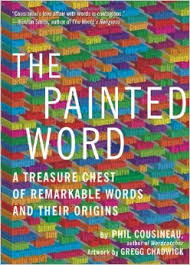
I also finished the letter “B” in the book The Painted Word  by Phil Cousineau. This book is organized like a dictionary, except that it only contains certain English language words that the author finds particularly intriguing, and it gives background on usage and how the meanings have migrated. If you love language, you’ll find this book much less painfully boring than I have made it sound.

Painted Word


That completes the books I’ve been reading over the past week. I did purchase two books this week, but they’re far down the queue to be read. One is the graphic novel The League of Extraordinary Gentleman by Alan Moore, and the other is Right Ho, Jeeves by P.G. Wodehouse.

BOOK REVIEW: Neverwhere by Neil Gaiman

NeverwhereNeverwhere by Neil Gaiman

My rating: 5 of 5 stars

Amazon page

Neverwhere taps into a reader’s imagination and the fantasy that beyond closed doors and locked grates, beyond the prying eyes of common men, lies something magical—not just the mundane sewers and conduits our rational mind tells us exist there. This magical world is “London Below,” and–to a lesser extent–rooftop London. It’s a world that exists below the workaday London that we know. It’s a London of angels and cutthroats, witches and warriors. It’s a London trapped in time, but unconstrained by the laws of physics or men as we know them.

The lead character is Richard Mayhew, a perfectly normal resident of London Above. He has a fine—if boring—job in the business world, and a fiancé isn’t right for him, but who he believes is close enough for an imperfect world by virtue of her being pretty, smart, and capable.

Mayhew is living an ordinary and comfortable life until he and his girlfriend come across an injured young woman on the street. While his fiancé, Jessica, steps over the girl because the couple are on their way to meet Jessica’s VIP boss, Richard refuses to leave the girl. The injured girl is a resident of London Below, and had collapsed to the sidewalk after escaping from the two London Below master assassins who killed her family. It turns out the girl, Door, is from a family whose magical gift is the ability to open doors—even doors that are locked, sealed, or that no one even recognizes the existence of. As no good deed goes unpunished, Richard’s assistance of Door pulls him into the world of London Below, and he soon finds that he’s almost invisible to the residents of London Above and that he’s been forgotten by Jessica, his friends, and his coworkers.

The rest of the book is a hero’s quest in which Door is trying to discover who ordered the assassination of her family and why, and Richard is trying to find out whether (and, if so, how) he can get back his life in London Above. Because the fates of Richard and Door are intertwined, they travel together along with a bodyguard named Hunter and a Marquis / conman in the debt of Door’s father named the Marquis de Carabas.

I enjoyed this book immensely. It’s highly readable and the reader will be drawn to the fate of the characters. It has that page-turner quality. I’d highly recommend this book for anyone who reads fantasy / speculative fiction–or who doesn’t but is willing to give it a try.

Neil Gaiman is, as always, the master storyteller. When the story calls for humor, it is genuinely funny. When it’s time to be scary, it creates shivers. The storytelling was good enough that I was willing to overlook an ending that—in less capable hands—would have felt flat and too easy.

I didn’t realize that Neverwhere was based on a BBC miniseries. In other words, for a change the book is based on the movie rather than the other way round. However, the book does concisely but vividly portray setting—a task that one might imagine being easier having gone in this developmental direction. And, of course, setting is extremely important in this book. The distinct feel of London Below, London Above, and Rooftop London must be conveyed.

Here is a link to a piece of said BBC miniseries:

View all my reviews