There was a little girl,
Who had a little curl,
Right in the middle of her forehead.
When she was good,
She was very good indeed,
But when she was bad she was horrid.

Category Archives: Children
PROMPT: Outgrown
Are there any activities or hobbies you’ve outgrown or lost interest in over time?
Well, having an imaginary friend is adorable at nine, but at ten they institutionalize you. So I would say, yeah.
“Where Go the Boats?” by Robert Louis Stevenson [w/ Audio]
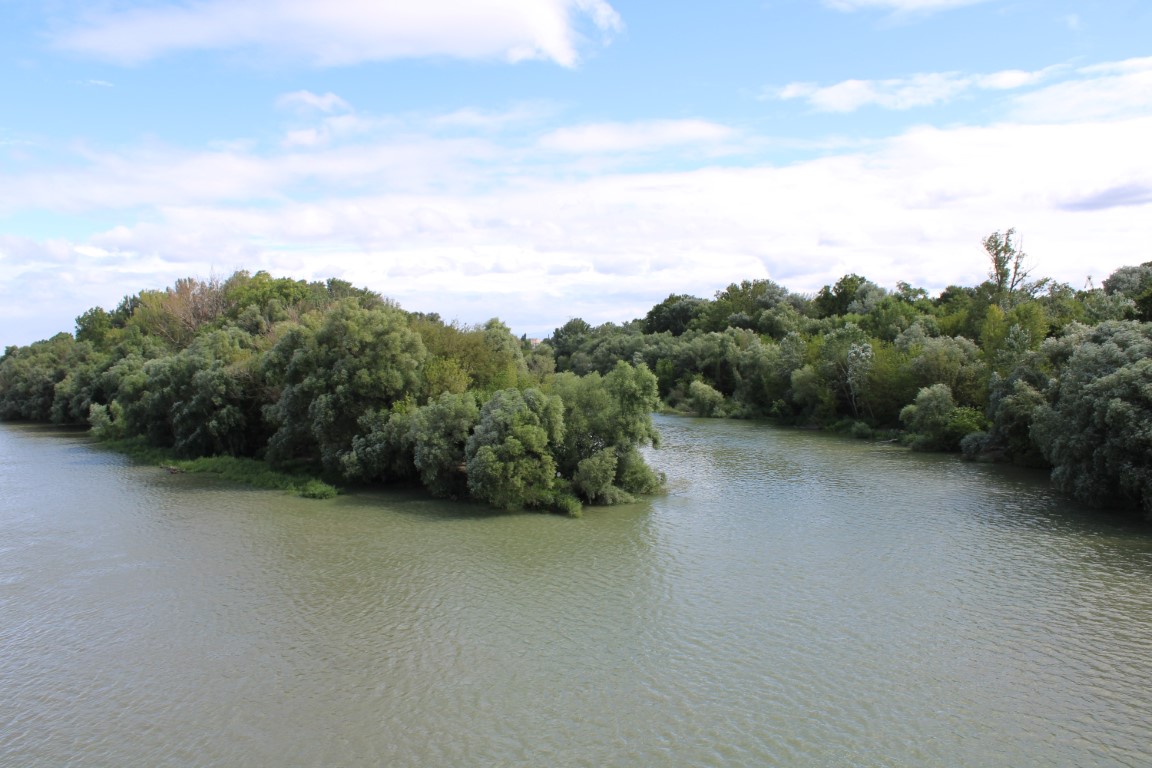
Dark brown is the river,
Golden is the sand.
It flows along for ever,
With trees on either hand.
Green leaves a-floating,
Castles of the foam,
Boats of mine a-boating --
Where will all come home?
On goes the river,
And out past the mill,
Away down the valley,
Away down the hill.
Away down the river,
A hundred miles or more,
Other little children
Shall bring my boats ashore.
BOOKS: The Crescent Moon by Rabindranath Tagore
The Crescent Moon : Poems and Stories [Paperback] [Jan 01, 2017] Rabindranath Tagore by Rabindranath TagoreMy rating: 5 of 5 stars
Available free at Project Gutenberg
Amazon.in Page
This is a collection of forty poems that are all connected by the theme of childhood. Many are in the voice of a child, but others are in a parent’s voice as he contemplates the nature of youth and how life has changed — or simply as he looks upon a sleeping infant. Some are brief stories or vignettes and others are scenes or philosophical reflections. Among the more well-known inclusions are: “Playthings,” “Paper Boats,” “The Gift,” and “My Song.”
This is Tagore at his most playful, but it retains his usual clever musing.
View all my reviews
PROMPT: Kid at Heart
What does it mean to be a kid at heart?
The capacity to see humor in flatulence, even when it’s your own.
Oh, wait, maybe I’m thinking of a “kid at fart.”
Childhood Limerick
BOOK REVIEW: How to Live Like the Little Prince by Stéphane Garnier
How to Live Like the Little Prince: A Grown-Up’s Guide to Rediscovering Imagination, Adventure, and Awe by Stéphane GarnierMy rating: 4 of 5 stars
Amazon.in Page
Out: April 12, 2022
Given my reading of this book, I’m clearly a huge fan of Saint-Exupéry’s “The Little Prince,” and yet I had lukewarm regard for this book and found it a slog to read – despite its short page count and readable style. Don’t get me wrong; the writing is fine and the book raises some interesting points, but still I came away unsure that this book has a reason to exist. Ultimately, I figured out what bothered me is that it’s a little bit like going to hear your favorite comedian and then spending twice as long listening to someone else explain and elaborate upon their jokes. “The Little Prince” is brilliant, but it’s a simple book with a simple theme and simple lessons, and I don’t know what value is added by even a skillfully crafted self-help elaboration upon the book. As far as stars go, I give the book the benefit of the doubt based on the fact [full disclosure] that I almost never like self-help books, and exceptions to that rule only come about if the book can teach me something about which I had no idea or if it is in itself so clever or beautiful of language that I’m moved.
If you liked “The Little Prince” (and, note: you’ll have to have read it for the references in the book to make much sense,) and you like self-help books, this will probably be right up your alley. But if you like “The Little Prince” and aren’t a self-help fan, then just read the original story again.
View all my reviews
BOOK REVIEW: Children’s Literature: A Very Short Introduction by Kimberley Reynolds
Children’s Literature: A Very Short Introduction by Kimberley ReynoldsMy rating: 4 of 5 stars
Amazon.in Page
To make an ineloquent (and possibly disturbing) comparison, what’s been said to be true of pornography is also true of children’s literature – i.e. we take for granted that we’ll know it when we see it, but trying to define its boundaries runs into difficulties at every turn. One imagines an illustrated book, simple of language and subject matter, featuring a child as protagonist, and avoiding the most traumatic or shocking subjects and themes, but none of those conditions has proven necessary and / or sufficient. Reynolds presents a landscape of children’s literature (and the debates swirling about it) through history, one that keeps in mind that the subject is slippery.
The book consists of six chapters and some ancillary matter. The first chapter sketches an overview of the history of children’s literature [restricted to English language books.] Here we see the changing face of kid’s lit over time, and learn how children’s literature only gradually became a distinct field, moving from the earliest English translation of “Aesop’s Fables” in the 15th century to the multimedia literary experiences of today.
Chapter 2 is the longest chapter and it investigates the many ways children’s books have been studied, and to what ends. As with adult literature, there are many different perspectives by which literary works can be analyzed, and many that apply to adult books are also seen here with their own child-oriented considerations: e.g. psychoanalytical, gender-centric, linguistic, stylistic, and historical. There are also some uniquely child-applicable considerations that are presented as well, such as how well adults can write in ways which optimally resonate with kids.
Chapter 3 investigates how the field has moved beyond the book to convey stories – old and new – in ways that might be more effective in reaching a diverse body of children. Emphasis is given to how the story experience can be more interactive and flexible to the needs of a broad audience.
The fourth chapter is about genre. In one sense, children’s books are considered a genre, but then there are many cross-genre books such as science fiction or fantasy books directed at a youthful readership. Special focus is given to the family story. The advantage of the family story genre is that it’s one area in which the child can be expected to have some level of experience. [Even orphans will have some sense of interpersonal dynamics by which they can relate.]
The penultimate chapter is about children’s literature as a means to prepare children for a future, from personal level considerations of mortality to societal level issues like ecological tragedy. Children’s fiction that looks to the future has become an increasing trend in the modern era.
The final chapter is where Reynolds gets to the most controversial aspect of children’s literature, which is whether (and, if so, how) subject matter should (or shouldn’t) be limited. One worrying concern is that children’s stories can become thinly-veiled means of indoctrination into political or religious (or anti-religious) dogma. It’s not just a matter of adults having greater discernment, but also that they have greater freedom to choose what books are available to them. The other major issue is to what degree children should be protected from traumatic, complex, or controversial subject matter, e.g. sex, suicide, etc.
The ancillary matter mostly consists of graphics (often historic art / artifacts of relevance) as well as a references / further reading section that is arranged by chapter.
If you’re looking for a concise overview of children’s literature and the debates and challenges that exist around it, this book provides a quick outline of the subject which references many exemplary works that can be looked into for more in-depth investigation.
View all my reviews
POEM: Unbridled Exuberance

At the sight of I know not what,
something — or, maybe, someone —pointed out by his grinning granny,
I saw a boy run in place,
overcome by enthusiasm from the waist down —
like a cherubic Michael Flatley sans the coordination, but with exuberance to spare.
At the sight of the boy,
I couldn’t help but ask myself when my idle setting got turned down so low.
Surely, once upon a time, there was something that so excited me that my limbs bypassed central control and spastically did their own thing…
but I can’t remember when.