BOOK REVIEW: The Drunken Botanist by Amy Stewart

The Drunken Botanist: The Plants That Create the World's Great DrinksThe Drunken Botanist: The Plants That Create the World’s Great Drinks by Amy Stewart
My rating: 5 of 5 stars

Amazon page


This book is about how plants are used in the making of alcoholic beverages from vegetative matter that serves as the primary ingredient in fermentation to obscure herbs and berries used to lend subtle flavoring. The book covers a lot of ground, being at once a guide to the chemistry of fermentation and distillation, a mixologist’s recipe book, and a guide to growing the plants used to make booze.

I will admit, if I weren’t such a neophyte to both subjects at hand – botany and alcoholic beverages – I probably wouldn’t have rated this book so highly. For me, almost every page offered new fun facts about alcoholic beverages, some of which I’ve consumed and many of which I never have. So if you have a high degree of understanding about one or both of these subjects, you may not find the book as intensely satisfying. Also, at times the book comes off a bit pretentiously – hardcore drunks probably don’t want to be shackled with so many rules for optimal alcoholic consumption (e.g. what type of glass they should drink a given drink from, etc.), but hardcore drunks are probably not a huge readership demographic. (It should also be noted that the reader gets some knowledge to fight pretentiousness as well, such as against gin drinkers who say they would never drink vodka when, in fact, they are drinking juniper berry-flavored vodka.)

The book consists of three parts. The first part describes fermentation and distillation and then offers two sub-parts dealing with the most everyday bases for alcoholic drinks (e.g. corn, grapes, potato, and wheat) as well as some of the more obscure and unusual objects of fermentation, respectively.

The second part delves into the plants that are added for flavoring or the like, and these are organized by: 1.) herbs and spices, 2.) flowers, 3.) trees, 4.) fruit, and 5.) nuts and seeds.

The final part gives some guidance on how some of these plants can be grown. It should be noted that this section is a bit thinner because a lot of information on growing the plants is covered in side-bars in the earlier sections and also this isn’t the book’s main thrust. The third part is similarly divided up between herbs, flowers, trees, berries & vines, and fruits & vegetables.

There are quite a few graphics, mostly in the form of line drawings, throughout the book – some are purely aesthetic and others are informative (e.g. drawings of plants.) There is also a recommended reading section that proposes further books to expand one’s understanding at the nexus of booze and plants. The book presents a lot of material in text boxes that set the information aside. These boxes include recipes, but also insights into how to best grow these plants with particularly emphasis given to how the process is optimized for those growing for beverage production (e.g. sometimes the optimal variety isn’t the most common variety.)

I enjoyed this book. It was readable, full of fun bits of information, and written in a light-hearted style. If you’re looking for a book on plants and alcoholic beverages, this is a good starting point. It doesn’t get too deep in the weeds but yet offers some obscure but amusing factoids.

View all my reviews

BOOK REVIEW: Lila Says by Anonymous

Lila SaysLila Says by Chimo
My rating: 5 of 5 stars

Amazon page


Lila Says is the tale of a star-crossed odd couple. The lead, Chimo, is an unemployed, 19-year-old, Arab man living in a Parisian government housing complex. Chimo’s life revolves around writing stories and getting by however he can. A fair amount of the book is about living a life of poverty in the ghettos of one of the world’s most expensive cities, but the core of it is about Chimo’s relationship with Lila.

While Chimo is awkward with girls and uncomfortable in sexual matters, Lila is an exhibitionist and – it seems at first – a nymphomaniac. She is a pretty blonde girl being raised by a Catholic aunt. Over the course of the novel, it becomes less clear that Lila is a nymphomaniac, and it’s possible that she just gets excited by causing arousal in others – particularly Chimo. In other words, it’s not so clear to what degree she is having sex, versus telling erotic tall tales. At any rate, the interplay between Chimo’s repressed nature and Lila’s unrestrained nature is at the center of the story. It soon becomes clear that part of the reason Lila has chosen Chimo is because he’s simultaneously safe and interested. That is, he can control his libido but doesn’t reject Lila’s flirtations. Chimo is surprised to find that Lila doesn’t talk to any of his friends the way she does to him, and – in fact – she doesn’t talk to them much at all.

This book is hard to rate. It’s definitely rough around the edges. However, as it’s presented as the journal of a young, unemployed man with minimal education that roughness contributes to an authentic feel. I have no idea whether it’s really a case like Go Ask Alice. (Go Ask Alice was presented as an anonymous manuscript written by a teen-aged girl whose life fell apart due to drug use, but it turned out to be written by a middle-aged woman whose life experience was nothing akin to Alice’s – though she was a therapist and youth counselor and thus had access to stories of those like Alice.) However, the text feels like it could have been hand-scrawled in the ruins of an abandoned building by candle light as described. (That is, if one discounts the British slang which takes one away from the “Arab man in a Parisian housing project,” but the book was originally published in French and so the English edition translation was made to invoke the same class level in its readership.) There are even a few footnotes about the state of the pre-edited manuscript that sell the meta-story of the book.

It’s also a great oversimplification to classify the book as erotica. It’s true that there is a great deal of sexual content in the book, and most of what Lila says, except toward the book’s end, is intended to be titillating. However, the book is also about living in poverty, selling blood to get grocery money and such. Furthermore, the book’s end ventures away from eroticism and into the realm of tragedy.

I found this book to be incredibly and surprisingly engaging. I might say I liked it warts and all, but I think it’s truer to say its warts contributed to making it more engrossing. I would highly recommend it for readers who don’t mind adult themes and who aren’t attached to happy endings (no pun intended.) I don’t mean to give anything away or to beat a dead horse. It’s just that if one picks the book up thinking of it as romance or erotica, one might feel betrayed. Better to think of it as a gritty work of fiction.

View all my reviews

BOOK REVIEW: Raoul Wallenberg by Ingrid Carlberg

Raoul Wallenberg: The BiographyRaoul Wallenberg: The Biography by Ingrid Carlberg
My rating: 5 of 5 stars

Amazon page


This is the most recent of the many biographies of Raoul Wallenberg. Wallenberg was a Swedish diplomat during the Second World War who is credited with saving thousands of lives. He was posted to Budapest with an assignment of issuing protective passports to Hungarian Jews. Hungary was a last bastion of Judaism among Nazi controlled / allied countries, but in the summer of 1944 they began mass deportation to the death camps in Poland. Protective passports from the neutral country of Sweden staved off deportation for many.

As dangerous as Wallenberg’s life was during his assignment to Budapest when he was constantly at odds with the Arrow Cross Militia (the Hungarian fascist party) and the Nazis who put them in power, the most intriguing part of Wallenberg’s life story may be his disappearance. In January of 1945, as he was seeking contact with the commander of the Red Army in Hungary to facilitate a post-War reconstruction of Budapest, he was arrested by the Soviets and surreptitiously moved to Lubyanka Prison in Moscow. The Soviets denied having Wallenberg, but facing overwhelming evidence from released prisoners who came into contact with Wallenberg in Lubyanka and Lefortovo prisons eventually made the Soviets recant. In the 1950’s they admitted they’d had him while making the suspect claim that he’d died of natural causes in 1947. There remains a great deal of mystery surrounding the case. Why they arrested Wallenberg in the first place? Why didn’t they release or exchange him like other foreign diplomats they had in custody. If they executed him – why’d they do it and why’d they do it when they did it. [There were claims by prisoners stating that they’d met Wallenberg in Gulag camps in the 1960’s and even into the 70’s (though the latter claims are more suspect.)]

In a bold move, this book is written in the old school style, which is to say chronologically. This may not seem odd for those who’ve been reading biographies and autobiographies for a long time. It’s how historians always used to write their books, and it certainly seems like a logical arrangement for the telling of historical events. However, the mode today is to start in media res, or in the middle of the exciting bits, and to sprinkle in only what is absolutely necessary of backstory as one goes along. Because of a combination of intense competition for one’s reading time and what seems like the diminished attention span of today’s average reader, it’s really quite brave for Carlberg to start with 150+ pages discussing: Wallenberg’s parents and grandparents, his days in America as an architecture student studying a form of building design that would be considered virtually useless when he returned to Sweden, and his attempts to get started in business in the years between his return to Sweden and his entry into the diplomatic corps. That said, this first of the three parts that make up the book is well done and more interesting than one might expect. It doesn’t suffer from the painful dryness that is so common when one discusses ancestors and the subject’s childhood. It’s not just that Carlberg keeps an eye on what data might be useful for the reader later in the book. In fact, I’d say that what makes the first part interesting isn’t that it shows us how Wallenberg’s youth forged him into an inevitable hero. Rather, it’s that we come away with a picture of a somewhat shiftless kid from the least wealthy limb of a family tree of a rich family. It’s not that he was born to be a hero that makes his background fascinating; it’s that he was in many ways an ordinary fellow whose decisions at critical moments made him a hero.

As mentioned, the book’s 23 chapters are divided into three parts. The first part, as described, is Wallenberg’s background. The second part explores his actions while posted to Budapest. This is when he had to deal with the likes of Adolf Eichmann and – at the very end – rogue elements of the Arrow Cross Militia who were engaged in killing sprees. The third part covers the period of Wallenberg’s arrest and disappearance at the hands of the Soviet Union. Many of the popular biographies of Wallenberg were written in the 1980’s, during a period of reawakened interest in his fate but when the Soviets were just beginning to loosen up, and so this version does contain a little bit of new information that came out during the Glasnost years and subsequently.

The book has a substantial group of black and white pictures of relevant people and documents. There are also modern-day descriptions of the author’s visits to various key places in Wallenberg’s story including various offices and residences, as well as Lefortovo prison. These are short (a few pages at most) and are interspersed with the chapters around which that locale was relevant. Some of them involved talking with people who had insight into Wallenberg’s life and other places are occupied by individuals with little to no knowledge of Wallenberg. There is a detailed accounting of sources, including both a bibliography and lists of interviewed individuals and unpublished sources.

I found this book fascinating. I will admit that I didn’t get hooked right away. While there was enough in part one to keep me interested, the book doesn’t become truly gripping until the second and third parts. In part three, it becomes genuinely hard to put down.

That said, if one is hoping for a work that resolves all questions, that work doesn’t yet exist, and it’s less and less likely that it ever will given the way the Soviets purged Wallenberg from documentation (very few references were found during the Glasnost era investigation) and apparently cremated his body. Few people remain alive who were involved and their memories are adversely effected by time. Still, Carlberg offers excellent insight into what went wrong on the Swedish side that may have contributed to Wallenberg’s demise. The Swedish diplomat jumped to conclusions that probably hurt Wallenberg’s survival odds. There are a few brief scenes in the book that are visceral, and one of these involves the degree to which that one diplomat was haunted by his missteps in the case. (Another involves a cudgel-wielding former KGB-interrogator who threatened Wallenberg’s step-brother when the relative tried to visit to find out more. If the sparse documentation is to be believed, the retired KGB man may have been the last person to speak with Wallenberg. But the man clearly wanted to put that behind him.)

There were just a couple of questions that I wish had been addressed by the book that weren’t. Carlberg is keen to point out that it appeared that the Soviets were hinting that a teen-aged Baltic refugee, Lydia Makarova, could be a possible exchange for Wallenberg. (The Swedish diplomats were too dense to get this at first because one had concluded Wallenberg died in Hungary and another – higher up — didn’t believe in quid pro quo life trades.) I can see how this Lydia Makarova wasn’t really relevant to Wallenberg’s story. She was just an extremely high value subject, but I couldn’t help but wonder why they would want a teen-aged girl so badly that they’d have been willing to take the public relations nightmare of admitting they abducted a diplomat regarded as an international hero. With the book weighing in at over 600 pages, I can see why there was reticent to investigate this further just to scratch an itch of curiosity, but still the itch remains.

I’d highly recommend this book. I’ve read other books on Wallenberg, and believe that this book offered substantial value added – particularly regarding the investigation of Wallenberg’s disappearance.

View all my reviews

BOOK REVIEW: Octavio Paz / Selected Poems ed. by Charles Tomlinson

Selected PoemsSelected Poems by Octavio Paz
My rating: 5 of 5 stars

Amazon page


Octavio Paz was a Mexican author, poet, and diplomat who won the Nobel Prize for Literature in 1990. (By separating “author” and “poet” I mean that he wrote in a variety of forms, and he is as famous for his essays as for his poetry.) His poetry reflects not only Mexican culture and sentiments but it also displays an infusion of the flavor of places he was posted or visited – e.g. there are many references to India and Hinduism as Paz was the Mexican Ambassador to India in the 1960’s. That variety is the spice of life is a sentiment Paz seems to have embraced. The poems included present examples of both short and long form, as well as prose poems and free verse. There is even concrete (visual) poetry in which the words are formed into an evocative shape. Also, as hinted at, there’s a mix of Eastern and Western worldview in these poems.

There are a number of different “Selected Poems of Octavio Paz” collections available. The details of the version I read are ISBN: 0140422463, first published in 1979 by Penguin Books and edited by Charles Tomlinson. The various collections tend to share many of Paz’s “greatest hits” and so the reason I mention the publishing details isn’t because you’re likely to get an entirely different selection of poems, but rather the features and translation skill may vary from one edition to the next. Most notably, the paperback edition I read is a bilingual edition (Spanish and English.) That didn’t do much for me as I’m not a Spanish speaker, though I do have an interest in the sound of poetry. While I can’t speak to the trueness of translation, I found the Tomlinson text to be evocative and effective.

The edition mentioned includes 56 poems drawn from five different poetry collections, ranging from the late 1940s to 1976. (Paz died in 1998.) Paz’s early collections favor prose poems and he moves more into free verse and short form poems later.

I enjoyed this collection. I was particularly enamored of Paz’s presentation of surrealist imagery and his questioning of reality. I would highly recommend poetry readers take in some of Paz’s work.

View all my reviews

BOOK REVIEW: Descartes’ Error by Antonio Damasio

Descartes' Error: Emotion, Reason and the Human BrainDescartes’ Error: Emotion, Reason and the Human Brain by António R. Damásio
My rating: 5 of 5 stars

Amazon page


I’ve joked that there must be a law requiring any author writing a book on neuroscience for a popular audience to tell the story of Phineas Gage. This book is no exception. Its first couple chapters explore the case of Gage in detail. For those who don’t read much on this subject, Phineas Gage was a foreman for a construction company. By all accounts he was a reliable and solid individual, respected by his employees, trusted by his employer, and beloved by his family. Then one day a four-foot tamping rod was blown through his skull – literally, in one side and out the other. One might think that having a chunk of brain skewered out by a steel rod on a gunpowder-fueled ride through the skull would leave one – at best — a glassy-eyed, drooling, catatonic lump. Surely, a steel rod would wreak more havoc than the narrow needle used in lobotomies? However, what makes Gage’s story fascinating is that the injury resulted in no readily apparent disruption in cognitive function. Gage could still speak fluidly. He retained his memories. He could do math at the same level as before. However, this isn’t to say that the hole through his brain left him unchanged. The even temperament that made him an ideal employee and that endeared him to friends and family was gone. Gage became angry and unreliable.

So what is the relevance of the Gage story to Damasio’s book? Quite a lot, actually. Damasio’s book is about emotion, its influence on decision-making, and how bodily states create emotion. In parts two and three of this three-part book, after introducing the reader to the role of the brain in emotion via the cases of those with selective brain damage, Damasio lays out an argument for what he calls the “Somatic Marker Hypothesis” which says that bodily states are what create the sensations that we associate with emotion. The title-referenced error made by Descartes will be apparent to those familiar with Cartesian dualism. Descartes believed there was a dualism between mind and body – i.e. that there was this physical stuff that got us about from place to place, but there were these intangible thoughts and feelings that were matter-independent that were the makings of mind and which were really you (i.e. you think, therefore you are.) Damasio believes that you cannot separate what it feels like to be you from the body and all its hormones, neurotransmitters, vital statistics, neuronal firing, etc.

The book consists of eleven chapters divided into three parts. In the first part, the author lays out not only the case of Gage, but other examples of individuals who had injury or illness in the brain that disrupted emotion and its influence on decision-making. We learn that an unemotional being isn’t like Spock, but instead is paralyzed by indecision. It turns out that it’s emotion that give us a kick, particularly when he have no sound basis on which to make a rational judgement. The second part draws the connection between body and our emotional self, culminating in a description of the Somatic Marker Hypothesis. The final part describes how the Somatic Marker Hypothesis could be tested and where this line of study seems to be going. The book is annotated and has a bibliography as one would expect of a scholarly work – even one written for a popular audience. The book has a few graphics – graphs, charts, and diagrams, but not very many and of a clear and simple nature.

I’d highly recommend this book for anyone interested in the working of the mind. It’s a thought-provoking look at what it means to be an emotional being and challenges our preconceptions about feelings.

View all my reviews

5 Works of Nonfiction That May Be [at least in part] Fiction

NOTE: There are many famous examples of books presented as nonfiction that turned out to be partially or completely fabricated (e.g. Go Ask Alice, A Million Little Pieces, Three Cups of Tea, The Teachings of Don Juan, and Papillon are examples that spring to mind.) That’s not what I was going for when I started this list. Instead, I was thinking of examples of books that may well be true to the best of the author’s knowledge, but which may also be examples of false memory syndrome. I became interested in this while reading Julia Shaw’s The Memory Illusion, which discusses how faulty memory can be — to the point that people can be led into false memories of something as traumatic as committing crimes that never occurred. Meredith Maran wrote a book entitled My Lie: A True Story of False Memory about what she discovered were false memories of childhood sexual abuse. So, I’m not saying these books are fabrications, and — for all I know — some may be completely true. After all, some of the featured individuals think they were exploited by the MK Ultra mind-control shenanigans, and some of them may have been, but it’s also possible some weren’t.


5.) Secret Weapons by Cheryl and Lynn Hersha: The Hersha sisters say they were in a program that turned them into femme fatales.


4.) Psychic Warrior by David Morehouse: I read about Morehouse in Jon Ronson’s The Men Who Stare at Goats. Sadly, it’s not in question that the military maintained a program of psychics, nor that Morehouse was involved in said program. What is in question is the degree to which the program had successes.


3.) Communion by Whitley Strieber: This is the most famous alien abduction story. I don’t know what really happened, but I seriously doubt it’s what the author proposed.


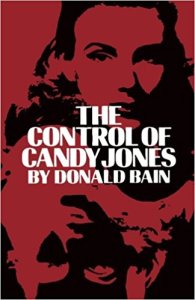
2.) The Control of Candy Jones by Donald Bain: This is a more well-known case similar to that of the Hersha sisters in which a woman was said to be reprogrammed by a nefarious psychiatrist in a mind control program. Candy Jones was famous as a pin up girl. After she got married, her behavior changed radically, and her husband asked her to participate in sessions of hypnosis which are said to have turned up a buried second personality.


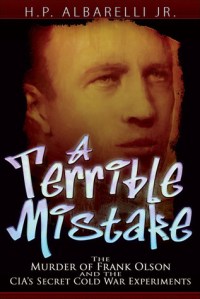
1.) A Terrible Mistake by H.P. Albarelli Jr: This is another example of a case in which there are certain remarkable facts that aren’t in dispute, but the degree to which the fine details are accurate is hard to judge. The fact is that Frank Olson was a biologist in the employ of the government, he was dosed with hallucinogenic substances, and thereafter he took a fatal plunge out of a hotel window. Whether he was murdered as a cover up or just had a bad trip has always been an open question.

BOOK REVIEW: Mad Country by Samrat Upadhyay

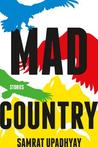
Mad CountryMad Country by Samrat Upadhyay
My rating: 5 of 5 stars

Amazon page


I’ve recently started reading at least one work of literature from each country I visit, and I picked this book up in Nepal as a first take on that country through the lens of literature. I couldn’t be happier with my selection. This book provided exactly what I was looking for in such a book, and more. What I want from such a book is insight into culture, lifestyle, and politico-historical context that can be difficult to witness through travel. Traveling a new country is like dating a new person; one doesn’t see the rough edges for some time. (Usually the relationship – in either case — is over before one sees into the murky depths.)

Over the course of eight stories, Upadhyay not only gives one insight into the nature of life for a variety of Nepalis (e.g. rich, poor, and middle class as well as young / progressive v.) older / conservative), he also shows the life of a hippie ex-pat gone native as well as presenting the worldview of a Nepali abroad (i.e. in America for college.) Where this book exceeded my expectations was in the skilfulness of tension-building employed in the stories. Often a book that achieves the aforementioned objectives does so in a way that is flat on story because it takes the character-centric orientation common in literary fiction. These stories are gripping as well as insightful, and don’t abandon story for character. It dances a beautiful line in that regard.

The first of eight stories tells of the trials and tribulations of an editor of a hard-hitting journalistic magazine, and the dual challenges she faces in taking on a corrupt regime while at the same time she has a friend who is going through a messy breakup. However the editor juggles these competing demands, we know she won’t escape some guilt of failing someone important to her.

The second story is about a rich boy whose life is tormented by the fact that his mother abandoned him and his father and moved on to form a new family. The boy takes to impersonating a beggar, secretly hoping his mother will see him and will be shocked into change. The story is also about the young man’s wake up call to the fact that he’ll never have the killer instincts bred by necessity into those less fortunate that are arrayed against him.

The third story is about “the Sharmas,” a dysfunctional Nepali nuclear family in which the mother is pure shrew, the father is trying fumblingly to have an affair, the son is a dim-wit, and the daughter is dating a young man who everybody seems to think is out of her league.

The fourth story is about a girl in the early 1980’s Kathmandu who goes from the drug-addled life of a Freak Street hippie to going full native. Here we see what draws the foreigner to Nepal and to Nepalese people, as well as how attempts to escape into another culture can be as troubled as attempts to escape into drug-induced euphoria.

The fifth story is by far the longest and might be classed as a novella. It’s about a young man who becomes obsessed with an African girl that he rescues in Kathmandu. The piece has a very dream-like quality to it, and through much of the story one is left unclear as to what is real and what is the product of the lead’s mind. In fact, the title “Dreaming of Ghana” suggests this imagined state of affairs.

The sixth story is the shortest, and – as its title suggests – it’s about an “Affair before the Earthquake.” The story evokes the emotion of world events that cleanly bisect our lives.

The eponymously titled penultimate chapter follows a wealthy and powerful woman who is “disappeared” by a corrupt authoritarian regime when she tries to look into the similar disappearance of her son. It’s a fascinating tale about a prominent real estate developer who is disabused of the notion that she is too powerful to be man-handled by the State. We see her transformation as a prisoner as the wind is taken out of her sails until one wonders whether she would ever be able to cope in her old life after being cowed by prison life.

The last story, like the fourth, turns things upside-down a bit. In it we find a Nepali student abroad who finds himself out in the cold because of his strong views on race. He discovers he’s at odds with the other foreign students because he thinks they should be more outraged about the bias displayed against them. He identifies with the plight of blacks, but they don’t see him as one of them.

This is an intense little collection of stories and I’d highly recommend it. The stories are well-crafted and keep the reader intrigued.

View all my reviews

BOOK REVIEW: Bring Me the Rhinoceros by John Tarrant

Bring Me the Rhinoceros: And Other Zen Koans That Will Save Your LifeBring Me the Rhinoceros: And Other Zen Koans That Will Save Your Life by John Tarrant
My rating: 5 of 5 stars

Amazon page


This book is an examination of fifteen classic Zen koans selected by John Tarrant, founder of the Pacific Zen Institute (PZI.) Koans are statements or stories that are designed to help students of Zen Buddhism escape their usual ways of thinking because the absurdity of koans cannot be meaningfully answered with the usual approach based in logic and reason. Even if the concept isn’t familiar, readers are sure to have heard the famous koan: “What is the sound of one hand clapping?” [Though one may have missed the value as a tool of the mind, and dismissed the koan as a sage’s attempt to be abstruse and esoteric.]

Each chapter addresses one koan in great detail. First, the koan is presented in a simple fashion. It should be pointed out that some of these koans are a single line and others are as long as several paragraphs. Next, there is a sort of introduction to the concept or point being addressed in the koan. Tarrant knows the value of story, and this frequently involves a narrative approach. Next, there is a section describing the koan in more detail than in which it was first introduced. Here the author elaborates and provides background. The final section of each chapter is about “working with the koan” and offers a bit of insight into how to start considering the lesson of each koan.

I enjoyed this book. It’s a good selection of koans that cover a wide range of styles and approaches. As I mentioned the author uses stories and anecdotes – both historical and contemporary – to help get his point across. The titular use of a particularly absurd koan “punchline,” gives one a taste of the author’s willingness to engage in the whimsical.

I’d highly recommend this book for those who are seeking to better understand koans, either as students of Zen or as individuals interested in the workings of the mind more generally.

View all my reviews

BOOK REVIEW: Hard-Boiled Wonderland and the End of the World by Haruki Murakami

Hard-Boiled Wonderland and the End of the WorldHard-Boiled Wonderland and the End of the World by Haruki Murakami
My rating: 5 of 5 stars

Amazon page


This novel intersperses two story lines, the connection between which only becomes clear near the book’s end. The first story arc is set in a realistic world in which a few futuristic and bizarre science fiction elements intrude on an otherwise ordinary Tokyo scenescape. Let’s face it, Tokyo is one of those cities that it’s easy to believe hides some unexpected truths inside its gargantuan sprawl.

In the first story (i.e. the odd-numbered chapters), a Calcutec (i.e. the narrator) is hired by a mysterious elderly scientist who’s running an independent laboratory. Calcutecs are individuals who’ve been trained to use their subconscious for data encryption and storage. As the offense / defense of data encryption has become a contact sport in this world, the narrator isn’t initially surprised when he gains some unwanted attention from nefarious types, but gradually he comes to discover that nothing is as it seems.

The second story arc plays out in a surreal dream world. In this world, the lead (also a “narrator”) is a dream reader who spends his nights taking in old dreams from the skulls of the beasts who reside in the countryside nearby and which die off in massive numbers each winter. All and all, this narrators life is relatively calm and tranquil, though he does suffer some anxiety over the fact that he’s been separated from his shadow, and that said shadow seems to be dying off.

For a story that plays out in the surreal imagery of the subconscious mind and which hinges on the esoteric world of the brain, it’s incredibly readable and easily followed. This is trippy reading, but it’s not difficult to follow. If you enjoy movies like “Inception,” “Source Code,” “Memento,” or “The Machinist,” this book will be right up your alley.

I’d highly recommend this book for those who enjoy mind-bending fiction.

View all my reviews

BOOK REVIEW: The Graveyard Book by Neil Gaiman

The Graveyard BookThe Graveyard Book by Neil Gaiman
My rating: 5 of 5 stars

This book begins with a family being murdered by Jack, a cold-hearted killer – a family all save the infant. It’s readily apparent that this isn’t a random violent crime. For one thing, the fiend is far more concerned with finding the baby so as to complete his treacherous task than he is with absconding with loot or reveling in carnage. We don’t know why the family is killed or how a baby could possibly be a worthy target for an assassin, but it’s a mystery that will play out over the course of the book. What we do know is that the boy, Bod – short for Nobody [Owens] – crawled from his crib, out of the house, and into a graveyard that night and that he was taken in by the dead [and a vampiric guardian named Silas] and granted free access to the graveyard.

While the plot is about a killer on the loose intent on murdering Bod, a lot of the book deals with the boy’s challenges as the one living human among a community of the dead. Silas and his adoptive – if deceased – parents, the Owenses, are reluctant to let the boy out of the graveyard because they know he is in danger and they can protect him there were a different set of rules apply, but he has a desire to experience the world. An abortive experiment with going to school fails because Bod sticks up for bullied kids and can’t help but employ some of the skills he’s acquired as a denizen of the graveyard. In the graveyard, he is a living person among the dead, but he is no less the outsider among the living.

This is written for a young audience, and is therefore highly readable while avoiding all the gore that one might expect of a book that begins in murder. Gaiman masterfully creates the ghoulishness and suspense without being horror, per se. I’d recommend this book for readers of low (intrusion) fantasy works.

View all my reviews