The Soul has Bandaged moments -
   When too appalled to stir -
 She feels some ghastly Fright come up
   And stop to look at her -

Salute her, with long fingers -
   Caress her freezing hair -
 Sip, Goblin, from the very lips
   The Lover - hovered - o'er -
 Unworthy, that a thought so mean
   Accost a Theme - so - fair -

The soul has moments of escape -
   When bursting all the doors -
 She dances like a Bomb, abroad,
   And swings opon the Hours,

As do the Bee - delirious borne -
   Long Dungeoned from his Rose -
 Touch Liberty - then know no more -
   But Noon, and Paradise

The Soul's retaken moments -
   When, Felon led along,
 With shackles on the plumed feet,
   And staples, in the song,

The Horror welcomes her, again,
 These, are not brayed of Tongue -
Do not weep, maiden, for war is kind.
 Because your lover threw wild hands toward the sky
 And the affrighted steed ran on alone,
 Do not weep.
 War is kind.

      Hoarse, booming drums of the regiment,
      Little souls who thirst for fight,
      These men were born to drill and die.
      The unexplained glory flies above them,
      Great is the battle-god, great, and his kingdom—
      A field where a thousand corpses lie.

Do not weep, babe, for war is kind.
 Because your father tumbled in the yellow trenches,
 Raged at his breast, gulped and died,
 Do not weep.
 War is kind.

      Swift, blazing flag of the regiment,
      Eagle with crest of red and gold,
      These men were born to drill and die.
      Point for them the virtue of slaughter,
      Make plain to them the excellence of killing
      And a field where a thousand corpses lie.

Mother whose heart hung humble as a button
 On the bright splendid shroud of your son,
 Do not weep.
 War is kind.
This poem opens War Is Kind and Other Lines (1899.)
Light-winged Smoke, Icarian bird,
 Melting thy pinions in thy upward flight,
 Lark without song, and messenger of dawn,
 Circling above the hamlets as thy nest;
 Or else, departing dream, and shadowy form
 Of midnight vision, gathering up thy skirts;
 By night star-veiling, and by day
 Darkening the light and blotting out the sun;
 Go thou my incense upward from this hearth,
 And ask the gods to pardon this clear flame.
Alone, the hermit returns home to sleep.
 He's cleansed of cares by way of solitude.
 He gives thanks and praise to the geese on high
 For lifting feelings to grand altitude.
 Day or night, his mind holds no intentions,
 Who can sense his energy, so subdued?
 His flight and submergence self-limited,
 Where can he find calm, and still be renewed?
This is the third poem in 300 Tang Poems [唐诗三百首] as well as the third of a quartet of poems entitled Gǎn Yù [感遇] that open the collection. The original in Simplified Chinese is:
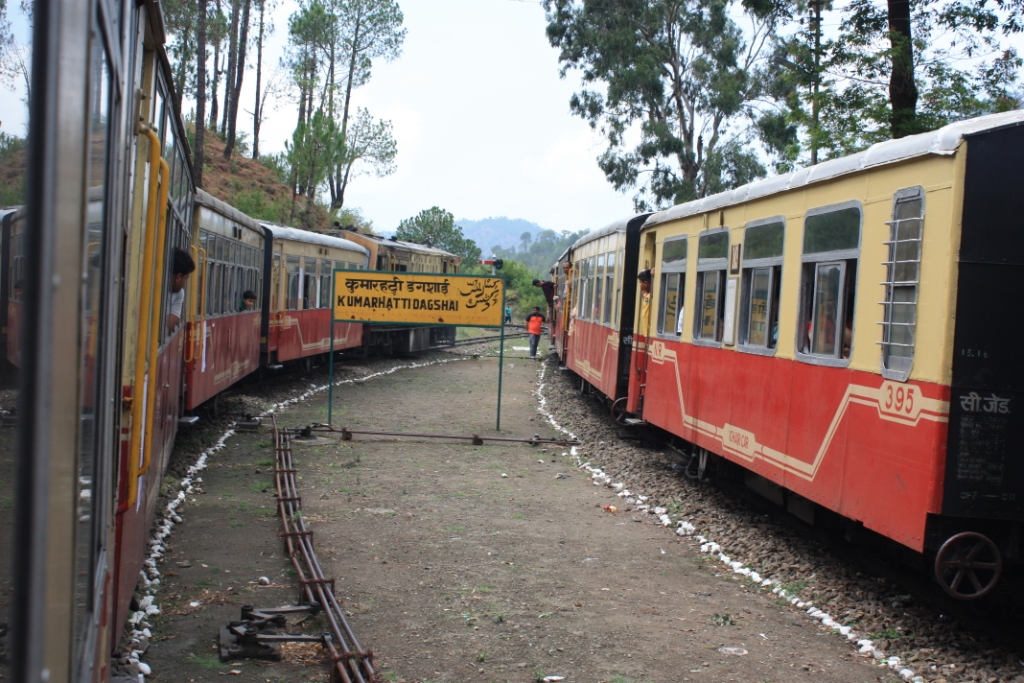
Faster than fairies, faster than witches,
 Bridges and houses, hedges and ditches;
 And charging along like troops in a battle,
 All through the meadows the horses and cattle:
 All of the sights of the hill and the plain
 Fly as thick as driving rain;
 And ever again, in the wink of an eye,
 Painted stations whistle by.

Here is a child who clambers and scrambles,
 All by himself and gathering brambles;
 Here is a tramp who stands and gazes;
 And there is the green for stringing the daisies!
 Here is a cart run away in the road
 Lumping along with man and load;
 And here is a mill and there is a river:
 Each a glimpse and gone for ever!
The wild winds weep,
         And the night is a-cold;
 Come hither, Sleep,
         And my griefs infold:
 But lo! the morning peeps
         Over the eastern steeps,
 And the rustling birds of dawn
 The earth do scorn.

Lo! to the vault
         Of paved heaven,
 With sorrow fraught
         My notes are driven:
 They strike the ear of night,
         Make weep the eyes of day;
 They make mad the roaring winds,
         And with tempests play.

Like a fiend in a cloud
         With howling woe,
  After night I do croud,
         And with night will go;
  I turn my back to the east,
  From whence comforts have increas'd;
  For light doth seize my brain
  With frantic pain.
I cut myself upon the thought of you
 And yet I come back to it again and again,
 A kind of fury makes me want to draw you out
 From the dimness of the present
 And set you sharply above me in a wheel of roses.
 Then, going obviously to inhale their fragrance,
 I touch the blade of you and cling upon it,
 And only when the blood runs out across my fingers
 Am I at all satisfied.













 Tiger Riding for Beginners