
Taken in Tallinn, Estonia in the summer of 2011

Taken in Tallinn, Estonia in the summer of 2011
 Matilda by Roald Dahl
My rating: 5 of 5 stars
[The Sarah Walsh illustrated edition comes out October 13, 2020.]
Matilda is a precocious child with parents who are negligent and verbally abusive. The story picks up shortly before Matilda is set to begin kindergarten, presumably so that we can learn that she is a preschool autodidact and that she has crappy parents. We also witness how she takes to “punishing” her parents whenever one or both of them behave in a particularly vile manner, using what might best be described as pranks. The empowerment of children, girls, and bookish people is the central theme of the book
Matilda begins school and is at once delighted to find a kind and caring teacher, Ms. Honey, and dismayed to find that the Principal, Mrs. Trunchbull, is a horrible woman. While Ms. Honey recognizes Matilda’s brilliance, she cannot get the girl advanced to a suitable grade because both Matilda’s parents and Trunchbull refuse to recognize the girl’s intellect. Dahl takes on both the cause of feminism and the plight of nerds. In the case of the former, we see how Matilda is disregarded by both her parents because she is a girl and they don’t see much value in her education and can’t fathom that she would be good at learning. While Matilda’s brother doesn’t exactly get top-notch parenting, at least some effort is made to advance his education. In the case of the latter, Dahl shows the derision for reading and studiousness that is all too common in society.
I won’t delve into the details of the balance of the story except to say that when Matilda discovers that Ms. Honey’s life is even more harrowing than her own, the young girl resolves to use her talents and capabilities to help improve Honey’s lot.
I read the version of the book, illustrated by Sarah Walsh, that is coming out in the autumn of 2020. Dahl’s story is the same, but the art is different. Having seen the Quentin Blake illustrated books, I’m aware of the difference between the two. However, as a non-artist, I don’t have much vocabulary to give a detailed description of said difference. I can say the Blake art is more reminiscent of old comic strips and the Walsh work was more cleanly drawn and “realistic,” while maintaining a general sense of whimsy and a bright color palette. I enjoyed the artwork, though I don’t claim a particular eye for such things.
I’d highly recommend this book for fiction readers. It’s written for children, but if you’ve gotten to adulthood without checking it out, it’s worth going back to read it. While the villainy maybe over-the-top for adult readers (i.e. there aren’t any nuanced characters,) the story has emotional resonance and is satisfyingly concluded. As to the question of the age of children it is good for, I don’t have much expertise in that either. However, as a litmus test, ask yourself if you think the kid can assimilate the image of Trunchbull swinging a girl by her ponytails – as in the hammer-throw – and tossing her over a fence.

Taken in Meghalaya in April of 2017 near the border with Bangladesh.
[With doggerel the only way to be “good” is to be ironically bad.]
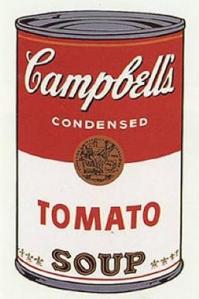 Being a true genius must be hard work.
Is there a less laborious path to the perks?
I’m so glad you asked:
Just convince the right person you’re a genius,
and you’ll be in like porn star penis.
Just stack some boxes of Brillo pads,
reprint some old burger joint ads,
slather color on portraits — Tammy Faye Bakker-style —
(just make sure to showcase the subject’s creepiest smile.)
Lest you think I’m just being snarky,
I say this without a trace of malarkey,
if you can buy mansions off a soup can label you didn’t design,
genius is too meek of a word, you stink of the divine.
[Like Odysseus being dropped in the lap of goddesses
who were ready & eager to pop open their bodices.]
Do you think the Campbell’s marketing artist has a mansion?
He probably retired with a meager pansion.
I say this without derision,
to be great artist you don’t need to show in galleries, Parisian
you simply need to showcase your vision
of some poor shmuck’s labors
to the person who can get you a better class of neighbors.

Taken from Gellért Hill in December of 2019.
 Said a man, standing on a crate,
“Thought and comfort are species that cannot mate.”
This philosopher continued:
“An idea unchallenged can’t claim merit. Sacred stories are paper tigers.”
“Anything sanctified may lead to murder. For one person’s sacred object will bump into that of another, and it’s only by brute force that such conflicts are resolved. ”
The mayor was captivated by the philosopher’s words, and thought:
The youth are lumps, existing free…
-of challenge
-of thought
-of dignity
-of power
So the mayor invited the philosopher to his town.
The townsfolk were not pleased.
The philosopher’s first act was the erection of a sign that read,
Your god is the wrong God!
One resident said, “How can you make such a statement?”
“I’m not here to offer instruction about how language works, but — rather — about how a thoughtfully lived life can be achieved.”
The first man kicked the philosopher in his left shin, and stormed off.
The second shouted, “But what gives you the right?”
“The right to what? To write a statement? To expose it to public scrutiny?”
“To make claims about which god is the true God.”
“I make no such claims.”
“But your sign says so.”
“Do you claim the sign is wrong, or that I have no right to make the comment — regardless whether it is true or false?”
“Well, mostly, the first one. The sign is not right,”
“Perhaps the sign IS untrue, and if proven so, I would certainly have to remove it. So tell me, is your counter-claim that your god is truly God?”
“It most certainly is,”
“Then tell me, how can I know that your claim is the correct one?”
“It is written in the scriptures.”
“So anything that is written in a religion’s scripture is true?”
“No. Not just any religion’s scriptures, just ours.” said, the man, thinking he’d anticipated the philosopher’s argument about how mutually exclusive statements can be true.
“And why just yours?”
“Because ours were written by the hand of God,”
“And how could a person such as myself be convinced of the truth of such a statement?”
“Because it is written…”
“So the scriptures of other religions don’t say they are the truth from God?”
“They may say it, but it’s not true.”
“So do you have more of an argument than that you believe something written centuries before your birth must be true and statements contrary to it must be false? If not, I must maintain that the statement on the sign has as much validity as your counterclaim. Both statements may or may not be true and with unassignable probabilities.”
And so the second man punched the philosopher in his right eye, and walked off in a huff.
A third man, a missionary, said, “That man was wrong,”
“I agree,” said the philosopher holding his palm over his eye, “violence is not a winning argument,”
“No,” said the third man, “not about punching you. He was wrong that what matters is the scriptures. I know my god is the God because I feel it’s true.”
“I had vertigo once. It felt like the room was spinning and like I would fall over, but neither was true. So, I can’t say that I put much faith in what I feel as arbiter of truth, but I definitely don’t have any feeling about the existence of your god — one way or the other. Are you saying he might be god to you — who feel this presence — and not to me, and to all those others, who don’t have such a feeling?”
“I’m not saying that…”
“Oh, good, because I was going to ask why you make so much effort to convert people to a subjective god?”
The third man kicked the philosopher in the right shin, shook his head, and walked off.
A fourth man approached and said, “Your sign is wrong because I have no god. I don’t believe in such hokum.”
The philosopher took out a marker and made some editorial changes. He wedged a large “V” in between the word “Your” and the word “god” and wrote “lack of” above it. He then crossed out the words “the” and “God.” The edited sign read:
Your lack of god is wrong!
“Surely, you aren’t going to attempt a proof for the existence of god after what you told your previous conversant?”
“I am not. You watched the previous discussions and should realize that I claim no more than that my statement holds as much validity as yours. Unless, that is, you are more successful at proving the non-existence of a god than the previous individuals did at proving its existence.”
“I cite Occam’s razor,” the fourth man said smugly, adding, “are you familiar with it?”
The philosopher said, “Indeed I am. But I wonder, why is it not called ‘Occam’s Law?’ Is it always the case that the simplest explanation is invariably true? Could we not find in the natural world instances in which the explanation for an observed phenomena was more complicated than an explanation we could theoretically imagine?”
“Not invariably, but a good rule…”
“So you base an absolute conclusion on a ‘good rule of thumb?’ Isn’t there potential for…”
The fourth man socked the philosopher in his left eye.
The philosopher, blinded with two swollen eyes and with a knob under each knee, sat by his sign, awaiting more takers.
The mayor came by and said, “I’m afraid this hasn’t worked out as I’d hoped. I’ve gotten so many complaints. Perhaps, it would be best if you move along.”
So, the philosopher grabbed his meager possessions, and limped one painful step at a time out of town.
***
Two weeks later, a colonizing army invaded.
The officers told the residents that they must convert.
The townsfolk all said that they would never convert.
The generalissimo said, “Convert or die. Those are your options.”
“That’s unfair,” said one man.
“What gives you the right?” said a woman.
The generalissimo then said, “OK. OK. If any of you can give me a sound reason why your religion cannot be supplanted by our own, I will reconsider…”

I
The known world died, made sick with Spanish Flu.
Flu made War look clumsy at dealing Death.
The Dead piled for the corpse cart to come through.
Trash stacked with kin who’d expelled their last breath.
II
What masters passed in those tens of millions?
Could we’ve faster mastered tech and science?
Might we’ve lost heroes that matched our villains?
Could the good have formed a grand alliance?
III
They say a forest without any fires
is a place of Death that doesn’t know it yet.
Disease isn’t just some fast-track to the pyre;
it’s a force of nature; an unpayable debt.

Taken in May of 2016 in Dubai

Taken in July of 2009 from atop Stone Mountain in Georgia
[A pantoum is a Malay form built in quatrains, and which uses repetition of lines. The second and fourth lines of one stanza become the first and third of the next. The final stanza can, but doesn’t necessarily, revisit lines from the first stanza.]
 She bends a moment writ in iron time,
while concentrating on a hov’ring bee.
Its undulation hushes a turbid mind.
Entranced, there’s nothing else to feel or see.
She concentrates on the hov’ring bee.
It becomes the sum of all things in her world.
There’s nothing else to feel or hear or see.
Only the bee alighting, body curled.
The bee is all that resides in this world.
Its undulation lulls her into trance.
She sees it flit and hover, its body curled.
The moment slows to show her its wee dance.


