Taken at Kalimba Reptile Park near Lusaka, Zambia in May of 2016

A closeup

Mass flight to water

Taken at Kalimba Reptile Park near Lusaka, Zambia in May of 2016
A closeup
Mass flight to water
People sometimes ask what my favorite travel locations have been in India. While there remain a great many places that I have yet to see, in the past three years I’ve seen many of India’s iconic (and lesser known) hot-spots. Here’s my top 10 list in ascending order.
10.) Mumbai: I’ll admit to a bias against big cities in my preferences. Indian cities are particularly noisy, smelly, crowded, and frenetic–none of which are characteristics I hold in high regard. However, Bombay has such a unique vibe. From old colonial mansions to shanty-town slums, it’s a city like no other.

The Taj Hotel
9.) Coffee and Tea Plantations: No. 9 may lack specificity, but there’s a common beauty in these verdant, rolling hills–be they in Munnar (Kerala), Madikeri (Karnataka), or the more well-known Darjeeling (West Bengal.) Not only are the plantations scenic, they’re also a peaceful place to recharge.
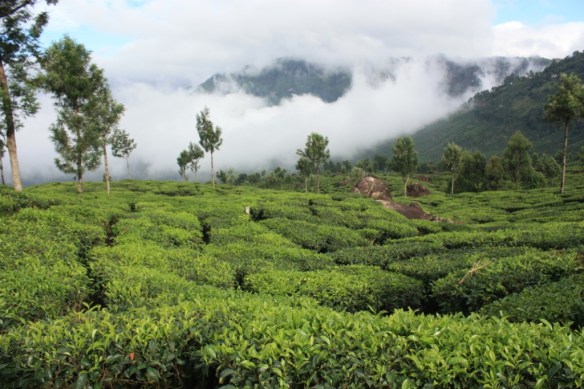
Munnar, Kerala
8.) Khajuraho: This is a quick stop; there’s not a lot to keep one in town once one has seen the amazing set of temples and the art that adorns them. However, Khajuraho makes my list because I favor places that have their own feel, and the open eroticism of Khajuraho certainly stands in contrast to mainstream India.

Khajuraho art
7.) Agra (the Taj Mahal and Agra Fort): People are often surprised that the Taj Mahal doesn’t come in higher on my list. I’m not saying one shouldn’t see it, but it’s not among the most impressive sights I’ve seen in India. This memorial to love is probably the most well-known tourist site in India, so enough said.
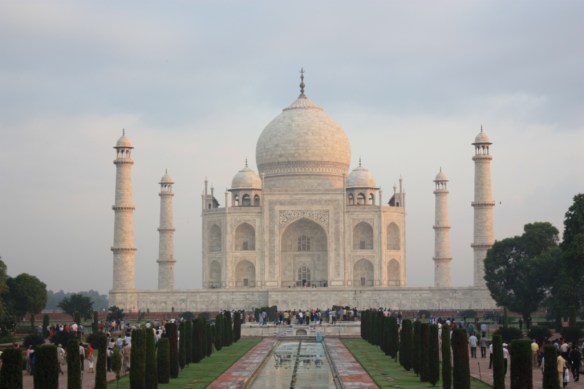
The Taj Mahal
6.) Amritsar: Guidebooks often portray Amritsar as a one-hit wonder, and that one hit is the Golden Temple (i.e. the Harmandir Sahib.) While the Golden Temple is certainly this town’s centerpiece, there’s more to see (not to mention to eat.) While each Indian state has its own cultural flavor, the Sikh character of Punjab makes it particularly true here.
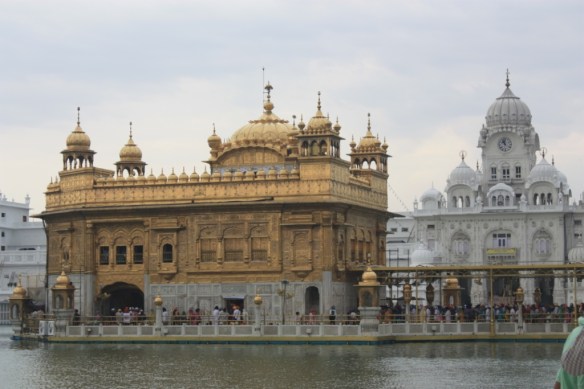
The Golden Temple (Harmandir Sahib)
5.) Kerala’s Backwaters: Adrift in the backwaters of Kerala is one of the most simultaneously relaxing and scenic experiences India has to offer.

A typical houseboat seen in the Backwaters
4.) The Caves of Ajanta and Ellora: This is one of those places that one has to really want to see because it’s not easy to get to. Except for die-hard Buddhists, for whom it is considered an important religious site, relatively few travelers make it to these grand sites. They aren’t just caverns but rather entire temples and monasteries carved into the side of mountains.
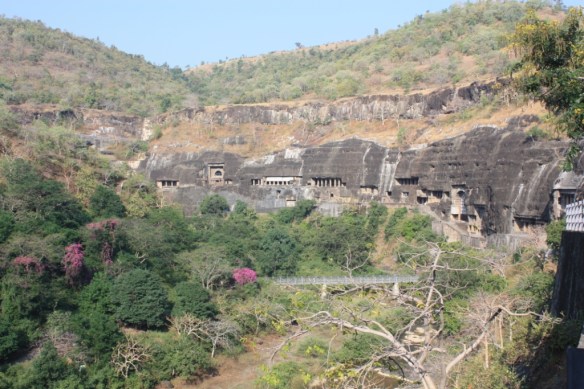
The Ajanta horseshoe bend
3.) Varanasi: Varanasi is both iconic India and–at the same time–a place that has its own unique feel. There are the near-naked holymen, the maze-like back alleys, and the burning ghats where the departed are cremated and have their remains put in the sacred Ganges River.

A Brahmin conducting the Ganga Aarti, a daily Hindu ceremony that takes place at the main ghat along the Ganges
2.) Hampi: Until last summer, Hampi had held my # 1 spot for some time. Yes, there are the Vijayanagara temples and monuments, but– even if there weren’t–the environment in which this ancient city is nestled is otherworldly. Imagine red sandstone boulders precariously (re: impossibly) perched upon each other with cacti communities and a carpet of green in between.
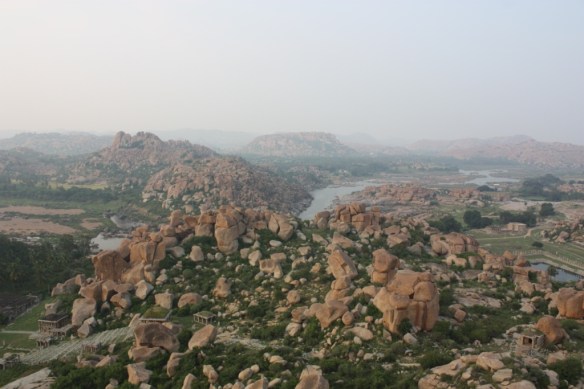
Plus the ruins of a once great Empire.
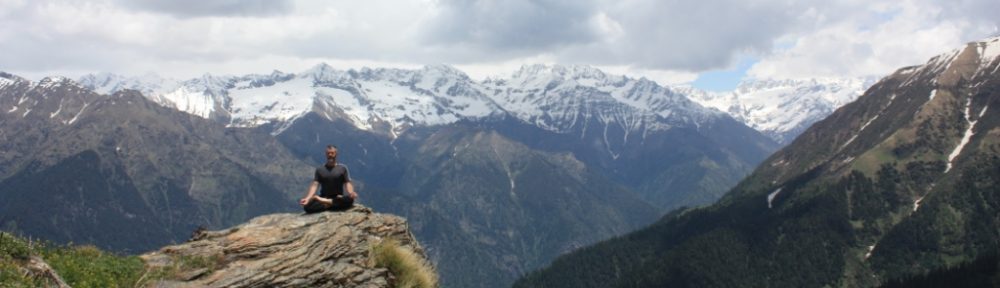
1.) Himalaya: For peacefulness, beauty, and inspiration of awe, it’s hard to compete with the land of snows. Around every corner is some new vista to blow one’s mind. The shear grandiosity of these mountains make them my #1.
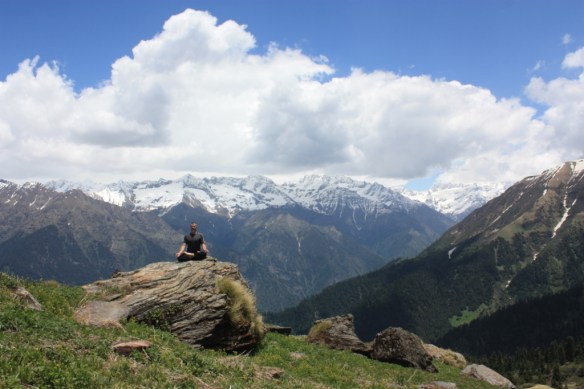
In the land of yogis
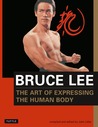 Bruce Lee: The Art of Expressing the Human Body by Bruce Lee
My rating: 4 of 5 stars
Even by today’s standards in which movie stars have personal trainers and scientifically formulated diets, Bruce Lee’s physique compares favorably to the most buff of leading men. In the 70’s there was no one even close. Consider “Way of the Dragon” in which Lee fights a character played by Chuck Norris. At the time Norris was the World Middleweight Karate Champion, a top-ranked athlete, but he looks comparatively doughy set across from Lee. What makes Little’s book intriguing for those interested in fitness is that it answers the question of how Lee achieved such a physique without the benefit of the last few decades of exercise and nutrition science. Sure, he had favorably genetics, but he also had—by all accounts—a sterling work ethic and a conscientious approach to fitness.
I wouldn’t recommend that one follow the programs described in this book wholesale without careful evaluation of the details. While Lee was impressive, he wasn’t free of athletic injuries. Best practices have shifted here and there with regard to the science of human performance. This isn’t meant to denigrate Lee’s approach. In fact, Lee, himself, followed the science of his time and recommended his students do the same. (For those unfamiliar with Lee’s martial art, Jeet Kune Do, its central tenet is to take what is of value and let go of what is not—i.e. never rigidly hold onto set notions.) It should also be noted that Lee—perhaps because of this philosophy—was often ahead of his time on issues like cross-training. I don’t want to leave the impression that there isn’t a lot that holds up well in this book. I’m saying that this is a book about how one man achieved spectacular results, but shouldn’t necessarily be taken as one’s one-and-only guide to fitness (though it does cover much of the relevant territory.) Intermediate and advanced fitness practitioners should know what to take and what to leave, but beginners should proceed with caution.
The book addresses Lee’s approaches to isometrics, weight training, calisthenics, flexibility, nutrition, cardio, and what would today be called functional training (i.e. fitness activities designed to better one’s performance of movements of the sort that one will use in one’s intended activity—in this case martial arts.) It’s important to note that Lee’s approach was optimized to the martial arts. For martial arts one needs a balanced approach to fitness, and it’s not all about aesthetics like it is for bodybuilders. One must be flexible as well as strong and be mobile more than muscly.
The books 24 chapters and ancillary matter are logically arranged. The chapters at the fore provide general information on weightlifting and related topics, the middle of the book is gets into specialized exercises by body part as well as special topics like stretching and nutrition, and the final few chapters get into sequencing and other information about how Lee arranged his fitness activities. Little draws heavily on Lee’s notes, often using his words verbatim.
The one way in which I think the book could be substantially improved would be more relevant photos and graphics, particularly in the sections that deal with specialized exercises. Don’t get me wrong, there are many photos in the book. However, they are all of Lee, and, of course, he had a great deal more photos taken either in action sequences (e.g. flying kicks, etc.) or in candid moments. There are few photos of Lee engaged in “sausage-making” activities like lifting weights or doing calisthenics. However, the subject in the photo need not be Lee. Photos would also allow the author to make the text in those chapters a little less heavy and more readable, and—therefore—it wouldn’t necessarily add to page count as much as one might think.
I’d recommend this book for fitness enthusiasts and martial artists. From beginner to advanced, there’s something for everyone to take away from this book.
 The View from the Cheap Seats: Selected Nonfiction by Neil Gaiman
My rating: 4 of 5 stars
Not every writer—not even many literary greats—could pull off a book like this. It’s a collection of random speeches, front matter from books (not his own), liner notes, and the occasional eulogy for individuals living and dead. While the book is organized into sections on topics like other authors, comic books, films, and music, it seems that organization derives organically from the topics on which Neil Gaiman is asked to comment–rather than a desire to tighten the book’s theme.
If you’re a Neil Gaiman fanboy/girl, you’ll need no excuse to read anything that he puts out (even though–if that is the case–you’ll probably have read much of this before in separate outings.) So the question is why the rest of us—who may enjoy Gaiman’s writing tremendously but who don’t qualify as fanboys / fangirls—should read this. The reason that it’s worth reading is that Neil Gaiman is funny, has a way of framing ideas that makes them thought-provoking and interesting, and frequently writes quotable bits of text that are essentially brain candy.
The book’s title comes from an essay on Gaiman’s experience attending the Oscars from the upper balcony. As mentioned, the book is divided into thematic sections–ten of them to be precise. The book starts with “Some Things I Believe,” which presents speeches on the virtue of reading, libraries, books, and bookstores. The next section discusses people he has known and worked with—largely writers and graphic artists. Then Gaiman offers thoughts on the nature of science fiction, again mostly through book forwards on seminal works from the genre. There is a section on films and Gaiman’s experience with them—several of his works have been made into films and many others have been considered. The next part is on comic books and the works and artists that influenced Gaiman. The next section bears the title “Introductions and Contradictions” and it offers introductions for various books (not Gaiman’s but those written for other writers.) There’s a musical section about a few recording artists including They Might be Giants, Lou Reed, and—of course—Gaiman’s wife Amanda Palmer. Next, Gaiman presents some introductions and forwards for works of fantasy. One section includes only a solitary entry–a commencement speech entitled “Make Good Art.” The final section is sort of a catchall of essays that includes the title piece and one on events in Syria.
I’d recommend this book for those who enjoy reading (or writing) in the genres for which Gaiman is known. His comments offer interesting insight, and you may learn about some books and authors that you’d never heard of before.
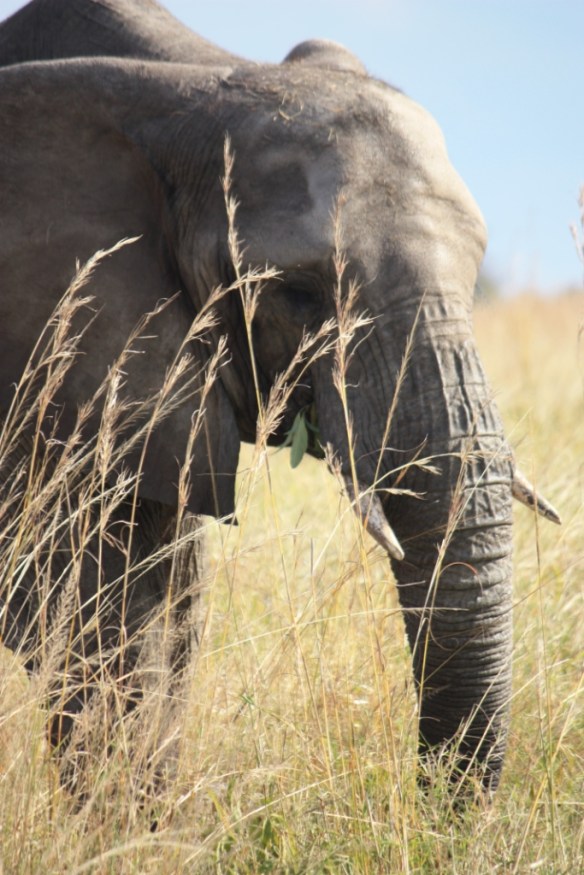
Taken on May 25, 2016 at Chaminuka Game Reserve near Lusaka
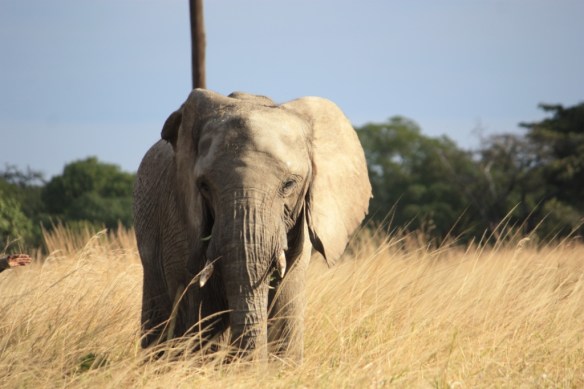

Taken in May of 2016 at the Palmwood Lodge in Lusaka
I’m back from travels in Thailand, Zambia, and the UAE with lots of new photos. This is an African species of Carpenter Bee (Xylocopa caffra) hanging from a flower. Lusaka was in full bloom, despite the fact that it’s [southern hemisphere] winter there and the weather was cool.
 I won’t be posting much more this month. I’ll be out wandering about and learning some muay thai.
During the last half of April, I taught a kid’s camp at a1000 yoga‘s Kormangala studio. Below are some ideas about my experience.
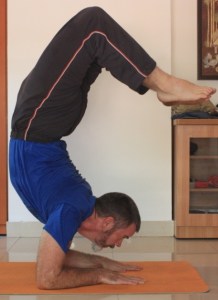
The Playful Scorpion
1.) Kids can’t down shift from 4th to 1st like adults. This was once a major point of frustration for me in teaching kids. When you ask kids to settle down after an activity they were really excited about, there’ll be a lag. There’s a temptation to see this unresponsiveness as a lack of respect, but it probably isn’t. (Which isn’t to say that the kiddies never attempt to test the waters.) The fact is that adults don’t get so amped up, and so it’s not so difficult for them settle down. Instead of getting frustrated with the kids, maybe one should feel sorry for the adults.
2.) Kids need a more advanced class, but not because they’re more advanced. Attention to detail isn’t a child’s strong suit. They have difficulty focusing on the finer points of alignment and breath–unless they’ve found a fun challenge in the pose. During the camp, we played with vrschikasana (scorpion pose) during the first few days. That’s not something I would do with adults. Kids get in the zone and, therefore, they don’t tense up and injure themselves so easily.
3.) Kids are natural flow hackers. If you don’t know what “flow” is, I’d recommend Mihaly Csikszentmihalyi’s book Flow, Steven Kotler’s The Rise of Superman, or Marer / Buzady / Vecsey’s Missing Link Discovered. (Depending upon your point of interest: psychology, athletics, or business, respectively.) However, in a nutshell, flow is the state of mind in which we perform at our best because of a combination of concentration and the quieting of one’s inner critic. One of the keys to catching the flow is finding a challenge of the appropriate level. The challenge should be just beyond one’s current capability. If it’s too easy, one gets bored. If it’s too difficult, one gets frustrated. Children instinctively seek out the Goldilocks’s zone in challenges.
I noticed this when we were playing a game in which each kid had to cross the floor walking only on wooden yoga blocks. This helps with balance, which tends to be a weakness among kids. Every time all the kids have finished crossing, a block or two is removed. So, the game gets harder the longer it goes on. The position of the remaining blocks can be adjusted, and, after a while, the kids wanted to adjust the blocks themselves because I was making it too easy. In other words, they wanted to make gaps that they would have to stretch to their utmost to succeed.
4.) Don’t assume that kids experience fear the same way you do. I suspect there may be some readers who will say, “that guy had kids doing scorpion on their second day of yoga, he must be a complete lunatic.” But, adults superimpose their fears on children. Kids’ excitement more easily overcomes their anxieties. In my last post on yoga, I referred to a FaceBook meme that I saw recently that said, “A child who falls down 50 times learning to walk, never says, ‘I don’t think this is for me.'” Somewhere along the line, people become mortified of failure or the risk of a bruise, but it’s not in childhood.
Have you ever seen a child fall down and start to get up–everything apparently fine–until he or she sees the gasp from mom (or another adult,) and then the child bursts into tears? If you’re the adult in the aforementioned scenario, let me suggest that teaching kids physical activities isn’t yet for you–at least not until you can manage your own anxiety a bit better. That’s not to say that there’s anything wrong with such people, but a teacher’s job is to show the child a world of possibilities and not to infect them with his or her own limitations.
5.) Finding the balance between inner child and outer adult can be a challenge, but is necessary. My working theory is that kids don’t trust an adult whose inner child doesn’t show through at least a little bit. Kid’s yoga is typically taught differently from the adult version. When teaching adults, one doesn’t practice alongside the students, but that’s the norm in teaching kids. (Kids can mimic better than they can follow complex verbal instructions.) The kids enjoy having the teacher participate, but one must also ensure that it remains clear who is the teacher. Otherwise, kids may be confused. When you’ve been participating in practice, playing games, and letting the children have some say in what they do (which is also a sound practice to some degree) they may gradually start to forget about your role as authority figure.