Unknown's avatar

About B Gourley

Bernie Gourley is a writer living in Bangalore, India. His poetry collection, Poems of the Introverted Yogi is now available on Amazon. He teaches yoga, with a specialization in pranayama, and holds a RYT500 certification. For most of his adult life, he practiced martial arts, including: Kobudo, Muay Thai, Kalaripayattu, and Taiji. He is a world traveler, having visited more than 40 countries around the globe.

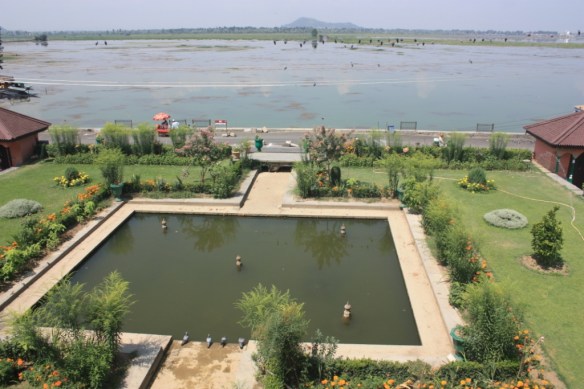
DAILY PHOTO: Nishat Bagh, Srinagar

IMG_0376 IMG_0432

Taken in July of 2016 in Srinagar

Taken in July of 2016 in Srinagar


Bangalore–during one of the city’s many iterations–was once called the “garden city.” While this title is as likely to be mocked as honestly cited these days, if I were issuing that title to an Indian city it would have to go to Srinagar. Many Indian cities have an impressive botanical garden, and some have some picturesque parks. But Srinagar takes the cake for a city its size. Besides the Botanical Garden there’s the Nishat Bagh (pictured), Shalimar Bagh, the Char Chinar, and Nehru Park. Furthermore, there are historical sites such as the Pari Mahal and Chashme Shahi Bagh that are also loaded with plants and flowers.

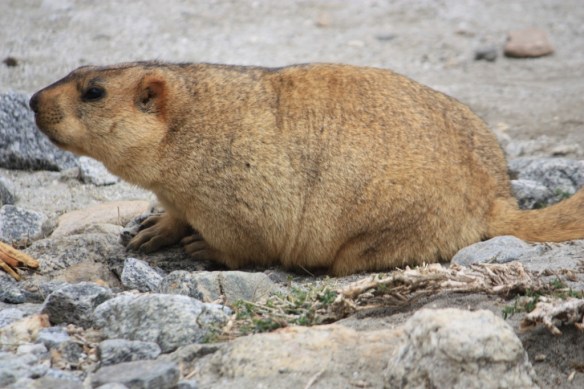
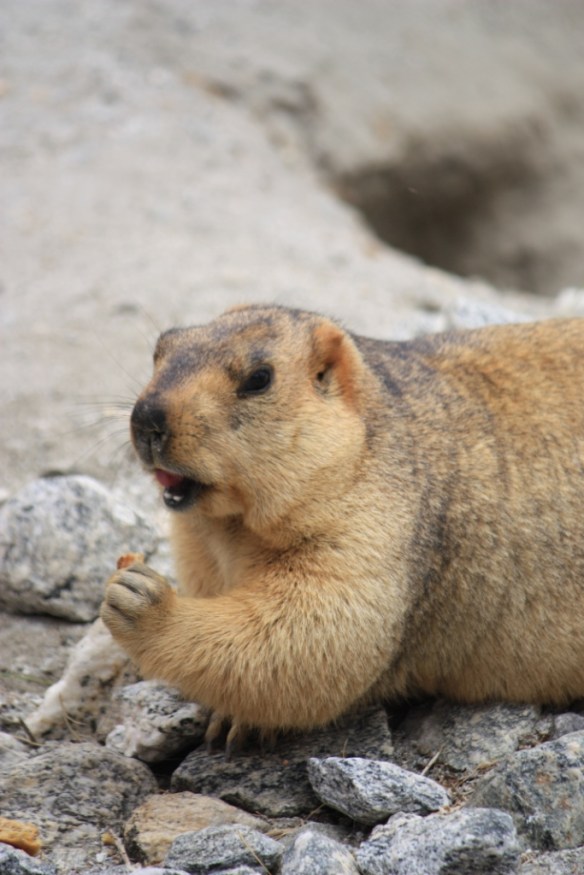
DAILY PHOTO: Marmot Along the Road to Pangong Tso

Taken along the road to Pangong Tso in August of 2016

Taken along the road to Pangong Tso in August of 2016

IMG_2577


The one on the bottom was rocking out, singing “Don’t Stop Believin'” by Journey into an air mic. Not really, but you can imagine it, can’t you? In fact, I bet you now have that tune stuck in your head. You’re welcome.

POEM: The Certain Man

IMG_2737


I met a man

along the road

who thought he knew

which way to go.


Certain was he;

he knew the path.

He had a map.

He’d done the math.


“Your map won’t help

you now, I fear.

Past the map’s edge

the world turns queer.”


“I’ll find my way,

be sure of that,”

the man dismissed

with words he spat.


When I returned,

an hour ago,

I passed a car-

cass in the snow.


No doubt, twas he,

the certain man–

hit a blizzard

in burning sands.

BOOK REVIEW: The Best of Poetry: Thoughts that Breathe and Words That Burn ed. by Rudolph Amsel & Teresa Keyne

The Best of Poetry: Thoughts that Breathe and Words that Burn (In Two Hundred Poems)The Best of Poetry: Thoughts that Breathe and Words that Burn by Rudolph Amsel
My rating: 4 of 5 stars

Amazon page

This is a collection that gathers 14 poems for each of 14 different themes. If you’re a math whiz, you know that means it’s a collection of 196 poems, but they round it out with four bonus poems to make a clean 200. If you’re a poetry reader, many of these poems will be familiar. They’re classic works from master poets from the 18th, 19th, and early 20th centuries (a few earlier.) Still, they are worth revisiting, the collection is inexpensive, and the organization, itself, is thought-provoking.

The fourteen themes that create the organizational schema for the book are: 1.) rapture: words that burn, 2.) a door opens; a door closes, 3.) love, 4.) humor & curiosities, 5.) memory, 6.) nature, 7.) tales & songs, 8.) solitude, 9.) contemplation, 10.) mystery & enigma, 11.) parting & sorrow, 12.) animals, 13.) inspiration, and 14.) cities. Then there are a couple bonus poems each attached to both the introduction and the epilogue.

As mentioned, the poets are mostly household names of English-language poetry, including: Emily Dickenson, Walt Whitman, Alfred, Lord Tennyson, William Blake, Percy Bysshe Shelley, John Keats, W.B. Yeats, Edna St. Vincent Millay, Thomas Hardy, Ralph Waldo Emerson, Carl Sandburg, T.S. Eliot, Wallace Stevens, Shakespeare, Lord Byron, Ben Johnson, Lewis Carroll, Oliver Wendell Holmes, William Wordsworth, A. E. Housman, Edgar Allen Poe, Samuel Taylor Coleridge, and Robert Frost. There are some names that are less than household names, but none that are obscure to poetry aficionados.

Again, many of the poems are well-known. Some of them are fragments of long poems, but most are stand-alone works. Examples of some of the standards include: “Chicago” by Sandburg, “If” by Kipling, “The Road Not Taken” by Frost, “Let My Country Awake” by Tagore, “The Tiger” by Blake, “The Raven” by Poe, “Kubla Khan” by Coleridge, “The Daffodils” by Wordsworth, “The Jabberwocky” by Carroll, “She Walks in Beauty” by Byron, and “There Is No Frigate Like a Book” by Dickinson.


I should point out that this is the first volume in a multi-volume set. There is also a second volume out, but I don’t know what the plans are beyond that.
I enjoyed this collection. I’d read most of these poems before, but the vast majority deserve re-reading and re-reading again. I’d recommend it for poetry lovers.

View all my reviews

DAILY PHOTO: Giant Maitreya of Diskit

Taken in August of 2016 in Diskit, India

Taken in August of 2016 in Diskit, India


It’s over 100ft (30m) tall.


A Maitreya is a “future Buddha,” meaning a Buddha who hasn’t yet appeared, but who was prophesied to live in an era to come. For people unfamiliar with Buddhism, this might seem strange. The Buddha we normal think of is Gautama Buddha, or the Shakyamuni Buddha (Siddhartha Gautama.) He was the founder of the religion, but one of many said to have achieved enlightenment. In other words, the Buddha we think of was an awakened one, not the awakened one.

BOOK REVIEW: William Blake: Selected Poems ed. Paul Butter

Selected PoemsSelected Poems by William Blake
My rating: 4 of 5 stars

Amazon doesn’t carry this edition.

So, e-Bay

Blake’s “The Tyger” is one of my favorite poems, and one of the few that I’ve bothered to memorize. Even if the words made no sense, they sound beautiful together, but not only do they make sense they forge powerful imagery. Blake wrote many poems that managed to be both pleasing to the ear and meaningful.

This collection consists of about 80 poems and fragments (of longer poems) that are pulled from Blake’s collections. Much of Blake’s work is about nature, though the worlds of man and the divine also feature prominently. With respect to the human world, poems about children are particularly common. Most of the poems and partials fit on a single page or two, but some are as short as a four-line stanza and others are as long as a dozen pages.

The compiler of the poems, Peter Butter, doesn’t feel the need to pile in rambling prologues and introductions—a plus in my opinion. The only ancillary matter consists of two timelines: one of Blake’s life, and one of with key events that happened over the course of his life. I will say that these two timelines are confusingly arranged in the edition that I read. They are two pages each, with the pages of each facing each other. So, as one flips, one reads a page of life history, one of world history, one of Blake’s history, and one of world history. Either rearrangement of pages or formatting changes would fix this right up.

This is a great little collection with which to get a taste for Blake. I’d recommend it for those who want some of his classics and some others, but without the need to wade through unabridged collection—in case he turns out to not be your cup of tea.

I’ll leave you with one of my favorite lines from the collection: “Wisdom is sold in the desolate market where none come to buy,”

View all my reviews

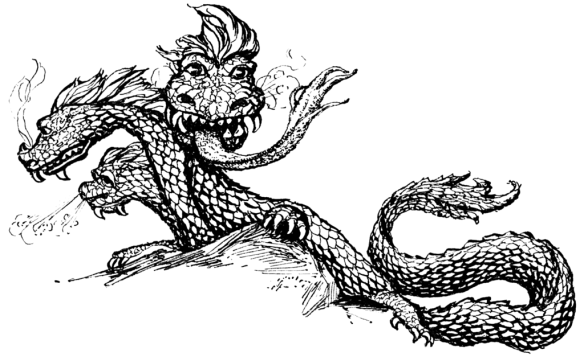
POEM: Thar Be Dragons

Source: Wikipedia (Public Domain)

Source: Wikipedia (Public Domain)


Where dunes are whisked in wisps down the valleys

Quiet as midnight in pitch black alleys

Thar be dragons

Where boxes tumble into churning seas

Submerging with the ease of a sea breeze

Thar be dragons

When you twitch into the deeps of sleep

Amid the bleating of counted sheep

Thar be dragons

DAILY PHOTO: Namgyal Tsemo of Leh

Taken in August of 2016 in Leh

Taken in August of 2016 in Leh


From the Shanti Stupa

From the Shanti Stupa

From the base

From the base

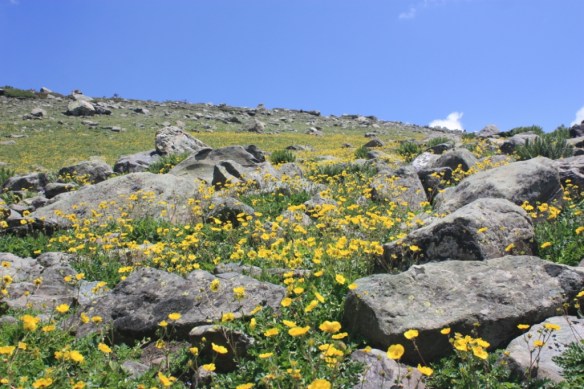
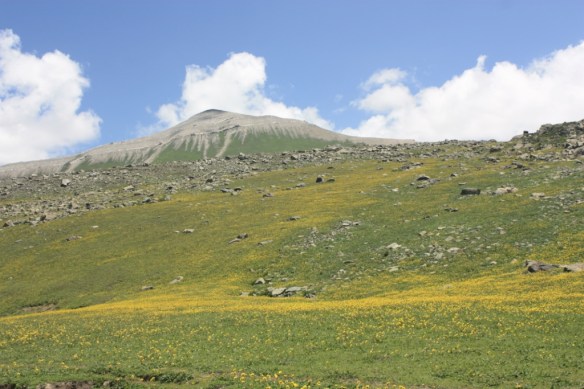
DAILY PHOTO: A Spray of Yellow Flowers in Kashmir

Taken in Kashmir in August of 2016

Taken in Kashmir in August of 2016

IMG_1318

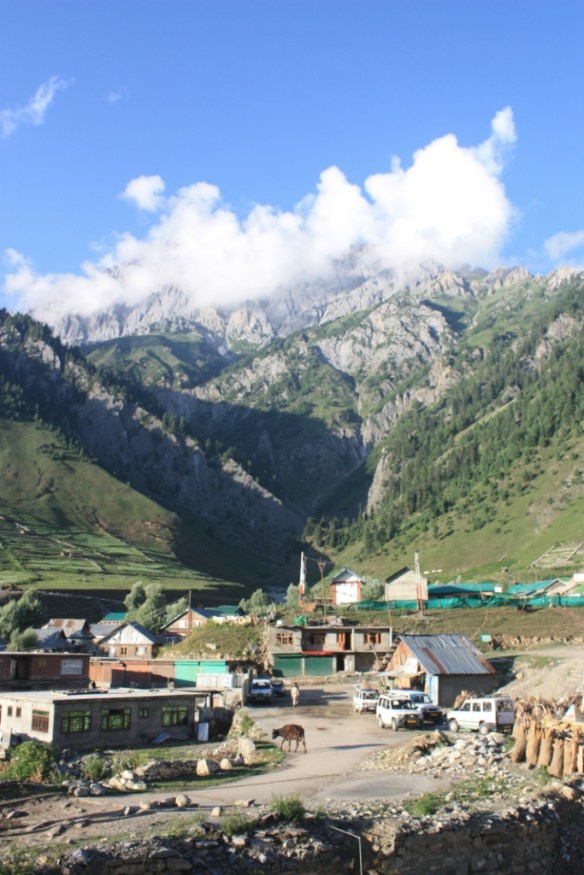
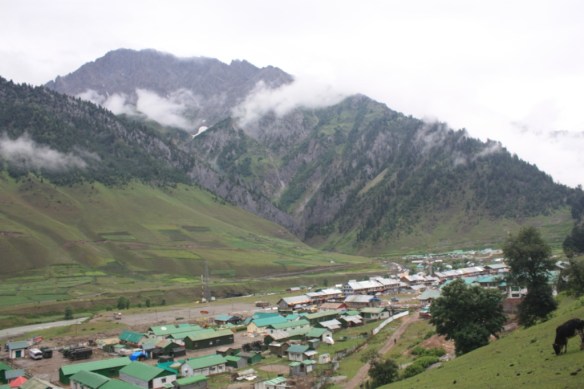
DAILY PHOTO: Sonamarg

Taken in July of 2016 in Sonamarg

Taken in July of 2016 in Sonamarg


IMG_0899