Unknown's avatar

About B Gourley

Bernie Gourley is a writer living in Bangalore, India. His poetry collection, Poems of the Introverted Yogi is now available on Amazon. He teaches yoga, with a specialization in pranayama, and holds a RYT500 certification. For most of his adult life, he practiced martial arts, including: Kobudo, Muay Thai, Kalaripayattu, and Taiji. He is a world traveler, having visited more than 40 countries around the globe.

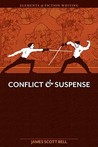
BOOK REVIEW: Conflict & Suspense by James Scott Bell

Conflict and Suspense (Elements of Fiction Writing_Conflict and Suspense (Elements of Fiction Writing_ by James Scott Bell
My rating: 4 of 5 stars

Amazon page


This is a book about the stuff that keeps readers reading. Without conflict there is no hindrance to a character achieving his or her goal, and thus no story. Suspense is a lack of clarity about what comes next that spurs the reader to keep exploring. Bell defines conflict and suspense, and then explores the various means by which these crucial features are conveyed in stories. I say in stories, but Bell is predominantly speaking to novelists with this book.

The book is divided into two unequal parts. The first, and larger, consists of fourteen chapters about conflict. The first few chapters describe conflict and how it is set up. Then Bell examines how the many dimensions of writing can be manipulated to fire up the tension, including: point of view, openings, subplots and flashbacks, dialogue, theme, style, and even editing. Chapter 14 suggests some tools that writers may employ to help them ratchet up the conflict.

The second, and shorter, part (8 chapters) delves into the topic of suspense. The organization follows a similar progression. First, Bell describes suspense through many potent examples. Second, he moves onto examine the various means by which suspense can be created. With respect to the latter, Bell suggests ways in which dialogue, setting, and style can be presented in order to create cliff-hangers. The last chapter pulls everything together to advise writers on the how to create stories that maximize conflict and suspense. This is in part a summary of the book, but it looks at the process more and the dimensions of writing less, and therefore offers something new as well.

Readers of Bell’s other guides may be familiar with the LOCK formulation that he uses in his “Plot & Structure” book. LOCK is an acronym for Lead (an intriguing opening), Objective (a goal of dire consequence), Confrontation (the battle for the objective), and Knock-out Ending (a conclusion that satisfies.) I mention this because one may find synergy in reading other books in the series. LOCK is not as central a concept here as in the “Plot & Structure” book, but it’s nice to have a common mechanism by which ideas are conveyed.

There’s not much by way of ancillary material. There are a few simple black and white graphics / diagrams. However, there is one nice feature in the form of an Appendix that analyzes conflict for two novels: “To Kill a Mockingbird” and “Silence of the Lambs.” These were good choices both because they represent literary as well as commercial fiction, and because they both have popular movie adaptations. The latter comment might seem like sacrilege to the “the book always beats the movie” crowd. However, using movies as examples—as Bell does here and there—offers the advantage that the average reader will have seen a higher percentage of good movies than they’ve read good books. This is even true for most us who read a ton because relatively few (if any) great movies come out each year and the history of cinema is much shorter.

I both enjoyed and learned from this book. Bell uses many excellent examples to support the ideas that he’s presenting, and this makes the book readable and easily digestible. I’d recommend it for writers of fiction who seek to put more zip into their creations.

View all my reviews

DAILY PHOTO: Churches, Chapels, and Cathedrals of Budapest

Taken in the summer of 2011 in Budapest

Taken in the summer of 2011 in Budapest


img_6937 img_6917 img_6428 img_6019 img_6096 img_6051

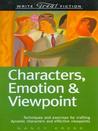
BOOK REVIEW: Characters, Emotion & Viewpoint by Nancy Kress

Characters, Emotion & Viewpoint: Techniques and Exercises for Crafting Dynamic Characters and Effective Viewpoints (Write Great Fiction)Characters, Emotion & Viewpoint: Techniques and Exercises for Crafting Dynamic Characters and Effective Viewpoints by Nancy Kress
My rating: 4 of 5 stars

Amazon page


This book is about how to write characters with sufficient depth that readers will follow them through to the end of a story. As the title suggests, there are three major components to the book: character building, emotional considerations, and point of view. A story requires a character who needs or wants something and faces barriers to that goal. The character has to be someone who the reader is interested in seeing through a process that involves inching toward a goal while being repeatedly beaten back. This doesn’t mean the character has to be likable, but if the character is unrealistic and uninteresting readers won’t get far. (In other words, they don’t have to like the character, but they do have to feel some sort of way about them.) Facing barriers to one’s goals creates emotional states that must feel authentic. If a character doesn’t respond emotionally to events, then the story is likely to feel flat (unless one has built a hilarious Sheldon Cooper-like character on purpose.) The perspective from which the reader learns of events is critical because it determines what information the reader is privy to, and—in particular—information about thoughts and emotions that are sometimes falsely portrayed.

Of the sixteen chapters that comprise the book, the first seven explore character development. Chapter 1 describes character in terms of general types. The book goes on to discuss the importance of how one introduces key characters. The next three chapters drill down into the challenge of building an authentic character: 1.) What is the character like deep down? 2.) Are the motives of the character clear-cut or complex? 3.) How can one show that the character has changed over the course of the story, and, if they don’t change, will the reader be satisfied? Chapters 6 and 7 investigate specialized types of characters (i.e. genre characters such as in romance, mystery, thriller, or sci-fi [Ch. 6] and in humor [Ch.7.])

Chapters 8 through 11 examine emotion and how it’s conveyed to the reader. The means by which writers communicate emotion include: dialogue (Ch. 8), metaphor, symbolism, and sensory experience (Ch.9.) Chapter 10 delves into special cases that are common in fiction but which require unique consideration (love, fighting, and dying.) Frustration has its own chapter (Ch.11,) and that may seem odd, but one must remember that a story is one barrier after another being erected in the way of the character’s pursuit of his or her objective.

The next four chapters present information to help the writer evaluate different approaches to viewpoint. Not only are there various pros, cons, and considerations one must take into account when deciding upon viewpoint, each approach has a several variations. The first of these chapters (Ch. 12) outlines the broad-based considerations. The next three chapters deal with first person (Ch. 13), third person (Ch. 14), and omniscient points of view (Ch. 15,) respectively. (The rarely used 2nd person point of view is also discussed briefly, but largely as a warning.) The last chapter explores how to make it all work by way of what Kress calls the “fourth persona.” Early in the book, one is told that the writer must simultaneously embody three personas (i.e. the writer, the character, and the reader.) Kress’s “fourth persona” is that of the critic, and it becomes necessary once one has drafted a story and character.

The book has a few extras. At the end of each chapters there are several (usually 4 to 6) exercises to help writers understand the concepts through practice. The chapters each have summaries, and at the end of the book there’s a summary in the form of a checklist. That is about it for ancillary features. There are a couple of graphics in the form of pictures of a “mini-bio” and an “emotional mini-bio.” These are single page fill-in-the blank summaries that help one build a character that has depth and an authentic feel.

I found this book to be interesting and educational. The writer uses examples from a number of popular commercial and literary fiction authors. There’s no real need to be familiar with any particular author, but being familiar with them might present one with additional insights. The book is readable.

I would recommend this book for writers of fiction.

View all my reviews

DAILY PHOTO: Andean White Church & Blue Sky

Taken in July of 2011 in the Peruvian Andes

Taken in July of 2011 in the Peruvian Andes

DAILY PHOTO: Colorful Shutters of Singapore

Taken October 29, 2016 in Singapore

Taken October 29, 2016 in Singapore


img_3566


img_3547

POEM: Man’s Best [and Faster] Friend

img_2586

Once there was a dog and a man.
The dog chased and the human ran.
The dog got leaner, the man fitter.
But sometimes got bit, and being bit got bitter.


Chased, one day, a bone in hand.
The man devised a clever plan.
Raising the club, he flung it aside.
The dog caught its meal in mid-stride.


From that day on man carried meat.
To offer dog a tasty treat.
Dog, it seems, had trained its master.
No more racing to get faster.


Thirty thousand years then past.
Pavlov trained at dog at last.
Humans are slow, but can learn.
As the world, in due time, turns.


DAILY PHOTO: Oddities of Haw Par Villa

Taken on November 1, 2016 at Haw Par Villa in Singapore

Taken on November 1, 2016 at Haw Par Villa in Singapore

img_4416 img_4409 img_4378 img_4372 img_4355 img_4330

DAILY PHOTO: The Esplanade Durians

Taken on October 31, 2016 in Singapore

Taken on October 31, 2016 in Singapore


img_4163


img_4143

BOOK REVIEW: Low Back Pain ed. by Jeffrey N. Katz, M.D. [A Harvard Med School Guide]

Low-Back Pain: Healing Your Aching BackLow-Back Pain: Healing Your Aching Back by Harvard Health Publications
My rating: 5 of 5 stars

Amazon page


This guide is one in a series put out by Harvard Medical School. It’s the second one that I’ve read, and I found them both to be beneficial reads. The first was on the health benefits of tai chi chuan (a Chinese martial art / system of health exercise [qi gong.])

Harvard Medical School’s willingness to report findings about unconventional approaches and self-care was part of the appeal of this book. When I first developed lower back problems, I went to the doctor, was diagnosed with arthritis via x-ray, and all I got was an offer for pain killers. To me this was much like going to the mechanic because the check engine light came on, only to be told that all they could do for me is unplug the pesky indicator light. At any rate, that’s why this kind of book can be useful, because one can’t always expect a given doctor within the modern medical establishment to be on top of treatments not involving drugs or surgery. This isn’t to denigrate those options, often times they are the best or only option, and they are covered in this guide as well. However, back pain is one of those rare areas in which sometimes the best option is outside medical norms. Much as many doctors hate having information thrust in front of them by patients, at least Harvard Medical School may garner more respect than a WikiMD post. There’s even a box talking about the mind-body connection, and options in that domain.

Low back pain is both extremely common and often still poorly understood. That’s because there are so many problems that can cause similar symptoms. [I guess this shouldn’t be a surprise because our pelvis had to rotate through evolutionary changes to take us from quadrupedal to bipedal. It makes sense that our nerves and blood vessels might be routed in such a manner as to cause troubles.]

While this guide is short, it does take on a range of issues, including: who’s most at risk, how the spine works [and doesn’t], what the basic categories of back injury are, how one’s specific ailment may be diagnosed, how to evaluate treatment options, what one can do on one’s own to help heal a problem back while preventing future injury, what medicines may be prescribed, what surgical options may be offered, and advice on facilitating a recovery.

As far as ancillary features are concerned, there are a number of line drawings. This artwork is generally either anatomical drawings used to show how the spine works or is injured, or show exercises that one can use to strengthen the back. There are a few pages each of resources and glossary. The resources are not so much printed resources (there’s only one of book, and that one is authored by the editor of this guide,) but rather organizations and even websites.

I found this guide to be informative and helpful. I would recommend it for anyone who has low back problems, or who might benefit from learning more about them (e.g. yoga teachers.)

View all my reviews

DAILY PHOTO: Chinese Bridge at Dusk

Taken on October 30, 2016 in Singapore's Chinese Garden

Taken on October 30, 2016 in Singapore’s Chinese Garden


This bridge, in the Chinese style, connects Singapore’s Chinese Garden to its Japanese Garden. Dusk offered a nice reflection.