Unknown's avatar

About B Gourley

Bernie Gourley is a writer living in Bangalore, India. His poetry collection, Poems of the Introverted Yogi is now available on Amazon. He teaches yoga, with a specialization in pranayama, and holds a RYT500 certification. For most of his adult life, he practiced martial arts, including: Kobudo, Muay Thai, Kalaripayattu, and Taiji. He is a world traveler, having visited more than 40 countries around the globe.

BOOK REVIEW: The Checklist Manifesto by Atul Gawande

The Checklist Manifesto: How to Get Things RightThe Checklist Manifesto: How to Get Things Right by Atul Gawande
My rating: 5 of 5 stars

Amazon page


Checklists have a bad, bureaucratic rap. Like Taylor’s time and motion studies and forms filed in triplicate, checklists seem to exist only to compound the drudgery of the workplace. Furthermore, many of the sectors in which checklists are most necessary are also those in which they are certain to be resisted—i.e. places in which there is a strong leader who is unused to having his or her instructions challenged: e.g. operating rooms and airplane cockpits. The element that ties those two locations together (along with other places where checklists are found) is that they are domains in which extremely complex activities take place, and in which one missed detail can have tragic consequences.

While the main story being told in this book is about the author’s experience leading a task force to build a surgical checklist and research its efficacy via a global study. However, Dr. Gawande takes us on the rounds of industries that found checklists before medicine did, and which had a thing or two to teach doctors about building and using them—notably the construction and air travel industries.

The book consists of nine chapters. After an Introduction that features a surgical case exemplifying how unexpected case characteristics can easily be overlooked when seconds count, the problem of extreme complexity is described as a rationale of the need for checklists in Chapter 1. While we tend to think we humans are tailor-made for complexity, the fact of the matter is that we aren’t. Mother Nature gives no capabilities that aren’t demanded to survive in the environment in which one evolved. So while we’ve done a great deal of cultural evolution to increase our capacity to deal with complexity (checklists included), the fact of the matter is that our minds and bodies are limited instruments. We can only hold a few items in short-term memory at once. We are no good at multi-tasking—despite the fact that most people feel otherwise. And when stress throws us into “fight or flight” mode, we develop tunnel-vision, not helping our capacity to see the minutiae in the big picture.

Chapter 2 delves into the checklist as solution to the aforementioned problem of extreme complexity. This chapter begins with the story of a bomber aircraft that had awesome capabilities but was deemed too complex for a single pilot to fly. (All it needed was a checklist.) The chapter then goes into medical examples. The first is a study of one of the major cause of infections: central line insertions. This offers a prime example of a procedure in which medical staff members know exactly what to do, but often small details are overlooked leading to disastrous outcomes. Then there is the case in which a little girl was saved against apparently impossible odds, in part due to a checklist performance.

Chapter 3 is entitled “The End of the Master Builder,” and as that name suggests, it’s largely about the role of checklists in construction. Construction can be compared and contrasted with medicine. The major similarity is that both fields have such high degrees of complexity that many specialists must be involved. The major difference is that time isn’t so critical in construction. (Just stopping and mulling over a solution is frequently not an option in surgery.) The biggest takeaway of this chapter is that it’s not only the tasks to be performed that need to be on the checklist but also the communication between team members.

Chapter 4 explains how centralized decision-making can be death in complex environments. The principle case discussed was how Wal-Mart out-performed the government in the wake of Hurricane Katrina in large part because leadership supported but did not dictate to managers of the stores in the storm-damaged area. However, the most fascinating piece of information for me was the explanation of why Van Halen had its infamous contract rider about having a bowl of M&M’s with all the brown ones removed. Apparently, no one cared about the candy. It was just an easy way to see at a glance whether anyone had been through the minutiae of the document–minutiae that included critical information such as how much weight the stage had to accommodate—i.e. safety issues not so easily observed but which would be potentially devastating if missed.

Chapter 5 tells the story of the World Health Organization (WHO) contacting Dr. Gawande and his first attempt at building and implementing a surgical checklist. As to be expected, there was a lot about that initial trial that wouldn’t work.

This led the author to go to what he calls “The Checklist Factory” in Chapter 6. Said “factory” is at Boeing, and it writes and updates all the checklists for Boeing aircraft—which are then modified by the individual airlines, presumably within limits governed by regulatory agencies. While the construction people taught Gawande that communication had to be on the checklist, the aircraft people taught him the need to simplify. One can’t put every detail on the list, only those that could be easily overlooked with devastating consequences. (i.e. One doesn’t need to write “Make an incision” because that’s impossible to forget, but one does include “Ensure antibiotics were delivered.”) Boeing also taught the author that there are two different flavors of checklist: READ-DO and DO-CONFIRM.

Chapter 7 describes the pilot study of the revised surgical checklist in eight hospitals in eight different countries (four developed and four developing.)

Chapter 8, “The Hero in the Age of Checklists,” explores the problem mentioned above about there being resistance in a many sectors (including medicine) because those leaders have rock star vibe going. We admire risk-takers and those who excel under pressure, but checklists seem to run counter to those traits. Thus, even when it’s clear that checklists save lives, there can be a reluctance to adopt them. Of course, as in the airline industry, eventually the checklist becomes accepted, and its use becomes second nature.

Chapter 9 tells of one of the author’s own surgical foibles, and how it led him to work to improve the procedure in order to reduce the risk of that kind of accident. It’s also an example of how the checklist kept the tragedy from being much worse.

This book has its sources annotated, but contains no graphics or other ancillary matter.

I’d recommend this book, particularly for those who work in the domain of complexity. However, I read it because it was referenced in a book I’d read on decision-making under fear. So it may also be of interest to you if you’re into questions of optimal human performance.

View all my reviews

DAILY PHOTO: Dance of Death


Taken in October of 2014 (Dussehra) in Mysore

DAILY PHOTO: The Blue City

Taken in November of 2015 in Jodhpur

5 Off-the-Beaten Path Indian Destinations You Should Visit

5.) Khajuraho in Madhya Pradesh


4.) Varkala in Kerala


3.) Pangong Tso in Ladakh


2.) Pushkar in Rajasthan


1.) Hampi in Karnataka

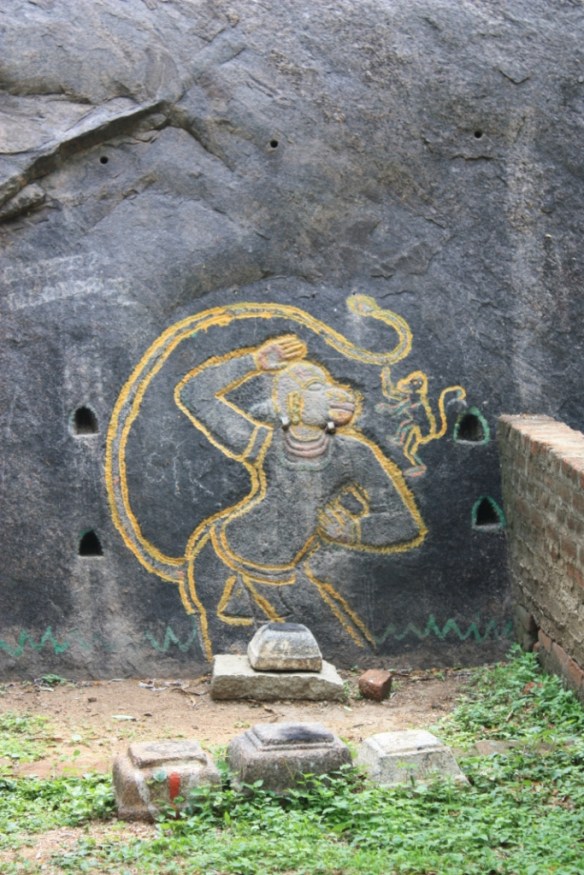
DAILY PHOTO: Hanuman Shrine

Taken at Ramanagara in May of 2014

DAILY PHOTO: Bush on a Mountaintop, Ramanagara

Taken in May of 2014 at Ramanagara

BOOK REVIEW: All the Light We Cannot See by Anthony Doerr

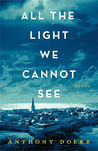
All the Light We Cannot SeeAll the Light We Cannot See by Anthony Doerr
My rating: 5 of 5 stars

Amazon page


This review will be short because, JUST READ IT.


“But, historical fiction isn’t my bag,” he said.


This isn’t that kind of historical fiction—i.e. the kind that binds one in a web of cultural minutiae and reads like a history book writ purple. This book will make you enrapt.


“But, I don’t like war stories. Too violent,” she said.


I bet you’ll like this one. Yes, it’s set during World War II, and war’s ugly face peeks around the corner from time to time, but one also sees how ordinary people do extraordinary things when exposed to the crucible of war. War doesn’t just bring out the worst; it also forces people to be better than they’ve ever had cause to be. The book is largely about a girl living under occupation and isn’t so much about life on the front lines.


How can I so boldly assert that one should read this particular book? (I normally lay out the facts first and only at the end make a recommendation.) Because this is one of the best crafted novels I’ve read. It’s extremely readable and engaging. The characters are superbly developed and one feels one knows them. Even the closest thing to a villain (if you don’t count war as the villain) is a complex and nuanced character who one wants to understand better.


I will tell you something substantive about the novel. It interweaves the stories of two teenage characters whose lives are fated to become entwined through the fortunes (and misfortunes) of war. The first is a blind girl who lives with her father in Paris. Father and daughter flee when the Nazis occupy France and end up living on the coast at Saint Malo with her great-uncle who is a shut-in owing to his experience in the last Great War. Of course, the move to the coast only delays the occupation and the point at which the war comes to them.


The other lead character is a German orphan boy with a gift for science who gets prematurely drawn into the war because of his great intellect and skill with radios. Not only are these characters both people who readers are drawn to, they both experience great growth over the course of the story. Imagine being blind in a war zone–or even just being a young nerd drafted into the war–and you can taste some of the emotional tension that resonates throughout this book. I won’t say that it’s all happy endings. It never is in war.


I’d highly recommend this book for all readers.

View all my reviews

BOOK REVIEW: Tropic of Cancer by Henry Miller

Tropic of CancerTropic of Cancer by Henry Miller
My rating: 3 of 5 stars

Amazon page


This, Henry Miller’s first novel, is about a young man living a bohemian life in Paris in the late 1920’s. It reads autobiographically. It’s often said that literary fiction downplays story in favor of character development. This isn’t necessarily true today, but it seems to be the case with this 1934 novel. There’s not much story—though a little one is packed in at the very end. The book does illuminate the lead character, but the reaction that character evokes is neither love nor hate but more of an “ewww” of disgust. Put another way, he’s like a Chuck Palahniuk anti-hero (e.g. think of Victor from “Choke”), but without out the quirky humor to make him amusing and interesting. This will make more sense in the next paragraph.

This book is often classified as erotica, but many readers might not find it to be erotic. Like a shock-jock, Miller chooses the most vulgar term to stun rather than using descriptive language to arouse. The lead (and other characters) spends a lot of time in bed with prostitutes, but at the same time he’s sleeping on the couch of some acquaintance or grumbling that he can’t afford a sandwich. Lest one think I’m hammering the book because of gratuitous sex, let me say that it’s not the sex that I find dismaying but a guy whose priorities are so askew of Maslow’s hierarchy as to make one wonder if he’s of the same species. There’s an uncanny valley with this character, only not with respect to facial appearance. All of that would be fine if the character experienced change over the course of the book, but the character neither grows nor is destroyed. I should also point out that I like Palahniuk’s anti-hero stories, but Miller takes himself too seriously to be fun, and I think that fun is the only way such a character makes for appealing reading.

So far I’ve made this book sound horrible, but I didn’t savage it with a sour rating. Ergo, there must be some redeeming value. There is. Miller’s use of language is intermittently gorgeous. He gets in these streams of consciousness in which poetry infuses into his prose. During these times, the story—such as it is—disappears even further into the hinterland, but the words can spark. Maybe Miller should’ve forgotten the hype that the novel is the ultimate literary art form and devoted his efforts to poetry.

I offer a qualified recommendation of the book. If you’re a reader of erotica and heard that this was a classic of that genre, then pursue it with caution. However, if you love words artfully twisted into little flashes of light, maybe you should check it out.

It goes without saying that there’s graphic content, but there are other reasons readers might be sensitive to this book. Not that I encourage avoiding a book because a character makes one feel ill-at-ease. (On the contrary, I frequently encourage it.) If a lead who comes off as simultaneously lusting after and despising women is a trigger for you, be forewarned this is such a character. (Note: He may also be anti-semitic, racist, and homophobic as well, but those elements aren’t explored in great detail. It could well be that the character doesn’t like humans in general. Maybe he was supposed to be a robot after all [hence the uncanny valley] and in that case I recant this review.)

View all my reviews

5 Awesome Street Foods [You Should Have Already Tried]

5.) Vada Pav (Potato [fritter] on a bun): India

Tip: Try it in Mumbai. While the one’s shown above were fine. The legendary Vada Pav is to be found at a stall across from Flora Fountain in Bombay.


4.) Pad Thai (Noodles Thai Style): Thailand

Tip: Vegetarians beware. Fish sauce is a standard ingredient in this dish. So if you order it vegetarian, it’s not just the prawns and / or chicken one needs to be wary about–depending upon how strict one is. Soy sauce is the substitute.


3.) Kürtőskalács (Chimney Cake): Hungary

Tip: It can be found at little stands in or near Christmas markets during the winter season. Buy it hot when it’s cold outside, and it will actually steam like smoke rising from a chimney. If  you’re in Hungary during the summer or you want a savory street food, try lángos .


2.) Banh Mi: Vietnam

Tip: Try this sandwich on a baguette from Banh Mi 25, a famous cart at 25 Hàng Cá, Hàng Đào, Hoàn Kiếm in Hanoi.


1.) Momo (Dumpling): Tibet, Ladakh, and anywhere displaced Tibetans reside.

Tip: Try the spinach and cheese momo of The Wok Tibetan Kitchen on Main Bazaar Road in Leh.


Bonus: Masala Dosa: India, particularly in the South

Tip: If you ask for a “Paper Masala Dosa” you’ll probably get something too big to fit on a plate (as shown.) It will be very thin and the potato-based filling will only be in the central part. (So it’s not quite as insane an amount of food as it may appear.)  This one is from Airlines Hotel in Bangalore. Dosa is just the Indian version of a pancake, and it can take many shapes and forms. There are a few varieties, but often it’s a rice & lentil-based rather than wheat-based flour.


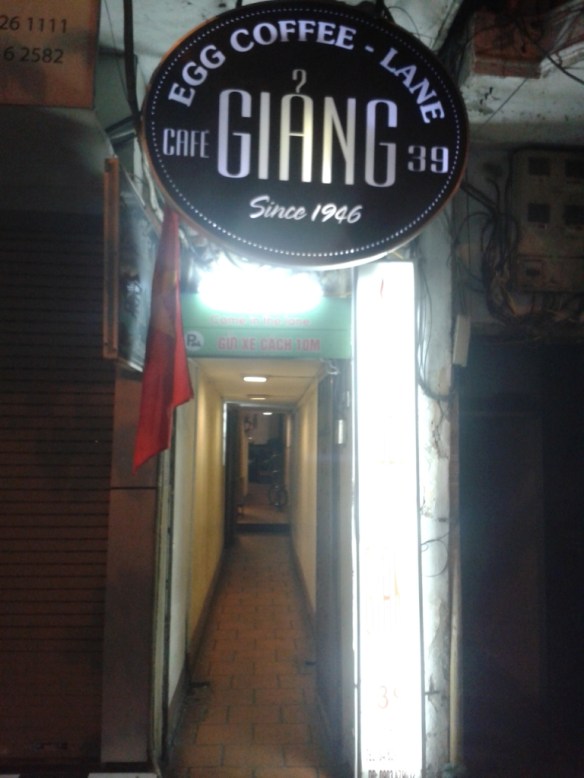
DAILY PHOTO: Egg Coffee, Hanoi

Taken in Hanoi in December of 2015


Egg coffee is a Hanoi staple. It’s made with egg yolk, condensed milk, and sugar so it’s not exactly low-cal, but it tastes delightful. The scuttlebutt is that it was invented when milk was in short supply during the war. The beverage is said to have been invented at Giang Cafe, but I couldn’t say for certain that it’s the same Giang Cafe we were at (shown above.) However, the place did have the feel of a local institution. Imagine people huddled around tiny tables on stools, the floor coated with sunflower seed shells, and nary an empty stool in the multi-floored establishment.