POEM: Will 2021 Be the Year…

One has to love the irrational exuberance of people who believe they’ve reached the finish line, the end of the worst possible 366-day period imaginable, as if the world will reset at midnight, as if waking up on January first will be waking up from a year long dream that was usually a nightmare, but was, at its best, a bizarre and incoherent (but emotionally-charged) dream.

I can’t help but wonder if 2021 will be the year in which…

–a ferry sinks in tropical waters, struck by an iceberg

–the virus will mutate on the eve of my vaccination day

–the drone of Brood X will get on last nerves, triggering a tsunami of riots

–a tsunami of water will wash away beachfront property

–there will be a plague of frogs [did we have one of those? I lost track.]

–aliens will land

–AI will make its move

–someone will misplace a thermonuclear warhead

It’s not that I’m a pessimist, I just don’t think Lady Fortuna will acknowledge Auld Lang Syne as stop sign, or as a bump in the road.

Our 2020 in Travel: Strange, but Not Disappointing

On January 1, 2020, we returned to Bangalore from Doha, Qatar — a long layover to thaw from Christmas 2019 in Budapest. Little did we know, this would be the only time that we’d be outside of India all year. Late in 2019, we’d been spit-balling 2020 travel to two or three other countries, one of which — China — rapidly became unlikely given the epidemic rippling out from Wuhan.

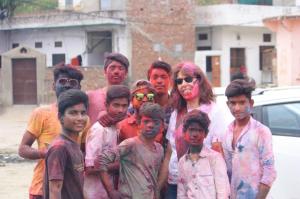
With COVID-19 cases in India still paltry and concentrated in a few locations, we went forward with our early March Holi trip to Jaipur, followed by Hola Mohalla in Anandpur Sahib — traveling via the bizarre planned city of Chandigarh. This trip would be our last by airplane for 2020. Mid-March was when the virus started to be viewed as worrying, and, by late March, an extensive lock-down would be implemented that would keep us home until mid-summer. 
There was a bright side to the restrictions. India has many sights that are difficult to get to, but which are worth seeing, including many in our home state of Karnataka. Therefore, when restrictions eased and intrastate travel became possible, we focused on seeing some of the South Indian sights that we’d never gotten to before — mostly because they were relatively inconvenient to reach.

Our first, tentative, explorations were just outside Bangalore at the beginning of July. One of which, Ramanagara Hill, we’d visited on previous occasions. The other, Chennagiri Hills, was new, but it was right next to Nandi Hills — a place we’d visited previously. All went well, except that, as we hiked down from Chennagiri Hill, an irritated official griped at us that it was closed (since said official apparently didn’t get to his post ’til about noon, we — and numerous other trekkers — had already passed through without knowledge that it was “closed.”)

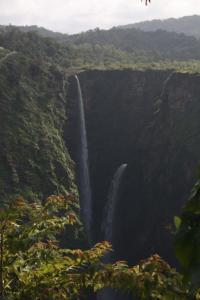
For the rest of the year, our travel focus would be on reaching some of the fruit beyond the low-hanging bits we’d already seen. In late August, we traveled to Gokarna and Jog Falls, the former is the most popular beach destination in coastal Karnataka and the latter is the second highest plunge waterfall in India.

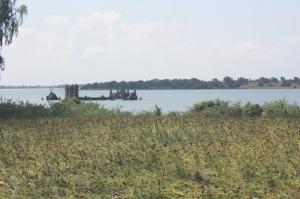
In October, we ventured out to the Sakleshpur area, a locale on the road to Mangalore near which we saw a sunken cathedral, a star-shaped fort, fog-enshrouded mountains, and some lesser-known Hoysala temples, (having seen the famous Hoysaleswara Temple at Halebidu as well as the one at Belur on previous occasions.)
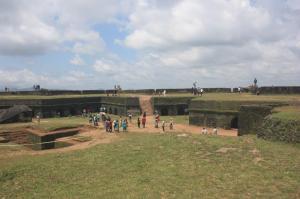
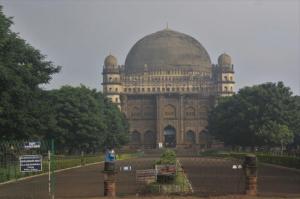
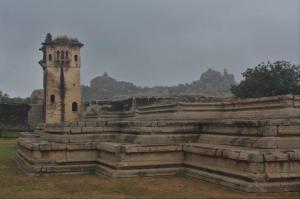
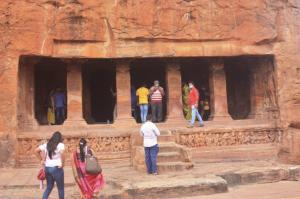
At the end of November, we participated in a North Karnataka tour run by the State Tourism Corporation (KSTDC.) The tour included Hampi, which we’d visited previously, but we still managed to see a couple things we’d missed on our first visit. The bulk of the tour, however, were places that were entirely new to us, including: Badami Caves, Pattadakal, Aihole, and Vijayapur (Bijapur.) The tour highlights were Badami and Gol Gumbaz (in Bijapur.) This trip went off without a hitch other than a learning curve about ASI’s (Archeological Survey of India’s) new system by which one had to purchase tickets online. The biggest problem we faced was that many of these sites are in places with — at best — spotty cell coverage. The part that was not so much a problem but an offense to logic was that, while the system was meant to reduce interpersonal contact to fight COVID [no need to exchange money with a ticket taker,] theory and practice diverged and — in practice — it usually meant about eight different guys handling one’s phone in lieu of the single-point of contact of a ticket-seller.
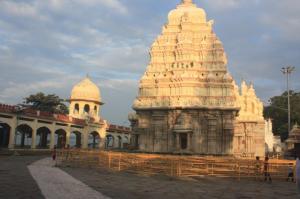
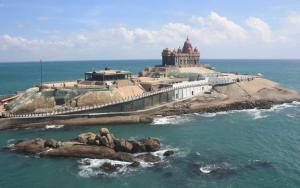
That brings us to December, which was the first and only time this year (since returning from Doha) that we traveled outside of the state of Karnataka. We toured southern Tamil Nadu. The trip started with a sleeper bus down to the tip of India. [The tip of peninsular India. The point in India that is furthest south is on an island in the Nicobar archipelago, but Kanyakumari — where we visited — is a town where the landlocked piece extends furthest south.] We then took a car from Kanyakumari to Rameshwaram, a pilgrimage town located out on an island that juts toward Sri Lanka, passing huge wind farms and salt “fields.” (The latter look a bit like unplanted rice paddies.) From Rameshwaram, we rode over to Madurai before catching a bus back to Bangalore.
So ended our year in travel.

On Saturday our 2021 travel is supposed to begin with another KSTDC tour of Nagarhole (a national park that is home to tigers and elephants) and Bylakuppe (the largest Tibetan settlement in southern India.) After that, who knows?

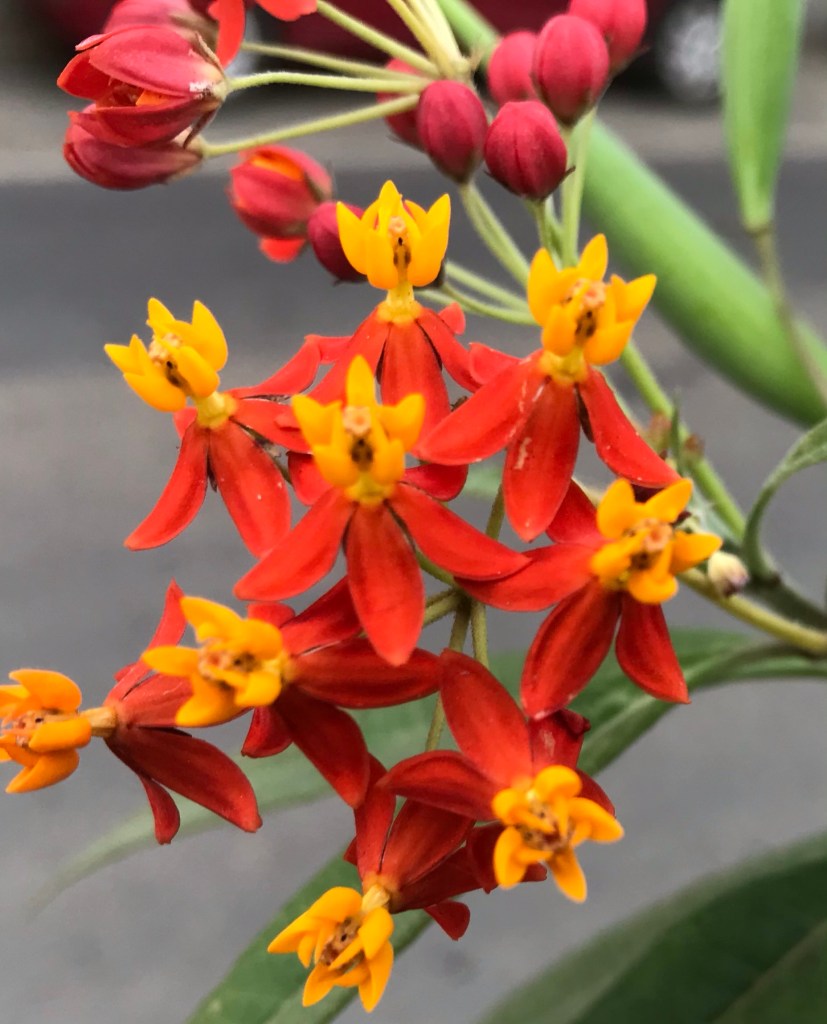
DAILY PHOTO: Colorful

Taken in Bangalore in December of 2020

POEM: A Sinking Feeling

lead boot sinking,

looking up to halo’d light,
a light that gets smaller & dimmer
as one plunges down through cold waters —

deeper & dimmer;
&
dumber & numb-er;

until there’s nothing left to exhale,
and every urge to fatally inhale

BOOK REVIEW: Introducing Aesthetics: A Graphic Guide by Christopher Kul-Want

Introducing Aesthetics: A Graphic Guide (Introducing...)Introducing Aesthetics: A Graphic Guide by Christopher Kul-Want
My rating: 4 of 5 stars

Amazon.in page


This volume is one in a large series of books that provide concise outlines of various subjects using graphics for support. In this case, it examines the philosophy of aesthetics. Aesthetics (the study of perception, sensation, and beauty) is a sub-discipline of axiology (the study of value), which – in turn – is a sub-discipline of philosophy.

The book consists of over one-hundred short (1 to 2 page) sections that present aesthetics from various angles. Some of that chapters focus on philosophers that had a particular impact on the subject, including: Plato, Aristotle, Aquinas, Kant, Hegel, Adorno, Nietzsche, Barthes, Derrida, and Lyotard. Others examine the approaches to evaluating aesthetics during various eras, including: ancient, medieval, Renaissance, the Enlightenment, Romance, Modern, Post-modern. Some define key terms, and others relate the subject to the broader human world. Still others relate the subject to other philosophical concepts, such as: reality, semiotics, or modes of governance and economy. There are sections that explore the subject’s classic questions, such as: “Are truth and beauty synonymous?” and “Should art have a purpose, and – if so – what?”

This entire series uses graphics as a support for the text. As with many of the books in the series, this volume mostly uses cartoon drawings that repeat key lessons from the text, sort of like an elaborate text-box. I can’t say that there was any point at which these graphics made anything easier to understand, but they don’t hurt either.

I found this book useful in getting a basic overview of the topic. There were times when it felt like it was straying from the topic of aesthetics, but I think that was just because so much of philosophy from post-modernism onwards looks at everything through a certain lens, regardless of whether such an examination seems particularly relevant or not (e.g. psychoanalysis, Marxism, etc.) [It’s interesting to think about “Communist Aesthetics” as the very term seems like an oxymoron. If you’ve ever seen the brutalist architecture or sculptures of Cold War Eastern Europe, you might conclude that the absence of aesthetic viewpoint was the prevailing Communist aesthetic viewpoint.] At any rate, while the book is not highly engaging reading, it’s a quick and concise outline of the subject (which is what it’s meant to be.)

View all my reviews

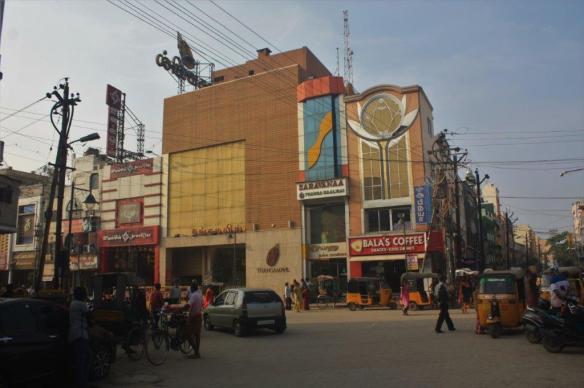
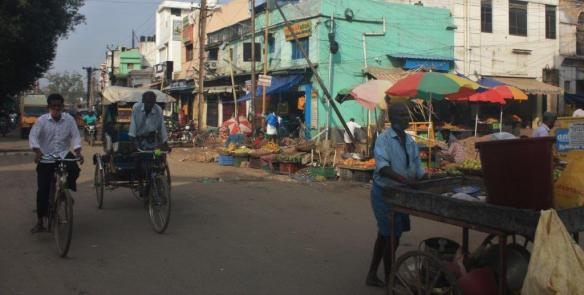
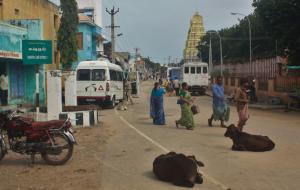
DAILY PHOTO: Madurai Street Scenes

Taken on December 21, 2020 in Madurai

POEM: Awaiting Winter [Sonnet]

The winter skies are drifting slowly in,
and soon the snow will begin to amass —
the powder settling so scant and thin,
accruing between blades of withered grass.

How many times will skies sputter, thusly
without it piling up or drifting deep?
Just coating soil like the world went dusty —
not snow one shovels but the kind one sweeps.

A child’s and an adult’s prayers differ.
While grown-ups are content to prolong Fall,
kids wish that winter will get here quicker —
but all wish Christmas snow will come to call.

“And when will snow liven our bleak doorstep?”
A question I once asked, but now forget.

DAILY PHOTO: Colorful Boats & a Church on the Shore

Taken on December 17, 2020 in Kanyakumari.

BOOK REVIEW: Chu, Vol. 1 by John Layman and Dan Boultwood

Chu, Vol, 1Chu, Vol, 1 by John Layman
My rating: 4 of 5 stars

Amazon.in page

Out: January 26, 2021


The unique element of this book is its food-centric premise, and – in particular – the existence of food-based extrasensory perception. The central character, Saffron Chu, is able to read the mind of anyone nearby, if she eats the exact same thing that person is consuming as he or she consumes it. Saffron is part of a criminal gang that conducts high-value burglaries. Saffron’s brother, Tony, has a different (and much grosser) food ESP in that he can get psychic impressions from sampling the deceased at crime scenes (i.e. a bit like “iZombie” but he doesn’t have to eat brains; it can be blood or viscera that he tastes.) [Actually, his power is broader than that in that he can get impressions off of anything he eats, except – for some reason – beets, but the tasting of blood and gore is most relevant to his role in this story.] Tony is a police detective.

The story begins with the crew that Saffron belongs to bungling the burglary of a powerful crime boss. Keeping with the critical role of food, the burglary fails because a city-wide outbreak of food poisoning attributable to tainted chicken strikes part of the crew, and only Saffron and her charming, if douchey, Dick Dastardly-looking boyfriend – Eddie Molay – escape. The rest of the story revolves around Saffron and Eddie trying to survive and escape revenge attacks from the crime-lord who they attempted to rob. As the couple is doing so, Tony and his partner are assigned to solve the murders of the burglary-gone-awry from which Saffron and Eddie escaped, as well as some of the subsequent cases that ensue.

Family is a major element of the story’ tension. The cat-and-mouse between Tony and Saffron is only part of this, though it is a central element of the story. These characters are also put in situations in which they must determine if family comes before the other things they value, and they must cope with the fact that whatever they do happens within a familial context – i.e. they each have to face the shame of the family knowing who they truly are.

The art is whimsical, colorful, and easy to follow. The classic cartoony nature of the drawings is beneficial in maintaining a tone that is lighthearted, despite the many gruesome deaths that are depicted in graphic, but comically absurd ways.

This volume collects the first five issues (#1-5) of the series. I enjoyed the story, which was straightforward and entertaining. The premise of the book is unique, if odd — but better bizarre than cliché.

View all my reviews

BOOK REVIEW: King Edward III by William Shakespeare

King Edward IIIKing Edward III by William Shakespeare
My rating: 5 of 5 stars

Amazon.in page


This play, one of the histories attributed to Shakespeare, is among those that have only in recent decades come to be included in The Bard’s canon. While the current consensus among Shakespeare experts seems to be that this play was authored or co-authored by Shakespeare, it remains possible that it wasn’t or that it was only partially written by him. [Fun fact: Shakespeare was known to collaborate, even though only experts know anything about any of his collaborators — and even then it largely seems to be educated guesswork.]

This is not among the most narratively satisfying of Shakespeare’s plays, but histories inherently face the issue of following the events as they happened – at least in some degree. Even kings don’t necessarily live drama-shaped lives. The play addresses two major events in Edward’s life. The first is his unsuccessful wooing of a beautiful Countess after the King’s forces drive back a Scottish attack on the Earl of Salisbury’s castle. This part follows the common dramatic theme of the mere presence of a beautiful woman draining men of both virtue and smarts. For a time, the Countess simply rebuffs Edward’s advances, but when that doesn’t work, she tells him that the only way they can be together is if each one murders their current spouse. The Countess only says this to snap Edward out of it, but when he agrees to take her up on the bargain, she changes tack. She tells Edward that if he doesn’t quit his pursuit of her, she will end her own life. This does snap Edward out of his horn-dog induced insanity.

The second story line involves King Edward’s fight to claim the crown in France. While many will find this the more gripping part of the play, it’s not King Edward III, but rather his son Prince Edward, who is really the hero of this fight. It’s Prince Edward who is engaged in the most savage fighting and who narrowly ekes out a victory.

While this may not be as engaging and gripping as Shakespeare’s tragedies or comedies, it is an interesting way to glimpse history. I have little knowledge of British history, and can’t really say how accurate the depiction of events is, but Shakespeare generally follows the basic contours of events as accurately as was probably known at the time. I highly recommend all of Shakespeare’s works, but if you don’t have time for them all, this is probably one you’ll set aside for the time being.

View all my reviews