DAILY PHOTO: Giant Maitreya of Diskit

Taken in August of 2016 in Diskit, India

Taken in August of 2016 in Diskit, India


It’s over 100ft (30m) tall.


A Maitreya is a “future Buddha,” meaning a Buddha who hasn’t yet appeared, but who was prophesied to live in an era to come. For people unfamiliar with Buddhism, this might seem strange. The Buddha we normal think of is Gautama Buddha, or the Shakyamuni Buddha (Siddhartha Gautama.) He was the founder of the religion, but one of many said to have achieved enlightenment. In other words, the Buddha we think of was an awakened one, not the awakened one.

BOOK REVIEW: William Blake: Selected Poems ed. Paul Butter

Selected PoemsSelected Poems by William Blake
My rating: 4 of 5 stars

Amazon doesn’t carry this edition.

So, e-Bay

Blake’s “The Tyger” is one of my favorite poems, and one of the few that I’ve bothered to memorize. Even if the words made no sense, they sound beautiful together, but not only do they make sense they forge powerful imagery. Blake wrote many poems that managed to be both pleasing to the ear and meaningful.

This collection consists of about 80 poems and fragments (of longer poems) that are pulled from Blake’s collections. Much of Blake’s work is about nature, though the worlds of man and the divine also feature prominently. With respect to the human world, poems about children are particularly common. Most of the poems and partials fit on a single page or two, but some are as short as a four-line stanza and others are as long as a dozen pages.

The compiler of the poems, Peter Butter, doesn’t feel the need to pile in rambling prologues and introductions—a plus in my opinion. The only ancillary matter consists of two timelines: one of Blake’s life, and one of with key events that happened over the course of his life. I will say that these two timelines are confusingly arranged in the edition that I read. They are two pages each, with the pages of each facing each other. So, as one flips, one reads a page of life history, one of world history, one of Blake’s history, and one of world history. Either rearrangement of pages or formatting changes would fix this right up.

This is a great little collection with which to get a taste for Blake. I’d recommend it for those who want some of his classics and some others, but without the need to wade through unabridged collection—in case he turns out to not be your cup of tea.

I’ll leave you with one of my favorite lines from the collection: “Wisdom is sold in the desolate market where none come to buy,”

View all my reviews

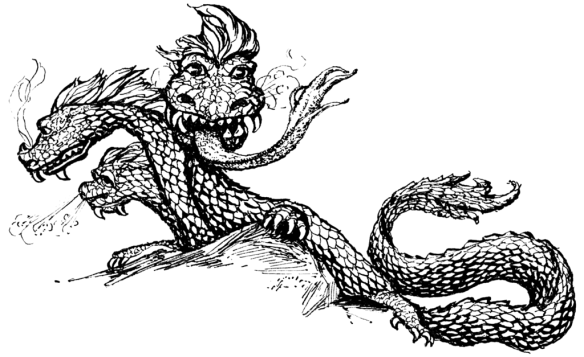
POEM: Thar Be Dragons

Source: Wikipedia (Public Domain)

Source: Wikipedia (Public Domain)


Where dunes are whisked in wisps down the valleys

Quiet as midnight in pitch black alleys

Thar be dragons

Where boxes tumble into churning seas

Submerging with the ease of a sea breeze

Thar be dragons

When you twitch into the deeps of sleep

Amid the bleating of counted sheep

Thar be dragons

DAILY PHOTO: Namgyal Tsemo of Leh

Taken in August of 2016 in Leh

Taken in August of 2016 in Leh


From the Shanti Stupa

From the Shanti Stupa

From the base

From the base

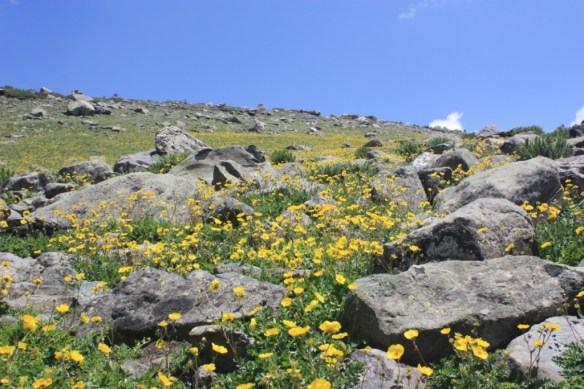
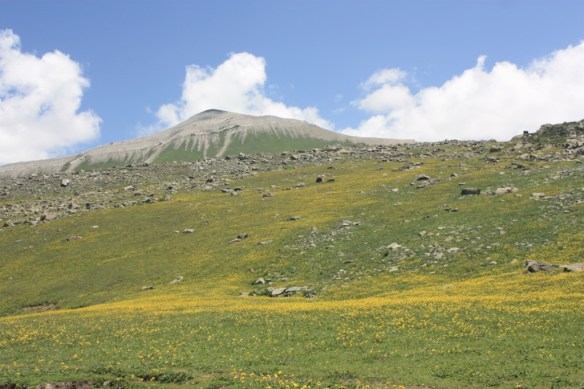
DAILY PHOTO: A Spray of Yellow Flowers in Kashmir

Taken in Kashmir in August of 2016

Taken in Kashmir in August of 2016

IMG_1318

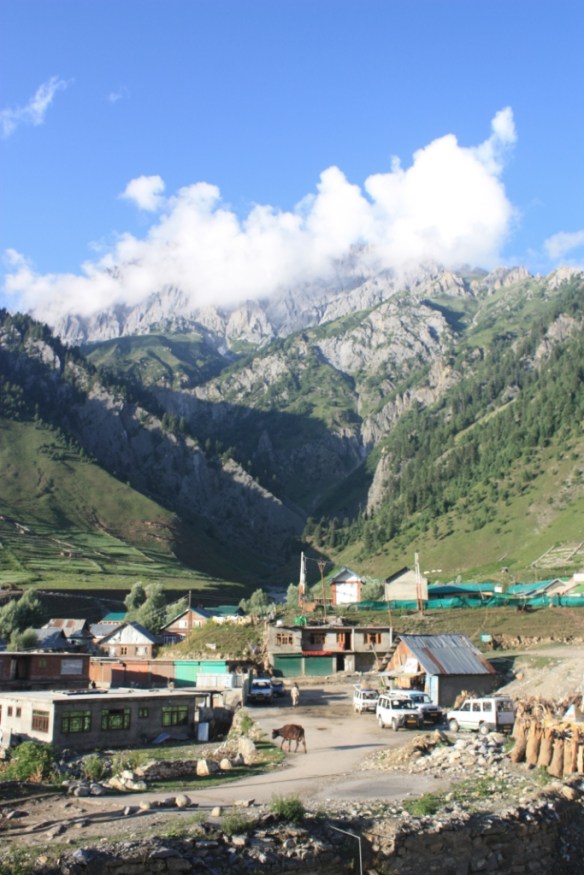
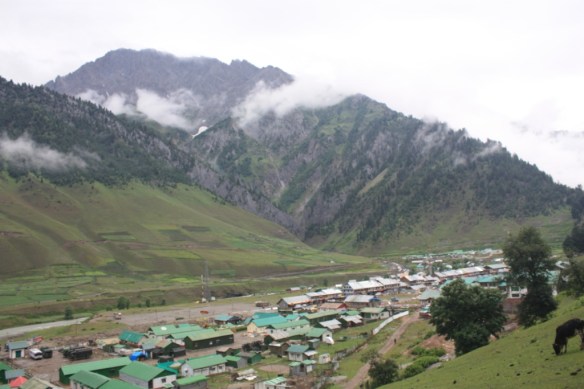
DAILY PHOTO: Sonamarg

Taken in July of 2016 in Sonamarg

Taken in July of 2016 in Sonamarg


IMG_0899

BOOK REVIEW: The Story of the Human Body by Daniel Lieberman

The Story of the Human Body: Evolution, Health, and DiseaseThe Story of the Human Body: Evolution, Health, and Disease by Daniel E. Lieberman
My rating: 4 of 5 stars

Amazon page

The story that this book tells is of a human body adapted and optimized for hunting and gathering that has been thrust by agricultural and industrial revolutions into conditions for which it is ill-suited. The central idea is that of the “mismatch disease.” The mismatch in question is a mismatch between the lives humans were evolved to lead and the ones that we have developed through cultural and technological progress. The human body is governed by what Nassim Nicholas Taleb calls “anti-fragility” or what biologists call “phenotypic plasticity.” Both terms say that our bodies get stronger when exposed to physical stressors and weaker in the absence of such stressors. We’ve now used culture and technology to reduce exposure to such stressors, while—at the same time—food is more available than ever and is in calorically dense / nutritionally sparse forms. This mismatch accounts for many problems. Of course, technology has also allowed us to reduce our exposure to dirt and germs, and this, after being once a boon, has begun to swing us into dangerous territory.

The 13 chapters (including the introduction) are divided into three parts in a logical manner to address the book’s objective. After an introduction that lays groundwork for understanding human evolution in a broad sense, the first part describes human evolution up to the point where culture became dominant force for our species. It clarifies how we became bipedal, how our diets developed, how we got smart, and the ways in which the aforementioned characteristics are interconnected. The second part shifts from Darwinian evolution to cultural evolution, and—in particular—elucidates the effects that the agricultural and industrial revolutions had on the human body. These cultural forces act much faster than evolution. While some argue that humans aren’t really subject to evolutionary forces anymore, owing to cultural and technological advances, Lieberman points out that Darwinian evolution does still effect humanity, but its effect is muted by comparison to fast-acting cultural developments. The final part looks at humanity in the present and projects out into the future. It considers what effect an over-abundance of energy and a declining need for physical activity have had on our species, and what can be done about it.

This book is thought-provoking, well-organized, and uses narrative evidence and humor to enhance readability. (A discussion of the absurdity of products in the Skymall catalog—e.g. luxury items for pet—is a case in point.) It certainly gives on a good education about human evolution. Furthermore, while there are many books out there that deal with mismatch as a cause of diseases like obesity and diabetes, Lieberman also addresses under-explored issues like postural problems from chairs, the influence of shoes on running gait, and the development of nearsightedness because of our close-focusing ways.

I’d say the book’s greatest flaw comes in its discussions of solutions at the end. The author puts all his eggs in the basket of wholesale solutions aimed to make society as a whole improve, while he could do more to share the details of what individuals can do to solve their own problems. Lieberman considers why natural selection won’t solve problems of mismatch and dysevolution. Then he considers how research and development and educational campaigns can only provide partial solutions. His ultimate solution is suggesting regulatory paternalism—e.g. what economists call Pigovian taxes–taxes designed to change behavior by making bad behavior (in this case sedentary lifestyles and over-eating / malnutrition) more expensive. Perhaps such solutions (which will remain political untenable for the foreseeable future in the US, at least) may be necessary, but one shouldn’t conclude that readers with better information and ways of approaching the problem can’t make a difference. I say this based upon the fact that a substantial (if minority) portion of the population is already doing the right thing—eating right, exercising, and not succumbing to modernity’s creature comforts. I, furthermore, say it as a one trained as an economist who has seen easier attempts at paternalism fail over and over again.

I’d recommend this book. I think it gives the reader insight into the problems caused by being evolved to be one thing while being groomed by culture to be another.

View all my reviews

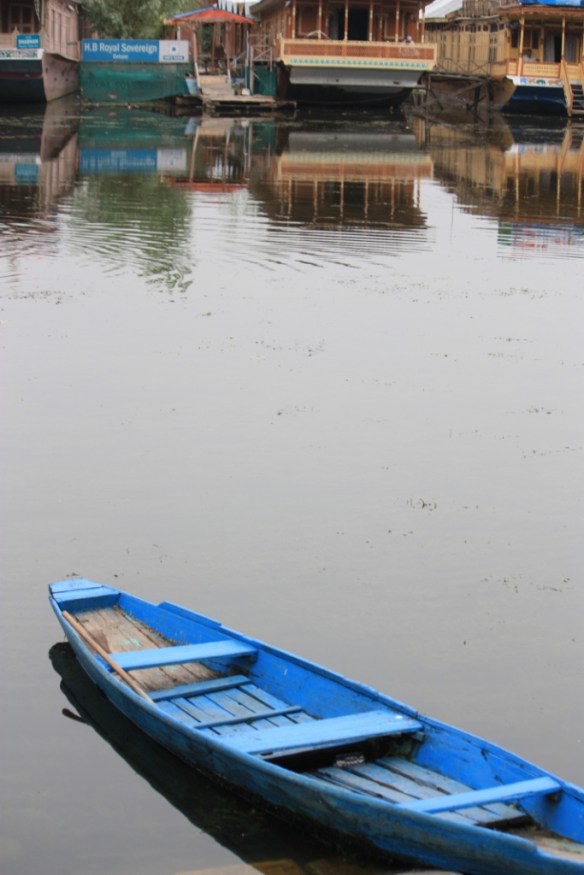
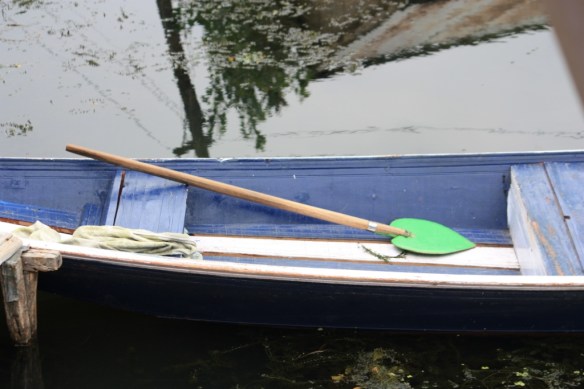
DAILY PHOTO: Blue Boats of Dal Lake

Taken in July of 2016 in Srinagar

Taken in July of 2016 in Srinagar

IMG_0643 IMG_0650 IMG_0655 IMG_1088

BOOK REVIEW: Missing Microbes by Martin J. Blaser, MD

Missing Microbes: How the Overuse of Antibiotics Is Fueling Our Modern PlaguesMissing Microbes: How the Overuse of Antibiotics Is Fueling Our Modern Plagues by Martin J. Blaser
My rating: 4 of 5 stars

Amazon page

This is one of several popular human biology books of recent years to take note of the fact that your body’s cells are outnumbered 10 to 1 by the bacteria that live in and on you—mostly in your digestive tract—and that our penchant for killing microbes has begun to show signs of harm as well as good. Since the germ theory took hold, we’ve been slaughtering all the little buggers we could, but increasingly we’ve learned that this isn’t without costs. In essence, we’ve been throwing out the baby with the bath water when it comes to our bacteria, while at the same time creating super-bugs.

As a first-worlder who’s been living in the developing world (India), I sometimes get ask if I get sick here a lot or at all. My stock response is to ask the asker whether they have Crohn’s Disease, IBS, Type II diabetes*, or any of the other diseases of affluence seen mostly in the first world. (*Type II diabetes is becoming much more prevalent in the developing world, notably in India where they like their deserts about 9000 times sweeter than, say, a fudge brownie. Furthermore, the disease has disproportionate effects in such countries because of limited treatment availability and late diagnosis.) In many cases, these developed world diseases are being tied to the killing off of our good gut bacteria.

Doctor Blaser’s book focuses on how overuse of antibiotics creates problems. For those who say, “I don’t get no stinkin’ antibiotics when I’m sick. I just suffer it out. Ergo, I don’t need to read this book,” there remain facts of which you should be aware. One such fact is that some of the antibiotics injected into the animals that become our food can act against our own personal microbiome. Yet another is that antibacterial soaps and gels are ubiquitous. Furthermore, the increased popularity of C-sections has starved infants of a source of good bacteria, and made them more prone to certain childhood illnesses.

“Missing Microbes” is organized into 16 chapters. The first discusses many of the “modern plagues” that have come about through the wholesale war on bacteria. The next couple chapters look at the role of microbes on the planet and in our bodies. There is a discussion of increasingly successful pathogens as well as the drugs that came along to take care of them. There is a discussion of over-prescription of antibiotics by dentists and doctors, their use in agriculture, and the transfer of good bacteria from mother to child and how rampant use of C-section negates this transfer. There are a couple of chapters on H. pylori and the lessons learned from trying to eliminate it after it became tied to ulcers. (In one of the most famous stories in modern medicine, a researcher swallowed a beaker of H. pylori to prove his theory to a skeptical audience of physicians.) Asthma is discussed as an example of an illness one might not expect to come about from destroying gut bacteria. One of the effects covered over two chapters is getting bigger (re: fatter as well as taller.) Staving off disease under crowded conditions isn’t the only reason modern agriculture uses antibiotics, it also makes for big, meaty animals—which when eaten by people may make big, meaty (actually, fatty) humans. Blaser then talks about how bad the situation might get (using the term “antibiotic winter,”) before discussing solutions. It’s, of course, true that humanity has gained a lot from antibiotics, and so putting the genie back in the bottle is not a solution. A nuanced approach is called for, and that’s what the author discusses.

I found this book to be informative, and would recommend it to anyone wanting to learn more about the risks presented by overuse of antibiotics.

View all my reviews

DAILY PHOTO: Horses of Sonamarg

Taken in July of 2016 in Sonamarg

Taken in July of 2016 in Sonamarg