The lake is glassy in August.
 The air and sky are oh-so clear.
 Vapor steams off of Yunmeng ponds,
 Ripples lap at Yueyang's piers.
 There're no boats to cross the water.
 Shame! I couldn't emulate sages.
 I sit and watch a fisherman
 And envy his catch and his wages.
This is poem #124 in 300 Tang Poems [唐诗三百首.] Original Poem in Simplified Chinese:
Slender grass waves in a light breeze;
   Tall-masted boat rocks in the night.
 Stars hang low, over the vast plain;
   The river moon struggles for height.
 I'll never gain fame by the brush --
   Too old for civil service posts...
 Wading, wading, what am I like?
    A sandpiper on the mud coast!
View flowers like a bandit;
  Let nature flow through you,
  Breathing in the Great Way
  As you let your crazy brew.
 Wander like the free winds --
  Sea and mountain in gray-blue.
  Feel true power overflow,
  As all nature lives through you.
 Before: sun, moon, and stars;
  Behind: the one from two.
  By dawn, sea turtles have gone,
  Soak your feet where they withdrew.
NOTE: The late Tang Dynasty poet, Sikong Tu (a.k.a. Ssŭ-k‘ung T‘u,) wrote an ars poetica entitled Twenty-Four Styles of Poetry. It presents twenty-four poems that are each in a different tone, reflecting varied concepts from Taoist philosophy and aesthetics. Above is a crude translation of the eleventh of the twenty-four poems. This poem’s Chinese title is 豪放, which has been translated to “Free,” “Set Free,” and “Broad-minded” in various English language translations.
Without a word,
   The gist is grasped.
 With no wails or soft sobs,
   Sadness spreads heart-to-heart.
 There is an enigmatic Prime Mover
   With whom each of us either sinks or floats.
 Dregs of rustic wine in a fine strainer.
 Buds on the cusp of bloom turned back by cold.
 Dust motes spreading by Brownian motion.
 Sea spume floating and tumbling onto shore.
    Shallow, deep, cohering, or scattering.
 Of ten thousand, any sample will do.
NOTE: The late Tang Dynasty poet, Sikong Tu (a.k.a. Ssŭ-k‘ung T‘u,) wrote an ars poetica entitled Twenty-Four Styles of Poetry. It presents twenty-four poems that are each in a different tone, reflecting varied concepts from Taoist philosophy and aesthetics. Above is a translation of the twelfth of the twenty-four poems. Translated titles vary: Herbert Giles entitled this one “Conservation,” whereas Tony Barnstone and Chou Ping called it “The Implicit Style.”
Stoop anywhere and pluck it up,
 But if you look 'round - it's not there.
 Any path may lead you to it.
A stroke of the brush becomes Spring,
 And the flowers are in full bloom. --
 It's like seeing a new year dawn:
 Snatch at it and you won't have it.
 Seize it by force and you'll be poorer.
Be like the old mountain hermit --
 Like duckweed gathered by stream flow.
Find calm amidst storms of feeling
 By knowing Heaven's harmonies.
NOTE: The late Tang Dynasty poet, Sikong Tu (a.k.a. Ssŭ-k‘ung T‘u,) wrote an ars poetica entitled Twenty-Four Styles of Poetry. It presents twenty-four poems that are each in a different tone, reflecting varied concepts from Taoist philosophy and aesthetics. Above is a translation of the tenth of the twenty-four poems.
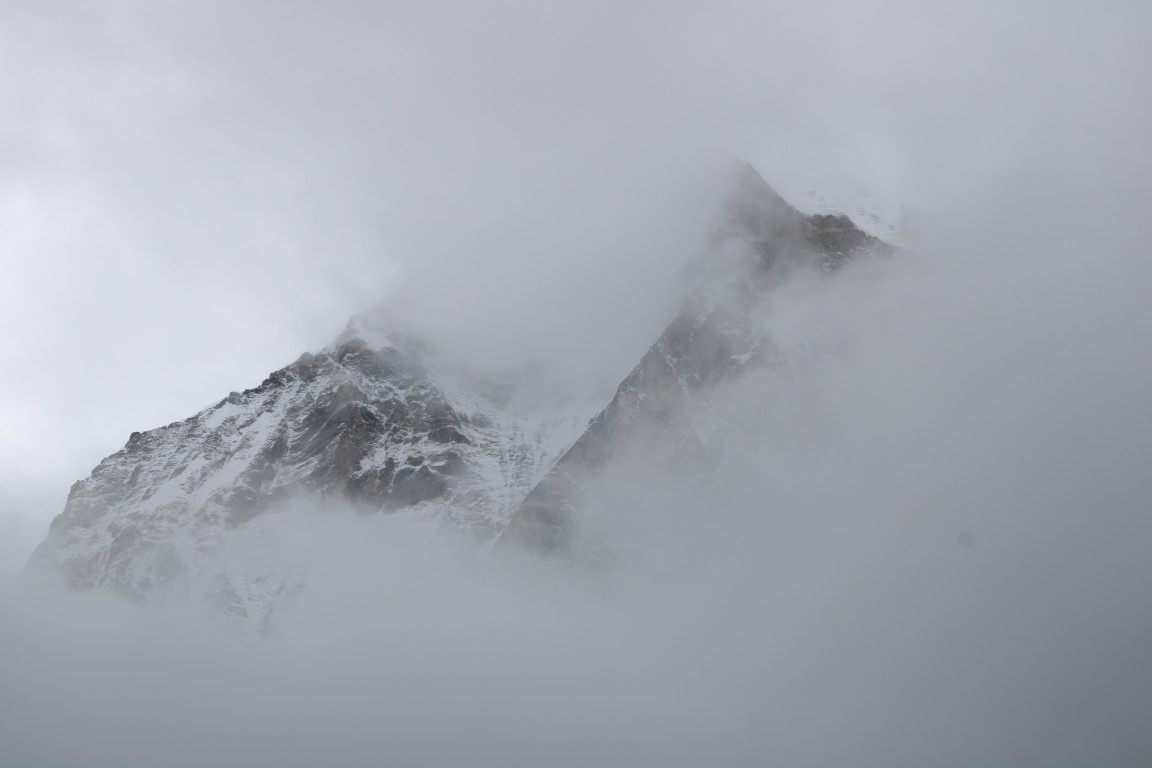
I question a local boy under a pine.
 He says, "Teacher is gathering herbs
          right here on the mountain...
 But who can say where?
 The mountain is thick with clouds."







 Tiger Riding for Beginners