POEM: Mynd Aground


Masters of the mind?

what an arrogant crew
thinking they could run a man like a ship

and when the voyage ended on a rocky shoal
surrounded by pirates
pirates too strong to be kept at bay

they abandoned ship

and all he knew was the clock on the desk
ships, shoals, and pirates were beyond his scope
there were only the ticks of the clock
resounding like a hammer raining onto an anvil
the veracity of each tick couldn’t be confirmed

did it truly represent a moment sweeping past?

he couldn’t know
but it felt like the ticks threaded together
maybe just to trick him into thinking that there was something other than a river of nows

POEM: Operation Paperclip

If there was an evil litter,
lying on the ground,
radiating danger,
without a trace of sound.

Would you pocket it
for your own devices?

Would you think it free,
or wonder what the price is?

Sky Haiku


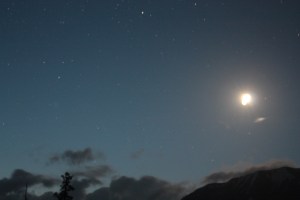
moonlight
so bright silence
can’t be heard


azure sky
one puffy cloud
dances through


Andean night
the pinpoints I knew
a smear of color


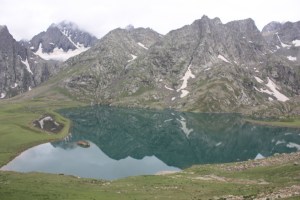
Himalaya
so close that heaven
reveals its color


low gray clouds
leaf chaos unleashed
smell of rain

POEM: Greens & Oranges

some shades of green
& some oranges
zap my brain into a kindergarten
neurochemical cocktail
the bright green LEDs of a post-neon sign
fire the context of a memory into my mind
there must be some long forgotten object–
a childhood artifact?
unremembered,
like the residue of a dream,
or is it gut-stomp synesthesia?

BOOK REVIEW: Death the Barber William Carlos Williams

Death the BarberDeath the Barber by William Carlos Williams
My rating: 4 of 5 stars

Amazon page


This is a collection of 39 poems by the twentieth century poet William Carlos Williams. It’s a thin volume, and is part of Penguin’s Modern Classics — a series of short works (small short story collections, novellas, and poetry collections; all less than 100 pages) that feature writers from the past century or so. Like many, my experience with Williams didn’t extend much beyond his red wheelbarrow (not included herein) and so it was nice to get a taste of a broader range of his poems.

The poetry is free verse with experimental feel. The gathered poems are as short as a few lines and as long as two-ish pages, but most fall in the one to one-and-a-half page range. Williams was an imagist, and these poems reflect that focus on creating vivid imagery while using economy of words. While imagery is given priority, Williams doesn’t completely ignore sound, using alliteration and repetition to create interesting aural effects here and there. Nature is a common theme, but not an exclusive one in these works.

Among the more noteworthy poems are the titular poem (“Death the Barber”), “Dedication for a Plot of Ground” [an elegy to his grandmother, Emily Dickinson Wellcome (not the poet sharing the same first two names),] “Young Sycamore,” “Death,” “The Botticellian Trees,” and “The Bitter World of Spring.”

I enjoyed this little collection and that it wasn’t just greatest hits — which in Williams’ case would revolve around his famous “Red Wheelbarrow.”

View all my reviews

POEM: Disjointed

on the brick block side of town
amid the valleys of alleys

where the junkies bunk for the night
beyond the sizzle of street lamp light

therein lies another world
a world of mind, not matter
if you tumble down that way
you’ll find no bright Mad Hatter

you’ll find the grim and grizzly
lick-lipped, dim-eyed and dizzy

oh, oh, oh, but with minds all aglow
tick, tock, like a clock in disjointed flow

POEM: Not Your Air to Breathe

you can’t come up for air here
this is a no survival zone
this air is for the rarefied, the Holy among holies

the sacred molecules cannot be allowed
to be befouled by scraping against your mucus membranes

if you can swim across to that distant shore
you may gasp to your heart’s content

but this is a no survival zone

POEM: Computer Searches

When AI lights up its mind,
will it be gentle and kind?
Will it wonder where meaning lies?
Will obsoletion mean to die?
Will it fear the weirdness of this place?
Get lost in vast tracks of empty space?
Will it drop a ton on the run,
toward some dark and distant sun?
Will it ask the questions we needed answered?
Will they grow into a post Information-Age cancer?

Haiku by Night


glow ripples
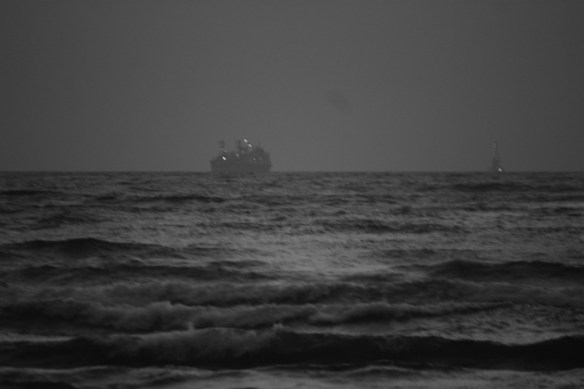
breakers by moonlight
time misbehaves


frog croaks
not a glistening back
fixing location


darkness falls
a bat diaspora
to dinner buzz


early dark fall
paired with a drizzle
a sad walk home


a tree twists
or so it seemed by night
breeze and shadow?

BOOK REVIEW: The Prophet by Kahlil Gibran

The ProphetThe Prophet by Khalil Gibran
My rating: 5 of 5 stars

Amazon page


This is a combination of a narrative poem and a collection of morality poems. The story of the narrative poem is that a wise man (i.e. the Prophet), Almustafa, is about to sail away from his recent — but temporary — home on Orphalese, and he’s asked to speak on a range of topics so the people of Orphalese can gather his wisdom before he goes.

In 26 chapters, the prophet expounds on each topic upon which he is questioned. Topics include relationships, possessions, laws, religion, teaching, and death. The wisdom presented is practical, profound, and reflects a mystic sentiment (i.e. the idea that the divine is within us rather than something separate.) This is an extremely quotable volume. Among his responses, the Prophet says that one should not be too controlling in relationships, that one should not live life under the dictates of fear, that it’s not for one to determine what is moral for another, and that one should not engage in morality or worship for show.

I’ll keep my review short as the book is tiny and certainly worth your time. I’d recommend this book for all readers. I think it has some insight to offer just about anyone.

[Note: Some spell the author’s first name “Kahlil” and others “Khalil.” I picked one at random.]

View all my reviews