BOOK REVIEW: Odyssey by Homer [A. Pope translation]

The OdysseyThe Odyssey by Homer

Translated by: Alexander Pope

Amazon page


This epic poem tells the tale of the action-packed return of the King of Ithaca, Odysseus (Ulysses in Latin,) from the Trojan War, as well as, of his resumption of the throne. The return home is harrowing because, early in the journey (though not in the story,) Odysseus blinds a cyclops that turns out to be the son of the sea god Poseidon (a.k.a. Neptune.) Because he incurs the wrath of Poseidon, the journey which – even in the rickety sailing / rowing ships of the day – would have taken a few weeks, took ten years, most of which he was the guest / hostage of the nymph Calypso. Retaking the throne was challenging because he was enshrouded in a disguise by Athena (a.k.a. Pallas) so he couldn’t just walk right up and say “remember this face, I’m the boss.” The disguise is donned so he can make sure his wife, Penelope, is being faithful (despite the fact that he’s been schtooping nymphs, witches, and probably a few human women that don’t bear mentioning) and since throngs of suitors have descended on Penelope’s castle who would rather see Odysseus dead (in hopes of acquiring his kingdom) it’s safer all around to check things out in disguise.

The poem doesn’t take a linear approach. It begins twenty years after the war at Troy. Everyone who survived is back, except Odysseus and his men, and so a plague of suitors vies for Penelope’s hand in marriage so that one of them can acquire Ithaca’s wealth. Penelope, the picture of matrimonial virtue, is not having it, but Greek hospitality says you’ve got to feed and look after visitors (because they might just be gods in disguise.) The first few books not only set up the problem of the suitors but also follow Odysseus’s son, Telemachus, as he travels around trying to find out from those who returned from Troy whether they know anything about Odysseus’s whereabouts.

The poem then skips to where Odysseus was at the time of Telemachus’s travels, which was stuck on Calypso’s island. The gods intervene to force Calypso to let the King go, but Poseidon is still upset and swamps Odysseus’s ship. Odysseus washes up onshore and makes fast friends with the local king and queen. It is through friendly discussion that we hear about all the trials and tribulations of Odysseus’s journey up to that point. He tells the couple about how he blinded a cyclops with clever word play and a flaming stick, how Poseidon first tempest-tossed him, how he ended up on the island of the nymph / witch – Circe, how Circe turned his men into swine, how he survived the Sirens by plugging the ears of his men and tying himself to the mast, how he survived the horrifying monsters Scylla and Charybdis, how he visited the underworld and met with some comrades from the Trojan War, how he got stuck on Calypso’s island, and then how he ended up on the island on which he tells the story. The king and queen are big fans, and send Odysseus off with best wishes and some parting gifts.

Odysseus makes it back to Ithaca, is summarily dropped off on the shore with said gifts – while he’s sleeping. That’s when he gets his disguise from Athena. He reveals himself to Telemachus, but otherwise keeps it all on the down-low, even keeping his return from Penelope. Telemachus also has to be careful because many of the suitors would love to assassinate him because he’s the only male opposition to their plans (if you haven’t noticed, Ancient Greece was misogynistic.)

Odysseus checks out the town in his beggar disguise and is enraged that the suitor’s have overstayed their welcome, are eating all the island’s livestock – not to mention trying daily to get in his wife’s knickers. It all comes to a climax when a festival banquet takes place, and Penelope (who is always looking for creative and / or polite ways to put off her suitors) says that she’s willing to marry any among them who has the strength and skill to string Odysseus’s bow and shoot an arrow through a dozen axe heads (battle-axes with a hollowed out blade so the weight is reduced.) They all fail. Some have arms too puny to string the bow; others lack the accuracy to shoot through the rings. That’s when disguised Odysseus says he’d like a try. The suitors object that he’s a beggar and couldn’t possibly run a kingdom. Telemachus, who knows what is up and who is – with his mother – hosting the event, agrees to let the disguised King take his shot. He succeeds, and then goes on a killing spree of the suitors.

After the bloodbath, he has to take great efforts to convince Penelope that he is actually her husband, the King. The god-given disguise is only part of what makes Penelope doubt. Odysseus has convinced everyone else by then. However, Penelope has had men trying to get in the sack with her for a decade, and to her mind it wouldn’t be above some skeezy god to play this gambit to try to bed her. She thinks the killing spree smells of god-like activity. [Even by Hollywood standards one guy killing 108 suitors (plus who knows how many of their groupies and hangers-on) strains credulity.] But eventually she is convinced.

Then Odysseus has to go see his father, Laertes, who is not long for this world. It’s during this visit that a second wave of attackers comes, and the “feeble old man” Laertes puts a javelin through the chest of the first of them. Then there’s a divine intervention that keeps the bloodbath from rolling on.

The most commonly stated moral of the story is: don’t run afoul of the gods. [Put more broadly / secularly, this could be restated as: behave morally.] Of course, Odysseus is not particularly moral, and he ultimately does alright despite being a liar, a trickster, a cheater, and a hypocrite (not to mention the murderousness.) So, there might be an additional clause, i.e. “behave virtuously, but – if you can’t – be on good terms with a few choice gods.” In truth, “use deception skillfully” may be more of the true moral of the story. Being tricky is a major part of what gets Odysseus through when all about him are dying. Modern critics sometimes take as a moral: “If women be nutty, then men are stark, raving lunatics.” This is consistent with what we see in the story (and, perhaps, in life,) but it would probably be attributing more progressiveness to the blind poet, Homer, than was the case.

I read the Alexander Pope translation, which is surprisingly readable given that it’s from the early eighteenth century (1720’s.) There were a few turns of phrase that I couldn’t find anywhere in dictionaries or search engine, but nothing that caused a major misunderstanding. It is a metered and rhymed translation, so it’s fun to read. Still if one isn’t comfortable with reading archaic English (for example if one doesn’t like reading Shakespeare,) one might not find it as enjoyable and easy to follow. That said, the edition I read had a short prose synopsis at the start of each book (i.e. chapter,) and reading that increases comprehension of the verse [if you don’t mind spoilers, which – if you’ve read this far, you presumably don’t.]

I’d highly recommend reading the Odyssey, and I was pleased with the Pope translation.

View all my reviews

POEM: Ode to My Immune System [Day 8 NaPoMo: Ode]

I

Accused of failing to think about you,
I cannot deny that it’s true.
My lymph bristles with white blood cells
that make invading me treacherous hell.
And leucocytes are just a start,
marrow and spleen each play a part.
I can’t thank you all in this strophe,
but if I could I’d give you each a trophy.

 
II

I can’t say I recall each time I’ve been sick,
but my T-cells must surely have a nice trick
cause they’ve got them etched from first to last,
dating back fifty years in my past.
And if my thymus weren’t a taskmaster
I fear my life would end in disaster
for my body would self-cannibalize.
[And if that idea gives me teary eyes,
tears have antimicrobial enzymes.]
If I had to think about all the times
my NK-cells shivved a potential tumor,
I couldn’t maintain such good humor.

 
III

My ode is almost done, and many were left out.
The truth is there’s a lot that I don’t know about.
So, it’s not that I don’t love my antibodies.
Nor that I think their work is shoddy.
I just didn’t do well enough in Chemistry
to describe their heroism with rhymed brevity.
Skin, lung cilia, gut mucus, and macrophage
each deserve more words up on this page…

than have smarts to write.

POEM: A Few Clerihew [Day 7 NaPoMo: Clerihew]

Edmund Clerihew Bentley
delivered his sarcasm gently
with just four lines
using the simplest of rhymes


It’s said that Adolf Hitler
shoulda been killed when he was littler,
but maybe he’d not have been reigning
if someone had bought one of his paintings


Edgar Allan Poe
always wrote in the Flow
his secret was a life of melancholy
you don’t write “The Raven” while jolly


President Woodrow Wilson
might’ve lost votes in the millions
think how one would do
with first term Spanish Flu

BOOK REVIEW: A Little History of Poetry by John Carey

A Little History of PoetryA Little History of Poetry by John Carey
My rating: 5 of 5 stars

Out: April 21, 2020

Amazon page


This book offers a wealth of biographical insight into poets, stretching back beyond Homer, but without getting caught up in the minutiae of full biographies. Rather, it’s more about presenting tidbits of information that help uncover why a given poet’s verse is as it is – both mixing an understanding of where the world was during that poet’s time and what the individual was going through. But that’s not all the book does. It also shows the reader how poetry changed over the centuries, how changes in society influenced poetry, and – sometimes — how poetry influenced society.

If covering poetry from “The Epic of Gilgamesh” through poets of the 20th century in a book with the word “little” in the title seems impossible, it is. It’s done in this volume by being English language poetry-centric. (Some might prefer to call it Western-centric because it discusses the likes of Ancient Greeks and Romans, as well as some German, French, Russian, and Italian poets, but these discussions are largely in the context of those poets interacting in the larger world of poetry.) That is, while it discusses foreign language poetry, it’s mostly with respect to poetry that influenced (or in some cases was influenced by) English-language poets. This focus is most profoundly seen in the book’s dalliances with Asian poetry, which are few and brusque. The book discusses a few Chinese poets as well as Japanese haiku poets, but explicitly in the context of how they influenced Arthur Waley and Ezra Pound. (Also influencing the minimal mark of Indian and Zen schools of poetry is the fact that the Beat poets were lost from the selection process as well.) The only other noteworthy mention of poetry of Asian origin is about Rabindranath Tagore, mostly because he was a Nobel Laureate and was globally prominent enough to influence poets of the English-speaking world (most of his work was originally in Bengali, though he did a lot of his own translations to English.)

The previous paragraph is not so much of a criticism as it might sound. It’s clear that any book that opts to take on an artform with as much longevity and universality as poetry in a single compact volume is going to have to be highly selective. However, I wouldn’t want anyone entering into the book thinking they would learn something about where Norse poetry or Hungarian poetry or Arab Ghazals (none of which bears a substantial mention) fit in the broader poetic scheme, and I can see how someone from an African or Asian tradition would come away offended by the lack of acknowledgement of global poetry. In short, what the book does, I felt it does very well, but its title could make people think it’s a different book than it is.

As a history, the book’s forty chapters are, quite logically, chronologically arranged. However, there are sometimes overlapping time periods because of how poets are thematically grouped. Each chapter shines a light on anywhere from one to about twenty poets (two or three is most common) who were exemplars of the time period. Generally, the chapters describe key details about each poet and his or her place in the art, and then dissects a particularly important work or two from said poet. Except in the case of a few short form pieces, whole poems aren’t presented, but rather illustrative lines or stanzas. (In many cases, I found myself pulling up whole poems on the internet because of curiosity that Carey aroused. Except for a few of the most recent poems, almost all the works discussed are in the public domain, and can be readily accessed.)

I learned a great deal from this book, and I was turned on to some poets that I hadn’t thought much about before by learning of their lives. I’ll definitely be reading more Spender, Wheatley, Auden, and Rossetti. There are many poets I’ve read without any touch of biographical insight beyond a vague notion of when they lived, and so it was interesting to gain an inkling of the world of each.

If you’re interested in poetry or the history of literature, I’d highly recommend this book. While it is English language-centric, if one approaches it knowing that, I think you’ll find it well worth your time.

View all my reviews

POEM: Escaping the Frame [Day 6 NaPoMo: Villanelle]

[A villanelle is a six-stanza form (originally French) in which the first five stanzas are three lines (tercets) with an A-B-A rhyme scheme, and the sixth is of four lines (a quatrain) with an A-B-A-A rhyme scheme.]

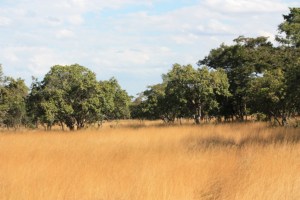
a vast grassland spans my field of vision
bison languidly trample the dry grass
azure sky seen in perfect precision

are these the fields the Greeks hailed Elysian?
but while it’s vast I feel it has no mass
perhaps, it’s just hi-def television?

I find my mind is wild in ambition
and ignores the window frame and the glass,
pretending all that is, I envision

but I know I see with imprecision
a glance sees no more than in science class
though vivid, it’s as false as a gryphon

but beauty beats logic to submission
I become one with wind-tousled tall grass
dazed, I’ve lost all mental inhibitions

why would nature thrill in exhibition?
baring beach to beach across each landmass
it’s not to employ more aestheticians
but to drown out distrusting suspicions

POEM: Bangalore [Day 5 NaPoMo; Acrostic]

Bridge between high-tech and no tech

Also, city of garrisons, gardens, and grandparents

Native of none and yet Namma Bengaluru

Growing bamboo-like with dense patches of people

Artistically eclectic: Kuchipudi dancers to cringe comedians

Lal Bagh calls to keep the title “city of gardens”

Obliging in ways rarely seen above ten million

Rust red and old stone buildings; the city’s grey hair

Everything is possible here

POEM: Away [NPM Day 4: Ghazal]

[Ghazal is a poetic form of Arab origin consisting of between 5 and 15 couplets. Traditionally, it is metered (how many feet per line varies from poem to poem, but shouldn’t within a couplet,) and has a rhyme scheme of AA-BA-CA-DA-etc. A common theme word or phrase across couplets is also tradition, and it often forms the rhyme. Loss and separation are among the most common themes.]
FF4ED57F-B107-4CC4-A94D-22BFE34FBE87

In the airport, I think I’ll find a way
to be “he who stayed” as I go away.

“Left” and “stayed” aren’t just matters of locale.
Some who stay, long ago drifted away.

Some retreat within their seats, I speak true.
Body here; mind a million miles away.

Unwalking undead, this kind of zombie.
So, the living must become runaways.

They’ll say I’m playing games of semantics,
but games are done, now I must go away.

Solitude Haiku [On the Third Day of NaPoMo]

let us now pray
for short people with no one
to reach the top shelf


moon-gazer
sitting on a rooftop
hugging knees


silent morning
awakened by the sounds
that aren’t


closing eyes
seeking faces forgotten,
sadly failing


what void
holds the millions
unseen


[Since it’s National Poetry Month (NaPoMo,) I’m trying to do a different form each day. So far: limericks, a sonnet, and haiku. If you know of any obscure forms, I’d be glad to hear of them, because I don’t think I know 30 flavors of poetry, presently — relatively short form, of course, I don’t have the time or skill to do an epic narrative in a day. (Though micro-narrative will certainly be a thing.)]

A Sonnet in Contradictions [Day 2 NaPoMo: Sonnet]

a tantrum caught on the face, but not thrown
a barrier unseen, like a mime’s “box”
a sprouting plant sprung from a seed unsown
and time shown on broken, not working, clocks

passing the test using knowledge unknown
farmer plows no field with an oxless ox
interest free loans and the silent moan
sale on magic, mineral-deficient rocks

train bound for nowhere at nought miles-an-hour
entropy decrease, the Second Law is dashed
try solving world peace with all-purpose flour
car jumps from a telephone pole uncrashed

i’ve seen all these, and oh so many more,
but i’m not some self-aggrandizing poet-whore

Viral Limerick III

I once tried an act of repositioning
to escape a fellow, uninteresting.
Back then, I did offend,
Too late, I have a mend,
Nowadays it’s just called “social distancing.”