BOOK REVIEW: Book of Nonsense by Edward Lear

A Book of NonsenseA Book of Nonsense by Edward Lear
My rating: 4 of 5 stars

Amazon.in page


This is a collection of over one-hundred limericks by Edward Lear published in 1846. Limericks are a popular five-line poetic form with an A – A – B – B – A rhyme scheme, and in which the B-lines are shorter than the A-lines. Two types of material leap to mind when one thinks of limericks: humor and bawdiness. I mention this because neither of these subjects feature prominently in Lear’s limericks. While a number of the poems could be described as amusing, I can’t say I found any of them laugh-out-loud funny. I suspect that the number that are found amusing would be larger for a reader from the early 19th century due to insider knowledge that escapes the present-day reader (i.e. the activities and the perception of people from various locales have changed considerably over the years.)

As the book’s title suggests, what is on display in these limericks is nonsense. While that reads like an insult, Lear is considered to be one of the founders of the genre of literary nonsense. It’s not nonsense in the sense of Lewis Carroll’s “Jabberwocky” in which fictitious words are blended with real words to create a synthesis that is grammatically logical but relies on the reader’s imagination to create any meaning. Rather, the events and reactions on display in the poems range from absurd to impossible, but the meaning can be interpreted. As with the poems of a later nonsense poet of renown, Ogden Nash, some of the whimsy of these poems derives from contortionistic acts of mispronunciation needed to square the rhyme (though I may be overstating this as I don’t know how much Lear’s British accent from almost 200 years ago would differ from the way I read with my 2020 American accent.)

Needless, to say this is a really quick read. Most editions are between 30 and 60 pages long, with all the white-space one would expect of a book of five-line poems. If you are interested in Limericks or poetic forms in general, it’s worthwhile to see how Lear writes them. It’s a big help in developing an ear for the flow of the limerick. I found the book to be a pleasant read, though some of the limericks are cleverer than others. Some left me thinking that Lear could have done much more with the poems. Often the last line is a minor variation of the first line, and, thus, neither serves as a punchline nor as a source of new information. That sometimes felt like a missed opportunity. Still, it’s a nice collection of nonsense limericks.


View all my reviews

POEM: Welcome to the Program

Throw open the doors of Simulation.
I saw the gearbox of that old, faux world,
or was it neuronal stimulation
programmed to grind as the spiral arm whirled?

It pains me t’ say what remains of the day
is a false front of backlogged memory
bits from days past — woven mind macramé.
Deja vu — but feels real, sensorily.

Send fire to the float tank to make ’em dance.
Puppets by wire who think themselves masters.
Better to feel the slump of one’s idle stance
than the perfect posture of bad actors.

Calling all those who know life is scripted:
“Viva la revolution!” to the gifted.

POEM: Worlds, Real & Imagined

Sitting in a café, watching snowfall collect,
on the lamp-lit portion of a quiet side street.


Mind struggling to create a fresh world of one’s own,
but unable to find one more swollen with life,
feeling, and profound truth than the one right outside.

Rainy Dusk Haiku

streetlamp in rain
each droplet catches light,
the drips glow


monsoon rain-song
isn’t loud, but is deafening —
ear-hushed / mind din


cyclone residue
crawls inland, shedding the sea
hauled to sky

POEM: Freak Street


In the dim lanes of the circus city,
set wide of the world you’ve come to know,
some part of a person vanishes —
stripped away in silence and without warning —
and whether that’s good or foul
depends on what rabbit-hole you drift into,
how deep you sink,
what hooks you back into the world you recognize,

&
whether that world recognizes you, back.

POEM: A Dead Winter Stillness

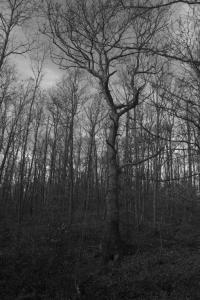
a faintly unnerving stillness burdens the forest

-not a beast scurrying or digging

-no birdcalls of alarm or affection

frost glitters on the rooted earth when the sun cracks through the clouds

but then falls invisible,

leaving that black soil unadorned

what do the hidden creatures smell?

what do the birds that pass silently over this forest know?

POEM: Wayward Memory

I remember the feel of places past
better than I do the sights.
I remember more azure skies
than I do those dark nights.

Of colored lights and germicide
my neurons take their cues;
bringing back a hospital scene,
or long forgotten shoes.

I have a madness of memory
for faults, but not for stars.
But I can’t claim to remember
each time I crashed a car.

I know my memories are lies —
of omission and of fact.
And little can I make the claim
they’re filed neatly in stacks.

POEM: Dry Fountain Wishes


Sly town stretches along the sea,
backed by sacred mountains.
And amid shabby, city streets
sits a broken fountain.

And when the church bells peal at dusk,
the drunk, they sing out loud.
And all the robbers and the thieves
slip through the gathered crowds.

Pockets are picked and watches slipped
from wrists of the hapless.
On painted women, gooseflesh shows —
their tops low and backless.

The dreamers reach to seize a coin
to pitch in the fountain.
Few direct wishes or appeals
to that ancient mountain.

POEM: Breath

Breath unfolds the soul,
expanding a crumpled shell
until it is proudly rotund.

And that air fuels fires —
brightly burning white-hot fires
that flash-fry evil jinns,
into fine, floating soot

One day you’ll know the fuel from the fire.

POEM: Memory & Instinct

That castle had a dark passage.
Winding minefields lined the passage.

Each step called for a memory —
an ancient memory scored deeply
in the DNA of man.

But those who rose to temple tops
lacked the instinct and the courage.

So, they chanted each line loudly,
but it didn’t save them from the fall.