BOOK REVIEW: Be As You Are ed. by David Godman

Be As You Are: The Teachings of Sri Ramana MaharshiBe As You Are: The Teachings of Sri Ramana Maharshi by Ramana Maharshi
My rating: 4 of 5 stars

Amazon page


In the early days of yoga, before there was Power Yoga or Yin Yoga — or even Hatha Yoga or Raja Yoga, there were three approaches to yoga. Bhakti yoga was devotional yoga, the yoga of the believers who pursued the path through worship. Karma yoga was the yoga of action: practiced by doing selfless deeds. Jnana yoga, often said to the hardest, was the path of knowledge, and it involved intense study and – in particular – introspective study of the jnani’s own mind. Sri Ramana Maharshi was one of the most well-known Jnana yogis of modern times (he lived from 1879 to 1950.)

This book presents Sri Ramana’s teachings in a question and answer format. The editor, David Godman, begins each chapter with an overview of Ramana’s views on the subject at hand, and he then launches into the Q&A exchange that makes up most of each chapter. The preludes are beneficial not only because they set up the topic, but also because they help separate Ramana’s core beliefs from the way he occasionally explained matters to non-jnani’s or those who weren’t ready to grasp what he believed was the fundamental teaching. (There’s a fair amount of, “Until you realize the self, X is true, but after you achieve self-realization Y will be true.)

Sri Ramana’s central teaching is that the jnani must actively inquire about the nature of the true self (a practice called atma-vichara, or self-inquiry.) As such, the book is organized as a guide to building a practice of self-inquiry.

The book’s 21 chapters are divided among six parts. The first part investigates the self as Sri Ramana refers to it. This isn’t the individual self that one is normally referring to in common speech. Part II is entitled “Inquiry and Surrender” and three out of the four chapters, herein, discuss the process of self-inquiry. Three chapters may sound like a lot, but this practice really is the core of jnana yoga. These chapters not only explain how self-inquiry is done and what it’s supposed to achieve, they also contrast the practice with others that bear a resemblance to atma-vichara, such as reciting “Who am I?” as a mantra, as well as, neti-neti — an exercise in negation in which one considers all the things that aren’t the self (e.g. “I am not my body.” “I am not this thought,” etc.)

Part III is about Gurus and transmission of teachings. It takes on such questions as: is a Guru necessary, and what constitutes a Guru (i.e. must it be a living human? Can it be a book?) The second chapter in this part is about sat-sang, which may be literally translated as “sitting with the guru,” but refers to a kind of transference that flows from being together.

Part IV is on meditation and yoga. Sri Ramana differentiates self-inquiry from meditation, though superficially they seem to be similar activities. He discusses dharana (concentration) and mantras in these chapters as well. One inclusion that may seem unrelated to the general theme is chapter 12, which is about the four-stage model of life called the asramas (student, householder, hermit, ascetic.) The chapter on yoga is about the eight limbs of yoga described by Patanjali, and their relevance to the practice of Jnana yogi. It should be noted that Ramana downplays the importance of these practices to the jnana yogi (a.k.a. Jnani) with the exception of pranayama (breathing exercises.)

Part V discusses samadhi, siddhi (supernormal psychic powers that some yogis believe can be achieved), and other challenges and phenomena that may be experienced during one’s practice of self-inquiry. While superpowers sound cool, Sri Ramana (as well as Patanjali) warned against he pursuit of these abilities as they become distractions from obtaining self-realization.

That last five chapters are grouped under the title of “Theory.” These chapters deal in the big “meaning of life” kind of philosophical questions. Much of these chapters consist of Ramana telling the interviewer to stop over-intellectualizing about obscure philosophical matters and start asking oneself who is asking the question (in other words, get back to self-inquiry and forget about abstract navel-gazing.) At any rate, the questions include: was the universe created, and – if so – how? is reincarnation real? what is the nature of god? is karma real? is free will real? etc. They are fascinating questions, and Ramana offers a few intriguing ideas, but mostly discounts the value of philosophizing.

There are no graphics in this book, but there is a glossary, notes, and a bibliography.

I found this book to be thought-provoking. At times it can be a bit repetitive. The key point that Ramana sought to get across is (in theory, not practice) straightforward. At times it seems like the questioner is badgering the witness because he doesn’t like the answer, such as when Godman wants Sri Ramana to elaborate on the nature of suffering and the need for compassionate acts. Ramana keeps telling Godman to just go back to self-inquiry and all will take care of itself. That said, Sri Ramana offers some fascinating thoughts, and generates beautiful food-for-thought.

I’d recommend this book for anyone who wants to know more about jnana yoga or to get a different take on the philosophy of yoga in general.

View all my reviews

BOOK REVIEW: Edgar Allan Poe: The Fever Called Living by Paul Collins

Edgar Allan Poe: The Fever Called LivingEdgar Allan Poe: The Fever Called Living by Paul Collins
My rating: 4 of 5 stars

Amazon page

Edgar Allan Poe is one of the most intriguing writers in American literature. His short life (he died at 40) was productive and inventive. He’s often credited with the invention of the detective story (i.e. “Murders in the Rue Morgue”), and was prolific as a writer of stories, poetry, and criticism. We know him for macabre tales like “Tell-Tale Heart” and the poem, “The Raven.” Few authors invoke such a benighted image.

Yet the popular image of Poe is a bit of a dark caricature, reflecting truths but exaggerating features for effect. Part of this exaggeration probably owes to our collective desire to romanticize the tortured artist – and Poe is as tortured as they come. However, some of the exaggeration of Poe’s faults owe to the fact that he was a harsh critic, and at least one of the authors who felt the sting of his pen found an opportunity to amplify the “drug-addled lunatic” aspect of Poe’s nature in a biography after the great author’s death. That’s not to deny that Poe had an addictive personality. He was both an alcoholic and prone to gambling away whatever funds graced his pockets.

This short biography (less than 150pp.) gives one insight into Poe’s life from birth to death in five chapters. The first of these chapters describes Poe’s childhood, which was marred by the death of his mother, abandonment by his father, and being taken in — but not adopted — by a foster couple. Granted the foster couple was wealthy, but Poe’s foster-father could be a harsh man and the uncertainty of not being formally adopted seemed to have weighed on Poe’s mind.

The middle chapters give special attention to Poe’s life as a writer, noting under what circumstances he was published, starting with a self-published chap book and moving through to becoming one of America’s great men of letters (though he never made enough money to live in comfort.) Poe famously married a cousin who was very young (though of legal age) at the time, and we get some insight into that relationship, which ended not terribly long before his own death. The last chapter gives the details of Poe’s demise.

I found this book interesting and educational. Collins neither gets lost in the minutiae nor give’s Poe’s life short shrift, and it feels as though he reveals the true Poe and not the T-shirt version. I would recommend this book for fans of Poe’s work and for those who are interested in the literary history of America.

View all my reviews

BOOK REVIEW: Bodyweight Strength Training Anatomy by Bret Contreras

Bodyweight Strength Training AnatomyBodyweight Strength Training Anatomy by Bret Contreras
My rating: 4 of 5 stars

Amazon page

This book combines a calisthenics manual with the anatomical drawings and descriptions necessary to explain the muscle activations involved in each exercise. It takes a very straightforward approach, being organized by body part. Each chapter discusses the component muscles of said part and their unique features, and then gives a series of exercises to work said part. For each exercise, at least one anatomical drawing is provided, showing the primary and secondary muscles being worked in the exercise. In some cases, more than one drawing is needed to convey the full range of motion of the exercise, but in many cases one drawing is sufficient. Each exercise also receives a brief bullet-point description of the action, a textual list of muscles utilized, and notes on issues and cautions to keep in mind to get the most out of the exercise.

Chapter 1 sets the stage for the rest of the book. It discusses general principles to be kept in mind like the need to balance opposing muscle groups, and it also lays out the advantages and limitations of calisthenics, or bodyweight, workouts over other approaches to fitness. Like a number of other calisthenics’ books, this one emphasizes the advantage of not necessarily needing any equipment. In other words, with a little creativity and some quality doors, robust furniture, or park access, one can do all of these exercises without either a gym membership or costly trips to the sporting goods store. Of course, one does need sturdy stationary objects to pull against, particularly to maintain a balanced upper body. What I like about this book more than some others I’ve read is that it emphasizes the need for safety in taking the equipmentless approach. I’ve cringed before in seeing some of the improvised set ups that have been jury-rigged as examples in other calisthenics manuals, but this book uses stout furniture and rafters to get the point across.

Chapters 2 through 9 each focuses on a particular body part, including (respectively): arms, neck and shoulders, chest, core, back, thighs, glutes, and calves. Each chapter starts with some general information on muscle action before launching into the exercises. If you have a particular interest in developing your glutes (i.e. your butt, your backside), then this is definitely the book for you. The author specializes in glutes, and while there are about a typical number of exercises for that musculature, the background information up front is more extensive than for most of the other chapters. For many of the exercises, the author proposes regressions and progressions — that is, easier and harder variants of a fundamental for those who either aren’t up to the basic yet or who need a harder version to challenge them.

The penultimate chapter, Ch. 10, presents whole-body exercises (e.g. burpees, mountain climbers, etc.) and discusses the benefits of including such exercises in one’s workout regimen. Included in this chapter is an introduction to both high-intensity interval training (HIIT) and to Metabolic Resistance Training (MRT.)

The final chapter offers an overview of all the factors to keep in mind when arranging exercises into a program (e.g. number of sets, repetitions per set, and how such considerations are varied depending upon one’s goals.) There’s a lot to consider when putting together a workout regimen, including: the necessary rest periods, balancing one’s workouts to avoid structural imbalances, and how to vary one’s approach depending upon one’s individual goals. A section on exercise for fat loss is included, which is important not only because there are so many people interested in that subject but also because there is so much misinformation out there.

As mentioned, most of the graphics are anatomical drawings showing the muscles in cut-away as the action of the exercise is being performed. There are a few other graphics to help clarify information, as well as tables in the last couple chapters to present information in an organized and easy to use fashion.

I found this book to be informative and well-organized. It’s a straightforward presentation of the skeleto-muscular action involved in various calisthenics exercises. If that’s what one is looking for, or even if one is just looking for a guide to bodyweight exercises, this book will meet your needs.

View all my reviews

BOOK REVIEW: Anarcha Speaks by Dominique Christina

Anarcha Speaks: A History in PoemsAnarcha Speaks: A History in Poems by Dominique Christina
My rating: 5 of 5 stars

Amazon page


This collection of poems, written by Dominique Christina and selected / arranged into a story by Tyehimba Jess, tells the story of a slave woman who was used for medical experimentation. Most of the poems are in the voice of this woman, Anarcha, and are conveyed in a slave dialect. However, a few are from the perspective of Dr. Marion Sims, the doctor who used Anarcha (and other slave women) for research and experimental procedures. Even without the cues in the poem titles, it’s easy to tell when these switches in voice occur because the doctor’s poems are in “proper” English, as opposed to Anarcha’s dialect. I should point out, while I can’t tell you how accurate the slave dialect is, I can say it presents no challenge to the reader’s understanding of the story or of the imagery or metaphor of the poetry.

The events described in these poems are based on a true story. Anarcha developed a fistula (a hole in bodily tissues that’s not supposed to be there) as a complication of carrying a child, and as a result suffered persistent bleeding. Anarcha’s owner handed her over to Dr. Sims to repair the fistula and stop the bleeding, which would require the development of a new procedure. Sims is often called the father of modern gynaecology, and was lauded with statues and honors. However, in recent years, his image has been tarnished by the fact that many of his advancements were only possible through the non-consensual examination of, and experimentation upon, slave women.

I should point out that, while reading this book has made me interested in learning more about the details of the story, I can’t really comment on the degree to which the poems accurately convey history. From the little I was able to garner from quick internet research, there are wide-ranging views on Dr. Sims and his research. Some think Sims belongs in Josef Mengele’s corner of hell. (Note for non-history buffs: Mengele is the Nazi doctor who experimented on Jews and other prisoners during the Second World War.) Others believe Sims was genuinely working to heal the slave women and wasn’t solely motivated to find a treatment for paying patients, and that — in the context of his times — he should be considered a fine, if fallible, doctor. I don’t know how much is know about what was in Sim’s mind or how it matched his behavior, but at a minimum he seems to have been much less delicate with his slave subjects than he would have been with his patients in terms of subjecting them to pain and humiliation.

I will say that the poems in Anarcha’s voice feel authentic, i.e. they feel like they convey truth about what would go through a person’s mind when put in her position. Her humanity is felt. In a few cases in the Dr. Sims poems, that authenticity feels like it breaks down, and one thinks, “no one sees themselves that way” – an instance of self-deification springs to mind. That said, perhaps it’s an accurate depiction. More than one doctor has been known to be colossally narcissistic on occasion.

That said, this is a poetical work and not a historical account, and so the beautiful language, clever metaphors, and emotional resonance of the work are what serve to make it a book that should be read. I would highly recommend this book for all readers. Even if you aren’t typically a poetry reader, you’ll find this free verse collection readable because of its story and the insightful view into the mind of Anarcha it presents.

View all my reviews

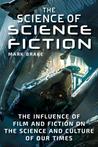
BOOK REVIEW: The Science of Science Fiction by Mark Brake

The Science of Science Fiction: The Influence of Film and Fiction on the Science and Culture of Our TimesThe Science of Science Fiction: The Influence of Film and Fiction on the Science and Culture of Our Times by Mark Brake
My rating: 4 of 5 stars

Amazon page


This book grew on me. The reason I didn’t like it at first has to do with how the title sells the book in the wrong direction. When one sees the title “The Science of Science Fiction” one expects a book like those by Michio Kaku (e.g. “Physics of the Future” or “Physics of the Impossible” – or perhaps like Kakalios’s “The Physics of Superheroes.” In other words, one is expecting a book that teaches one about science through examples of science fiction, i.e. using science fiction to make science interesting and relatable. If you are expecting that kind of book, I suspect you’ll be disappointed.

The book doesn’t go into any depth on scientific issues. Instead of a book about the nexus of science and science fiction, one gets a book about the nexus of the history of science fiction, the history of science, trends in scientific progress, and trends in science fiction. (The confusing title is a little bit justified, therefore, given the broad territory of the books “niche,” but it could lead to confusion.) If you are interested in questions such as which came first the fictional atomic bomb or the real one, you’ll be reading the right book. If you are interested in whether or not quantum entanglement can be used for an ansible (faster than light communication) or how fast Superman has to jump to orbit the planet, you’ll find this book a disappointment.

The book is divided into four parts and has many brief chapters in each. Most of these chapters take as their lead a recent work of science fiction (usually a movie) though the book is at its strongest when it’s teaching the reader about the history of science fiction and how that history was influenced by – and influenced – real world events.

The first part is about space. It considers such questions as whether we will see alien visitor or invaders, the likelihood of parallel universes, and when we can expect to colonize other worlds.

The second part is entitled “time” and it considers the many ways time has been explored through science fiction. The time machine is considered from several dimensions and through movies such as the “Terminator” series and “Looper.” However, other time-related plot devices are also given scrutiny, such as precognition.

The third part is about machines and the interaction between man and machine. What can we expect from the rise of artificial intelligence (AI) and robots? The reader learns about the earliest use of the term robot and how historical science fiction compares to the realities coming to fruition.

The fourth, and final, part is entitled “Monster” and it investigates the realm of biology. Can monsters or supermen be created through super-serums or genetic modification? What are the limits of the human body and mind? These are the type of questions that are investigated.

There are no graphics, notes, or back matter in this book. However, I did read a review copy, so your results may vary.

If you are interested in the history of science fiction and how science fiction relates to scientific progress and the effect of science on culture, then I recommend this book. As I said, if you’re wanting to learn about science through the lens of examples from science fiction, then this is probably not the book for you. As I said, the book is at its strongest when it explores the history of science fiction.

View all my reviews

BOOK REVIEW: Running Anatomy, 2nd Edition by Puleo and Milroy

Running Anatomy 2nd EditionRunning Anatomy 2nd Edition by Joseph Puleo
My rating: 4 of 5 stars

Amazon page


This book explores anatomy (and to a lesser degree physiology) as it pertains to running, and shows how one can strengthen anatomy to increase one’s performance as a runner.

I will divide the book up into three parts, though that division is not explicitly made by the authors. The first three chapters discuss running fundamentals. Chapter 1 explores the nature of movement in running. The reader learns about the phases of the running gait and the muscle activation relative to said phases. The second chapter focuses heavily on the anatomy and physiology of the cardio-vascular system and the impact it has on muscle performance. Chapter 3 discusses external factors that can influence running performance such as air temperature, humidity, terrain, and altitude.

The second part of the book consists of the middle five chapters, and gets to the heart of the subject. These chapters investigate the role of musculature in running and show numerous exercises that can be used to strengthen said muscles as well as describing the activation of muscles in those exercises. Starting from the ground up, these chapters proceed as such: feet and ankles, legs, core, shoulders and arms, and chest and back. One might not think that the upper body is critical to running, but the authors demonstrate otherwise.The exercises selected assume the availability of a full range of fitness equipment: machines, free weights, as well as elastic bands and BOSU – though some bodyweight exercises are included.

The third part of the book explores some odds and ends that are crucial, but not covered in earlier chapters. Chapter nine explains how to avoid injuries. Running is an activity that offers plenty of opportunity for repetitive stress injuries because it’s an endurance activity involving iterated actions. Chapter ten explores alternative training programs (e.g. training in the swimming pool or on treadmills), and the pros and cons of such activities. The last chapter is about gear, and – not unexpectedly – much of it is devoted to shoes and questions such as whether one needs orthotics. It should be noted that the authors are firmly in the camp that favor footwear. (There are many advocates of barefoot running in recent years.)

There are many color drawings that show which muscles are activated by movements. The drawings are clear and effective. There is an index of exercises at the end that makes it easy to find various exercises.

I’d recommend this book for runners and trainers who are interested in how muscles can be strengthened and stretched to increase performance and minimize the risk of injury.

View all my reviews

BOOK REVIEW: The Like Switch by Jack Schafer

The Like Switch: An Ex-FBI Agent's Guide to Influencing, Attracting, and Winning People OverThe Like Switch: An Ex-FBI Agent’s Guide to Influencing, Attracting, and Winning People Over by Jack Schafer
My rating: 4 of 5 stars

Amazon page


Written by a former FBI behavior analyst, this book presents tips on how to build rapport — be it with a co-worker, a love interest, or the subject of an interrogation. There’s not a lot of material in this book that’s surprising or unexpected, but the stories of counter-intelligence operations and criminal investigations make for greater intrigue than the typical book of this nature. (Though the most common type of story in it may be the tale of “how I got a free upgrade from an airline employee,” and that’s probably not that different from what one would read in a similar book by a corporate trainer with a more mundane resume.)

One aspect of this book that did seem unique was how much discussion is given to laying the groundwork of a friendship. Schafer emphasizes the need for patience, and he uses an example of cultivating a spy that involved a Special Agent placing himself in proximity to a target day after day before he ever exchanged so much as eye contact, let alone speaking. Interestingly, the epilogue shares a similar story from a historical memoir that shows both how effective these tactics are and how long they’ve been around. I wouldn’t be surprised if a civilian expert on these issues would say, “that’s fine if you need an ultra-light hand to cultivate a spy, but the same tactics may be a little too glacial for finding a mate or building a customer base. Personally, I don’t know how well Schafer’s approach translates to the work-a-day world, but I can imagine that if one parked oneself along a potential love interest’s route for week after week they might form the opinion one is either spineless or a stalker long before one got a chance to share eye contact.

The book consists of eight chapters, plus some front and back matter. The first chapter, entitled “The Friendship Formula,” sets out some banal concepts about the need to put oneself in proximity with one’s “target,” and then to build the frequency, duration, and intensity of said proximity events. However, it goes on to introduce some of the fundamentals that are elaborated upon later.

Chapter two focuses on pre-conversational activities. This largely involves non-verbal facial expressions and body language, but it also gets into issues such as appearance. Chapter three is about a central concept that Schafer calls “the golden rule of friendship,” which is basically the idea that people like individuals who make them feel good about themselves. Of course, people may distrust flatterers, and so the direct approach may not always be the best approach. The chapter therefore addresses pitfalls as well as sound tactics.

Chapter four is about what the author calls “the laws of attraction,” which are a series of ideas used to get the subject to look at one in a favorable light while avoiding the pitfalls of being too ham-handed. These are just ways to seem more appealing, often by capitalizing on (or making clear) existing causes for the individual to like one. But sometimes they involve deck-stacking activities such as in the case of “the law of misattribution.” In misattribution one shows up when an individual has been exercising so that maybe he or she will mistake the exercise-induced endorphin high for positive feelings towards one. There is a mix of ethical and exploitative approaches, and some ideas that might be of benefit for gaining a temporary upper-hand with someone one doesn’t have any long-term concern about might not be wise to employ with someone with which one might want a long-term relationship.

Chapter five is where one gets around to talking to the target of one’s desired rapport. As with the preceding chapters, this is as much about what not to say as it is what to say, but the single biggest point is to do more listening than talking. That is, give the target plenty of opportunity to talk about his- or herself and be cognizant of what they are saying, rather than preparing one’s own words. This is easier said than done given all that one must keep in mind, and the non-verbal cues one is watching for, etc.

Chapter six returns to non-verbal communication territory, and emphasizes testing one’s efforts to build rapport while simultaneously noticing the signs of whether it’s going well or not. This allows one to adjust one’s strategy (or to know it’s time to give up.)

Chapters seven and eight include material that one won’t necessarily see in competing books. Chapter seven is about maintaining the relationship that one has established. A lot of this chapter is about conversational strategies for defusing tense situations, lessening the friction in the relationship, and getting what one wants without building animosity. The last chapter takes one into really different territory by discussing on-line relationships and the building thereof. In large part, this chapter is a cautionary tale of the risks of entering a relationship given the lack of all the non-verbal cues. There are several cases of how individuals managed to portray themselves as something they weren’t.

I found this book interesting and beneficial. Its strengths include a tight focus; it doesn’t blast one with information by fire-hose, but rather offers a few simple ideas to focus on and hammers them home. The organization was logical, basically building up over the course of a relationship / interaction from being in proximity to making eye contact to conversing to weathering an argument. I also found that the book used photographs effectively. Non-verbal communication is much more effectively and efficiently communicated by photograph, and the author used many color photographs for this purpose. There was even a series of plates that acted as a quiz, asking the reader to put the knowledge she’d acquired to use, with an Appendix serving as the quiz key.

I should mention that some jerk tactics are scattered throughout the book – by that I mean approaches designed to dupe and / or manipulate the target. These may be fair game for interrogating criminal suspects or terrorists but some could backfire upon one when put to use in a relationship that demands more trust. Usually, the author isolates himself from these tactics by telling us it was something his student or a suspect once mentioned. For example, he describes pickup artists going to an ATM kiosk, plucking up receipts showing large balances, and then using said receipts when it came time to give a girl his number as a means to subtly plant the lie that he was wealthy. Mostly, the book seemed to separate itself from the many “how to be a successful creep” books that are out there, as is noted by the chapter on fostering long-term relationships.

I’d recommend this book for anyone interested in the dynamics of building relationships.

View all my reviews

BOOK REVIEW: Messy by Tim Harford

Messy: The Power of Disorder to Transform Our LivesMessy: The Power of Disorder to Transform Our Lives by Tim Harford
My rating: 4 of 5 stars

Amazon page


The book’s premise is simple: being neat and tidy isn’t the great virtue you’ve been led to believe, and being messy isn’t inherently a vice. Over nine chapters, Harford explores the various dimensions in which our impulse to toward tidiness can get in our way, and for which a little messiness might be the cure. Each chapter uses a central story or two as exemplars, with other stories and anecdotes providing support.

The book’s introduction sets up the idea by describing a famous concert in Köln (Cologne) by Kieth Jarrett in which the pianist reluctantly agreed to play the concert on a sub-par piano, and (it’s argued because of the limitations of that instrument) went on to produce the best-selling solo jazz album. This tale sets up chapter one, which focuses on creativity, nicely. Creativity may be explicitly the topic of chapter one, but it’s a concept that cuts across the entirety of the book. Tidiness – it is argued — is antagonistic to creativity. In the first chapter, Harford describes how David Bowie partnered up with Brian Eno, and how Eno’s “oblique strategies” – while they annoyed the musicians to no end by throwing monkey wrenches into the act of making music – were highly successful in producing a unique sound.

Chapter two discusses collaboration, which always makes a mess. Central to this chapter is a discussion of the Hungarian mathematician Paul Erdős and the famous Erdős number that virtually all scholars are familiar with — at least those in who work in math, science, engineering, and other disciplines with a quantitative bent. It’s sort of a Kevin Bacon six-degrees-of-separation for those who make mathematics. The number describes how far removed one is from having a paper penned with this notoriously prolific mathematician (co-authored, one removed co-author, etc.,) and everyone publishing quantitative / mathematical scholarship desired a low number. The point made by Harford wasn’t just that collaboration in general is messy, but that working with Erdős, specifically, was, and it required collaborators to adjust to his peculiar, professorial ways.

Chapter three explores how tidy workplaces sometimes hinder productivity. The central case is MIT’s Building 20, which was popped up in record time to meet a wartime demand. The building housed a disproportionate amount of world-class science and engineering, and it’s argued that this was in part because its poor design put random people together on long walks to exits or toilets, and in part because – since it was a hideous monstrosity of a building – no one cared if its labs and offices were a mess or not.

Chapter four delves into the value of mess in improvisation. Of course, Jazz is revisited in this chapter, but the lead story is Martin Luther King Jr.’s most famous speech and how it came out of being forced by circumstance to abandon his usual process of extensive preparation and editing. Chapter five describes messy tactics as winning strategies. Erwin Rommel’s success by disruption and chaos creation is at the heart of this chapter as is the development of Britain’s SAS which sometimes beat Rommel at his own game by using a similar approach using smaller, more agile, and more elite forces. There is also an extensive discussion of how Amazon went from humble beginnings to being the 800 pound gorilla of online shopping.

The sixth chapter investigates the role of incentives. For an economist, this is a fascinating topic as the key to understanding economic behavior is usually to follow the incentives. Of course, unintended consequences often go hand in hand with attempts to produce / manipulate incentives. Much of this chapter describes how attempts to tie up loose ends through regulation have ended up generating worse outcomes than could ever have been anticipated.

The next chapter (ch. 7) is about automation, which could be seen as an attempt to clean up messy activities. Harford discusses the situation with self-driving cars, which it’s hoped will help to make highways safer. However, the case he concentrates on is that of flight Air France 447, which went down in part because its inexperienced pilot at the helm couldn’t cope when the fly-by-wire system designed to anticipate and smooth the pilot’s inputs into the controls suddenly went off-line. In other words, the junior pilot wasn’t used to flying messy.

Chapter 8 is about resilience, and here the author challenges the age-old economic notion that specialization always results in greater productivity. Harford suggests that diversity and intermixing of activities and people – rather than specialization and homogenization – often results in a better outcome. The final chapter takes a wider view at how being messy can help one in life. The author spends a great deal of space to the question of how on-line dating services do such a poor job – spoiler alert – they try to make the messy process of finding a soul mate neat and tidy.

The book has citations and end-notes. In the Kindle edition, these notes are hyperlinked for ease of use. There are no graphics, but they aren’t missed.

I enjoyed reading this book and found it to offer many fascinating cases. I will say, as I was reading these well-researched and interestingly described cases, I sometimes had to think hard (maybe do some mental gymnastics) to make the connection between the case at hand and the book’s central theme – leaving me to wonder if I was missing something or whether there wasn’t some shoe-horning of interesting anecdotes into the book to produce a work that was more about being interesting than about proving a particular point. That said, I would recommend the book, particularly for anyone interested in increasing their creativity, productivity, or both.

View all my reviews

BOOK REVIEW: The Memory Illusion by Julia Shaw

The Memory Illusion: Remembering, Forgetting, and the Science of False MemoryThe Memory Illusion: Remembering, Forgetting, and the Science of False Memory by Julia Shaw
My rating: 4 of 5 stars

Amazon page


Julia Shaw is a psychologist who conducted research into whether (and how) false memories could be “planted” in a person’s mind – and not just any memories, but memories of having committed a crime that one actually didn’t. That research is fascinating, and I think it’s tremendously valuable given the disparity between how accurate people believe their memories are and how fallible they are in practice. This disparity has played a major role in many a miscarriage of justice with eye-witnesses historically being considered the gold standard of evidence in criminal trials. Of course, I’m also a bit uneasy about people learning the recipe for an optimal process of generating false memories as it has the taint of being MK Ultra-level nefarious. (Though it should be pointed out that subjects must be active – if unwitting – participants in creating these false memories, so “planting” memories is an oversimplification.) This book discusses Shaw’s research, but it’s more of an overview of science’s understanding of the limits of memory and how those limits conflict with our beliefs – at least about one’s own memory [we often recognize how fallible other people’s memories are.]

The book consists of ten chapters. Chapter one dives into to one of the most common occurrences of false memory, and that’s the claim by some people that they remember events from their infancy – if not their own birth. Shaw presents the evidence for why such memories aren’t possible. This sets up the whole subject nicely because one must ask how so many people can claim to remember events that are physiologically impossible for them to have remembered, and to frequently be right about most key details. No one is suggesting that such people are liars (not all – or even most — of them, anyway.)

Imagine a school-age child hearing a story about his or her life as a baby. Hearing said story triggers a visualization in this child’s mind, and that visualization might well be filed away in memory, but when that memory is recalled the person in question may not realize she is recalling her imagined image of a story and not the actual event itself. Herein lies the crux of false memory: 1.) anything one visualizes in detail might potentially be stored away and become undifferentiated from the experiencing of an event; 2.) when we recall a memory we are recalling the last time we remembered it and not the event directly, and this can lead to a disparity between the memory and the actual event as it gets tied up with what’s going on in one’s mind at the time.

Chapter two explores perception, and how flawed perceptions may become flawed or tarnished memories. Just as memory isn’t the direct recording of events that we often feel it is, perception isn’t a direct replication of the world but rather a model generated in the brain. Therefore, the limitations and inaccuracies of the mental model are the first line of deviation of memory from reality. Chapter three describes how the brain’s physiology and evolutionary biology produce limitations to our ability to remember – limitations in spite of which we could thrive in the world in which we evolved.

Chapter four begins a series of chapters that take on specific objections that will arise to the ideas about false memory presented in the early chapters. This chapter counters an anticipated objection about people who seem to have perfect memories. In other words, a reader might admit that most people’s memories are crap (and even that his own memory isn’t infallible,) but what about the people with Las Vegas stage shows or the Asperger savant who knows every phone number in the Manhattan White Pages? Surely, these rare cases disprove the general idea of how memory works. Shaw shows that none of these people have perfect memory. Some have spectacular autobiographical memory (memory for their own life events) and others are exceedingly skilled at using mnemonic devices to remember any facts, but they all have limits. There’s also a discussion of how an unusually perfect autobiographical memory is often more of a curse than a blessing. We forget for good reason.

Chapter five examines another common memory fallacy, which is that one can remember best by getting the middleman of the consciousness mind out of the way and feeding data directly into the subconscious. In other words, it takes on subliminal learning. You may be familiar with the idea from ads suggesting that you can learn French in a couple of weeks without cracking a book just by playing audio tracks in one’s sleep and letting oneself learn effortlessly. Like every program that promises growth without effort, this one is debunked. Studies suggest that if one sleeps during such nights, one won’t learn, and if one learns, one isn’t actually sleeping. In other words, learning requires one’s attention.

I will say, the book fell off the rails for me a bit during this chapter. As I wrote in a recent blog post about psychological concepts that even psychologists repeatedly get wrong, Shaw denies the existence of hypnotic trance state as an altered state of consciousness. However, it becomes clear she isn’t arguing against the scientific perspective of what hypnosis is (a physically relaxed but highly mentally attentive state) and is rather denying the misconceived popular notion that seems to involve a person (possibly wearing a glittery cape) taking control of another person’s mind and making them into a zombified drone. She writes in an odd, round-about fashion on this subject as well as the topic of brainwashing – for which she offers her own value-laden definition. I’m not so sure that she didn’t understand hypnosis as much as she wanted to make sure her work was thoroughly distanced from hypnosis and brainwashing. It seems just seems strange and a bit dubious that a scholar studying false memory wouldn’t be thoroughly familiar with the literature on suggestibility and the states of mind most associated with it, i.e. hypnosis. I can only imagine the hoops she had to go through to get her research design through an IRB. (IRB’s are review boards that make determinations about whether a research project is – among other things – ethically defensible. After a series of famous — and ethically questionable — studies by the likes of Stanley Milgram, Ewen Cameron, and Timothy Leary, to name a few, psychology has come under great scrutiny.)

Chapter six asks whywe believe our memories are so awesome despite all evidence to the contrary. This comes down to why most of us unjustifiably judge ourselves superior in most regards. As is true of drivers, almost every person thinks she is better than average in the realm of memory. This is important because it’s not so much that our memory is fallible that leads to problems but that it’s fallible while we think it’s perfect. Chapter seven challenges the belief that there are certain events that are indelibly etched into our brains such as (depending upon age) the Kennedy assassination, the Challenger explosion, or 9/11. Such memories were once considered “flash bulb” memories, perfect renderings of societally traumatic events carved into our synapses. However, once these memories started to be put to the test, it was found that the details — vis-à-vis where one was and what one was doing at the time — are often wrong.

Chapter eight discusses how media and social media mold memories. One element of this is group-think. One’s memories may be molded through manipulation of the fact that people will readily believe that which is consistent with their beliefs while denying that which is inconsistent – regardless of facts and evidence. This chapter also takes on how social media influences memory as a distraction and because of so-called digital amnesia in which people remember less because they figure they can look it up at any time in the vastness of the internet.

Chapter nine proposes that even one’s most traumatic memories aren’t necessarily accurate, and – in fact – might be more likely to be fallacious. This may be the most important chapter of the book because it shows how a confluence of factors (namely, bad questioning tactics and peer / societal pressure) can result in the inadvertent planting of false memories. The chapter focuses on a series of Satanic ritual sexual abuse cases, a number of which were eventually disproved. So eager to build a case to bring believed wrong-doers to justice, law enforcement officers sometimes inadvertently pressured children into making up stories under the guise of trying to get them to open up, stories that sometimes became false memories.

Chapter ten shifts gears to consider what one can do about the issue of faulty memory – in other words how one can avoid being manipulated through exploitation of the limitations of one’s own memory. This is valuable information and not just for legal purposes but for life in general.

The book has a few graphics as necessary throughout the book and has end-notes to provide sources and elaboration on comments in the text.

I found this book to be immensely valuable as food-for-thought. The author presents many fascinating stories and the results of intriguing research studies, all in a readable package. I’d recommend this book for anyone who is interested in the subject of the limits of human memory, how these limits can be manipulated, and how that manipulation can impact the criminal justice process.

View all my reviews

BOOK REVIEW: The Drunken Botanist by Amy Stewart

The Drunken Botanist: The Plants That Create the World's Great DrinksThe Drunken Botanist: The Plants That Create the World’s Great Drinks by Amy Stewart
My rating: 5 of 5 stars

Amazon page


This book is about how plants are used in the making of alcoholic beverages from vegetative matter that serves as the primary ingredient in fermentation to obscure herbs and berries used to lend subtle flavoring. The book covers a lot of ground, being at once a guide to the chemistry of fermentation and distillation, a mixologist’s recipe book, and a guide to growing the plants used to make booze.

I will admit, if I weren’t such a neophyte to both subjects at hand – botany and alcoholic beverages – I probably wouldn’t have rated this book so highly. For me, almost every page offered new fun facts about alcoholic beverages, some of which I’ve consumed and many of which I never have. So if you have a high degree of understanding about one or both of these subjects, you may not find the book as intensely satisfying. Also, at times the book comes off a bit pretentiously – hardcore drunks probably don’t want to be shackled with so many rules for optimal alcoholic consumption (e.g. what type of glass they should drink a given drink from, etc.), but hardcore drunks are probably not a huge readership demographic. (It should also be noted that the reader gets some knowledge to fight pretentiousness as well, such as against gin drinkers who say they would never drink vodka when, in fact, they are drinking juniper berry-flavored vodka.)

The book consists of three parts. The first part describes fermentation and distillation and then offers two sub-parts dealing with the most everyday bases for alcoholic drinks (e.g. corn, grapes, potato, and wheat) as well as some of the more obscure and unusual objects of fermentation, respectively.

The second part delves into the plants that are added for flavoring or the like, and these are organized by: 1.) herbs and spices, 2.) flowers, 3.) trees, 4.) fruit, and 5.) nuts and seeds.

The final part gives some guidance on how some of these plants can be grown. It should be noted that this section is a bit thinner because a lot of information on growing the plants is covered in side-bars in the earlier sections and also this isn’t the book’s main thrust. The third part is similarly divided up between herbs, flowers, trees, berries & vines, and fruits & vegetables.

There are quite a few graphics, mostly in the form of line drawings, throughout the book – some are purely aesthetic and others are informative (e.g. drawings of plants.) There is also a recommended reading section that proposes further books to expand one’s understanding at the nexus of booze and plants. The book presents a lot of material in text boxes that set the information aside. These boxes include recipes, but also insights into how to best grow these plants with particularly emphasis given to how the process is optimized for those growing for beverage production (e.g. sometimes the optimal variety isn’t the most common variety.)

I enjoyed this book. It was readable, full of fun bits of information, and written in a light-hearted style. If you’re looking for a book on plants and alcoholic beverages, this is a good starting point. It doesn’t get too deep in the weeds but yet offers some obscure but amusing factoids.

View all my reviews