Cobra [Haiku]

the cobra rises:
eyes fixed & tongue darting --
all 's still; nothing 's calm

Copperpod [Haiku]

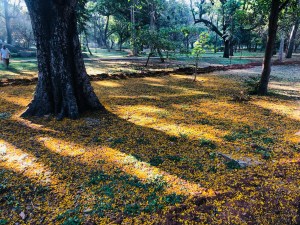
morning light
hits downed copperpod blossoms:
ground guilded

BOOK REVIEW: The One-Straw Revolution by Masanobu Fukuoka

The One-Straw RevolutionThe One-Straw Revolution by Masanobu Fukuoka
My rating: 5 of 5 stars

Amazon.in Page

I kept running into references to this book in my readings about food and farming, and, eventually, I figured it must be a must-read. One topic that’s of interest to me (and should be of interest to everyone) is how [or, perhaps, whether] humanity can be sustainably fed, given the realities of human nature. Fukuoka (d. 2008) was at the vanguard of what’s been called the “natural farming” movement (a term he admitted he didn’t love.) He spent decades growing rice, other grains, and fruits in rural Shikoku, Japan, using a minimalist approach.

The book mixes philosophy, biography, commentary on food / nutrition, and instruction in Fukuoka’s approach to agriculture. Guided by a philosophy of “wu wei” (i.e. “effortless action,”) Fukuoka figured out how to reduce the amount of effort and resources put into farming, while maintaining crop yields that were competitive with the standard farming model. His approach appears backwards, lazy, and unlikely to succeed. He didn’t plow his fields. He planted by casting seed into the previous crop before harvesting it (note: he alternated rice with winter grains.) He didn’t weed, but rather let white clover grow freely and used the stalks and chaff from one harvest as cover for the next (again, rotating crops,) a cover that biodegraded into nutrients. He used no chemicals, neither fertilizer nor insecticide. And yet, important details of his approach kept his yields up while using minimal resources to maximum effect by operating in accord with nature (e.g. no insecticides seems to risk infestation, but it also means that you haven’t killed the creatures that eat pests.)

Fukuoka’s philosophy combines the principles of nature, Buddhist & Taoist concepts, and – believe it or not — something reminiscent of Nihilism (without calling it such.) There are parts of the book that some might find disagreeable. For example, Fukuoka uses an analogy that draws on the Mahayanist view of the distinction between Mahayana and “Hinayana” that Theravadins may find offensive (fyi: the older branch of Buddhism considers “Hinayana” to be derogatory and believes it’s a label based on a mistaken belief.) [To be fair, Fukuoka explicitly stated that he belonged to no religion and he claimed no expertise on the subject.] More likely to take offense are scientists and agricultural researchers, a group who takes it from both barrels. [Fukuoka says his opposition to scientists is that they fill the same role in society as the discriminating mind plays in mental activity, and he values the non-discriminating mind.]

I found this book to be loaded with food-for-thought. It raises a number of questions that aren’t answered inside (e.g. is Fukuoka’s approach scalable?,) but it’s a fascinating and highly readable introduction to natural farming. I’d highly recommend it for those interested in the subject.


View all my reviews

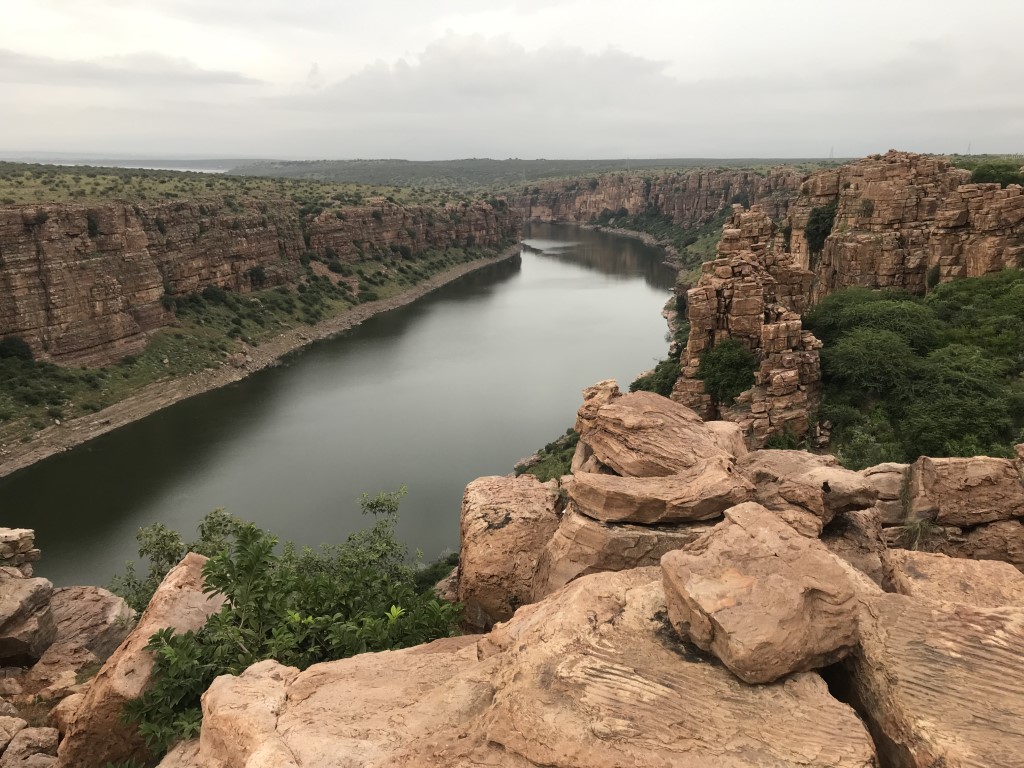
DAILY PHOTO: On the Rocks at Gandikota Canyon

Taken in November of 2021 at Gandikota Canyon in Andhra Pradesh

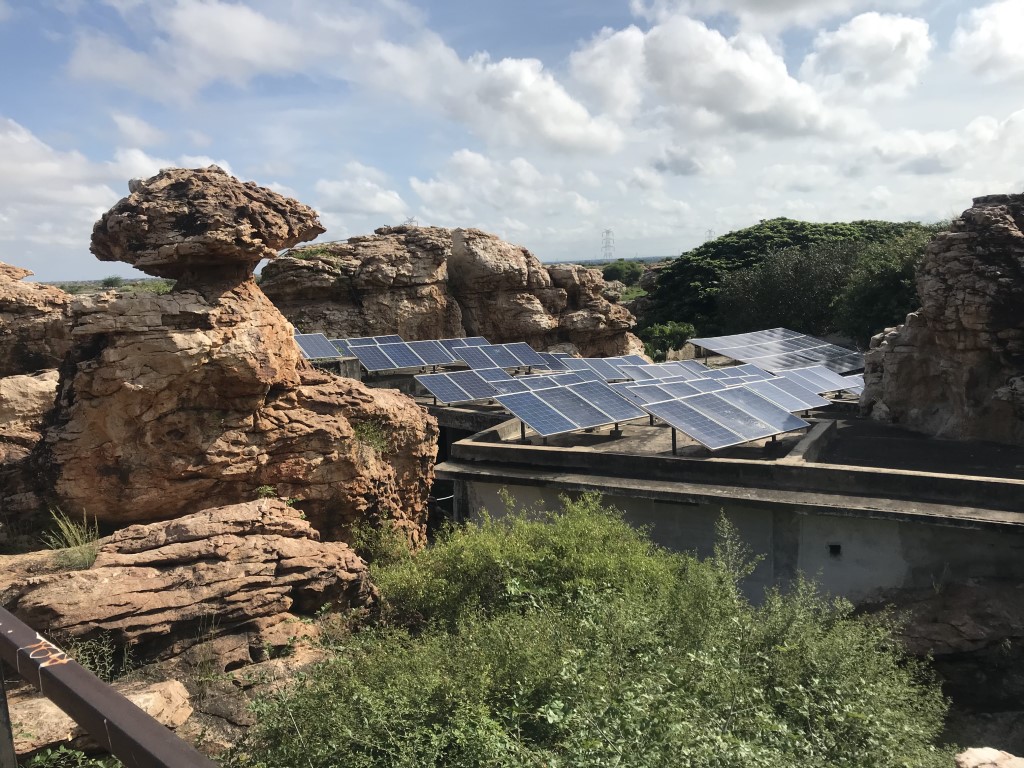
DAILY PHOTO: Balancing Rock and Solar Array

Taken at Orvakal Rock Garden in November of 2021

Liquid Metal [Haiku]

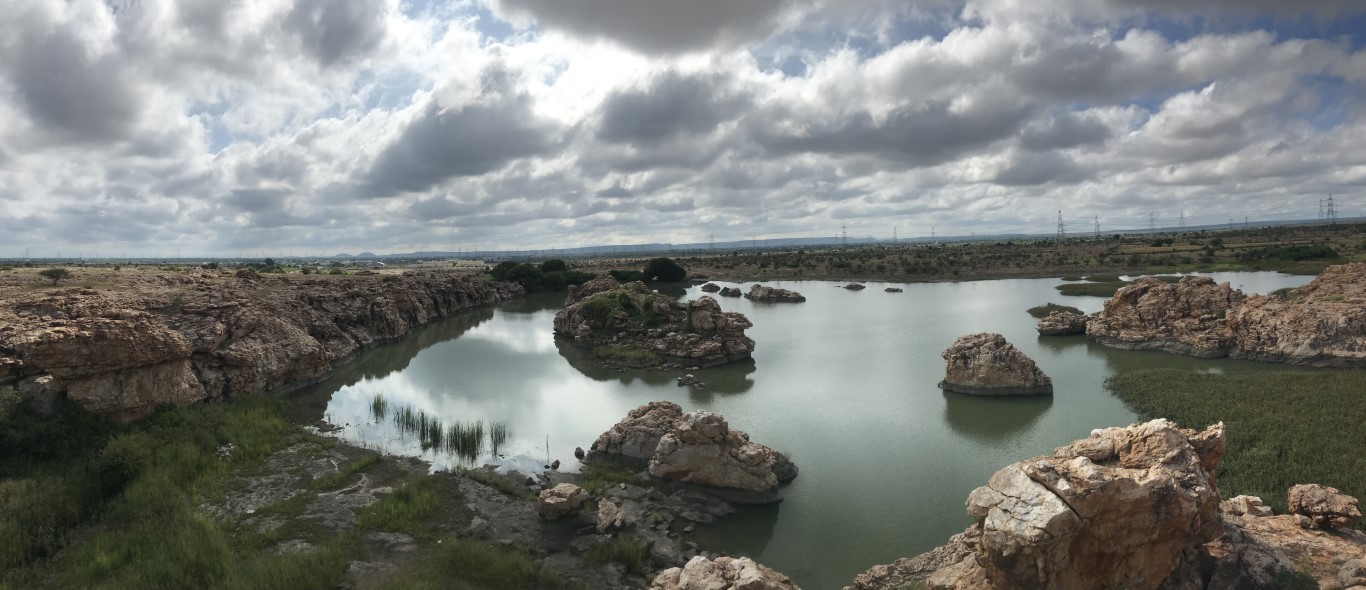
under low clouds,
the boulder-strewn pond looks
like liquid metal

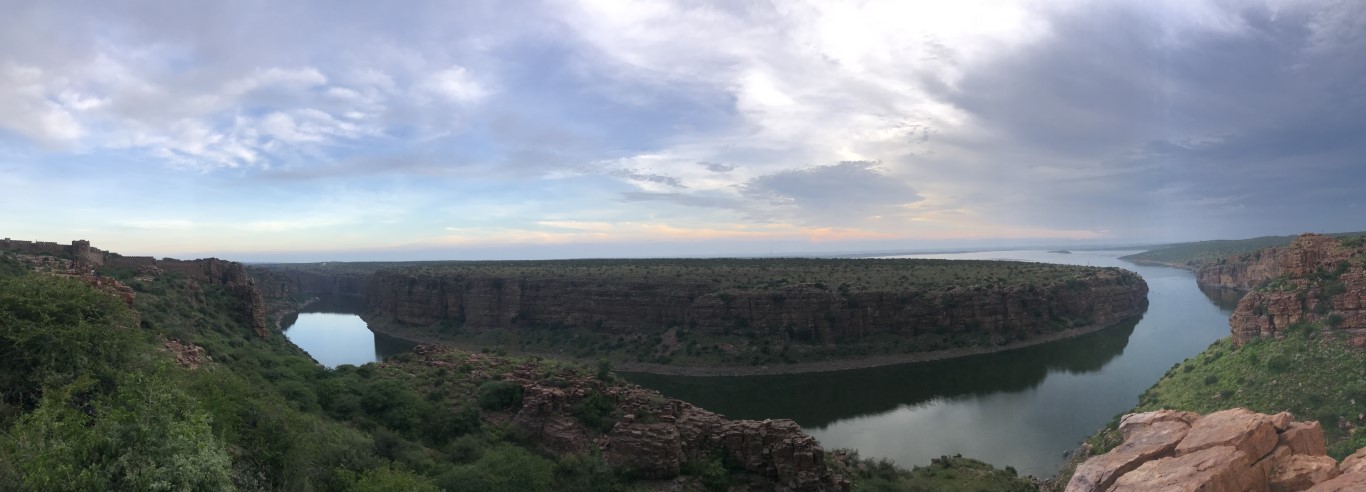
Horseshoe Bend [Free Verse]

I stand before a horseshoe canyon,
and it feels like the world
has folded back upon itself.

And I sort of like that idea.

There's too much emphasis on progress,
so maybe we need pockets of regress.

Not a full fusion blast of regression.
No one's calling for being battered back 
to the stone age.

Maybe, it'd just be nice to escape
the clarity of the watercourse way.

To be in the kind of place
where one has to drop a leaf
to know which way the waters flow.

Storied Lands [Sonnet / Idyll]

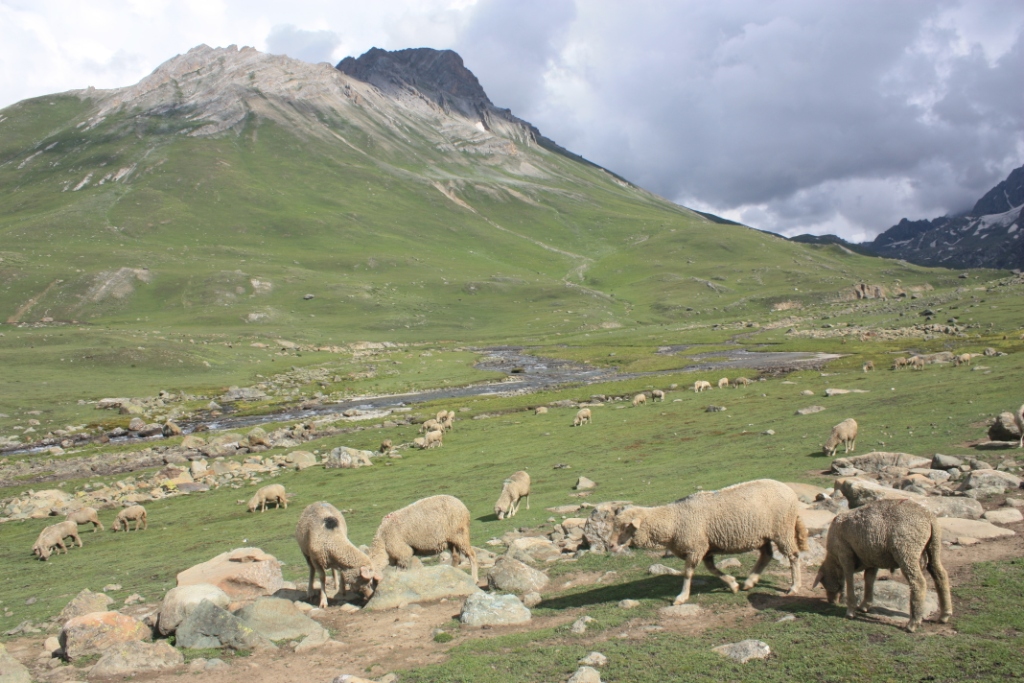
In mountain meadows, bleating sheep abound,
and green grass grows as high as their hunger
allows -- about as high as cricket grounds,
but I am lost in fantastic wonder.

It seems to me this is a storied land,
not merely grazing space, but where dragons
once flew, and one might see giants, firsthand --
a place that's never known a plow 'r wagons. 

It's where magic must once have arisen,
if ever such a place had existed --
where sparkling streams still burble and glisten
whose secret is kept ever tightfisted.

If you stumble into this storied realm
don't let its siren sight overwhelm.

BOOK REVIEW: Forest Walking by Peter Wohlleben & Jane Billinghurst

Forest Walking: discovering the trees and woodlands of North AmericaForest Walking: discovering the trees and woodlands of North America by Peter Wohlleben
My rating: 5 of 5 stars

Amazon.in Page

Out: April 26, 2022

Wohlleben’s “The Hidden Life of Trees” was one of those rare books that profoundly changed the way I looked at the world, and so I was eager to read his forthcoming work. This book is at once narrower in focus (i.e. intended to appeal to the North American market, specifically,) but also much much broader (i.e. reflecting upon not just the trees but the other species that reside among them as well as how humans can best get around within the forest.) It might seem strange for Wohlleben (a German forester) to do a book on the North American forests, and I suspect that’s one reason that his one-time translator / editor (Jane Billinghurst) became his co-author. [I don’t know where Billinghurst is from, but she does add many North America-specific vignettes to the book.]

Like “The Hidden Life of Trees” this book is packed with intriguing insights into woodland environments. The twenty-one chapters aren’t explicitly divvied up, but there’s a clear logic to the grouping of chapters. An opening chapter focuses on the importance of having a multi-sensory experience in the woods, and then chapters two through five are concentrated on trees and their various parts.

Chapters six through eight explore species that work on, with, and against trees, with particular focus on fungi and other species that break down and recycle forest material. Chapters nine and ten turn the attention to how to help kids get the most out of their forest experience. The next couple chapters consider how to get the most of seeing the forest at unconventional times, i.e. night and during varied seasons. Then there are a few chapters investigating how to observe other lifeforms of the forest, particularly animals and insects.

Several chapters follow that explore how humans can survive and thrive in wooded ecosystems, including everything from wilderness survival / primitive living skills to dressing to save oneself from ticks and chiggers.

I learned a lot from this book. As I mentioned, it’s full of intriguing little tidbits about the forest.

The opening sentence of the book’s Introduction did mention it being intended as a book one would take into the forest with one, and I would say it’s not that book at all. It’s the kind of book one reads before going out (and probably returns to after coming back) but it’s just not organized in such away to make it worth lugging around (i.e. it’s not like a field guide – set up to allow one to rapidly find what one is interested in on the fly.)

That said, you’ll learn a lot from reading it, and I’d highly recommend it.


View all my reviews

Mongoose [Haiku]

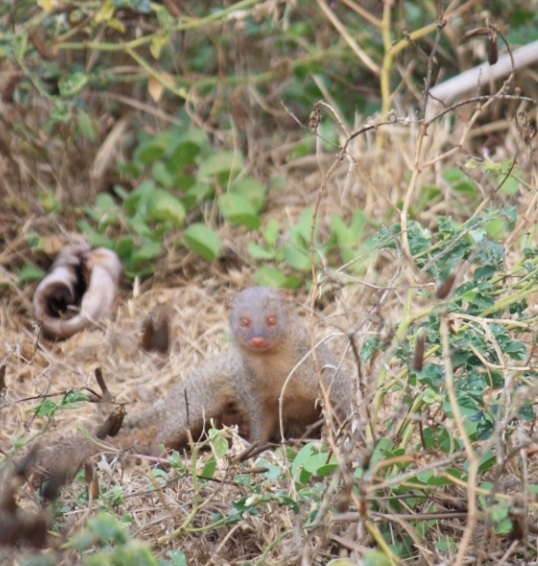
a pausing mongoose 
looks at me, 
as I look at it