An App for That: Profound Yogic Practices You May Not See in Class

To the average person, yoga consists of a series of poses that stretch the muscles and strengthen the core.  In truth, often the most profound and life-altering experiences had by yoga practitioners involve only a seated or lying posture. If you practice yoga, you’re probably aware that postural practice, or asana, is just only one element of yoga, and perhaps you’ve experienced some of the other elements of yogic practice. However, it’s not always easy to access such training at the local studio.


These days there’s another way. These practices can be accessed through apps such as EKA.


Below are five powerful yogic practices that you might not find taught at your local yoga studio, but that you’ll find on EKA.


5.) Yoga Nidra: Yoga Nidra translates to “yogic sleep.” It’s a practice in which one stays in the mind-state between wakefulness and sleep, i.e. hypnagogia, for an extended period while working through a sequence of practices. Yoga nidra is extremely relaxing, but also allows one to access the subconscious in a manner similar to that of self-hypnosis. This makes the practice useful both for people who have trouble with sleep or settling into rest, but it also allows one to influence the subconscious so that one can make changes in areas where subconscious influence is strong.


For example, a person seeking to lose weight understands that they need to be careful about what they eat. However, the subconscious isn’t always on the same page as the conscious mind, and cravings for sugary or fatty foods may win the battle. In yoga nidra, we use sankalpa — a resolution, to help win the subconscious over. We also use practices like visualizations to gain insight into what is happening outside the bounds of conscious thought, and to exercise influence over it.


4.) Kaya Sthairyam: Kaya Sthairyam translates to bodily stillness, or steadiness. If you’ve done any meditation, you were probably taught to adopt a position in which you could be as still as possible throughout the practice. The reason for this is that even subtle movements can distract one, weaken one’s concentration, or have a stimulating effect. In yoga, kaya sthairyam is used to achieve a state of maximum stillness. If one wishes to increase one’s ability to concentrate for extended periods, one must build one’s capacity to remain still. That said, kaya sthairyam need not be thought of as only a prelude to meditation. The tranquility that arises from these practices make them worthwhile in their own right.


3.) Bija Mantra: In India, chanting is a very popular practice among yoga practitioners, and many have found great clarity in it. In one of my early classes teaching yoga to children, I found that as soon as the kids sat in a cross-legged pose many of the younger children spontaneously started softly reciting the gayatri mantra. That’s how intense was their association between sitting down cross-legged and chanting.


In the West, mantra chanting is less familiar. The six bija mantra, or seed mantra, are a beautiful way to introduce oneself to mantra chanting because of their simplicity. Because the bija mantra (LAM, VAM, RAM, YAM, HUM, and AUM) are all monosyllabic, easily pronounced, and are related sounds, they can be picked up quickly and easily.


2.) Witnessing Meditations: The yogic teaching that has had the most life-changing effect on me has been dispassionate witnessing. While it’s not a complex idea, it requires some explanation.


Let’s first consider what minds usually do in the face of a problem. There are two common responses that are not particularly healthy.


The first is to distract oneself from the problem. In some cases, this distraction can be an unhealthy activity — such as drug abuse, but it might also be something neutral like watching television. However, even if you distract yourself with a wholesome activity like volunteering at a soup kitchen, the problem is still there and it will have its say. If not directly, then indirectly through nightmares, indigestion, or a stress-induced illness.


The second option is obsessing. The brain tries to lessen the sting by anticipating the worst possible scenario. The trouble with this obsession is that to find our worst case scenario — we have to hang toxic labels on all possible events and invent possibilities that are so unlikely as to be nearly impossible. And having invented such dire cases, we often give them too much weight. As Mark Twain put it, “I’ve had a lot of worries in my life, most of which never happened.”  The negativity piles up and causes stress and anxiety to balloon out of control.


In dispassionate witnessing, we don’t ignore or distract ourselves, but we also don’t strap on value judgements or build worst cases. We simply recognize what we are feeling, acknowledge it, but don’t feed our anxieties.


One of the most basic witnessing practices involves watching sensations in the body. Imagine you’re doing this practice and you feel an ache in your back. If you try to ignore the sensation, the mind may turn up the intensity to get your attention.  If you obsess, you’ll soon convince yourself that this sensation is really an ache… no, a pain… no, it’s agony… oh no, could there be a tumor growing on my spine? [That may be exaggerating a bit, but you see the point.] However, if you focus your attention on the sensation without labeling it, you’ll probably find that the sensation passes. In essence, the body says, “Hmm, the brain examined this sensation and didn’t think it was anything to be concerned about, let’s move on.”


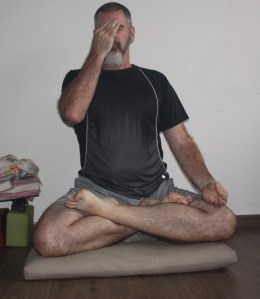
1.) Pranayama: Probably the most under-rated yogic practice is pranayama, or breathing exercises. By controlling one’s breath, one can influence one’s emotional state, one’s physiological processes, and the state of agitation in one’s mind. Breath practices are the most direct means to counteracting the stress response. However, despite constantly breathing — day in and day out — most people remain unaware of the incredible power of consciously controlling the breath.


There are a variety of types of breath exercises. There are breaths that have a stimulating effect on the body and mind, and those that have a calming effect. Scientific evidence has accumulated that there are benefits to practicing slower and deeper breathing, and pranayama offers a systematic approach to building this capacity. No matter what kind of pranayama one is doing, there is a side benefit from holding one’s focus on one point, the breath.


Pranayama is a great lead-in to meditative practices. It helps achieve a state of mind which is neither drowsy nor agitated. That said, pranayama is also beneficial on its own.


If you’re interested in exploring any of these practices, the EKA app is a great place to start.


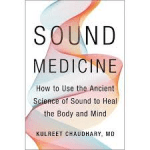
BOOK REVIEW: Sound Medicine by Kulreet Chaudhary

Sound Medicine: How to Harness the Power of Sound to Heal the Mind and BodySound Medicine: How to Harness the Power of Sound to Heal the Mind and Body by Kulreet Chaudhary
My rating: 4 of 5 stars

Amazon page


The Longfellow poem “There Was a Little Girl” has a line that says, “…When she was good, She was very good indeed, But when she was bad she was horrid.” That’s kind of how I felt about this book. At its best, it reports findings about how practices involving sound (i.e. mantra chanting) effect health and well-being, and lends insight into why sound sooths. At its worst, it tries to sledgehammer the square peg religious / spiritual practices into the round hole of quantum physics and foundational physics, often engaging in leaps that are at best wildly speculative, while presenting them as though they are as likely as not.

My favorite professor from undergraduate studies was a folksy Religious Studies Professor who cautioned against two opposing fallacies. The first he called “the outhouse fallacy.” This is assuming that because people of the past didn’t have indoor plumbing that they were complete idiots. Let me first say that, until recently, yoga (and other complementary health practices) suffered its fair share from this fallacy among doctors and the scientific community who felt that it couldn’t possibly help with health and well-being because it wasn’t rooted in the latest scientific findings. However, there is an opposing fallacy that my teacher called the “firstest-is-bestest” fallacy, which assumes the ancients figured it all out and we are just bumbling around in the dark hoping to stumble back into what they once knew. Scientists are prone to the first fallacy and the second is rife among religious folk. As a medical doctor who turned to siddha yoga (a form that puts a great deal of belief in superpowers and magic), Chaudhary had a rough road to not fall into one of these fallacies and, in my opinion, she falls more into the second — sounding at times like the ancient yogis knew more about the subatomic world and consciousness than science ever will. Most of the time, she words statements so that a careful reader can recognize what is well-supported and what is speculative, but she’s rarely explicit about the degree to which speculations are such, and I don’t remember an instance in which she presented an alternative that would undermine her argument. (i.e. The unstated argument seems to be that mantra is special among practices, that its usefulness is embedded in the fundamental physical laws of the universe, and, therefore, that it works by mechanisms unlike other meditative / complementary health practices [i.e. by engaging the parasympathetic nervous system so the body can make repairs using established biological mechanisms.])

In a nutshell, there is a “god in the gaps” approach to the book that says, look we don’t understand consciousness or all the “whys” of quantum mechanics, ergo there must be supernatural explanations. I don’t think that because we’ve used EEG since the 1920’s and fMRIs since the 1990’s and still haven’t yet unraveled the hard problem of consciousness that we need to say that god / supernatural forces are where we must look for explanation. The gap is ever closing, slowly but surely, and there’s no reason to believe it’s reasonable or useful to cram commentary from Vedas (or any other scriptures) to fill the gap.

It’s not only the science where Chaudhary presents a belief as though it is established truth without alternative explanations. Early on, she states that colonization is the reason for the decline of meditation in India. Don’t get me wrong, I’m as accepting that colonization resulted in a great number of evils as anyone, but it’s a leap to say that – therefore – every negative a society faces is because of its colonizer. I would point to Thailand, a society that was never colonized (except a brief period by the Burmese) and which is primarily made up of Theravadan Buddhists (a system for which meditative practice is considered central,) most of whom also do not meditate regularly today. I suspect a more logical explanation for the fact that most Indians don’t meditate today is that: a.) it’s hard work and time consuming (as a productive endeavor it’s not bread-winning and as a leisure time activity it’s laborious,) and b.) the majority of Indians (like the majority of Thais) probably never mediated. (When we look back in time, we often want to create this wholesome and uniform image that what we have writings about was how everyone lived, and that probably never reflects the truth.)

So now that my rant is over, I should say that I didn’t think this book was horrible, by any means. It has a lot of good information, and some of the speculative bits offer interesting food for thought. As long as one reads it carefully and with a healthy dose of skepticism, it’s a beneficial consideration of sound and vibration in health and well-being. It’s just that when I compare it to, say, Davidson and Goleman’s “The Science of Meditation” (which I reviewed recently) this book is far less careful about presenting the science, eliminating pseudo-science, and letting the reader know what is controversial and speculative versus what is well-supported by sound and rigorous investigation.

View all my reviews

POEM: Confessions of Mindfulness Pimp

It’s disconcerting, discovering one is a pimp.

Don’t get me wrong;

-I’ve never slapped a ho’

-I’ve never even called anyone a ho’

-To the best of my recollection,

I’ve not even thought anyone a ho’

I’m empathetic to honest work reviled.


But I’ve known the hard-handed hustle of a product that’s felt about in much different terms than it’s talked about — felt an act of masochism but called “working late.”

-a product the customer wishes — with every fiber of his being — he didn’t need.

-a product around which distractions grow like weeds through the cracks of a post-apocalyptic sidewalk.

-a product the customer wishes he could fast-forward to the end-bliss, escaping the awkward preliminaries.

-a skill that the customer tells himself he’s good at, knowing if he had skills, monetary transactions wouldn’t be necessary.

I’ve dealt virtue like it was a vice.

“Psst, Buddy, want some clarity?

“I won’t tell a soul you’re out here looking.”

I’ve pimped mindfulness and wellness — unrepentantly.

My Year of Discovering How Weird the Mind Gets, Pt. XI [Chanting]

Some people swear by the mind-altering properties [and other benefits] of chanting mantras. I’ve been reading a review copy of Kulreet Chaudhary’s “Sound Medicine,” a book whose play-on-words title says it all. It’s about the way sound is either shown or speculated to have health effects. (Full-disclosure: Some of the speculation gets a bit out there.)  Chaudhary is both a medical doctor and an Ayurvedic practitioner, and has an outlook akin to that of Deepak Chopra.

Chanting has never been my thing. I’ve learned about it and done some in yoga training, but I can’t say it ever resonated [no pun intended] with me. However, in the spirit of investigation, this month I did a few one hour and half-hour sessions of chanting. I kept it very basic, chanting AUM as I was taught with equal parts of A – U – and – M.

While I can’t say that I’m sold that chanting is the ultimate practice that achieves outcomes unachievable through other means, I will say that after these sessions I do feel a sense of calm and clarity. I can certainly see why mantra chanting has appeal for so many people, even though I also believe that, sadly, it’s sometimes oversold as something supernatural and the discussions about it are needlessly complicated.

BOOK REVIEW: The Science of Meditation [also sold as Altered Traits] by Daniel Goleman and Richard Davidson

The Science of Meditation: How to Change Your Brain, Mind and BodyThe Science of Meditation: How to Change Your Brain, Mind and Body by Daniel Goleman
My rating: 5 of 5 stars

Amazon page


This book has been sold under the title listed above as well as the less prosaic title, “Altered Traits.” The switch may represent a lack of confidence that the coined term “altered traits” would catch on, and / or a desire to market the book as broadly as possible.

“Altered Traits” is a play on the more well-known term “altered states [of consciousness.]” The idea being that meditation (as well as many other activities from consuming psychoactive drugs to having a shamanistic drum rave) create a change from the ordinary waking state of consciousness, but what the authors wanted to focus more upon is the long-term and sustained changes that result from extended meditation practice. (Hence, coining the term “altered traits.”) These sustained changes are a prevalent theme through out the book. This makes sense as one of the co-authors, Richard Davidson, is well-known for investigating the brains and brain activity of monks and yogis with extremely advanced practices (tens of thousands of hours in meditation.) Still, the prosaic title, “The Science of Meditation,” may make more than marketing sense because the book does discuss the scientific research on meditation pretty broadly.

Both Goleman and Davidson are long time meditators as well as being subject matter experts in psychology and brain science. This is a major strength of the book. Some scientists are dismissive of practices that have origins in spiritual practices and have blindsides or are prone to oversimplifications because of that bias. On the other hand, that bias isn’t helped by the fact that meditation experts often oversell meditation as a practice that will do everything from spontaneously cure your cancer to allow you to levitate six feet in the air. The authors of this book aren’t afraid to call out such spurious claims, but aren’t dismissive of practices of religious or spiritual origin. The authors also spend a fair amount of time criticizing past scientific investigations of meditation (including their own) on the basis of naivete about the nature of the practices. A major problem has always been an “apples and oranges” grouping together of practices that are different in potentially important ways. There have also been all the problems that plague other disciplines as well (small sample size, poor methodology, etc.) These discussions won’t mean much to most readers, but are helpful to those who want a better idea which studies are gold standard and which are weak. That said, the book doesn’t get bogged down in technical issues.

The book opens by laying out some of the important differences between various meditation practices and trying to educate readers who may either not know much about meditation or may know it only from the perspective of a single discipline. Goleman and Davidson suggest one way of thinking about different kinds of meditation is in terms of “the deep and the wide.” The former being sectarian practitioners who practice specific ritualized practices in an intense way. The latter being more secular practitioners whose practices may borrow from different domains. They present a more extensive classification scheme than this simple bifurcation, making it more of a continuum. Later in the book, they consider ways in which practices might be categorized (e.g. Attentional, Constructive, and Deconstructive) but it’s emphasized that there isn’t currently an agreed upon schema.

Throughout the book, one gets stories of the authors experience in investigating this subject. This included trying to get monks to allow themselves to be studied, even with a letter from the Dalai Lama. It also covers the challenge of trying to build interest in the subject in an academic setting that once thought of meditation as little more than voodoo.

The middle portion of the book has a number of chapters that address particular types of practices and the specific effects they have (and haven’t) been found to have. These include developing a more compassionate outlook and behavior (ch. 6), improved attention (ch. 7), negation of pain and physical ailments (ch. 8 & 9), and meditation / mindfulness as part of a psychotherapeutic approach. The authors repeatedly point out that these practices were never intended for the purpose of treating ailments (mental or physical,) though they do seem to show benefits in a number of domains outside of what the spiritual seekers who brought them to prominence intended of them.

The chapters toward the book’s end focus heavily on investigations into advanced meditators, and the altered traits and brain changes seen in them.

There are few graphics in the book, but it’s annotated and has an “additional resources” section in the back.

I’d highly recommend this book. The authors’ mixed background gives them a good vantage point to provide an overview of the subject, and also allows them to tap into stories of their experiences which make the book more interesting than it otherwise would be.

View all my reviews

My Year of Discovering How Weird the Mind Gets, Pt. III [Meditation]

This is the third installment in a series of posts on my study of altered states of consciousness. The January and February posts described my experiences with psilocybin mushroom tea and a sensory deprivation float tank, respectively.

This month (March) I’ve stepped up my meditation practice to at least an hour per day, every day of the week. (As opposed to a couple of one hour sessions as well as a couple of shorter sessions per week.) Meditation might seem tame in comparison to the previous practices (and some to come.) However, if one can quiet the mind, one experiences some of the same phenomena as are had during more dramatic practices, as well as other events that are too subtle to notice in other states. It’s easy to get more excited about practices that dial an experience up to eleven than ones that require one to listen carefully and patiently, but that’s a mistake.

Immediately after I completed the Vipassana ten-day course, I maintained a practice of this intensity for a brief period of time (as is the recommendation) before it became a bit cumbersome.  (My discussion of the Vipassana course can be found here.) For readers unfamiliar with the practice, Vipassana practice uses bodily sensations as an anchor for the mind. One repeatedly scans the body, observing any sensations that one feels along the way without judgement. It’s technically a Theravadan Buddhist practice, but is taught in a secular way. By “anchor” I mean some “object” that the awareness can be directed toward so as to make it more readily apparent when one’s mind wanders and easier to bring it back because there is something to direct the attention. Besides bodily sensation, some of the common anchors include: breath, mantra, visualizations, or external objects.

This doesn’t mean that every meditative practice requires an anchor, and the practice I’ve been using this month (by-and-large) did not.  I use an anchor (most often breath awareness) to achieve stillness of mind, but then switch to observation of what thoughts or imagery pop to mind. One might call this an anchorless meta-cognitive meditation. One just watches the mind, becoming witness to whatever arises, noting it, letting it move on, and resuming the watch. For yoga practitioners, this equates to the early stages of antar mouna, through and including chidakasha (watching subconscious imagery pop up.)

One notices many things about how the mind operates during meditation. The coarsest way of differentiating what I find arises in meditation is the distinction between conscious thoughts versus the subconscious imagery. Typically, I don’t observe the latter until the former have subsided. Conscious thoughts are often verbal as well as visual, but the subconscious matter is virtually all imagery.

One also realizes the crucial role played by memory. Often what I see is a memory residue of an image that arose. I’ve become very aware of essential memory is in our human style of consciousness. While in meditation one wants to reduce or eliminate the mental activities that come in tow with memory (i.e. analysis, making connections, elaboration, etc.,) one can’t help but notice how central such activities are to language and other learning that make us uniquely human.  Then there is recognition of the limits of memory. Just as one sometimes has an inkling of the substance of a dream, but can’t pull front and center in one’s mind, there is often the inkling of an image — gone before it registers.

If one is wondering why pick a one hour practice, it’s in part about the maximum my body is capable without needing a break to move lymph about and restore blood circulation to normal. During the Vipassana course, one has about ten hours a day of scheduled meditation, but I still needed a walk at least every hour or so. As for why not do smaller time chunks, I’ve found that I experience some phenomena past a half hour that I don’t recall experiencing in shorter practices. It takes some time to relax to a point at which one’s conscious mind stops trying to make plans or otherwise go off on tangents. Feelings of euphoria, oneness, and ease of mental quietness tend to come beyond a half of an hour for me — when they come.

I was disabused of any notions that a daily meditative practice over such a short period would lead to heightened mental clarity and emotional control. I’ve done 26 days out of 31 as of this writing, and have been as wild-minded as ever, and certainly more than the preceding months. I can’t say that this has anything to do with meditation one way or another. Perhaps, I’d have been even worse, given the nature of life’s ups and downs, if I hadn’t been practicing as such — but, of course, I can’t make such a claim — not meaningfully.

That said, I think I’ve made some interesting observations about how my mind works and what its limits are. I can’t say I experienced any wild mental phenomena, not of the nature I experienced during the long meditative days of the Vipassana course. However, I have been able to observe some fine detail about the sensation of shifting into a hypnogogic state, and other curious experiences that interest me. Subtle shifts of mind states have been a major point of curiosity for me. 

Next month, I’ll be attending a workshop on hypnosis, and the next post will be on hypnotic trance states.

POEM: Gravity’s Conspirator

trunk bent at a right angle
and leaning to the south

yet, that tree shows no struggle

every second — day and night
gravity summons it to the ground

it’s survived more than a few monsoons
puddles and soggy soil
have conspired with gravity
the wind has conspired
climbing animals have conspired
alighting hawks and crows have conspired
the boy who crawled out the horizontal limb and swung conspired

for years they have conspired

but the tree rarely so much as trembles

it’s doomed, but that knowledge holds no sway

and when i sit,
centered to thwart gravity,
i still feel the dogged pull
though its only conspirator is
my mind

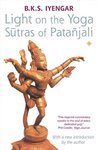
BOOK REVIEW: Light on the Yoga Sutras of Patanjali ed. by B.K.S. Iyengar

Light on the Yoga Sūtras of PatañjaliLight on the Yoga Sūtras of Patañjali by B.K.S. Iyengar
My rating: 5 of 5 stars

Amazon page


The “Yoga Sutras” are 196 aphorisms about yoga that were penned by a sage named Patanjali around 400 CE (i.e. AD.) Unless you’re a Sanskrit scholar with expertise in the history of yoga and the region that birthed it, it’s hard to gain anything from reading the Sutras directly. The Sutras are written in a terse style in a sparse language, and so most readers aren’t equipped to interpret them – which takes not only knowing the language but have some understanding of the context in which they were written. This means the Sutras are most commonly packaged into a book-length manuscript that includes not only the translation but also analysis and commentary.

There are many such books available, but the challenge is to find one that: a.) comes as close to the original meaning as possible without either misunderstanding or tainting the meaning with the translator’s and / or commentator’s worldview / ideas / ego; b.) is approachable to a modern reader. With respect to the latter, it’s easy to find free translations on the web, but often these were produced over a century ago, and can make for challenging reading for today’s readers. While it may seem like it would be closer to the source material, it can also be thought of as injecting another layer of culture in between the original and the present-day reader.

The Sutras are organized into four sections. The first section introduces the reader to yoga and explains the state of mind called Samadhi. The second section outlines the eight-fold practice of yoga called Ashtanga Yoga. The eight limbs include the two aspects of yogic ethics, yama and niyama, as well as postural yoga (asana,) breath exercises (pranayama,) sensory withdrawal (pratyahara,) concentration (dharana,) meditation (dhyana,) and the aforementioned Samadhi. The third section focuses on the super-normal abilities yogis are said to achieve, along with a warning that the pursuit of these abilities can become a fatal attraction with respect to one’s growth. The final section discusses the liberation, that is the ultimate objective of the practice of yoga.

The organization of this volume makes it suitable for readers of a wide range of levels of experience and scholarly understanding, and allows a reader to benefit from a shallow or deep approach to reading / research of the Sutras. It includes the original Sanskrit, then a Romanized alphabet phonetic write up of the original Sanskrit Sutra, and then a listing of the various meanings for each of the Sanskrit word. Then it has the English translation of the Sutra as literal as possible. Finally, there is B.K.S. Iyengar’s commentary and analysis. Sometimes these elaborations are just a few lines and sometimes they’re a few pages, but most commonly each is about one page. I like the approach of providing the original as well as information that facilitates the reader systematically piecing together his or her own understanding of each Sutra. I think it shows both humility and eagerness to support students on the part of the editor.

There are various appendices, indexes, and a glossary to make the book more useful.
This isn’t the first book of translation and commentary of the Sutras that I’ve read. However, it is the most readable, approachable, and useful that I’ve read. I would highly recommend this book for all practitioners of yoga.

View all my reviews

My Year of Discovering How Weird the Mind Gets, Pt. II [the Tank]

Source: Wikipedia via Floatguru

This is the second installment in my series of posts examining experiences with altered states of consciousness. This month I visited a float tank, what would have at one point been called a “sensory deprivation chamber” or an “isolation tank,” but now days they are called by more soothing sounding names such as R.E.S.T. [for “restricted environmental sensory therapy”] chamber. I like “flotation tank” because it’s the most neutral term, but it doesn’t necessarily convey what this technology does — which is to place one in body temperature water loaded with Epsom salt (increasing buoyancy) and cut out as much light and sound as possible by enclosing one in an insulated pod.

[Before I proceed, those interested in reading the first installment of this series, describing my experience with psilocybin mushroom tea — and which lays out my plan for the year — can find that post here.]

Withdrawing from sensory stimulation has a long history here in India. In yoga, it’s called pratyahara, and it’s one of the eight limbs of yoga described by Patanjali in his Yoga Sutras that date back to around 400 CE (that’s AD for the old school.) Of course, back in the day pratyahara was practiced in a cave or other isolated spot that cut one off from light, heat / cold, and sound as much as possible.

However, the technological approach is quite new in India. I visited 1000 Petals in Bangalore, which — as far as I know — is the first commercial float tank in India, and is — excepting the one at the company’s newer Mumbai (Bombay) location — among the only commercial tanks in the country as of now. [By “commercial” tanks, I mean only those that customers from the general public may visit. Who knows how may private tanks exist among India’s spice, coffee, and industrial barons? However, it’s an expensive piece of hardware for a private individual to own and maintain.]

I wasn’t sure what to expect, but had some basis for guesses. The general expectation is that with less stimulation, the brain both dials up awareness of the limited available input and may even start to create false signals. I’ve had experiences during meditation with under-stimulated sensory systems “acting up” in the face of reduced input — though this has primarily been during extended sessions of meditation. During the Vipassana 10-day meditation course, I frequently had morphing shapes play out scenes on the inside of my eyelids  — purple on a black background — and on occasion heard vivid music in my head (but which I knew was solely in my head.) Also, on a number of occasions during the Vipassana course, I had sensations that my body was stretching toward the ceiling.  I once even had an intense flowery scent that I’m not sure was an olfactory hallucination or a combination of the wind blowing just right to bring pollen into the meditation hall and my sensory attentiveness being dialed up to eleven due to under-stimulation. With possible exception of the flower smell, I never had any experience that would meet the common conception of a hallucination — i.e. sensory experience that I couldn’t tell whether was real or false. [Except in as much as I have only a vague notion of what being “real” means. An approximation suitable to getting through life in polite society.]

The question of the moment is whether the experience matched or defied my expectations? The general answer is, “both, in some measure.” Where it matched my expectations was in the fact that it was extremely relaxing. I spent much of the hour in a hypnogogic state (the state on the edge between wakefulness and sleep) and came out of the tank in the comfortably numb state that I associate with a good massage.  Unlike meditation, where one starts to have back aches and leg pains that detract from comfort, keep one awake, and eventually cause endorphins to surge through one’s system, the flotation tank makes one as comfortable as one can be from the outset. This doesn’t mean that the tank cuts one off from all tactile sensation. Just because the temperature matches one’s body and one is floating so as to not be in contact with anything but salty water, doesn’t mean one becomes completely numb. Sensations do arise, and, even though they might be so subtle that they ordinarily wouldn’t draw one’s attention, one becomes aware of them because one’s mind is so yearning for input.

The biggest way in which the flotation tank defied my expectation was the utter lack of response to the dearth of visual signal. At one point I realized I could get a little of that purple on black shape-shifting that I experienced in Vipassana, but only if I consciously turned my attention to the underside of my eyelids. It didn’t force its way to the center of my attention like it had during Vipassana. There are several factors I can imagine playing into this disparity. For one, the float tank session was just one hour, where as the Vipassana course days lasted about ten hours on the mat. For another, the float tank was pitch black or as near to it as my eyes were capable of discriminating, whereas the mediation hall had windows and was merely dim. A more personal possibility is that, having done a lot of meditation in the intervening time, my mind isn’t as distressed by a lack of sensory input as it once was.

I can’t say that my mind didn’t respond to the lack of sensory stimulation at all. It just didn’t seem to respond to the lack of visual input. I didn’t opt to wear ear plugs (which were available,) but the water went into my ears and — except for some initial sensation while settling in — there was very little to be heard. Mostly, I could hear my own breathing and occasionally hear / feel my pulse. [I found I could dully hear external sounds in the bass range such as construction workers pounding or a helicopter flying over, but not at a level that was distracting, and my mind didn’t  do anything with these stray sounds.]

As there was no smell to speak of and I could only taste the inside of my mouth if I turned my attention to it, this left tactile sensation as my primary source of stimulation. It’s funny, there is little to feel it would seem, but because one’s nervous system dials into what’s there, it begins to feel like one is laying in a perfectly form-fitting solid rather than on a liquid. And I became acutely aware of any sensations that came along. I didn’t have any strange “Alice-in-Wonderland Syndrome-eque” sensations like stretching or melting that I’ve experienced to a limited degree in meditation (possibly because those experiences may have resulted from an endorphin dump.)  I did have a couple instances of leg twitch in the hypnogogic state, and I couldn’t feel the twitch at all because the leg wasn’t against anything solid, but I knew it happened from the ripples lapping up against my torso. 

So, long story short, my mind didn’t behave strangely when subjected to an hour of sensory reduction. It was very relaxing and brought about an extended hypnogogic state — oddly without the imagery that I usually associate with that state.

Looking ahead: Next month, I’m going to be in the more familiar territory of meditation. However, I’ll be looking to see if ramping up the intensity of my practice to at least one hour every single day, produces any interesting outcomes. In April, I’ll be attending an introductory level workshop of the Institute for Clinical Hypnosis and Related Sciences (ICHARS) to learn how to extend my familiarity with hypnotic trance induction from self-hypnosis to working with others.

2019: A Year Finding Out How Weird the Mind Gets, Pt I [The Mushroom]

For the past five years, since I moved to India, I’ve been studying what my mind is and what it’s capable of. I’ve used tried and true methods, including: yogic dharana (concentration) and dhyana (meditation) techniques, Vipassana meditation,  dream yoga/ lucid dreaming [albeit, with limited success,] and the practice of self-hypnosis.

In 2019, while continuing the trend, I’m going to get into the weeds and see how strange the mind gets. I was originally going to entitle this “My Year of Exploring Varieties of Conscious Experience,” but that sounded punishingly boring. The current title may come off as frivolous, but I hope is more intriguing as well.

The year has begun, and so has my year of exploration. January was the month in which I first experienced psilocybe cubensis — what the kids call “magic mushroom” or “shrooms.” I should point out that — besides alcohol and caffeine — this was my first experience with any mind or mood altering substance. [With the exception of one afternoon thirty years ago when I was prescribed Tylenol with Codeine after having all four wisdom teeth pulled — an event that probably remains the most bizarre mental experience of my life.]

I’d like to be able to say that I’m the type who boldly tries out new things with derring-do, but those who know me know I’m the kind who reads hundreds of pages of research and commentary and then cautiously dips a toe into the waters. Among the extensive pre-experience reading I did was Michael Pollan’s excellent book, How to Change Your Mind and a study finding psilocybin mushrooms to be the safest of the mind and mood altering substances. (Yes, that includes being much safer than alcohol — a finding, the veracity of which, I have not a doubt. Those curious about this topic are encouraged to see Drugs without the Hot Air by David Nutt, which delves into how society’s approach to such substances can be absurd and without merit in logic. Nutt was famously fired from a government position in Britain for openly stating that alcohol and nicotine are both considerably more dangerous /damaging than a number of prohibited substances)

What was my experience like? Strange and fascinating. However, even at the time, I found myself wondering whether I was cursed with knowledge. How much did all that reading and research influence my experience for the good, the bad, or the indifferent? I don’t know, perhaps a lot, but maybe not at all. I’ll give some examples. One of the early and persistent effects was seeing the world overwritten in prismatic geometric forms. The closest I could describe this is to imagine the shapes seen in jaali — the latticed windows seen in Indo-Islamic architecture — but with a repeating “echo” of lines and a kind of rainbow prismatic effect.

Jaali

I suspect this is a neuro-chemical effect of the substance on one’s brain, but I couldn’t help but wonder whether my experience was trained by having read Aldous Huxley’s descriptions of “sacred geometries” during his own experience. (Of course, it also makes me wonder what Indo-Islamic craftsmen and architects might have been taking.)

As I mentioned, I could see where prior knowledge could have both positive and negative influences on the experience. I’ll start with an example of a possible positive effect of prior knowledge. One thing the reader needs to understand is that the physicist’s conception that things at rest will stay at rest and things in motion will stay in motion doesn’t hold in the mental world of psilocybin — everything goes into motion. It could be the breathing letters of a word on the page or the gentle writhing of a house plant, but not much just sits there. As I stared up at the ceiling, the staples that held the cable to the ceiling fan in place became blocky ants on the march, and soon any dot anywhere became an ant on the move. Now, I can imagine how this might stir in some people a “bad trip,” freaking out about the infestation. However, my mind always somehow recognized that the animation of those still objects was in my brain and not in the room. I was trained to think of these experiences as the effect of a serotonin mimic going hog-wild inside my brain, and I never thought that maybe I’d kicked open Huxley’s famed “Doors of Perception” and something real was now on display to me that I couldn’t ordinarily see. [Though I can’t eliminate that possibility.]

However, I also must wonder whether I might have had a grand breakthrough or experience of enlightenment (probably little-e) — as many claim to have had — if my experience wasn’t so grounded. I scribbled about seven and a half pages while I was “tripping,” and I was very curious about whether it would be gibberish or pure illumination. It was neither. About half my sentences broke off about 2/3rds of the way through, but those that I could make out were not wide the mark of my day-to-day philosophy. It reflected the diminished self and euphoria of the experience (which I’ve  also experienced in meditation), but wasn’t otherworldly. I will say, my psilocybin self was a wee bit bolder, realizing that — like a dog chasing its tail — if I ever captured the understanding I seek, the fun would be blanched from life. The closest thing to a revelation was that I needed to embrace my ignorance — a conclusion my sober self had already come to acceptance of in its bolder moments.

What are my recommendations if you plan to partake of a cup of mushroom tea? Make sure your environment is not overstimulating. Make sure there is nothing fear or anxiety inducing in the area (perhaps including knowing the legal status where you are.) Have a calm state of mind. Realize that for about 30 for 45 minutes you will think the tea had no effect upon you and the strangeness will come on gradually. Some people say you should have someone around. I don’t know that I’d say it’s necessary, (unless you have anxiety issues and then you might not want to partake without seeking medical advice)  but if you do make sure it’s not someone who gets on your nerves.

So what is next? February will be the month in which I try out a sensory deprivation float tank. In yoga, one of the legs of practice is pratyahara (withdrawal from the senses.) I’m fascinated to see what effect the body temperature Epsom salt water has — if any — over and above closed-eye meditation in a dim room.

My tentative schedule is:

January  —  Mushroom — check

February — Sensory Deprivation Float Tank

March — 30 days of hour-long meditations

April — Hypnosis (attending an intensive workshop)

May — EEG feedback meditation

June — Tummo / Wim Hof Method / Holotropic Breathwork

July — extensive Yogic dharana  and dhyana practice

August —  resumption of dream yoga / lucid dreaming practices

September — periodic fasting (and, maybe, controlled sleep deprivation)

October — Biofeedback pranayama (breathing exercises)

November — Poetry of the Subconscious Mind

December  — mixed practices, putting it all together

I plan to keep up documentation of my practice, and hope you’ll follow along when I post something. I’m also interested to hear about the experiences of others regarding these and other consciousness related practices. I don’t know how strange it’ll get, but things might get pretty weird.