“Love is Not All” (Sonnet XXX) by Edna St. Vincent Millay [w/ Audio]

Love is not all: it is not meat nor drink
Nor slumber nor a roof against the rain;
Nor yet a floating spar to men that sink
And rise and sink and rise and sink again;
Love can not fill the thickened lung with breath,
Nor clean the blood, nor set the fractured bone;
Yet many a man is making friends with death
Even as I speak, for lack of love alone.
It well may be that in a difficult hour,
Pinned down by pain and moaning for release,
Or nagged by want past resolution's power,
I might be driven to sell your love for peace,
Or trade the memory of this night for food.
It well may be. I do not think I would.

“The Cross of Snow” by Henry Wadsworth Longfellow [w/ Audio]

In the long, sleepless watches of the night,
A gentle face -- the face of one long dead --
Looks at me from the wall, where round its head
The night-lamp casts a halo of pale light.
Here in this room she died; and soul more white
Never through martyrdom of fire was led
To its repose; nor can in books be read
The legend of a life more benedight.
There is a mountain in the distant West
That, sun-defying, in its deep ravines
Displays a cross of snow upon its side.
Such is the cross I wear upon my breast
These eighteen years, through all the changing scenes
And seasons, changeless since the day she died.

“A Quoi Bon Dire” by Charlotte Mew [w/ Audio]

Seventeen years ago you said
Something that sounded like Good-bye;
And everybody thinks that you are dead,
But I.

So I, as I grow stiff and cold
To this and that say Good-bye too;
And everybody sees that I am old
But you.

And one fine morning in a sunny lane
Some boy and girl will meet and kiss and swear
That nobody can love their way again
While over there
You will have smiled, I shall have tossed your hair.

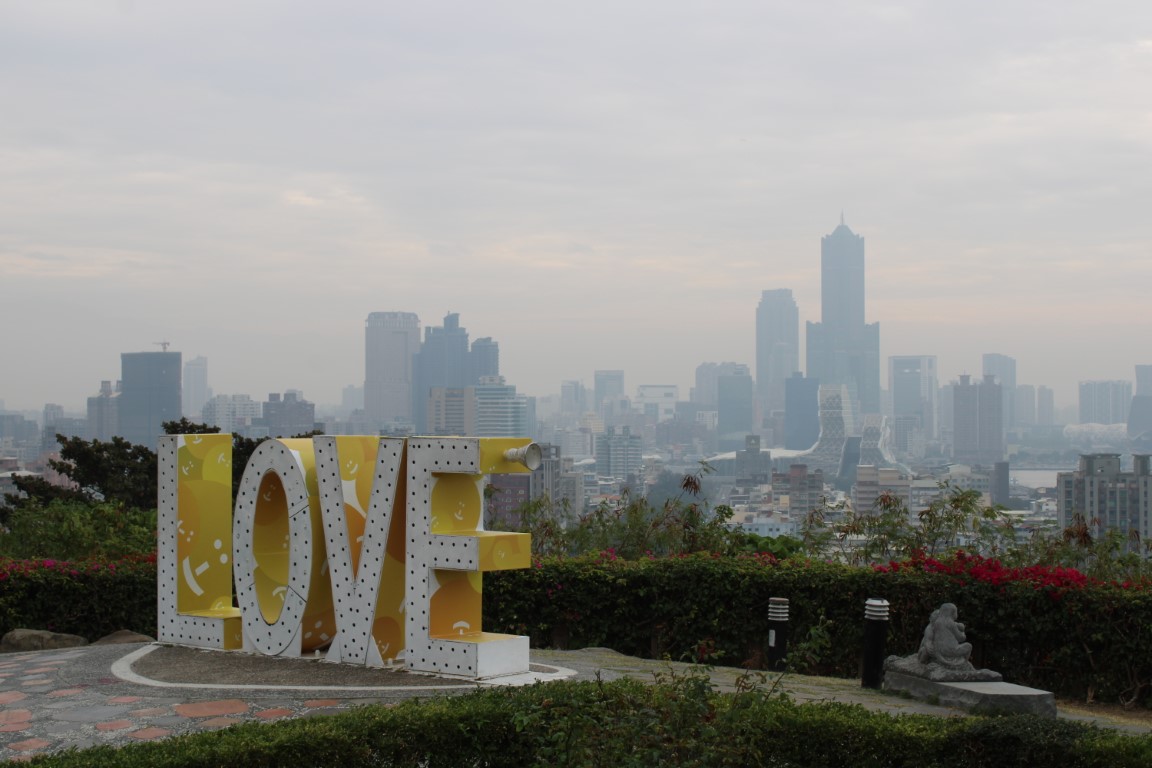
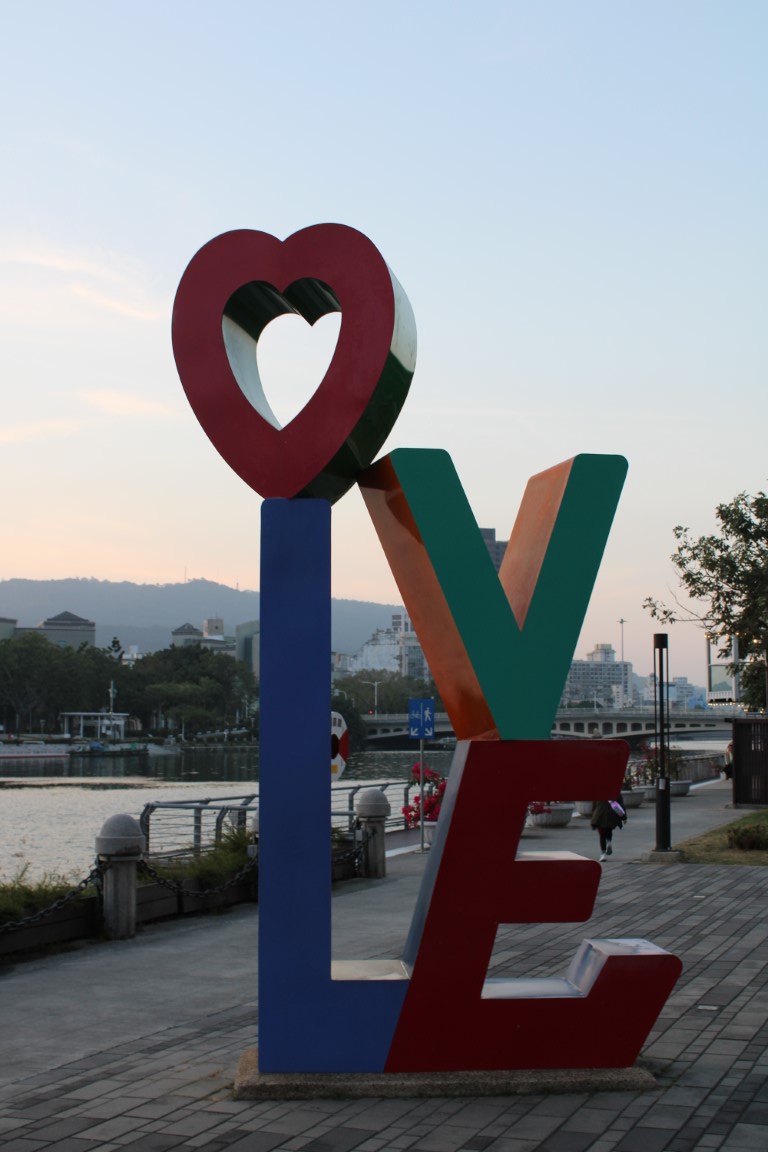
DAILY PHOTO: Love Signs, Kaohsiung

“A Red, Red Rose” by Robert Burns [w/ Audio]

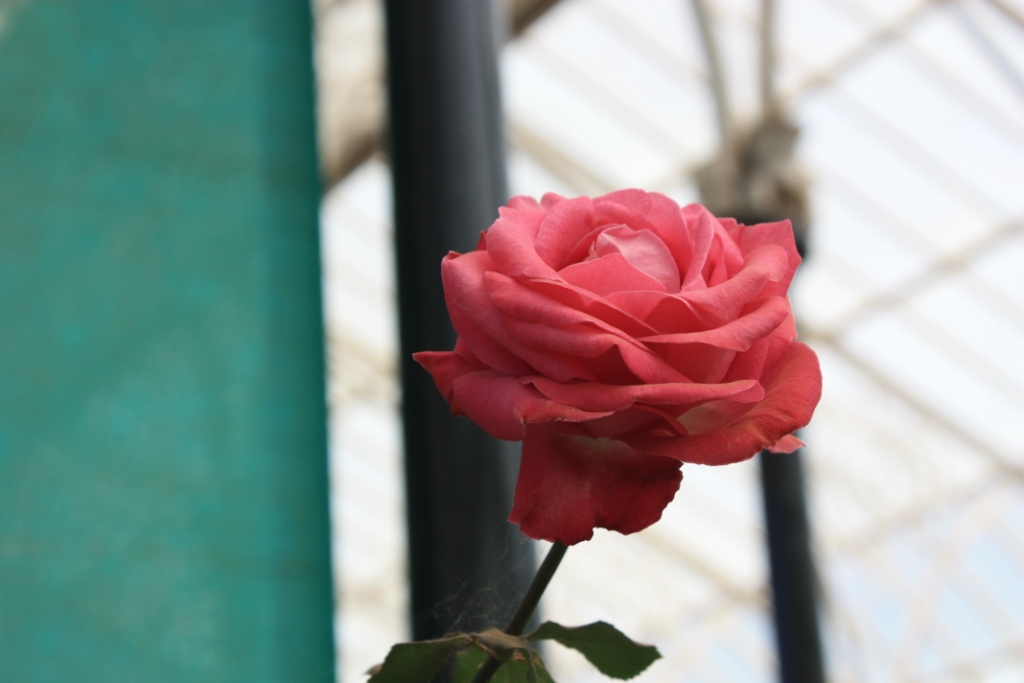
O my Luve is like a red, red rose
 That's newly sprung in June;
O my Luve is like the melody
 That's sweetly played in tune.

So fair art thou, my bonnie lass,
 So deep in luve am I;
And I will luve thee still, my dear,
 Till a' the seas gang dry.

Till a' the seas gang dry, my dear,
 And the rocks melt wi' the sun;
I will luve thee still, my dear,
 While the sand o' life shall run.

And fare thee weel, my only Luve!
 And fare thee weel awhile!
And I will come again, my Luve,
 Though it were ten thousand mile.

“Sonnets from the Portuguese 43” by Elizabeth Barrett Browning [w/ Audio]

How do I love thee? Let me count the ways.
 I love thee to the depth and breadth and height
My soul can reach, when feeling out of sight
 For the ends of being and ideal grace.
I love thee to the level of every day's
 Most quiet need, by sun and candle-light.
I love thee freely, as men strive for right;
 I love thee purely, as they turn from praise.
I love thee with the passion put to use
 In my old griefs, and with my childhood's faith.
I love thee with a love I seemed to lose
 With my lost saints. I love thee with the breath,
Smiles, tears, of all my life, and, if God choose,
 I shall but love thee better after death.

You, Too [Lyric Poem]

I cannot be one.
 I cannot be lost.
  I cannot buy my entry
      at a payable cost.

I cannot be three.
 I cannot be boss.
  I cannot isolate: diamonds
      from the dross.

I think I can be two,
 just the me & you.
  our two could be one,
      like two planks form a cross.

PROMPT: Romantic [Or, romantic]

Daily writing prompt
What’s your definition of romantic?

Depends on the context. If I’m thinking about poetry or philosophy (which I often am,) then it pertains to the early nineteenth century movement that counterpoised the Enlightenment. Those “Romantics” disliked what they saw as the cold rationality of Enlightenment thinking; they valued spiritual and mystical experiences, and they believed it was important to not throw out the spiritual “baby” with the bathwater. That is, like many Enlightenment thinkers, they realized that it was necessary to jettison many of religion’s noxious ideas (e.g. the concept of “chosen people”) and also realized that mindlessly following moral dictates that may or may not have made sense in the pre-Christian Levant could be detrimental to their present-day life experience. However, unlike most Enlightenment thinkers, they did find value in spiritual views of the world as well as in the pursuit of mystical experiences. William Blake (even though he is often labeled pre-Romantic) provides an excellent example. His poems are spiritual to the core, and yet explicitly reject a lot of the moralizing and toxic aspects of conventional religion.

Of course, that variety of “Romantic” is usually given a big-R, and so I suspect the question is after a more colloquial definition. With that in mind, I believe “romantic” means “that which facilitates the unity of two (or more, I don’t judge) people in an immersive intimate experience of each other during a common period of time.” I’m not big on trappings. I think people obsess over trappings because it allows them to slack on the physical / cognitive demands of being fully engaged. This is why sex (done well) is such a great tool both for relationship building and for personal development. It makes it relatively easy (i.e. rewarding) to stay fully engaged in a common experience and in the moment, and to not fall into the attentional abyss.

Suspect Alterations [Common Meter]

To say you love, but require change
     is so deeply fishy.
 To mold the nature of your love
      as if her soul were squishy.

Love Locks [Free Verse]

Wandering through a new city,
 I come upon a bridge:
  its rails loaded with locks.
   They call them "love locks."

It gets me wondering how many locks
 long outlived the love they memorialized?

How many were lust locks --
 linked to the bridge before 
  the couple really knew each other's
   vexing peccadillos?

How many were like ill-advised back tattoos,
 a lover's name - someone one met in Vegas - 
    and whose name one wouldn't
       otherwise remember, 
     were it not inked across one's spine
        in a 120-point flame-festooned font?