BOOK: “Islands in the Stream” by Ernest Hemingway

Islands in the StreamIslands in the Stream by Ernest Hemingway
My rating: 5 of 5 stars

Publisher Site – Simon & Schuster

This novel was actually published almost a decade after Hemingway’s death. It was found among his papers, a complete — but rough — draft.

The book’s protagonist is Thomas Hudson, a divorced painter living alone in the Caribbean. The story is told in three parts. In the first, Hudson’s solitary existence is brightened by a visit from his three sons (one from one ex- and the other two from a second.) The second part is the story of a prolonged bender in Cuba. The final section follows Hudson and his crew as they track the survivors of a sunken German U-boat as said Germans try to island-hop their way to safety. The three sections are each quite different in tone. The last part reads like genre fiction (i.e. commercial fiction,) while the former two are character driven literary fiction (but of quite different tones.)

The book is mostly about loss and grief and the varied ways with which it is dealt, and the process through which the griever proceeds.

I enjoyed this book. While, like a life, it may be a bit messy, I found it compelling. I’d recommend it for those who enjoy Hemingway.

View all my reviews

BOOKS: “A Short Stay in Hell” by Steven L. Peck

A Short Stay in HellA Short Stay in Hell by Steven L. Peck
My rating: 5 of 5 stars

Publisher Site: Strange Violin Editions

If you enjoy books like Joseph Heller’s Catch-22 or Douglas Adams’ The Hitchhiker’s Guide to the Galaxy this book will probably be right up your alley. It may not be as unrelentingly (and hilariously) absurd as H2G2, but it’s clever, amusing, and thought-provoking.

The premise is that a devout Christian finds himself in hell because it turns out that Zoroastrianism was actually the one true religion. Fortunately, Zoroastrian hell is neither as grim nor (perhaps, ironically) as fire & brimstone-oriented as the Biblical version, but it is tedious, demoralizing, and — while it might not last forever –it lasts long enough to seem like forever.

Jorge Luis Borges fans (such as myself) will find a nod to his work in the shape of said hell.

I’d highly recommend this book for readers of irreverent and humorous literary fiction. It’s funny. It’s clever. And it’s a quick read.

View all my reviews

BOOKS: “Sightseeing” by Rattawut Lapcharoensap

SightseeingSightseeing by Rattawut Lapcharoensap
My rating: 5 of 5 stars

Publisher Site – Atlantic

This collection of seven short stories offers insight into Thailand and its culture, but the stories are also gripping and clever. It’s a rare thing for stories to so engage with issues such as poverty, class, the refugee experience, the human experience, and foreignness and to still be highly entertaining.

Farangs is about the interaction of Thais and foreigners in the form of a love triangle featuring a Thai protagonist, a Western girl, and the girl’s erstwhile (also foreign) boyfriend.

At the Cafe Lovely is about two brothers, the older of whom takes the younger brother to a “cafe” that is more of a bar with built-in brothel. The story shows the seedy side of Bangkok, but also the bond between brothers.

Draft Day is about two friends, one from a wealthy family and the other not, who have to go to the draft lottery to determine whether they will have to serve in the military or not. This story is potent observation on social justice.

Sightseeing is about a mother and son’s last trip before the mother loses her vision.

Priscilla and the Cambodians is about a Cambodian girl who, in a rough-and-tumble manner, befriends two geeky Thai boys. The story explores the woes of being poor outsiders in a world that cares neither for the poor, nor for outsiders.

Don’t Let Me Die in this Place is about an old American man who moves in with his son and the son’s Thai wife and their children in Bangkok after the man has suffered a stroke and is in recovery. It’s about the old man’s struggle to adapt to a very different life while at the same time coping with not being able to take care of himself.

Cockfighter is the longest and also probably the most visceral of the stories. It centers on a teenaged girl whose father is the titular “Cockfighter” and whose mother makes hand-sewn bras. It’s an intensely psychological work of fiction with some hilarious moments, as well.

I’d highly recommend this collection for all readers of short fiction. I chose it as my travel literature for Thailand (I read a work [or works] of literature from all countries I visit,) but I don’t think one has to have a particular interest in Thailand to find the stories fascinating and profound.

View all my reviews

BOOKS: “A Man Was Going Down the Road” by Otar Chiladze

A Man Was Going Down the RoadA Man Was Going Down the Road by Otar Chiladze
My rating: 5 of 5 stars

Publisher Site

This is the English translation of a novel considered to be one of the most important literary works of Georgia (i.e. the country, not the state) in the twentieth century. The multigenerational tale adapts from Greek Mythology, most notably the story of Jason and the Golden Fleece and Daedalus and Icarus (the former taking place early in the book and the latter towards the end.)

Given its pacing, multigenerational sprawl, and the rambling ordinary life interactions between big events, this book isn’t of the highest readability, but that has its benefits. Supposedly, the author was taking digs at the Soviets and their invasions and operations in Georgia, but – apparently – the Soviet censors never made the connection due to the abstruse nature of the story. Otherwise, we might not have this book to read, today.

Regardless of my comments about readability, the book does have a number of positive things going for it. I found the translation to have some beautiful stretches of language. There was an opening paragraph of one of the latter chapters that floored me. Also, it’s not all soap opera, the more intensely plot-driven bits are compelling, most notably the Golden Fleece story.

I’d highly recommend this book for readers who don’t mind the challenge of literary fiction pacing and everyday minutiae.

View all my reviews

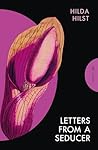
BOOKS: “Letters from a Seducer” by Hilda Hilst

Letters from a SeducerLetters from a Seducer by Hilda Hilst
My rating: 5 of 5 stars

Publisher Site – Pushkin Press Classics

Release Date: May 27, 2025

This is an upcoming English translation of a 1991 novella from Brazilian author, Hilda Hilst, from what has been called her “obscene cycle.” It is mostly an epistolary novella in which a man, Karl, writes his sister, Cordelia, informing her about his recent sexual adventures and attempting to coax a confession out of her about her own activities long in the past. We never see any replies from Cordelia. (And that is part of what makes the book fascinating.) The only indication of her responses that we get are Karl’s references to Cordelia’s comments from her last letter in his present letter. However, we can’t necessarily be certain that even those occasional suggestions of dialog represent the truth.

To understand why one might have doubt, one must be aware of what else is going on in this book. There is one other narrative voice, and that is of Stamatius. Stamatius is in socio-economic terms the opposite of Karl. Karl being of the gentlemanly class — his behavior and letters to his sister notwithstanding — and Stamatius is a starving artist (a writer, to be precise.) The two men speak of each other, though always in deprecating terms. However, there’s reason to think the two men might be one. Stamatius, while condemning Karl’s sex obsession, also mostly engages in tales of his own sexual adventures as well as presenting those of others. In fact, the end of this novella is a collection of short vignettes of the nature one might see in a smutty letter magazine, only better (and sometimes poetically) written.

By the author’s own description, this novella is intentionally pornographic. While the same thing is said of Hilst’s The Obscene Madame D I did not find that book particularly graphic or sex-centric. This book, however, is quite graphic and if one took away references to sexual activities
nothing of substance would remain. (Not true of The Obscene Madame D.)

I found this book to be intriguing, despite the fact that it is quite sloppily arranged (presumably on purpose,) but it does present some splendid use of language (at least in this translation — the original is in Brazilian Portuguese) and character psychology.

I’d recommend this book for readers of literary fiction who don’t mind plotlessness and pornographicness.

View all my reviews

BOOKS: “Kokoro” by Natsume Sōseki 

KokoroKokoro by Natsume Sōseki
My rating: 5 of 5 stars

Publisher Site – Pushkin Press

I first read this many years ago in college for a course on Japanese culture. I didn’t have a good reading experience then because this novel is too quiet to hold the concentration of a fidgety mind. However, on rereading it, I found it to be an intense and moving reading experience. It’s a brutally realistic piece of literary fiction, featuring quiet and unexpressive characters who are never-the-less experiencing a kind of agony of living.

The book’s beginning revolves around the relationship between a young man just finishing college and an older, somewhat hermetic, man. By “relationship” I’m not talking about a sexual or otherwise intimate interaction. This strange relationship might best be made sense of by the fact that the young man calls the older, “Sensei” (i.e. “teacher.”) So, it is largely an informal mentor-mentee relationship, but the reader may not really understand why “Sensei” is a reasonable honorific for the old man until the end. The latter portion of the book is Sensei’s “confession,” or the telling of formative events of his life. It is in this confession that we learn that Sensei is not so much a teacher by virtue of conveying abstract scholarly information but rather he teaches by showing the young man his own life story as a cautionary tale.

You must be in a quiet state of mind to keep attuned to this book, but – if you can do so – it is well worth reading. I’d highly recommend it for readers of literary fiction.

View all my reviews

BOOKS: “The Man with the Compound Eyes” by Wu Ming-Yi

The Man with the Compound EyesThe Man with the Compound Eyes by Wu Ming-Yi
My rating: 5 of 5 stars

Amazon.in Page

This book is at once a work of eco-fiction, literary fiction, and speculative fiction. The story revolves around a pair of characters whose worldlines become intertwined when the Pacific Trash Vortex is spun out, crashing into the Eastern shore of Taiwan. “Riding” the trash vortex is Atile’i, a member of a remote Pacific Island where second sons (of which he is one) are exiled to the sea to ensure the tiny island’s population doesn’t outstrip its resources. Atile’i is found by Alice, an academic who moved to a rural area of the Eastern shore and who is in an extended period of grieving the loss of her son and [common law] husband. Their union helps them each in the process of finding closure for their respective traumas.

There is a secondary story involving supporting characters, but at its heart, the book is about how an unlikely pair is brought together by environmental factors. That said, the secondary story does offer the reader insight into the indigenous population of Taiwan, a number of tribes whose relation to the island has been overshadowed by both the huge numbers of Chinese immigrants and the various agents of colonization (i.e. Europeans and the Japanese.)

I found this book to be highly readable. It manages to highlight environmental perils without being preachy in a way that detracts from the intensity of the story (and, thus, which reduces the effectiveness as a tool of persuasion.) [This being a line that some other eco-fiction writers have been unable to walk, such that they dissipate the power of story through a need to virtue signal, tribe signal, and finger-point.]

I’d highly recommend this book for readers of literature in translation, eco-fiction, literary fiction, or anyone who likes an interesting story.

View all my reviews

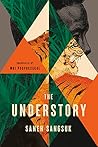
BOOKS: The Understory by Saneh Sangsuk

The UnderstoryThe Understory by Saneh Sangsuk
My rating: 5 of 5 stars

Amazon.in Page

An elderly monk tells stories from his life to the kids living in a small [and fictitious] Thai village. This is one of those works of literary fiction that you have to give a chance. The pacing, the subject matter, and the approach of the first part of the book is such that anyone without an intense interest in Thai village life or the thoughts of a Thai monk on the state of Buddhism in India (almost non-existent) will find it a bit of a slog. However, as the story shifts to the young man’s (pre-monk) life, adolescence through life as a newly married man expecting his first child, it becomes an intensely gripping story.

In the early parts, there’s a lot of violation of that old chestnut, “show, don’t tell” and — like much literary fiction — it’s not clear that there will be a story (versus exposition, character development, and description of events of a non-story like nature.) However, this transitions into the evocative story of how the narrator came to be a monk after a tragic farming householder experience. I can’t even give an accurate description of how far in I think the book makes this swing because my reading pace in the second part was so much quicker and more compelled than early on.

The book has hints of supernatural elements in it but can be read as realism in an environment of intense superstition.

I’d highly recommend this book for those who enjoy literature in translation. Give it a chance to win you over. It will, soon enough.

View all my reviews

BOOK REVIEW: Crabwalk by Günter Grass

CrabwalkCrabwalk by Günter Grass
My rating: 5 of 5 stars

Amazon.in Page

This story is narrated by its lead character, Paul Pokriefke, a journalist who was on the ill-fated ship, the Wilhelm Gustloff, being born on a rescue ship immediately after his pregnant mother was among the small proportion of survivors to escape that most deadly maritime disaster in history. The sinking of the Gustloff is the book’s center of gravity, it’s around that event – and the events that led to it and that sprang from it – that the story swirls.

The strange title, “crabwalk,” can be taken in a number of ways. For example, the author uses the term when he advances the story by moving in some direction that isn’t chronologically forward. However, the central crabwalk is the failure of a segment of the German population to move forward in the aftermath of the Second World War. This is shown through the narrator’s son, Konrad Pokriefke, a neo-Nazi of sorts who has an obsession with the sinking of the Wilhelm Gustloff and the incident by which that huge ship got its name (Gustloff being a Swiss Nazi who was assassinated by a Jewish student named David Frankfurter.) For much of this story, Konrad’s obsession plays out on the internet, in chatrooms and on websites that Paul covertly monitors – Paul being estranged from his son, a misfortune that he often blames on his own fatherless upbringing.

One confounding element of the story is the apparent cold rationality of Konrad Pokriefke. To clarify, the young man doesn’t exhibit sound reasoning, but he has this rationale in his mind (nutty as it may be) and he is dispassionate about doing what he believes he needs to do. Konrad isn’t the red-faced, spittle-flying Neo-Nazi. At first, it felt implausible for Konrad to have such a set of views and to be so coolheaded about them. That said, I suspect the author wrote it that way intentionally, and eventually it came to feel true – if horrifying [i.e. the idea that this cold version of hatred might be more sustainable than the intensely angry variety and that it might also retain more hatred in the face of interaction with “the enemy” (it being harder to maintain generic hatred of people with which one has an up close and personal interaction.)]

I found this book, which mixes factual events with fictional characters, to be compelling and thought-provoking. It did have a slow burn at the start, but it makes up for it with greater intensity as the story climaxes.


View all my reviews

BOOK REVIEW: The Catcher in the Rye by J.D. Salinger

The Catcher in the RyeThe Catcher in the Rye by J.D. Salinger
My rating: 5 of 5 stars

Amazon.in Page

This book will be familiar to most Americans as high school required reading. It’s about a teenager, Holden Caulfield, who’s just been expelled from a boarding school and who goes on the adolescent version of a bender – which involves some drinking but is more a mix of attempted escape and soul-searching. At first, it seems that Holden just wants to put off having to see his parents (this not being the first school at which he’s failed,) but then it seems like he might try to escape the transition to adult life altogether.

The core premise is that Caulfield can’t adapt to adult life. This is interesting in that, in some ways, he’s preternaturally mature. The character has an unusually accurate perception of his own nature, even when that nature is petty, childish, or lazy. He doesn’t rationalize his failures but recognizes them. Ultimately, Caulfield can’t cope with the false masks required of adult living and the ever-changing nature of adult life.

Like many, I did a shoddy (at best) job of reading this book in high school. It’s not exactly an action-packed romp, and the major happenings (e.g. a fight at school, being shaken down by a pimp on behalf of prostitute whom Caulfield had paid but hadn’t had sex with, and an unwelcomed [possibly sexual] advance from a former teacher) are few, far between, and somewhat anticlimactic. That said, as literary fiction the book is readable, makes bold choices with language, builds a fascinating character, and offers plenty of interesting psychology to ponder.

I’d highly recommend this book for readers of literary fiction (or a re-read for those who half-assed it in school.)


View all my reviews