
Taken October 8, 2013
This will be my last daily post for a few days. I’ll be traveling to Delhi and Agra and will have lots of new pics in about a week. This pic was taken in the area near Commercial street.

Taken October 8, 2013
This will be my last daily post for a few days. I’ll be traveling to Delhi and Agra and will have lots of new pics in about a week. This pic was taken in the area near Commercial street.

Taken September 2013 at Nandi Hills, India
Sometimes, you just wonder what a monkey is thinking.
Taken October 9, 2013
I’m a hole-in-the-wall kind of guy. I like good food wherever I find it, but I find it particularly pleasurable at tucked away little places.
This week I ate at Citrus in Leela Palace. It’s one of the swankiest places in Bangalore. The food was excellent, but, of course, you know it’s going to be excellent. It’s expensive and has a French sommelier on staff. There’s great food, but no surprises.
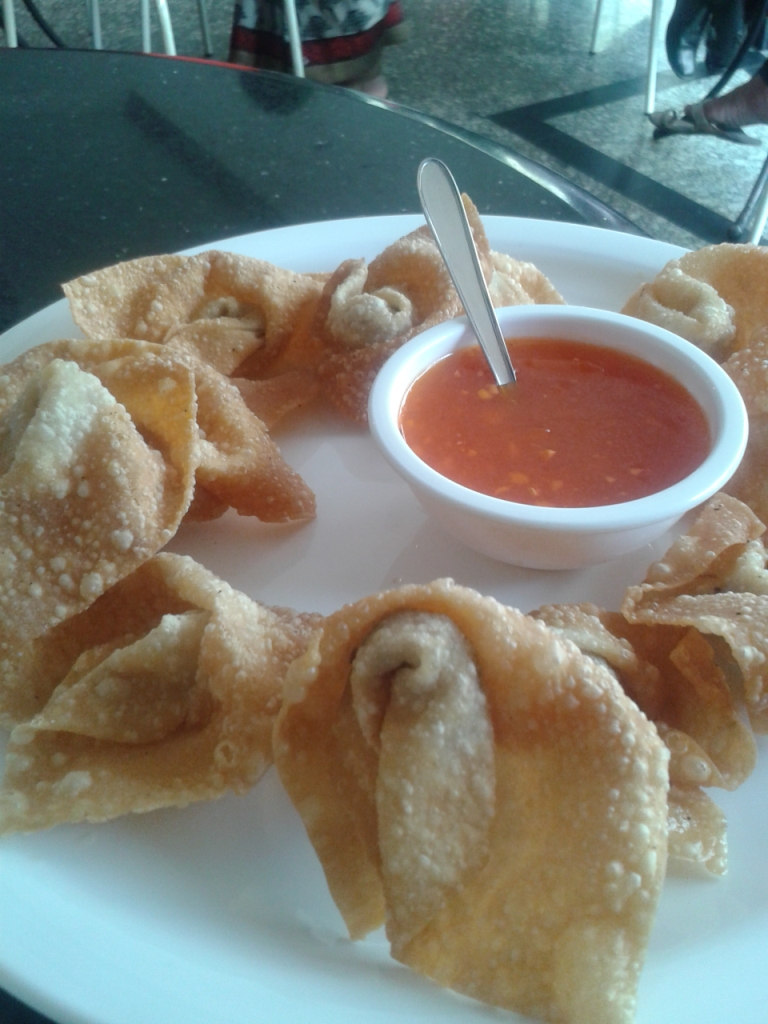
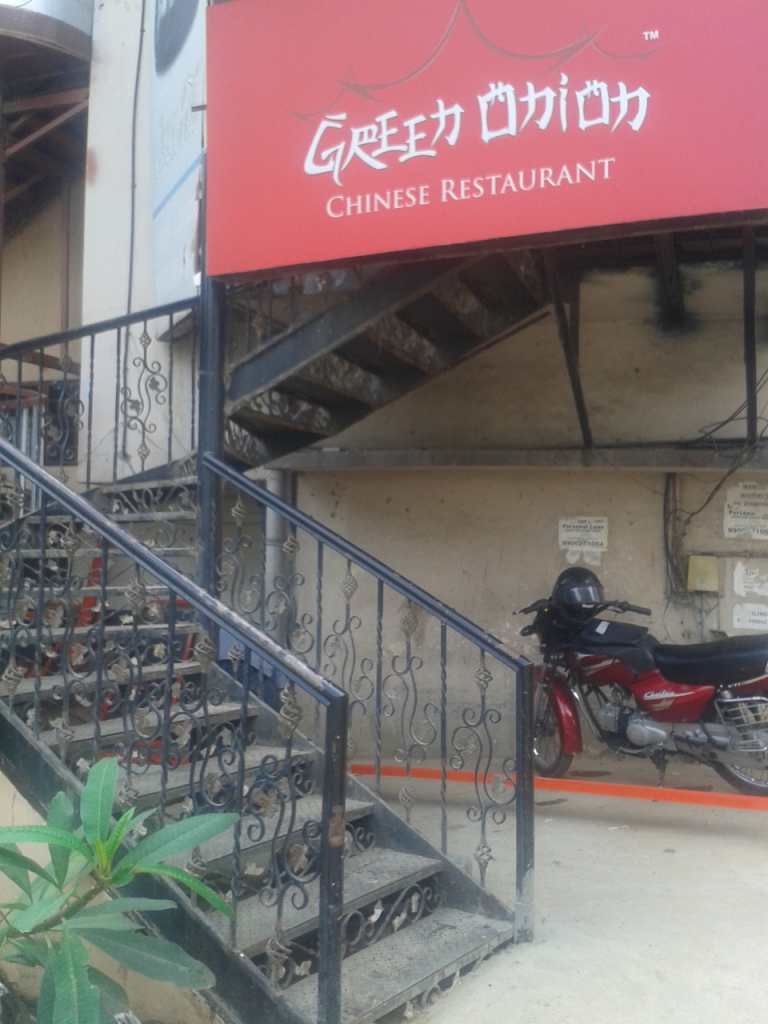
Green Onion is a little first floor (second floor to Americans) Chinese place on a short side-street off of MG Road. I’ve been there twice, and it’s been almost full both times. It’s good food at a reasonable price. Today, I had the above fried wontons along with kung pao chicken (which I order as much because it’s fun to say as because it’s delectable.) As can be said of most any Chinese place in Bangalore, it’s Indo-Chinese. That is to say, dishes don’t taste like they would in Beijing. That doesn’t make them bad, just different.
I don’t know if it’s cultural bias or not, but I think good Chinese food in America mirrors Chinese food in China more closely than does good Chinese in India. (Of course, bad Chinese food abounds in the U.S. and probably outnumbers good Chinese restaurants.) It may be because American food doesn’t have the extensive and potent flavor palette Indian food does, or because the China and India have shared a border for long enough to have developed a third entity cuisine over time in the manner that Tex-Mex food is distinct from Mexican. All this being said, it’s still tasty, just not in the same way Chinese food in China is.
 Gitanjali by Rabindranath Tagore
My rating: 5 of 5 stars
Get Speechify to make any book an audiobook
Gitanjali is the most well-known work of the Bengali polymath Rabindranath Tagore. Tagore was the first non-European winner of the Nobel Prize for Literature (1913.) While Gitanjali is a work of poetry, Tagore didn’t restrict himself to this form, but also wrote stories, novels, plays, and music.
Gitanjali translates to “Song Offerings” and while the English version is a translation, it was translated by Tagore himself. Thus, there is no need to wonder whether the translator got it right or injected too much of his own worldview into the process.
This collection of 103 poems (the original Bengali has 157)displays both beautiful language and thought-provoking sentiments. This may be why the work is so beloved and stands the test of time.
I’ll share a few of my favorite passages:
“The child, who is decked out with prince’s robes and who has jeweled chains round his neck loses all pleasure in his play;…” -Poem VIII
“O fool, to try to carry thyself on thy own shoulders! O Beggar, to come to beg at thy own door!” -Poem IX
“On the day when the lotus bloomed, alas, my mind was straying, and I knew it not.” -Poem XX
“On the seashore of endless worlds children meet.” -Poem LX
“In the moonless gloom of midnight I asked her, ‘Maiden, what is your quest, holding the lamp near your heart? My house is all dark and lonesome,– lend me your light.’ She stopped for a minute and thought and gazed at my face in the dark. ‘I have brought my light,’ she said, ‘to join the carnival of lamps.’ I stood and watched her little lamp uselessly lost among lights.” -Poem LXIV
“And because I love this life, I know I shall love death as well.” -Poem XCV
The edition I have, which is published in India by Rupa Press, contains Tagore’s Nobel Prize acceptance speech as well. (The Amazon page I’ve linked to shows the edition that I read, but the cover shown above is a different version. The poems are all the same because Tagore self-translated, it is only the supplemental matter that is different.)
I highly recommend this collection of poems.
Taken October 8, 2013 in Bangalore.
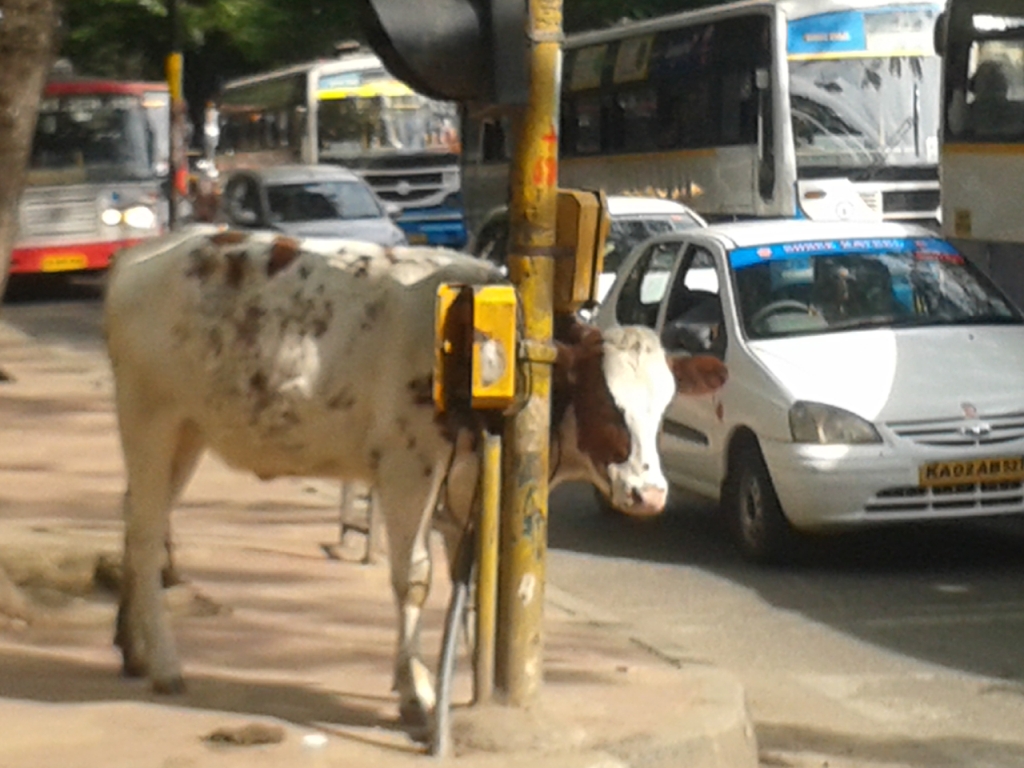
I just missed the perfect picture of this cow using its hoof to push the button for the pedestrian crosswalk light. I’m kidding of course, Bangalore doesn’t have functioning buttons for the pedestrian crosswalks and the cows damn sure know it.

Taken in September of 2013
This M-3 tank is on display at the base of the Madras Sappers. It’s one of the military units housed in Bangalore. Madras is also called Chennai, and is a town in south India on the east coast. It’s about due east of Bangalore. Sappers are military engineers who deal with mines.
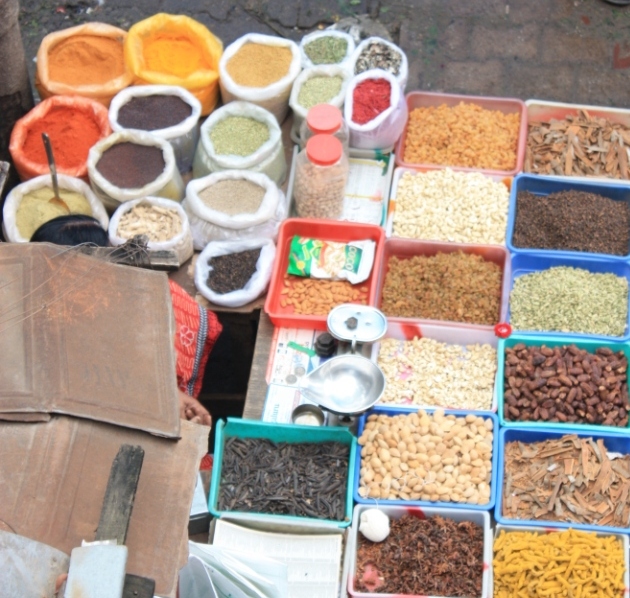
Taken in September 2013 in KR Market.
An overhead shot of a spice vendor’s goods at the City Market in Bangalore.
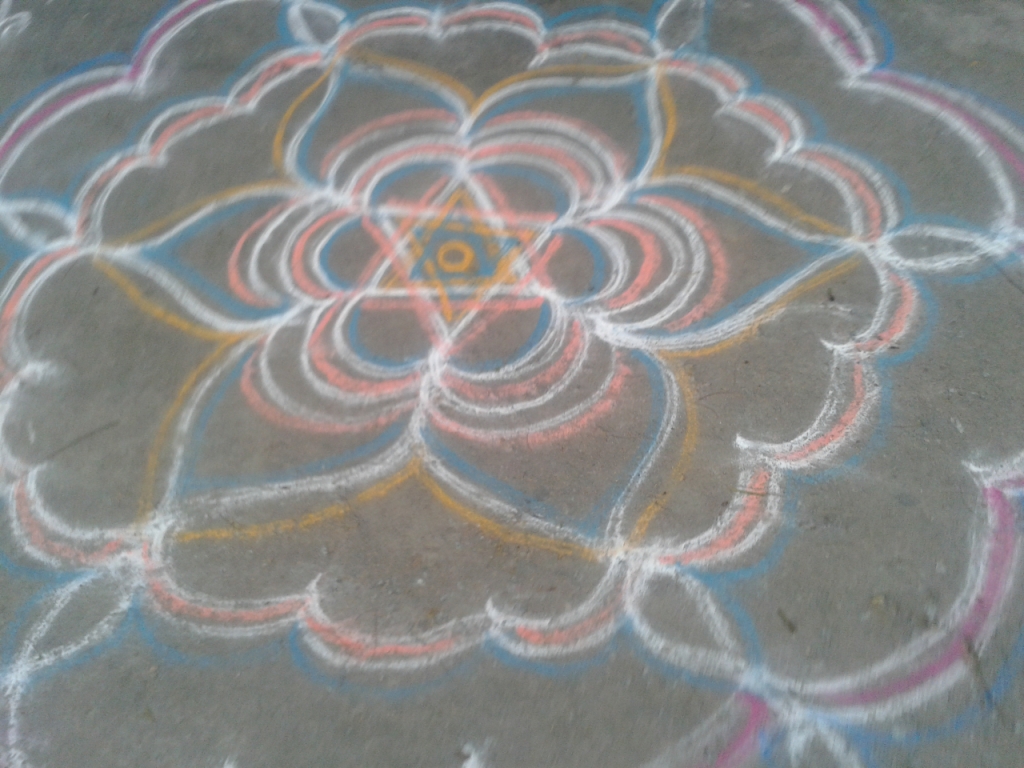
Taken on October 5, 2013 on 80 Feet Rd in Bangalore
Kolam are chalk or (traditionally) rice powder drawings that one finds in front of entryways throughout much of South India. The practice has even carried over to other countries in the South Asia displaying Indian influence such as Thailand and Malaysia. Their drawing is traditionally practiced by Hindu women each day to bring prosperity to the household. Although this one was in front of a business as is also common these days. Some are much smaller and less elaborate than this one. However, some are even more elaborate and perfectly formed. They only last a day, and are traditionally washed away at the end of one day so that a new one can be drawn to start the new day.
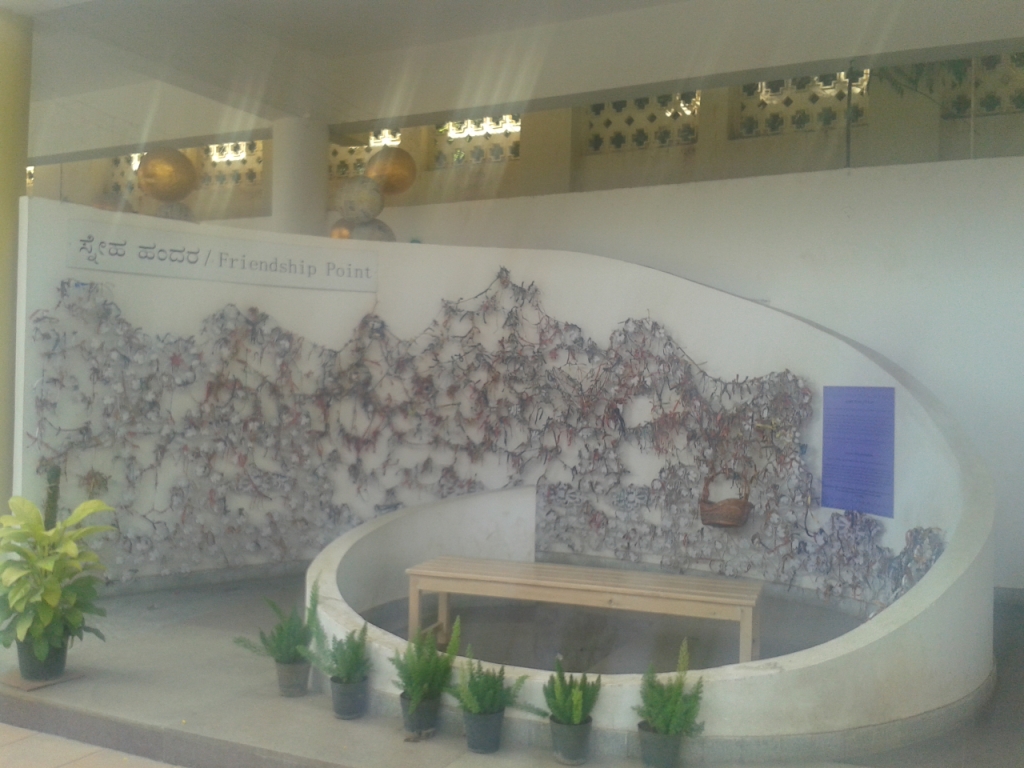
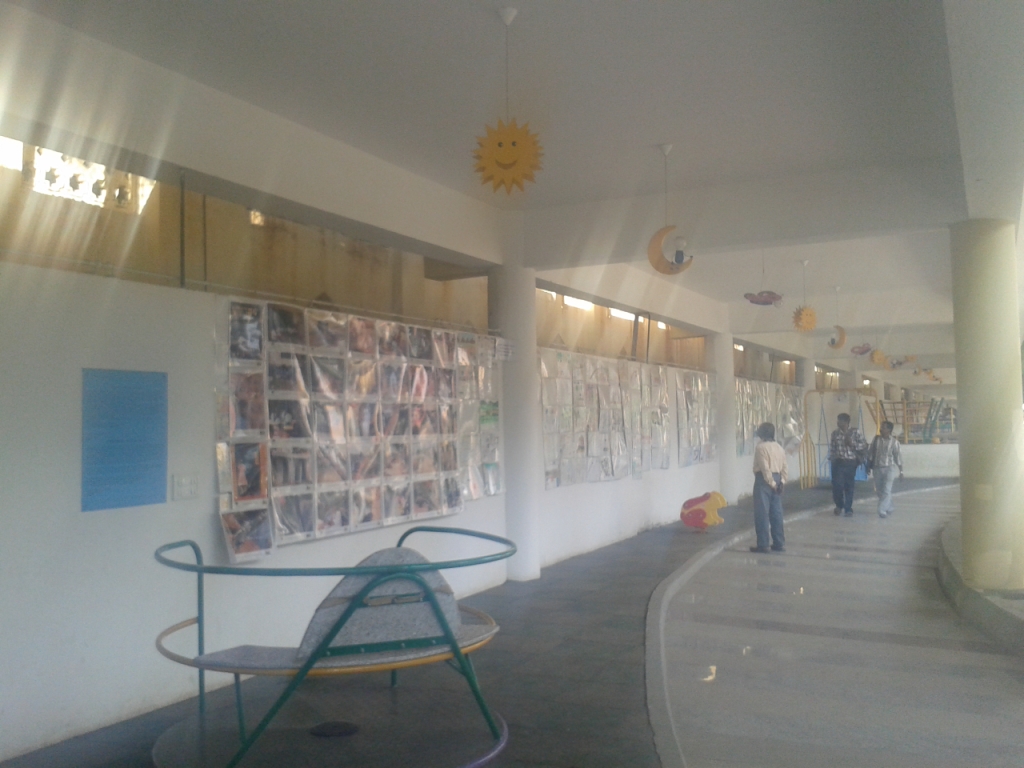
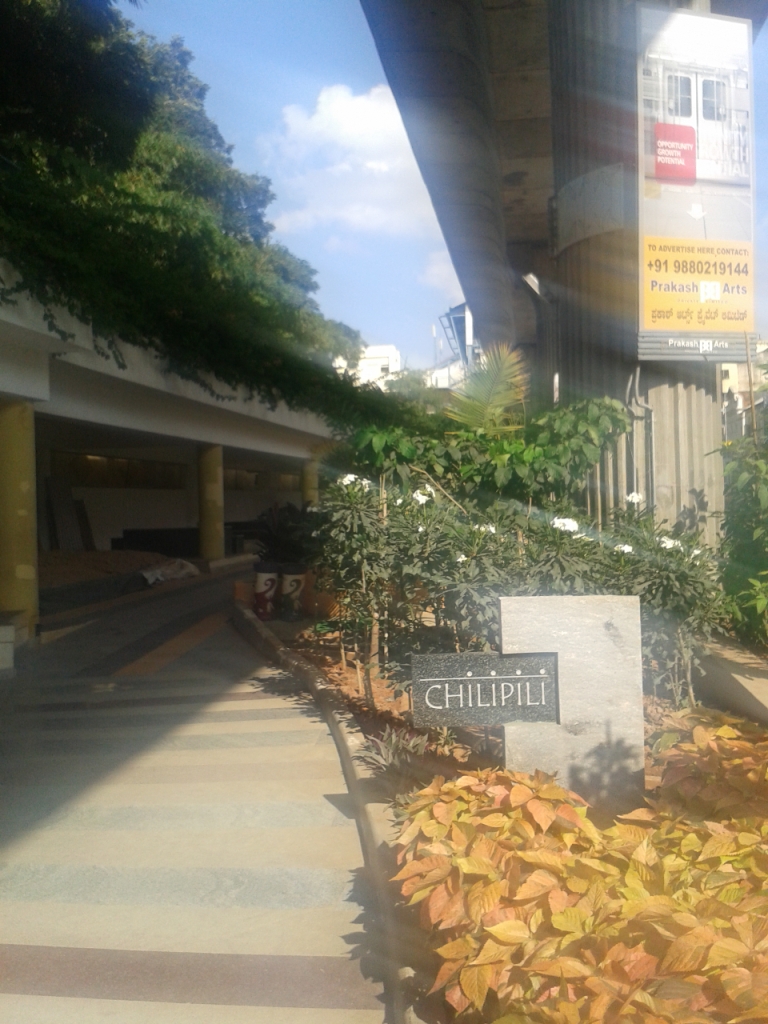 Sorry for the haziness, I’m experimenting with taking shots with a phone. I normally use a DSLR, but no matter how long I live here I won’t be able to convince people (mainly drivers and hawkers) to leave me be to take my daily walk in peace with a clunky camera on my person. When you say you live here and are not a tourist, but you have a DSLR around your neck, you can see the “Does Not Compute” light come on in their head as their brains prepare to explode. However, with a phone one gets many fewer interruptions.
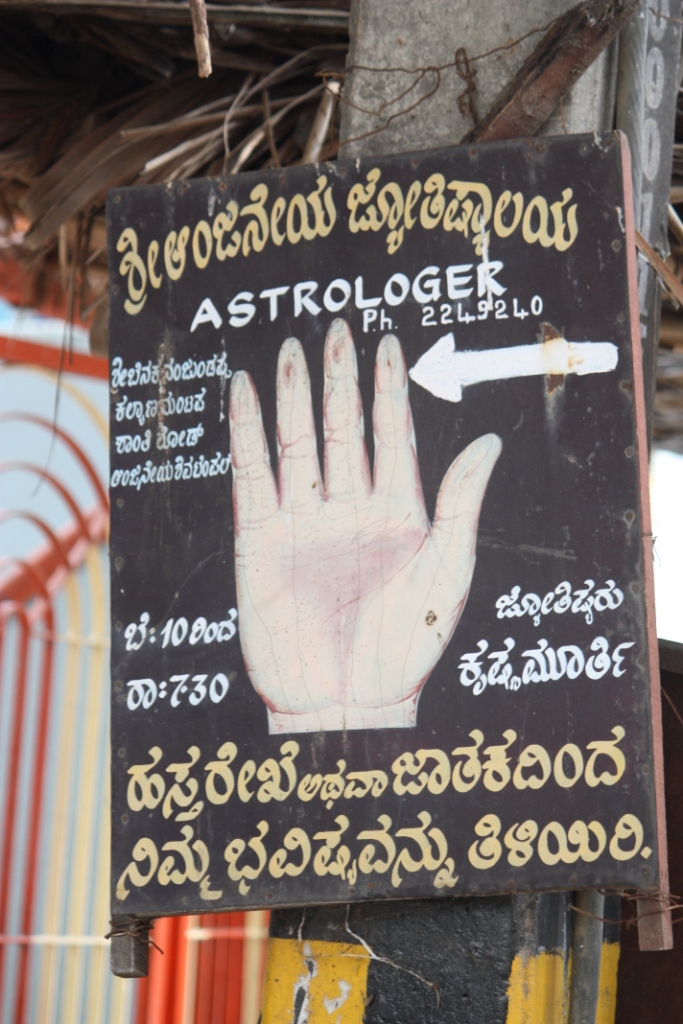
Taken in September 2013 in Bangalore
This is one of the most recognizable signs in India. You’ll find them in every neighborhood. There are many Indians who are firm believers in palm reading and astrological forecasting. Of course, there are a lot who aren’t as well. When you have a billion people, you’re going to have a lot of people who do everything (in absolute terms, even if it’s a small percentage.)
Of course, these businesses are not all connected by a guild or anything like that (as far as I know), they’ve just developed this universal signage–the palm. It’s brilliant. You don’t need to worry that the reader can read whichever of India’s 1,000 languages that you wrote the sign in. (This one is in Kannada, by the way.) On an almost unrelated note, but one which interested me, I heard that the McDonald’s sign is now a more recognized symbol globally than the Christian crucifix–but I don’t know how scientific that is. (The tie-in was branding.)
I’m always doubly skeptical when an astrologer approaches. Surely if they were worth their weight they’d know that I don’t put stock in forecasting of any kind whatsoever–not even statistical forecasting which (mis)uses sound mathematical principles.


