I never met a one I didn’t like.
Tag Archives: fitness
PROMPT: Physical Exercise
What is your favorite form of physical exercise?
I’m a big fan of them all. I like to move it, move it.
Each in its time.
Though the less special equipment I need access to, the better. I’m a firm believer that one needs only the body and mind to keep a fit body. It’s all a matter of how, how often, how intensely, and how safely one moves one’s body. Gadgety fitness can become too fetishist, and not build integration of the body as much as is ideal.
PROMPT: Hobby or pastime
What is your favorite hobby or pastime?
Swimming, at the moment.
PROMPT: Walk or Run
How often do you walk or run?
Daily. I don’t live in an aquarium (thus allowing swimming as the predominant mode of transport,) nor am I a potted plant that stays where I’m set. Also, flying is out of the question, except in an airplane.
BOOK: “Seven Animal Postures” by Jeogun [Trans. by Dowon]
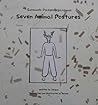
Seven Animal Postures by JeogunMy rating: 4 of 5 stars
Publisher Information – Sunmudo Daegeumgangmun Foundation
I bought this book in the gift shop of Golgulsa Temple [i.e. Stone Buddha Temple,] in the countryside outside of Gyeongju, South Korea. Golgulsa is a fascinating place. It’s sort of the Shaolin Temple of Korea, teaching martial arts and qigong (energy work) alongside meditation and Buddhist philosophy. The Korean Buddhist martial art is called Sunmudo, and I’d never heard of it before traveling to Korea.
At any rate, this book is a 35-page guide to a set of qigong practices known as the “Seven Animal Postures” (or Yeongdongipgwan.) It’s a set of exercises that are similar to qigong practices like the Eight Pieces Brocade, and not greatly dissimilar to yogasana (i.e. yoga’s postural practices.) [FYI: The animals of these exercises are Tiger, Dragon, Deer, Monkey, Bear, Turtle, and Crane.]
The book offers a little bit of background on Sunmudo and the benefits of it, but is mostly a guide to the movement, breath, and postural details of these seven exercises. It has line drawings to help elaborate upon the text. My only gripe would be that the paper the book is printed on to make it more visually interesting has blocks of darker color that make it a little harder to read than is necessary.
If you are interested in qigong or yogic practices that are a bit more off the beaten path, you may find this one interesting.
View all my reviews
BOOKS: “Swimming” by Roger Deakin
Swimming: Vintage Minis by Roger DeakinMy rating: 5 of 5 stars
Publisher Site – Vintage Minis
This book contains a collection of excerpts from the book Waterlog by Roger Deakin. It’s one volume from a series of short books that contain essays, stories, poems, or book excerpts that is put out by Penguin under the imprint “Vintage Minis.” The book describes the author’s experiences of wild swimming throughout Britain. The description of nature and of the exhilarating experience of wild swimming are beautifully composed, and it’s an all-around pleasant read.
If you’re interested in wild swimming, I’d recommend this book.
View all my reviews
PROMPT: Fun… Exercise
In the Flow.
PROMPT: Morning
I’m a morning person and am typically at fairly high energy levels first thing in the morning, So, that time is generally active, filled with exercise and / or physical activity of varied varieties (calisthenics, walking, running, and — of late — the occasional swim [which I normally do latter in the day.])
[Of course, there is the obligatory urinating, washing, toothbrushing, etc. (sequentially not concurrently,) but that seems like it would go without saying and would be strange to ask strangers about.]
BOOK: “Rocket Yoga” by David Kyle
Rocket® Yoga: Your Guide to Progressive Ashtanga Vinyasa by David KyleMy rating: 5 of 5 stars
Publisher Site – Human Kinetics
This book provides an overview of Rocket Yoga, which is newcomer to yoga’s ranks that adapts from the Ashtanga Vinyasa school of Pattabhi Jois. The objective of Rocket is to make the practice more adaptable, both in terms of being suitable for a broad range of students and for individual students to adapt the practice in ways that would fit their objectives, strengths, and limitations. There are also adjustments made in the sequence to streamline the flow.
For those unfamiliar with Ashtanga Vinyasa, it is a fixed form flow style. Fixed form means that at a given level one is repeating the same sequence the same way every session until one bumps up to the next level. This offers great advantages for building fitness, muscle memory, and connection to the practice, but many find it tedious and the threat of burnout is ever-present. Rocket attempts to keep the benefits of fixed form practice but to mitigate the burnout factor by having three sequences that can be interspersed in one’s practice, as well as by allowing more room for individual variation. Ashtanga Vinyasa is also often perceived as daunting because as a flow form it involves a lot of vigorous transitional movement and also because even some of the preliminary series asana (postures) are challenging for your average practitioner. While Ashtanga Vinyasa generally allows for modification, Rocket leans into this a bit more. (That said, the Rocket system also has ways to step up the challenge as well.)
As with many system-centric yoga books, much of the book is description of the asana (postures) that make up the system as well as elaboration on how they are sequenced. However, the book does open with philosophical and historical background and ends with discussion of how the practice might be adapted (e.g. there is a section for pregnancy.)
The book has a lot of color photographs that are clear and well captured (if of limited perspective.)
If you are an Ashtanga Vinyasa practitioner (or perspective practitioner) and are curious about how the basic concept might be adjusted to mitigate potential burnout or make the system more flexible, I’d recommend giving this book a look.
View all my reviews
PROMPT: Leisure Time
That’s trickier than it seems. I quite enjoy reading and many forms of bodily movement activities (e.g. swimming, yoga, taiji, qigong, exercise, etc.,) but I’d count them more as personal development activities than leisure activities. (Even something as seemingly non-purposeful as juggling.) I sometimes watch TV / movies, but I don’t know that I’d say I enjoy that so much as find it an opportunity to zone out.