BOOK REVIEW: The Graveyard Book by Neil Gaiman

The Graveyard BookThe Graveyard Book by Neil Gaiman
My rating: 5 of 5 stars

This book begins with a family being murdered by Jack, a cold-hearted killer – a family all save the infant. It’s readily apparent that this isn’t a random violent crime. For one thing, the fiend is far more concerned with finding the baby so as to complete his treacherous task than he is with absconding with loot or reveling in carnage. We don’t know why the family is killed or how a baby could possibly be a worthy target for an assassin, but it’s a mystery that will play out over the course of the book. What we do know is that the boy, Bod – short for Nobody [Owens] – crawled from his crib, out of the house, and into a graveyard that night and that he was taken in by the dead [and a vampiric guardian named Silas] and granted free access to the graveyard.

While the plot is about a killer on the loose intent on murdering Bod, a lot of the book deals with the boy’s challenges as the one living human among a community of the dead. Silas and his adoptive – if deceased – parents, the Owenses, are reluctant to let the boy out of the graveyard because they know he is in danger and they can protect him there were a different set of rules apply, but he has a desire to experience the world. An abortive experiment with going to school fails because Bod sticks up for bullied kids and can’t help but employ some of the skills he’s acquired as a denizen of the graveyard. In the graveyard, he is a living person among the dead, but he is no less the outsider among the living.

This is written for a young audience, and is therefore highly readable while avoiding all the gore that one might expect of a book that begins in murder. Gaiman masterfully creates the ghoulishness and suspense without being horror, per se. I’d recommend this book for readers of low (intrusion) fantasy works.

View all my reviews

BOOK REVIEW: The Journey to the East by Hermann Hesse

The Journey to the EastThe Journey to the East by Hermann Hesse
My rating: 5 of 5 stars

Amazon page


This lesser-known Hesse work adopts a theme common throughout the author’s books in that it’s philosophical man-versus-himself fiction. The book’s protagonist, H.H., is a member of a secretive league [called “The League”] with whom he is undertaking a journey of self-discovery. H.H. fails to complete the expedition, and that fact haunts him into old age. Ultimately, H.H. finds Leo, a servant who’d been on the journey with him, with whom H.H. had a great affinity, and whose disappearance (along with some loot) led to H.H.’s abandonment of the trip. In the process, the lead discovers that nothing was what it seemed.The book examines how vulnerable people are to disillusionment and how quickly they can lose their passion, and it urges the reader to consider from what source one draws one’s strength.

This novella is a little under a hundred pages, and is told in five chapters. The first couple of chapters describe the ill-fated journey. The third chapter is a pivot in which H.H. is considering his inadequate attempt to chronicle events, and is advised to get closure by tracking down Leo. In the last two chapters, H.H. does find Leo, receives the man’s wisdom, and ultimately finds out what really happened.

I enjoyed this book. It’s a quick and simple read, but is extremely thought-provoking. I’d recommend this book for anyone who likes to think about life’s big questions.

View all my reviews

BOOK REVIEW: The Finger by William S Burroughs

The FingerThe Finger by William S Burroughs
My rating: 4 of 5 stars

Amazon page


This is book #25 in Penguin’s “Modern” series. These short books (less than 100 pages) feature short works (poems, short stories, essays, speeches, and even a novella or two) from 20th century luminaries. In this case, the book consists of six short stories by the Beat Generation writer William S. Burroughs, who’s most famous for his novel “Naked Lunch” and for his affinity for heroin. I mention the latter not to besmirch Burroughs’ character, but because drug use (and the vices that sometimes travel hand-in-hand) is a fixture in Burroughs’ writing, and this collection is no exception.

Many, if not all, of these stories are in the same fictional universe, as suggested by repeated characters and locations — most notably the junky William Lee of “Naked Lunch” fame. [These stories were previously published in a collection entitled, “Interzone,” and the titular piece had an even earlier first publication in the book, “Early Routines.”] However, the stories are all stand-alone pieces and a couple of them show no evidence of being related. The one’s that do share common features don’t tell an overarching tale.

The six stories are:

1.) “The Finger”: An addict, Lee, cuts off his own finger (just the top joint) and is surprised by the reaction it incurs.

2.) “Driving Lesson”: An individual with no experience driving is asked to take the wheel, and given some bad advice to boot.

3.) “The Junky’s Christmas”: The spirit of Christmas overcomes an addict’s yearnings.

4.) “Lee and the Boys”: Lee and his various [non-sexual] interactions with young male prostitutes.

5.) “In the Café Central”: This isn’t so much a story as sketches of the various meetups simultaneously transpiring at a café. There is a table with: a.) a guide and a tourist, b.) a German expat and the annoying gossip who he uniquely tolerates, c.) a beautiful woman with bad teeth who is a wee bit sensitive about them.

6.) “Dream of the Penal Colony”: This hazy, little story is part a dream of being in a penal colony and part slurry of reality and the hallucinations of drug-addled drifter.

I enjoyed this little collection and would recommend it for someone who wants to sample Burroughs before diving into one of his novels. While the first story may have gotten the title role by virtue of its bizarre subject matter, I’d argue that “The Junky’s Christmas” is narratively the strongest. It’s not too hard to follow these pieces despite the fact that the stories virtually all feature unreliable narration by virtue of being told through the eyes of someone in the grips of substance abuse. Burroughs presents that mix of reality and drug-distorted world-view vividly and intelligibly. That said, if you’re expecting the world through sober eyes, you’re in the wrong place.

View all my reviews

BOOK REVIEW: Only the Impassioned by H. C. Turk

Only The ImpassionedOnly The Impassioned by H.C. Turk
My rating: 4 of 5 stars

Amazon page


The blurb offers readers the gist of the story. In a nutshell: an American soldier, Andrew Bower, experiences some horrific happenings during the Second World War and the subsequent liberation of a Nazi concentration camp. Nearing being sent home at the end of the European campaign, he’s severely wounded. In his wound- and drug-induced stupor, a dream world story unfolds. He imagines he’s fled to a tiny, neutral country that’s been unaffected by the war. Bowers’s deathbed dream mixes insights into the absurdity and insecurity of war with a fantasy about the adult family life it looks as though he will be denied.

The dream world story explores an interesting theme, particularly involving the notion that to be human means to be a mixed bag of drives and desires and not a mechanistic unified actor. Andrew wants to flee to a place untouched by the war, but even there he (and the people who populate his mind space) finds he can’t escape the anxiety. To be in an unaffected country means only to be in the looming shadow of war. It doesn’t mean one will feel safe. Bowers thus faces the dilemma of whether to go back to war or to stay in war’s shadow. This split is commonly seen in the real world. Soldiers despise being in a war, but are often drawn to it in part because they feel they owe it to their peers, in part because of guilt, and in part because acting is better than sitting around stewing in one’s fear and torment.

The surrealism of the dream sequence gradually unfolded. By this I mean one doesn’t sense an immediate shift in tone and imagery from the real to the metaphysical. This may have been on purpose, and some portion of readers will like it that way, but I suspect another portion of readership would like a clearer / cleaner shift in the feel. There does come a point at which there is a weirdness going on that one can’t reconcile with the real world, but that comes fairly well into the part of the story that isn’t rooted in the real world. It’s a hard line to capture that mental world surrealism without becoming distracting. Adding to the challenge in this case, there’s meant to be a haziness in which real world elements intrude into the mental world.

I found this book to be entertaining and insightful, and would recommend it for readers of war fiction.

View all my reviews

BOOK REVIEW: Up the Down Staircase by Bel Kaufman

Up the Down StaircaseUp the Down Staircase by Bel Kaufman
My rating: 5 of 5 stars

Amazon page


This is a humorous novel about a rookie teacher’s first year in a New York City public school with all the frustrations and victories that experience entails. It’s an epistolary novel – meaning it’s conveyed through a series of documents. Some of the humor is of a “kids say the darndest things” nature – though these are high school students, so the humor isn’t so much born of naiveté as it is a combination of teenage snarkiness and a maddening ignorance of concepts that students should have grasped by that age (i.e. laugh so you don’t cry style humor.) The humor from kids is largely conveyed by students’ comments in the teacher’s comment box as well as via homework assignments.

There’s a second kind of humor in the form of bureaucratic absurdism. Bureaucratic wrangling and lack of resources cause most of the protagonist’s frustrations. This humor is largely conveyed through memos – some school-wide and some specifically to the protagonist, Sylvia Barrett. Barrett also commiserates with her co-workers, and we see some of her frustration playing out through the post-it note equivalent of water-cooler conversations.

The epistolary form offers a challenging format for both character development and story presentation. However, the novel is strong on character development. It achieves this in large part by mixing long-form letters to a close friend with the short memos and comment box entries. The reader gets to see events unfold and responses by way of different documents. The longer letters give us some depth of feeling. There is even a point where Barrett is being swamped by correspondence and we hear nothing back from her, and in this we can feel the degree to which she is overwhelmed.

The book isn’t story-centric. However, there is a narrative arc that revolves around the question of whether Barrett will stay on at the public high school or move on to teach at a liberal arts college. She is torn because she feels she can do good at the public high school and that would be satisfying, but at the same time she is bureaucratically frustrated and demoralized by perceived failures. There are dramatic events here and there to elevate the tension from the run-of-the-mill school events, but not so much that the book ever moves away from feeling like the real experience of a rookie teacher.

The book uses drawings here and there, usually presented as student doodles, to add to the humor.

I enjoyed this book, finding it to be both humorous and illuminating. I would highly recommend it for those interested in the challenges of secondary education or who can appreciate the [bittersweet] humor of it.

View all my reviews

5 of my Favorite Books on Yoga

5.) Sure Ways to Self-Realization by Swami Satyananda Saraswati: All you need to know about meditation and more. The first half of this book examines various yogic approaches to meditation and offers in-depth explanation of said techniques. The second half puts yogic meditation into a larger context by providing a survey of meditative approaches from around the world. It’s as close to one-stop shopping for the yogic meditator as one is likely to find, and the presentation of material on topics such as Jnana Yoga and Tantra is much more balanced and illuminating than many books.


4.) Your Brain on Yoga by Sat Bir Singh Khalsa: This Harvard Medical School Guide provides an overview of the scientific evidence for the benefits of yoga practice.


3.) A Search in Secret India by Paul Brunton: Brunton traveled India looking for the needles of yogic sagacity amid a haystack of charlatans and posers, and he found a few.


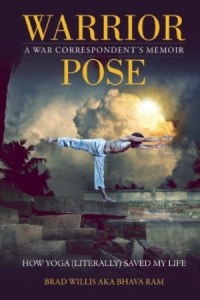
2.) Warrior Pose by Brad Willis: As the sub-title suggests, this book is about how yoga saved the life of a war correspondent who suffered from a severe spinal injury that had repercussions beyond his back — re: his state of mind.


1.) The Heart of Yoga by T.K.V. Desikachar: This book provides one-stop shopping for building one’s yoga practice, and it does so in a very down-to-earth, secular, and non-doctrinaire way. It also includes a translation and brief commentary of Patanjali’s Yoga Sutras — hence, the reason I didn’t need to include that work on this list.

BOOK REVIEW: Gagamba by F. Sionil José

Gagamba The Spider ManGagamba The Spider Man by F. Sionil José
My rating: 5 of 5 stars

Amazon page


This short novel revolves around a real world event, the devastating earthquake that struck Luzon, wreaking havoc on Manila, in July of 1990. The novel is written in an unusual format. The chapters could be described as character sketches offering insight into various people who were in (or next to) the Camarin building when it collapses in the earthquake. Rather than the usual narrative approach, F. Sionil José offers captivating slices of the lives of these individuals that include insight into what brought each of them into the doomed building.

In the book, the Camarin Building houses a popular Spanish food restaurant called “the Ermita” that attracts wealthy movers and shakers both for its cuisine and for the ladies-of-the-evening who ply their trade there. The book presents an interesting contrast between the powerful military officers, businessmen, politicians, and expats who came there to dine and the common folk who work or live in the shadow of the building. The latter includes the character for which the book is named. Gagamba means spider in Tagalog, and it’s the nickname of a beloved man who sells lottery tickets outside the Ermita (because his deformity gives him an appearance reminiscent of a spider.) We see how all become equal in the cross-hairs of Death.

What makes these stories about the victims all the more intriguing is that we know from the book blurb that two of the characters (in addition to Gagamba) will survive the building collapse. The author does a good job of creating characters who are intriguing and who we want to know more about. There is the military officer who is aide to a high-ranking General but who is made a lucrative proposal from a superior officer to mule drugs (this being pre-911 days in which VIPs and their assistants might plausibly be exposed to little to no screening.) There’s a Filipino-American who is taking a priest and family friend out for a fancy dinner. The priest’s ominous discomfort with the setting of the meal – a feeling that we can’t tell is (as he says) because he’s uncomfortable with the cost or because he has an unspoken discomfort with the vice know to occur there – makes one wonder. There’s a homeless couple who lived in the alley beside the Camarin with their infant child.

I enjoyed this book. I think it offers some insight into Filipino culture and the chaotic nature of disaster. I’d highly recommend the book for readers of literary fiction, particularly if one also has an interest in foreign literature.

View all my reviews

BOOK REVIEW: The Lathe of Heaven by Ursula K. LeGuin

The Lathe of HeavenThe Lathe of Heaven by Ursula K. Le Guin
My rating: 5 of 5 stars

Amazon page


This book’s lead character, George Orr, runs afoul of the law for borrowing the prescription cards of friends and acquaintances. But Orr isn’t a run-of-the-mill junky out to get prescription painkillers. Instead, he’s taking medications to keep from dreaming, because Orr’s dreams change reality—sometimes in subtle, and sometimes in drastic, ways. Of course, the world would be chaotic if the dreams only changed the present, but they also retroactively change the past to be consistent with the new present. Orr is the only one who remembers both the new and old timelines, but he’s not happy with these god-like powers–especially given the chaotic and unpredictable possibilities that arise from the subconscious mind. Not unexpectedly, Orr is reluctant to tell anyone this because they will think he’s mad.

Orr gets assigned to voluntary therapy with a psychologist who specializes in sleep disorders. Orr tells Dr. William Haber about his unique condition, but, once the doctor recognizes Orr is telling the truth, Haber draws the opposite conclusion from Orr. Haber thinks that Orr should be using his “power” to make the world a better place, rather than being scared of it and trying to avoid it. Haber presents the classic example of good intentions gone awry. While the doctor does use the hypnotically induced sessions to improve his own career situation, the worst outcomes result from the doctor’s attempts to help Orr (without Orr’s approval or prior knowledge) to improve the world. The law of unintended consequences is ever-present, and the dreams guided by Haber often result in “out of the frying pan and into the fire” situations.

This is an interesting premise in a highly readable book. The contrast between Orr and Haber reflects a broader societal tension between those who think they can engineer a utopian future and those who think that one’s attempts will always blow up in ways that one can’t anticipate. It should be noted that the title comes from “The Book of Chuang Tzu” and the virtue of “wu-wei” or “actionless action” in contrast to the corresponding vice of trying to manhandle the world into a desired state is central to the story.

I enjoyed this book. It’s a short novel with a clear theme that is thought-provoking. I’d recommend the book for fiction readers, and highly recommend it for readers of sci-fi and speculative fiction.

View all my reviews

BOOK REVIEW: A Christmas Carol by Charles Dickens

A Christmas CarolA Christmas Carol by Charles Dickens
My rating: 5 of 5 stars

Amazon page


There’s a famous quote that has been attributed to various individuals, including both Mark Twain and Blaise Pascal. The wording varies, but the gist is: “Sorry for writing you a long letter, I didn’t have time to write a short one.” While it’s a witty comment, the humorous subversion of expectations doesn’t mean there’s not an underlying truth. It takes work and / or brilliance to convey an idea persuasively with few words. “A Christmas Carol” is an outstanding example of a tight story that powerfully conveys its theme.

Ebenezer Scrooge is a cranky banker who wants nothing to do Christmas. He won’t give his employee, Bob Cratchit, time off so that Cratchit can spend the holiday with his family—including his ailing son Tiny Tim. He chases off charities. He won’t even accept an invitation to attend the Christmas party thrown by his nephew, Fred. Then one night, he’s visited by the ghost of his recently deceased business partner—Jacob Marley. Marley, who was as cheap and crotchety as Scrooge, is burdened with horrifying chains, and the ghost warns Scrooge that if the old man doesn’t change his ways, he—too—will end up wandering through eternity in a similar set of chains. Before disappearing, Marley tells Scrooge to expect visits from three more ghosts.

The three subsequent visits with the famous ghosts of Christmas past, present, and future don’t require much discussion. First of all, the names of the ghosts (e.g. Ghost of Christmas Past) are self-explanatory. Secondly, this story is iconic in pop culture and it’s been remade in every medium in every way imaginable from modern adaptations (e.g. “Scrooged”) to “Simpsons” episodes. At any rate, the first ghost shows Scrooge that there was a time when he wasn’t such a curmudgeon while reminding him that he once had an employer, the beloved Mr. Fezziwig, who was a much better to Scrooge than Scrooge is to Bob Cratchit. The second ghost takes him to see the Cratchits and their meager but blissful Christmas festivities and then to his Nephew’s party as well. The final apparition, The Ghost of Christmas Future, takes Scrooge to the end of his own line. In the wake of the four ghost visits, Scrooge makes some changes to avoid the fate he’s been shown.

The Puffin Classics version that I read has an introduction by Anthony Horowitz and some artwork. That said, I don’t think it matters much what version one reads. It’s about the story.

I’d highly recommend this book for all readers.

View all my reviews

BOOK REVIEW: River of Teeth by Sarah Gailey

River of Teeth (River of Teeth #1)River of Teeth by Sarah Gailey
My rating: 4 of 5 stars

Amazon page


This alternative history book takes as its premise the “what-if” of: what if feral hippopotamuses had been introduced into the bayous of Louisiana. This was apparently an idea that was considered in the real world, presumably by people who didn’t realize that hippos are one of the most territorial and cantankerous creatures in nature. Those who’ve read the writings of the explorers / adventurers who made their way through Africa in the 18th and 19th centuries will be well aware that hippos were among the most feared creatures faced by those expeditions — rivaling black mamba and lions, and not at all like the cattle they were expected to be.

The first part of the novel consists of a hippo wrangler of British origin, named Winslow Houndstooth, building his team of hippo wranglers Magnificent Seven style. Houndstooth has a contract from the federal government to drive feral hippos out of a marshy river basin called “the Harriet.” Houndstooth also has a plan to do this dangerous job in a way that—if it works—will make the job quick and easy while exacting revenge on his archenemy, a man named Tavers who operates gambling riverboats on the Harriet. The story is as engrossing as it sounds. Dangers abound for our protagonist and his team of misfits – misfits of varying reliability, and —like George R. R. Martin—Gailey isn’t afraid to kill off a character.

The introduction of hippos isn’t the only way in which the story is alt-history. It’s also set in a world in which people of various sexual orientations and gender identities are much more open with their sexuality than they would have been in the Louisiana of the early 20th century as we know it. (Note: It’s not clear whether it was the introduction of hippos to America that created divergence in the parallel timeline that allowed for this progressiveness, whether it was a more open societal outlook on sexuality that facilitated the introduction of hippos, or whether these are independent events.)

At any rate, while gender and sexual orientation issues are quite prominent in the story, there’s only one area in which this disparity between historical reality and the alt-world became a distraction for me. I should point out that there would be no distraction in a science-fiction or fantasy story, as there is in historical fiction, because the author can create or destroy societal mores and norms as she wishes in a non-existent world. Anyhow, the one distraction I referred to had to do with one character, Hero, for whom the plural pronoun is used throughout. I must admit that I spent a few pages trying to figure out whether Hero had two heads like Zaphod Beeblebrox before I concluded that it was an attempt to deal with gender identity (I think.) I will say that the character development is skillful and Gailey does a great job of producing characters that evoke love or hate but not indifference.

I enjoyed this story. It’s a quick read, has likable and loathable characters, and builds tension throughout. There is a second book that I understand can be read independently of this one called “Taste of Marrow.” I have not yet read it, but probably will.

View all my reviews