“Slender” [Poetry Style #3] by Sikong Tu [w/ Audio]

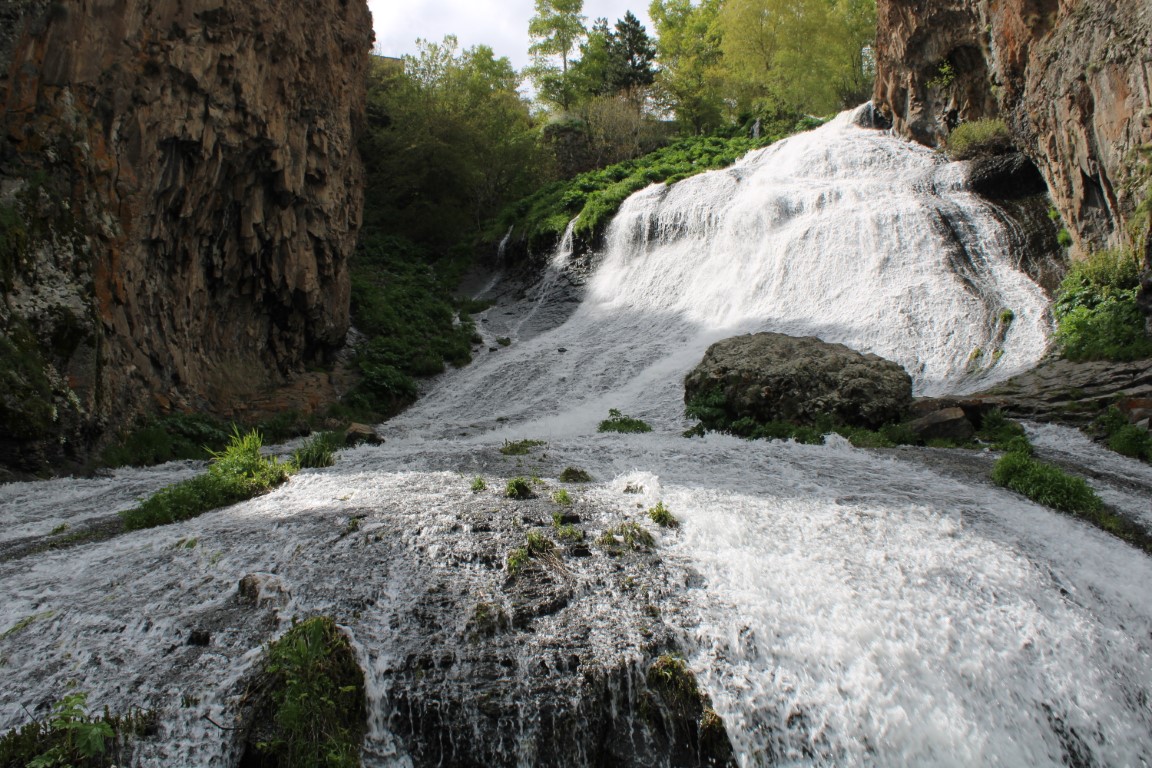
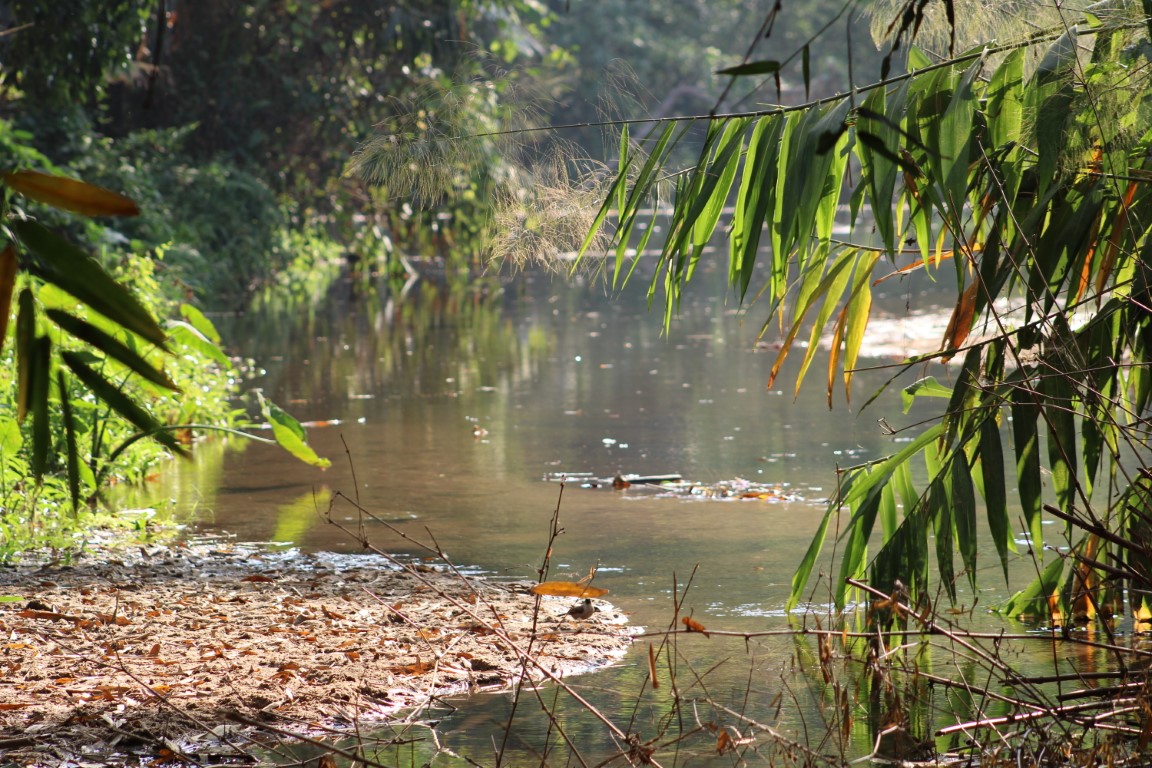
Picking, picking where water flows
From a distant fountainhead.
Moving up the narrow valley,
One may see a stunning beaut.
Peachtrees laden with ripe fruit
As breezes blow by the water
And willows wind along the stream,
While warblers consult with branch-mates.
The more one walks, the more Truth joins,
And more Truth may reveal the Way.
If this world is without end,
The old must be made new again.

NOTE: The late Tang Dynasty poet, Sikong Tu (a.k.a. Ssŭ-k‘ung T‘u,) wrote an ars poetica entitled Twenty-Four Styles of Poetry. It presents twenty-four poems that are each in a different tone, reflecting varied concepts from Taoist philosophy and aesthetics. Above is a crude translation of the third of the twenty-four poems. This poem’s Chinese title is 纤秾. Giles translated the title as “Slim — Stout” and it’s also been translated as “Delicate – Rich.”

“Absolute” [Poetry Style #1] by Sikong Tu [w/ Audio]

With wear you will decay outside,
But inside resides the vital force.
Approach the Absolute through the Void:
One's strength will grow, and vim will course.
You can know the world and its Way,
Across space and time -- to the Source.
To desolation range hang dark clouds,
Air still as latitudes of the horse,
Move beyond all one knows by sight,
And gain the Center -- but not by force --
Hold onto this strength by hook or crook,
And flow the Endless by watercourse.

NOTE: The late Tang Dynasty poet, Sikong Tu (a.k.a. Ssŭ-k‘ung T‘u,) wrote an ars poetica entitled Twenty-Four Styles of Poetry. It presents twenty-four poems that are each in a different tone, reflecting varied concepts from Taoist philosophy and aesthetics. Above is a crude translation of the first of the twenty-four poems. This poem’s Chinese title is 雄浑, and its translated titles include: “Energy – Absolute” [Giles] and “Vigorous.”

“Picking Mulberries” by Ouyang Xiu [w/ Audio]

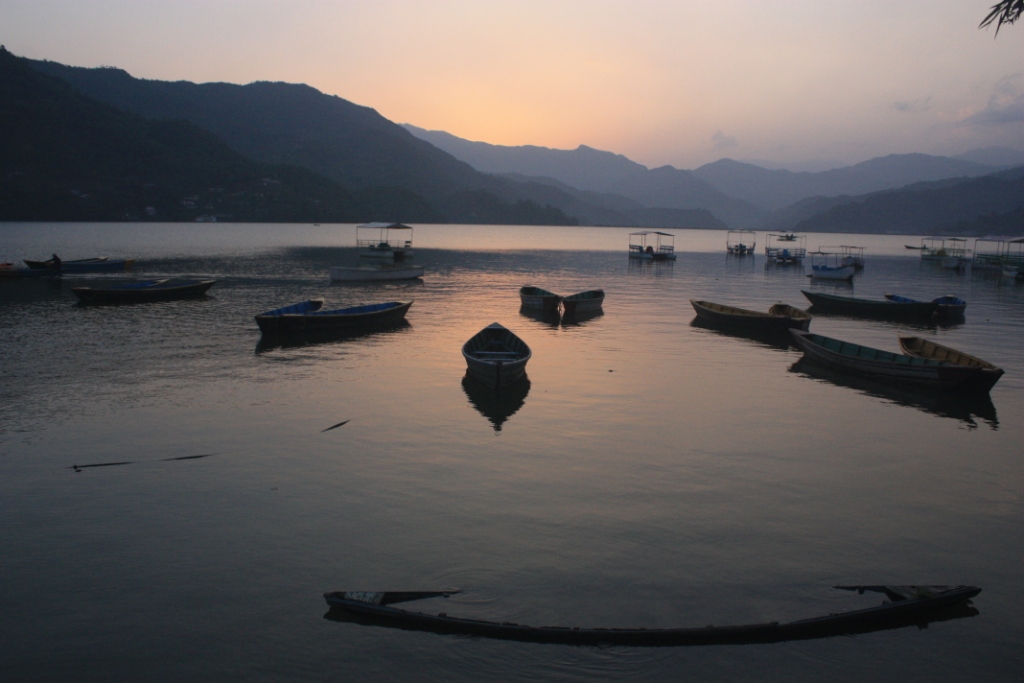
Adrift on West Lake in a wine-laden, colorful skiff:
As flutes play fast and lutes, deftly
And a jade cup circuits swiftly,
The boat's calm rocking lulls the drunk into sleep.

Thin clouds seem to float right under the rudderless boat.
The water's blue matches the sky's,
As lake to sky and back move eyes,
"Do the clouds above match those that in the water float?"

“Fluid” [Poetry Style #24] by Sikong Tu [w/ Audio]

Like water spilling over rocks?
Like a bead's roll across the floor?
Cliches, they fail to tell the story,
As no doll shows life's splendor.
But the Earth' unsupported spin through space,
As the heaven's pivot and sprawl for more...
If you could find how it all began,
You'd see it'll be as it was before.
The high and bright realm of the gods
Returns to nothing and nevermore.
And if you lived ten-thousand years,
You might find yourself in days of yore.

NOTE: The late Tang Dynasty poet, Sikong Tu (a.k.a. Ssŭ-k‘ung T‘u,) wrote an ars poetica entitled Twenty-Four Styles of Poetry. It presents twenty-four poems that are each in a different tone, reflecting varied concepts from Taoist philosophy and aesthetics. Above is a translation of the twenty-fourth of the twenty-four poems. This poem has been alternately titled “The Flowing Style,” “Fluid,” “Motion,” etc. by varied translators from its Chinese title of 流动.

“Goose Chant” by Luo Binwang [w/ Audio]

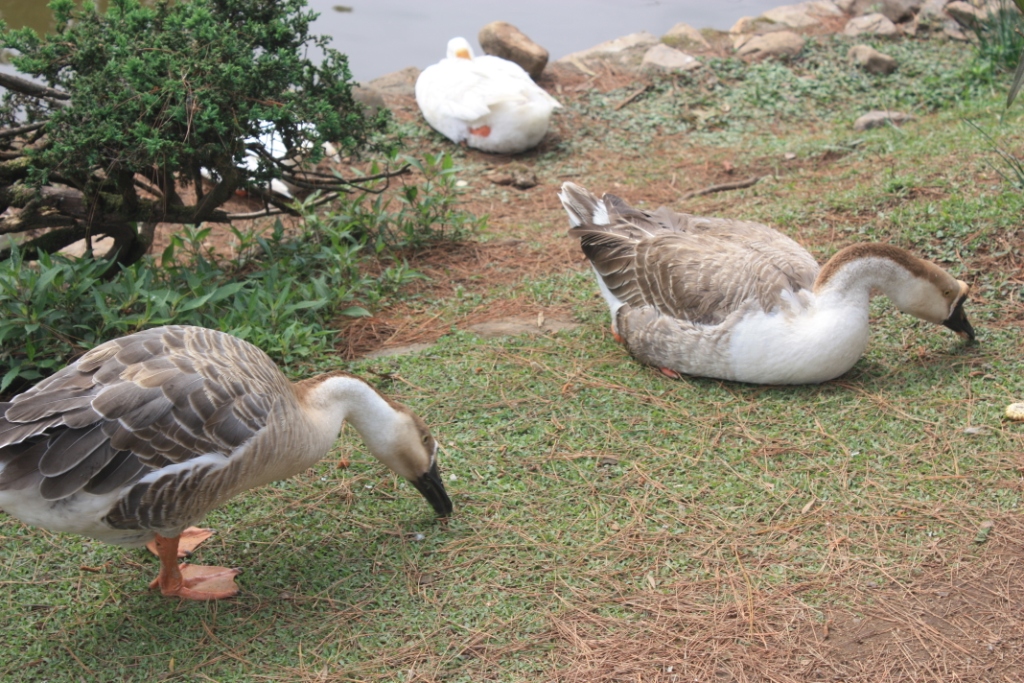
Goose, Goose, Goose,
Look skyward and let your song loose.
White feathers float on the green lake
As red feet paddle through clear waves.

NOTE: This poem’s title is often translated as “An Ode to the Goose” but the Chinese title 咏鹅 (Yǒng é) is “Chant[ing] Goose.”

“Feeling for the Farmers” by Li Shen [w/ Audio]

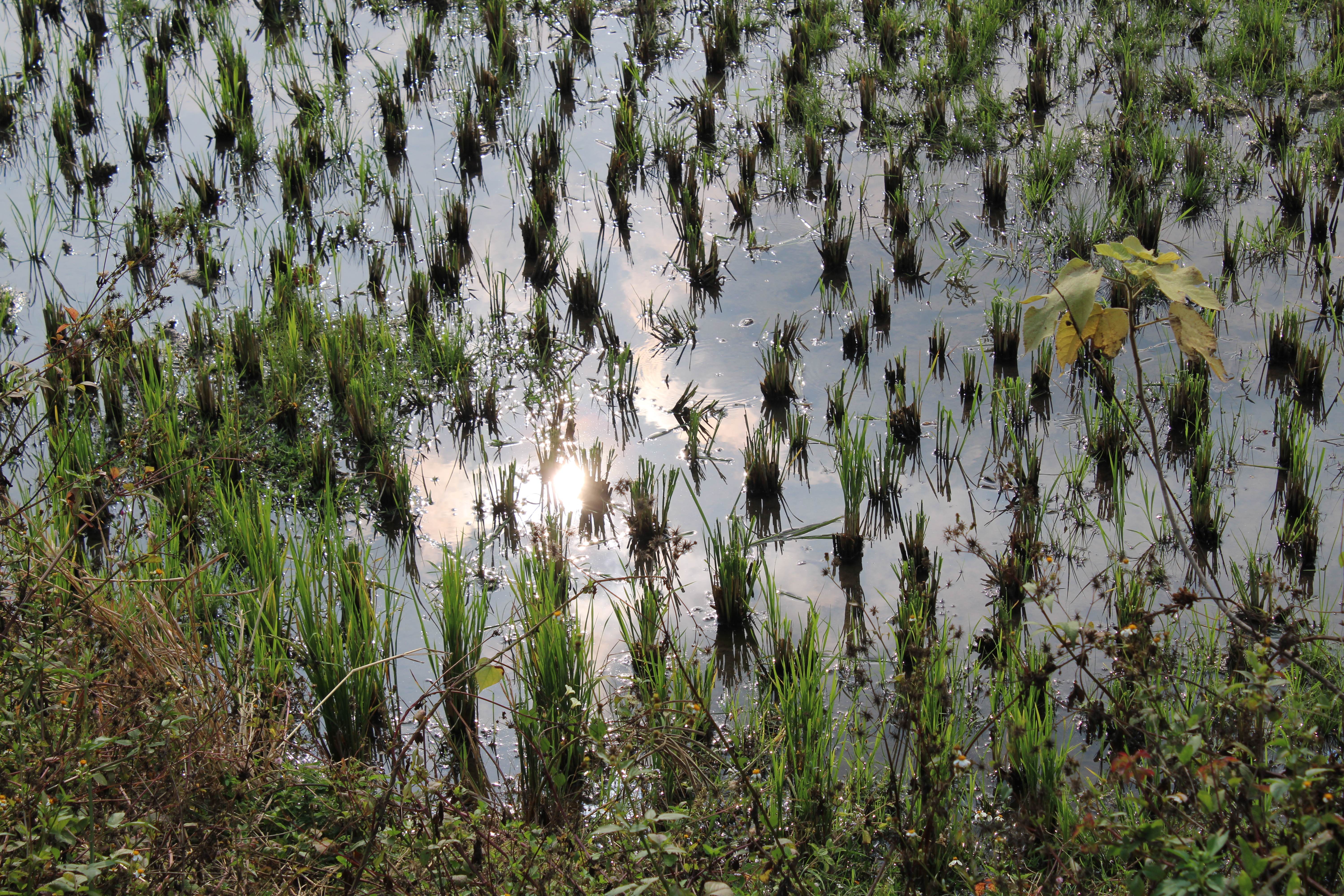
Hoeing farmer, as heat haze roils,
His flowing sweat waters the soil.
All those who know food on a plate
Should feel each grain comes of that toil.

NOTE: The title of this poem (悯农, or Mǐn Nóng) is often translated as “Toiling Farmers,” though “Compassion for Farmers” or “Pity Farmers” would be closer to the literal translation.

“Abstract” [Poetry Style #22] by Sikong Tu [w/ Audio]

Lonely and longing to travel;
All alone and lacking a tribe.
Like the crane up on the mountain,
Or the cloud that enshrouds its peak.
Like the portraits painted by past
Masters, of souls you couldn't have known.
Like a leaf drifting on swift winds,
Bounding through the boundless spaces.
You'll never be able to hold it,
But can hear the song it dances to,
Those who accept this can tune in,
And the signal will only get stronger.

NOTE: The late Tang Dynasty poet, Sikong Tu (a.k.a. Ssŭ-k‘ung T‘u,) wrote an ars poetica entitled Twenty-Four Styles of Poetry. It presents twenty-four poems that are each in a different tone, reflecting varied concepts from Taoist philosophy and aesthetics. Above is a translation of the twenty-second of the twenty-four poems. This poem has been alternately titled “Abstraction,” “Elegance,” and “Drifting Aloof” by varied translators, but its original title is 飘逸.

“Ascending Happiness Plateau” by Li Shangyin [w/ Audio]

At day's end, feeling ill-at-ease,
Riding a cart to the plateau.
The setting sun fires glorious skies,
But a yellow dusk is coming.

“Form” [Poetry Style #20] by Sikong Tu [w/ Audio]

Quit seeking to firm up the soul;
Return to the unadorned truth.
One can seek the shape of water;
One can write of a pleasant spring.
Winds shift the shapes of clouds,
Flowers stand tall, and flowers droop.
The great waves of a sprawling sea,
The mountain's craggy ruggedness...
They all emulate the Great Way.
Every wonderful thing is dust.
Find semblance beyond shape or form.
In this person, the multitudes.

NOTE: The late Tang Dynasty poet, Sikong Tu (a.k.a. Ssŭ-k‘ung T‘u,) wrote an ars poetica entitled Twenty-Four Styles of Poetry. It presents twenty-four poems that are each in a different tone, reflecting varied concepts from Taoist philosophy and aesthetics. Above is a translation of the twentieth of the twenty-four poems. Translated titles vary. This one has been titled “Descriptive” and “Form and Feature” by varied translators.

“Hand in Hand” by Su Shi [w/ Audio]

Hand in hand.
Plum petals floated to her skirt.
-- Love unbound --
Now, lost souls mill about:
Thier loved ones long unseen.
Old songs are heard once more,
Recalling Tower and Temple.

On ordinary days,
I'd write a thousand lines.
Now, I brush away dust,
And think of us, together.
The moon reflects in the lake.
Willows droop beside water.
A dragon-head cloud drifts on air.

Note: Translated titles vary. e.g. Xu Yuanchong entitles his translation “Song of Incense.”