BOOK REVIEW: Hapkido by Scott Shaw

Hapkido: Korean Art of Self-DefenseHapkido: Korean Art of Self-Defense by Scott Shaw
My rating: 4 of 5 stars

Amazon page


When I picked up this book, all I knew about Hapkidō was that it was a Korean martial art, that it wasn’t a sport like its more famous martial cousin—Tae Kwon Do (TKD), and that it was a more comprehensive art (grappling as well as striking) than TKD. I grabbed it because at least one of these mental reductions proved only partially correct and I wanted to know what else I might be getting wrong. In the first paragraph, I learned that Hapkidō was heavily influenced by / a descendant of Daitō-ryū Akijūjutsu. (If that art sounds vaguely familiar, it’s because it was also a big influence for its most famous student, Morihei Ueshiba—i.e. the founder of the Japanese art Aikidō.)

This book is tiny. It’s an overview of the art in less than 100 pages (and, as is common with martial arts books, at least half the space is devoted to photos.) So the first thing a reader might want to be aware of is that you’ve probably read newspaper articles with higher word counts than this book. I’ll leave it to the reader to determine whether that’s a good or bad thing.

The book consists of five chapters, but the last chapter accounts for the majority of the page count (but not the word count.) The first two chapters are histories. The first offers an overview of Korean martial arts situated in the context of national events of the time. The second chapter is a history of Hapkidō and gives one insight into Daitō-ryū Akijūjutsu and how it came to influence the Korean founder of Hapkidō, Choi Yong-Sul.

Chapters 3 and 4 examine aspects of the art that one might call “pre-basics” for lack of a better term. As ki (i.e. life force / energy, those familiar with Chinese arts might know it as “chi” or “qi”) plays a central role in the art, Chapter 3 discusses ki and describes breathing and meditation practices that are used for building energy. Chapter 4 describes break-falls and the art’s one posture / stance (a natural posture.)

Chapter 5 describes, and presents photos of, basic defensive moves of Hapkidō. There are five sub-sections that explore, respectively, the following types of techniques: disengagements (i.e. breaking away from an opponent who has seized one), joint locks, throws, punch defenses, and kick defenses.

I found this book to be concise and informative. If one is seeking a detailed overview of the art, one might want to look elsewhere. However, if one is just trying to figure out what Hapkidō is all about, it should serve you well. I doubt that an experienced student of the art would get much out of this book as it’s just the bare bones. Not everybody is looking to delve into the minutiae.

View all my reviews

BOOK REVIEW: Tai Chi Chuan Classical Yang Style by Yang, Jwing-Ming

Tai Chi Chuan Classical Yang Style: The Complete Form QigongTai Chi Chuan Classical Yang Style: The Complete Form Qigong by Yang Jwing-Ming
My rating: 5 of 5 stars

Amazon page


This book is one stop shopping for students of the Yang Style Tai Chi Chuan Long Form (i.e. 108 forms.) That’s not to suggest that it only describes the sequence of that form. It does that, but it also offers lessons in the history of the art, explanations of chi and qigong, and elucidation of the fundamentals of the art.

The book is divided into four parts. Chapter one examines the history of this martial art and places Tai chi chuan in the context of Chinese martial arts as well as the Yang Style within the context of Tai chi chuan. The nine sections of the first chapter also explore Tai chi chuan as a means to healthy living, and provide guidance to students on how to go about taking up the practice.

Chapter two consists of five parts that delve into the concept of chi (qi), or energy. This section mixes together mythology of traditional Chinese theory on chi with scientific explanations where science has something to say on the matter.

The third chapter describes the 13 postures of Tai chi chuan, which are a set of fundamentals that feature prominently in the martial art. This is a relatively brief section and is where the book becomes photo intensive.

The fourth chapter offers students guidance about the unarmed element of Yang Style of Tai chi chuan. While the capstone of the chapter is a systematic walk through the Long Form, there’s also coverage of some Yang Style fundamental movements as well as presentation of meditation practices taught in the system. It should be noted that this book doesn’t cover the sequence of the Yang Style Short Form (a.k.a. 24 Forms, or the Beijing Standard Form.) (I mention that because that’s the most popular form in the world and many students may want to learn about it specifically. This book offers many insights into the minutiae of the component forms, but doesn’t describe it as a sequence.) There is a fifth chapter, but it’s only a brief conclusion.

With respect to ancillary matter, like most martial arts books, it’s graphic-intensive. The bulk of the graphics are photos that are used in chapters 3 and 4 to clarify the movements and postures. Said photos have arrows and other figures drawn onto them to help clarify the movement involve. There are also a few line diagrams and maps, and chapter 2 has a many scientific photos, diagrams, and anatomical drawings.

There are three Appendices. The first provides a list of the forms of the Yang Style Long Form. The second is a glossary of the many Chinese terms mentioned in the book. The final Appendix provides information about the DVDs that are available to be used in conjunction with the book (there are markers throughout the book to provide suggestions of when students should turn to the video lessons.) There are end-notes of cited material, but I read the Kindle edition, and most of these were unavailable because Chinese characters didn’t convert to the electronic format. This was no big deal for me because I couldn’t read the Chinese reference material anyway, but if you read Chinese, you might opt for the hard copy of the book.

I learned the Yang Style short and long forms several years ago, and bought this book to provide some background and technical guidance. I found the book to be interesting and informative, and would recommend it—particularly if you’ve learned the Yang Style (but one may find the early chapters interesting even if one hasn’t.) The author uses a number of entertaining and educational stories and the book is readable and insightful for students of all levels.

View all my reviews

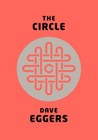
BOOK REVIEW: The Circle by Dave Eggers

The CircleThe Circle by Dave Eggers
My rating: 5 of 5 stars

Amazon page


In Eggers’ novel, the Circle is a technology giant that looks a lot like Google + FaceBook + PayPal + Twitter all wrapped together under one corporate roof. Mae Holland, the book’s lead, is a young woman hired into the firm owing to her close friendship with a college roommate turned high level executive at the Circle, Annie. Even though Mae is brought in to work what is called “customer experience” (i.e. customer service) doing seemingly tedious work, Mae is in hog heaven. She left a job doing tedious work in a depressing environment with minimal support, and so this job personalizing boilerplate responses in a fascinating place with the opportunity to move up is a dream. The Circle is a utopian workplace where engineers are given free rein to experiment, where great minds and performing artists come to hang out, and where one gets handsomely rewarded for playing on one’s social media at work. All one needs to thrive at the Circle is a sharp mind and a willingness to accept that one’s days of privacy and solitude are behind one.

The Circle is the dystopia that some would say we are on the cusp of and others think we’ve already plunged into. It’s not Orwell’s gray dystopia of brutal state force. Neither is it Huxley’s bright and shiny dystopia of drugs and free loving. It’s a dystopia in which people willingly give up all privacy and negate the need for a neo-KGB by posting every idiotic thing that they do directly to the worldwide web. However, as in Huxley’s “Brave New World,” we see that the most nefarious character isn’t necessarily the most dangerous. The Circle is headed by an executive trinity. There’s the tech genius who we know little about until the book’s end–except that his life runs contrary to what the Circle seeks in its employees in that he’s fiercely private to the point of being mysterious. There is Tom Stenton who is the face of greedy capitalism, a loathsome character in every way imaginable. However, the real danger comes from the likable–and seemingly reasonable–Eamon Bailey who’s an idealist who thinks that people can perfect if they have no shadows in which to make mischief.

Mae is introduced to us as a likable character. She’s a hardworking but human girl next door. When we are introduced to Mercer, her ex-boyfriend and the face anti-Circle-ism, we assume that she’s being reasonable in her dislike of him. Even though he sounds reasonable, she knows him. Mercer rails against this corporatized surveillance state, and initially one may not be able to tell whether he’s a Luddite or the voice of reason. As the story goes on, however, the reader is likely to like Mercer more and more and Mae less and less. But the question remains until the end whether Mae will do the right thing as she becomes aware of the full—disturbing–picture of the Circle.

I got engrossed in this book. It’s absorbing both because of good character development and an intriguing story. That’s probably why the novel was made into a film that came out earlier in the year. It’s one of those books with the readability of popular commercial fiction, but which provides some food for thought. Some of the twists you may figure out, but the book keeps one wondering until the reveals.

I’d recommend this book for fiction readers—particularly if you have any pictures on social media with a drink in your hand or bad judgement in progress.

View all my reviews

The movie trailer, if you’re interested:

BOOK REVIEW: Wired to Grow by Britt Andreatta

Wired to GrowWired to Grow by Britt Andreatta
My rating: 3 of 5 stars

Amazon page


This is one of those books that is hard to rate and review. It does a thing well, and if one is looking for a book of its strengths, it’ll serve one well. That thing it does well is to concisely and clearly summarize research in neuroscience relevant to learning new skills. If that is something one is interested in, and one hasn’t done much reading on the subject yet, this book will get one up to speed in just over 100 pages while offering insight into where to go to flesh out what one has learned.

That said, if one has read up on pop-sci neuroscience and /or self-help books applying said research, one is likely to find that this book offers little value-added while lacking the depth and narrative approach of competing works. The latter is particularly intriguing as this is a book about effective learning, and it seems clear that humans like learning through stories. However, Andreatta does little story telling beyond brief mentions of approaches she’s used in her seminars and occasional recaps of the stories of the researchers whose work she’s drawn upon. Some may find this isn’t so bad because it keeps the book compact. Story telling is page intensive. On the other hand, a lack of story-telling means that the material is a bit less prone to stick than it might otherwise be.

The author’s approach to making the material stick is to hang it on a three-phase model (learn-remember-do) and to keep it brief. Many of the chapters consist largely of bullet points, and in places the book feels like a PowerPoint handout. (I’ll let the reader decide whether that’s a good thing or not.)

The book is organized into twenty chapters arranged in five parts. (That tells one a lot about the brevity of chapters, given the book is 102 pp.) The five parts consist of: I.) an overview of neuroscientific fundamentals; II.) a description of research related to the “learn” phase of Andreatta’s model; III.) the same for the “remember” phase; IV.) coverage of the “do” phase; and V.) a section called “design” that helps the reader to apply what they’ve learned in the earlier parts to build approaches to teaching and learning.

There is some useful ancillary material. First, there are many graphics of a variety of types (pictures, line drawings, tables, and graphs) that are nicely drawn and effective. Second, there are “Your Learning Journey” sections interspersed throughout the book. These are one page or less exercises that are designed to help one put one’s learning to use. Thirdly, there is a bibliography that includes crucial reference materials divided by type: i.e. journal / scholarly research, books, journalistic / media accounts, and cited scholars. Finally, there are apparently additional resources accessible online, e.g. downloadable pdf files, but I didn’t investigate these features.

I would recommend this book for those looking for a concise summary of recent developments in neuroscience as they apply to education and learning. If you’re well-read on the subject, however, you might not find that this book delivers much extra. It should be noted that the author is speaking from an educator’s perspective (i.e. not a scientist or psychologist) and readers may find that a plus or not.

View all my reviews

5 Neuroscience Fun Facts for Yogis & Yoginis

5.) IDEA: While our conscious mind feels like the sum of our mental world, in fact, it’s the tip of the iceberg of mental processes. Our decisions and actions are guided to a large degree by happenings below the waterline.

INTRIGUING EXAMPLE: In one study, interview subjects were randomly assigned to hold either iced or hot coffee. No attention was drawn to the coffee and it was set up as a mere accident of happenstance (the HR person directing the interviewees had her hands full.) The coffee was retrieved before the subjects made handshakes with interviewers. Unrelated to their verbal responses, those who had held the iced coffee were disproportionately described more in terms suggesting a cold personality (e.g. calculating, devious, etc.) and those who had held hot coffee were credited with a warmer personality.

RELEVANCE: Get your hands warm before you start making corrections.

REFERENCE: The coffee study is discussed by David J. Linden in his book Touch. However, there are many books on this topic, several that I’ve reviewed. In particular, I can recommend Eagleman’s Incognito and Mlodinow’s Subliminal.


4.) IDEA: Emotions play a crucial role in decision-making. We aren’t nearly so rationale and calculating as we think ourselves to be–particularly when there is uncertainty in the mix.

INTRIGUING EXAMPLE: Giovannni Frazzetto’s book describes cases of patients with lesions in their medial prefrontal cortexes who would deliberate ad nauseam and still couldn’t reach a decision.

RELEVANCE: This is why we don’t silence or stamp out emotions, but rather watch them dispassionately while avoiding a mental drift into a frenzy of illusion building.

REFERENCE: The Frazzetto book I referenced is: How We Feel, and it deals with anger, guilt, anxiety / fear, grief, empathy, joy, and love.  However, the patients described in his book were those of Antonio Damasio, and so you may want to check out Descartes’ Errorwhich I’ve heard good things about, but haven’t yet read.


3 .) IDEA: Experiences once thought to be supernatural, mystical, or fraudulent are increasingly being understood in scientific terms.

INTRIGUING EXAMPLE: For some, an Out-of-Body-Experience (OBE) is an impossible flight of fancy, while for others it’s a mystical / transcendent state beyond the physical realm. However, in recent years scientists have not only confirmed that people have these experiences, they’ve come a long way toward understanding such occurrences by actually inducing them via electrodes applied to the right angular gyrus. It seems that area of the brain is responsible for integrating sensory information from various senses, and its disruption creates an illusion of one’s consciousness floating outside the body.

RELEVANCE: As many have wisely advised, don’t spend a lot of time chasing siddhis–not only might it stunt your growth toward the ultimate goal, it might just be running after tricks of the mind.

REFERENCE: I highly recommend Anil Ananthaswamy’s The Man Who Wasn’t There. The book looks at the various ways in which “self” has been defined (one’s memories, one’s body, etc.) and it shows how neuroscience has learned a thing or two about the various dimensions of self, and how none of them fully defines an “I.” (i.e. The Buddhist conception of the self as illusion might turn out to be not far off the mark.)


2.) IDEA: Our brains can be rewired through practice and training. The property is called neuroplasticity, and it’s often described by the verse: “neurons that fire together, wire together.”

INTRIGUING EXAMPLE: You may have heard about  how London taxi cab drivers develop an enlarged hippocampus, which helps them meet the vast spatial memory needs required of the job. However, an even more fascinating example may be how some blind people have developed a capacity for echolocation–i.e. their mind registers changes as sound bounces off walls, curbs, and other obstacles.

RELEVANCE: One takes advantage of neuroplasticity when one works to be more kind and compassionate by recognizing and changing one’s behavior patterns.

REFERENCE: Fascinating reading on the topic can be gleaned from Kathleen Taylor’s book Brainwashing, but the most widely-cited book on the topic may be Norman Doidge’s The Brain That Changes Itself.


1.) IDEA: We have neural circuitry that predisposes us to spiritual belief and inclinations toward the sacred.

INTRIGUING EXAMPLE: The evidence suggests that it’s not so important who or what you believe in, but the more positive the message the better. People of religion have demonstrated both better and worse health outcomes–all else equal–and it seems linked to whether you have one of those smiting gods or a more compassionate one.

RELEVANCE: Belief and surrender–religious or secular–can play an important role in one’s personal development.

REFERENCE: Newberg and Waldman’s How Enlightenment Changes Your Brain deals with these issues in detail.

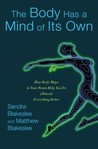
BOOK REVIEW: The Body Has a Mind of Its Own by Blakeslee and Blakeslee

The Body Has a Mind of Its Own: How Body Maps in Your Brain Help You Do (Almost) Everything BetterThe Body Has a Mind of Its Own: How Body Maps in Your Brain Help You Do (Almost) Everything Better by Sandra Blakeslee
My rating: 5 of 5 stars

Amazon page


This book examines the role of the nervous system in movement and bodily activity. It describes how one’s body is able to perform extraordinarily complex maneuvers that we often take for granted because they feel effortless. It investigates some of the ways in which the interface between body and brain go awry, as well as the various effects this can have. It also offers insight into how we can be deceived because we are experiencing the world less directly and more through the shaping activities of the brain than we feel is true.

The book contains ten chapters, plus a little forward and back matter. The first chapter is entitled “the body mandala” and it provides an overview of how the nervous system can be thought of as a series of maps layered upon maps that routes various input from outlying areas to the brain and commands from the brain to the outlying areas. A “mandala” is a symbolic representation of the universe [from Hindu and Buddhist traditions], and this notion is repeatedly revisited throughout the book.

Chapter 2 explores the mapping of the homunculus and its ramifications. If you’ve ever seen a 2-D or 3-D image /model of a human being that has gigantic lips and hands and disproportionately small torso and thighs, you’ve seen said homunculus (as the term is used in neuroscience.) The reason it’s scaled this way is that body part size is reflective of space in the nervous system dedicated to said parts and not their actual size. If you’ve ever seen one of those maps–called cartograms–in which the size of a country reflects a statistic, say, population (thus India, China, and Singapore are much larger than their physical size, but Canada is much smaller than its), you get the drift. This chapter also answers the question everyone wants to ask (and many do) which is “why–if the lips are so large because of their dedicated territory in the brain—are the genitals unexpectedly small in the homunculus?

Chapter 3 describes how body maps can be in conflict and what effect this can have. It talks about why people who lose weight often still feel fat and move in ways that are not reflective of their actual figure. It also gets into anorexia (and the lesser known bigorexia) which reflect mismatches between perceived body image and actual body schema.

Chapter 4 investigates a fascinating phenomenon in which visualization can often result in strength and performance gains. Said gains aren’t on the same scale as among those who actually exercise or practice, but the fact that one can make gains without moving a muscle is certainly intriguing. Of course, the takeaway is that one can get the best of both worlds by augmenting physical conditioning and practice with visualization—one has a more finite number of feasible physical training hours in a day (i.e. there are diminishing returns on physical training at some point.)

Chapter 5 is the first of two chapters that deal with problems related to improper interaction between the nervous system and the body. Here we learn about “the yips” that plague golfers and other occupational dystonias. When one begins practicing any physical activity, the objective is to build up muscle memory so that the movements can be completed purely unconsciously. This works through neuroplasticity—the fact that sequences of neurons that frequently fire together become more strongly linked—but neuroplasticity can have a dark side at the extremes.

Chapter 6 considers the way in which the system of maps can fail such that one fails to recognize one’s own limbs, one recognizes extra ones, or the like. Chapter 7 is about peripersonal space—i.e. the physical bubble of space that one needs to feel comfortable, and which varies both culturally and individually.

Chapter 8 delves into the role that upcoming technology may have in changing how we look at the body-brain connection. Mirror neurons are the subject of the penultimate chapter. You’ve probably heard of these neurons which fire when we see someone else perform an action. Usually there is an inhibitory signal to keep our body from actual mimicry, but sometimes you may find yourself unconsciously mimicking the position or body language of another person when one is engaged in an engrossing conversation. (Yawning contagiousness is a featured example.) Mirror neurons play a role in how we learn so quickly, how we sometimes anticipate the behavior or emotions of others, and deficient activity in these cells has been speculated to be responsible for autism.

Chapter 10 describes the role of the insula in human activities. The insula has been found to be involved in emotion and rewards system by which humans are motivated to engage in a number of bodily activities.

The book has many graphics to clarify technical points, many of these being line drawings of the brain and other physiological structures. There is also a glossary of key scientific terms.

I found this book to be fascinating. It was highly readable despite its technical subject matter, and it described these systems and the research about them in a clear manner. I’d highly recommend it—particularly if one is interested in movement, fitness, and optimal human performance.

View all my reviews

BOOK REVIEW: Black Panther: A Nation Under Our Feet, Vol. 3 by Ta-Nehisi Coates

Black Panther: A Nation Under Our Feet Vol. 3 (Black Panther 2016-)Black Panther: A Nation Under Our Feet Vol. 3 by Ta-Nehisi Coates
My rating: 5 of 5 stars

Amazon page


This is the concluding segment of a story written by Ta-Nehisi Coates in which King T’Challa (a.k.a. the Black Panther) must fight to keep his nation, Wakanda, from descending into chaos and revolution. It features “Black Panther (2016)” #9-12, as well as some supplementary material from “New Avengers (2013)” #18, 21, and 24.

As with the other volumes in this story, there is a major and a minor plot, and at the beginning of this Volume the latter resolves itself in order to fold into the main story. The major plot involves an attempted revolution fomented by a man named Tetu who heads a revolutionary organization called “the People” that has engaged in terrorist and other nefarious activities. While progress was made against Tetu and his allies in Volume 2, he still presents a threat to the throne and to Wakanda. However, Tetu isn’t the only threat to the nation. Wakanda’s problems are bigger and more systemic than that. While Tetu is a terrorist, there are dissenting factions with far more legitimacy, including the Midnight Angels (former bodyguards to the King, i.e. ex-Dora Milaje) and the much-loved philosophy professor, Changamire.

The secondary plot involves T’Challa’s search for his sister Shuri who has been trapped in the Djalia, the Wakandan plane of memory. At the end of the second volume, T’Challa resumes the search using a technology that channels and amplifies the powers of his friend “Manifold.” As it happens, bringing Shuri back occurs effortlessly, but it seems returning her to this world isn’t so critical to the story as the effect her experience had on her. She returns with an encyclopedic knowledge of the history of Wakanda as well as numerous inexplicable supernatural abilities. The past queen plays an important role in the balance of the story both by advising T’Challa, fighting, and lending her influence with the Midnight Angels (ex-Dora Milaje.)

The fight for Wakanda plays itself out as both a battle of action against forces controlled by Tetu and Zenzi as well as a battle for the minds of the people (not to be confused with the organization “the People.”) I found it to be a smart story.

The supplementary material from “New Avengers (2013)” was illuminating. My only problem with it is that it occurs after the story is complete. If one just reads this Ta-Nehisi Coates arc, one might want to go to the end of Volume 3, and read this material first or pick up the whole “New Avengers (2013)” story. By doing so, one will have a much better understanding of why there is so much conflict in Wakanda, and why T’Challa is so unpopular. It’s hinted at here and there, but I didn’t understand the motivation fully until this material showed the events rather than offering random back story tidbits.

I would recommend this story for anyone. I don’t think one needs to be a regular comic book reader or have a particular interest in the Black Panther character to find it interesting and enjoyable.

View all my reviews

BOOK REVIEW: Black Panther: A Nation Under Our Feet, Vol. 2 by Ta-Nehisi Coates

Black Panther: A Nation Under Our Feet, Book 2Black Panther: A Nation Under Our Feet, Book 2 by Ta-Nehisi Coates
My rating: 4 of 5 stars

Amazon page


This volume contains the middle portion of a three-part story arc written by Ta-Nehisi Coates. The books included are “Black Panther (2016)” #5-8 and “The Black Panther: Jungle Action” #6&7.

As the subtitle suggests, the fate of Wakanda is at stake and King T’Challa, a.k.a. the Black Panther, must find a way to keep his nation from falling. Public displeasure with T’Challa is being exploited by a man named Tetu who heads a revolutionary group called “The People.” Tetu is allied with a powerful psychic named Zenzi and—in contrast to the populist message his organization’s name suggests–the arms dealer Ezekiel Stane. However, while the might of Tetu and his allies represents a dire threat, the greatest challenge might be from a beloved scholar named Changamire, who holds both the moral high ground and the voice of reason. As Tetu sought to co-opt ex-Dora Milaje members Aneka and Ayo (now called the Midnight Angels) to gain legitimacy as well as their strength, he also seeks to get Changamire in his corner.

As the main plot of political intrigue unfolds, there is a subplot involving T’Challa’s sister Shuri who is trapped in the Djalia—Wakanda’s plane of collective memory. For a time T’Challa is forced by events to set aside his desire to get his sister back in order to battle Tetu both outright and by rekindling goodwill in the hearts and minds of his people. However, Shuri’s lessons in the Djalia, delivered by a griot in the form of her mother, are interspersed throughout the story, and by this segment’s end T’Challa finds it impossible to delay his search any longer.

Coates presents us with a human T’Challa, one who makes mistakes and whose mistakes exacerbate the threat to Wakanda. His most notable mistake is allowing himself to be talked into convening a council of “counter-revolutionary” experts who, in fact, consist of heads of the security apparatus for several corrupt regimes. His only saving grace is that Tetu has even more skeletons in his closet. T’Challa has to deal the best he can with situations in which there is no clear high ground, and that makes for a more intriguing story than one normally associates with superhero comic books. By the end of this Volume, it seems that Black Panther—along with his allies Manifold, Luke Cage, Misty Knight, and Storm—has turned things around by defeating Stane and uncovering the lair of “the People,” but then one realizes how fragile Wakanda remains.

The two bonus books “Jungle Action” #6&7 are from the early 1970’s and feature an earlier challenge to T’Challa’s throne from his archenemy Erik Killmonger. I can see why these two comics were included. Said books might be viewed as influences on this story, but there may have been better choices. At the end of the third volume (reviewed concurrently), there’s material from a 2013 run that offers great insight into why T’Challa is on the outs with his people. For those of us who pick up select stories (i.e. not all-reading fanboys), the insight offered in Volume 3’s supplementary material would be useful earlier in the reading process. (Preferably it would be in Volume 1.) The first volume includes a single book from “Fantastic Four.” It’s fun to read because it’s Black Panther’s introduction into the Marvel-verse and it shows us how formidable Black Panther is as well as letting us in on the secret that Wakanda is the most technologically advanced nation on the planet. However, I think knowing why the Wakandans are so disgruntled would help make Coates’s story more powerful.

As it’s a comic book, I should mention the artwork–even though I have no particular insight into graphic artistry—comic book or otherwise. All I can say is that I liked the art and found it effective and clear. I viewed the book in black-and-white, so I have nothing to say about color palette.

I enjoyed this arc and thought this section of it had a good balance of peril and victory for our hero. I’d recommend it broadly. I don’t think you have to be solely interested in comic books or the Black Panther character specifically to find this story intriguing.

View all my reviews

BOOK REVIEW: A Study in Scarlet by Sir Arthur Conan Doyle

A Study in Scarlet (Sherlock Holmes, #1)A Study in Scarlet by Arthur Conan Doyle
My rating: 5 of 5 stars

Amazon page

Get Speechify to make any book an audiobook 

This is the first book of the Sherlock Holmes canon, and is also the first Holmes novel (most of Arthur Conan Doyle’s Sherlock Holmes stories are short stories published in collections.) The book was first published in 1887.

There are actually two stories told in the novel. The first part of the novel describes a mysterious murder that happens in London and whose victim displays a gruesome death mask. Later a second murder is discovered. It’s not clear whether the two killings are connected but the two men were associates and so it’s a likely conclusion—though the victims’ manner of death is quite different. Because, it’s the first story, there’s also the meeting of Holmes and Dr. Watson–who becomes Holmes’s roommate and who soon becomes fascinated by the work of the world’s first consulting detective.

Part I is as one would expect of a Holmes’ story in setting and characters, the second part is out of the ordinary but none-the-less fascinating. Part II begins with a man and a little girl being rescued by a caravan of Mormons. The two are the sole survivors of a Donner Party-style ill-fated wagon train through the Rockies. The man and the girl go on to live with the Mormons, if uneasily. Eventually, the girl reaches age. While she falls for a non-Mormon hunter, the polygamous Mormon’s face a situation in which the demand for wives far outstrips supply. This sets up the intrigue of the story. That intrigue is eventually tied up by Holmes at the end of the second part.

It seems like it would be an odd way to tell such a story, in two disparate parts, but both parts of the story are well-told and gripping. Though, I found the adventure in Utah to be particularly edge-of-the-seat. There’s a reason Holmes was such a popular character. Arthur Conan Doyle wove fascinating tales.

I’d recommend this book for all fiction readers—unless you’re a Mormon with anger issues, then you might want to just pass.

View all my reviews

BOOK REVIEW: Steppenwolf by Hermann Hesse

SteppenwolfSteppenwolf by Hermann Hesse
My rating: 5 of 5 stars

Amazon page


Harry Haller lives out-of-step with virtually every aspect of modern society. He finds the prevailing music, art, and entertainment to be trivial and low-brow. He has pacifist tendencies amid strongly nationalist peers. This disjoint between his individual nature and society’s has made him depressed to the point of being suicidal—but he hasn’t been able to bring himself to commit the act, and has instead given himself a deadline.

Enter Hermione (note: her name seems to be rendered “Hermine” in some editions), a woman who is in many ways the exact opposite of Haller. She loves Jazz, enjoys dancing, and doesn’t like to be too serious or analytical about anything. She becomes his Yoda. She teaches him to dance, introduces him to a lover, and exposes him to the delights of frivolity. While the book opens in a way that makes one think it might be an indictment of modern society, what it really shows is how Haller’s unhappiness comes from insisting that society should be fitted to his worldview and proclivities. If he can find a way to get beyond that insistence, he can transcend his unhappiness.

One of the fascinating intrigues of the book is that Hermione early on promises that she will get Haller to do two things: fall in love with her and something else which I’ll leave to the reader but which seems even more unfathomable. This sets up an intense tension that one eagerly follows through the rest of the book. (It’s not so surprising that Haller will fall for Hermione. That seems to happen immediately. Still, you’ll remember that I pointed out that Hermione played cupid and set Haller up with her friend Maria, so it’s fascinating that she intends to make him fall in love with her.)

The organization of the book is a bit unconventional, but it works both in terms of being easy to follow and in providing a multi-dimensional story. (Though if one missed the first part on wouldn’t be at a terrible loss.) The first part is an “Editor’s Preface” as told by the nephew of Harry Haller’s landlady. He comes into possession of Haller’s manuscript and explains what it is that made him go to the trouble of publishing it, despite—as he tells us—he ordinarily would not. It explains how this man’s limited interaction with Haller intrigued him and made him want to tell the story. The second part is labeled “Harry Haller’s Notebooks (for mad people only),” and is from Haller’s perspective. This section shows us a depressed Haller walking the streets and railing against the futility of the world when his attention is captured by a sign for a theater that announces: “Admission not for everybody. For mad people only.” From that point we enter the story itself, which is entitled “On Steppenwolf: A Tract (for mad people only.)”

The novel gets bizarre / surreal at the end as Haller is going through his “Magic Theater” experience. One doesn’t know exactly what is real, what is hallucinogen-induced, and what flows from madness. However, this warped reality works well for a story of transcendence and transformation.

I’d recommend this book for readers generally. It’s short, readable, has intriguing characters, and is thought-provoking. If you like stories that make you think, you’ll enjoy this book.

View all my reviews