DAILY PHOTO: Saint Against the Sea

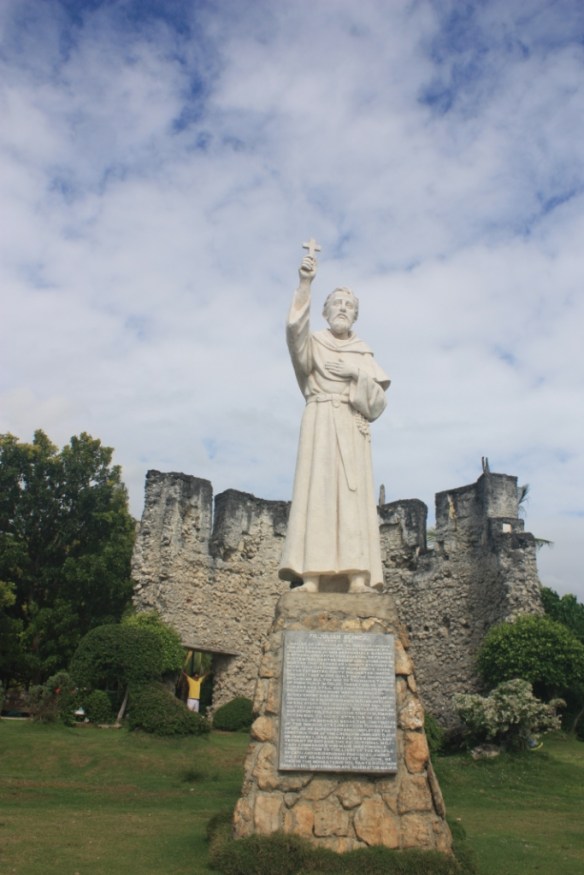
Taken in Oslob in December of 2017


OK, he wasn’t really a saint, that was alliterative poetic licence. He was a priest named Father Julian Bermejo, and he is celebrated for his role in having baluartes (watch towers) built to warn Cebuano residents of threats from both nature and pirates.

BOOK REVIEW: The Path by Michael Puett

The Path: A New Way to Think About EverythingThe Path: A New Way to Think About Everything by Michael Puett
My rating: 5 of 5 stars

Amazon page


This book is organizationally and conceptually similar to a book by Edward Slingerland that I reviewed recently entitled “Trying Not to Try.” I’ll first discuss how the books are alike before differentiating them as I believe they are both worth reading. First, both books essentially look at how the ideas of ancient Chinese philosophers—both Confucian and Taoist—can be put into practice to improve one’s life in the modern world. Second, the heart of each work consists of chapters devoted to the thinking of one particular philosopher and how the ideas of said philosopher compare and contrast to those of the others.

That said, both books create their own space in a way that justifies each’s existence. While Slingerland focuses heavily on the notion of wu-wei (effortless action) and de (the charisma of effortless action,) Puett and Gross-Loh consider a broader swath of human activity. That may make it sound like this book is more rambling and unfocused, but there is a central theme that cuts across the chapters. That theme rejects the simple and straightforward ideas given credence by modern Western society (as well as by the Chinese Mohists–i.e. followers of Mozi.) It suggests that the self is not a fixed entity but rather a collection of patterns. One needs to accept that these are just ruts that can be negated and to behave accordingly if one hopes to achieve an enjoyable life in a world that can be capricious and chaotic.

The first couple chapters of the book look at the problems of the modern world and how ideas from traditional societies—such as the China of past centuries—differed. With that context set, each but the last chapter examines an aspect of the human condition from the perspective of a particular Chinese philosopher.

Chapter three offers Confucius’s ideas about rituals and how they can be used to cultivate virtuous behavior. Chapter four presents the ideas of Mencius with regards how to live life in a world that is capricious and arbitrary.

The fifth chapters shifts from Confucianism to Taoism as it explores Laozi’s ideas about how one can influence others not by brute force but by moving in accordance with “the Way,” and how eliminating illusory distinctions is the key to developing this soft power.

The sixth chapter focuses not on the ideas of a particular author but a particular work, “The Inward Training.” This manual describes how one can increase one’s vitality (readers maybe familiar with the idea of “chi” or “qi,” as in “tai chi” or “qi gong”) by a mystical approach that cultivates the divine within one.

Chapter seven is about Zhuangzi’s ideas about accepting that our world is constantly in flux and to battle this fact is as futile as it is exhausting. The ideas discussed echo the aforementioned concept of “wu-wei” as well as modern concepts of positive psychology such as Czikszentmihalyi’s Flow and ecstasis.

The penultimate chapter returns to a Confucian philosopher, one by the name of Xunzi, who believed that humans create the patterns we live under and it’s up to us to get past said patterns and not to accept them as a given. The last chapter circles back around to propose how the ideas presented throughout the book might allow us to remake the modern world in a happier form.

The book has no graphics, but does have a small section of resources and readings.

I found this book to be enjoyable and informative. The authors use modern stories and cases to make these ideas understandable and relevant to the reader as well as to supplement stories of ancient history. The book provides food for thought and—as I said—it creates its own niche. I’d recommend it for readers interested in how ancient Chinese wisdom can relate to present-day living.

View all my reviews

BOOK REVIEW: T’ai Chi Classics by Waysun Liao

T'Ai Chi ClassicsT’Ai Chi Classics by Waysun Liao
My rating: 5 of 5 stars

Amazon page


This book conveys the teachings of three tai chi masters of old: Chang San-feng, Wong Chung-yua, and Wu Yu-hsiang. However, those masters’ treatises take up only a small portion of the book. That’s not a criticism. No doubt the treatises were cryptic and sparse, and so they are presented with commentary embedded rather than as literal translations. The treatises discuss the concepts that each of the masters thought was essential to the art, and the author conveys these complex and ethereal ideas in a way that is as understandable as possible.

Before presenting the three treatises in chapters four through six, the author offers a three chapter background on essential concepts for the tai chi student to understand. Chapter 1 presents historical background on tai chi and differentiates temple style from the family styles of tai chi, as well as giving insight into the philosophical underpinnings of the art. The second chapter offers a primer on chi, the life-force energy that is at the conceptual heart of tai chi. Chapter 3 describes jing and the means by which chi is expanded and transferred.

After the three treatise chapters, there is a final chapter that is intended to take the book from theory to practice. Most of the final chapter is a step-by-step description of a tai chi form, and consists of line drawings of the positions with bullet point descriptions of the movements. However, the chapter begins with some lists of key philosophical concepts as well as clarifying ideas about movement fundamentals.

There are line drawings throughout the book, not only to show physical positions in the practice but also diagrams to help convey the difficult concepts discussed throughout the book as well as Chinese calligraphy characters. Besides the calligraphy, these graphics are crude, looking as one might expect in a notebook. I don’t think the crude form of the graphics is a problem, and the notebook effect it creates may be an intentional aesthetic. As I don’t believe one can learn a martial art or other system of movement from a book, the fact that the graphics don’t offer much detail isn’t a problem.

I found the book to be thought-provoking and would recommend it for students of tai chi and qi gong.

View all my reviews

BOOK REVIEW: Taoist Yoga & Chi Kung by Eric Yudelove

Taoist Yoga and Chi Kung- For good health,better sex,and longer life.Taoist Yoga and Chi Kung- For good health,better sex,and longer life. by Eric Yudelove
My rating: 4 of 5 stars

Amazon page


This book was originally released under the title: “100 Days to Better Health, Good Sex & Long Life.” It offers a 14 week qi gong practice that proposes to improve health, sex life, and longevity. It’s presented as a step-by-step explanation of the practice aimed at those who intend to carry out the practice—as opposed to those who are looking for a more general explanation or overview.

The book offers a systematic presentation of the 14 week / 100 day practice. It’s divided into two parts. The first is a short explanation of Taoist concepts as they pertain to health building practices, and particular emphasis is given to the concepts of chi (energy / breath), jing (body), and shen (mind.) That emphasis is valuable as each of the chapters (i.e. the description of each week’s practice) is outlined according to these three concepts. So, each week there is a new breath practice, new bodily practices, and a new meditation or visualization practice. That said, these practices build on each other—i.e. starting with very basic activities and either adding to them or shifting to more complex variations.

The sections on breath and mind are fairly straight forward and mostly involve one practice each per week. Those practices become quite complex over the course of the book, but it’s one practice per week. This is in contrast to the middle section that has three or four subsections of activities per week. The middle section on Jing, or body, includes subsections on making sounds, self-massage, “sexual kung fu” (exercises intended to tone the reproductive system and prevent chi “leakage”), and the movement exercises that one might most closely associate with qi gong (chi kung.)

The book has many graphics in the form of line drawings used to clarify anatomy or how one is to visualize the practices. There is a glossary to help explain both Chinese terms and terminology in English that is specific to qi gong. There is also a two page bibliography that includes many works by one of Yudelove’s teachers, Mantak Chia, but also including works by individuals from other lineages and systems.

I have practiced through week eight. One may find the parts of the practice vary in their usefulness, but there doesn’t seem to be any harmful practices and there are many from which one will benefit. I’d recommend the book if one is looking for practices—as opposed to background. The explanations are systematic and the overall practice is well-organized. It’s not the kind of book that is much of a pleasure to read for reading’s sake. Much of the book is lists and bullet points of step-by-step explanation.

View all my reviews

DAILY PHOTO: Siquijor Sunset

Taken in December of 2017 on Siquijor in the Philippines

DAILY PHOTO: Tarsiers

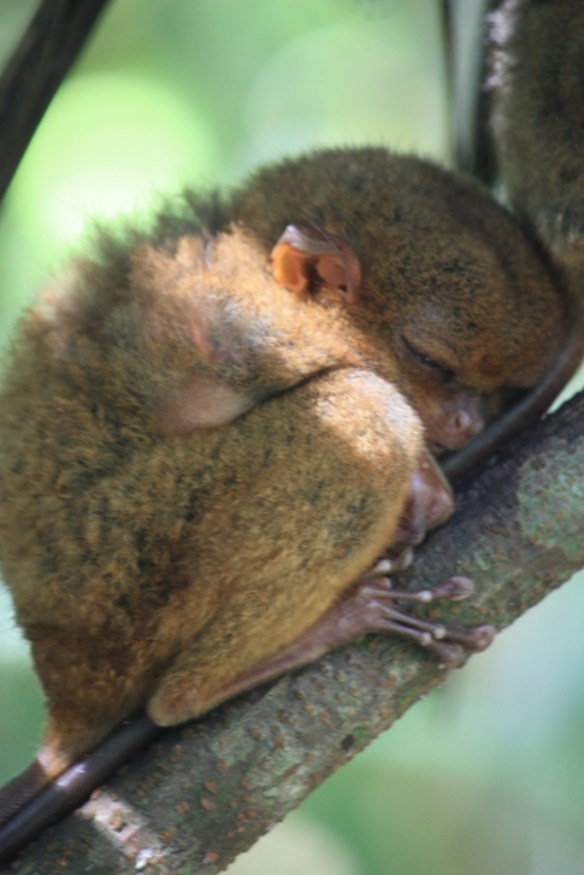
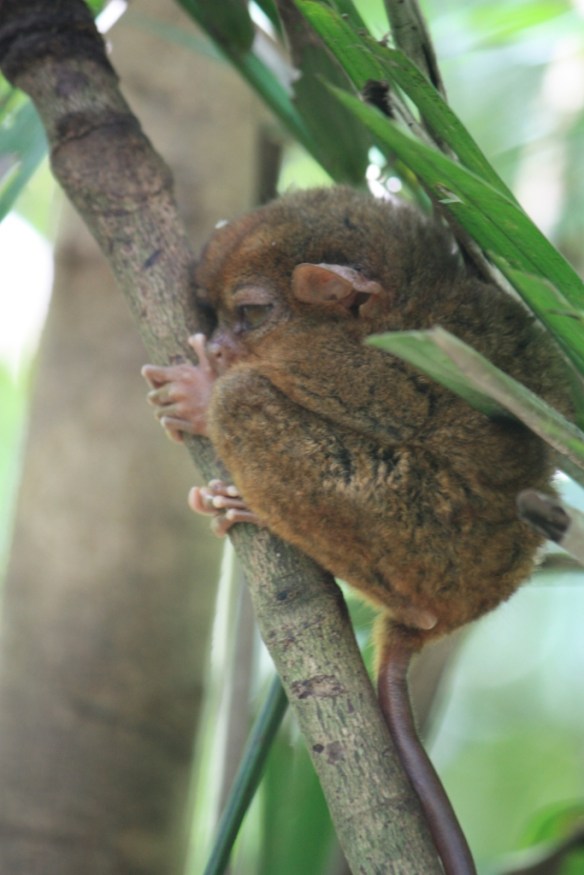
Taken on Bohol in December of 2017

Tarsiers may be the product of a five-way orgy between an owl (eyes), a bat (ears), a frog (hands), a rat (tail), and a monkey (body), but they’re still pretty cute.


DAILY PHOTO: Rendered Cubist

Taken on December 16, 2017 at the Rangoli Metro Art Center in Bangalore

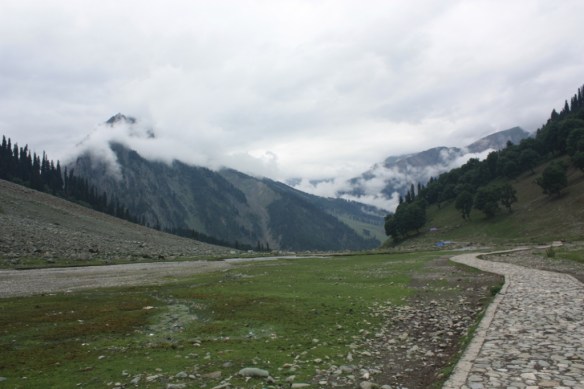
DAILY PHOTO: Scenes from the Walk to Thajiwas Glacier

Taken in August of 2016 near Sonamarg

DAILY PHOTO: Winter Skies over Assumption Cathedral, Vác

Taken in December of 2014 in Vác, Hungary

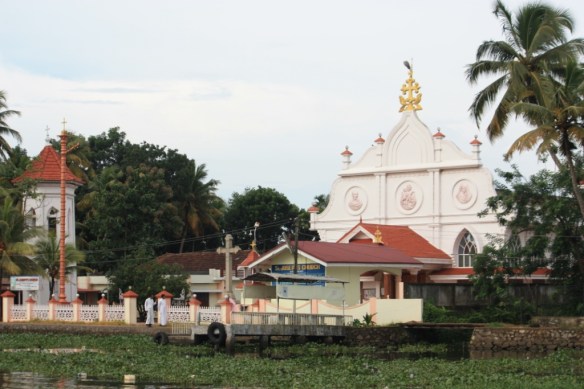
DAILY PHOTO: Backwaters Churches

Taken in July of 2017 in the Keralan Backwaters near Alappuzha